The Final Chapter Of Fringe Is A Bold Departure

The fifth and final season of the TV show Fringe premiered this past weekend and it’s a radical departure from the previous four seasons.

In last season’s episode “Letters Of Transit”, the show deviated from its normal format, which is normally about a federal team that investigated bizarre science phenomena. Instead “Letters Of Transit” jumped ahead to the year 2036 and presented a world taken over by the enigmatic Observers. These unusual, telepathic, bald-headed men in black suits have appeared in every single episode of the show, often in the background unnoticed. It was eventually explained that they were humanity’s descendents from a far future where the Earth had become uninhabitable. This was why they arrived in 2015 and conquered our society as was shown in a dream sequence at the beginning of the fifth-season premiere episode “Transilience Thought Unifier Model-11”.

It seemed as if “Letters Of Transit” might’ve been a special one-off episode but by the end it was clear that many questions were unanswered and there weren’t any resolutions. Clearly Fringe‘s producers intended to continue the story, which was a huge risk because at that time the show was nearly cancelled. Luckily, the gamble paid off and Fringe was renewed to conclude the storyline.

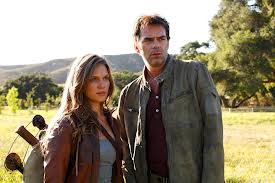
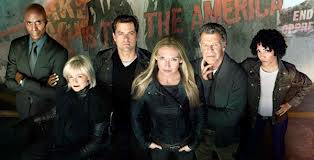
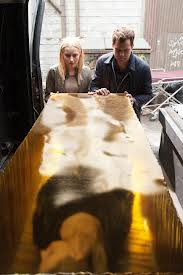
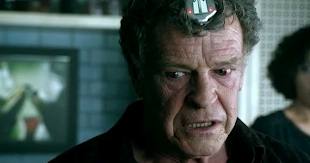
However, from looking at “Transilience Thought Unifier Model-11” it is apparent that the rest of the show will take place in the future. Though the head-spinning cases that the Fringe Team worked on may be gone and their agenda has drastically changed, the beloved characters are still around. Daffy Walter Bishop (John Noble), his son Peter (Joshua Jackson), and FBI Agents Olivia Dunham (Anna Torv) and Astrid Farnsworth (Jasika Nicole) were kept in suspended animation and thawed out to speak to help save the world from the Observers.

Regarding the Fringe Team, viewers were still treated to its quirky nature and saw new nuances to their characters. Walter Bishop still calls Astrid by various nicknames and continues to be absent minded. Meanwhile, Peter and Olivia wrestle with guilt over not being able to stop the Observer’s invasion back in 2015 and losing their daughter during that time. Now reunited and aided by Peter and Olivia’s grown-up daughter Henrietta (Georgina Haig), the team is forced to work in the dystopic New York underground and come up with a way to defeat the Observers.

The world they come into isn’t brave but new and disturbing. The Observers are everywhere and maintain an iron grip on the world with their advanced technology. Expression and free will are discouraged as humanity is slowly being ground under in a police state. Many aspects of the world (represented by New York City) seem the same but with more advanced technology and a feeling of decay setting into civilization. One startling image was that of New York’s Central Park, which has been paved over and turned into a huge processing plant to pump carbon monoxide into the atmosphere. It turns out our air is too oxygen-rich for the Observers.

It was intriguing to see in these two future episodes how things change in the future. Whereas before, Fringe presented a parallel Earth in some episodes for fans to wonder over that world’s differences from ours, this time we learn about our future. If the Fringe Team manages to defeat the Observers, and they probably will, one can only imagine what will be shown as Fringe concludes. Even though the show now takes place in 2036, hopefully more flashbacks to the modern era will be shown. This bold departure in the show’s format is a bit startling but very welcome and illustrates Fringe‘s dynamic nature.

Lewis T. Grove

Major Plot Holes Throw Looper For A Loop

Joseph Gordon-Levitt and Bruce Willis team up the film Looper, a rather disappointing time-travel thriller, which is too bad because the potential was there for it to be phenomenal. Gordon-Levitt stars as Joe who is an assassin in the year 2044. He lives in Kansas and his job is to kill people sent bound and gagged from the future. Joe explains that thirty years from his present time travel is discovered but is instantly outlawed. The only ones who use it are criminal organizations who use it to send their targets back into the past because it is nearly impossible to dispose of a body in the future.

Joe lives a happily empty criminal life until one day he discovers that his next target is actually himself from the future. His future self is played by Bruce Willis and he does a credible job of portraying a supposedly reformed criminal that is trying to save his skin and rewrite history. When the Gordon-Levitt Joe first confronts his future self, the Willis Joe manages to escape with a mission at hand. The Gordon-Levitt Joe is targeted by his employers who now want to kill him and his future self, yet instead of going on the run, he still wants to kill his future self, hoping he will get in good graces again. This doesn’t make much sense, nor does much of the movie.

One flaw with Looper is that it adds too many subplots. For instance, the future version of Joe not only wants to stay alive but wants to do a Terminator and find and kill the child version of the criminal boss that had him sent back to the past. Enter Emily Blunt as Joe’s love interest. She plays a farmer and a mother named Sara whose son Cid is future Joe’s target. So the Gordon-Levitt Joe hides out in her farm waiting for his future version to turn up while building a relationship with the mother and son. But the plot twists don’t end there, in the future a mutation appears among people that allows telekinesis and Cid happens to be an especially powerful mutant.

Honestly, when this development turned up, Looper strayed away from its original premise and came off as an uninspired X-Men movie. Another thing is that it’s difficult to find anyone sympathetic in the movie, even the boy Cid isn’t likeable. He looks like a perfect Damien for a new version of The Omen.  Joe is largely an unrepentant killer and drug addict. Joe’s future version is more cold blooded whose excuse for the Terminator rampage is that his future wife will be killed by Cid’s people. Unlike the Terminator films, it never is shown how bad Cid will become so no one can really root for the future Joe to kill this child. A word of caution, despite the trailers promising an action-packed spectacle, Looper has very little in the way of action. There are some chase and fight scenes but they lack energy and urgency.

Then there are the mechanics of the premise. If illegal time travel is used by criminals why are they worried about disposing of bodies, wouldn’t it be more of a crime to be caught using time travel technology that can be used to rewrite history? Why kill the targets when they come back? No one bothers to interrogate them to learn about the future, one would think that a criminal wouldn’t at least want to pull a Biff Tannen and learn sport scores to get rich! Why send them only thirty years back? The film never establishes that there is a limit to how far back a target can be sent. So why not send them to a preshistoric past or to the middle of some great catastrophe?

Looper has some good points. The production design showcasing a decaying U.S. and an opulent China was well done and it was refreshing to see a film not take place in a futuristic New York or Chicago. Joseph Gordon-Levitt also gets kudos for playing subtly a young version of Bruce Willis. Of course, he doesn’t look like the Willis we’ve seen back in Moonlighting but there are some slight resemblances and Gordon-Levitt shows enough of Willis’ mannerisms to pull the feat off. Looper tried to be different but in the end maybe someone should’ve gone back in a temporal loop to fix the screenplay before filming began.

Lewis T. Grove

Falling Skies Rising

The science fiction war drama TV show Falling Skies just concluded its second season on TNT with the episode “A More Perfect Union”, and proved that it never rests on its laurels.

Falling Skies stars Noah Wyle as Tom Mason, an ex-history professor and now second in command of a rag-tag militia called the 2nd Mass. Originally based in the Boston area (and for the entirety of its first season), the unit abandoned New England early in the second season to head for the supposed safe haven of Charleston, South Carolina.

As with most filmed road trips stuff happened, usually to progress a storyline or develop characters. For instance, Tom started a tender relationship with the group’s field medic Dr. Anne Glass (Moon Bloodgood), dealt with recriminations from being abducted then released by the alien invaders (from the end of the first season) and had to accept that his children had grown up. The oldest Hal (Drew Roy) became a competent, deadly soldier and a future leader; the youngest Matt (Maxim Knight) grew up too fast and is now doing sentry duty; but the most interesting son is his middle one, Ben. He had been abducted (along with many of Earth’s children) by the aliens before the show started and fitted with a biomechanical device on his spine that enslaved him. Ben was rescued last season but this season covered the repercussions and gave Ben one of Falling Skies’ best arcs. It became clear that he had been altered by his experience, seen with his enhanced physical skills and the psychic links he shared with aliens whenever they were nearby.

This was instrumental in one of the main arcs. It was revealed that some factions of the arachnid-like alien Skitters were rebelling against their masters and were seeking help from the humans. Tom and others had to overcome their mistrust of the rebel Skitters and while some of the show’s plots moved along a bit too fast, this one had the right pace. This helped viewers to see that things weren’t black and white when it came to the aliens who conquered Earth.

So what waited for them in Charleston? Supposedly the city was the new capitol of the United States with a working government and armed military. More importantly to the beleaguered 2nd Mass., the city offered the promise of a return to normalcy: hot showers, meals and safety. In the penultimate show of the season, “The Price Of Greatness”, they discover that the city had moved underground, leaving behind ruins to throw the aliens off their tracks. Despite a warm welcoming and comforts, things weren’t so great in the underground city. Our heroes were caught between Tom’s old mentor (Terry O’Quinn), the civilian leader, who basically wanted to remain hidden from the aliens and the General Bressler (Matt Frewer), who wanted to go after the aliens. By that episode’s end, the military initiated a coup but that didn’t solve anything.

The final episode of the season had the 2nd Mass. undertaking a covert mission to assassinate an alien Overlord and destroy a cobbled-together installation. There was genuine tension, excitement, deaths and new developments to carry over to the third season. The acting and character development was very well done, it even made viewers feel for an inhuman rebel Skitter when it was killed. That alien never spoke and was quite hideous, but anyone would’ve felt its plight as it desperately tried to fight its alien enemies.

There are many questions unanswered in the show, chiefly, what do the aliens want with Earth? By the end of “A More Perfect Union” it seems as if the aliens are at war with another alien race, but it’s unknown if the new aliens can be counted as allies. Falling Skies gave viewers enough bait to entice them to keep watching.

Many second seasons for shows are make or break in terms of quality. Luckily for Falling Skies, it has found its bearings in the second season and like any worthwhile TV show leaves viewers eager for new episodes and new seasons.

Lewis T. Grove

Total Recall Is Easy To Forget

Let’s get to the point, the Arnold Schwarzenegger version of Total Recall is better than this new one with Colin Farrell. I have to admit I never read the source material by Philip K. Dick that both films are based upon. So I judged this film on how it compares to the 1990 version and the level of satisfaction I get from watching it.

The original sci-fi classic is superior because of Schwarzenegger’s forceful type A personality, which is both abrasive and appealing at the same time. He has action-motivated comedy timing, delivering lines with a unapologetic Austrian accent. That movie had your classic Schwarzenegger lines and Arnold’s nature blended perfectly with Paul Verhoeven’s stark vision of the future. It was easy to buy that Schwarzenegger’s character of Douglas Quaid grew into a freedom fighter, he was someone you could cheer. In the new version of Total Recall, Farrell’s character is more of a scared loner and less heroic. It’s largely the same premise, a bored factory worker in the future tries to have exciting memories implanted into him but learns he’s some kind of super spy and involved with a wide conspiracy with everyone out to kill him including his wife. On a side note, one of the few things I liked about this Total Recall were the two main women. Kate Beckinsale (Quaid’s wife) and Jessica Biel (his lover Melina) are incredibly attractive and captivating.

The new film also lacks Verhoeven’s cynical humor that made the first one so memorable. Gone are the mutants and the Mars setting. Although we do get a few nods to the original such as the three-breasted hooker and that old lady that was really Quaid in disguise when he arrives on Mars that kept saying “two weeks,” makes an appearance. But I found myself missing Mars, it made the original film seem more massive and epic. Another thing missing is a memorable and powerful soundtrack that the original had. I can’t even remember the score to this new version of Total Recall but to this day I can clearly remember Jerry Goldsmith’s soundtrack for the original film.

The production design in the new Total Recall is spectacular to look at. The transportation system used to travel between two cities on opposite sides of Earth was really interesting. Basically in this version, Earth is a toxic, uninhabitable wasteland except for two cities (The United Federation of Britain and The Colony-formerly Australia). The only way to travel is to use a gravity elevator that actually goes through the planet’s core. It reminded me of that great underrated gem The Core. As a passenger approaches the center of the planet the gravity reverses since the elevator is headed to the opposite side of the world and the chairs in the elevator have to rotate. Several interesting scenes take place in this setting and was one of the film’s few highlights.

Some of the other future tech was also neat to look at. For example, they use phones that are imbedded into palms and the robot police that pursue Quaid were really cool and would’ve fit in perfectly with Verhoeven’s Robocop.

But this film lacked Schwarzenegger and it suffered; it just wasn’t very interesting. There was not enough comedy relief- or compared to Schwarzenegger, not enough signature comedy by the leading actor. I don’t blame Collin Farrell though; Arnold is one of a kind. I knew Total Recall was in trouble because of the fact that I fell asleep twice while watching it. Even Ice Age: Continental Driftis a better film than this one. So IOW, (using a thick Austrian accent) “Get your ahss back to Mars.”—at least, on blu ray or DVD- with the original Total Recall.

GEO

The Dark Knight Rises And Falls

Acclaimed director Christopher Nolan concludes his Batman film trilogy with an absolute triumph. Needless to say, I loved The Dark Knight Rises. It’s simply one of the best superhero movies ever made and more importantly a satisfying way to finish a Batman film series.

By this, what is meant is that The Dark Knight Rises gives a finality to the Batman story  that has not been seen in comics except perhaps for certain aspects of Frank Miller’s classic The Dark Knight Returns. In fact, Batfans will notice many similarities to The Dark Knight Returns at least in broader sense. That includes the idea of a retired Batman/Bruce Wayne (played by Christian Bale) making a comeback when his beloved city of Gotham is imperiled, then he gets defeated the first time out before regrouping and coming back to take out the foe that pummeled him the first time out.

Christopher Nolan’s film also utilizes aspects of the great “Knightfall” storyline where the villain Bane defeats Batman by wearing him out then crippling him. Bane may not seem an imposing or interesting foe to the larger public because the only film exposure non-comic book fans had of him was that awful Batman And Robin movie. But true fans will see the spirit of who Bane is in The Dark Knight Rises. Tom Hardy who plays the masked villain deserves a lot of credit for the way he made Bane such a distinct villain. Not only did he physically pump up his body impressively to resemble the muscle-bound foe but because parts of his face are covered, Hardy created a memorable voice villain. Bane’s voice has a deep cadence that makes him sound like an older man or officer used to ordering troops around. How does he compare to Heath Ledger’s Joker from The Dark Knight? Well, as great as Hardy is in Nolan’s third Batman film, Ledger created not only one of the greatest comic book villains on film but one of the greatest film villains of all time. Plus, viewers were able to see Ledger’s face and see more emotion than with Hardy.

As with all comic book adaptations, changes were made in The Dark Knight Rises. This was done with Bane regarding his origin. In this film, his background is tied to Batman, Ra’s al Ghul (Liam Neeson from Batman Begins returns to play him) and Ra’s’ daughter Talia (Marion Cotillard). Viewers will see a link between all four characters and see how their shared experiences transformed them into separate ways.

But Bane isn’t the only standout in The Dark Knight Rises. Other memorable characters include Selina Kyle (Anne Hathaway), John Blake (Joseph Gordon-Levitt), Lucious Fox (Morgan Freeman) and Alfred Pennyworth (Michael Caine).

Although Selina isn’t called Catwoman and her feline aspects aren’t as exaggerated as with previous film incarnations of Catwoman, the character works in context of the film. Some may wonder during the film why so much screen time is spent on Blake, a young cop and ally of Batman, but he provides the film’s most pleasant surprise at the end; his arc was a real crowd pleaser. Fox is in many ways the head or brains of the Batman franchise. It should be pointed out that Alfred, Bruce’s loyal butler, is the heart and soul of the Batman franchise. He warns Bruce not to confront Bane simply because Alfred fears Bane. He knows that Bruce isn’t a match for the hulking villain. This leads to a very emotional argument where Alfred tells him that Bruce has another option in his life that doesn’t have anything to do with darkness. Bruce can have a shot at a happy life, but the superhero won’t hear of it since he feels bound to fight Bane. At that point, having a happy life is an abstract notion. It isn’t until Selina comes into the picture that having a happy life seems possible, so she serves as a sort of catalyst. Sure Marvel’s The Avengers was the greatest and most exciting superhero movie ever made, but The Dark Knight Rises has a deeper emotional core.

And what great battles are featured in the film! Nolan pulls out everything here. The Gotham police, the National Guard, and even the air force come out to confront Bane and his army. It was all thrilling to watch. As were all the cool gadgets and vehicles Batman uses like The Bat, the new interpretation of the batwing flying craft. The Bat was an amazing sight, sort of like a flying tank with VTOL capability and well armed. Batman also uses a type of EMP gun which helped him travel stealthily throughout Gotham, it was ingenious!

Christopher Nolan created an effective bookend to his Batman movies. Whereas The Dark Knight seemed like a crime thriller, his third film feels more like a superhero film.  The end of Batman in this film means so many things in the context of Nolan’s Batman world, and The Dark Knight Returns provides multiple, satisfying resolutions. Anyone who is worrying about the third film curse can relax because he doesn’t let the fans down with this sendoff.

GEO