The Amazing Spider-Man Reboot

It can be argued that The Amazing Spider-Man is the Spider-Man film for fans of the web-slinging hero. Frankly, it surpasses Sam Raimi’s trilogy in terms of special effects and that is not overly relying on CGI. The practical effects and stunt work really make Spider-Man come alive in a way that hasn’t been done before. The 3D is visually spectacular even the night shots. Pardon the pun but some shots of Spidey are truly amazing and look as if they were taken out of a comic book panel. Forget about alterations to his costume, the filmmakers captured the essence of Spider-Man.

But enough about the effects and look. The rest of The Amazing Spider-Man is a solid and welcome addition to Marvel’s superhero film roster. While director Marc Webb may not be as gimmicky and flashy as Sam Raimi was, he has an eye for character. He lets the quiet moments speak for themselves and knows how to show just enough of a character moment before moving on. The relationship that Peter Parker (Andrew Garfield) has with Gwen Stacy (Emma Stone) is the soul of the movie without going overboard.

Webb wisely uses this constraint in showing us other aspects of Parker. This results in the film not being as cornball or overly sentimental as Raimi’s Spider-Man films sometimes felt. Don’t worry, there aren’t any dance numbers! Garfield does an excellent job portraying him and his masked alter ego. He makes viewers and fans forget about Tobey Maguire with his constant moping and sad eyes. This Parker while burdened with responsibility is very proactive and as Spider-Man he cracks jokes, and behaves just like he does in the comic books. While this film has the hero constantly unmasked it actually works and one doesn’t mind.

As for the rest of the cast, they turn in fine performances with top honors going to Stone and Denis Leary (as her father police captain George Stacy). The captain’s obsession with trying to arrest Spider-Man is an engaging subplot that was never explored in depth before on film and deftly adds to Spider-Man’s headaches. BTW, Stan Lee has one of his very best and funniest cameos in the film that puts him in the same shot with his greatest creation.

The main villain in The Amazing Spider-Man as everyone knows is the Lizard a.k.a. Dr. Curt Connors (Rhys Ifans) a one-armed scientist with ties to his dead parents. The film links his creation to Spider-Man’s and it’s a complaint that goes back to many of these films (such as Batman) but it’s handled fairly well. Compared to the comic book version, Connors isn’t as sympathetic which is a detriment to the film. The Lizard may not be as great a villain as Doctor Octopus but he is still an imposing, formidable  character who puts Spider-Man through hell. Standing nearly eight feet tall with regenerative powers and a cunning mind he seems more like a smart Hulk mixed with Wolverine and a velociraptor from Jurassic Park. That’s a deadly combination.

The film does have faults: we didn’t need to see another origin sequence, which could’ve been handled with flashbacks; some plot developments are dropped too cleanly; the score by James Horner isn’t particularly memorable. But there are so many things that the filmmakers get right with this film because like Sam Raimi, they understand Spider-Man and it shows. So how does it compare to the previous films? Well it’s much, much better than Spider-Man 3 and arguably on par with the first Spider-Man. Despite Spider-Man 2’s flaws it was Raimi at his energetic best and a better film than The Amazing Spider-Man, but Spider-Man 2 set a high bar that is hard to top. It’s too bad Sony chose to release The Amazing Spider-Man so soon after Raimi’s trilogy ended. This is bringing about some unfair comparisons by fans of those films. But go in with an open mind and be prepared to be amazed.

José Soto

Polarizing Views On Prometheus

EDITOR’S NOTE: Ridley Scott’s film Prometheus brought out significant debate among our writers who fell into two differing camps. Presented are two separate viewpoints on the film, both pro and con. Warning: Spoilers ahead.

PRO: This is an excellent movie!

According to the folks behind the film, it’s supposedly “not-an-Alien-prequel” set in Ridley Scott’s Alien universe. The story revolves around the Weyland Corporation crew of the spaceship Prometheus searching for life on a far away planet. Not just any life, but searching for ones who may have created the human race.

Noomi Rapace and Charlize Theron both did a great job in Prometheus portraying scientist Elizabeth Shaw and Weyland administrator Meredith Vickers respectively. Also, I should mention the acting of Guy Pearce (as Peter Weyland ) and Michael (X-Men: First Class’ Magneto) in another great role as the android David. Good casting all around.

The first Alien movie creeped me out for years. Jim Cameron’s Aliens was more action and suspense. Prometheus is more about discovery, revelations of the origin or mankind, alien biohazards and questioning religious faith in the disturbing world of the Alien universe. Fans of the original film were begging for Scott to return to the Alien Universe. After a few false starts, he finally was able to get the greenlight to direct Prometheus.

It should be noted that 1979’s Alien was a co-creation of a core team of brilliant filmmakers. Directed by Ridley Scott; alien designs by H.R. Giger; interior spaceship designs by Ron Cobb; spacesuits by comic book artist Moebius; produced by Walter Hill and David Giler and written by Dan’O Bannon and Ron Schusset. But no one individual could have produced the first movie on their own. There was no singular vision from one of them. It was a dynamically active collaboration between all of them during the production of the movie. It’s like they all have shared creative custody to the dreaded Alien creation.

After plenty of sequels which were not directed by Scott, it was nice to see many of Alien’s original founding fathers return—with plenty of ideas– Scott, producer Walter Hill, Giger and his designs. Many unexplored concepts that those original Alien founding fathers had are readily extrapolated in this movie.

The settings of the first Alien movie are there, like the space jockey’s horseshoe-shaped ship; the Weyland Corporation; a seemingly psychotic android; a relief sculpture inside the horseshoe spaceship, seen in darkness when a character points the flashlight on the wall that looks like Giger’s alien; human victims unwillingly hosting alien parasites (plenty of those). Also, all the ancillary Giger grey, bony biomechanical structures of the alien ship and tech are very well recreated. It’s got plenty of elements from the Alien universe.

The bio menaces in the movie are built up to show it’s not-the-face-hugger, not Giger’s alien, not-the-eggs, so there’s a whole new set of bio menaces in Prometheus. Believe it or not (can’t help it), Scott’s movie appears to take it in a new direction. Set-in-the-Alien-universe-but-seemingly-not-Alien this new movie proves that Scott is a sly guy. The final seconds of the movie reveal how this movie ties into Alien. Not to spoil it too much, but during the final seconds, the audience in my theatre expressed their approval by uttering, “wowwww”, “nice”, Oh, ok!”

The production design & CGI are truly well done, kudos to the crew. I’m ordering the book Art of Prometheus and the Cinefex issue with the article on the movie.

Thumbs up. Go see Prometheus in theatres. There’s nothing like being spooked by these master storytellers who helped create the Alien franchise. And finally, don’t believe the “not-an-Alien-prequel” marketing campaign. It’s a great addition to the franchise and stay to the end.

GEO

Con: While I do agree with GEO on many of Prometheus’ technical merits (production design, effects, acting), I had many problems with the film.

The first half of the movie was fine, good buildup and all. It begins with humanoid Engineers seeding a planet with their DNA, then Earth scientists in 2089 discover ancient clues leading to the Engineers’ planet. The film jumps ahead a few years later to a spaceship called Prometheus arriving at an Engineer planet with a scientific crew. At this point, I give the filmmakers credit for trying to do more than just a prequel to Alien and the approach was different. Instead of a grungy, beat-up and cramped spaceship like the Nostromo, we get a spacious, state-of-the-art explorer craft with eye-popping holographics (one of the best reasons to see Prometheus in 3D).

028_dp_260_0184_right.1260.jpg

But in the second half of the film, after the crew awaken things that should be left alone, then the film just fell apart thanks to the sloppy writing that left plot holes larger than those organic looking entryways into the Engineers’ ships.

Characters do dumb, illogical things, plot points are brought up, dropped without warning then taken up again; seriously how rushed were writers Damon Lindelof and Jon Spaihts? No one in production or in the editing room brought up these glaring mistakes?

Let’s go over some of them. During an expedition into the Engineers’ deserted pyramid, two scientist freak out and decide to leave the main expedition, but get stranded inside the structure when a storm approaches. So what do they do? They camp out in a chamber that holds countless vases with mysterious goo and after seeing a hammerhead slug-like creature they act like it’s a puppy, approach it and get attacked! Weren’t they scared by the entire place? Where did their scientific training go? Why not back away instead of leaving yourself open to attack? All of this could have been taken care of if the creature attacked them by surprise.

Later, the Prometheus crew goes back to look for them, finds only one body, make a comment about needing to find the other scientist and the matter is dropped for the next plot development. Of course, the other scientist shows up later and attacks the crew when a few thrills were needed.

Then there’s Elizabeth Shaw’s unexpected pregnancy. That entire plot development was chilling and worked well until after she has the alien fetus removed surgically. Shaw gets up and runs around afterwards after having major surgery! Any woman will tell you who had a cesarean, that running and even walking are impossible. That surgery slices open abdominal muscles that are needed for just walking. The film could’ve thrown in some line about advanced healing therapy in the form of an injection (as was shown later when a paraplegic Weyland was able to walk), something real quick could’ve been shown. But no, this glaring plot hole eluded the production team.

Another problem stemming from this sequence is that nothing is done about the alien fetus by the rest of the crew! No one really pays much mind to Shaw, despite the fact that by this point she’s running around all bloodied and that earlier she was treated as someone who was contagious! The list just goes on, but the point is that these glaring plot holes just took me out of the film.

Ordinarily, minor quibbles can be glossed over and forgotten but when a film just piles one shoddy mistake after another then that’s a problem. I can forgive the fact that the film never answers why the Engineers are so hostile to humans and so on. Those are valid questions set up for a sequel. But when characters lose all common sense and behave irrationally or plot developments don’t make sense, well then it’s time to admit that the film is flawed. Prometheus has many things to admire about it, but sadly too many detractions as well.

José Soto

Falling Skies Returns

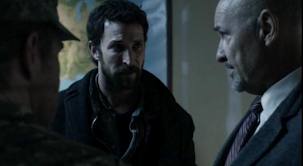
Falling Skies premiered last summer and while it was executive produced by Steven Spielberg it didn’t receive half the fanfare and hoopla that Spielberg’s other TV offering Terra Nova did. But Falling Skies did one thing that the other sci-fi show couldn’t, it survived.  This week, TNT premiered the second season of Falling Skies and it picked up where it last left viewers.

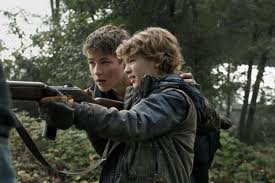
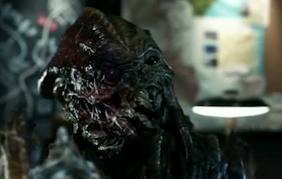
At the end of the first season, the show’s protagonist, a history teacher turned freedom fighter, Tom Mason (Noah Wyle) allowed himself to be taken captive by the alien invaders that have conquered the world. The second season premiere episode of Falling Skies (actually two episodes “Worlds Apart” and “Shall We Gather At The River”) takes place three months later in Boston and the Massachusetts countryside. Mason’s group led by the hard-bitten but sympathetic Captain Weaver (Will Patton) are engaging in harassing attacks against the alien skitters (vaguely resembling giant arachnids) and the robotics mechs. During one ambush, Mason’s two sons Hal (Drew Roy) and Ben (Connor Jessup), who was previously enslaved by the aliens, discover a wounded Mason in the melee.

Flashbacks reveal what happened to Tom Mason in the missing time. On board the aliens’ ship Mason is told that his group will be given sanctuary if they stop fighting. He refuses the offerand attacks the aliens’ bipedal overlord. Next thing he knows, he is released along with other military prisoners who are then executed; strangely he is able to escape. Eventually he reunites with the group but he no longer trusts himself. Convinced he has been turned into some kind of sleeper agent, Mason has himself restrained after a parasitic lifeform is found in his eye. The scenes where the group’s doctor, Anne Glass (Moon Bloodgood) removes the wiggling, worm-like creature were truly cringe inducing.

By the time, Tom Mason has reunited with his friends, it’s obvious that this rag-tag group is very desperate and depleted. Over a hundred people have been killed since Mason’s capture and they are low on supplies. These two episodes do a great job of showing how beaten down these fighters are and yet they keep on fighting. At this point, their primary objective isn’t to overthrow the aliens. They are simply outmatched. Rather their only goal is survival. The production design is excellent, everyone looks believably grungy and their equipment looks worn and well used. And the second season has ramped up the action and the tension.  As one of the few genuine science fiction shows on the air right now, Falling Skies is a well-produced effort and it seems as if the show has found its legs and will hopefully continue to grow. Unlike other genre shows, it’s fairly easy to jump into Falling Skies and watch the interesting story unfold.

Waldermann Rivera

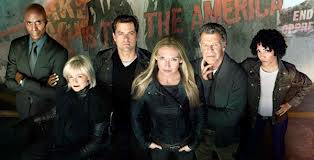
Fringe Concludes Its Fourth Season

While the fate of two universes was in the balance in the final fourth season episode of Fringe, until very recently so was the show itself. Many Fringe fans breathed a relieved sigh when the show was given a final reprieve by Fox for a fifth and final season because now the show can properly finish its complex storyline. Yet by looking at the final episode “Brave New World, Part 2” one could tell that the show’s producers meant for this episode to also serve as a series finale if needed. Fortunately that wasn’t the case, but TPTB have to be careful not to fall into the trap that Babylon 5 did. In that show, the proper storyline came to a conclusion at the end of its fourth season only to be given a new season but felt tacked on and aimless.

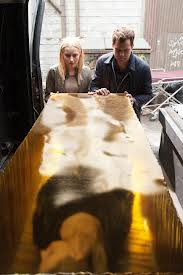
As for the episode itself, it was one of the best of the series. Tightly plotted, suspenseful, and it featured all the elements of a classic Fringe episode. Meaning time-traveling Observers, reanimated corpses, weird and gross pseudo science, end-of-the-world theatrics and FBI agent Olivia Dunham (Anna Torv) doing a turn as one of the X-Men by emulating Jean Grey and Wolverine’s mutant tricks. This episode explained many of Fringe’s mysteries such as why was Olivia dosed with the fictional drug cortexiphan (which gave her psionic powers); what did the wounded Observer called September mean in previous episodes when he cryptically stated that Olivia Dunham had to die and most importantly what was the goal of the ultimate baddie.

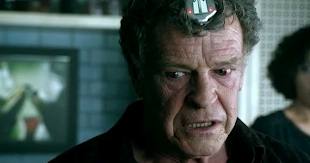
The head villain was revealed in the penultimate episode of the fourth season to be Walter Bishop’s (John Noble) old partner William Bell (Leonard Nimoy) and he wanted to recreate the universe to his own design. William Bell had created a modern-day Noah’s Ark with new creatures and meant to use Olivia Dunham’s powers to fuel the collision between our universe and the parallel one that had been seen many times on Fringe. Naturally, it’s up to Olivia and her lover/partner Peter Bishop (Joshua Jackson) to stop this mad scheme.

What was surprising and oddly reasonable was his motive. Bell was dying of cancer and came to hate the unfairness of life. He reasoned that if we were created in God’s image then it was only natural that we try to be like God-hence all the scientific experiments and aberrations throughout the series. But what was surprising was that Walter Bishop came up with the scheme to destroy and remake the universe. Actually, Bishop concocted this back before the show when he was an evil mad scientist. This revelation also explains why the current Bishop is more benign and doesn’t have his full mental capacities.

There is a feeling of conclusion in the final minutes of the episode (Walter even finally calls his assistant by her proper name!), the Fringe Division of the U.S. government receives full funding and resources and Olivia and Peter are ready to live happily ever after. But luckily for us fans, a final nugget and indication of what is to come arrives in the form of the Observer, who delivers a warning. This is probably alluding to the future timeline seen in the recent episode “Letters Of Transit” where the Observers take over the world.

Thankfully, there are now a few more episodes left to answer this mystery and the other remaining ones. Thirteen episodes to be exact.

José Soto

New Essential Guide For A Star Wars Library

After some delay Del Rey finally released Star Wars: The Essential Guide To Warfare by Jason Fry this April. I went by my local book store today and saw the book. Browsing through it, I’ll have to say it was definitely worth the wait, IOW it looks good. As the title suggests, the book covers the conflicts in the Star Wars universe in chronological order starting with before the time of the Galactic Republic. The first conflict covered is with the Hutts fighting on a planet. For each conflict there are a few beautifully detailed drawings, along with a map of the galaxy showing where the conflict took place.

It also has profiles on the major characters that fought in the wars and details on the weapons used (i.e. blasters and lightsabers) and the ships used as well. Afterwards, the book goes on to describe a particular conflict and it seems to be told from the perspective of a historian or researcher living in the Star Wars universe.

Art by Darren Tan

A lot of space is devoted to the Clone Wars and the famous Galactic Civil War covered in the films. These parts of the book are in the middle while the first third covers the early years of the pre-Republic and the last third goes into the post-Return Of The Jedi period in other words the expanded universe. Characters and races seen in these sections include Admiral Thrawn and the Yuzhan Vong.

Star Wars: The Essential Guide To Warfare reminded me of the book The Illustrated Star Wars Universe that covers the different planets in the galaxy which is also from the viewpoint of someone living in that universe.

Art by Dave Seeley

Overall, it seems like a good history of the Star Wars universe with a good timeline and provides good reference material as well. My favorite topics were, of course, from the movies like the Battle of Endor or the Battle of Coruscant because I finally got to see the battle from the POV of a cockpit fighter. The art by several artists are well done and bring the storylines to life. One thing that was amusing was the depiction of the Ewoks, they look more like savages instead of teddy bears. Too bad George Lucas didn’t go with this idea when they were depicted on screen.

My only complaint about the book is that there aren’t as many drawings as I expected. There was a lot of text, which is fine, but I wish more space was devoted to big splashy artwork. But Jason Fry does a good job with the book and it would make a solid addition to the library of any true Star Wars fan.

C. S. Link