2012 Doomsday Scenarios: Month Six

As we go about our daily routines one thing we may or may not pay heed to is the weather…unless it gets bad. Our civilization deals with constant disasters that strike us like hurricanes, volcanoes, tsunamis, blizzards and whatnot. But a very rare but real occurrence are the super disasters that threaten not only our way of life but all life on Earth.

Doomsday Scenario No. 7: Super Disasters Cometh

Ever since Hurricane Katrina, the deadly tsunamis in Japan and Southeast Asia and the cries about global warming, we’ve become all-too-aware about how nature can suddenly uproot us; sometimes without warning. There are several movies, cable programs and books that go into detail about these so-called super disasters. One of the mainstays on Syfy’s Saturday night schedule are movies about unlikely yet destructive disasters. While The History and Science Channels have a plethora of specials about these potential super disasters. Here are just a sampling:
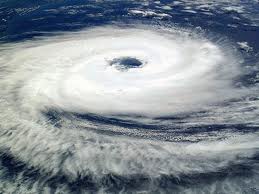
  • Hypercanes: As its name sounds, a hypercane is a super hurricane that could occur if ocean temperatures reach about 120 degrees Fahrenheit. What causes this would be asteroid strikes, supervolcanoes or climate change. Hypercanes could be large enough to cover an area the size of North America and would have wind speeds of over 500 mph. That is inconceivable to our thinking when a Category Five hurricane is one that has wind speeds of over 157 mph. The storm surges would devastate coastal regions leading to countless death and destruction, but what is really frightening is that they could last a long time. A recent movie that depicted a hypercane (though its accuracy has been called into question) is The Day After Tomorrow.
  • Megatsunamis: Think of those deleted scenes from The Abyss where the underwater aliens threaten humanity’s coastal cities with gigantic tidal waves and that gives you an idea of what to expect from a megatsunami. What would cause such a catastrophe would be impact events like a meteor hitting the ocean or a supervolcano. Many scientist believe that if the Canary Islands’ Cumbre Vieja volcano were to erupt the event would create megatsunamis that would devastate England and the North American east coast.
  • Global Warming Effects: The controversy over what causes global warning or climate change rages on but the impact is starting to be felt by Earth. Let’s flash forward a few decades or centuries from now and look at what is in store. First of all, the ice sheets in both poles melt completely. Not only does this doom indigenous wildlife there but will probably raise the ocean levels by about forty feet. That is enough to flood parts of Florida, Louisiana, London, Southeast Asia, Belgium and The Netherlands, and other low-lying regions. That would result in mass migrations, droughts, scarce resources and finally civil unrest. At first the world’s temperatures would rise, including the oceans, thus leading to hypercanes. But it has been theorized that ultimately climate change would bring about a premature ice age. The film A.I. Artificial Intelligence showed this happening to Earth most famously with those scenes showing a flooded Manhattan and later with an ice age occurring two thousand years later. The Day After Tomorrow inaccurately has an ice age happening seemingly instantly as the Earth suffers through the devastating effects of global warming.
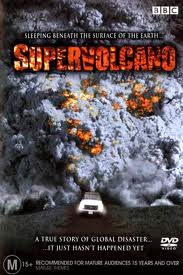
  • Supervolcanoes: This mega disaster is especially frightening for two reasons. We have very little means to accurately predict them, let alone locate all the supervolcanoes or calderas on Earth (scientists believe our planet may have as many as forty supervolcanoes). The other reason is because this event is fast and incredibly destructive. The Discovery Channel/BBC One aired a special years ago called Supervolcano about the eruption of the Yellowstone Caldera in Wyoming. Also Harry Turtledove penned a new trilogy of books about the same caldera (the first book out is Supervolcano: Eruption).The special presented a fairly accurate and frightening account of what would happen when the caldera erupts. First there will be constant earthquakes before the eruption. When the supervolcano blows, it will unleash toxic gas clouds and sulfuric ash that will blanket the skies over Earth for years. This in turns makes the air unbreathable and block sunlight. Obviously plant life will die off and food supplies will dwindle for the remaining humans who by then will be reduced to a meager stone-age level of existence. It actually happened 74,000 years ago in Toba, Sumatra. Fossil records show that humanity nearly went extinct from that event. But what curdles the mind is that the Yellowstone Supervolcano erupts roughly every 600,000 years and it turns out it is overdue. So it can happen in our lifetime.
There are many other mega disasters that Earth faces that are nearly incomprehensible because we haven’t experienced them (or they happened in our prehistory). Frankly if or when they occur there is very little we can do to prevent them. At that point the best we can do is literally hunker down and plan on surviving as a species.
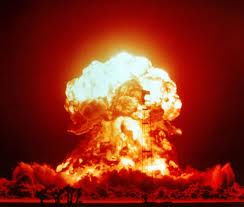
2012 Doomsday Scenarios: Month Four

In many ways, the idea of a total annihilation of our civilization due to war is the most terrifying doomsday scenario. Imagine the horror of the initial nuclear strikes that will destroy entire cities, wipe out millions if not billions of people in mere seconds and leave behind an unlivable radioactive wasteland. What probably makes this scenario so chilling is that the possibility of this happening is very real. Sure the Cold War ended but the threat of an all-out nuclear war still exists.

Doomsday Scenario No. 9: Nuclear Armageddon and Aftermaths

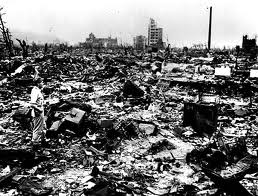
We all fear using nuclear weapons because of the effects of just two atomic bombs used in Japan at the end of World War II. The horrific sights and looming radiation made many realize how devastating these weapons were. Many have come to the conclusion that a full-scale nuclear war would destroy our civilization and way of life. But there are some who think that a nuclear war would be survivable and winnable, though what kind of life is there to live after that event? Is it worth surviving?

The Nuclear Dawn

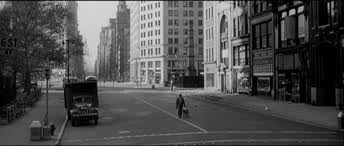
Since the dawn of the nuclear age, countless books, films and TV shows have explored the post-apocalyptic world left after the nuclear mushrooms have dissipated. There have been somber, intellectual works and outrageous parodies that covered this concept. With the former early notable films include Five, The World, The Flesh And The Devil, and On The Beach. These early works naturally got many details incorrect. For instance, with The World, The Flesh And The Devil, our hero (played by Harry Belafonte) is the sole survivor of World War III (at least for the first half of the film) and winds up in an abandoned New York City where all the buildings are intact and there aren’t any bodies anywhere. The film tried to explain it away with a silly line about radioactive isotopes that dissipated after five days. Despite its scientific inaccuracies, the film was an interesting look at how a person would cope after surviving the apocalypse. At least in the movie Five the dangers of radiation are shown, the same with On The Beach. The latter was more of a character study about how we would face our untimely end (the film and book took place in Australia where an American submarine crew took refuge from the fallout of World War III but radioactive winds will soon reach the continent, dooming everyone living there), while Five showed how we can try to carry on emotionally after a traumatic event. The TV series The Twilight Zone had several episodes dedicated to nuclear war, some of the better known ones included “Time Enough At Last ,” “Two,” “The Shelter,” and “The Old Man In The Cave.”

The Day After Wars

As we studied more the concept of nuclear war and film/TV effects budgets increased more graphic and accurate depictions came about. Probably the most famous one is the TV film The Day After. It started off with the typical daily routines among Kansas City residents then midway through it, the world was jarringly torn asunder as the city was reduced to rubble with corpses everywhere,  people succumbing to radiation and civilization collapsing.

The Day After was one of many emotionally draining presentations. Some of the best ones were Threads (a British film that also graphically depicted World War III and the end of humanity), When The Wind Blows (an animated piece about an old couple eventually dying from radiation following nuclear war) and Testament. Taking place in a small suburb outside of San Francisco, in Testament, its residents aren’t hit with any nukes but are affected by the radiation and being cut off from the outside world. It’s particularly gut wrenching to watch the main character-played by Jane Alexander-tenderly nurture her dying children.

Opposite The Day After and Testament, there some ludicrous presentations. They include Invasion U.S.A. This Is Not A Test and Panic In Year Zero. Wildly inaccurate and poorly executed these films from the ’50s and ’60s couldn’t convey what would really happen if the unthinkable happened. Two more recent efforts include a “comedy” that aired on Fox called Whoops! about nuclear war survivors and Jericho which aired on CBS. So much of what happens in the show is unbelievable. Here are a couple of examples: townspeople put out an open-air picnic after a radioactive rainfall (!); a spoiled rich girl throws a party because her parents are out of town and won’t give up her generator to the police-who stand idly by as she parties! In reality, the authorities would’ve taken the generator by gunpoint.

Aftermath

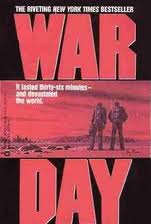
Then there are the films, books and stories that take place either shortly or long after a nuclear war. Too numerous to name here, these are just a sampling of books: The World Set Free by H.G. Wells (written in 1914, it correctly predicted the use of atomic weapons during war), Alas, Babylon by Pat Frank,  A Canticle For Leibowitz by Walter M. Miller, Jr., The Long, Loud Silence by Wilson Tucker, The Last Ship by William Brinkley, The Postman (also made into a film starring Kevin Costner) by David Brin, Swan Song by Robert McCammon, Warday and Resurrection Day. With Warday, Whitley Strieber writes about a United States that has been crippled economically and spiritually by a “limited” nuclear exchange with the Soviets. Partly a travelogue, the main character goes around America that is struggling to recover years after a war. The same thing happens with Resurrection Day by Brendon DuBois, the twist is that it’s an alternate history novel that follows the U.S. a decade after the Cuban Missile Crisis led to war.

For movies as with books there are too many to list. They include Damnation Alley (based on a Roger Zelazny book and is complete with giant killer roaches!), Def-Con 4, the Mad Max films, Radioactive Dreams, the 1960 film version of The Time Machine (it featured London destroyed by atomic bombs) and Peace On Earth-an MGM animated short release in 1939 featuring a world devoid of humans, who killed themselves off in a final war.

At The Precipice

Everyone knows about how close we came to war with the Cuban Missile Crisis and are now finding out about accidental close calls and near wars that happened before and since that crisis. As recently as 1995, Russia mistakenly believed a rocket launch by the U.S. was the beginning of a pre-emptive strike and almost retaliated. In 2001, India and Pakistan nearly went to war with each other and were prepared to use their nuclear stockpiles against each other.

Today we lose sleep over rogue nations like Iran developing nuclear bombs. It seems as if we are at the dawn of a new arms race where everyone seems to want to have their own nuclear stockpiles. Then of course there is the specter of terrorist groups and nut jobs getting their hands on a nuclear weapon. One thing that prevented all-out war between the U.S. and the Soviet Union was the concept of M.A.D. (Mutually Assured Destruction) which kept generals and leaders from losing their cool and automatically launching missiles for any reason. It’s unlikely many of these nations and terrorists will hesitate to use a nuclear weapon.


What is disturbing about this scenario isn’t the possibility of it happening but that it’s something that can be prevented. Some point out that nuclear weapons have to date kept the world out of full-scale wars like the First and Second World Wars. In a way they are right, the devastating nature of these weapons reminded world leaders not to brazenly use them…to date. But the reality is that the genie is out of the bottle. Trying to wish away nuclear weapons and reduce stockpiles may be a pipe dream. The capacity for war will exist within us for a very long time and so is the will to develop deadlier weapons. Perhaps one day, when humanity has matured past the point of war will it be feasible to put aside this nightmare.

The Feasibility Of Space Prisons

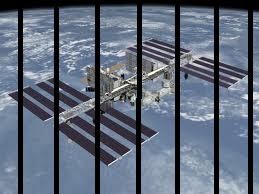
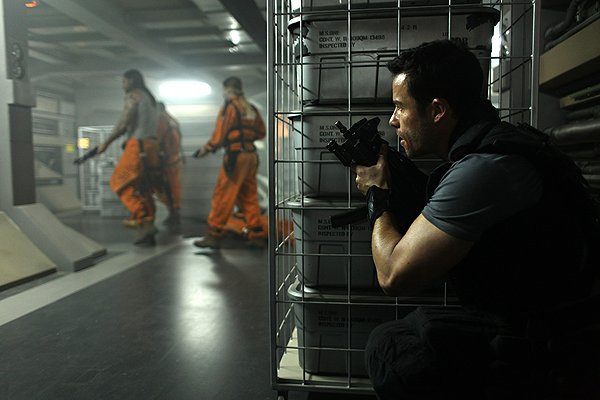
The premise in the movie Lockout has to do with the hero breaking into an orbital prison facility to rescue the president’s daughter. It sounds like a winner especially for movie executives out to make a quick buck; take an existing story plot about a high-security prison and shoehorn it into a science fiction world by having it take place in space or the future, etc. “It’s Escape From Alcatraz in space or Papillon in space!” they may cry out in excitement. Space prisons have popped up in science fiction books and movies and can be fun. However, the problem is that when examined the premise doesn’t make much sense.

The heart of the problem with a space prison is that of resources. Building and maintaining an orbital prison would be such a cost prohibitive drain of resources that it probably won’t happen. Imagine the public outcry when the costs of maintaining such a prison are revealed. Many today complain when they hear that inmates get “luxury” items like cable TV. People would argue that prisoners don’t deserve to have necessities like air, food and water. Never mind if a way is found to have those necessities replenish themselves on a station.  Our civilization has to be a lot more advanced than depicted in Lockout and other films like Fortress 2: Re-entry to provide these things, let alone effective and practical security measures. Another thing to consider is the safety of the planet. During Lockout, the prisoners take control of the station. At one point, there is the danger of the prison’s orbit decaying which poses the risk of re-entry. That’s tantamount to putting a prison complex within a nuclear power plant today. That is a recipe for disaster. It just wouldn’t be done.

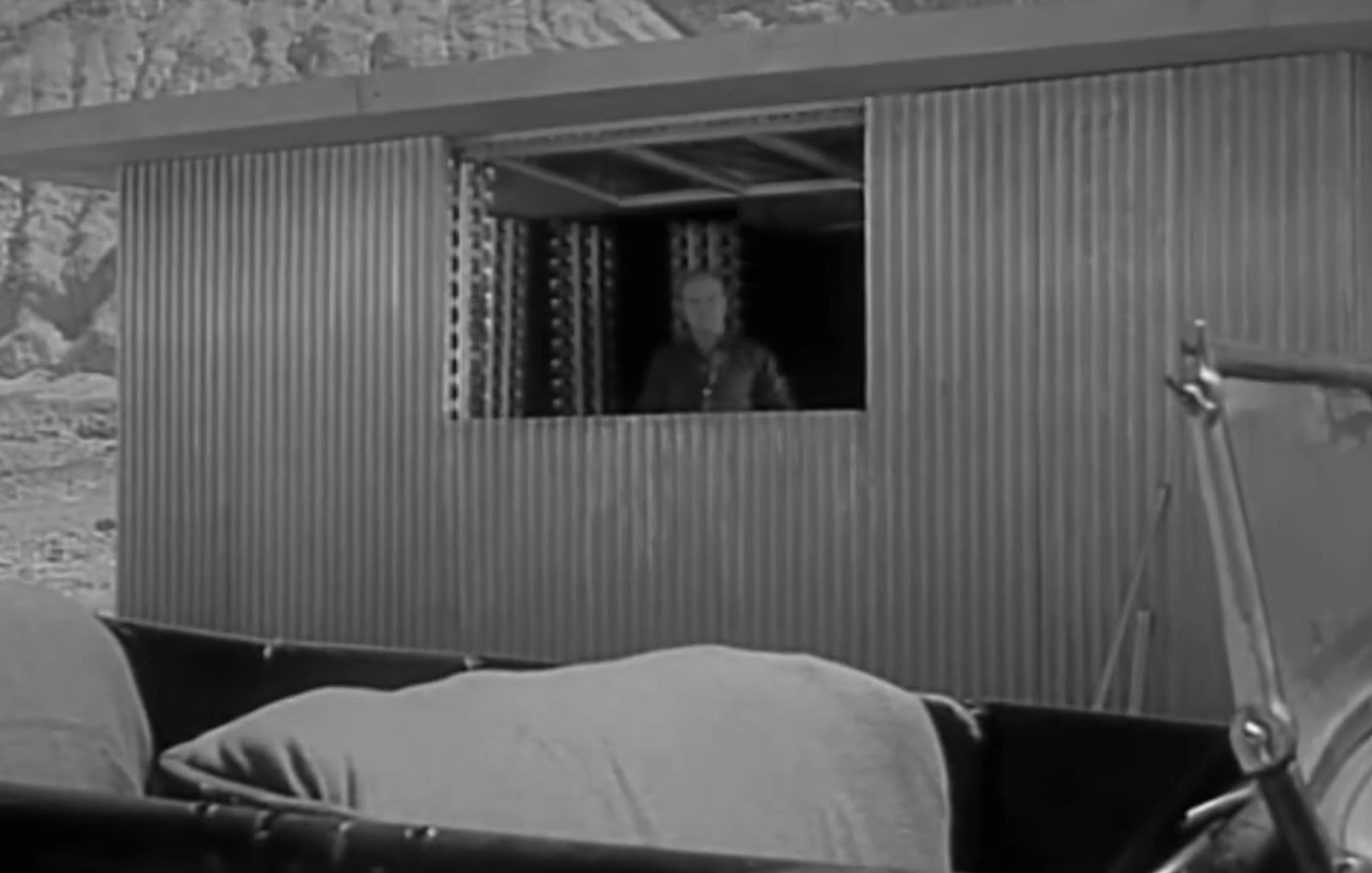
Now once a civilization becomes a true space-faring one, then a space prison is feasible. Take the prison facility seen in the Star Trek: Voyager episode “The Chute.” The alien society that kept the characters Tom Paris and Harry Kim captive routinely traveled between planets and most likely were able to easily produce the bare elements needed for survival in such a place. Another twist is the prison asteroid, one of which was presented in The Twilight Zone episode “The Lonely.” In that episode Jack Warden plays a prisoner held in solitary confinement and literally has the world to himself.  One caveat with the asteroid is that in the episode it looked like a desert with an atmosphere. This begs the question of using resources to construct such a place for one prisoner given that in the show, the space-faring tech wasn’t very advanced. Then there is the notion of using entire planets as a penal colony as shown in the series Earth 2. Once again, why waste an entire planet as a prison? This makes little sense since in that show Earth was dying and the characters were trying to set up a viable colony on the penal planet.

As for us, don’t expect to be reading about orbital prisons anytime this century. Probably when we have regular transport between the planets in our solar system with viable, self-sustaining colonies will this idea come to fruition. Cool-looking prison breaks and with nifty effects and explosions will remain in books and films. The bottom line is that it is way cheaper and easier to just keep prisoners down on Earth.

José Soto

Real Or Fake 3D Films

Once considered a novelty gimmick back from the ’50s 3D films look to be a mainstay in modern-day cinema. Specifically, f/x-laden genre spectaculars. It’s gotten to the point that a big-budget sci-fi or fantasy film without the 3D treatment seems to stand out or seem lacking. A prime example of that is the upcoming The Dark Knight Rises.

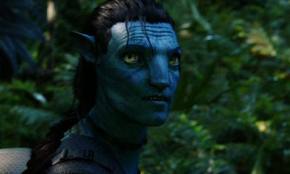
As anyone knows, this all started with the phenomenal success of James Cameron’s Avatar. There had been 3D film releases before Avatar but none of them were as hugely successful as Cameron’s sci-fi epic. Naturally, the film studios attributed Avatar’s success to the revolutionary 3D process that James Cameron utilized and set out to recreate that film’s success at the box office. This is why it seems as if every major genre or animated film is released these days in 3D.

All would be terrific if the 3D used was actually good on a consistent basis.

More and more often, audiences are complaining about the inferior 3D used in many films. Unlike Avatar, which was filmed using 3D cameras, most films released in 3D are post-converted. Usually it seems as if this process was slapped on at the last second and it shows. There are many rants that the films looked dark during some scenes, and actually seemed two dimensional at other times. These complaints were leveled at Clash Of The Titans, Green Lantern and Marvel Studios’ recent super hero films.

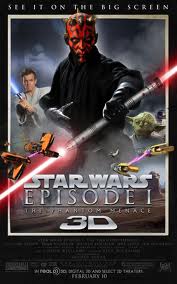
Film studios are in danger of killing any enthusiasm for a 3D film. What makes things worse is that the studios won’t reveal in their ads if the films were truly filmed in 3D or not. Add to that the higher ticket prices and it won’t be long before the bloom is off the rose so to speak. There are signs that this is happening already. Take the ticket sales of the newly released John Carter; despite the promotion that the sci-fi epic was in 3D (it was post-converted according to reports) it wasn’t a big hit. Or better yet, look at how Star Wars Episode I: The Phantom Menace did when re-released last month in 3D. It wasn’t a flop and did respectably but it wasn’t a mega hit. Of course, being that Star Wars Episode I was filmed over a decade ago, one couldn’t expect it not to be post-converted, and in that film’s defense the conversion was actually pretty decent. While some images appeared to be two-dimensional, some scenes looked good and at least there weren’t any scenes that looked dark.

The true 3D process using special cameras is costly, but in the long run, it would benefit studios since they can claim their films are true 3D films rather than something hastily done to earn a quick buck.

The good news is that while many upcoming films are using the post-conversion process, there are more and more films that do use actual 3D. While some of those films may not be appealing to some (feature-length animated films and horror films) they do point to the notion that 3D is becoming more mainstream. Perhaps a day will come when it becomes more economical for studios to produce true 3D films on a regular basis or at least improve the post-conversion process. (This improvement would benefit older films needing conversions like future Star Wars re-releases.)

This website reports which recent and upcoming films are true 3D films and which ones aren’t. The following is a partial list of upcoming films using both types of 3D.

Post-Converted: The Avengers, The Cabin In The Woods, Gravity, Men In Black III, Wrath Of The Titans

Actual 3D: Abraham Lincoln: Vampire Hunter, The Amazing Spider-Man, Brave, The Hobbit, Ice Age: Continental Drift, Madagascar 3: Europe’s Most Wanted, Prometheus, Resident Evil: Retribution

José Soto

2012 Doomsday Scenarios: Month Two

We’re in the middle of the cold and flu season but the next big pandemic is just around the corner. In fact, many doctors and scientists say we’re overdue for one.

Doomsday Scenario No. 11: The Killers Within

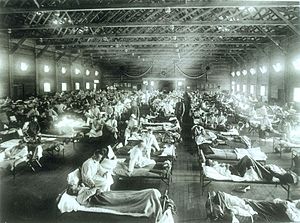
The idea of a pandemic is terrifying and in recent years we’ve dodged the bullet with the onset of AIDS, Ebola, SARS and recently with the H1N1 virus. The last really major pandemic that humanity faced was the Spanish Flu that occurred during World War I in 1918 and killed roughly 50 to 100 million people worldwide. The disease was so widespread and lethal to soldiers that many feel that the disease helped end the war. It is still considered to be the worst modern pandemic to strike humanity. The other horrible pandemic that threatened humanity further back in history was the Black Plague that wiped out a third of Europe’s population in the middle ages. But history is littered with waves of pandemics from assorted diseases like smallpox, typhus and many flu variants. Due to medical advances, we as a whole have been lulled into complacency until very recently. But recent events show that we are still vulnerable. Many fear that soon our antibiotics and other medicines will fail and we’ll be vulnerable to mass death just as our ancestors were.

Add to this fear is the specter of biological terrorism. This threat is all too real as seen with the anthrax terror attacks in 2001. It’s very feasible that some nut can obtain a rare flu strain or a manufactured disease and find a way to spread it to the populace.

Quarantines and Breakdowns

It’s all too easy for our society to fall apart in the wake of a deadly pandemic if a cure or treatment isn’t quickly found. With modern transportation, diseases can spread rapidly and before the medical community is fully mobilized, the contagion could have manifested everywhere.

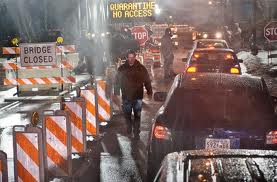
Social norms will be frayed as the disease spreads. People will demand quarantines and closed borders but that won’t do anything to stop the disease. Nevertheless, fear and distrust will worsen with the new migrations of those wanting to avoid contracting the disease. Unfortunately, many of these refugees will be carriers themselves. Additionally governments will try to futilely treat victims and provide adequate health services. It’s easy to imagine hospitals and care centers guarded by mobilized soldiers, who would also enforce curfews and quarantines. But eventually public services will shut down as the death toll climbs. With fewer and fewer guards, cops and soldiers to enforce the law, anarchy follows and thugs will gain control. Once the disease has run its course, there won’t be much of anything left. Humanity will be forced to rebuild.

Fictional Examples Of The Aftermaths

Such fears have been the basis of many science fiction films, books and shows that postulate on the impact of a true pandemic today and the aftermath. The basic storyline usually goes like this: a disease wipes out 99% of the human (and sometimes animal) population. A handful of survivors then struggle to rebuild civilization. Other times, the story is about the valiant efforts to contain an exotic disease before it spreads.

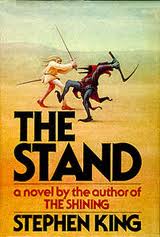
Some popular books that deal with this include Stephen King’s epic The Stand,  Michael Crichton’s The Andromeda Strain, Richard Matheson’s I Am Legend, Max Brooks’ World War Z , George R. Stewart’s Earth Abides, and most recently with Clemens P. Suter’s Two Journeys.

There are many films that deal with this subject. For example there are three adaptations of I Am Legend (the first being The Last Man On Earth and most recently the 2007 Will Smith version), which is about a plague that turns most of humanity into vampire-like creatures. In 28 Days Later (and its sequel) a man-made virus is accidently released that turns its victims in the U.K. into savage, zombie-like killers. Then there is George Romero’s film The Crazies about a bio-weapon that induces homicidal madness. The Andromeda Strain, about a scientific team trying to eradicate a supposedly extra-terrestrial disease, was made into a film released in 1971 and a recent mini-series. A similar approach was utilized with the 1995 film Outbreak but the disease was less exotic in origin but just as deadly. The Stand was made into a well-received mini-series in 1994 and there are efforts to have a remake done. Twelve Monkeys shows us a future where a disease has decimated the world and the protagonist time travels back to modern times to discover how the disease started. The most recent film about pandemics was Steven Soderbergh’s Contagion, which covers in dismaying detail how our society unravels with the onset of a killer virus.

With television there are few examples of a modern pandemic wiping out humanity. Two that come to mind are Jeremiah, which is based on a Belgian comic book, and starred Luke Perry as the title character. In Jeremiah, a plague has killed off most adults in the world and it picks up a generation later when the surviving children have now reached adulthood. The other one is BBC’s Survivors, a remake of a series produced in the 1970s, and the premise was about the usual plague survivors finding a way to work together and rebuild society. UPN’s The Burning Zone wasn’t about a post-apocalyptic world but rather about a team of bio-agents who dealt with deadly, unusual diseases including some engineered by a mysterious group who considered humanity to be vermin that needed to be eradicated by diseases.

Like many doomsday scenarios there isn’t any way to anticipate the onset of the catastrophe.  A pandemic could arrive tomorrow or in a few years, but it will happen. So it pays to be alert and safe though and to wash your hands often.