
In the Planet Of The Apes film series, humanity’s simian relatives have inherited the Earth in the far future. It’s a fascinating premise, that humankind currently the dominant life form will one day be supplanted. This goes back as early as with H.G. Wells’ classic The Time Machine, where that book’s narrator time travels to the distant future to find that humans no longer exist.
However with The Time Machine and the Apes films, the future rulers of the Earth are related to us. In the case of Wells’ story, humanity evolved into two distinct species the predatory Morlocks and the cattle-minded Eloi. But is this what will happen? Who is to say that our evolutionary branch will continue to dominate the world? For all we know, the eventual rulers will be based upon other animal species currently sharing the world with us. Or they could be something else. Let’s look at some candidates in a post-human world.
Rodents
 There’s a good case to be made that some kind of rodent will dominate the world. They are a hardy species able to survive in just about in every environment. Rats are notoriously difficult to eradicate since they are very intelligent and durable. It’s easy to imagine a world where rodents become the dominant species. In Dougal Dixon’s book After Man: A Zoology Of The Future, a future Earth is presented where rodent dog-like species called the falanx and bear-like bardelots are the top predators. Rodents have also filled other ecological niches in this future world. So it’s easy to imagine how a sentient rodent species could arise from this environment further along into the future.
Insects
 This is harder to imagine but not impossible. What impedes insects from becoming dominant life forms is the environment. Earth’s gravity and atmosphere prevent insects from ever growing very large. Over 400 million years ago in the Devonian Era insects grew into monsters because of Earth’s higher oxygen content and temperatures. If such conditions were to be repeated and if there aren’t any competitors then it’s conceivable that insects could rule the land again and from there possibly lead to sentient insects. The potential for insect intelligence already exists with social insects like bees, wasps and ants. The latter are excellent candidates with their complex social hierarchies. Compared to bees and wasps, ants are very common and one species, the driver ant in EastAfrica, is a true terror capable of killing small animals. Phase IV was a movie released in 1974 that was about a newly evolved species of ants that developed a hive intelligence and began supplanting humanity. It may be far-fetched given humanity’s resilience and other competitors but given the right conditions then the opportunity is there for the insects.
Artificial Intelligence
 Pretty cut and dried, the Singularity arrives in a few decades or so, Skynet comes online, etc. Humanity is enslaved or exterminated by sentient computers and robots. There is no Neo or John Connor to the rescue. Who knows what the computers do after we’re gone? Maybe they find Earth too confining or completely strip its resources and leave for the stars. Afterwards the microbes that survive will eventually yield to complex life millions of years later. It’s anyone’s guess as to what the new top life forms will be.
Marine Mammals
Dolphins and whales come to mind but despite arguments about the level of their intelligence one important factor impeding their capability for social and technological advancement is their inability to manipulate their environment. They lack appendages that allow them to handle objects. Perhaps if some cetacean evolves to return to land they can develop ambidextrous hands. But that could happen instead to the pinnipeds, namely seals. As with the insects, much depends on environmental factors. A flooded Earth will do.
Reptiles
There could be a second age of reptiles that leads to new kinds of dinosaurs. It’s happened before so it can happen again. Only this time the reptiles or neo dinosaurs evolve into a sentient species. There are several sci-fi stories that present advanced dinosaurs with technology. Harry Harrison’s alternate history book trilogy West of Eden is a good example. In Stephen Baxter’s Evolution, readers are introduced to sapient dinosaurs. Star Trek: Voyager had an episode in the third season called “Distant Origin” that featured a reptilian alien race that turned out to be dinosaurs that left Earth millions of years ago. Of course no such beings have been found in the fossil records…yet. Then again dinosaurs ruled the Earth for millions of years and they included bipedal forms with complex claws but never developed sentience as far as we know.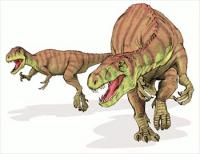
The Rest
Other candidates include birds. They had their chance when the dinosaurs died out but mammals beat them to the punch. As with cetaceans their lack of manipulating limbs could’ve hindered them. Perhaps an evolutionary throwback that reintroduces hand-like claws might do the trick. Pigs are reputedly very intelligent as are elephants. But with elephants they are on the verge of extinction, seeing them taking over is difficult. Pigs are versatile creatures but lack manipulating organs unless their flexible snouts evolve into trunks giving them a chance. The list goes on, many animal species can be candidates for evolving into a sentient, sapient race. Frankly, there are many variables that can’t be completely accounted for so we’ll just stick with our imagination for now.
Lewis T. Grove


 Starloggers