The Dearth Of Far Future Films

Last week, we learned a bit about Neill Blomkamp’s upcoming science fiction movie Elysium and while intriguing one thing revealed is that despite rumors the film isn’t set in the far future. On the other hand, earlier we found out that Will Smith’s next science fiction film After Earth takes place some one thousand years after humanity abandoned Earth. The settings for both films point out how there is very little science fiction films that take place in the far future. It seems as if filmmakers are uncomfortable producing films that take place beyond the 25th century. In fact, the average future date they tackle is the 22nd to 23rd centuries. Just look at Star Trek, Alien and other recent films. If not date is set and they want to depict a far future, the date is left vague like in THX-1138.

This contrasts with science fiction literature that is filled with books and stories taking place thousands, millions and even billions of years from now. Some of the most famous examples are H.G. Wells’ The Time Machine, Isaac Asimov’s Foundation saga and Frank Herbert’s Dune books. As everyone knows, the first Dune book was adapted into a poorly received film by David Lynch. One complaint leveled against the adaptation was how confusing Dune’s premise was to the general audience who couldn’t relate to a tale in a galaxy-spanning society. This could be why there are so few films set far into the future. The reality is that no one can accurately predict how humanity will evolve. It’s very likely that we wouldn’t relate to them at all. That isn’t to say that it’s not possible to make the characters relatable. If it weren’t possible there wouldn’t be so many sci-fi books taking place in the far future.

Obviously the ones to blame for this attitude are movie executives who try to sell films to the general audience and often underestimate their customers’ intelligence levels. While someone who is only into romantic comedies and mindless action flicks probably don’t want to be bothered with a sci-fi movie whose setting needs some explaining. Many of them point to the failure of Dune and assume that no one wants to see a film set in an unrecognizable society. Unfortunately this has become a convenient fallback for executives (never mind that the Sci-Fi Channel produced two successful adaptations of Dune and its sequels). Also their inability to simply explain a film’s setting is due to their lack of storytelling skills. But that is debatable.

Then again one problem facing filmmakers is presenting a far future that won’t look dated years after the film is released. Not to mention they usually don’t have the budget to present a full-fledged future in detail.

One way around this challenge was to depict a dystopian future where society has collapsed and nature has reclaimed the Earth. Planet Of The Apes comes to mind when using this depiction. It takes place in 3978 long after humanity has devolved into mute savages and simians have inherited the Earth. The Time Machine is another example where humanity has evolved into two separate species millions of years from now. Or just do away with the Earth like Don Bluth’s animated film Titan, A.E. did. After the world was destroyed in the film’s beginning, humanity has become a refugee species, having lost any cultural and technological advancements. This meant that they were relatable to modern-day audiences (who related to time-placed heroes from our era in The Time Machine and Planet Of The Apes).

It is a challenge to put out a sci-fi film that takes place far into the future but it isn’t impossible. This conception that people won’t be able to relate to the characters and setting is ridiculous. After all, films come out that depict our distant past yet audiences care about those characters and understand what is going on. So it shouldn’t be difficult for the average moviegoer to understand a character in the far-flung future. It has been done and hopefully will be done in the future.

Lewis T. Grove

Is The Bubble Expanding On Superhero Films?

Last year, there was a lot of speculation about the lasting power of superhero films. Many believed that they were on the way out due the way they underperformed in the box office in 2011.

There were three films in 2011 based on Marvel Comics characters (Thor, X-Men: First Class and Captain America: The First Avenger) while DC Comics’ Green Lantern was also released as a film. While the Marvel films did respectably in the box office they weren’t supersized hits like The Dark Knight or the first Iron Man movie. Still they were well-received by fans and critics and did well enough to warrant sequels.

Green Lantern however, was a different story. As everyone knows, the film was a huge disappointment to many fans and didn’t make a lot of money. According to Box Office Mojo, the big-budgeted Green Lantern only earned $116 million with a worldwide total of $222 million domestically.

Many factors went into account for the disappointing box office sales in 2011. Some blamed the lack of popularity of some characters. The general public may know who Batman is, but brining up Green Lantern would raise eyebrows. With X-Men: First Class, many said that it may have made more money if it featured more well-known mutant characters and if the franchise didn’t have the stigma of recent inferior entries. Others pointed to a general burnout for such films and inferior 3D conversions (which thanks to bad word-of-mouth would dampen sales). Unless the film was phenomenal many would rather wait for DVD.

With that, while this year’s crop of films had fairly positive buzz late last year, there were concerns when 2012 began as to how good this year’s superhero films would turn out. Nerves weren’t helped by the failure of Ghost Rider: Spirit Of Vengeance but the superhero genre showed earlier this year that it had some life left with the success of Chronicle. There seemed to be cautious hope that The Avengers, The Amazing Spider-Man and The Dark Knight Rises would do well. The heavy-hitting properties starring the companies’ flagship heroes were to affirm the popularity of superhero films.

Of course, the release of The Avengers changed everyone’s perceptions about superhero films. It featured characters that were seeded years earlier, so that lesser-known heroes like Hawkeye were paired up with superstars like Iron Man. But more importantly the film was well made and able to generate a super-frenzied buzz before its release. To date The Avengers has made $598 million domestically and nearly a staggering $1.5 billion worldwide according to Box Office Mojo.

Seemingly overnight, upcoming superhero films are now highly anticipated regardless of past hesitations. For example, while many fans decried Bane’s voice in early trailers for The Dark Knight Rises, adjustments were made to alleviate those concerns, even though the jury is still out on Catwoman. The final Christopher Nolan Batman film will undoubtedly do well. It may not perform as well as The Avengers but count on it being one of the year’s biggest hits.

The Amazing Spider-Man is also poised to do well. There are many detractors about the validity of a reboot so soon after Sam Raimi’s trilogy but many are impressed by what’s being shown on clips and trailers and it has a major marketing push behind it (plus this year being Spidey’s 50th anniversary can’t hurt). The film will probably finish behind The Avengers and The Dark Knight Rises in terms of sales. Another factor that could help the new Spider-Man film is that it is coming in a bit of a lull between the other two superhero films. Currently, other films are topping the charts but don’t seem to have the staying power that The Avengers had and The Dark Knight Rises will probably dominate the box office for the remainder of the summer.

If one or both of the upcoming superhero films reaches blockbuster status expect the floodgates to open even further for future superhero films. Apparently stunned by the spectacular success of The Avengers, DC Entertainment announced that a Justice League film is in development. Anticipation seems to be growing over next year’s slate of superhero epics–Iron Man 3, The Man Of Steel, Thor 2 and The Wolverine. Furthermore, Marvel has announced that there will be follow ups to The Amazing Spider-Man and X-Men: First Class (with new stars like Michael Fassbender and Jennifer Lawrence reprising their roles) in 2014, as well as a new Captain America film, and another unannounced Marvel film. There are plans to bring back to the silver screen Daredevil and the Fantastic Four as well as big-screen debuts for Black Panther, Ant-Man, Wonder Woman, Lobo, and the Flash. Even Kick-Ass which only did respectably in theaters is getting a sequel.

At this point, it’s too early to say where all this will go, but two things are certain: 1) we’re in the Golden Age of Superhero Films and 2) despite some failures they are now a well-established movie genre that will stay for some time to come.

José Soto

The Avengers Changes Superhero Films Forever

Wow. The new movie The Avengers literally left me breathless and spent after seeing it. Marvel Studios needs to take a well-deserved bow for their efforts throughout the years that culminated in this film. Many had doubts regarding the ability to pull this endeavor off but they are quickly dispelled with The Avengers. It so profusely feels like the climax that had been building up for many years.

Marvel Studios clearly made the right choice with Joss Whedon as the film’s director. He has the filmmaking talent and perhaps, more importantly, possesses a clear love and respect for the Marvel universe and it shows onscreen. But this film isn’t some slavish fanboy production. No, Joss Whedon and the crew had an understanding of how the Marvel universe works, how the Marvel characters behave and how to translate that to the screen and entertain even non-Marvel fans. It is difficult to imagine anyone else achieving what Whedon did and The Avengers will make him a deservedly A-list director. (On a side note, hopefully he will have the clout now to do a Firefly revival. Hey, we can only hope!)

The Avengers jumps right into the action when demigod Thor’s (Chris Hemsworth) nemesis and brother Loki (Tom Hiddleston) arrives at an underground S.H.I.E.L.D. bunker and makes off with an otherworldly and powerful MacGuffin called the Tesseract (that’s the Cosmic Cube seen in many Marvel comics that grants unlimited power to wielders). After Loki escapes from the bunker, S.H.I.E.L.D. director Nick Fury (played by Samuel L. Jackson doing his usual tough-as-nails shtick) assembles a team of super heroes to help him retrieve the Tesseract and stop Loki’s plan to conquer the Earth.

Then the fun begins as beloved characters like Tony Stark/Iron Man (Robert Downey, Jr.), Steve Rogers/Captain America (Chris Evans), Thor, Dr. Bruce Banner/Hulk (Mark Ruffalo, replacing Edward Norton and Eric Bana), Natasha Romanoff/Black Widow (Scarlett Johansson) and Clint Barton/Hawkeye (Jeremy Renner) meet for the first time. In the typical Marvel comics manner, they don’t get along with each other and even come to blows. But they learn to get along and even respect one another just in time to confront Loki and his alien army.

The Avengers is an action-packed bonanza with fantastic characters and that’s before the climatic final third of the film. Taking place in New York City, the beachhead for Loki’s alien invasion, the explosive, multi-tiered battles on the streets and in the skies are simply spectacular. There have been some complaints over how low-budget some previous Marvel Studios productions have been, but here no expense was spared. But unlike some empty, big-budget films, the action was very fluid and easy to follow, but more importantly the audience cared deeply about the heroes as they fought the alien army. Each character, even some minor ones, had their moment to shine. The Avengers could’ve easily been dominated by one or two characters like Iron Man due to the actor’s charisma but Joss Whedon knows how to give the actors just enough time to make their contributions before moving on the next character or plot point.

This film has set new standards for super hero films. One can only wonder how the filmmakers will top themselves (a clear, audience-rousing hint is given during the end credits; Marvel fans will rejoice) or how other studios’ films can compare to this one. Marvel Studios would be wise to retain Whedon for the inevitable sequel or at least use him for other productions. BTW, stick around for the very end, there’s another post-credit sequence. Without giving anything away, it isn’t anything earth-shattering, but rather a cinematic equivalent of having a cigarette or a relaxing drink after being so pumped out by the movie.

José Soto

The Feasibility Of Space Prisons

The premise in the movie Lockout has to do with the hero breaking into an orbital prison facility to rescue the president’s daughter. It sounds like a winner especially for movie executives out to make a quick buck; take an existing story plot about a high-security prison and shoehorn it into a science fiction world by having it take place in space or the future, etc. “It’s Escape From Alcatraz in space or Papillon in space!” they may cry out in excitement. Space prisons have popped up in science fiction books and movies and can be fun. However, the problem is that when examined the premise doesn’t make much sense.

The heart of the problem with a space prison is that of resources. Building and maintaining an orbital prison would be such a cost prohibitive drain of resources that it probably won’t happen. Imagine the public outcry when the costs of maintaining such a prison are revealed. Many today complain when they hear that inmates get “luxury” items like cable TV. People would argue that prisoners don’t deserve to have necessities like air, food and water. Never mind if a way is found to have those necessities replenish themselves on a station.  Our civilization has to be a lot more advanced than depicted in Lockout and other films like Fortress 2: Re-entry to provide these things, let alone effective and practical security measures. Another thing to consider is the safety of the planet. During Lockout, the prisoners take control of the station. At one point, there is the danger of the prison’s orbit decaying which poses the risk of re-entry. That’s tantamount to putting a prison complex within a nuclear power plant today. That is a recipe for disaster. It just wouldn’t be done.

Now once a civilization becomes a true space-faring one, then a space prison is feasible. Take the prison facility seen in the Star Trek: Voyager episode “The Chute.” The alien society that kept the characters Tom Paris and Harry Kim captive routinely traveled between planets and most likely were able to easily produce the bare elements needed for survival in such a place. Another twist is the prison asteroid, one of which was presented in The Twilight Zone episode “The Lonely.” In that episode Jack Warden plays a prisoner held in solitary confinement and literally has the world to himself.  One caveat with the asteroid is that in the episode it looked like a desert with an atmosphere. This begs the question of using resources to construct such a place for one prisoner given that in the show, the space-faring tech wasn’t very advanced. Then there is the notion of using entire planets as a penal colony as shown in the series Earth 2. Once again, why waste an entire planet as a prison? This makes little sense since in that show Earth was dying and the characters were trying to set up a viable colony on the penal planet.

As for us, don’t expect to be reading about orbital prisons anytime this century. Probably when we have regular transport between the planets in our solar system with viable, self-sustaining colonies will this idea come to fruition. Cool-looking prison breaks and with nifty effects and explosions will remain in books and films. The bottom line is that it is way cheaper and easier to just keep prisoners down on Earth.

José Soto

George Lucas & His Retirement

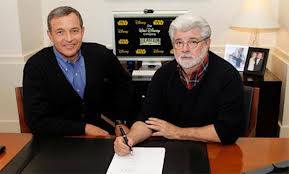
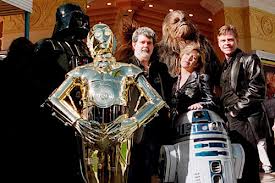
It’s been all over the news lately that with the release of Lucasfilm’s Red Tails George Lucas plans on retiring from blockbuster, i.e. popular films. Lucas cites the hard time he had trying to get Red Tails financed by studios (before he wound up paying for most of the film himself) and hints at the bitter reaction from many fans over his Star Wars prequels. In a New York Times Magazine interview he states, “I’m retiring, I’m moving away from the business, from the company, from all this kind of stuff.”

But looking at this and other interviews, one can spot a loophole or two. He does not rule out a fifth Indiana Jones film, although the older Harrison Ford gets and the longer it takes for Lucas to approve a script the less likely that becomes. Then there is the Star Wars live-action series that he is still trying to get off the ground. That looks more likely since advancements in special effects will soon make it financially feasible for Lucas to produce film-quality episodes of his galaxy-spanning saga.

Actually, his so-called retirement isn’t exactly news. Back when Star Wars Episode III: Revenge of the Sith was released, Lucas said then that he wanted to move away from blockbuster films. And even further back when Return of the Jedi came out, he claimed back then he wanted to focus on small, experimental projects. For many fans still bitter about Jar Jar Binks and Indy surviving a nuke blast in a fridge that’s great news. Don’t let the door hit you on the way out George, they may be thinking. But to others this is sad news and cements the fact that there won’t be any future Star Wars films.

Then again, look at his earliest efforts, THX-1138 and American Graffiti. Many forget today that both films were quirky, experimental pieces of filmmaking but are rightfully considered classics today. That’s especially true with THX-1138 since even today the film is seen as an avant-garde film. Whereas American Graffit is seen as a more conventional film it actually helped introduce the storytelling narrative of the main characters going off on their individual tangents without a set plot. That is because this technique has been copied so many times since. So Lucas probably just wants to go back to his roots and make quieter, low-budget films. That’s fine, since he did a superb job in directing them and at this point in his career, being that he is set financially, he can now afford to do whatever he wants.

Oh by the way, don’t forget that along with THX-1138 his other early genre effort was a little-known film at that time about some kid running around in spaceships with aliens. Yes that was Star Wars, but it was considered to be a huge risk for 20th Century Fox and experimental. So don’t write George Lucas off just yet.

Lewis T. Grove