Frankenstein Still Resonates Today


frankenstein boris

Frankenstein’s monster is an iconic horror figure that has terrified and fascinated audiences for generations and has done so in several different formats.  The reasons for this are varied and include the ideas that were present in the original novel written by Mary Shelley in 1818 titled Frankenstein; or, The Modern Prometheus.  It tells the story of a scientist named Victor Frankenstein who creates a human being from the body parts of corpses. His reason for doing this is to bring life to a dead body, thus transcending death itself.

henry frankensteinThis brings to mind the idea of zombies that are so popular right now in society as well as the idea of playing God. All of the fears that come with modern technology that can potentially cause chaos (such as the fears of cloning, or bio-engineered diseases) are all present in this story. Frankenstein’s creation is a hideous creature that wipes out his creator’s family, but is also portrayed as a somewhat sympathetic character. Someone who was brought into this world recklessly and thrown away by his father. The monster’s attempts to integrate himself into human society fail miserably and his subsequent rampage further increases the terror and misery caused by irresponsible scientific actions.

This is reminiscent of the ideas presented in the Jurassic Park movies where bringing extinct creatures to life cause death and destruction. Even if the motives were possibly noble to begin with, who doesn’t dream of seeing majestic dinosaurs live again, the end results are always catastrophic.

The many different movies in subsequent decades about Frankenstein’s monster show the lasting power of this story. The most famous is obviously the classic 1931 film Frankenstein starring Boris Karloff.  His great performance as the menacing creature is still remembered today and is the benchmark for any Frankenstein movie.  The look and sound of the monster is what everyone thinks of now whenever the name Frankenstein is said. Halloween costumes, and TV shows like The Munsters all show how iconic that original design is.

curse of frankenstein

The story of Frankenstein’s doomed creature has been retold many times since the ’30s. The Hammer film studio in Great Britain produced an excellent version in 1957 starring Christopher Lee as the monster and Peter Cushing as the mad scientist titled The Curse of Frankenstein.  More recently in 1994, Kenneth Branagh deniro frankensteindirected and starred in Mary Shelley’s Frankenstein with Robert De Niro as the monster. While it received mixed reviews I think this is a great version of the story and is very faithful to the original novel. De Niro’s performance is both frightening and tragic and the film touches on all of the important ideas that Mary Shelley presented almost two hundred years ago. The idea of the all-too human desire to cheat death at almost any cost still resonates with us. Another theme it explored was that science is seen at first as the way to salvation and a better life, but the characters realize that these visions of ours don’t always come true and sometimes make things much worse.

mary shelleyThe fact that Shelley was only 18 years old when she wrote this classic novel is impressive and the fact that almost two centuries have passed since its publication show that great ideas that touch on fundamental themes always stand the test of time, and still have relevance regardless of the genre and the times. In addition, while the novel and movies are seen as firmly in the horror camp for obvious reasons, it can also be said that they are in the realm of science fiction as well with its previously mentioned emphasis on science and research into both biology and questioning what it means to be human. Frankenstein is definitely a story that asks these questions and will continue to both scare and thrill audiences, this Halloween and for years to come.


C.S. Link
Marvel Phase Three and Beyond

new schedule

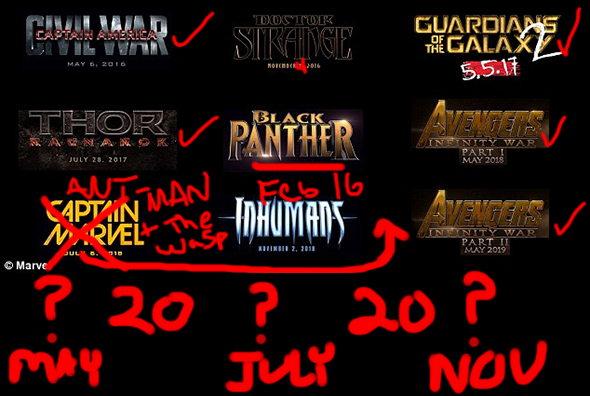
Marvel Studios has once again captured headlines lately with their announcement for their upcoming film slate. While the news that a sequel to Ant-Man will be made came as a nice surprise, there are now rumors percolating about what films will get produced. It’s intriguing food for thought starting with the revised schedule for their Phase Three Marvel Cinematic Universe (MCU) films.

Phase Three

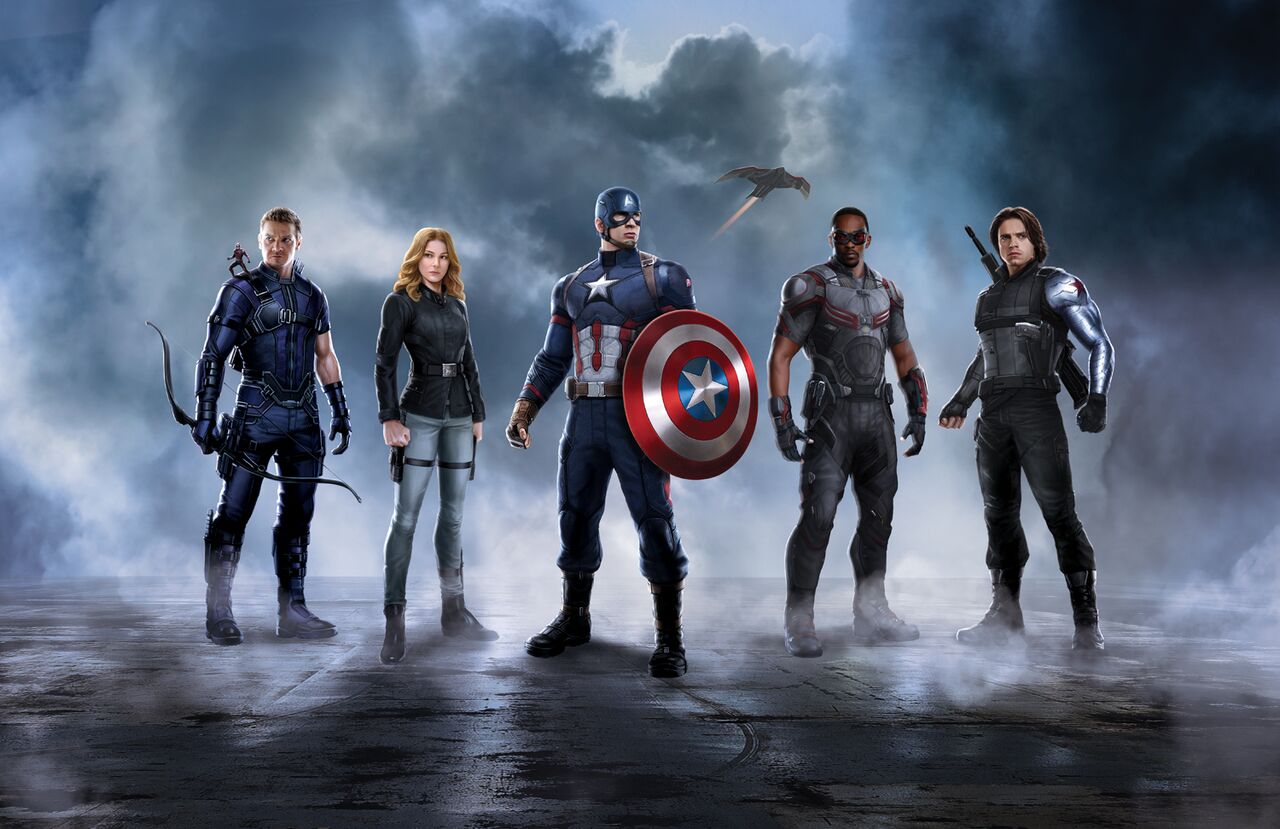
The third phase of the MCU films starts next year on May 6 with the release of the eagerly awaited Captain America: Civil War, which many are calling Avengers 2.5 because it’s stuffed with so many superhero characters. Next in November 4, the Sorcerer Supreme himself Doctor Strange makes his big-screen debut.

team cap

From there Marvel Studios amps up their schedule by releasing three films per year starting in 2017 with Guardians of the Galaxy, Volume 2 on May 5, a Spider-Man reboot for July 28 and finally Thor: Ragnarok on November 3. Now the 2018 slate has been changed to accommodate the second Ant-Man film. This means that Black Panther has been moved up to February 6, instead of July 6. That slot now goes to Ant-Man and the Wasp and Avengers: Infinity War, Part I debuts on May 4. Sadly for some fans, the Captain Marvel film originally scheduled for November 12,  2018 will instead come out the following year on March 18. The final two Phase Three films for 2019 will include Avengers: Infinity War, Part II on May 3 and Inhumans on July 12.

More Ants!

Ant-Man turned out to be a bit of a surprised for many who predicted it would be Marvel Studios’ first flop. Instead it made $178 million domestically and even more overseas. While it wasn’t a humongous blockbuster, Ant-Man earned a healthy profit and lots of good will from fans who appreciated its quirky charm.

waspThe fact that there will be a sequel proves that Marvel has a lot of confidence in the property. So what will Ant-Man and the Wasp be about? Here’s a thought, while the first film was basically a heist caper, the sequel could be a rescue story or have a man vs. nature motif. The film could be centered on rescuing the original Wasp who was lost in the quantum realm in a flashback scene in Ant-Man. In fact, some observers of the film picked out a silhouette that resembles the Wasp when the title hero was momentarily trapped in the subatomic universe. Having Ant-Man and the Wasp exploring the quantum realm and finding new worlds will be a fun twist and visually arresting. After that if Marvel Studios decides on another Ant-Man film they can call it Giant-Man as Ant-Man morphs into Giant-Man to follow the comic books in a sense.

Continue reading

Top Ten Star Trek Alien Races

trek aliens As we commence celebrating Star Trek’s 50th anniversary, it’s a good time to start looking at the best of Star Trek through the decades. To begin, let’s look at one of the hallmarks of what made Star Trek (TOS) and its spinoffs so popular: the many diverse alien races that appeared in the shows and films.

tholian10. Tholians: One of the most non-humanoid races ever featured in Star Trek. Crystalline and mysterious, the Tholians could only exist in high temperatures and were known for their punctuality and xenophobic nature. Often mentioned after they first appeared in the original series, the Tholians’ only other onscreen appearance happened decades later in Star Trek: Enterprise. Time for an encore! First Appearance: “The Tholian Web” Star Trek

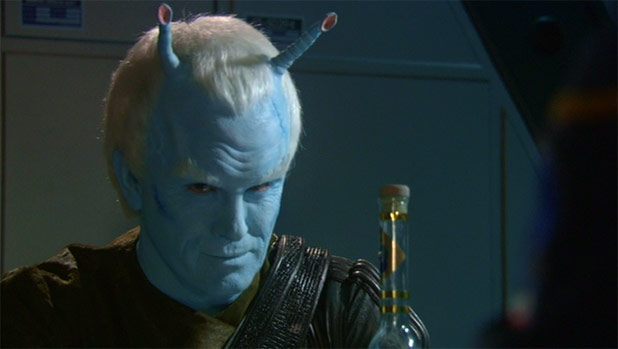
andorian shran

9. Andorians: One of the founding members of the United Federation of Planets along with Vulcans and humans. These hostile, blue-skinned aliens with antenna weren’t fully explored until Star Trek: Enterprise (ENT) and episodes from that show that featured Andorians were some of ENT’s best. First Appearance: “Journey to Babel” Star Trek

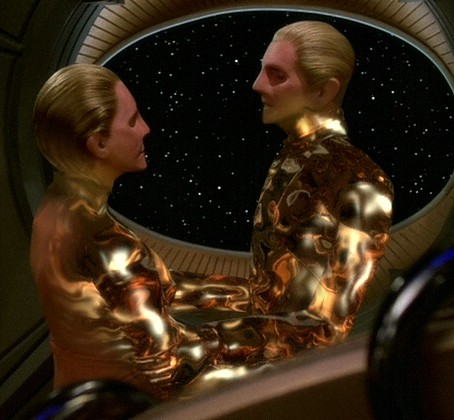
changeling8. Changelings: These enigmatic shape-shifting aliens used their distrust and fear of “Solids” to rule the Gamma Quadrant and conquer any world that dared to defy them. Whether using their shock troops in the Dominion or by simply using their shape-shifting abilities to spread confusion and misdirection, the Changelings were a race to be reckoned with. “Emissary” Star Trek: Deep Space Nine

7. Cardassians: As former oppressors dukat and garekof the Bajorans, the militaristic Cardassians quickly made a lasting impression with their reptilian skin, bony necks and antagonistic but cultured manner. Harshness, nationalism and pride were their defining characteristics which led to many conflicts with other galactic powers.  Their alliance with the Dominion in Star Trek: Deep Space Nine (DS9) to regain glory would come back to haunt this proud race. First Appearance: “The Wounded” Star Trek: The Next Generation

Romulan commander

6. Romulans: Distant off-shoots of the Vulcans that never embraced a pacifistic, logical lifestyle, the Romulans while displaying a war-like, calculating demeanor were also seen to have a semblance of honor throughout the spinoffs and films. Plus, they get points for having that delectable Romulan ale. First Appearance: “Balance of Terror” Star Trek

ferengi

5. Ferengi: Donald Trump would fit in nicely with these aliens! With their hideous bat-like ears (they’re yuuuuuge!) and small stature, the Ferengi are a profit-driven alien race with a shallow. unethical nature. Still, they’re humorous and effective foils for Star Trek’s more dull, er, enlightened human society. First Appearance: “The Last Outpost” Star Trek: The Next Generation

kira

4. Bajorans: Conceived in Star Trek: The Next Generation (TNG) as fugitives and terrorists fighting to liberate their people, the Bajorans were given center stage in DS9. This show allowed a deep exploration of the race as we learned they have a deeply spiritual nature that resonated with viewers. First Appearance: “Ensign Ro” Star Trek: The Next Generation

borg

3. Borg: A cybernetic race made up of different alien species including humans, the Borg are one of the deadliest enemies faced by the Federation. Driven solely by achieving biological and technological perfection, the Borg are relentless and methodical as they assimilate any aliens they encounter including us. First Appearance: “Q Who?” Star Trek: The Next Generation

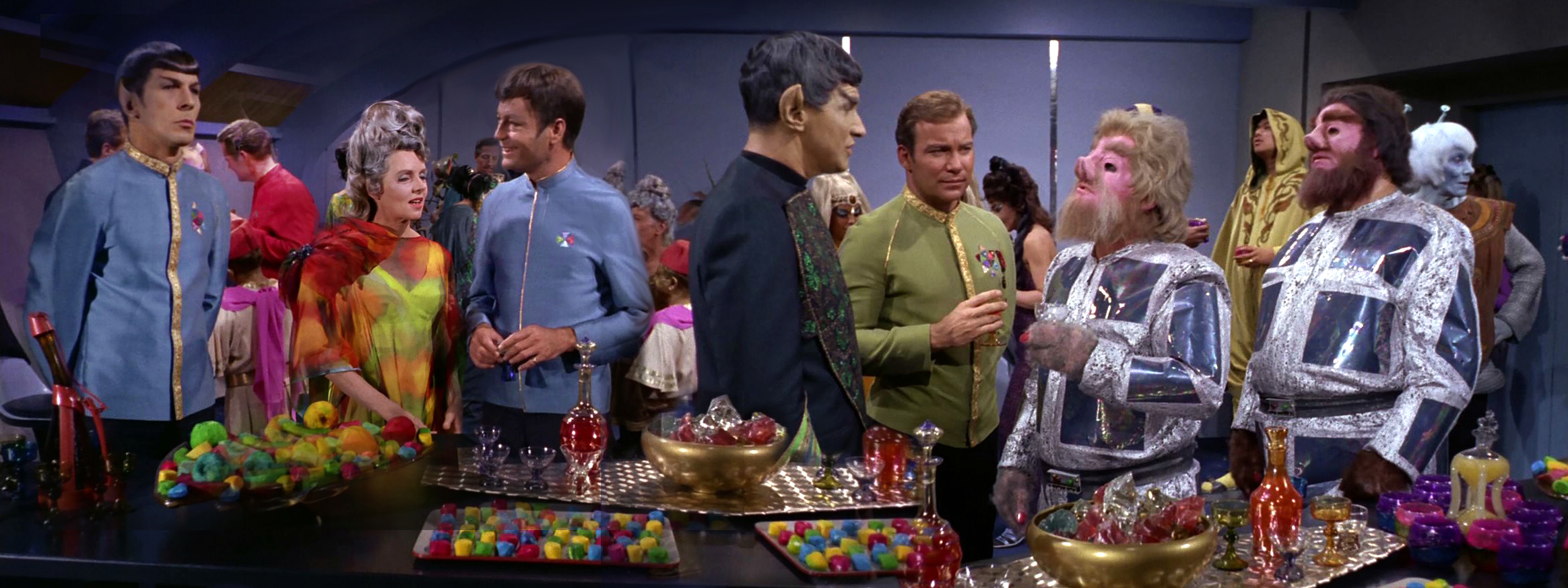
vulcan spock

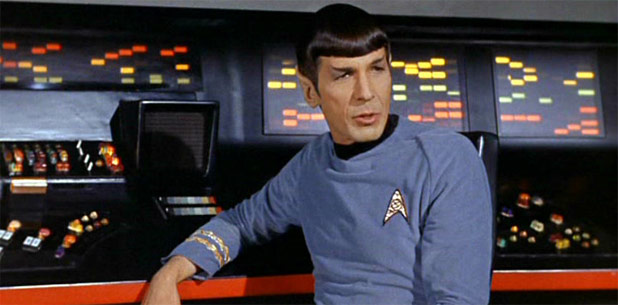
2. Vulcans: Pointy eared, cold and logical, but hiding a deep respect for other lifeforms, the Vulcans are one of the most popular aliens in Star Trek lore and part of our popular culture. Best represented by the Enterprise’s first officer, Mr. Spock (Leonard Nimoy), the Vulcans are a founding member of the Federation and one of Earth’s staunchest allies. Forever mystified by our emotionally driven society, and slightly contemptuous of us, nevertheless, Vulcans are a fascinating race even if they are a bit dry. First Appearance: “The Cage” Star Trek

klingons

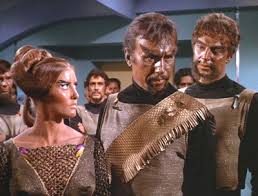
1. Klingons: Brutal, savage, war-hungry, but with a deep sense of honor, the Klingons are the best alien race showcased on Star Trek. First introduced as bitter enemies in TOS, kangthey were perfect stand-ins for our Cold War rivals. Eventually, the Klingons were given a makeup upgrade and became strong but contentious allies for the Federation as seen in TNG and other shows. The spinoffs and the later Star Trek films presented another, prideful side to the aggressive aliens with their sagittal crested foreheads. Like the Vulcans, Klingons are now part of our popular culture in so many ways. First Appearance: “Errand of Mercy” Star Trek


Lewis T. Grove


Assorted Star Trek Highlights

original enterprise

As we celebrate the 49th anniversary of Star Trek (God, that makes me feel old!), some quick thoughts came to me regarding the beloved show and the franchise it spawned. Star Trek and its many incarnations had many highs and lows, but what stuck with me throughout the decades were the highlights and some general observations about Trek.

Captain

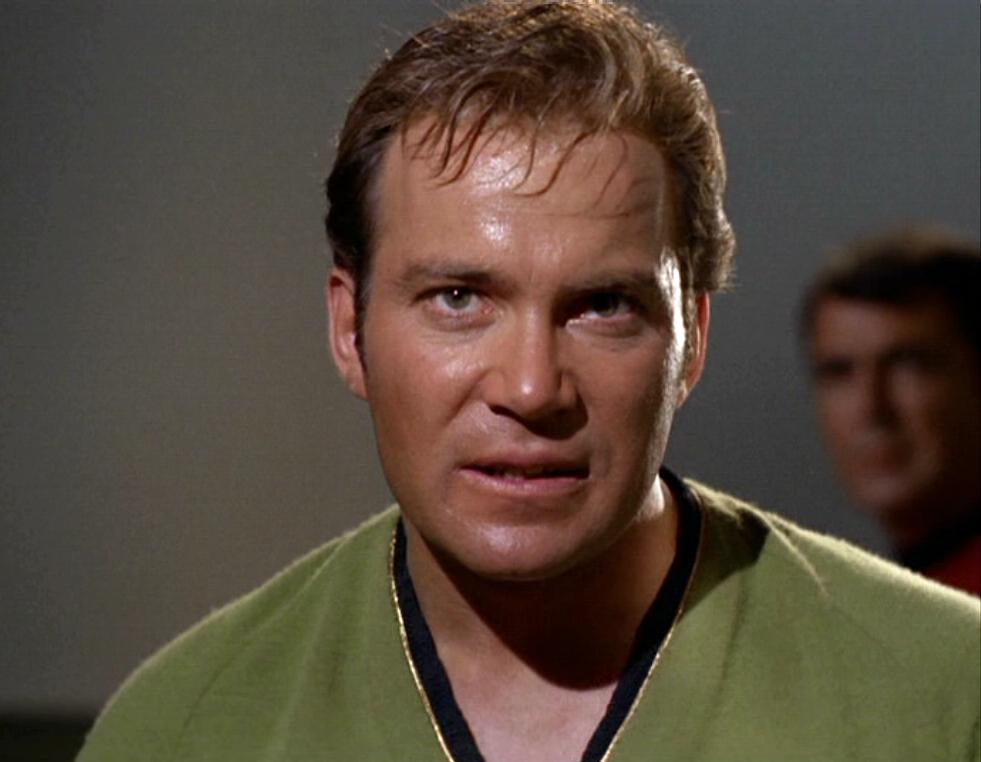
James T. Kirk, played perfectly by William Shatner, is the best Star Trek captain. Period. Nothing more to say.

classic kirk

Villains

Star Trek has many memorable villains that faced off against Kirk, Picard and others. The biggest and baddest of them all still remains as Khan, the first version played by Ricardo Montalban. While Benedict Cumberpatch did a menacing job reimaging Khan in Star Trek Into Darkness, Montalban’s Khan was just insane. The other great Trek villains are the Borg Queen (Alice Krige) from Star Trek: First Contact, General Chang from Star Trek VI: The Undiscovered Country (Christopher Plummer had great chemistry with Shatner), Shinzon from Star Trek: Nemesis, Nero from Star Trek, Kurge (Christopher Lloyd) from Star Trek III: The Search for Spock, Q (John DeLancie) from Star Trek: The Next Generation, the Romulan Tomalak (Andreas Katsulas) of Star Trek: The Next Generation, Ron Perlman’s Nosferatu-like Viceroy in Star Trek: Nemesis, Gul Madred (David Warner) in Star Trek: The Next Generation and Gul Dukat (Marc Alaimo) in Star Trek: Deep Space Nine. In general, I enjoyed the Klingons, Romulans and Borg. Finally, I have to give a shout out to the black oil spill creature that killed Tasha Yar. It proved that oil spills will be the death of us!

khan II

Ships

Star Trek is well known for its many distinctive space ship designs. Of course, one of the best has to be the original Enterprise from Star Trek. It’s simple, classic and culturally important. With that I will state that I loooooove the Enterprise from Star Trek: The Motion Picture! As for the Enterprise seen in the Star Trek reboot, I admit that I like it, but don’t love it like I did with the earlier movie versions of the Enterprise. I also thought the space station designs in the reboot didn’t work (but I loved the ones used in the early films, the same goes for the early space dock used in the first two Star Trek films).

enterprise refit

Other great ships for me were the Enterprise D from Star Trek: The Next Generation with its amazing concept of having the saucer separating from the ship. Meanwhile, I also liked the Enterprise E first seen in Star Trek: First Contact because it had this neat, sleek look.

Starfleet also had other great designed ships. Let’s start with the shuttlecraft Galileo. It was a classic, and I’ll have to say that the updated shuttle designs seen in Star Trek: The Next Generation were nice. Two other great ships were the Defiant from Star Trek: Deep Space Nine (it’s one great, tough, little ship!) and the Reliant from Star Trek II: The Wrath of Khan. It’s got the most innovative design and was actually a happy accident. Director Nicholas Meyer saw the blueprints for it upside down and approved it. This allowed for the designs of differently shaped Federation starships.

reliant

The alien ships used in Trek were also wonderful, take the Klingon Bird-of-Prey ships that were seen in most films and TV shows. It just showed what a great design it was. I also liked the Romulan warbirds from the Trek spinoffs and the Ferengi ships, too. Other ships that deserve mentioning should be the alien probes V’Ger and the whale probe. With V’Ger I didn’t know the full shape of it until I saw the director’s cut. I think it was OK, but the closeups of it are more spectacular than its outside silhouette shape. What I liked about the whale probe from Star Trek IV: The Voyage Home was that it kind of mimicked the elongated shapes of the whales.

vger

I should point out that the Borg cube first seen in Star Trek: First Contact is Trek’s answer to the spherical Death Star. Maybe the next sci-fi franchise should have the enemy ship look like a cone! Star Trek: Deep Space Nine, Star Trek: Voyager and Star Trek: Enterprise had many more ship designs, but they weren’t very memorable to me except for the Bajoran solar sail ship.

Costumes

A common thread in these musings of mine is how great the original Star Trek was and how it got so many things correct. Any so-called improvements made by the movies and spinoffs, while mostly good, just can’t compare to Classic Trek. A good example of this is the costuming of the original show. They used simple multi-colored costumes that made it easy to denote rank and division. The design and colors were so great and the 2009 movie reboot kept the same pattern, but improved on the fabrics and patterns used.

Star trek reboot

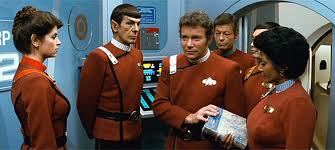
A close second would be the classic red uniforms that were used for most of the original cast movies starting with Star Trek II: The Wrath of Khan. They had a naval design that was just perfect for the movie’s tone.

khan cast

The spinoff Star Trek TV shows also had some nice costumes, especially the ones used in Star Trek: The Next Generation that followed the spirit of the original series in having different colors denoting rank and division.

As for costumes that didn’t work, that dishonor goes to the bland outfits used in Star Trek: The Motion Picture. They looked like grey pajamas! But the fancy white and grey uniform worn by Admiral Kirk and Spock’s black Vulcan tunic were great.

Music

The original theme by Alexander old trek castCourage has a resonating hailing overture that builds to a sense of adventure thanks to the use of a singer and bongo drums. I just love listening to it. Composer Michael Giaccino built on that mood with his take of the original Star Trek theme in J.J. Abrams’ reboot. His version of the original theme is magnificent.

The second best Star Trek theme for me is actually a tie between Jerry Goldsmith’s majestic score for Star Trek: The Motion Picture and James Horner’s adventurous work in Star Trek II: The Wrath of Khan. Goldsmith’s fanfare is a hail to adventure and the rest of the soundtrack made the movie better than it was. Horner’s work meanwhile had the right tone for the movie which evoked naval ships and battles.

Star Trek VI: The Undiscovered Country had a score that I liked a lot. It was dark, intriguing, yet had fanfares that were sentimental farewells for the original cast. The signature send off at the film’s end was fantastic. Other noteworthy scores are the ones for Star Trek: First Contact, Star Trek: Voyager, while the one for Star Trek: Deep Space Nine grew on me.

Background Design and Cinematography

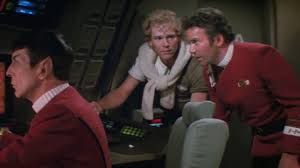
wrath of khan bridgeFor me, Star Trek II: The Wrath of Khan had the best look on the whole because of its slightly darker lighting. It’s funny to think that the sets used in that film were the same ones from Star Trek: The Motion Picture. It’s amazing what lighting can do! On that note, I’ll say that I hated the bridge lighting used in Star Trek V: The Final Frontier, but loved the improved lighting in Star Trek VI: The Undiscovered Country thanks to Hiro Narita, who also worked on The Hunt for Red October.


Star Trek: The Next Generation had the best computer interfaces, it still looks futuristic and I love the look of the graphics. Meanwhile the look of the Trek reboot sports a fresh interpretation. It’s like walking into an Apple store with mirrors that produce lens flares! I didn’t mind the look, but I know purists object to it.


Walter L. Stevenson

Falling Skies Concludes

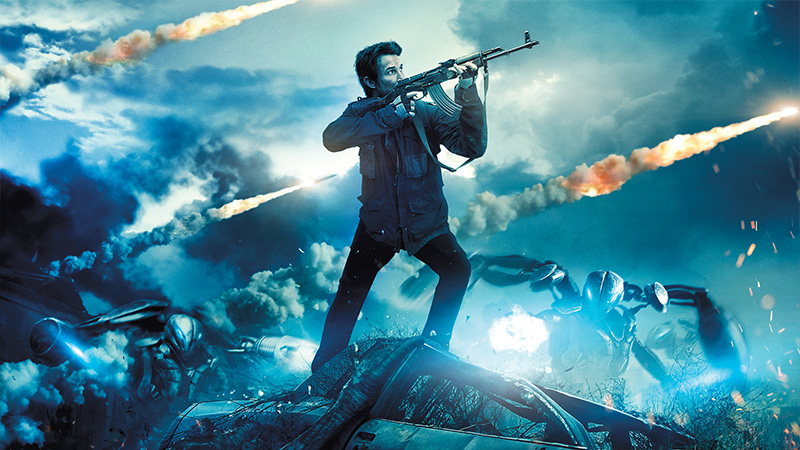
falling skies picture

After five seasons the TNT TV series Falling Skies has come to a conclusion. Executive produced by Steven Spielberg, Falling Skies told the saga of the Mason family and a ragtag group of human fighters resisting an alien occupation of Earth. It was a rocky road getting to its endgame with unexpected highs and lows.

Looking back at Falling Skies, it could be seen that it was trying to emulate the same post-apocalyptic feel of the more superior The Walking Dead, but it couldn’t achieve those lofty goals. Still, it was for the most part entertaining to watch.

The first three seasons were easily the best for Falling Skies since the show displayed a desperate, squalid atmosphere where the freedom fighters were always on the run and for the most part were just staying one step ahead of the alien Espheni and their minions. As the show progressed so too did the humans.

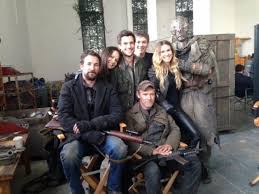
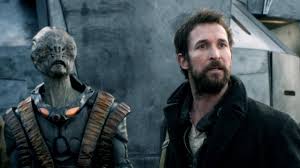
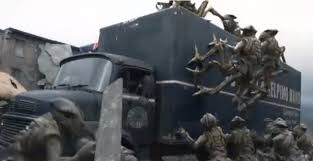
fs castLed by Tom Mason (Noah Wyle), his wife Anne (Moon Bloodgood) and Col. Dan Weaver (Will Patton), the human fighters got better at fighting the aliens and were able to set up a provincial government thanks to the help of alien allies called the Volm, represented by one of the coolest TV aliens, Cochise (Doug Jones). Despite its limited budget, Falling Skies was generally entertaining, well acted and had some impressive production values. The set design was extremely dark and disheveled, which sold the fact that the American countryside was decimated by the alien invaders. The show had its faults such as delving too much in Mason family drama that involved Hal’s three sons, and the stories and characters were uneven.

hal and cochise skitters attack truck

Regrettably, Falling Skies took a turn for the worst in its fourth season, which was just a symptom of its behind-the-scenes hurdles where the show went through many showrunners. How bad was it? Well, one of the worst sci-fi clichés was used: the alien/human hybrid who prematurely ages into a young adult and has superpowers. Then the show’s characters were split up; some were put into a ghetto where Tom Mason became a vigilante superhero (I’m not making this up), then one of his sons wound up in an alien youth camp where the children were being indoctrinated to welcome the alien conquerors. If the aliens had conquered Earth why go through all this trouble?

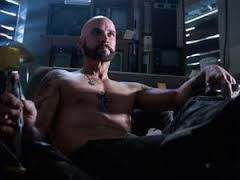
Luckily, Falling Skies improved somewhat in its final season. It became grittier and darker even though the writing and character motivations were all over the place. Take for example, breaking bad popethe character of John Pope (Colin Cunningham), who was first introduced as a villainous biker type then became an antihero. During the final season, Pope decided to go back to his murderous, evil ways and was after Tom Mason. At that point, Pope became like Jason Voorhees and was impossible to kill. He would show up in the last few shows in an extended cameo and be unceremoniously dispatched only to turn up alive in the next episode. This went all the way into the final episode, but at least his final scenes were actually effective thanks to Cunningham’s acting ability.

It was easy to tell that the showrunners wanted to wrap up the show in the last episodes, which is why things felt so rushed. But what was maddening, was the insistence of introducing and then ignoring new characters. Some were interesting, others were forgettable. Like with Pope, this trait went on into the final episode “Reborn” where a new biker type entered the picture (Jeff Fahey), who basically provided off-screen cannon fodder.

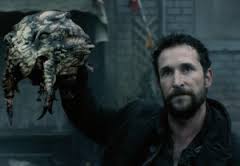
find your warriorThe final battle between the humans and the aliens showed its budgeted limitations with much of the action happening off-screen and with sound effects. But at least “Reborn” ended on a satisfactory note, even if it won’t go down as a great finale. Looking at its pluses and minuses, the final episode represented the entirety of Falling Skies. Some good ideas with uneven execution, but on the whole, the show was a decent diversion on TV for the summer.

Lewis T. Grove