Top Ten Modern Doctor Who Episodes

For us Yanks across the pond the season finale of Doctor Who will air this weekend with “The Wedding of River Song.” That said, let’s look at the ten best episodes from the modern era which started with Christopher Eccleston in 2005 and is running currently with Matt Smith. This list will only include regular episodes, not the Christmas specials and other shows that have popped up over the years.

10. “The Girl in the Fireplace” The Doctor has a brush with romance (aside from the tension between him and Companion Rose Tyler) when he meets Madame de Pompadour via time portals on a derelict spaceship.

9. “The Eleventh Hour” Our first introduction to Matt Smith as the Eleventh Doctor and Karen Gillan as Amelia “Amy” Pond showed the kismet the two had as partners across time and space.

8. “School Reunion” Old-time companion Sarah Jane Smith (the late Elizabeth Sladen) returns to the Who-verse and it’s a joy to see her holding up quite well; the scenes where she and Rose (Billie Piper) exchange Companion stories were great.

7. “Bad Wolf/The Parting of The Ways” The Ninth Doctor’s swan song is epic without being too overblown and bittersweet while giving us one of the best modern Dalek storylines and radically changes the dynamic of the show.

6. “The Girl Who Waited” This one illustrates the danger of time traveling with the Doctor when Amy enters the wrong door in a planet and winds up trapped for over thirty years waiting for rescue while time passes by normally for her husband Rory (Arthur Darvill) and the Doctor.

5. “Human Nature/The Family of Blood” An amnesiac Doctor hides from predatory aliens out to feed on him by transforming into a human that falls in love; then we are given a glimpse as to how coldly vengeful the Doctor can be when he regains his memories and dispatches them.

4. “The Empty Child/The Doctor Dances” When the Ninth Doctor first appeared he was an angry, morose person but here he starts to lighten up in the second part of this creepy World-War-II era episode, which features great visual sights, frights and introduces Captain Jack Harkness (John Barrowman).

3. “The Doctor’s Wife” This Neil Gaiman-written episode has the TARDIS’ core matrix is transferred by an evil sentient asteroid into Idris (Suranne Jones) an enchanting, attractive woman who is dying. The asteroid transfers its mind into the TARDIS and tortures Amy and Rory as the Doctor and Idris (showing us a rare examination of their relationship) try to recapture the Time Lord’s ship.
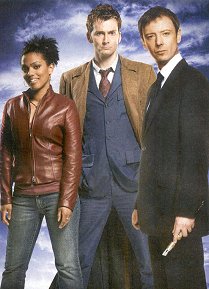
2. “Utopia/The Sound of Drums/Last of the Time Lords” A three-part epic that brings back Jack Harkness from Torchwood and re-introduces the classic Who villain The Master (played first by Derek Jacobi and then with devilish glee by John Simm) who is found literally at the end of time by the Doctor and Martha Jones (Freema Agyeman). Then he is reincarnated into a Tony Blair type of politician who infiltrates modern-day British politics and becomes Prime Minister, instituting a reign of terror.
1. “Blink” Any fan can see that guest star Carey Mulligan’s Sally Sparrow  is a prototype for Amy Pond. She’s pretty, smart, young and quite resourceful when dealing with the best of the new Who villains, the Weeping Angels. They appeared as angelic statues that steal a person’s temporal energy by sending them back in time, which they did to the Doctor and Martha. Trapped in the 1960s, the Doctor communicates to Sally via DVD Easter eggs, and the entire episode is a brilliant use of time travel and genuinely frightening villains. The last few seconds with the Doctor warning viewers not to blink are unforgettable.

José Soto

Star Trek At 45

Star Trek, the original show, turned 45 years old this September. Meanwhile the tenth anniversary of the last Trek show Enterprise is also in September. The point is these milestones came and went largely unnoticed or celebrated. So we all wonder why the lack of enthusiasm?

Really, everyone lately is yakking about the Star Wars blu-rays, Back to the Future shoes, new super hero movies, Harry Potter and even a new Avatar attraction for Disney’s Animal Kingdom, but barely a peep out of the world of Trek. I clicked over to the Star Trek website and it seems like a slow week in January. An article reminiscing about Enterprise, IDW comics, Star Trek: The Exhibition coming to St. Louis and upcoming conventions.

You’d think that with all the hoopla over the last Star Trek movie and how it re-energized the franchise and started things fresh that Trek would remain in the public eye. Guess again. Maybe it didn’t help that J.J. Abrams and his crew are taking forever to get a new film going. Then more and more fans are complaining about Abrams’ take on Trek and how it ruined the franchise, nullifying over forty years of Trek lore and made the film seem like a Star Wars wannabe flick.

Another thing that isn’t helping is CBS Studios not wanting to make another Star Trek show while greenlighting junk like Person of Interest and other cop procedurals. For the average Trek fan (I refuse to call myself and fellow fans as trekkies, that’s too demeaning) this is a cause for alarm. In this crowded medium, Trek has to struggle to stay in the public eye. It can’t just rest on its laurels. That attitude of taking fandom and demand for granted is why the later shows declined in quality and ratings putting us in this situation.

No Trek isn’t going away, who knows maybe the new film, whenever they decide to make it, will stir things up. Maybe it will take the fiftieth anniversary when we’ll get the articles and such about how Trek gave us cell phones and tablets (but no holodecks but we’re getting there with the 3D TVs). But Trek is best known for being a TV show, that is its home medium, so a new show has to come out to keep up with the other franchises. Just do a cartoon for now until the right people are found who can put out a quality show. That way Trek stays in the public’s mind. It worked for Star Wars with The Clone Wars cartoon. Here’s an idea do a cartoon about Starfleet Academy. It won’t be that offensive to anyone who hates the thought of Star Trek 90210 since it will more geared toward younger viewers, who in turn may become tomorrow’s fans that keep the dream alive. Just do something already.

Waldermann Rivera

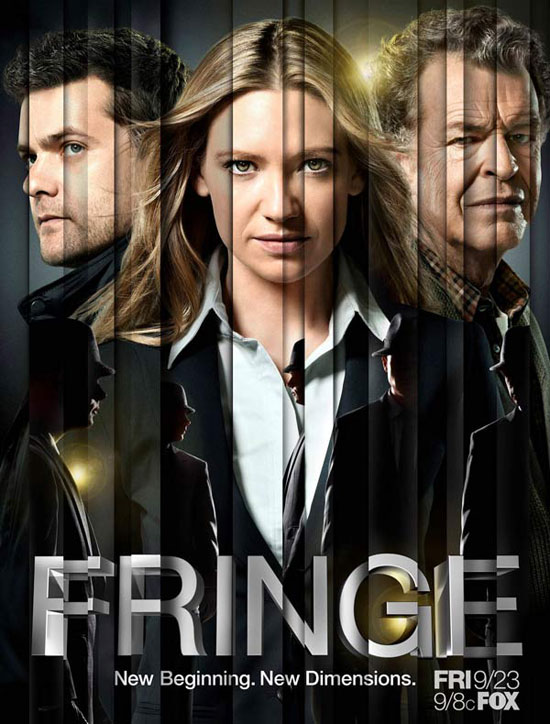
Fringe Begins Its Fourth Season

One of the few returning network TV shows that’s worth watching live premiered its fourth-season opener and Fringe didn’t disappoint devoted fans.

Despite its rich history, this episode “Neither Here Or There” is a bold jumping on point for new viewers. The reason for that is because of FBI Agent Lincoln Lee’s (Seth Gabel) re-introduction to the Fringe Division, which serves to explain what the show is about for anyone who doesn’t know anything about shape shifters, Observers, or amber.

Last season, Peter Bishop (Joshua Jackson),  in trying to prevent the destruction of two universes, was erased from existence which resulted in a new timeline. In this one, Agent Lee’s partner (played by Stargate: Atlantis’ Joe Flannigan) is killed by a strangely translucent man-a really disgusting effect. This leads him to meeting Olivia Dunham (Anna Torv), Walter Bishop (John Noble) and the rest of Fringe Division who investigate bizarre occurrences.

While the episode is set up to introduce new viewers to the Fringe universe, it’s also an intriguing yet subtle re-acquaintance for fans. Yes it’s a new timeline but things aren’t that different. The changes will only be caught by fans like Walter appearing a bit more unhinged than usual. Knowing the show, more clues will be peppered among upcoming episodes. But fans will note that Peter’s existence is critical and his absence should’ve made the timeline more radically different especially when it comes to the simmering cold war between our universe and the “Over There” universe that still exists.

What worked best for the episode were all the clues that weird stuff is going on, best shown with Peter’s ghostly image that literally appears in blinks and the enigmatic Observers who want to preserve the new timeline. It’s all intriguing and makes one want to learn more about what is going on and where it will all lead. Given the show’s history, it’s unlikely that it will disappoint fans. Despite its superficial similarity to The X-Files to casual viewers this program is a lot more than monsters of the week and convoluted conspiracies.

That’s why Fringe is the best sci-fi show on the air right now.

José Soto

Overcast For Falling Skies

TNT’s sci-fi series Falling Skies concludes its freshman season this weekend and like any good show near its final season episodes its building up to a good crescendo.

Here’s a very quick summation of the show. Earth has been invaded and conquered off-screen by aliens who are comprised of two types: the multi-legged skitters and robotic, armed-to-the-teeth bipeds called mechs. They’ve wiped out most of human civilization and have also kidnapped children and turned them into a zombified slave force via mechanical harnesses that are dug into their spines. The show follows the plight of a Boston-based militia group called the 2nd Massachusetts led by Capt. Weaver (Will Patton) and the program’s main character Tom Mason (Noah Wyle) who are trying to find a means to defeat the alien invaders.

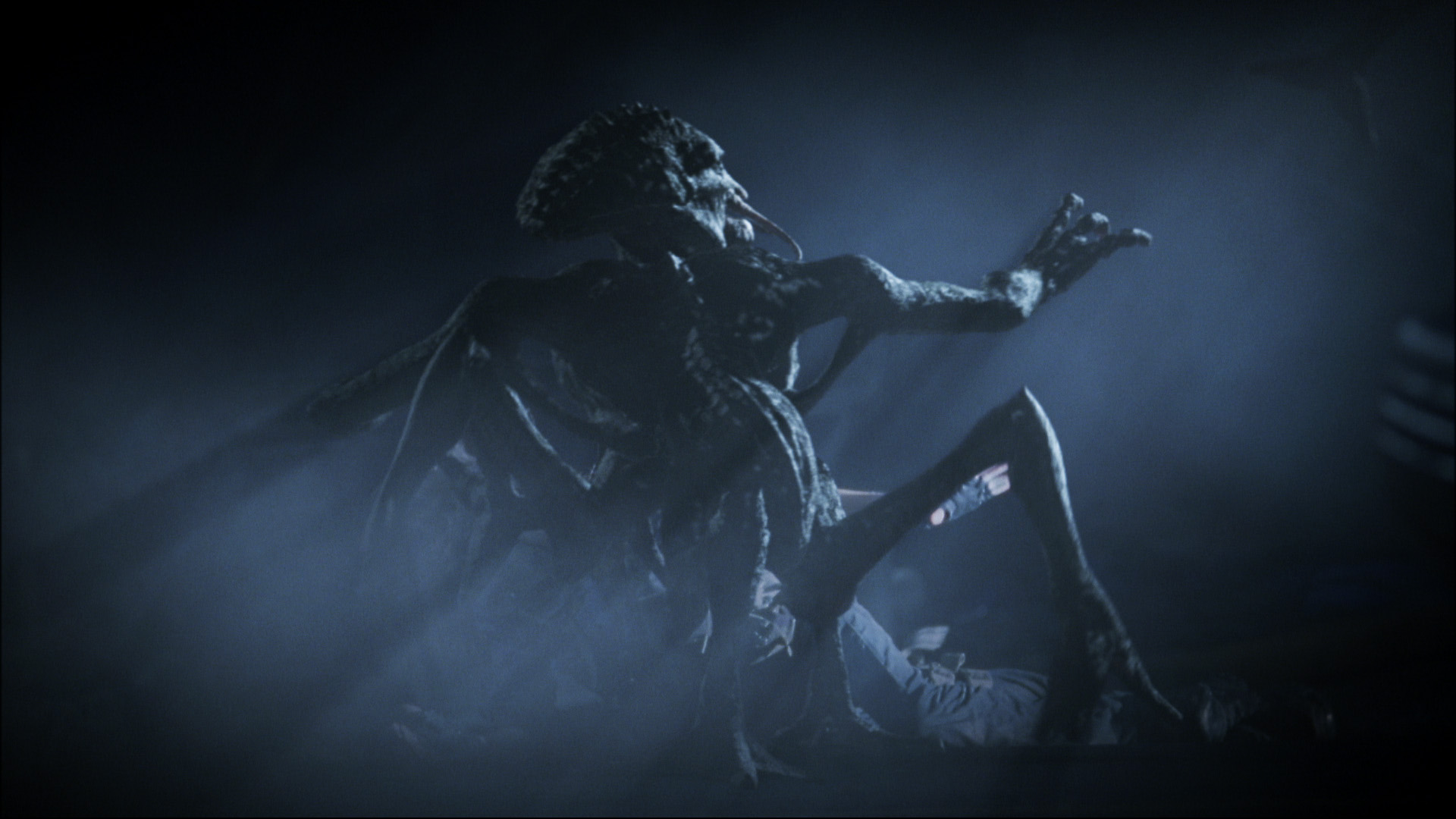
The aliens have been scavenging the countryside for parts throughout the series and are building these huge towering structures in major cities. The purpose of the structures is unknown but guessed to be landing platforms. In the most recent episode “What Hides Beneath” the militia group is given orders to join an all-out attack on the structures. During a recon of the structure and the alien’s stronghold in Boston some revelations come up. First, the humans are able to develop bullets that can penetrate the mechs’ armor giving our heroes a glimmer of hope. Second a third alien species is discovered, and apparently it looks like they are in command of the skitters. Seeing these tall, elongated humanoids with their thin limbs was a surprise and unnerving. By the way the final look in the broadcast version differs from the clip shown on the show’s official website. But what was more disturbing was the revelation that during an autopsy of a dead skitter the humans find out that the skitters have their own slave-making harnesses attached to themselves too. What’s even worse is the implication that children who are attached to the harness for a long period of time are being mutated into a different type of life form. Already one of the rescued teenagers is showing an allegiance to the aliens and Mason’s recently liberated son has signs that he is mutating physically.

Falling Skies has been successful in answering some questions about the story and characters while bringing up new ones. What are the skitters exactly? Who are the new alien leaders and what is their agenda with our planet (please, please, please don’t let it be they’re after our water or gold–looking at you Cowboys and Aliens!)? Plus the show is giving out nuggets of information about the characters and developing them as well. For instance, in the “What Hides Beneath” episode viewers find out about Weaver’s family and their fate. There has been a hardening of sorts from Moon Bloodgood’s character of Dr. Anne Glass. Yet she is still the caring doctor we all hope for. Another good development which opened up a whole new can of worms was the rescue of Mason’s son Ben. When the show premiered the son was a captive of the aliens and the early episodes chronicled Mason’s quest to find his son and how he was held up. In other shows, this would’ve been the status quo and frustrating for viewers.  Here though, the son was freed and now the repercussions are becoming clear and it’s subtle, doesn’t hit you over the head.

Overall, the developments are coming at a perfect pace, not to slow, not too fast. It’s not a classic show but that’s fine because sometimes those kinds of shows get full of themselves. While there’s room for improvement at least they’re on the right path. If only the V revival was this good, maybe that show would still be around and remembered. Thankfully Falling Skies has been renewed for a second season and next summer can’t come soon enough. Anyone who hasn’t seen the show or missed episodes can catch a marathon on Sunday that precedes the season finale or watch them online.

José Soto

Images Courtesy of TNT

A Brief Look Back At Star Trek: The Experience

From January 3,1998 to September 1, 2008 Star Trek fans had a haven to call their own when the Las Vegas Hilton ran the attraction Star Trek: The Experience. Part indoor theme park, part museum; the $70-million-dollar attraction had components that all faithfully recreated the science fiction world of Captains Kirk, Picard and the shows’ other heroes and villains.

Visitors were greeted at the entranceway by an enormous hanging model of Kirk’s Enterprise from the movies. Inside the attraction’s main circular layout, which recreated the Deep Space Nine (DS9) Promenade from Star Trek: Deep Space Nine, (the Experience’s fact sheet claimed that the entire area was 65,000 square feet), other overhead models of ships from Star Trek’s many incarnations were a sight to behold. For the record, also greeting visitors were the Enterprise D from Star Trek: The Next Generation, the Voyager from Star Trek: Voyager and a Klingon Bird-of-Prey ship seen from the movies. Guests could just dine in the attraction’s center, or do some shopping off to the left and take in the sights. As they gawked at the intricate detailing of the place, actors dressed and made up as aliens from the shows such as Klingons and Ferengi interacted with visitors and stayed in character.

But most came for the main attractions. Originally, that was just the Klingon Encounter and History of the Future Museum, but BORG Invasion 4D was added in 2004 (at one point in 2005 there were plans to add another area devoted to the original 1960s series that featured Kirk and Spock but alas that never came to fruition.). Fans paid admission for both shows and experienced them as many times as they wanted. After paying, they turned a sharp right from the cashier off to the entrance’s right and walked up a long, twisting walkway that took them through the museum.

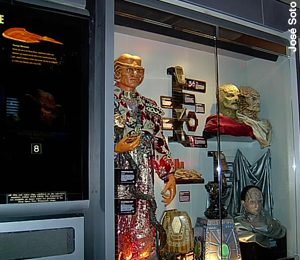
It featured an exhaustive timeline of our history and that of the shows and movies. But what was most interesting were the huge collection of genuine Star Trek props going back forty years. In fact, the people behind the attraction claimed the museum had the largest, permanent collection of props. After browsing through the winding museum, visitors stood in line and chose whichever attraction they wanted to try first.

In the Klingon Encounter, guests were somehow transported (through backstage effects) on board a flawless recreation of the Enterprise D’s interior complete with actors playing futuristic spacemen. What happened was that a visitor would line up to board a simulator ride then suddenly the lights would go out. There was a blast of air and quick strobe lights in the pitch darkness. Then the lights would go on and voila the visitor was standing on the transporter pads of the ship’s transporter room. Guests were then given a quick tour of the Enterprise’s corridors and bridge before being whisked away into a shuttle that confronted the Klingons. Of course, the shuttle was really a simulator ride that concluded the show. Basically the  storyline was that the Klingons traveled back in time to modern-day Earth and tried to abduct the visitors but the Enterprise intervened and transported the people on board. The twist was that someone in the group turned out to be the ancestor of Captain Picard. Both Jonathan Frakes and Levar Burton reprised on viewscreens their roles as Riker and LaForge.

The future was also visited in BORG Invasion 4D as fans entered a futuristic space station that came under attack by the villainous cyber beings, the Borg. As in the first show, actors stayed in character and the sets were flawless recreations of Federation architecture. Like in Klingon Encounter, guests were evacuated to a shuttle but contrary to the first attraction, this one concluded with the visitors sitting in a theater and being part of a 4D interactive film. It was similar to what you would find in the Disney or Universal parks with tactile experiences enhancing the show. In this film, the Borg were trying to assimilate the audience before being stopped by the starship Voyager. Robert Picardo, Kate Mulgrew and Alice Krige reprised on viewscreens their roles as the ship’s Emergency Medical Hologram, Admiral Janeway and the Borg Queen. Continue reading →