After We Say Goodbye To The Guardians Of The Galaxy

Guardians of the Galaxy, Volume 3 has proven to be a fitting and emotionally satisfying conclusion to one of the best trilogies in the Marvel Cinematic Universe (MCU). Still, while the film does conclude many character arcs it surprisingly presented us with new directions for these characters and the larger MCU that are worth speculating about. WARNING: Spoilers will follow about the film.

The Legendary Star-Lord

One of the biggest surprises from Guardians of the Galaxy, Volume 3 was the final post-credits scene. After a rather mundane scene with Peter Quill aka Star-Lord settling down to life on Earth with his grandfather, a title card pops up announcing that “The Legendary Star-Lord will return”. This was rather stunning. Throughout the film, there was a sense that Quill was approaching an emotional end to his time as the space-faring Star-Lord. He was first seen moping and drinking over the loss of his lover, Gamora (who was killed during Avengers: Infinity War), and his fellow Guardians pointed out that he still had family on Earth. During the film, he tries to rekindle his romance with an alternate version of Gamora (displaced from another timeline into the “regular” timeline), but she did not reciprocate the love because in her timeline she never knew him.

Throughout the film, Peter had to come to terms that his Gamora was gone and that it was pointless to continue his wooing her doppelganger. Frankly, it was refreshing that writer and director James Gunn did not try to put them back together since that development would have felt empty. Doing so also would have robbed the emotional impact of the original Gamora’s death. Peter’s acceptance that the current Gamora was not his lover reborn showed a level of growth and maturity for him. This was welcomed by fans because there have been complaints that while he is a goofy and endearing superhero, he came off as immature in some of his appearances. In reality, in this film he demonstrated that he was very crafty and mature during unexpected moments, such as when he and the team infiltrated that weird organic medical facility in space.

After nearly dying during the film’s final act, Peter decides to essentially retire as Star-Lord. He appoints Rocket Raccoon as leader of the Guardians of the Galaxy, and returns to Earth. But the implication that Star-Lord will return opens up lots of speculation about how this will come about. Chris Pratt, who plays Peter Quill, has stated he is willing to reprise the role at some point in the future. Most likely he will turn up in the upcoming Avengers films or he could wind up starring in a TV show or special that would be about his adventures on Earth. After all, the legendary Star-Lord cannot just spend the rest of his life eating cereal with his grandfather in Missouri. Maybe he will find a new love. Perhaps this person could be Kitty Pride, who was involved with him in the comic books—this could also be a way to bring in more mutants into the MCU. Or he could wind up being some kind of advisor or mercenary for the Earth-based forces that protect Earth from aliens. Or he could finally find a way to reunite with his Gamora in Soulworld, a realm where her spirit exists in, which was seen in Avengers: Infinity War. This would echo a development in the Marvel comics where at one point a deceased Gamora resided in this realm.

Continue reading

Guardians Of The Galaxy, Vol. 3 Perfectly Concludes A Classic Trilogy

Filmmaker James Gunn finishes his tenure at Marvel Studios and the Marvel Cinematic Universe (MCU) with Guardians of the Galaxy, Vol. 3, the finale of his classic trilogy about misfit cosmic heroes.

Gunn has been able to maintain the same level of heart, humor and action throughout all three Guardians of the Galaxy film with the third film, and in some ways he elevated it with his MCU swan song.

Taking place years after the first two films and the events of the last Avengers films, Guardians of the Galaxy, Vol. 3 brings back all the loony and loveable heroes. Now the owners of Knowhere, a cosmic mining station made up of a dead Celestial’s skull, the Guardians are more administrators than intergalactic heroes. The film begins with a flashback origin of Rocket (voiced by Bradley Cooper), a cybernetically and genetically enhanced raccoon with genius-level intellect. This tragic origin story peppers the film throughout and underscores the emotional and physical pain that Rocket endures in his life. The origin features some of the most gut-wrenching moments in the film and elevates Rocket into a true hero.

After the flashback we are taken to Knowhere where we meet again the other Guardians. Their leader Peter Quill (Chris Pratt) has become a drunk because he is unable to get over the loss of his girlfriend Gamora (Zoë Saldaña), who was killed during Avengers: Infinity War. Adding to his misery is that another version of Gamora from an alternate timeline exists, but she does not have any feelings for him. As his fellow Guardians try to console him, they are attacked by Adam Warlock (Will Poulter), a golden, artificially created super-powered person. Though he is defeated by the Guardians, he gravely injures Rocket before he leaves them. The rest of the film focuses on the efforts of Quill and the other Guardians to find a way to save their friend. The other Guardians include the powerful but dim-witted Drax (Dave Bautista), Rocket’s BFF, the tree-like Groot (voiced by Vin Diesel), the empath Mantis (Pom Klementieff), and the cyborg Nebula (Karen Gillan). During their intergalactic journey, they soon cross paths with the insane geneticist and Rocket’s creator, the High Evolutionary (Chukwudi Iwuji), who has been hunting Rocket for his own diabolical purposes.

While the film continues the same irreverent tone as the previous entries in the trilogy, it does stand on its own due to its more mature atmosphere. The characters have grown since we first saw them in 2014 and are looking for something more with their lives. This was a rather unexpected and logical thing to do with the characters, because while they have become a family unit, they have to evolve and continue in their own journeys. The core characters, especially Rocket and Peter Quill, each have their own unique arcs and level of development, whether they have to deal with their painful pasts or prove they are much more than what others think of them. Rocket and Quill’s arcs have powerful and engaging arcs that form the heart and soul of the film and elevate it above standard superhero films. These character moments were richly satisfying and came to appropriate conclusions.

Unlike the other films, there is an intense feeling of dread and melancholy that pervades the film as the Guardians face their potential doom at every corner. Without giving anything away, there were many moments where I thought that was it for certain characters. This shows how intensely we’ve become attached to these plucky and quirky heroes. James Gunn skillfully exploits our feelings with each peril he throws at them.  What helps underscore this mood is that Guardians of the Galaxy, Vol. 3 is not as goofy as the other films, although it has its fair share of laugh-out scenes. That is alright. This film avoided the missteps of Thor: Love and Thunder where that film got lost in its over-indulgence of silly humor to the detriment of some of its subject matter. Guardians of the Galaxy, Vol. 3 succeeded where the last Thor film did not in that it treated much of its subject matter seriously and avoided inappropriate silliness.

While the High Evolutionary is the best villain the Guardians have faced in their films, he could have used more nuance, although Iwuji does a fantastic job in his performance as a callous and dismissive scientist with a twisted heart. His cruel actions towards his test subjects, including Rocket during the flashbacks, are a vivid and emotional presentation of one of the film’s themes about animal cruelty and the morality of using animals for scientific research. What the High Evolutionary does to Rocket and others makes us openly hate him. To be honest some of the scenes featuring the High Evolutionary’s test subjects may be too intense for some viewers. So be warned.

The other actors in Guardians of the Galaxy, Vol. 3 put in some of their best performances. You could tell they are very invested in their characters and knowing this film will be their final time playing the characters, they elevate their craft beautifully. What helps, of course, is that unlike many sequels, the characters are allowed to grow and evolve. Thanks to their performances and how the characters were written, by the time the film comes to its end many viewers will be openly crying, while the rest will pretend they have something in their eyes.

There are a few minor nitpicks with the film that are not really worth mentioning. Maybe Adam Warlock could have used more screentime, but so could have other characters like Kraglin (Sean Gunn), but they do get their moments to contribute and shine, and even give a hint of what is to come.

How does Guardians of the Galaxy, Vol. 3 compare to the others in the trilogy? Well, it is much better than the second film and is about on level with the first one, though they are both distinctly different from one another. Given its level of greatness, it is easily one of the finest MCU films, and the best one in recent years, aside from Spider-Man: No Way Home and Avengers: Endgame.  Given the recent missteps in the MCU, it is a joyful relief that the cinematic universe can still deliver a film that emotionally involves us.  

José Soto

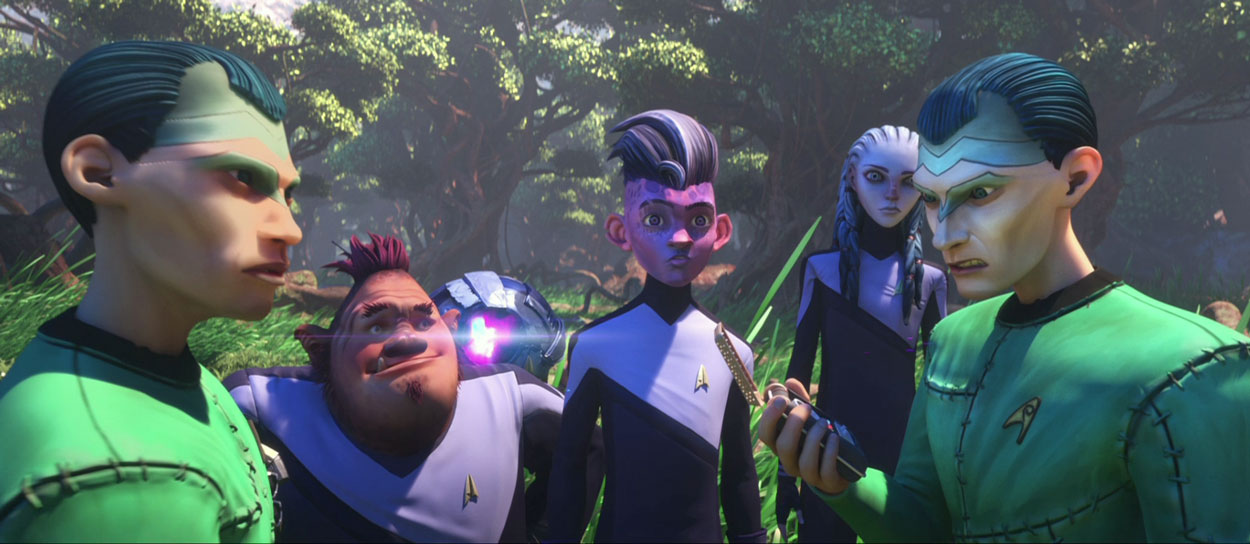
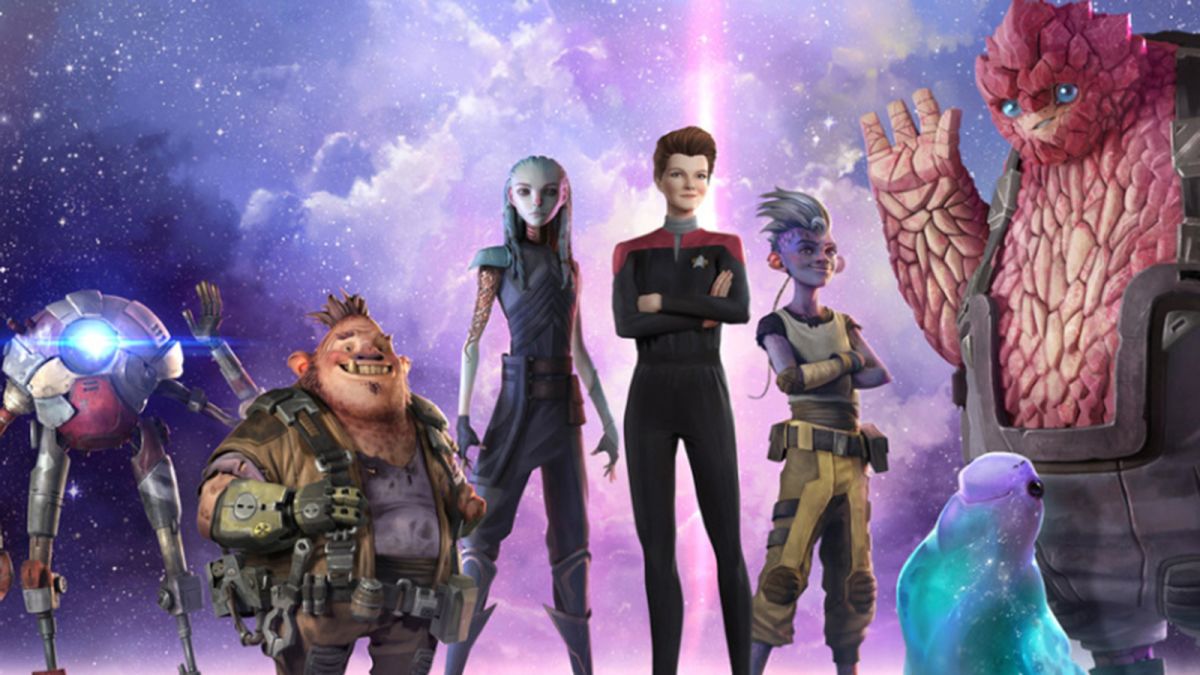
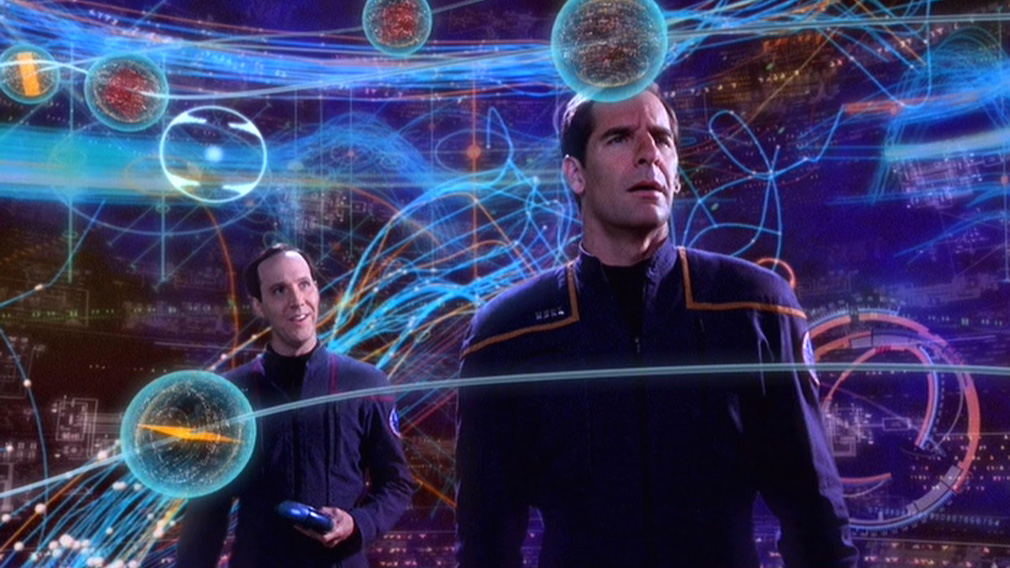
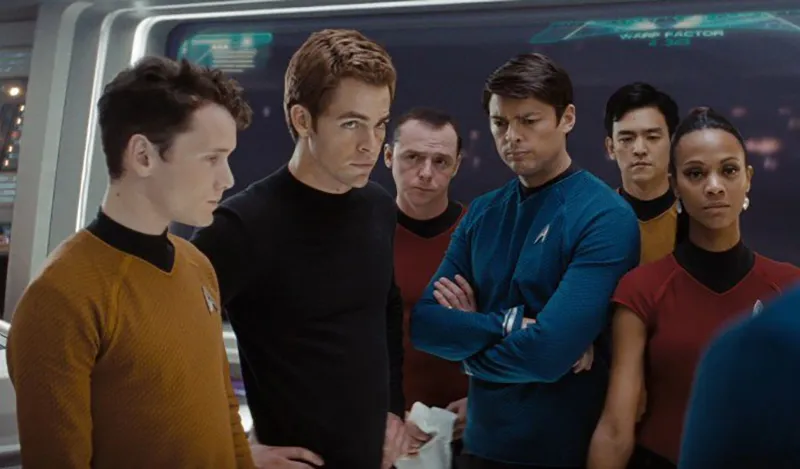
The Potential Of Star Trek: Legacy

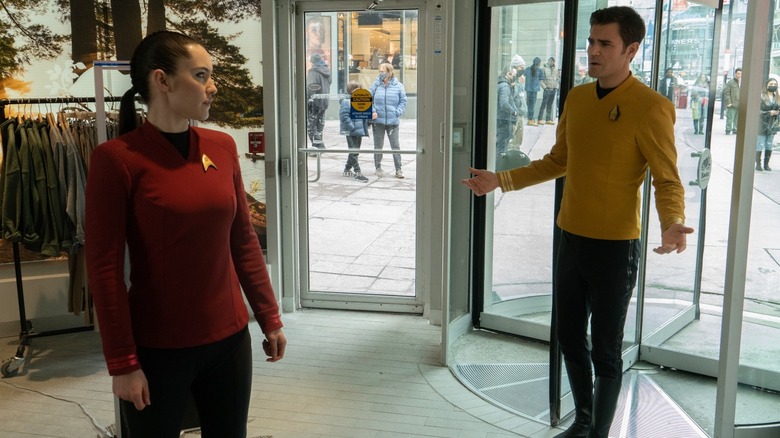
Fans are still swooning over season three of Star Trek: Picard and for good reason. Not only did it feature the long-awaited reunion of the cast of Star Trek: The Next Generation (TNG), but it was bursting at the screen’s seams with Easter eggs and references to most of the previous incarnations of Star Trek TV shows and films. More importantly, instead of wallowing in Member Berries, the third season actually set up a potential spinoff—Star Trek: Legacy. *Warning for those who have not seen season three of Star Trek: Picard, there will be spoilers from here on out.

During the third season of Star Trek: Picard, we were introduced to Jack Crusher, who turned out to be the son of Jean-Luc Picard. In many ways he was a lot like his father but with a rakish bent as he seemed more comfortable acting independently and living a pirate-like lifestyle. Perhaps this is how Picard was like in his younger days. In some ways, Jack had more of the swashbuckling demeanor of James T. Kirk (more on him soon). Yet he had an intellectual and empathic side that echoed his father. In a sense he came off as an authentic child, who has elements of both his parents with unique personality traits gained from experiences the parents never had. Jack quickly became a fan favorite and has enough personality and development to return in future Star Trek spinoffs. This was very clear at the end of the final episode of Star Trek: Picard when he joined Starfleet and was posted on the Enterprise-G as special counselor to the captain.

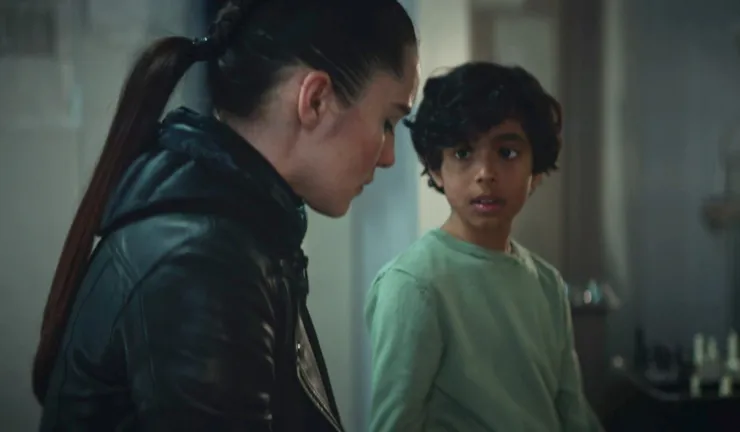
The third season also introduced several other characters, some of which were bridge officers of the Titan-A (later rechristened the Enterprise-G). The one standout was Sidney La Forge, the Titan-A’s helm officer and daughter of Geordi La Forge. She soon formed a friendship with Jack with hints of something more to develop. It was fun seeing the two scions interacting with each other, which foretold great adventures to come if the powers that be at Paramount Pictures greenlight a Star Trek: Legacy. Obviously the two characters would be some of the central characters of this show.

Two other characters that could headline the show would be Captain Seven of Nine a.ka. Annika Hansen, and her first officer Rafaella “Raffi” Musiker.  Most fans know that Seven debuted on Star Trek: Voyager before becoming a regular on Star Trek: Picard. Raffi is the only remaining original character from Star Trek: Picard to remain a part of the show after the other original characters were written out after the second season of the show. Even though they are not the children of past Star Trek characters they in a sense would carry on the legacy of Star Trek: Picard. Perhaps other past Star Trek: Picard characters like Sohji Asha (Data’s daughter) could return and continue the theme of legacy.


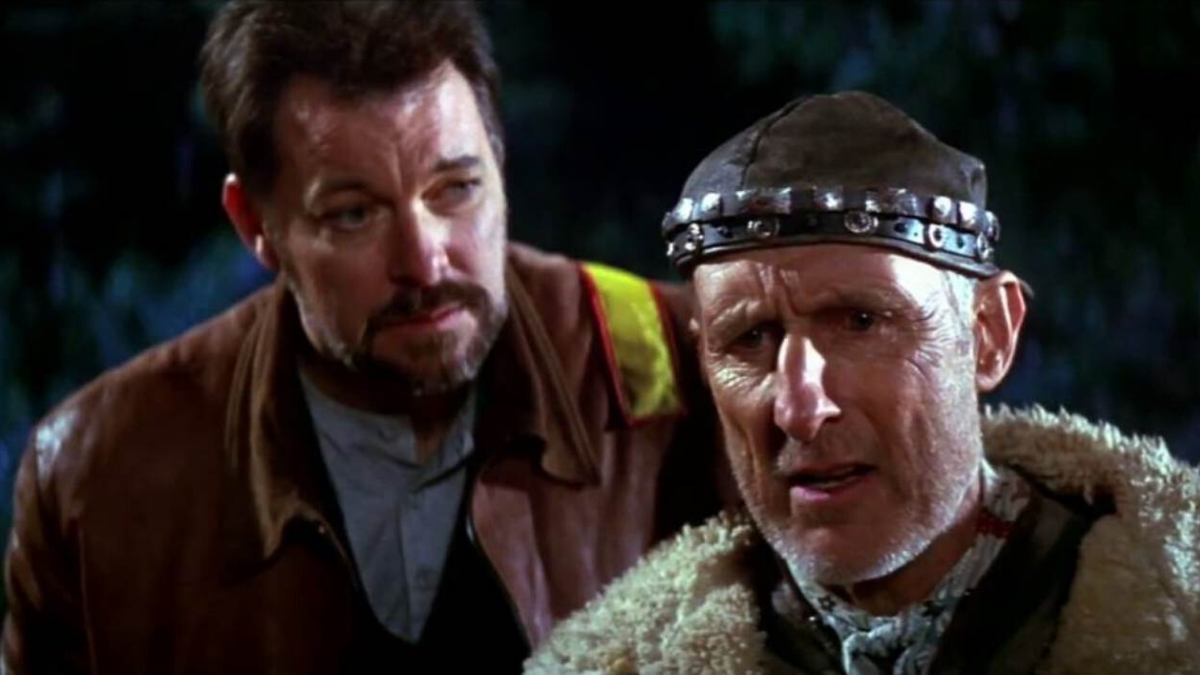
Another character that could return is Captain Liam Shaw. Yes, he was killed off in the penultimate Star Trek: Picard episode “Vox”, but he quickly became a fan favorite. While he was very surly and dismissive towards our favorite TNG characters especially Picard and Will Riker, he was actually the voice of reason. He was more cautious when it came to his ship, the Titan-A, and the safety of his crew, which conflicted with the daring decisions made by Picard and Riker that threatened the Titan-A and crew. More often than not he was willing to call out Picard on his decisions and his arguments usually had merit. What made him more dimensional was the revelation that he was a survivor of the Battle of Wolf 359. He clearly was still suffering from that incident where the cybernetic race called the Borg decimated a Starfleet armada. This also explained his animosity towards Picard since Picard was assimilated by the Borg and helped them defeat Starfleet. In as sense this also explains his antagonistic relationship with Seven since she is a former Borg. Shaw was a great character and it was too bad he was killed off. However, Terry Matalas, the showrunner of the third season, has hinted that there is a way for Shaw to return in the Star Trek: Legacy show. Being that this is Star Trek, there are dozens of ways to do this: clones, time travel, cold storage, Seven’s Borg nanoprobes, even Q could easily bring Shaw back.

Continue reading

Star Trek: Picard Concludes With A Bold New Legacy

The third and final season of Star Trek: Picard just streamed its last episode, titled appropriately enough “The Last Generation”, and it was a brilliant finale to an exceptional season for the TV show.  *Warning: Spoilers will follow.

Star Trek: Picard as a series has been a mixed bag of a Star Trek show. While it was great to see Patrick Stewart reprise his role as retired Admiral Jean-Luc Picard, some of the episodes in the first season were not as well executed as they should have been. Meanwhile, the second season started strong but soon fell apart and became a big disappointment. So, in the final season of Star Trek: Picard, the showrunners, led by Terry Matalas, pulled out all stops to make this a worthy swan song to the legacy of Star Trek: The Next Generation (TNG). This included reuniting the core cast of that beloved TV show and numerous Member Berries recalling not just Star Trek: The Next Generation, but the original Star Trek, Star Trek: Deep Space Nine, Star Trek: Voyager and even other media like Star Trek Online. And you know what? It worked!

The third season of Star Trek: Picard quickly engaged viewers with reunions and beguiling mysteries that threatened the United Federation of Planets and Starfleet. Picard received a plea for help from Dr. Beverly Crusher (Gates McFadden), who he has not spoken to in decades. She and her young adult companion Jack (Ed Speleers) operate independent of the Federation and deliver medical aid to those that need it. They are also pursued by mercenaries led by the mysterious Vadic (Amanda Plummer). The problem is that Crusher is located just outside Federation space and Picard needs to find a way to get to her.

Picard enlists the help of his best friend and former first officer of the Enterprise-D, Will Riker (Jonathan Frakes), along with Seven of Nine (Jeri Ryan), who is the first officer of the Titan-A (a nice nod to Riker’s offscreen adventures as captain of the previous Titan). Together, they commandeer her ship to the edge of Federation space to rescue Crusher and Jack, who turns out to be Picard’s son. Their efforts unveil a vast conspiracy against Starfleet and the Federation itself involving Changelings (last seen in Star Trek: Deep Space Nine) and their unknown partner.

Everyone involved with the third season was at the top of their game and it was clear they were determined to turn the season into a love letter for fans. It is incredible that they succeeded as the TV show was exciting, full of emotion and great character moments. Some aspects of Star Trek: Picard evoked previous Star Trek tropes and plot points, but they were executed in a respectful and invigorating fashion that felt fresh. The best example of this were with the early episodes where Picard and the crew of the Titan-A played a cat-and-mouse game with Vadic and her ship the Shrike in a nebula that was clearly inspired by Star Trek II: The Wrath of Khan. Then there was the major subplot of Picard getting to know Jack, which was similar to Kirk’s relationship with his son David in that film. But it worked because these moments were not exact duplicates of the famous Trek film but added new wrinkles. Of course, what sold it was the execution with memorable acting and topnotch production values.

Continue reading

Top Ten Mario Video Games

With the stunning success of The Super Mario Bros. Movie it’s a great time to look back at the Nintendo franchise that inspired the film and rank them in order of awesomeness! How does this list compares to yours? Be sure to drop a comment.

10. New Super Mario Bros

As Mario’s first new side-scrolling game in several years, this title was released for the Nintendo DS and brought a new visual style to the series that was continued for many games after it and was highly influential. It was a return to Mario’s roots after many 3D games were released, with fun 2D levels and multiple power-ups and secrets to explore.

9. Super Mario 3D Land

This title for the Nintendo 3DS has Mario going through familiar 3D levels, but the action is similar to his earlier 2D side-scrolling games, and it has the return of his iconic raccoon suite from Super Mario Bros 3. The levels are great fun to play and are an inspiration for the later 3D World game.

8. Super Mario Land

Mario’s first portable game for the Game Boy is simple, but incredibly fun and shows how easy it is to pick up a Mario game and have a great time. Based on the NES original, the levels are short, but exciting and challenging. The game even has side scrolling shooting levels, which provides a unique experience in Mario games.

7. Super Mario Bros 2

Mario’s second NES game is in some ways the most unique. He travels to the  dream world of Subcon and battles a new enemy named Wart and his shyguy minions. The action is different from every other title and features his brother Luigi and his friends Peach and Toad as playable characters for the first time. The ending sequence is also a fan favorite, which reveals it was all a dream.

6. Super Mario 3D World

An evolution of the earlier Super Mario 3D Land, having Cat Mario running through fun and exciting levels in a 3D world is something every Nintendo fan should experience and the cat suit is perhaps Mario’s best powerup, The remaster of this title includes Bowser’s Fury, which is the first foray into an open world Mario game that is a fun hint of things to come for future Mario games.

5. Super Mario Bros 3

Mario’s last NES title was his best on the console. This title featured a return to the Mushroom Kingdom and showed for the first time, Bowser’s kids, such as Lemmy Koopa, Wendy O Koopa, and Ludwig Von Koopa, to name a few, who have become fan favorites in their own right and have appeared in many other games, as well. This game expanded on the original game in a huge way, with an overworld to go through, and new power ups such as Mario’s raccoon suit that enable him to fly. Taking off and flying above your foes is an epic moment in Mario gaming!

4. Super Mario World

The high point of 2D mario gaming, this launch title for the Super NES had Mario’s dinosaur pal Yoshi appearing for the first time running through beautifully designed areas in Dinosaur Island while battling Bowser and his offspring, the Koopa Kids. This game perfected everything that came before, such as an interactive overworld, a Superman-like cape to fly around, and a huge amount of levels to explore.

3. Super Mario 64

This was the first and arguably the most influential 3D game of all time. Being able to move Mario in a fully immersive 3D world changed video games forever and had you going though varied and exciting levels while battling Bowser and his minions. The first time you were able to move Mario in any direction and explore Peach’s castle is a moment that so memorable and is just one of many such moments that Mario games have provided.

2. Super Mario Bros.

The original that reinvigorated the video game genre after the Atari crash of 1983, this side-scrolling classic introduced Bowser, Princess Peach, goombas and the Mushroom Kingdom that are now icons for all gaming. The numerous levels and secrets in each world were groundbreaking at the time and made Mario a household name.

1. Super Mario Galaxy

The pinnacle of 3D Mario gaming, this adventure has Mario soaring through outer space in wildly inventive levels that changed how 3D platformers were played. The sheer fun and excitement of this game is what makes Mario an icon who long ago surpassed his gaming roots and now is a movie star.

C.S. Link