Star Trek: The Next Generation Showed It Was Possible To Catch Lightning In A Bottle Twice

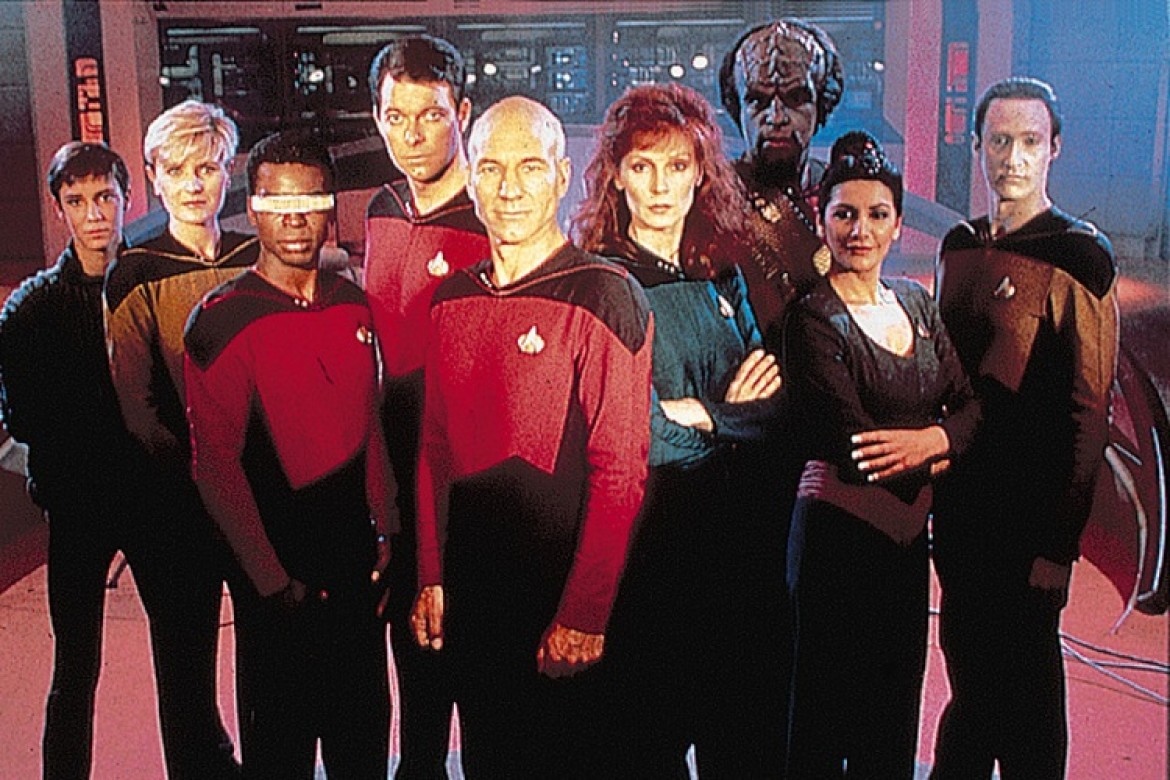
As we’re getting ready for the return of Star Trek to TV (or rather Trek’s first foray into original streaming service) with Star Trek: Discovery, it’s a prime time to look back at Star Trek: The Next Generation, which was Star Trek’s first foray in a then-unique syndication format. Devoted fans already know that it’s the 30th anniversary of Star Trek: The Next Generation.

The series is almost as beloved as the original Star Trek, but many overlook the fact that when it debuted thirty years ago in syndicated televisionit was dismissed automatically. Fans of the original show were understandably skeptical about Star Trek: The Next Generation ever since it was announced. After all, it did not feature Kirk, Spock, McCoy and the other beloved characters and the first promo images looked strange. A bald captain? Klingons are no longer the enemies of the Federation? Why did the new Enterprise look ungainly? What was the deal with those weird one-piece uniforms and lounge chairs on the Enterprise bridge? People wondered what the creator Gene Roddenberry must have been thinking when he developed the new Trek incarnation. Even Leonard Nimoy wondered if the show would succeed. Citing that it was impossible to catch lightning twice in a bottle, Nimoy turned down the offer to develop the show before Roddenberry was approached.

When it finally premiered in September 1987, let’s say that many fans were underwhelmed by what they saw. The first episode “Encounter at Farpoint” was interesting and gave the main characters good introductions. Plus, it introduced the omni-powerful entity Q into Star Trek lore and thanks to John DeLancie’s sardonic line delivery, the character stood out. But more importantly, the main star of the show Patrick Stewart, who played Captain Jean-Luc Picard, made a powerful impression. Sure, he was not the swashbuckling Captain Kirk, but Stewart made his character uniquely different from Kirk while exuding a commanding and thoughtful presence in the show.
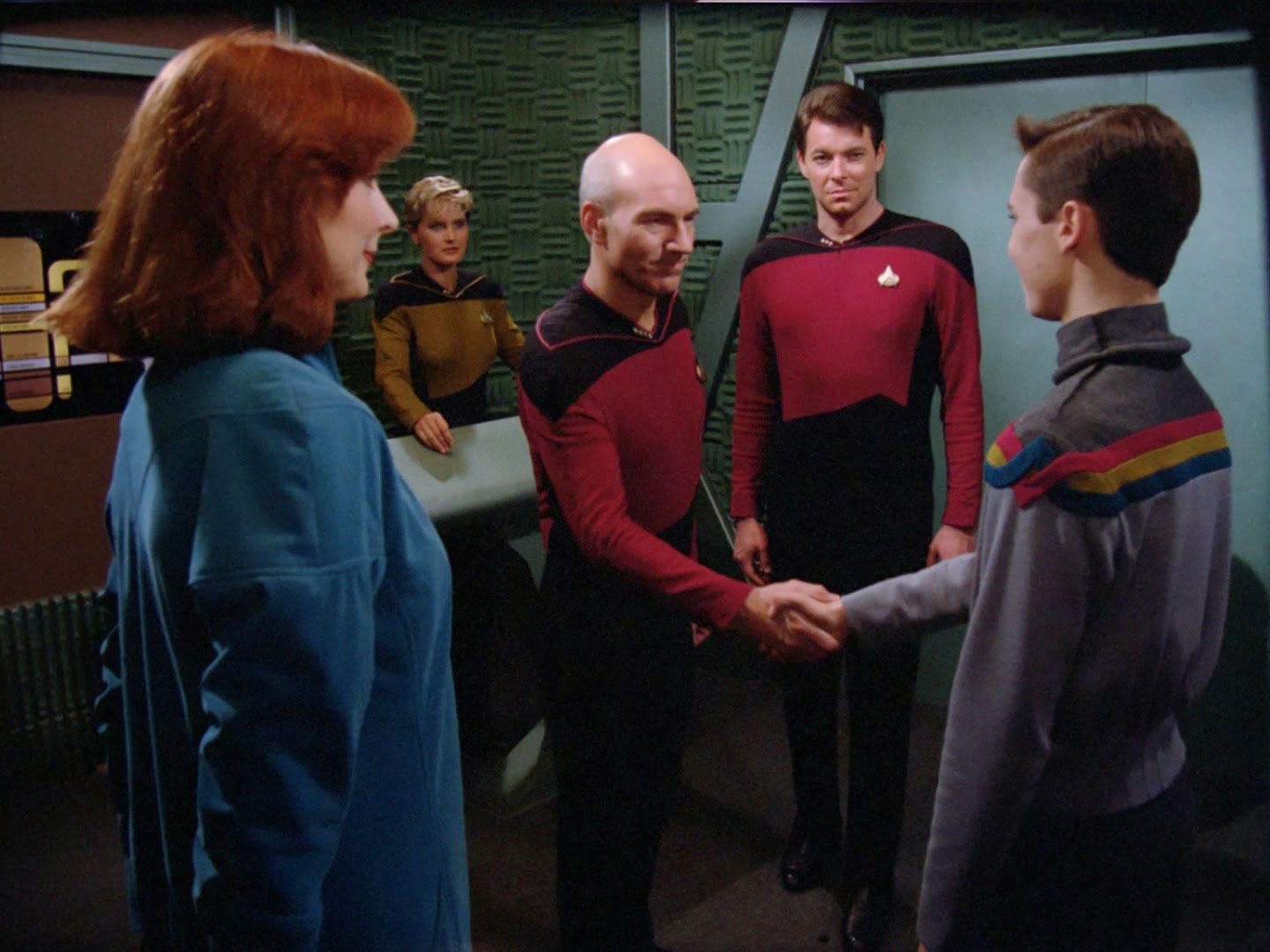
Still, Star Trek: The Next Generation was nearly derailed in its wobbly first season. What handicapped the first Star Trek spinoff were poorly written scripts and characters. One of them was especially hated by fans, young Wesley Crusher played by Wil Wheaton. In many episodes he came off as petulant, self-important Gary Sue who was a critical key in many plot lines. Some episodes were incredibly dull and did not go anywhere. The early episodes aped the worst qualities of the original show where the Enterprise crew would visit a planet of the week and solve that planet’s problems. The made-up societies they encountered were just unbelievable and its people reeked of caricatures. The show also had a problem with coming up with interesting villains, aside from Q.

Yet, the show showed promise. As the first season drew to a close, Star Trek: The Next Generation seemed to find its bearings. The characters were better developed with the breakout being Data (Brent Spiner), who emulated the Spock position of being the outsider who questioned humanity. The stories also became more interesting as Star Trek first toyed with the idea of episodes-spanning sub-plots. In this case, a nefarious conspiracy at the heart of Starfleet and the first hints of the Borg, a cybernetic race that would not appear until the second season. It took some risks such as the above-mentioned conspiracy storyline that upset some parents for its violent content. There was also the killing off of a major character in the show (Tasha Yar, played by Denise Crosby), which was a first for Star Trek.

Fans began to come around and eventually embraced the Star Trek spinoff. Although the original show continues to be regarded as the best Star Trek show, it cannot be denied that Star Trek: The Next Generation has achieved its share of greatness through the season. It stood apart from its predecessor for being more thoughtful, for better exploring themes and characters and for its updated special effects.

When Star Trek: The Next Generation was being developed it was supposed to have featured descendants of the original Enterprise crew. Thankfully, the show evolved away from that and went with all-new characters. References to the original show were extremely rare, which allowed the show to develop its own identity. It would have been all too easy to just continue the same formula, but Roddenberry knew that for the new show to succeed it had to follow a different path. That is why we’re celebrating the show thirty years later.

Enterprise D

Now as if to commemorate the 30th anniversary of Star Trek: The Next Generation, a new Star Trek TV show will debut this month to pick up the baton. However, many fans are highly skeptical and dismissive of the new Star Trek: Discovery. The list of complaints continues growing as more details come to light, and many of them are valid. The core complaint is that the new show does not feel like Star Trek. But think about that, it’s the same gripe leveled at Star Trek: The Next Generation when it first aired. The new show seems like it will take Star Trek in a new direction, just like the first Trek spinoff did. Star Trek: Discovery may not hit a homerun at first, but fans should keep an open mind and show some patience when it premieres. It may find its legs and be as memorable and great as Star Trek: The Next Generation, the first Star Trek spinoff that proved it was possible to catch lightning in a bottle twice.

Lewis T. Grove
 

A Bizarre Return To Twin Peaks

twin peaks return poster

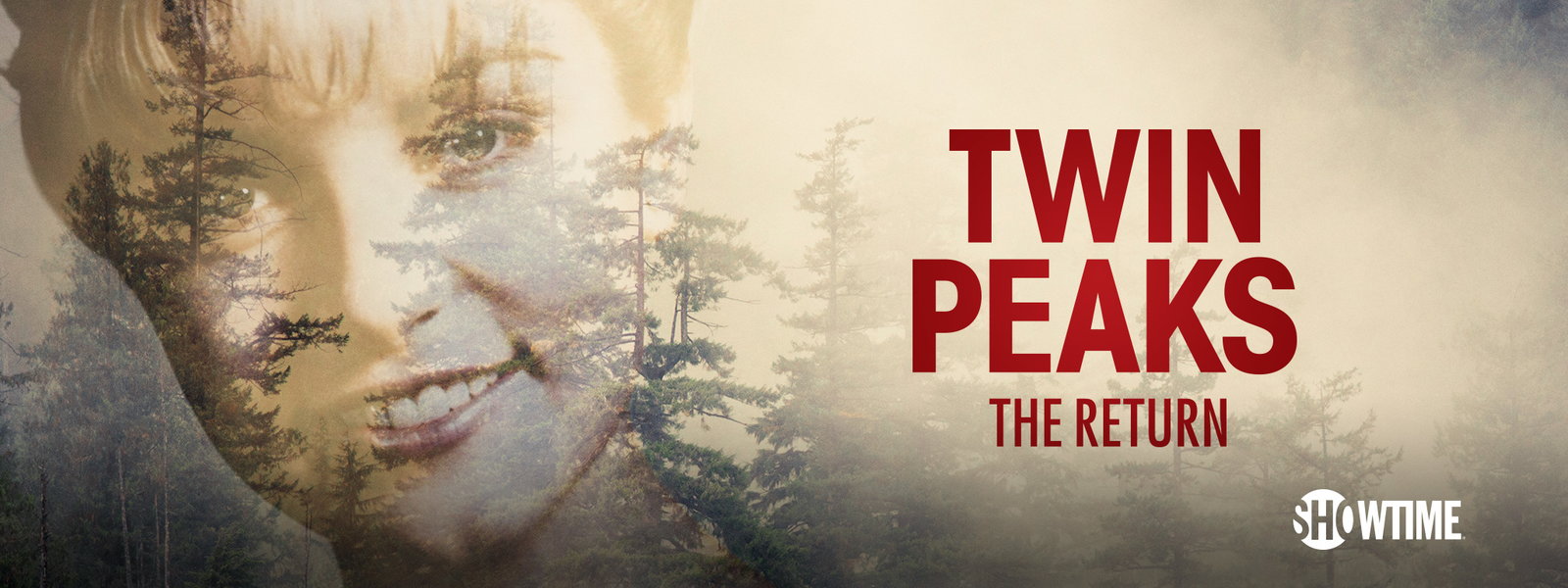
Twin Peaks: The Return brought audiences back to the surreal world created by David Lynch and Mark Frost that featured FBI special agent Dale Cooper (Kyle MacLachlan) seemingly trapped in an alternate dimension known as the Black Lodge while his evil counterpart was let loose in the world. This is how the second season of the Twin Peaks show ended in 1991. Ever since then, fans have been wondering what happened to Cooper, as well as the other characters on the show. Twin Peaks: The Return answers these questions, at least somewhat in this 3rd season. How these questions are answered can be seen as controversial since Lynch takes his time with the story and tells it in a roundabout way, with many episodes not even taking place in the town of Twin Peaks (the original show’s setting) at all. Much of the action, especially in the early episodes center most of the action in faraway places like Las Vegas and New York City as Cooper’s return to our world is in the form of a low functioning alter ego known as Dougie Jones, who is barely able to speak. Meanwhile, his evil doppelgänger rampages across the country in search of mysterious coordinates. This along with the ambiguous ending make the legacy of this return something that is already controversial among fans and will generate conversation or years to come. I have not even gotten to the truly mystifying eighth episode that doesn’t even have much dialogue at all and instead shows a collage of bizarre images of an atomic explosion in the desert and scary looking woodsmen, all of which seem to show how the denizens of the Black Kodge came to our world.

One aspect of this season that harkens back to the original is the combination of genres that Twin Peaks is famous for. Scenes with campy humor followed by something that is truly menacing or sinister, along with seeing iconic locations like the double RR diner and the Twin Peaks sheriff station all take us back to the first time we encountered these memorable places and people. Most of the original cast returns and are as wacky as ever along with new and funny characters like the Mitchum brothers (Robert Knepper and James Belushi) and Janey-E (Naomi Watts) and Sonny Jim Jones (Pierce Gagnon). These moments will definitely leave those wanting a nostalgic feeling satisfied.

Answering the question of how much you will like the rest of Twin Peaks: The Return depends on certain things. For me, I really enjoyed the whole experience because I found the whole story and characters to be very interesting and thought provoking. I will admit that the seemingly open-ended nature of the final episode was unexpected and I’m not sure what to make of it. Having said that, I still like the idea of the continuing debate that will make you remember the show and think about it long after it’s over. However, if you are not really a fan of David Lynch’s movies, this might not appeal to you since Twin Peaks: The Return is much more in line with his feature films like Twin Peaks: Fire Walk With Me instead of the first two seasons of the show. Those original episodes were almost like a parody of soap operas that centered on a quirky town and its characters that audiences came to love. While we do revisit these characters in the new season and it’s great to see them again, the whole tone of the 3rd season is much more in line with Twin Peaks: Fire Walk With Me and other Lynch films like Lost Highway, Mulholland Drive and even Eraserhead. If you are looking for a show with a strict beginning middle and end, I’m not sure how much you will get out of Twin Peaks: The Return. It was filmed and shown as basically an 18-

hour movie, that has scenes and characters that seem to come out of nowhere and don’t seem to have anything to do with the main story. Eventually, most of what we see comes to make sense in the second half of the season as various characters and storylines do come together in the town of Twin Peaks during a final confrontation with evil Cooper. Getting there, however, does require some patience on the part of the viewer. Even then, there are some situations that seem to go unresolved at the show’s end. The basic story of Agent Cooper and his struggle with his doppelgänger does get resolved, but his ultimate fate, along with that of Laura Palmer (Sheryl Lee) and Audrey Horne (Sherilyn Fenn), are not clear.

This does seem to hint that Lynch and Frost would like to continue the story in a fourth season. But as of now, it’s not known if this will happen. There is a book written by Frost called Twin Peaks: The Final Dossier coming out in October, that might give some hints to the mysteries still not solved, but we’ll have to wait and see. If this is the end for Twin Peaks, I can say that while I would have like a little bit more of a resolution, i am happy that we got to go back to this world and further explore its mysteries. I’m also eager to rewatch the whole thing again, hopefully in a blu-ray release, maybe with some more answers in a missing pieces like segment that accompanied the Twin Peaks: Fire Walk With Me blu ray. Here’s to hoping of more cherry pie and coffee in our (and Agent Cooper’s) future.

C.S. Link

Unleashed Star Wars Toys

star wars unleashed

While we Star Wars fans salivate over the Star Wars Force Friday II release of new toys, let’s take a quick look back to one of the most popular and colorful Star Wars figures line. This one was called Star Wars Unleashed, which debuted in 2002 and ran until 2007, ten years ago. The line mostly concentrated on the characters from the then-current films Star Wars Episode II: Attack of the Clones and Star Wars Episode III: Revenge of the Sith.

As with recent Star Wars toys, the Star Wars Unleashed line was manufactured by Hasbro and the figures cost more than the standard six-inch figures. Usually they retailed for about $15-$20 and the cost was due to their size, plus the bases of the figures. Those who managed to buy them at the initial price back then are extremely lucky because they now cost quite a lot in the secondary markets. Some fetching prices well into the hundreds of dollars.

When the line was first launched, each figure had a theme reflected in their dynamic poses. Each pose represented a key moment for the character in the movie. This was probably to make up for the fact that they’re not as articulate as regular figures though they’re much more detailed. A good example of such vivid posing and sculpture is the Anakin Skywalker figure is known as “Rage” since that the sculpture illustrated his violent mood after his mother was killed in Episode II. We all know after her death Anakin went on a killing spree, which made him reckless, even into his fateful confrontation with Count Dooku. It was one of the most dramatic poses in the series with Anakin in full attack mode wielding two lightsabres and a look of pure hatred. It’s amazing that the manufacturers were so capable of capturing his inner turmoil since one wouldn’t expect that from a toy. The other most dramatic figure that was part of the initial release was the Darth Maul figure that is called “Fury” and he is placed standing on one leg as if ready to pounce on a hapless Jedi as a swirl of red dark force energy swirls around that leg. For some reason, the other figures released in the following years didn’t have any subtitles, which took away from the idea that the sculpture were supposed to represent the characters at certain, pivotal moments.

Luckily for the collectors, the later figures in the Star Wars Unleashed line were just as impressive and in fact more so. Take the Boba Fett figure that was sold exclusively at Target. The detailing is simply beautiful and the pose was so dramatic. You almost expect the bounty hunter to come to life. In the actual display, Boba Fett is battling the hungry sarlacc creature while trying to escape. This was inspired by the scene in Star Wars Episode VI: Return of the Jedi when he is eaten by the creature. In this pose it looks as if he’s ready to blast off, implying that he survives the encounter. It was a beautiful and dynamic sculpture as Fett’s posture with one arm raised high and one leg tangled in the sarlacc’s tentacle was reminiscent of a cover from an old science fiction pulp magazine.

On a side note, additional figures were repackaged and sold exclusively in Wal-Mart, KB Toys, Best Buy and Target. They included two versions of Darth Vader, Luke Skywalker and General Grievous. The figures were slightly larger than the original figures.

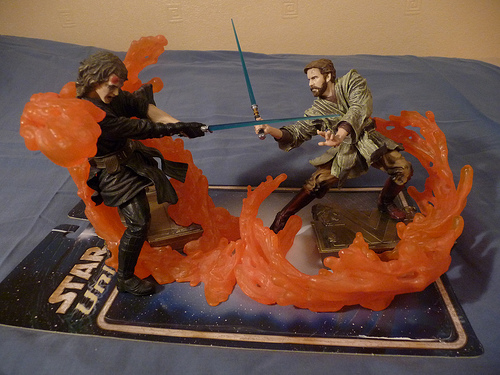
The best figures from that line included the just-mentioned Darth Maul and Boba Fett, as well as the Yoda (2003), Obi-Wan Kenobi and General Grievous (2005). One nifty aspect of the Obi-Wan figure is that he can be easily connected at the base with the Anakin Skywalker figure also released in 2005. Based on the final moments of Star Wars Episode III: Revenge of the Sith, when they confront each other on the volcanic planet Mustafar, they are both shown in battle poses as swirls of lava surround them. Only their mastery of the Force keep the lava at bay. Even though these two figures were sold separately, they could be connected.

This idea was carried one step further the same year with the Yoda vs. Palpatine figures that come together in one package. It can be said that Hasbro took this to the next level with the release of the Epic Battles packs collection. These sets sold for less and included at least four figures though they are much smaller, roughly three inches tall. The collection includes groups of Jedi, Wookies, Droids, Imperial Troops and so forth. They were also well detailed with dramatic poses but were not as enticing as the regular Star Wars Unleashed figures, which were more geared for older children and adult collectors. However, they’re perfect for the younger fans who want to recreate exciting scenes from this film series that just seems to spawn more and more creative toys and figures.

On the other hand, the popularity of the Epic Battle packs spelled the end of Star Wars Unleashed. There was only one Star Wars Unleashed released in 2007, Count Dooku, which was just as masterfully sculpted and detailed as the other figures. It’s a shame that the line ended because there are so many characters that would be perfect.  Imagine one being sold for Ahsoka Tano, Rey, Lando Calrissian, Qui-Gon Jinn, or Luke Skywalker from the first Star Wars film. We do have the Titanium and Black Series figures which are just as impressive, but Star Wars Unleashed does hold a special place in my collector’s heart. It’s probably because of the dramatic forces that captured the essence of the characters. Perhaps one day they can come back in some form or another.

José Soto

Robocop: Celebrating The Cyber Masterpiece

Robocop poster

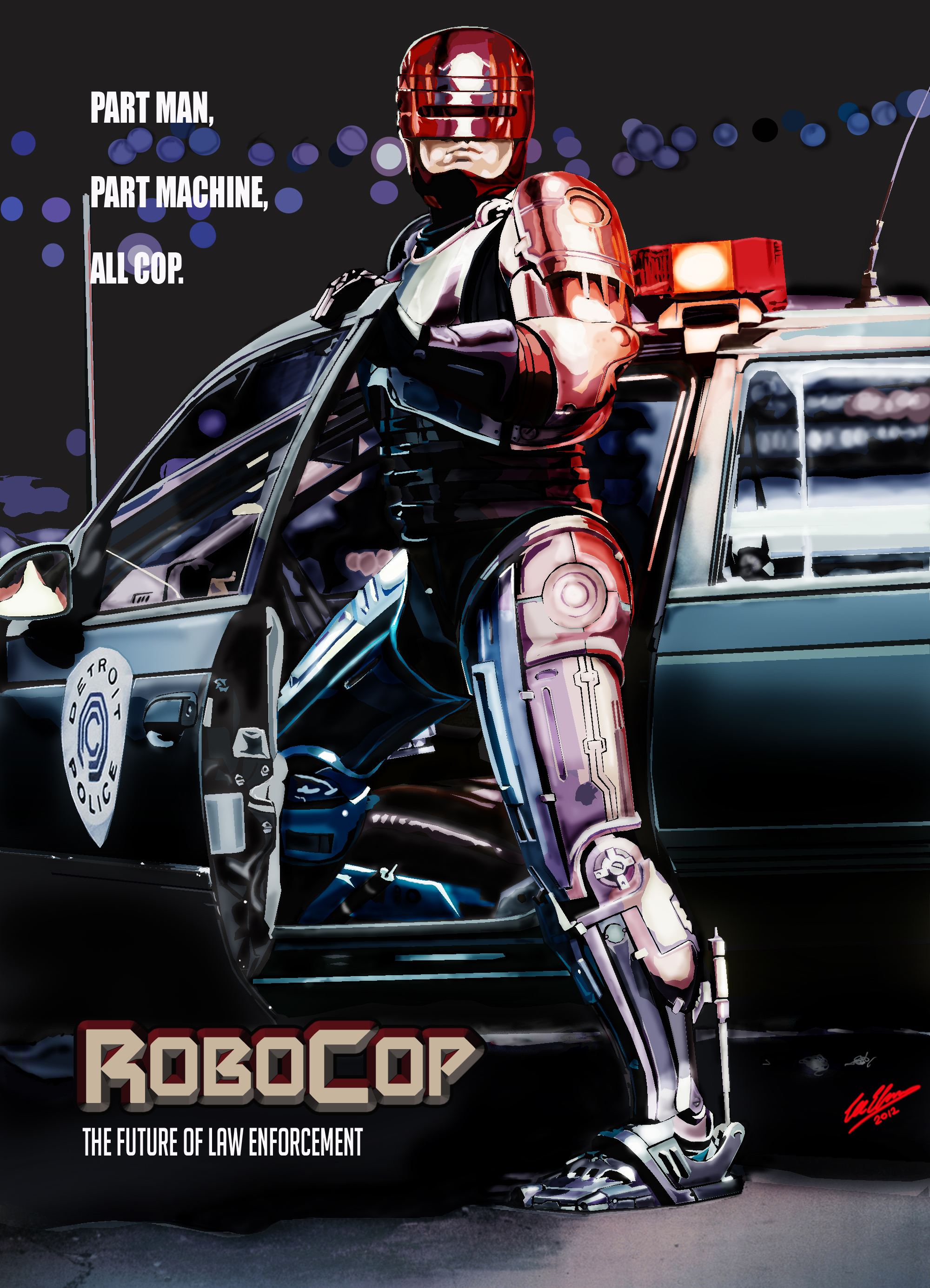
On August 1987, genre film fans received a bonafide treat when the film Robocop made its debut. To say that the film was a thrilling surprise would be an understatement on the league of the title character’s stoic line delivery. Part of the reason for the enthusiastic reaction to Robocop is that August is usually a dumping ground for non-starter films that no one remembers weeks after they debut. Robocop bucked that trend with its no-holds-barred action, over-the-top violence and wry social commentary.

Serving The Public Trust

Robocop starred Peter Weller as Murphy a beat cop in a futuristic and crumbling Detroit who is viciously gunned down. Left for dead, and with a ruined body, Murphy is resurrected into the mechanical body of Robocop, a prototype robotic constable. The cyborg police officer is touted as the crown jewel of Omni Consumer Product’s (OCP) media blitz to promote a revamped Detroit to be renamed Delta City. Robocop makes an immediate impact in the public consciousness as he patrolled the dangerous streets in his sleek chrome body that was designed by Rob Bottin. Buttressed by Basil Poledouris’ pounding and bombastic score, Robocop efficiently curbs crime thanks to advanced cybernetic skills.

morton and robocop

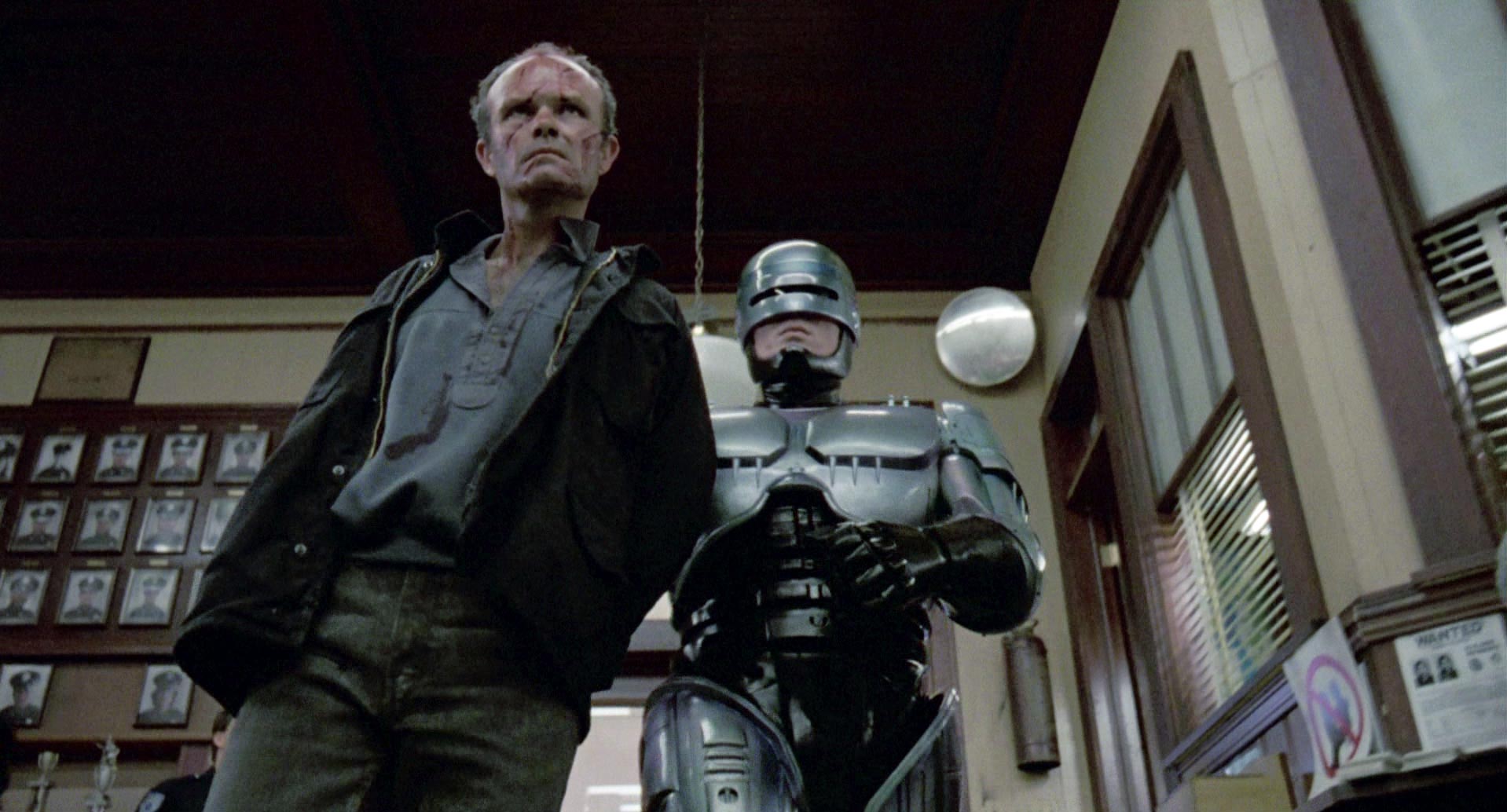
However, beneath the chrome armor Murphy’s mind and humanity, which was supposedly wiped clean during his transformation, starts to re-emerge. At the same time, the film follows the ruthless corporate antics of Robocop’s overlords who care little for their community. Eventually, Murphy’s emerging morality clashes with his handlers, who are in league with the local crime lords. In this case, Robocop’s arch rival Clarence Boddicker (Kurtwood Smith), who looks like a typical suburban father but has a severe aptitude for violence that rivals a favela gang leader. Even though these villains did not have any superpowers, their cunning and willingness to go the extra mile were quite a match for Robocop.

Robocop and Boddicker

The film made quite a splash that late summer and for good reason. Thanks to Dutch director Paul Verhoeven, Robocop excelled in macabre humor and biting action scenes. Verhoeven and the other filmmakers including producer Jon Davision, and screenwriters Ed Neumeier and Michael Miner, were clever enough to inject a balance of pathos for Murphy’s plight and inspired social observations.

Dystopian Corporate Culture

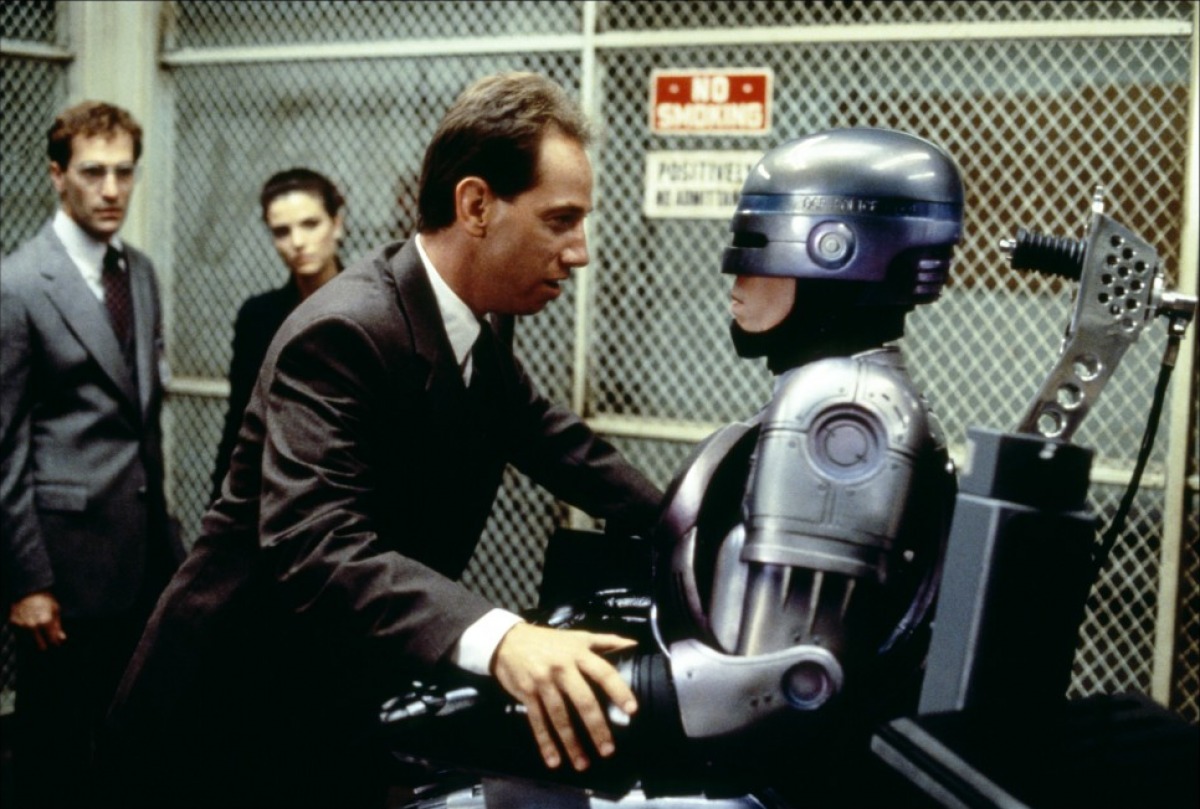
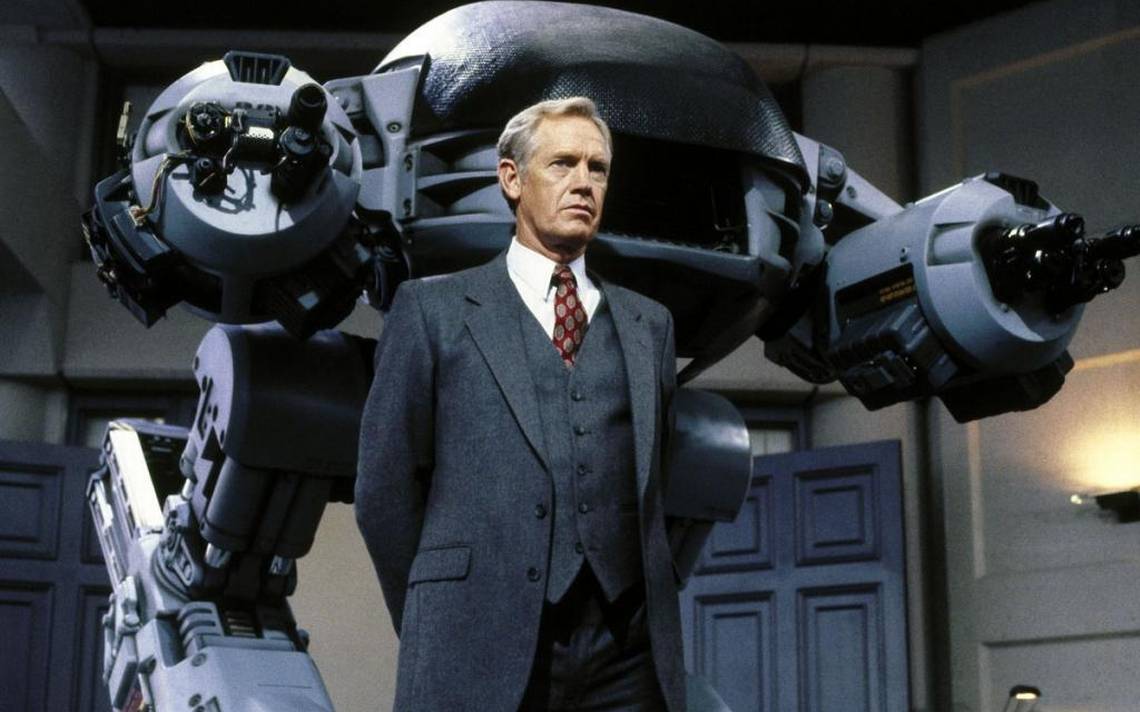
Robocop’s futuristic America is one where the country is slowly decaying as common decency gives way to empty consumerism. An insensitive corporate culture has taken hold on society as the top business leaders claw each other to get to the top while the rest of community suffers from their decisions. The main corporate scumbags in the film were Bob Morton (Miguel Ferrer) and his boss Dick Jones (Ronny Cox), and both men exemplified the callous, slimy and two-faced negative image of corporate leaders. Seeing Morton’s conniving machinations and Jones’ ruthless actions were fascinating to watch and reflected the narcissistic business-oriented culture of the ‘80s.

Jones and ed209

Sadly, the film’s commentary echoes the fraying moral fabric of today’s society and illustrates how prophetic Robocop was in predicting our future. Of course, violent crime is not as prevalent as in that film, but many of the other dystopian aspects presented in that film seem just around the corner for us, if not here already.

The level of violence shown in the film is still quite shocking today given the way Verhoeven seems to revel in showing us how vicious humanity can be. What helped make the level of violence so intense and shocking was the superb makeup work by Bottin.

First Modern Superhero

In many ways, Robocop can be considered a prototype for modern superhero films. The film was inspired by The Six Million Dollar Man and the more adult-oriented comic books that appeared in the 1980s. Groundbreaking comic book writers like Alan Moore and Frank Miller were making a splash with their graphic comic book stories where the heroes were more than willing to use extreme violence to fight crime. Robocop employs similar means, using all of his weapons and high-tech tools at his disposal. A good example of this in the film is where a thug took a woman and used her as a shield against Robocop. The cyber cop then used his advanced marksman skills to castrate the bad guy through the woman’s dress with a perfect shot that left her unharmed.

But Robocop didn’t just have street punks to fight against. His greatest enemies were his corporate handlers who stripped Murphy of his humanity and did not have the public’s best interest at heart. OCP only saw Murphy not just as an asset but as a quick fix. The company wanted to replace Detroit’s human police force with a robotic one they could control. Their first attempt, the lumbering ED-209, proved to be a failure and so the Robocop program was quickly brought online as a stopgap measure. Even though Robocop was a public success, he was distrusted by many human police officers who correctly saw him as a threat to their livelihood. The one exception was his partner Lewis (Nancy Allen), who eventually deduces Robocop’s original identity and helped him recover his humanity. Although ED-209 was considered a failure, due to software issues, the robotic sentinel was still a credible threat to Robocop. ED-209 was quite popular with fans and the stop-motion effects by Phil Tippet used to bring him to life was one of the last times the effect was used in a major film.

Violent Laughs

ED-209’s failed debut when he mistakenly kills a hapless OCP executive was one of the film’s funniest and macabre moments and illustrated how Verhoeven reveled in directing over-the-top violent scenes that brought out guilty laughs. Keep in mind, that the executive’s death scene was actually edited from a more violent version where the robot repeatedly fired on the corpse, which sprayed blood all over the boardroom. Then there were the clever commercials that were inserted in between scenes, which were bursting with satire. Fans of the film still love the line from some ads “I’d buy that for a dollar!” which was shouted from a john buying the services of prostitutes.


Given all the film’s merits, what made Robocop a masterpiece that still resonates thirty years later was its core conflict of individuality versus an overbearing corporate culture. We empathized with Murphy’s dilemma as his humanity shone through all the hardware covering up what remained of his physical body. It was also a metaphor for the capacity of our human spirit to rise above encroaching technology.

José Soto


The Defenders Come Together At Last

marvel-defenders-tv-show-images

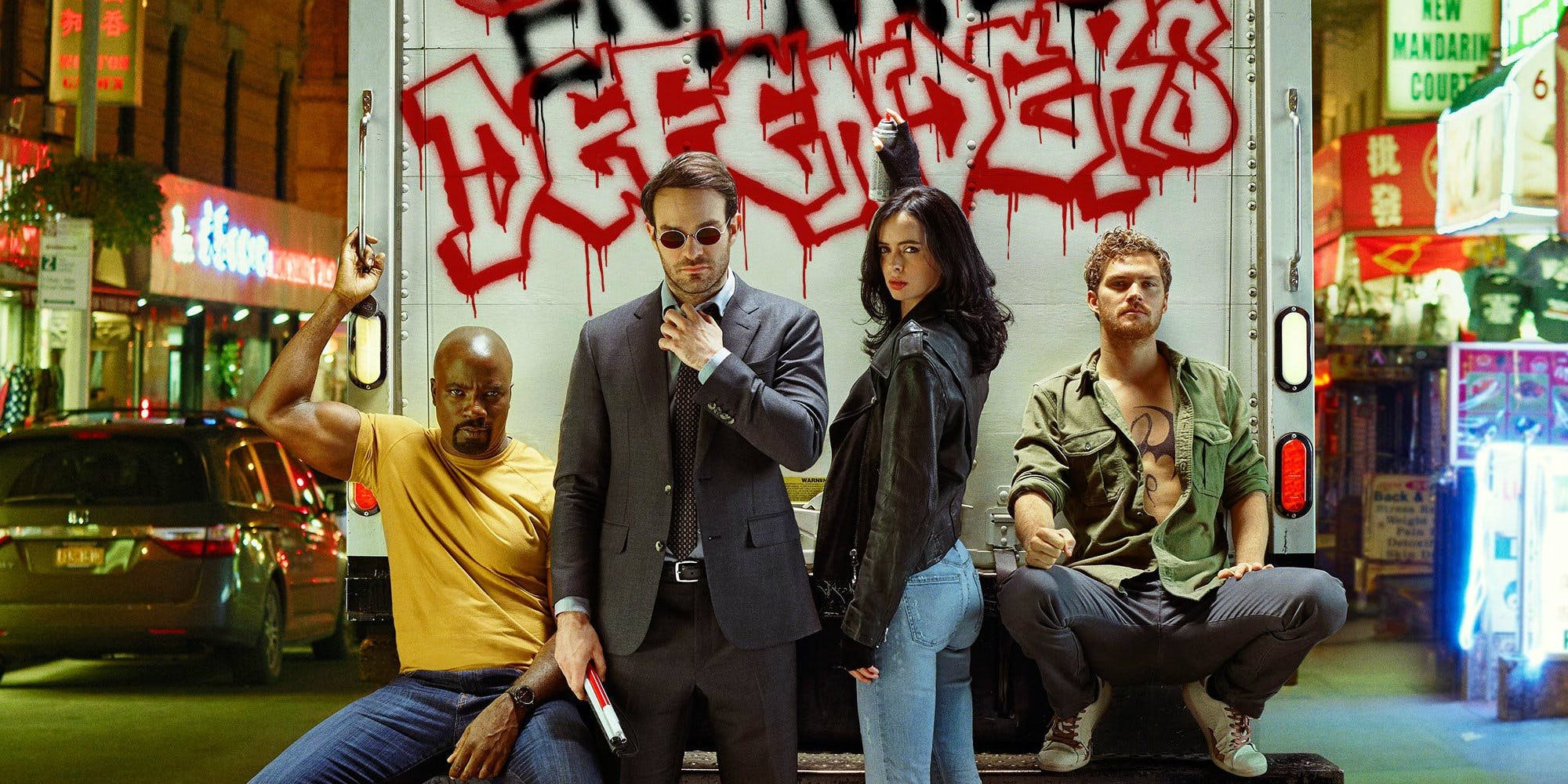
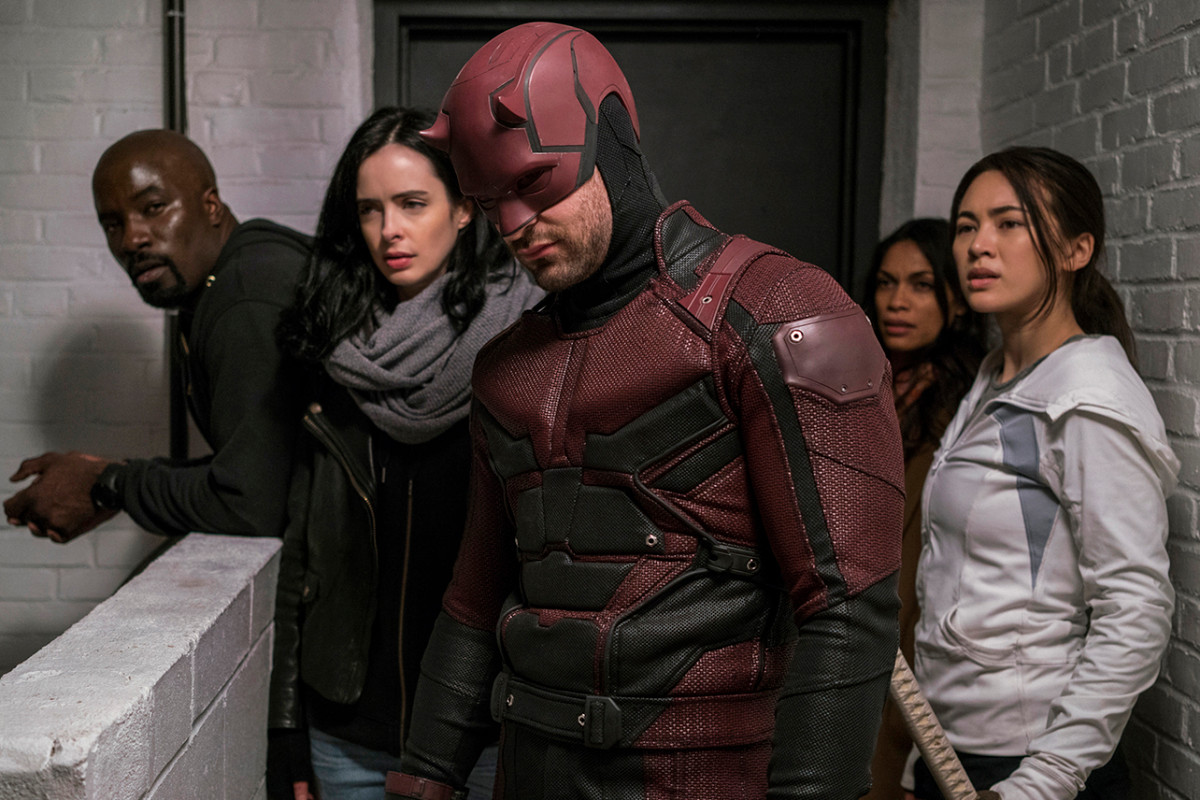
The Marvel Studios mini-series event The Defenders just premiered on Netflix and is the culmination of the past four Netflix/Marvel superhero streaming shows Daredevil, Jessica Jones, Luke Cage and Iron Fist. The Defenders finally brings the main leads from those shows together at last like in The Avengers, which what fans have been waiting for ever since the superhero shows were announced years ago. Needless to say this is a big deal for fans of the shows for obvious reasons.

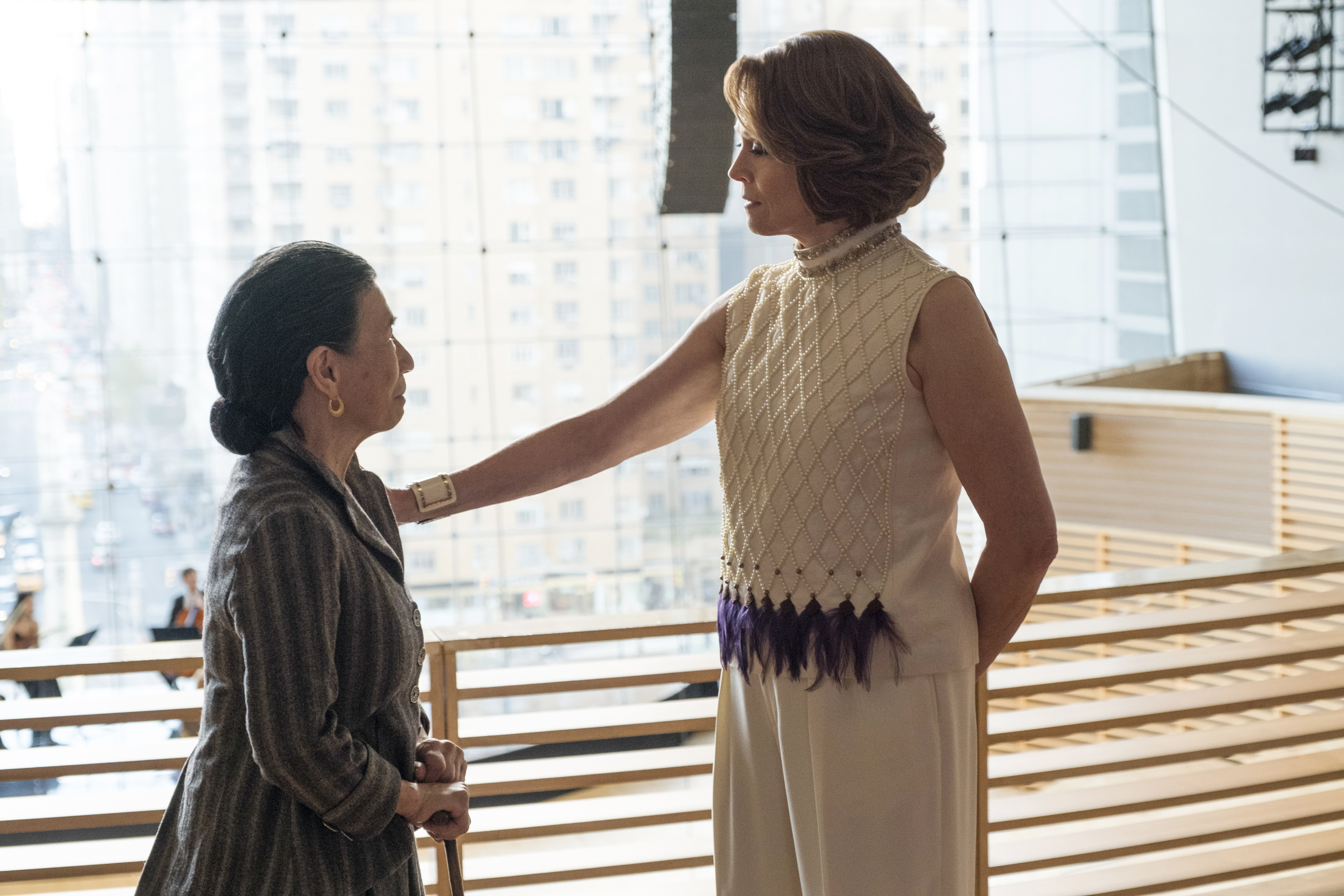
Running only eight episodes, The Defenders stars Charlie Cox as Matt Murdock/Daredevil, Krysten Ritter as Jessica Jones, Mike Colter as Luke Cage and Finn Jones as Danny Rand/Iron Fist along with the supporting actors from their respective shows and Sigourney Weaver as Alexandra, the show’s main villain. The Defenders does not take long to get into the action and meat of the story. It starts with all four heroes separately running afoul of the mysterious Alexandra and by the third episode they all meet in the heat of battle and the story just moves along from there. As expected with these Marvel Comics stories, the four don’t exactly get along at first, which is best shown with Rand actually hurting the invulnerable Cage with his Iron Fist. But all ends well as they put aside their differences to face their mutual foes.

In their separate investigations, they learn  that the shadowy criminal organization, The Hand, who have appeared in Daredevil and Iron Fist, are making an ominous move in New York City. In a nutshell without giving too much away, the leaders of the Hand, which includes Alexandra, are carrying out an operation that will wind up destroying the city and it’s up to our heroes to stop them.

alexandra and gao

Overall, The Defenders is an enjoyable and brisk-moving mini-series that should delight fans and casual viewers. All the actors bring their A game to the show with the standouts being Cox and his own show’s cast. Fans of the shows should be pleased that all the characters are faithfully presented. Matt Murdock carries the weight of the world on his shoulders, Jessica Jones drinks whenever she can, Luke Cage stands around and gets shot at without any injury and Danny Rand finds any opportunity to say “I am the Immortal Iron Fist!”

Despite all the complaints about Jones and his show, his character here is much better portrayed and less insufferable. Fortunately, Jones proves that he can bring something to the role and Iron Fist’s appearance here presents the case that the faults with the Iron Fist TV show were due to those showrunners, not the character or actor. For example, Jones seems more at ease during his fight scenes, a critical flaw with Iron Fist, and on the whole, the fight choreography was crisp and full of power. The standout fight scene was probably in the third episode when the four Defenders finally all meet each other, but the others spread out in the other episodes are fun to watch and grab your attention, though at times they are too dark and it is clear that some of the actors seem more natural at fighting than others. That criticism does not apply to Jones, believe it or not.

defenders hall fight

The villains are another quibble with The Defenders. Unlike The Avengers which had the breakout villain, Loki, the villains in this show are not particularly compelling. Basically, they are just a bunch of super ninjas and though that is appropriate for the power levels of the Defenders, they could have been more threatening or had more clear motives. Another gripe about the show and the villains has to do with the fact that the show takes place in the Marvel Cinematic Universe (MCU).  It is not the fault of the show, but it is annoying that with the severity of the threat to the city, no one has the notion to try to contact the Avengers or even Dr. Strange given the supernatural aspect of the Hand. We don’t even see the Avengers Tower in the New York skyline, whereas in Spider-Man: Homecoming that film took every opportunity to show the tower whenever there was a shot of the city. Then there is the reaction of some of the characters to what is going on; basically they have a hard time believing in the Hand and their threat, and even the nature of the leads’ powers. This goes for especially Luke Cage, who cannot accept that Danny Rand spent time in another realm and became a mystical warrior. That is a strange reaction for an inhabitant of the MCU that has seen open alien invasions and big league superhuman battles. Let’s not forget that Cage himself has superhuman powers. For these reasons it is hard to accept that The Defenders takes place in the MCU. But that is something that fans have to ignore and just go with the story.

daredevil and defenders

What ultimately makes The Defenders work is the camaraderie between the leads and seeing them all together. Thankfully, after taking time to introduce them individually in the first episode with interesting cinematography that presents each hero with a different color scheme, the show quickly has them teaming up and getting to the meat of the story. Their interactions were very amusing and some of the show’s best moments. They all had good chemistry and complemented each other well to the point we were sold that they came to care about one another. While The Defenders may not have the same thrilling impact and joy of The Avengers, it is quite enjoyable in its own right and helps set a path forward for the future of these grounded heroes.

Lewis T. Grove