Captain America: 75 Years As A Living Legend

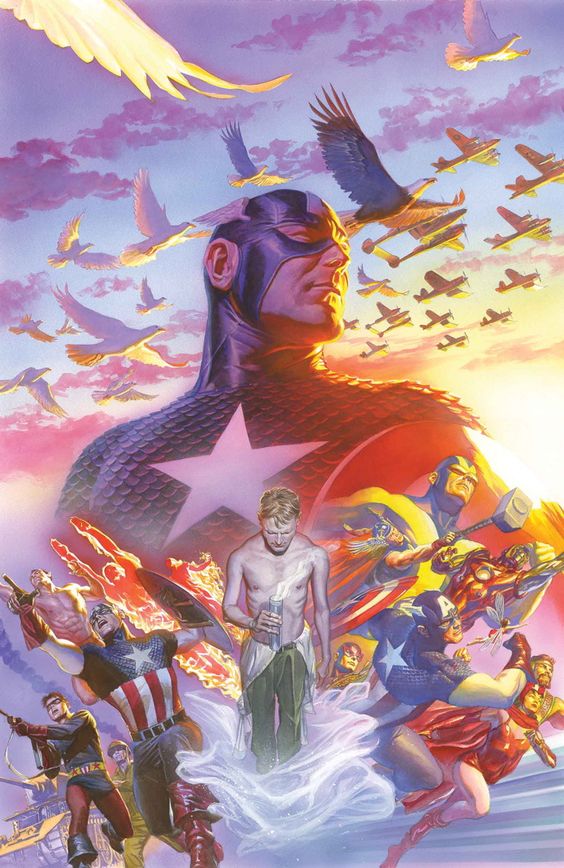
Alex Ross Captain America art

This year is a true landmark for Marvel Comics’ Star-Spangled Sentinel of Liberty. It’s not just because Captain America is the star of the biggest movie of the year (to date) Captain America: Civil War, but most importantly because this is the year Marvel is celebrating his seventy-fifth anniversary.

Imagine that number, three quarters of a century old and up there with the likes of modern-day legends like Superman and Batman. Unlike those two icons, Captain America didn’t always enjoy a high level of popularity. There are many reasons which reflected the mood of the times and the character’s level of development.

Unlike Batman and Superman, Captain America was undeniably a byproduct of the World War II era. When he made his debut in Captain America Comics #1 in 1941 World War II was occurring.

War-Born Hero

The U.S. was not involved in the war but Captain America Comics #1 coversooner or later the country would be and this left U.S. citizens with frayed nerves. It was the right time for a morale booster in the comic book pages. Comic book creators Joe Simon and Jack Kirby, both of whom were Jewish and particularly alarmed by Adolf Hitler’s undisguised anti-Semitism, wanted to bring to life an American counterpart to the so-called German Aryan super race. Keeping that in mind they created Steve Rogers, a weakling who wanted to serve his country and was transformed into the super-soldier Captain America.
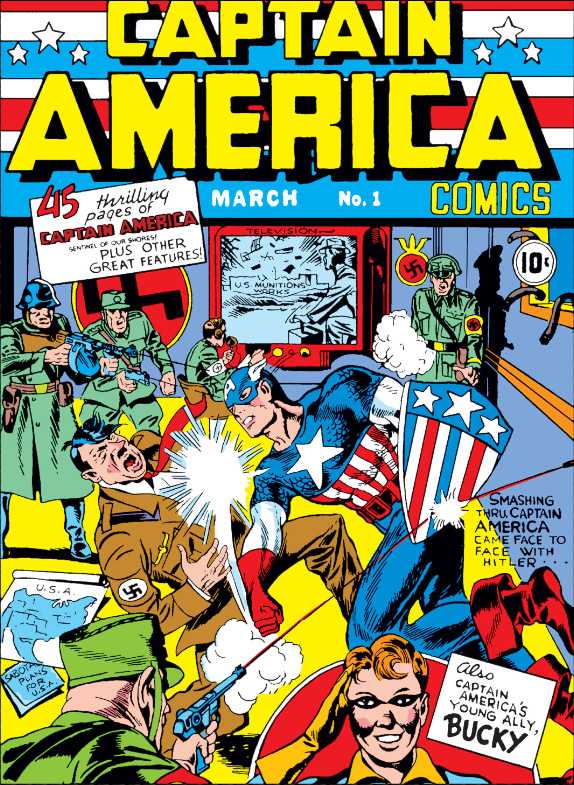
To their shock, almost immediately after his debut, Captain America became a sensation with the American public. But after the war ended, interest in the Sentinel of Liberty waned. The public was ready to move on from its war footing and Captain America was too ingrained in the World War II era to seem relevant in a post-war America. Even an attempt to modernize him in the 1950s as a “Commie Smasher” failed to reignite interest and before long his title was canceled. It seemed as if he would be relegated to the dustpan of comic book history. Or so it seemed.

Legendary Rebirth

Thanks to the efforts of Stan Lee and Jack Kirby in the 1960s, the good captain was resurrected as part of the new wave of comic book superheroes that took the nation by storm. Due to the ingenuity of Lee and Kirby, Captain America was brought back into the limelight after being found frozen in the landmark comic book The Avengers #4. This plot twist was ingenious in that it brought back the same character without having to pull an Earth-2 introduction of a new character with the same name. At the same time, the man-out-of-time twist added a lot of pathos to Captain America, who now struggled to find a place in a new world and find a sense of relevance. Of course, what helped the captain’s newfound popularity were the exciting stories that placed him in the middle of the Avengers’ battles. From these early tales it was obvious that Captain America was a born leader and the other team members gravitated towards him and treated him as such. It wasn’t long before he became the actual leader of the Avengers and led the team into higher levels of greatness.
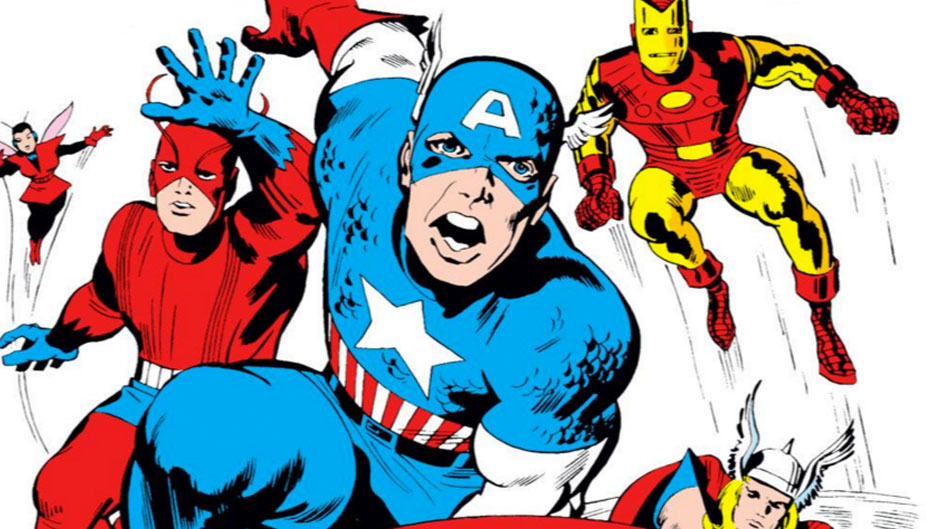
Captain America lives again

At the same time, he was rewarded with his own comic book that featured many interesting supporting characters and villains, among them a resurrected Red Skull–his greatest enemy during World War II.  But what kept the stories interesting was the character development of how he struggled to fit in and overcompensated by throwing himself into his work of saving the world.

This came to a head in the 1970s during the Watergate era when he lost faith in the U.S. government and actually gave up the Captain America identity. This theme would be revisited time and time again in several stories in the following decades that coincided when the nation was plagued with self doubt.

The Heart of America
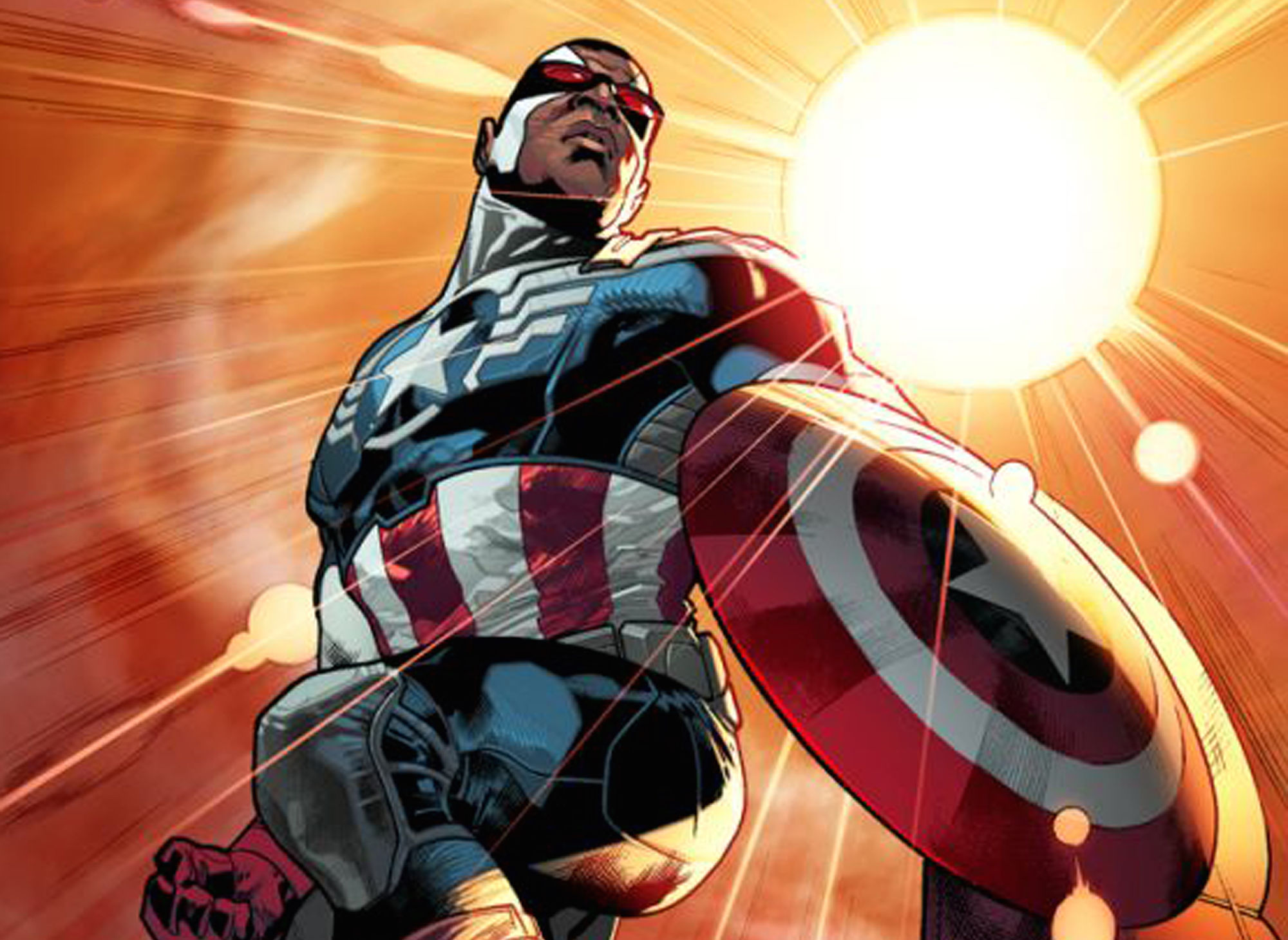
Sam Wilson: Captain AmericaDuring these events other heroes have taken up the mantle of Captain America and provided fresh new outlooks on what it is to be the iconic hero. Most readers know that currently Sam Wilson,  who was Captain America’s partner the Falcon, is the new Captain America. The twist here being that Wilson is  African-American, but it feels natural because who else but Steve Rogers former partner is worthy enough to wield the shield and honor of being Captain America? It is a testament that the role of Captain America is larger than any one person.

Fans of the more traditional Captain America should not fret. As these cyclical stories go, eventually the original hero will reclaim the mantle. Steve Rogers has done it in the past, most famously after he was supposedly assassinated in Ed Brubaker’s acclaimed run of the title last decade. Keep that in mind with the current absurd plot twist that Steve Rogers is a Hydra sleeper agent. This is just a sales gimmick and it too shall pass.

With Sam Wilson as Captain America now, this development illustrates the universal appeal of the superhero. Despite his bright costume, Captain America isn’t some jingoistic right wing ideologue who sprouts platitudes about making America great. He is more than that, he is a symbol for what this country represents and strives for: freedom, justice, perseverance, hope, and decency. He doesn’t go around boasting about the U.S., he just fights for what is universally right. It is part of his core belief and why he resonates with people from all walks of life.

Another reason for his success is because given his situation, it would be natural if he wallowed in self pity, but he doesn’t. Of course, he does have regrets and doubts, but Captain America just plows ahead and adapts to any situation.

Reaching Legendary Status Through Film

These days, seeing how popular he is in our culture, it is hard to believe that some had doubts about his widespread appeal, especially overseas. It’s why his first film Captain America: The First Avenger was called simply The First Avenger in Russia, South Korea and Ukraine, while other countries were given the choice of dropping the name Captain America, but kept it anyway.
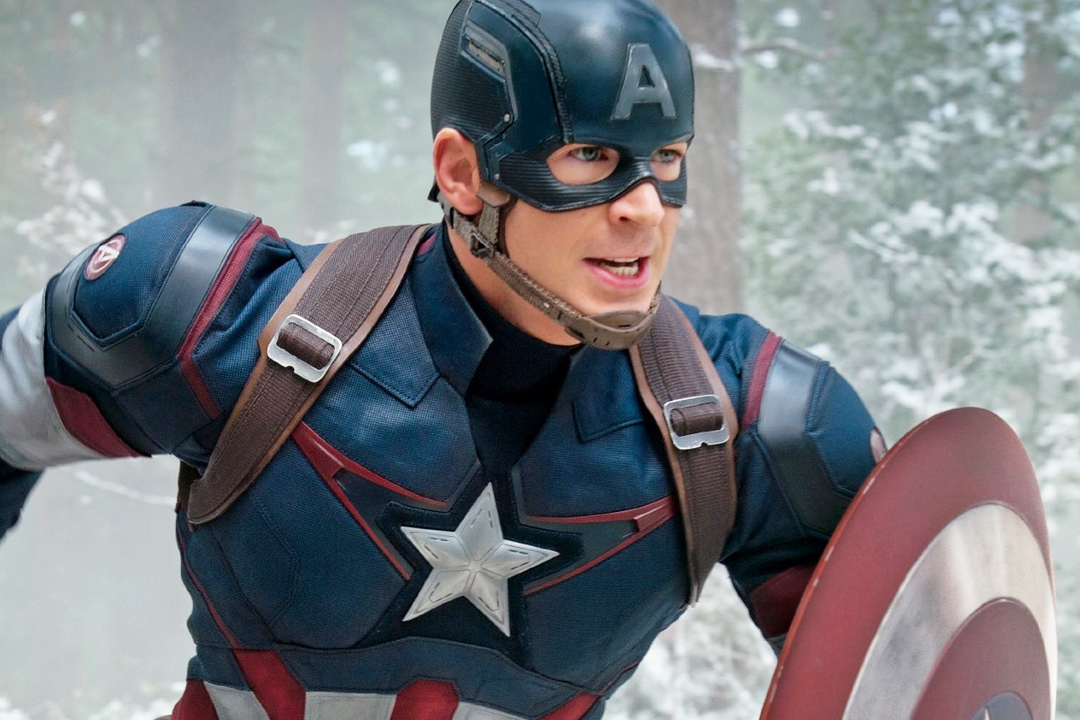
Chris Evans as Captain America


That film and its sequels turned him into a A list superhero that has in many ways eclipse Marvel Studios’ most popular superhero Iron Man. Much of the credit is due to the smart writing and direction that delivered exciting and thought provoking films. Of course, the casting of Chris Evans was truly inspired. Marvel Studios could have gone the easy route and hired some square-jawed hunk but went with Evans. His portrayal of Steve Rogers/Captain America feels natural and he emotes a sense of empathy and iron will that quickly won over audiences. Just like with Robert Downey, Jr. or Hugh Jackman it is difficult to imagine who can take over the iconic role.
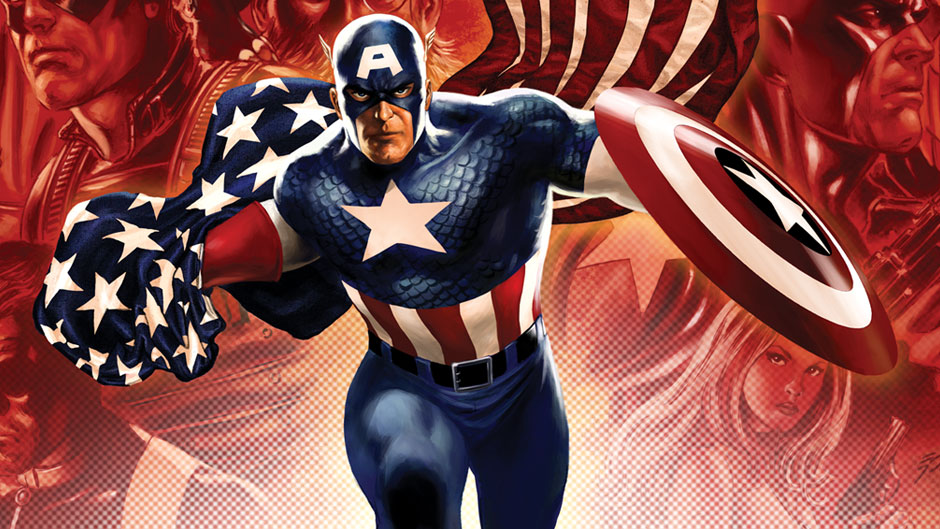
Captain America patriotIt is clear that the superhero is more revered these days because of the films but it is more than that. Captain America has a special quality that is sometimes hard to pinpoint but he evokes an ideal of who we all should be, not just Americans but everyone. That is why we are all celebrating his 75th anniversary.

José Soto
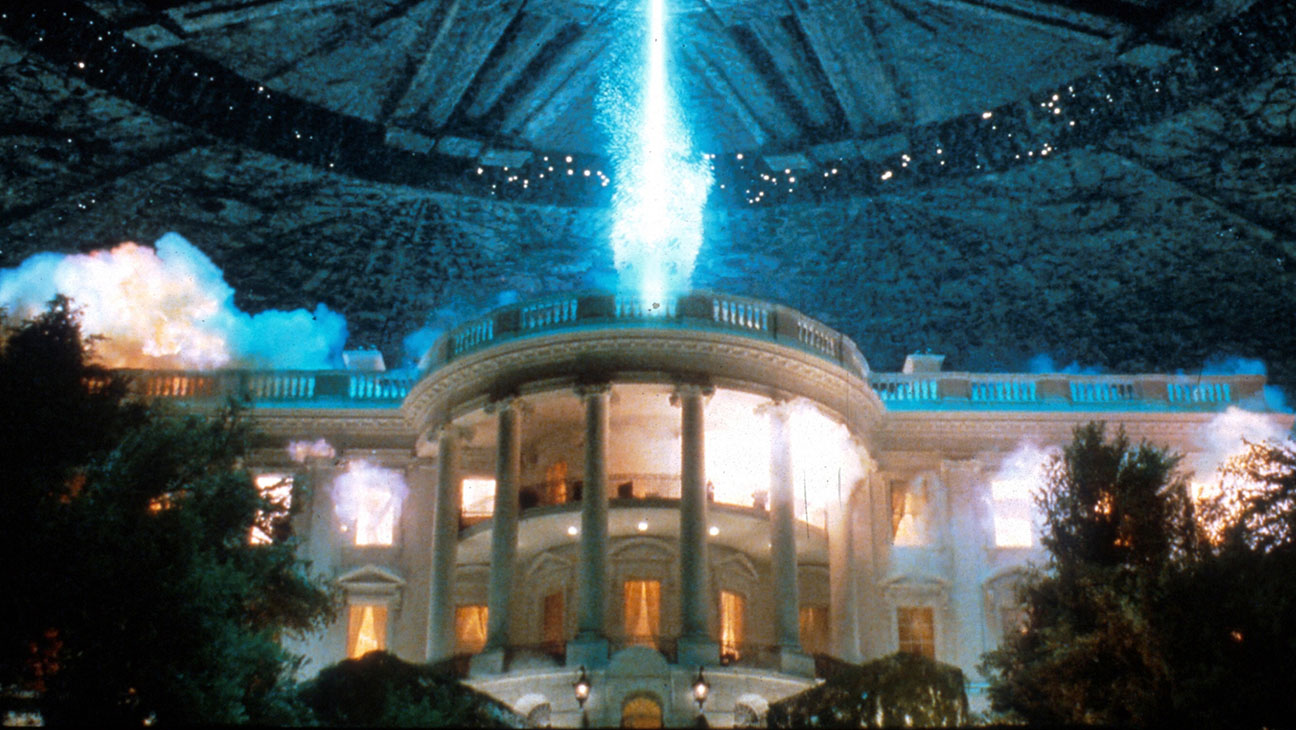
Independence Day 4Ever

White House destroyed in ID4

When I went to see Independence Day: Resurgence recently I couldn’t help but be disappointed with the film. It lacks so much of what made the original Independence Day so great. That film still resonates today for many good reasons.

Independence Day had something for everyone. It was a true epic that was funny, suspenseful, exciting and full of drama. But most importantly the original film had a simple core message about how we all had to come together and put aside our petty differences. All these elements were packed together in one movie and it meshed well. This all went to how Roland Emmerich and his partner Dean Devlin came up with the inspired idea for Independence Day.

Shortly after the success of their film Stargate, Emmerich was asked about alien life and he stated that if alien spaceships would suddenly show up he would be paralyzed with fear. This got the two filmmakers thinking about an idea that would become Independence Day.

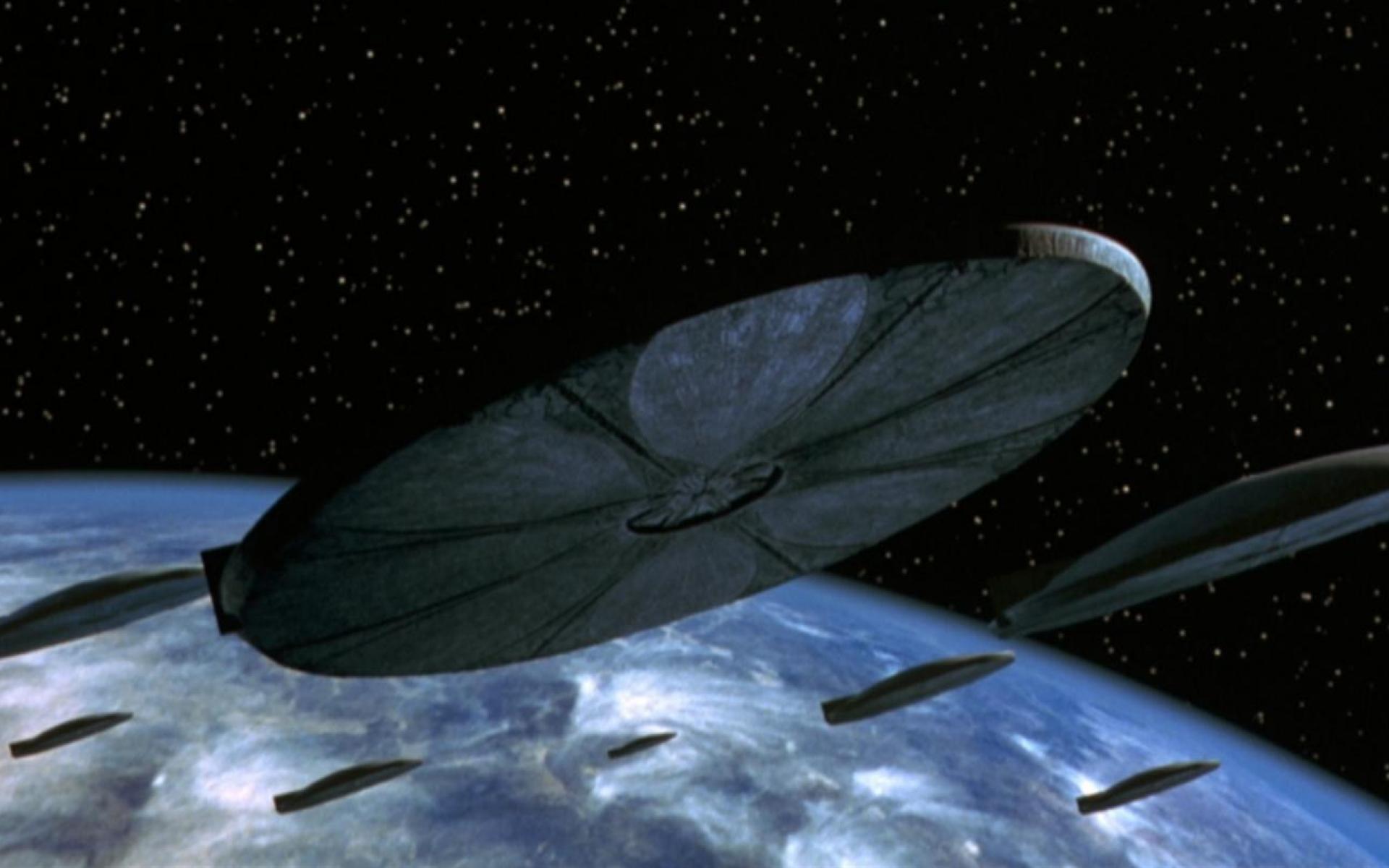
ID4 aliens arrive

Alien invasion movies have been around since the 1950s and they wanted to try something different. They melded that genre with the tired one of the disaster film, which had their heyday back in the 1970s. What they did was very smart, they took two distinct genres to make one great film that had the best elements of both genres. For instance, let’s look at the cast. The two main stars of Independence Day were Will Smith and Jeff Goldblum. Emmerich and Devlin filled the cast with lots of terrific character actors like Robert Loggia, Judd Hirsch, Margaret Colin, Mary McDonnell and Vivica A. Fox. That was something directly inspired by the all-star casts of those old epic disaster films like The Poseidon Adventure, Earthquake and The Towering Inferno.

Another element they took from the disaster film genre which is related to the diverse cast is having several different characters with their own distinct stories and backgrounds that were scattered across the country. Their stories were actually interesting, especially Smith’s character who had to battle the aliens and was concerned about his girlfriend.

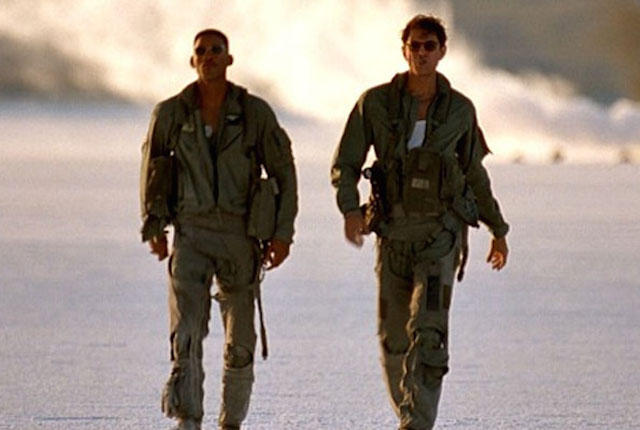
Smith and Goldblum triumphant

Meanwhile, she and the First Lady, who were completely different were reduced to equal terms as they struggled to survive the alien attack. The arc of Goldblum’s character was great also since he played the likeable nerd who saved the day in the end. Another story that worked was the one with Randy Quaid’s character who was seen as a kook by his family and society, but is redeemed by his heroic sacrifice.

The film made a point that these characters with their own strengths and flaws couldn’t defeat the aliens on their own. But when they finally converged, they pooled their efforts and beat the aliens.

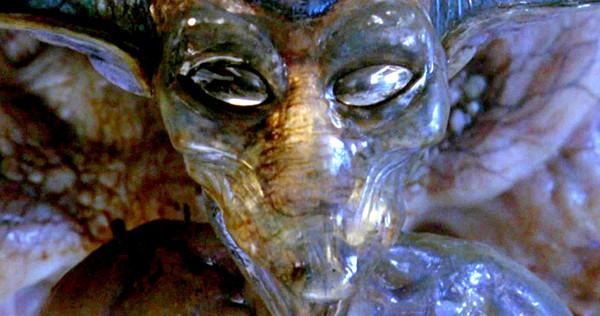
id4 alienAs for the aliens themselves, they were among the most stunning movie aliens ever created. Originally, Emmerich wanted to use the standard grey aliens with the big heads but add something different to the look. Creature designer Patrick Tatopoulos came up with two different concepts, one of them was putting a new spin on the traditional grey aliens and one that was gigantic. Emmerich liked both concepts and so he decided to use both of them. This is how we got the small alien in the living exo-suit with the tentacles.

What is really amazing is that the aliens, like the rest of the film’s effects, were done largely with practical effects. In fact, Independence Day is the last, big-budget epic to use practical effects with models and puppets. Very little CG was used for the film unlike Independence Day: Resurgence and every other blockbuster these days. What the special effects and production team accomplished is incredible being that what they did largely holds up today, twenty years after the movie was released.

Thinking about Independence Day’s ID4 speechsuccess is that it wasn’t done by Lucas, Spielberg or Disney. Yet this film holds its own even now twenty years later, which is something that cannot be said for Independence Day: Resurgence. Some snobby critics have argued that the movie appealed to the lowest common denominator but seriously who cares? The bottom line for me is that I leave the theater happy and satisfied. Independence Day did that for me and that is all that matters. What added to that feeling of joy was the triumphant score by David Arnold that was the best John Williams soundtrack he never made.

Independence Day had so many great ingredients that were salutes to other films like War of the Worlds, with the virus that defeats the aliens being a computer virus, the final battle echoing a Star Wars space battle and the final triumphant scene in the desert that was taken from the Chuck Yeager moments in The Right Stuff. But most of all Independence Day resonated because of its simple message of mutual cooperation to defeat a powerful threat. That message is still valid today and will carry on for a very long time .

Steven L. Walterson

Flying Cars Impractical

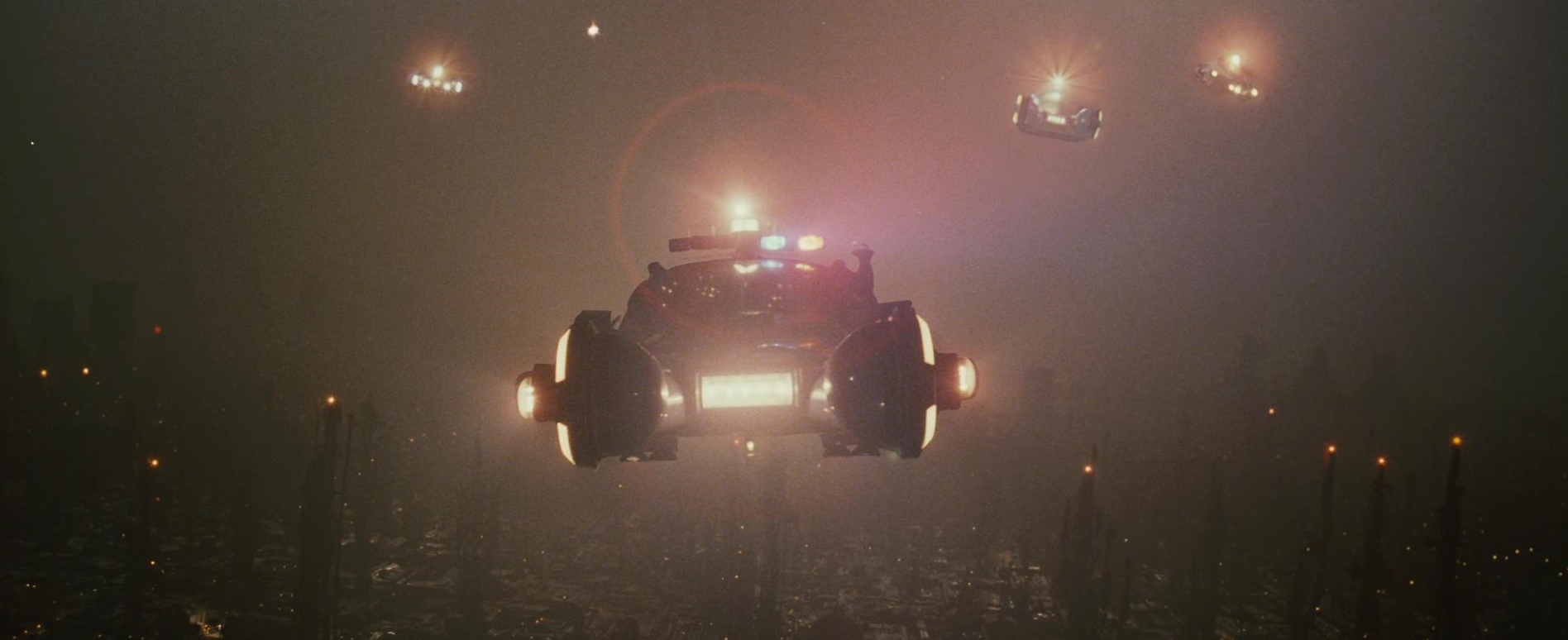
 Blader Runner car over LA

For anyone stuck in traffic having a flying car is the ultimate dream. It sounds like a good idea and looks so uber cool on film. Imagine zipping around the skies in a flying car like George Jetson or Doc Brown with his DeLorean in Back To The Future. You’re late for work, traffic has come to a halt on I-95 due to construction or some accident. But no problem! Shift your car to flight mode and off you go. Soar by all the rubberneckers and you make it in time to your meeting with minutes to spare.

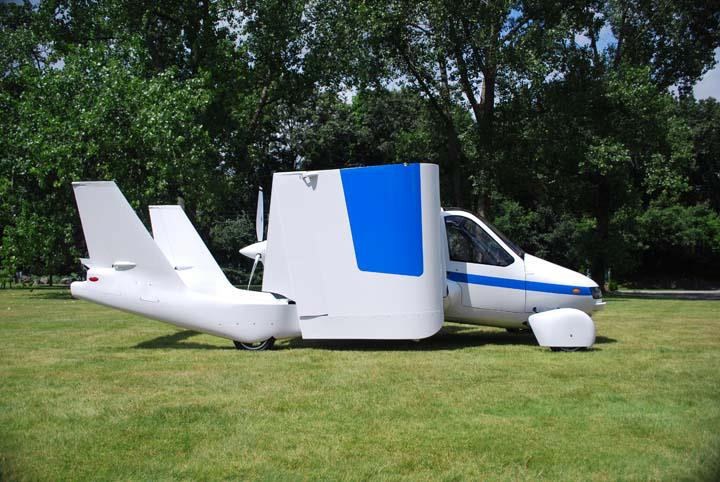
Transition Production PrototypeThe problem with this concept is that flying cars are not practical, today. Yes, there are inventors fine tuning actual flying cars but they’re bound to be a novelty items at least for the near future. Actually, those so-called flying cars that are being tested now are really just mini-copters or airplanes with automobile features. They’re not hovercraft. Several companies that are testing practical flying cars include Terrafugia, Haynes Aero and Moller International. In fact, the Defense Advanced Research Projects Agency has a multi-million dollar program with Terrafugia to build flying  military vehicles.

Terrafugia car

You would think that with all these recent developments and press releases that flying cars are just around the corner. The truth is that people have been building prototypes going back decades, but the cars built just weren’t practical. And neither are the ones being tested now.

Skyjams

Let’s look at the traffic scenario from above. OK , you’re stuck in traffic and switch your car over to flight mode to escape congestion. That would be fine if you’re the only one with a flying car. More likely, many drivers around you would have flying cars as well and have the same idea as you.  Before you know it, the traffic will be following you into the sky. Then there’s coordinating the air traffic with all the cars suddenly going up into the air. It would be a chaotic, logistical headache and will probably lead to more accidents.

DeLorean in sky traffic

As shown in Back To The Future, Part II, Doc Brown had to deal with traffic in the air when he flew the DeLorean time vehicle. In fact, there’s this one scene where he complains about congestion in the skyway. The film showed that when flying, the cars had to follow a certain path. A driver won’t have free reign and space to just go anywhere. Actually, any pilot will tell you that planes and helicopters have rigid flight paths that they must adhere to; any deviation has to be cleared with air traffic control. Flying cars will also have to follow strict flight paths; in effect a skyway will be created with these paths. So if flying cars were to take off in popularity, the traffic congestion won’t go away. It may turn out to be faster to stay on the ground! Of course, there are some futurists that may scoff at this hurdle with claims that flying cars operate three dimensionally instead of today’s ground vehicles that operate two dimensionally. In theory, they claim that traffic jams would not be a problem for a vehicle operating in a three-dimensional plane but reality will probably dictate otherwise.

Air & Road Compatible

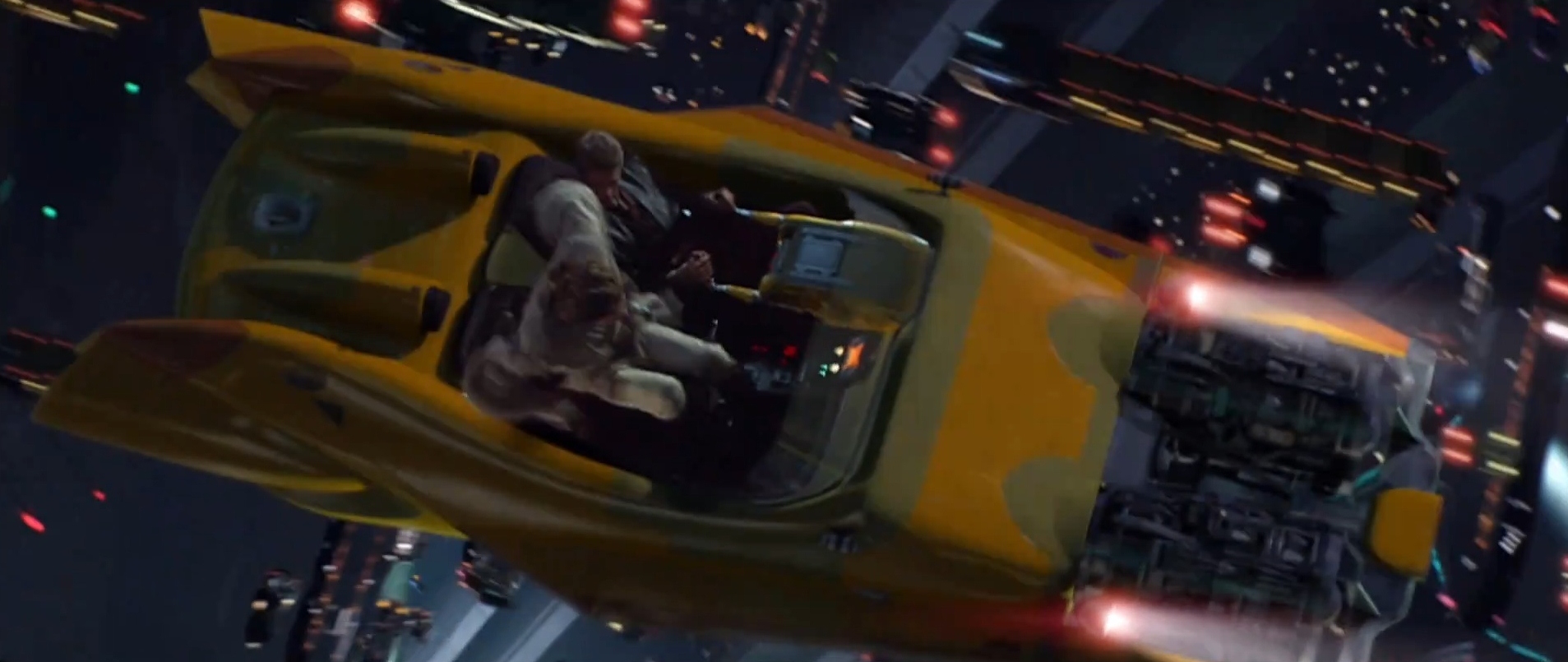
Another issue is that there are many dials and features on a plane that a pilot has to contend with so it’s more complicated to operate than a car. Remember when they showed the dashboard and controls in that flying spinner car in Blade Runner? It looked very complex. Then there is making sure the cars meets both road and air standards.  What about safety features? Convertibles are definitely out, which makes that flying car chase sequence in Star Wars Episode II: Attack Of The Clones even more ludicrous. It’s one thing to have Obi-Wan Kenobi landing on Anakin Skywalker’s flying car unscathed or Anakin jumping out of it to get to the assassin’s vehicle; it can be explained that they used the Force to control their falls. But Anakin jumped out of a convertible, how safe would that vehicle be or practical without a helmet and mask? Just look at the old biplanes. The pilots in them had to wear helmets, goggles and warm clothing. All that wind up in the sky is cold and brutal, there isn’t any way anyone could operate an open-air flying car.

Star Wars flying car

What if something goes wrong? This won’t be like a normal car situation where the vehicle just stops working and you push it off to the side of the road. No, that thing is coming down. Perhaps an onboard computer will sound off an alarm if something is wrong with the car, forcing an emergency landing. But how trustworthy is that computer?

A look at the current prototypes will tell you that these things can’t easily fit into an average mall parking lot or garage. The flying features, i.e. the wings and propellers, have to be more compact to reduce the vehicles’ profile on the road. But how much can be reduced to operate safely in the air? All of this will add significantly to the price of the cars. Which means even if they came out tomorrow only the wealthy can afford them. Plus, what kind of fuel is to be used and its cost hasn’t been taken into account. Continue reading

Fathers & Sons in Star Wars & Star Trek

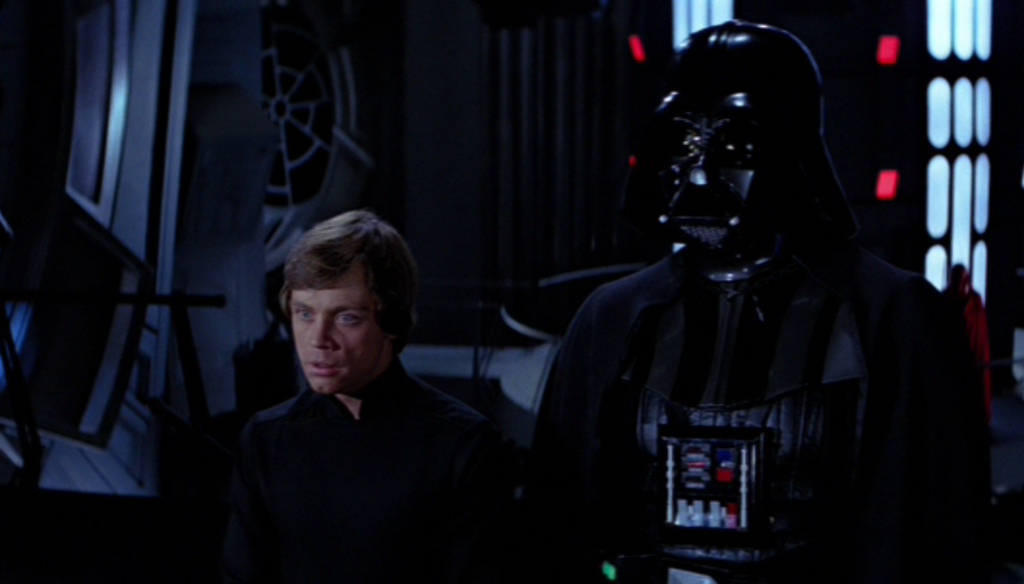
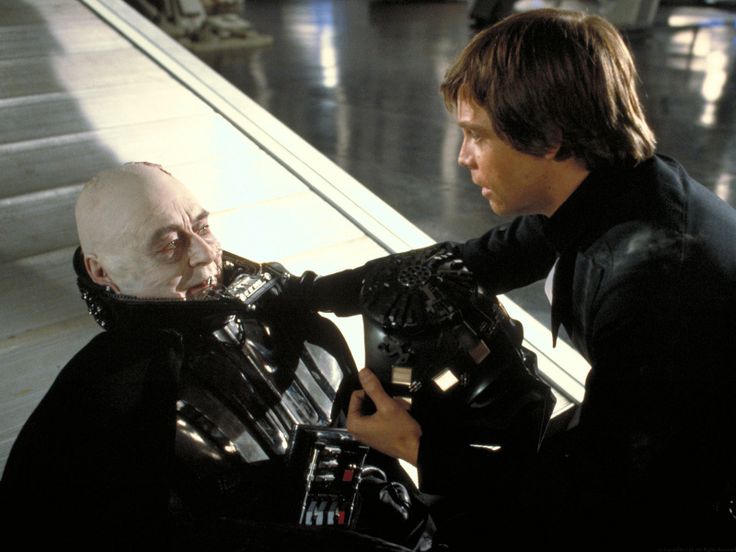
Luke Skywalker and Darth Vader

the visitor

As we celebrate Father’s Day and take time to remember our fathers it’s easy to start thinking about the fathers seen in the two great sci-fi live-action franchises: Star Wars and Star Trek.

Paternal Wars

In pop culture Star Wars is more readily connected with fatherhood issues because of Darth Vader and his twin children Luke Skywalker and Princess Leia Organa. Right now, Vader’s fatherhood is commemorated with cute merchandising that is everywhere, but seriously, Vader is a terrible father figure. Not too surprising since he is the galaxy’s most infamous villain who terrorized the Star Wars universe as Emperor Palpatine’s right hand man.

But his dastardly nature was cemented with the way he treated his children. In Star Wars Episode IV: A New Hope he tortured his daughter for information, though he may not have known Leia was his daughter. On the other hand, this implies that his command of the Force was not as great as he thought or that Leia’s connection to the Force was strong enough to shield her identity from him.

Darth Vader and son

Now with Luke, Vader showed that for most of the Star Wars films, he was a terrible father. He knew who Luke was yet he was obsessed with trying to seduce his son to the dark side of the Force, going so far as to chop off Luke’s hand during their epic lightsaber duel in Star Wars Episode V: The Empire Strikes Back. Yet, Luke still wanted to save his father. In Star Wars Episode VI: Return of the Jedi, Luke felt a glimmer of Vader without helmetgoodness within Vader and he believed he could help redeem Vader. This was why he was hesitant to confront Vader, which he had to do in order to become a Jedi.  By the film’s end, Vader’s resolve weakened and his burgeoning love for son was enough to turn him away from the dark side. Darth Vader found some redemption when he killed the Emperor to save Luke’s life even though it ultimately cost him his own life. Whether or not this final act absolved him of his past crimes is open to debate, but clearly, his love for his son drove him to defeat the Emperor.

Father and son relationships didn’t end Han Solo and Kylo Renwith the sixth Star Wars film. In Star Wars Episode VII: The Force Awakens, we learn that Han Solo’s son, Ben, was actually Kylo Ren, a new follower of the dark side. In this situation, the father is much more sympathetic and our scorn is directed at the son. But we have to wonder what kind of father Han was to Ben. It couldn’t have been a great relationship; he implied during conversation that Ben had too much of Vader in him. But Han hoped he could save his son’s soul when the two finally reunited. Sadly, Ren’s actions at that point set him down a darker path.

Continue reading

Top 50 Star Trek Episodes, Part 2: Episodes 11-30

 Star Trek collage wallpaper

As many reading this know, this year marks Star Trek’s 50th anniversary. It’s actually an event that will happen in less than three months from now as celebrations will most likely hit fever pitch among fans who delighted in the space-faring adventures of Captain James T. Kirk (William Shatner), First Officer Spock (Leonard Nimoy) and the rest of the starship Enterprise crew. Continuing our countdown of the 50 best episodes from the original Star Trek series, we will start with the 30th best episode…

30. “Tomorrow is Yesterday” The starship Enterprise and its crew time travel to the 1960s and rescues a U.S. Air Force pilot (Roger Perry) who isn’t allowed to return home and report on what he has witnessed.

Tomorrow is Yesteday

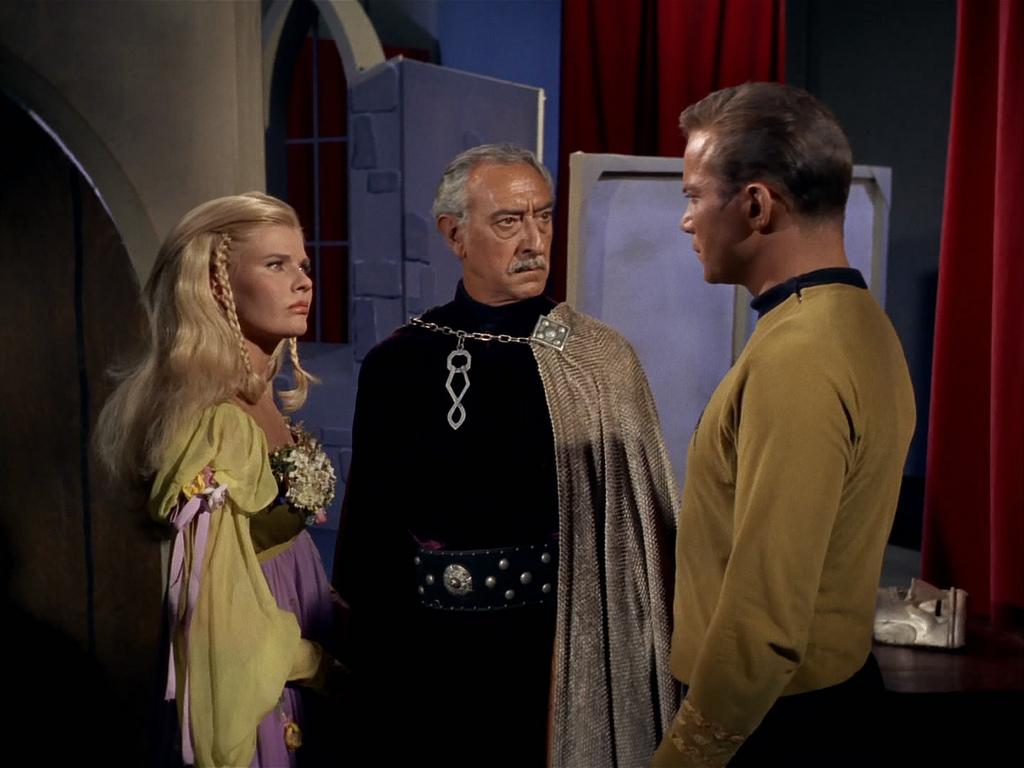
29. “The Conscience of the King” Excellent scripted lines and stellar acting by Arnold Moss as a tortured former dictator turned Shakespearian actor highlights this episode.

Conscience of the King

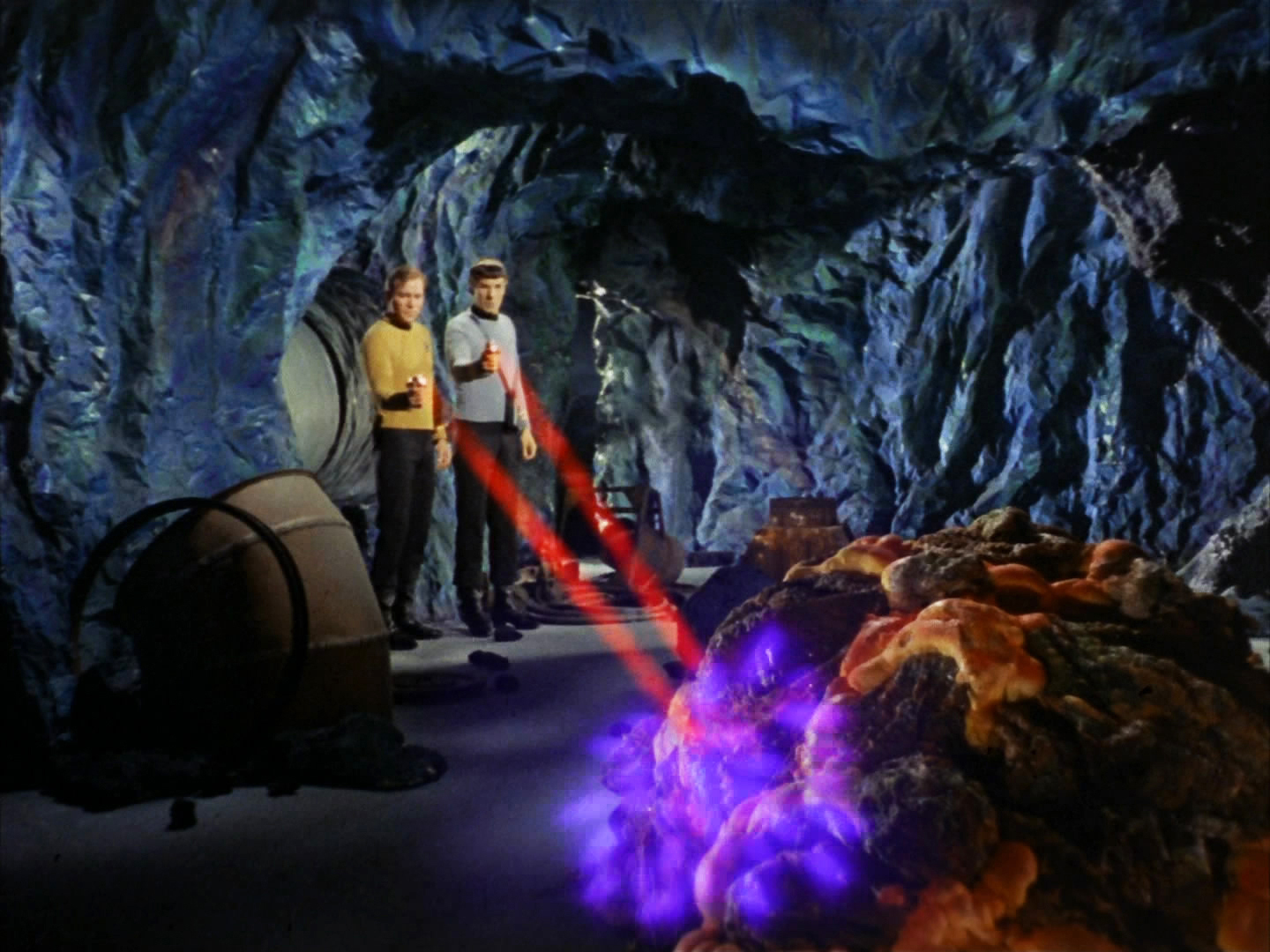
28. “The Devil in the Dark” Captain James T. Kirk and Spock investigate killings at an underground mining facility by a monstrous rock-like creature. But there is more to the story…

Devil in the Dark

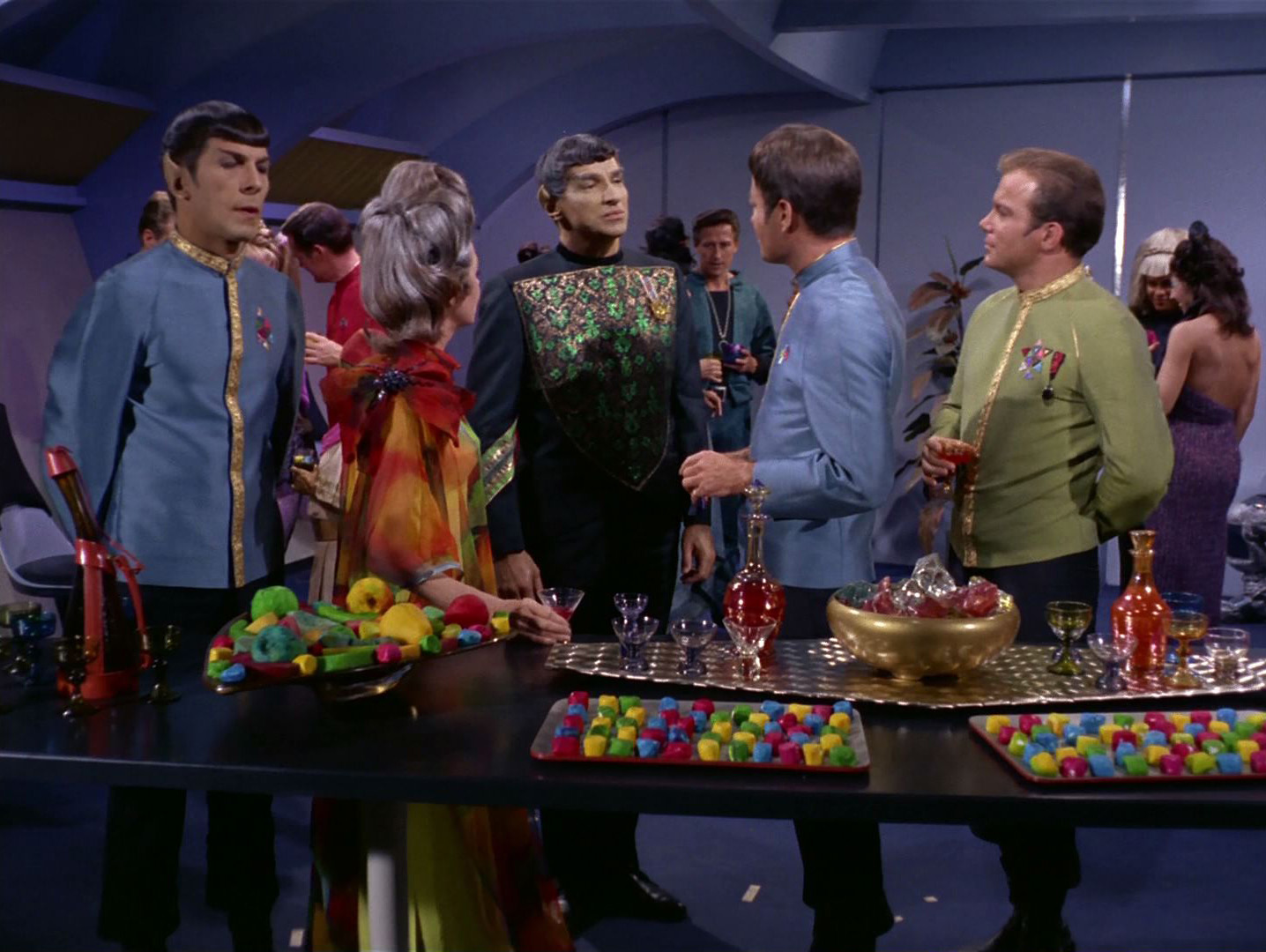
27. “Journey to Babel” The Enterprise transports diplomats to a peace conference; among the passengers are Spock’s estranged parents (Mark Sarek and Jane Wyatt). Complicating the occasion are the strained relations between Spock and his father and an onboard secret agent trying to wreck the conference.

Journey to Babel

26. “Assignment: Earth” In this backdoor pilot, Kirk and Spock time travel to Earth in the 1960s and meet the mysterious Gary Seven (Robert Lansing), a human sent by aliens to Earth to keep humanity from destroying itself. However, his mission is hampered by Kirk and Spock who suspect Seven is up to no good.

Gary Seven Assignment Earth

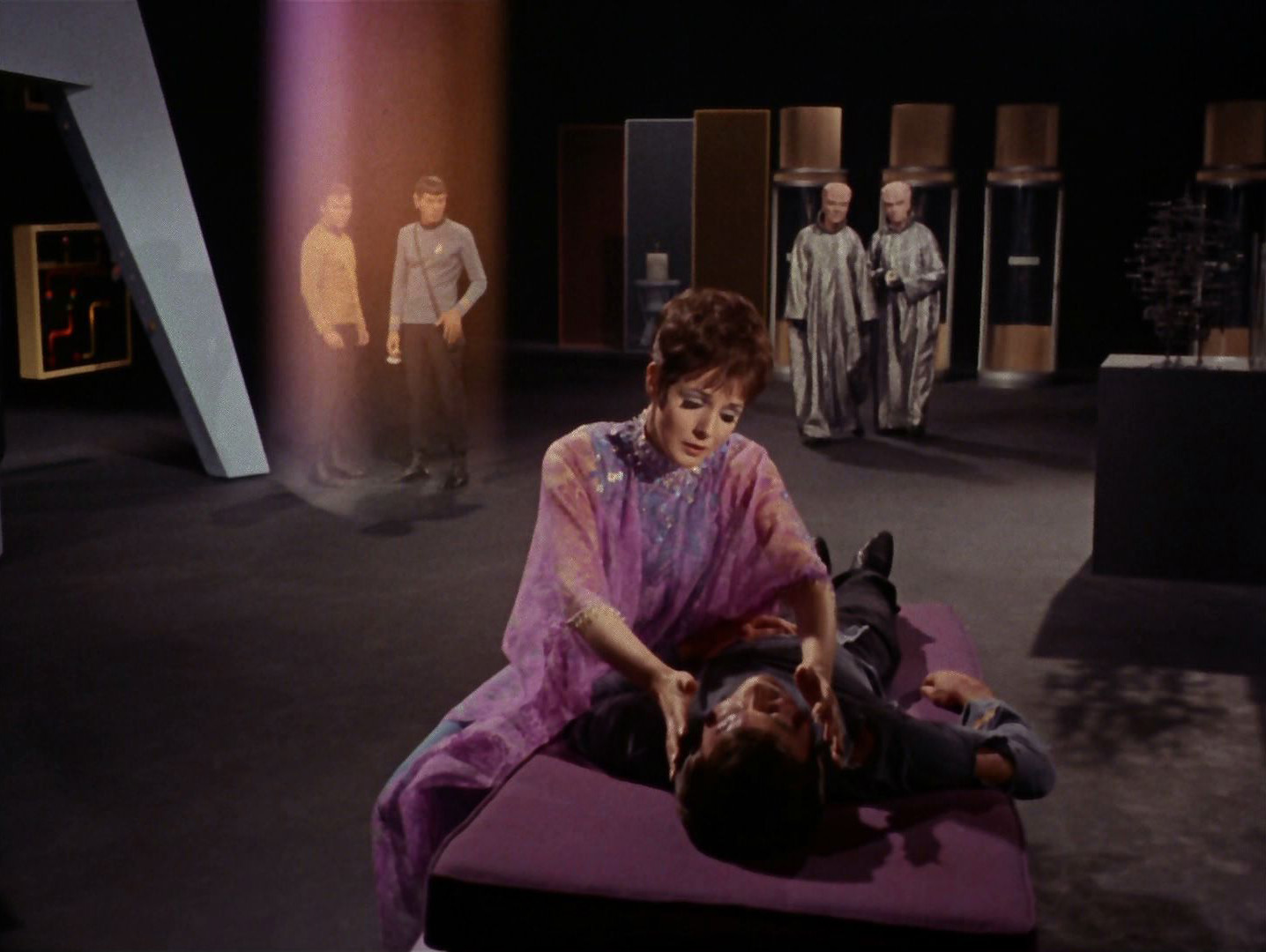
25. “The Empath” Kirk, Spock and Dr. McCoy (DeForest Kelley) are captured and tortured by callous aliens. During the ordeal they meet Gem (Kathryn Hays), a mute woman who has the power to heal others and is also under study by the aliens to see if her people are worthy of salvation. Helping make the episode so memorable were Hay’s magnificent and expressive performance and a beautiful score.

The Empath

24. “Amok Time” Spock must return to his home planet Vulcan and mate or else he will die. This episode was the first one to lift the veil on the enigmatic Vulcans and revealed much about their logic-based culture. The Vulcan travelogue and cultural exploration were punctuated by a nail-biting duel between Spock and his friend Kirk for the hand of Spock’s betrothed.

Amok Time duel

23. “The Enemy Within” A transporter malfunction splits Kirk into two halves. One meek and indecisive, the other lecherous and primal. This oft-used trope of the evil twin actually worked well because the script (by Richard Matheson) thoughtfully examined how dual aspects of Kirk’s personality, including his savage side, were essential to his survival and capability as a leader.

Kirk the Enemy Within

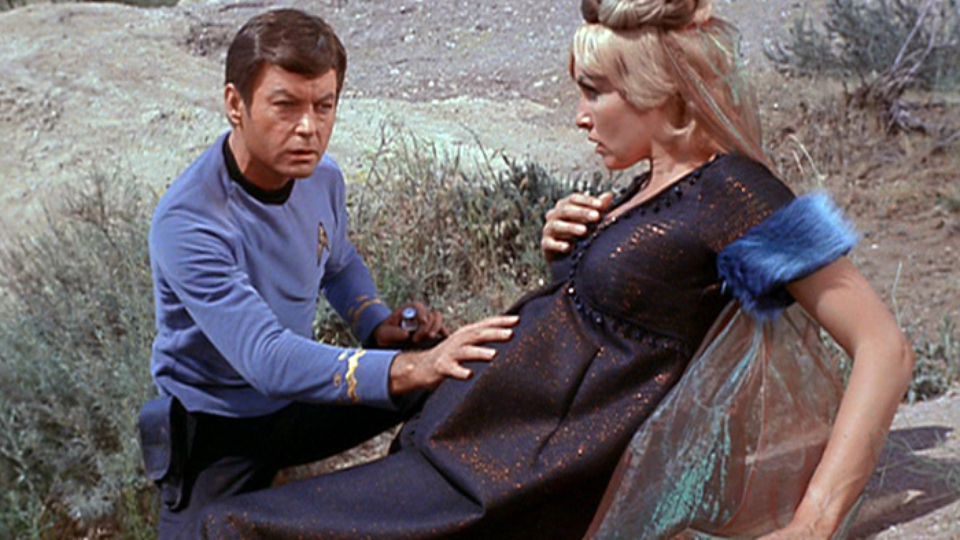
22. “Friday’s Child” On a planet with a primitive and brutal society Kirk, Spock and McCoy are embroiled in a tribal power struggle involving Klingons. After the head of local tribal leader is killed the trio must escort his pregnant wife (Julie Newmar) to safety while avoiding the leader’s successor and his men. Meanwhile, McCoy has to deal with an uncooperative patient and Spock, who is clueless around infants.

Friday's Child

21. TIE: “The Cage”/”The Menagerie, Part I &II” The very first Star Trek pilot “The Cage” about telepathic aliens imprisoning Captain Pike (Jeffrey Hunter), a previous Enterprise captain, was rejected by NBC, but the network allowed series creator Gene Roddenberry to produce a second pilot. However, footage from the original pilot was recycled into a classic two-part episode of the regular series as Spock undergoes a court martial for helping his former commanding officer.

Continue reading