Artemis II Heralds Resumed Moon Missions With The Promise Of More Space Exploration

As a kid growing up in the ‘70s, there were few things cooler than knowing that we landed on the moon. It was a whirlwind era of excitement for kids as we waited for the next moon landing. We had other obsessions in that time like Mego action toys, G.I. Joe figures and TV shows like the Six Million Dollar Man and Space: 1999. But right in the mix was something even bigger: the moon missions-until one day, I noticed we weren’t sending anymore astronauts to the moon.

What happened a few years ago for me at the time was beginning to be a thing of a distant past. IN 1972, the Apollo space missions ended. A lot of us thought they were merely on hiatus. By 1976, we celebrated the nation’s bicentennial but without any further lunar missions as the number of lunar missions that year was a big zero. At a family trip to Cape Kennedy (which had since been renamed by Cape Canaveral, its original name) and the Kennedy Space Center, I remember the experience in awe. They had rockets everywhere and spaceships that sent people to the moon. But what dampened the experience for me was that in my visit, the Apollo era had ended.

Over the years we’ve been through a long stretch of futurist speculations and promises seen on the covers of magazines such as Popular Science and Omni, and sci-fi TV shows. We’ve had robotic missions to nearby planets that captured our imaginations and the space shuttles missions which helped construct the International Space Station. But these suborbital missions did not really captivate us like the Apollo missions since it did not seem like we were advancing towards a permanent presence on the moon and beyond. Setbacks like the Challenger disaster and political squabbles over NASA’s budget didn’t help either. Yes, we made advances with satellites and robotic missions but they seemed uneventful for most of us.

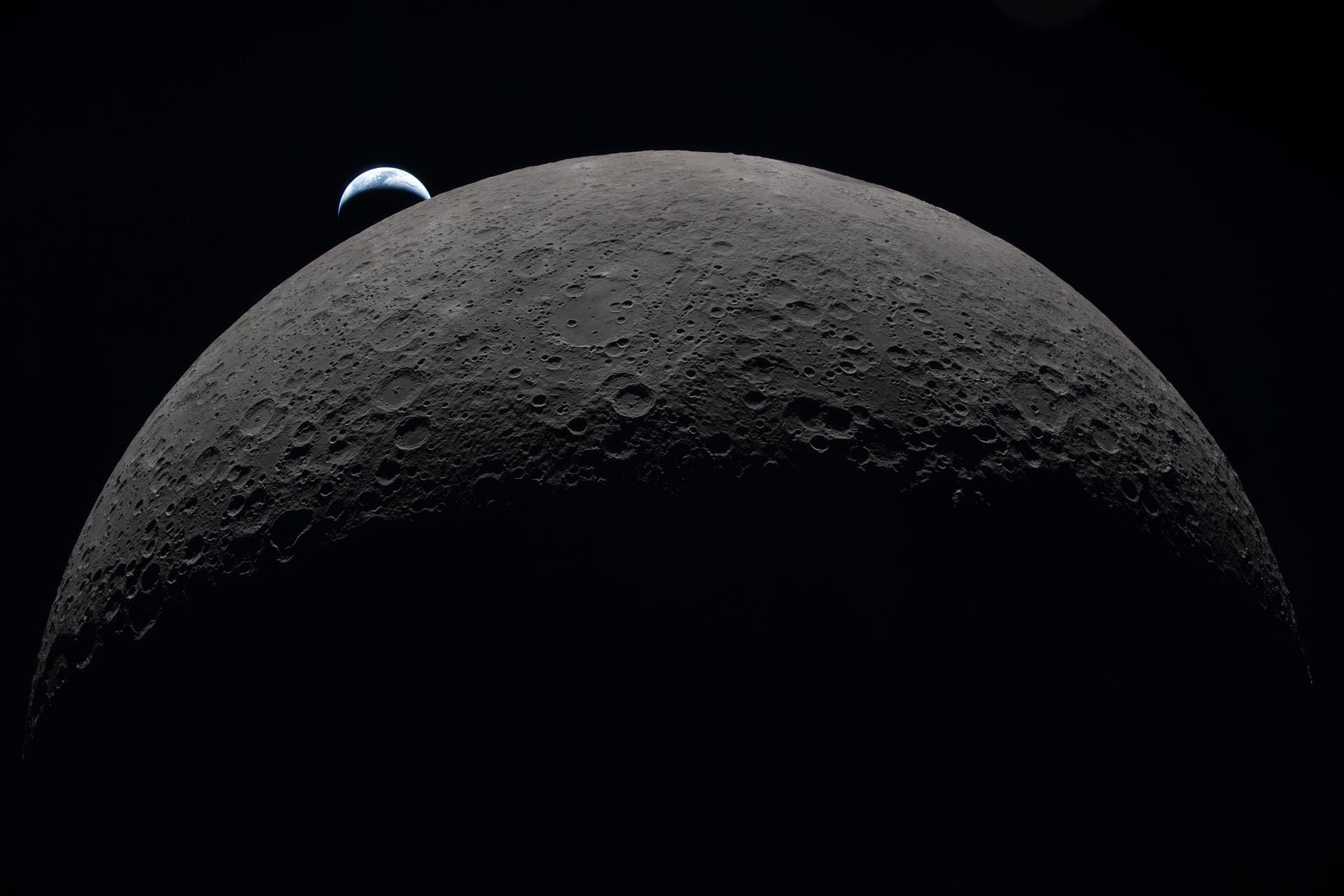
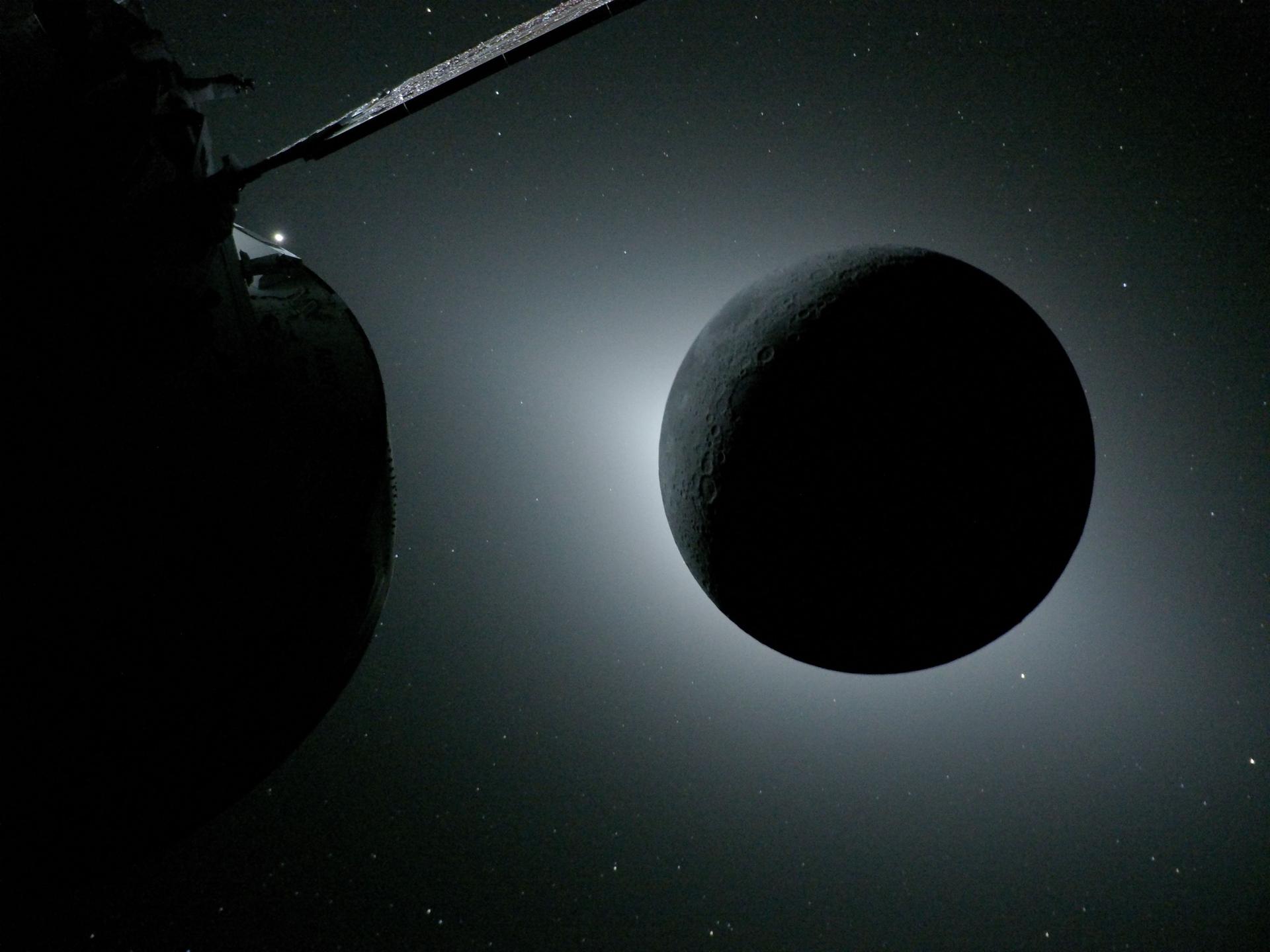
That all changed 54 years after the last Apollo mission when the Artemis II mission reignited that wonder with its 10-day journeyed around the moon and farther out in space than any human has journeyed, which captured sights unseen since time began.

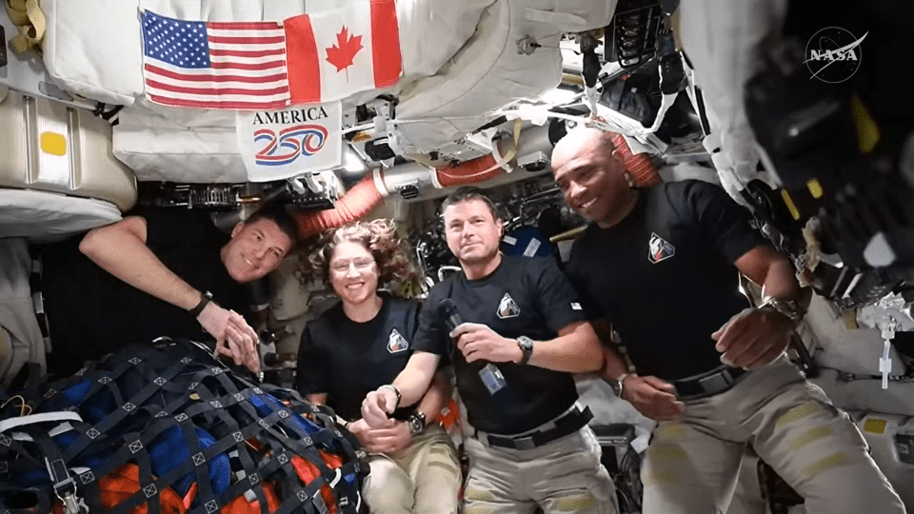
It all started on April 1, 2026 when astronauts Reid Wiseman, Victor Glover, Christina Koch and Jeremy Hensen launched onboard the Orion spacecraft called Integrity to the moon. In addition to this being the first time humanity left near Earth orbit since the early 70s, the mission established many historic firsts: the first multinational crew to go to the moon, the first woman, the first person of color, the first non-U.S. cititzen and more importantly the furthest out into space that any human has journeyed. This happened during the climax of the trip when the Artemis II astronauts headed out past the dark side of the moon and captured spectacular images that will certainly inspire future generations. Their journey unexpectedly captivated the world as this peaceful mission showed the best of humanity thanks to the personable messages and images the Artemis II crew conveyed to the world from the cramped Integrity. Their voyage provided us with much needed relief and renewed hope for humanity as it is embroiled in needless wars, pandemics, crumbling economies and criminal political leaders. There may be some hope for us, yet.

Now that the Artemis II crew returned safely to Earth, their mission was more than just a historic event—it’s our return to the dreams our generation grew up with, and hope to have again. Just like the Apollo heroes, the Artemis II crew are paving the way of something even bigger—our next leap into space exploration. Alongside our childhood nostalgia, what truly fuels the Artemis II mission is how far we’ve come.

The privatization of space, with players like SpaceX, Boeing and Blue Origin, has opened up competition and innovation with space. Advances in computing, AI, and engineering, plus what we learned from past missions have reignited a new era for space exploration. This will include a lunar landing in 2028 and hopefully the establisment of a moon base in 2030. From there we can start to seriously conisder missions to Mars and beyond within the next few decades. What once was paused after the Apollo misisons ended, have been rekindled as humanity races back to the moon…and goes beyond.

Steven L. Walterson

Battlestar Galactica Reimagined Circa 2003

After the original Battlestar Galactica TV show ended its run in the late ’70s there have been numerous attempts to revive it. Some included efforts by Bryan Singer and Richard Hatch, the star of the original TV show. But none were successful until Syfy greenlit a remake instead of a sequel to the orignal show, which aired as a two-part mini-series on the cable channel beginning on December 8, 2003.

Distinctly darker and more grounded than the original TV show, the new Battlestar Galactica quickly won acclaim from critics and fans, even those who were skeptical over the changes made to the concept. The mini-series was so successful that Syfy quickly ordered a series, which began airing later in 2004.

The basic premise of the new Battlestar Galactica was similar to the original TV show. In a distant part of the galaxy, a fragile truce between humans and a cybernetic race called the Cylons is shattered when the Cylons launch a surprise attack that destroys the human civilization. The few remaining human survivors set off in a ragtag fleet led by the last remaining battlestar warship called Galactica to find refuge in the lost human colony world known as Earth.

Whereas the original Battlestar Galactica clearly followed the spirit of Star Wars with an emphasis on starship battles and admittedly cheesy scripts, this version was edgier and grittier. It was clear that this 2003 version of Battlestar Galactica was influenced by 9/11. This turned off some fans of the original Battlestar Galactica who desired a more innocent rendition, but the reimagining drew in many more fans to take their place. They welcomed the moral dilemmas and flawed characters that were the main feature of the mini-series as the aftermath of war and its impact on humanity was fleshed out. The show was so grounded that even though these humans lived in a distant part of the galaxy they wore the same kind of clothes we wear today including business suits. They spoke like normal people, too with the exception that the F word was replaced by “frak” to get around censors, although this made up curse word was used too often and unrealistically in normal conversations.

Another way Battlestar Galactica stood apart from the original was with its exceptional acting. Starting from acclaimed and well known actors like Edward James Olmos and Mary McDonnell to relative newcomers like Jamie Bamber, Katee Sackhoff and James Callis, they infused their roles with needed gravitas which engaged the audience. Unlike the original which focused on the adventurous exploits of Captain Apollo and his buddy wingman Starbuck, the clear leads in the remake were Olmos’ William Adama and McDonnell’s President Laura Roslin. Both characters were unexpectedly thrust into leadership roles for the desperate remains of humanity looking for any kind of guidance and hope. Even with the compelling and mature leads, the remake was more of an ensemble piece, as it prominently featured other important characters like Adama’s son Apollo (Bamber) and his best friend, Starbuck (Sachhoff in a role that was orignally portrayed by a man).

Adding to the drama was that the Cylons were hunting down the last remnants of humanity. One of these survivors was Dr. Gaius Baltar (Callis), who unwittingly helped the Cylons destroy human civilization and grapples with his guilt as he is taunted and seduced by an imaginary Cylon called Number Six (Tricia Helfer). She is part of a new race of Cylons that evolved to look and act like humans and were able to infiltrate human society. This new wrinkle with the Cylons added an intriguing twist and put a face to the enemy, which in the original show were just robots without any personality. This development also introduced an element of paranoia as the humans were no longer sure if the enemy was hiding in plain sight among them ready to commit acts of sabotage and terrorism.

The success of Battlestar Galactica revitalized interest in the IP and led to a TV series that ran for four seasons, a spinoff series called Caprica and there are reports of a new version to be produced. Some of the best sci-fi episodes of any TV show were part of the TV show’s lineup as it further developed the plot lines and characters introduced in the mini-series. This would not have been possible if the Battlestar Galactica 2003 mini-series failed to find an audience and it is why it should be praised for its accomplishments twenty years later.

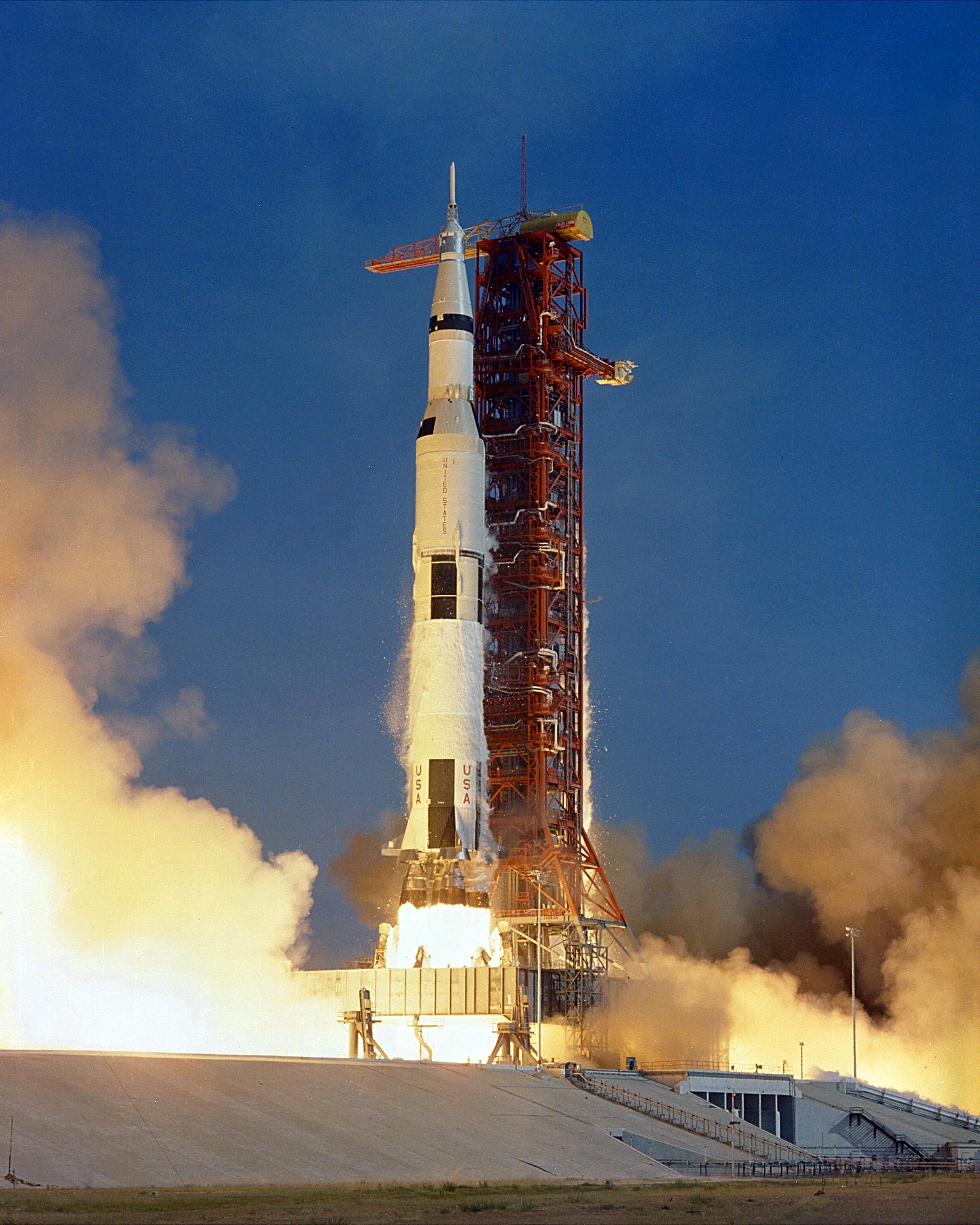
One Giant Leap: Apollo 11’s 50th Anniversary

It may be all too easy to conveniently forget or dismiss the historic anniversary of the Apollo 11 moon landing given the current mess our world is in. It is also just as easy to get caught up in all the problems, both petty to serious, we face, from hateful political tweets to nuclear proliferation, from celebrity gossip to climate change. Yet, the fact remains that fifty years ago, humankind observed and celebrated its greatest technological feat with the first manned landing on our moon.

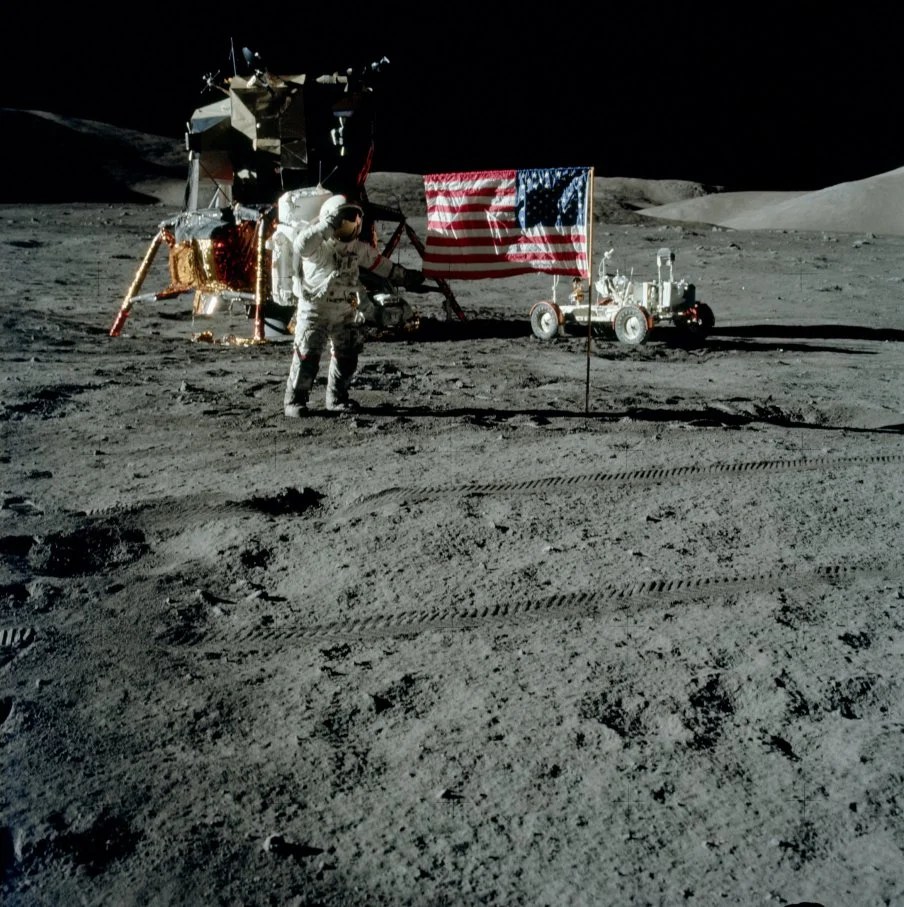
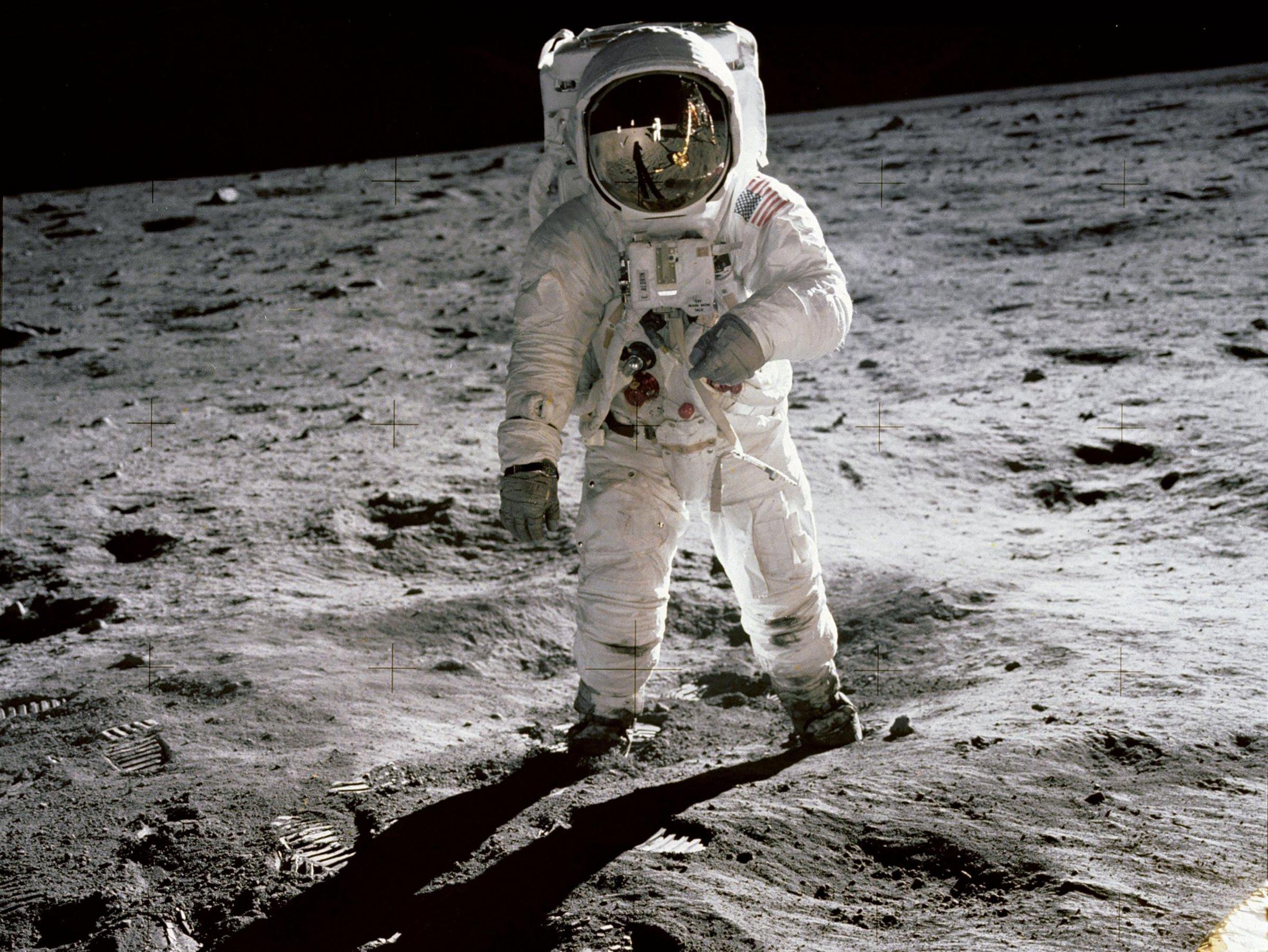
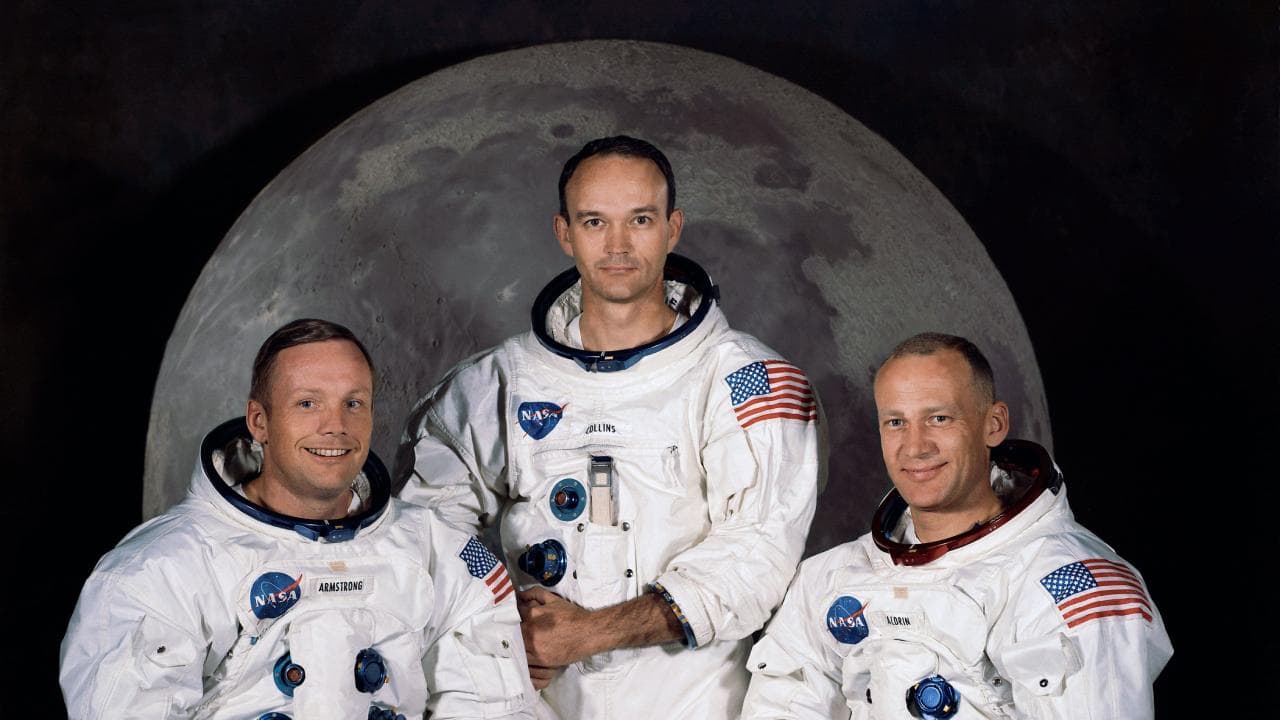
Of course, everyone knows of Neil Armstrong, the first man to walk on the moon, Edwin “Buzz” Aldrin Jr., the second man to walk on the moon, and Michael Collins, the command module pilot of the Columbia, which stayed in lunar orbit as Armstrong and Aldrin descended to moon on the lunar module Eagle. Their accomplishment was truly spectacular and took great courage considering the dangers they faced with relatively untested and primitive (by today’s standards) technologies. Neil Armstrong was always an understated, low-key person who quickly disappeared from the spotlight after his feat. This is part of the reason why not many know how suitable he was for the mission. In his career, Armstrong displayed a calm veneer and quick-thinking skills that were needed in the Apollo 11 mission. Before Apollo 11, Armstrong used these skills to improvise and save his life during dangerous tests and would do so again as the Eagle approached its landing spot. The astronaut saw as they approached the site that it was not a suitable place to land the Eagle, so he used his piloting and navigational skills to quickly find a new location with precious seconds to spare before the module’s fuel ran out. The mission was that close to failing but thankfully it was a huge success which momentarily united all of humankind.

Apollo 11 was one of the most significant milestones in our collective history because with this feat humanity was no longer Earthbound. We are now on the verge of becoming a spacefaring species thanks to the mission, which truly was one small step, but an incredibly important one. This is vital because by traveling into space we are taking steps to prevent our extinction. Of course, landing on the moon was just the beginning and as of now it will take much more for us to become a true space-dwelling species.

One downside to the Apollo mission is that it was fueled back in the ’60s by the Space Race between the United States and the Soviet Union. The U.S. was caught up in a struggle to get to the moon first, to achieve President John F. Kennedy’s goal of getting to the moon by the end of the decade. And this was accomplished 50 years ago, but afterwards, both superpowers took their eyes off the ball. Instead of expanding upon the landing and establishing a lunar colony, both countries focused their space efforts much closer to home. As we made numerous trips to low Earth orbits to set up space stations and conduct experiments the public’s interest in the space effort quickly diminished. Many became downright dismissive and openly (and loudly) wondered what was the use of traveling to space when we had more pressing problems down on Earth.

While these critics have a legitimate point, they overlooked the long-range benefits of space travel and even the immediate ones. For example, after the Apollo program closed down in the ’70s, many of the technicians involved in the program eventually migrated to the computer field. Many of them were considered geniuses and many organizations involved with computers took advantage of this. They were able to use their expertise and knowledge to help drive the marvelous Computer Age that we live in. This is stunning when you consider that the computer that ran the Eagle spaceship was far weaker than any cellphone. As primitive as the computers were during the Apollo mission they paved the way for the computer renaissance today.

However, computers and other technological innovations are not the primary legacy of Apollo 11. Thanks to the efforts of the Apollo 11 astronauts and everyone involved, the imagination was fueled for many of today’s entrepreneurs who have an eye toward space. These include Elon Musk, Jeff Bezos, Richard Branson, and Robert T. Bigelow. They are actively improving and creating new space technologies such as the resuable Falcon 9 rocket–a true successor to the Apollo’s Saturn V, inflatable space habitats, and more. Private companies are now paving the way to fully return us not just to the moon but to Mars itself. So even though it may seem as if we had reached a dead end with the lunar landing 50 years ago, the fact is that there was merely a delay. We are on the cusp of the next great Space Age where the Space Race won’t be between nations but companies as they rush to reach the red planet. There will be mishaps and setbacks but in the long run these will be mere blips in our future history of being space dwellers.

Thus, 50 years later, Apollo 11 continues to impress and inspire countless of others who will carry forth our species into the stars. Collectively, we will always commemorate and celebrate this historic moment for our species because as Neil Armstrong himself famously said when he took his first step on the moon, “That’s one small step for man, one giant leap for mankind.”

Walter L. Stevenson and José Soto