It has been 30 years since the first episode of Star Trek: Voyager debuted, yet it is still fondly remembered today, especially when it is compared to many modern Star Trek TV shows. Let’s take a look back at Star Trek: Voyager as its 30th anniversary is celebrated.
Flagship Show
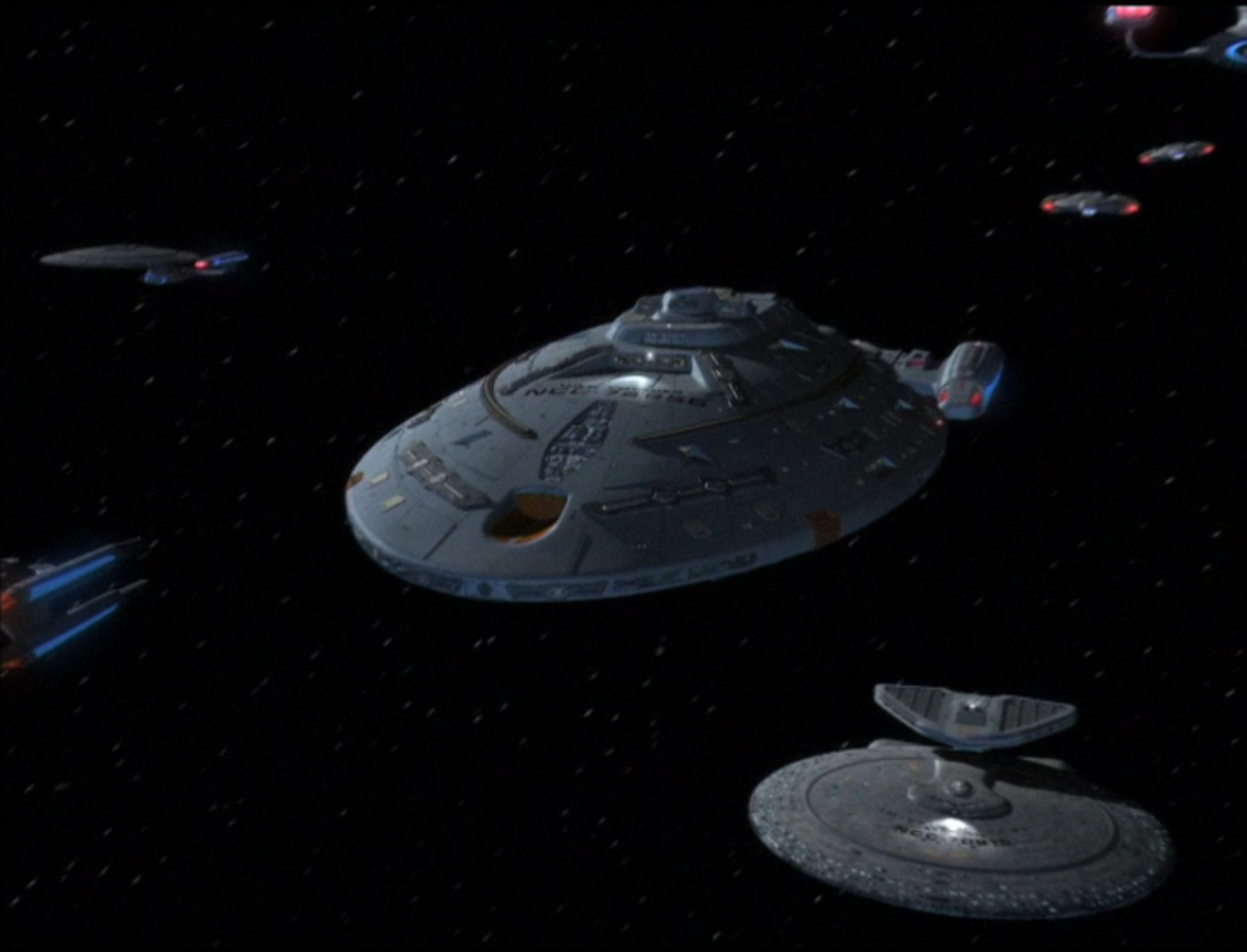
Star Trek: Voyager was the flagship TV show of the fledgling United Paramount Network (UPN) that launched on January 16, 1995, with the airing of “Caretaker” the pilot episode of Star Trek: Voyager. When the TV show premiered it was largely anticipated though many fans had reasonable reservations about yet another Star Trek TV show. After a decades-long drought, fans were inundated with TV shows starting with Star Trek: The Next Generation (TNG), which was followed by Star Trek: Deep Space Nine (DS9), and then Star Trek: Voyager. It was supposed to address complaints Paramount Pictures executives had about DS9 for straying too far from standard Star Trek.
Showrunner Rick Berman, who also ran TNG and DS9, was reportedly hesitant to produce another Star Trek TV show that would run concurrently with DS9. However, the Paramount Pictures executives were adamant about creating another Star Trek TV show that more closely followed the standard starship-visiting-planets formula to help launch UPN. Given this task, Berman and his associates sought to differentiate Star Trek: Voyager from other Star Trek TVshows.
A Lost Crew in Space
The premise was fairly simple, a starship called Voyager from the United Federation of Planets and Earth is flung to the far corner of the galaxy (the Delta Quadrant) with a crew made up of Starfleet officers and renegade Maquis freedom fighters (more on them later). With limited resources and on their own, the Voyager crew has to find a way back home while exploring on the side and encountering strange new worlds, yada yada.
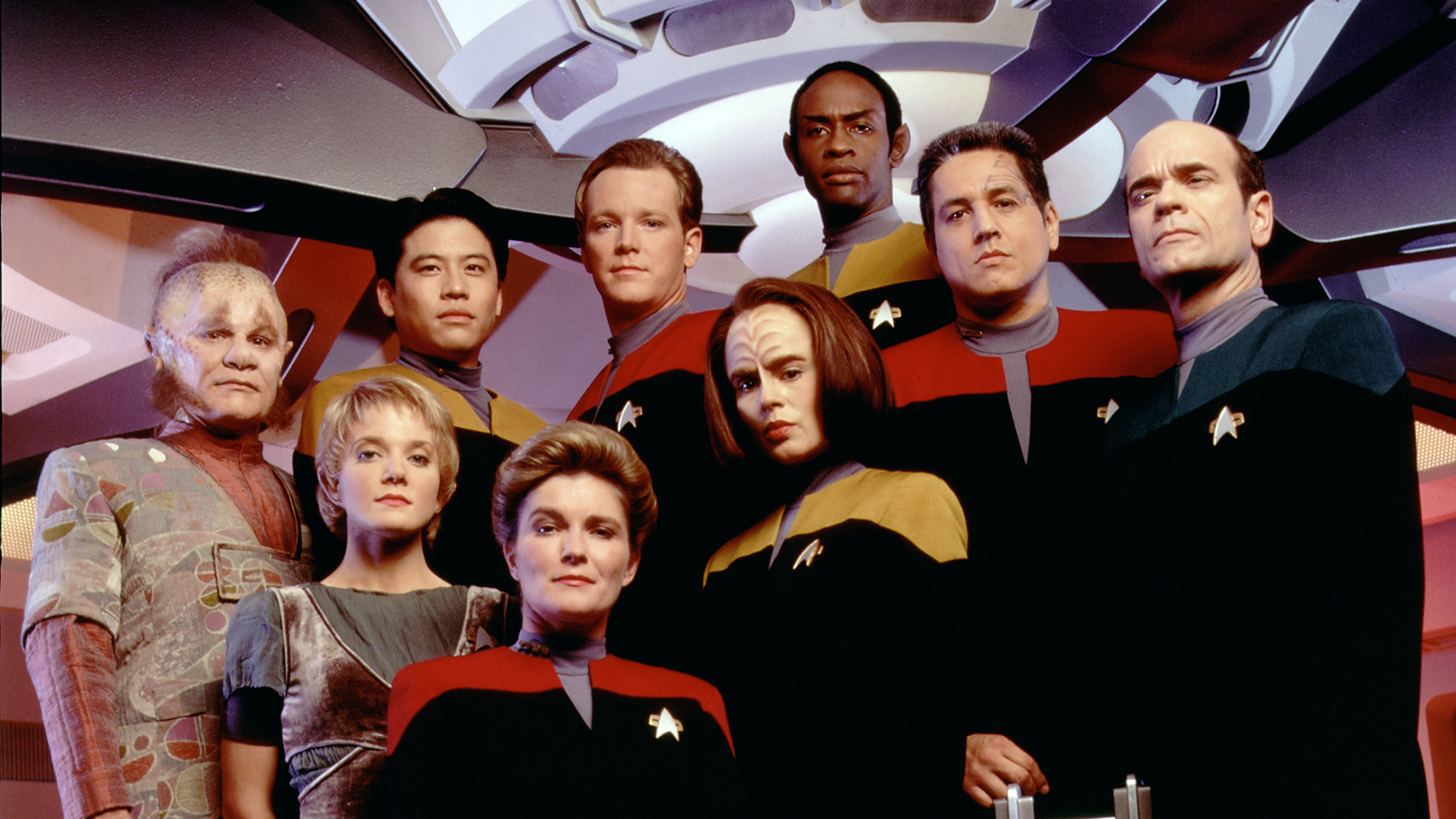
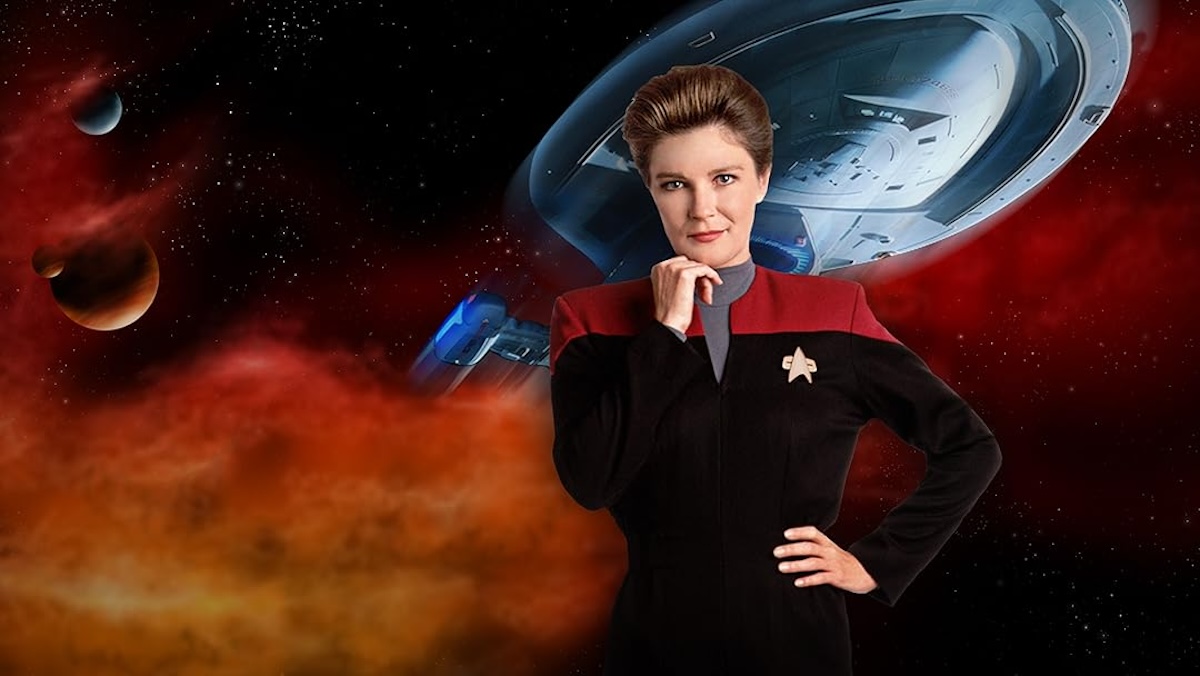
Kate Mulgrew starred as Captain Kathyrn Janeway, who commanded the Voyager and was dedicated to upholding Starfleet’s ideals while protecting her crew. At the time of her casting, there was a lot of hoopla and celebration because the main character of a Star Trek TV show was a woman. Other characters included the ship’s first officer, Chakotay (Robert Beltran), the leader of the Maquis and a former Starfleet officer, Tuvok (Tim Russ), the ship’s stoic Vulcan security officer, Tom Paris (Robert Duncan McNeill), a disgraced former Starfleet officer who gets his chance at redemption by serving as Voyager’s helmsman, B’Elanna Torres (Roxann Dawson), a half-Klingon Maquis member who became Voyager’s chief engineer, Harry Kim (Garrett Wang), a young Starfleet ensign on his first assignment, and the Doctor (Robert Picardo), a holographic medical program that performed the duties of the ship’s chief medical officer.
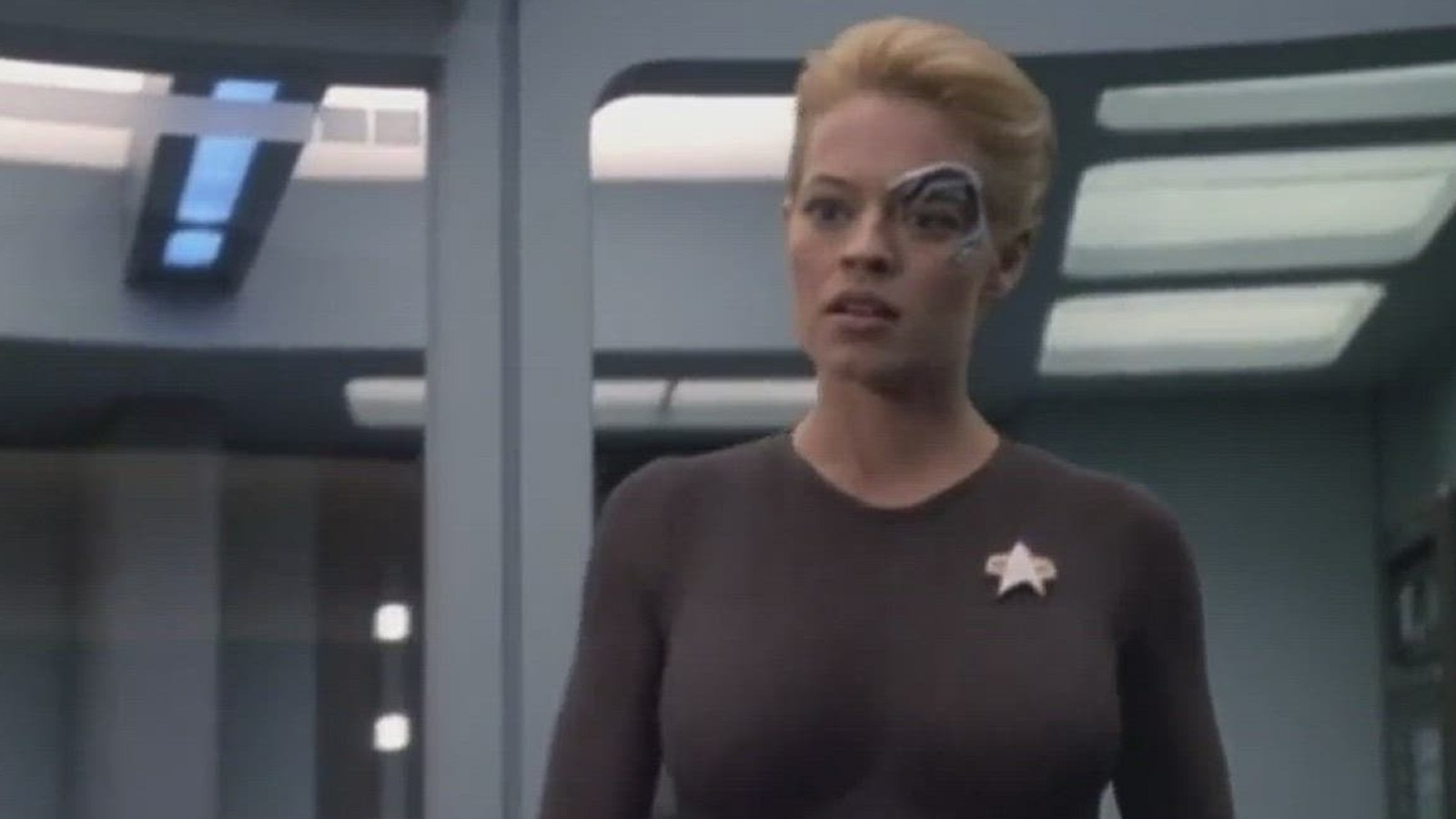
At the end of “Caretaker”, Voyager picked up two alien shipmates who are native to the Delta Quadrant and bring needed knowledge about the local space. They are Neelix (Ethan Phillips), a Talaxian drifter who ends being the ship’s cook and ambassador of sorts, and his girlfriend Kes (Jennifer Lien), an Ocampan who operates as the Doctor’s medical assistant and helps the program develop a personality. As the series progressed, it added Jeri Ryan to the cast as the former cybernetic Borg drone called Seven of Nine while Lien departed the series. Seven of Nine became the show’s breakout character thanks in part to the performance of Ryan as she served as the show’s version of Spock. In other words, a stoic outsider who questioned humanity while discovering her own.
Essentially, the TV show combined aspects of the original Star Trek and Lost in Space, and it worked for the most part. Yet, there was glaring issues with the TV show which turned out to be a harbinger for the creative drought the Star Trek franchise was beginning to suffer from at that time.
Continue reading Starloggers