2012 Hallmark Ornament Highlights

Sure it’s after Christmas, but for us fans of Hallmark ornaments it’s a fun or frustrating time (depending on how successful you are in hunting) for bargains as genre-based ornaments go on sale for half off or more.

As we’re busy gobbling up 2011’s ornaments, let’s look ahead to this year’s ornaments. Most of them will go on sale sometime in July with the rest coming out in October. Incidentally, the full lineup of Hallmark ornaments won’t be officially revealed until this spring. But for now here are the known 2012 ornaments based on cool stuff we like. In other words, this ain’t about fuzzy elves or reindeer!

Star Trek

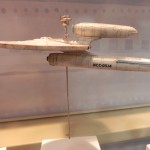
U.S.S. Enterprise NCC-1701-D

To celebrate the 25th anniversary of Star Trek: The Next Generation, Hallmark is releasing this replica of Captain Picard’s Enterprise. Collectors will know that this ship was produced in 1993. The difference between these two is that this one can be displayed on a stand (similar to Hallmark’s 2006 version of the original Enterprise) and is battery operated. Presumably it will feature lights and sounds; hopefully Jerry Goldsmith’s majestic score will also play when a button is pushed.

Dr. McCoy

The third in the Legends of Star Trek series. This figure of everyone’s favorite Starfleet doctor is a companion piece to the other entries in the series, Kirk and Spock.

Two Spocks Meet

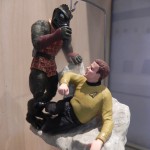
Not sure what is the official title of this diorama. It’s a recreation of sorts (without the Star Trek delta shield logo in the background) of that scene near the end of the 2009 Star Trek film where the old Spock from the real universe meets his younger alternate self.

Star Wars

If you’re a Star Wars fan then this is your year. Without contemplating any convention exclusives, a total of five ornaments will be released by Hallmark. They include:

TIE Interceptor

Barely glimpsed in Return of the Jedi (but that’s nothing new when it comes to Star Wars merchandise), nonetheless it will be beautifully detailed as are most Hallmark ship ornaments.

Han Solo on a Tauntaun

From The Empire Strikes Back, Han sporting his winter duds on his soon-to-be doomed riding animal. For any non-fan, the animal is a tauntaun used as beasts of burden by rebel soldiers and personnel on the frozen world of Hoth. Han took this animal out at night to look for his friend Luke who…oh never mind, it looks neat! Trust me it will make a solid gift for a Star Wars fan and it won’t cost a lot either, probably selling for less than $20. Then again from looking at the fact that the ornament has a base which would fit batteries it could mean the price could be jacked up. But it’s still a good gift!

General Grievous

As a fan of this character from Revenge of the Sith and The Clone Wars cartoon, I’ve been hoping they would release this Jedi slayer, which if you’re into the villains of the movies, make a great addition to that collection or on your tree. (A fan can geek out by putting all the Star Wars villains together in one spot!) The cape and lightsabre are a nice touch. Too bad they didn’t have him with all four arms extended, but that would probably make the ornament even more fragile. Future editions can feature his raspy voice.

Darth Maul

This is Maul’s second ornament, the first one was released in 2000 a year after The Phantom Menace came out. Fortunately, the pose is different in this year’s model and not a re-issue with a new paint job. Those kinds of ornaments are reserved for convention to go on sale in the secondary markets for obscene amounts of money.

Lego Stormtrooper

Hot on the heels of the successful Lego Darth Vader ornament comes this one of the white-clad cannon fodder. Perhaps Lego droids or Yoda are up for 2013.

Waldermann Rivera

Please visit our website to continue reading this article!

Best Of 2011

Short and sweet here’s our rankings of the best (and worst) in sci-fi, fantasy, comics, etc. in film, TV, etc.

Best Sci-Fi TV Show

Fringe, with all the mind-bending twists, parallel universe visits, inter-dimensional funkiness, and John Noble’s brilliant portrayal of half-mad scientist Walter Bishop, this show has outdone The X-Files It’s a shame its ratings are plummeting making a fifth season not guaranteed. Please Fox, if you intend on canceling it, give the creators time to wrap up the show.

Best Horror TV Show

The Walking Dead, just the premiere episode in its second season made it scarier and more terrifying than anything shown in theaters. With many contenders for the title like Supernatural, True Blood and American Horror Story, The Walking Dead ate out the competition.

Best Fantasy Show

Finding Bigfoot–just kidding! Actually it’s a tie between True Blood and Game of Thrones. Sure the latter has many horror elements like vampires and witches, but the entire Sookie and the Faerie angle took the show into the fantasy realm.

Best Documentary/Reality Show

Prophets of Science Fiction, airing on the Science Channel offers viewers involving examinations of the lives of sci-fi literary greats and how their works influenced culture.

Best Cancelled TV Show

Stargate Universe, it’s too bad Syfy got impatient with this program thatdecided to jettison all the cowboy antics of previous Stargate shows and concentrate on the wonder of space travel. One truly got the impression that the people onboard the ancient starship Destiny were out exploring the unknown. Too bad viewers never got a proper series conclusion, which is nothing new with genre shows even on networks supposedly dedicated to them. But that’s another rant.


Best TV Character

Walter Bishop (John Noble) in Fringe. His mad scientist antics are very funny while also full of pathos. As stated online everywhere it’s a crime Noble hasn’t been nominated for an Emmy.
 

Most Missed TV Character

Castiel from Supernatural, our favorite deadpan angel sadly bit the dust shortly after the seventh season premiere. His death has overshadowed the rest of the season, even the supposed death of the Winchester Boys’ surrogate father Bobby.

Most Improved TV Character

The Eleventh Doctor as portrayed by Matt Smith in Doctor Who. After a shaky first season, Smith has grown comfortable with the role and showrunner Stephen Moffat has let the wild complexity of time travel define this show.

Best Series Finale

V, technically it was only a season finale but the show was cancelled. Nevertheless, people who still tuned in watched in glee as hated characters,especially annoying teenage son Tyler Evans (who incidently gets the title for Worst TV Character), get killed and the aliens apparently conquered the Earth with some kind of cosmic enrapturing that left most of the populace in a trance-like state of alien worship. Cool, the bad guys won!

Worst Series Finale

Smallville gave fans who waited ten years for Tom Welling a.k.a. Clark Kent the moment to finally put on the Superman suit and the show did not deliver it right. Sure Welling ripped open his shirt at the very end to reveal his S Shield and there were a couple of bad far away CG shots of Superman but that figure could’ve been anyone!

Best Sc-Fi Film

Rise Of The Planet Of The Apes, a genunine surprise given how disappointing Tim Burton’s 2001 remake was. This emotional film reinvigorated the franchise and took it in a new direction in a way that was better done than most ofther reboot attempts, including J.J. Abrams’ Star Trek. Also the year’s best film line was heard in this movie: “NO!”

Best Horror Film

Insidious, made by the creators of Saw and Paranormal Activity used many ingredients for a memorable horror movie: creepy kids, demons, haunted houses, ooh time to sleep with the lights on.

Best Fantasy Movie

Harry Potter and the Deathly Hallows, Part II brings the film saga to a spectacular finish. Now the question remains will Potter mania stand the test of time? We think so.

Best Animated Film

TIE: Kung Fu Panda 2 and The Adventures of Tintin, Steven Spielberg gives us another rousing adventure film in the vein of Indiana Jones but using beautiful animation but Kung Fu Panda 2 had more heart in its story of Po the panda trying to discover his roots and inner self.

Best Super Hero Film

Captain America: The First Avenger, everything could’ve gone wrong but instead was a nearly perfect rendition and ode to one of Marvel’s earliest heroes.

Best Super Hero On Film

Captain America from Captain America: The First Avenger, see above and add in Chris Evans’ heartfelt portrayal of an average man who only wants to do good and became someone greater.

Biggest Disappointment

Green Lantern could’ve been so great but it wasn’t. In a summer with a patriotic hero, a larger than life thunder god and retro mutants this film presented a tepid origin story with forgettable villains and the 3D stunk. Unbelievably a sequel is still being planned.

Best Guilty Pleasure/Action Film

Battle: Los Angeles, the basic message of this alien invasion story told from the point of view of grunt marines is KILL, KILL, KILL! But there were many tense moments with great and gritty action sequences. Many claimed it was a mashup of Black Hawk Down and Transformers and they were right.

Best Use Of 3D In A Film

Transformers: Dark of the Moon may be dumb, noisy and be stricly for watching stuff blow up, but the 3D was nearly perfect and added depth to the film.

Best Trailer For An Upcoming Film

Prometheus, seriously we just don’t get tired of seeing this preview about Ridley Scott’s return to the Alien universe.

Best Comic Book Event

DC’s The New 52, was the game changer for the comic book world. It updated all the DC characters with a comprehensive reboot and the company’s aggressive push into digital online comics could pave the way to comics’ salvation.

Best Comic Book

Justice League, Jim Lee’s vivid art and the restructuring of the team’s personalities and relationships made this a can’t-miss comic.

Best Super Hero In Comic Books

TIE: Superman and Spider-Man, both flagship characters had their ups (Superman updated again but this time the changes largely work and readers are given two distinct versions of the character in his two books) and downs (Spider-Man is still suffering the damage of Marvel boss Joe Quesada’s boneheaded decision to have Spidey make a deal with the devil and erasing his marriage, still the Spider-Island story arc was whacky fun) yet continue to shine no matter their trappings. Honorable mentions go to Batman, The Flash and Captain America.

Digital Comics Rising

It’s pretty obvious that the world of digital comics is expanding at a phenomenal rate. As tablets and smartphones become more commonplace it won’t be too long before the number of readers of digital comics could eclipse that of regular paper comics.

Companies like DC and Marvel sell digital downloads and even offer free downloads to sample their comics. And it’s very easy to download comics. Just download an app with Comixology, iVerse Media’s Comics + or even from comic book companies themselves. In fact, Marvel, DC, IDW, Dark Horse and others also offer free apps.

After downloading the apps, just sign up for a free account. Readers are taken to the sites’ main menu where they can buy comic books. There are literally thousands of titles to choose from, no more running around to different comic book stores to find that elusive issue that is sold out everywhere. A simple search button will yield instant results. At this point the sites don’t have complete collections but the library is growing so it won’t be inconceivable to have a complete collection of Fantastic Four digitally.

Once they’re downloaded, the comics go into the cloud so they can’t be lost even if you’re device is damaged. Anyone can go into a friend’s laptop or desktop and view their own comics. While comics can be read on traditional computers, reading them on mobile devices is the way to go becausenow the digital comics are as portable as regular paper comics. What’s more is that images can be enlarged to better appreciate the art and a simple swiping of fingers allows page turning to be easier than regular comics. Plus readers don’t have to worry about being careful with reading mint comics and the online comics don’t have any ads to skip over.

Before buying comics, readers are given a preview of a couple of pages to sample the comic. This can be a disadvantage to regular paper comics where a reader can conceivably skim through the entire issue before deciding to buy the comic. But many times, companies offer several-page previews or even an entire first issue which gives one a better idea of what they’re going to buy.

These free downloads are an excellent way to preview comics or characters. DC jumped at this opportunity by offering downloads of popular characters and calling them for example Flash 101, which offers origins and first appearances of characters, complete with cover galleries. It’s a great introduction for new readers and DC should use this concept more with their lesser known characters.  One can only wonder why Marvel isn’t doing this.

DC certainly has the edge when it comes to digital comics. It seems as if they wholeheartedly embraced the concept especially when they launched The New 52 earlier this year when they relaunched their titles on paper and digital on the same day. These digital comics revived DC’s sales, in fact, for September 2011 they were the only company to have reported a sales increase of 1000% that is simply incredible.

However, not all is perfect with digital comics. To really compete, digital comics must offer more for the same price. For example a paper comic is $2.99 or $3.99 and that is supposedly due to production and print costs. Then why are online comics the same price? Sure if one is patient, individual issues usually drop in price weeks later, but why should the costs be the same on the first day of issue? If companies are to charge the same price then incentives should be offered. This could include creator commentaries, scripts, galleries and sketches. The comics should have a toggle button pencil inks and even one to remove the word balloons so readers can really appreciate the artwork.

Companies need to take advantage of the interactive features that are possible with online comics. One thing that can be done is to include live, real-time reader comments and updates. This means that a reader can finish a book then be able to comment on the issue which will show up immediately in that book’s commentary section.

While currently downloaded comics offer suggested links to similar titles, the comics should offer a link to a superhero homepage, that is that homepage would explain who is the character, show maps and galleries and databases on characters and story arcs. In DC’s case, offer a link to their 101 introductions or include it with the initial download of a particular comic. Annuals should be annotated with sound f/x which could be an incentive to buy them.

Perhaps the Justice League annual, the deluxe edition, can have voice actors, CG effects, sound effects, original music composed and conducted for the annual; the penci/inlk/color/word ballon toggle, interviews with the editor, writer, artists, dropdown reader commentary (the letters page), link to the Hall of Justice where you can get a converged version of the 101s, like Superman 101 will present not only comics, but TV shows, animation, gaming, trailers, and movie versions. Also polls asking for opinions of a particular issue, character, or villain, etc.
 
Also, DC Universe online should converge with the New 52. And of course, any new mass media creation should be cross compatible with other media, meant to tie unto an integrated universe. 
 
They could have started with the Green Lantern movie and linked him with the future formation of the Justice League. DCUO could have merged the Ryan Reynolds GL into the game. That’s the big picture examples of how digital comics can further evolve.
 
Check out this video from the annual big idea conference TED, which stands for Technology, Enternatinent, Developers:


Here they show what an ebook can do. DC & Marvel really should exploit the best that tech has to offer to show that a superhero story can envelope a convergence of media.

There is still room to grow with digital comics. Perhaps some of these suggestions could be utilized to fully realize digital comics’ potential. In the end this could be what saves comics.

José Soto and GEO

Top Ten Butterfly Effects

One theme that runs through many time travel stories is that of the Butterfly Effect. Most famously demonstrated in Ray Bradbury’s short story “A Sound of Thunder” where time travelers go back to prehistoric times on a dinosaur safari and inadvertently change the future by carelessly killing a butterfly in the past. The most recent example of the Butterfly Effect is in Stephen King’s newest literary release 11/22/63; in that book the assassination of John F. Kennedy is prevented resulting in a radically altered timeline.

This list will cover some of the best Butterfly Effects presented on several media that I’ve seen or read (sorry haven’t read Lest Darkness Fall or The Time Ships yet), and are based on Effects directly due to time travel and the amount of time spent exploring those altered worlds.

10. “Storm Front, Part I & II” from Star Trek: Enterprise; the fourth season opener concluded the maligned and confusing temporal cold war storyline. Captain Archer and the Enterprise crew are trapped on Earth during World War II in a timeline altered by aliens. This resulted in the Nazis being more technologically advanced and occupying parts of the U.S.

9. “Turn Left” from Doctor Who; the episode examines what would have happened if Companion Donna Noble never met the Doctor. It’s a grim timeline that features the deaths of the Tenth Doctor, Martha Jones, Sarah Jane Smith, Torchwood and Britain under martial law.

8. “Year Of Hell, Part I & II” from Star Trek: Voyager; the crew of the lost starship Voyager stumble upon an obsessed alien intent on using time as a weapon in his region of space then as a means to restore his wife after utilizing the weapon erases her from history. The Voyager crew literally go through hell as they try to track down the alien and restore the timeline. It was so well done many fans grumbled when things went back to normal!

7. Flashpoint; The DC Comics mini-series and its spin-offs has the Flash preventing his mother’s death while time traveling, which forever alters the DC Universe. First the Flash is trapped in a nightmarish, violent version of the DC Universe with many altered heroes and villains then the storyline concludes with the creation of the New 52 titles running today with updated versions of the DC heroes.

6. “The Hanged Man” from Journeyman; it’s a short-lived series from 2007 that in a similar vein to Quantum Leap had the hero (reporter Dan Vasser-played by Kevin McKidd) uncontrollably time traveling and changing history. In this episode, Dan leaves behind a digital camera in 1984 that is reverse engineered. When he returns, not only is technology more advanced but his young son is erased and instead has a daughter, leaving him with a deep moral dilemma.

5.” Profile In Silver” from The Twilight Zone of the 1980s; the late Lane Smith portrays a history professor who goes back in time to study the assassination of his ancestor, John F. Kennedy, and winds up saving him. This of course begins a cataclysmic chain of events due to time trying to compensate for the alteration. In other words World War III is about to erupt. In true Twilight Zone fashion, the ending is a real twist.

4. The Guns Of The South; Harry Turtledove’s masterpiece is about what happens when Confederate soldiers are armed with AK-47s by time-traveling racist white South Africans. Obviously this turns the tide of the Civil War in the Confederate’s favor and readers learn that Lincoln loses re-election, Robert E. Lee becomes president of the C.S.A., the U.S. gets into a war with Britain and the Confederacy becomes a technologically advanced nation.

3. The Age of Apocalypse Storyline from the X-Men books; Professor X of the X-Men is accidently killed in the past by his son. This chain reaction leads to the villainous mutant Apocalypse conquering America and committing genocide on non-mutants. For months the crossover X-books featured alternate versions of mutants such as a heroic Magneto leading the X-Men, Wolverine with a missing hand and teams with different members some of whom are villains in the regular books like Sabretooth.

2. The Nantucket Trilogy comprised of S.M. Stirling’s books Island In The Sea Of Time, Against The Tide Of Years and On The Oceans Of Eternity; the storyline has the island of Nantucket, its modern-day inhabitants and a Coast Guard ship sent back in time to the Bronze Age. Their necessary interactions with the people in that time period lead to early introductions to gunpowder, primitive air travel and increased global trade and contact. Naturally trouble starts when renegades leave Nantucket and begin to carve out their own kingdoms leading to armed conflict.

1. The Back To The Future Trilogy; Robert Zemeckis’ three films about a time-traveling teenager and his buddy scientist is actually a fantastic examination of the Butterfly Effect. In the first film, Marty McFly travels from the 1980s in a DeLorean to the 1950s and prevents his parents from falling in love. The obvious effect is that he and his siblings are being erased so he has to restore the timeline (audiences are helped by the rapid fire explanations of Doc Brown about the nuances of time travel). He succeeds for the most part. While his parents do wind up together they are changed due to their future son’s influence and this results in Marty’s family being better off when he returns to the ’80s.

In the second film, a trip to 2015 results in a more dire Butterfly Effect. The trilogy’s villain Biff Tannen steals the DeLorean and travels to the ’50s to make his younger self rich. When Marty McFly and his friend Doc Brown return to the ’80s, their hometown has been transformed into a nightmarish vision. Seedy casinos and chemical plants are everywhere,

crime is rampant and even Richard Nixon is still president while the Vietnam War rages on. Marty’s family life is radically changed as his father is dead and his mother is married to Tannen. In the third film, the Butterfly Effect is reflected in the duo’s adventures in the 1880s; chiefly with their confrontation with Tannen’s murderous ancestor which could lead to their premature deaths. The Effect is last touched upon in the end when we see a landmark renamed and Marty McFly altering an event in the ’80s that has an unknown yet hopeful alteration to his future.

José Soto

Alternate History In Film and TV

Time travel films and TV shows are popular and well known to audiences. However one will find a lack of films and shows about alternate history and universes. Based on this inequality viewers  would think that alternate history is some minor niche sub-genre in science fiction. But sci-fi fans who actually read books and stories know that’s not the case. Just scroll through the Amazon or Barnes and Noble sites and one can find a multitude of books and story collections concerning alternate history. Many are very popular with readers such as the many multi-book series by Harry Turtledove (ex. the Worldwar books, the Great War trilogy, etc.), S.M. Stirling’s works and so on. Even comic books have notable alternate history works. These include Captain Confederacy, Storming Paradise, Marvel Comics’ What If? one shots, DC’s Elseworlds comic and most famously Alan Moore’s Watchmen. Then why so little films and TV shows?

The genre has been so poorly represented that one can easily count the amount of films and shows about this subject. Some of the best examples aren’t obvious alternate history but are well known. In fact, one film is considered one of the best films ever made. Which one? It’s A Wonderful Life. Many say it’s a fantasy but it’s also about alternate history. George Bailey wishes he was never born and is then shown a world where he never existed, one that is nightmarish. Viewers only see the butterfly effect on George’s hometown Bedford Falls (renamed Pottersville) but one can’t assume there weren’t other butterfly effects. Notably when his guardian angel points out to George Bailey that he never saved his brother and thus George’s brother never saved his fellow soldiers in World War II. Who knows what effect that would’ve done to the timestream? Also evil Mr. Potter became more powerful and corrupt without George Bailey to keep him check. There’s no telling what kind of influence Potter would’ve had in the darker world shown in It’s A Wonderful Life.

Other examples of alternate universes usually show a world that has been altered by time travel (and perhaps giving the impression that the genre is tied to time travel, which it isn’t). A good example of that is Back To The Future, Part II where Biff Tannen steals the time-traveling DeLorean and alters his past making him a rich and influential figure in history. Aside from the changes to his and Marty McFly’s hometown, viewers with good eyes will see that the world had been altered. Look at a newspaper that Doc Brown shows to Marty McFly. The altered timeline in Back To The Future, Part II takes place in 1985 and a feature article in that paper is one that shows that Richard Nixon is still president of the United States and that the country is still involved in the Vietnam War.

There have been other films that are more clearly about alternate history. Unfortunately many of them aren’t any good, and came and went in theaters without much notice. This could be why studios don’t greenlight more films in this genre. Such films include Jet Li’s action piece The One (which shows several alternate worlds including one with a President Gore), Southland Tales, C.S.A.: The Confederate States Of America, the 1995 version of Richard III (which takes place in a 1930s fascist Britain and stars Ian McKellan), Never Let Me Go, HBO’s adaptation of Fatherland (with the oft-used premise of Nazis winning World War II), It Happened Here, and White Man’s Burden (which has a world where racial roles are reversed between whites and blacks). Add to that list Zack Snyder’s Watchmen adaptation where frankly the best part of the film was the opening credits which showed how history was altered when superheroes came into existence in the 1940s and 1960s. A more recent film that has to be labeled alternate history is Inglourious Basterds. It’s more of a World War II action picture but the ending, without giving away spoilers, demonstrates that the film is about alternate history. Another recent example is District 9 wherein an alien craft becomes stranded in South Africa in the 1980s although it takes place in modern times.

Regarding the TV medium, the best examples of alternate history are Fringe (which has a major storyline about crossing over into a world where the World Trade Center is still intact, technology is about ten years advanced of ours, and where Bono isn’t a famous singer), an awful ’80s show called Otherworld about a family trapped in a parallel world and Sliders, of course. Despite its wildly varying quality, Sliders best exemplified the exploration of alternate worlds. Oftentimes, the creators went wild in presenting worlds that had living dinosaurs, an America ruled by Communists and other powers and different world threats. Sadly this also meant that Sliders had some truly dumb episodes that ripped off the plotlines of several sci-fi stories. Regardless, Sliders is probably the best TV example of alternate universes. Believe it or not The West Wing can also be considered to be about an alternate universe since it clearly shows that recent history has had a few fictional presidents (without a mention of the Bushes and Clinton) and events. Spike TV recently aired a half-hour program called Alternate History that examined what if the Nazis conquered America. It was blasted by fans of the genre for glossing over many repurcusions and it’s unknown at this time if more episodes will follow. Other genre shows like Star Trek and Doctor Who have had episodes dealing with alternate universes as well.

Some shows and films (and books too) are now considered alternate history because at the time they came out predictions were made that never came to be. They clearly point out that they took place in a certain time period and events happened that would radically change our history up to now. Look at Alien Nation (both the film and series). The storyline claims that the alien Newcomers came to Earth sometime in the late ’80s or early ’90s. Then there’s Strange Days (which takes place in late 1999 and has a world with advanced VR tech) and Red Dawn, where the U.S. is invaded by Soviet forces. One has to lump in 2001: A Space Odyssey and its sequel 2010 since we don’t have A.I.s or regular lunar transports (with Pan Am still in existence!) to bustling space stations. Some films will soon become alternate history presentations as dates stated in the films come to pass. That includes Blade Runner (L.A. has about eight years to keep from looking like that hellhole shown in that classic film) and Back To The Future, Part II. We’re about four years away from the film’s look at 2015 and there still aren’t any hoverboards, cool flying cars and self-lacing sneakers. There’s still time for the Cubs to win the World Series by then. 😀 With TV shows, the mini-series Amerika and The Day After have to be thrown into this lot (thankfully neither events depicted in them have come to pass).


Aside from poor reception by viewers one reason why there alternate history doesn’t have more of a presence in film and TV could be that they require extensive exposition to explain themselves. Look at Southland Tales; in that film several minutes in the beginning was used up to show that the U.S. diverged from our history when terrorists detonated two nukes in Texas. It was clumsily presented and frankly one didn’t care about how this impacted the dull characters.

Another reason for the lack of such films and shows is that alternate history can be complex, showcasing a broad range of characters affected by altered events. Aside from expensive production values, to really get audiences involved the productions  need to have well-developed characters like in many books. This logic of caring only about characters could be why some films are only about the altered lives of the characters such as It’s A Wonderful Life, Sliding Doors and The Family Man. It would help if people took more interest in history to better appreciate this genre. That is because alternate history offers us a way to reflect on how things might’ve been different and to enjoy what we have or strive for something that we don’t have yet.

José Soto