Superman’s Appeal After 75 Years

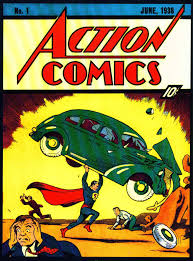
byrne supermanThis year we celebrated many important milestones like anniversaries for well-loved works like Iron Man, The Wizard Of Oz, Star Trek: Deep Space Nine, the Avengers and recently Doctor Who. But before the year ends, there is one very important anniversary that should be acknowledged because the introduction of this character heralded the rise of superheroes in popular culture. That person is Superman of course, who first graced the pages of Action Comics #1 75 years ago. As everyone knows, he’s one of the most recognizable fictional characters ever created and his popularity is only rivaled by Batman and Spider-Man when it comes to superheroes.

People may wonder why is Superman still popular after 75 years? There are other superheroes out there with flashier costumes and more intriguing backgrounds. He didn’t become a superhero because someone close to him was a crime victim. He is considered to be a big boy scout with upstanding morals and is actually one of the most overpowered superhumans around. On paper a character like that would be considered boring, and honestly, many of his stories were dull. But that was usually the fault of the writers or editors who didn’t know how to handle this iconic superhero. Despite these limitations Superman continues to capture the imaginations of many fans young and old. So what is it about him that makes him popular? Is it because he is the first of the modern-day mythological beings? Or is it something more?

It could be that Superman represents the American Success Story. Think about it, he is the ultimate immigrant action comics 1who arrived in our shores (via rocket ship instead of a boat or plane) and he excelled. Thanks to the powers he gained from being on Earth, Superman was able to make his life better and to contribute to society. Consider this, if he remained on Krypton, he would not have the powers of flight, super strength and so on. While he may have made some impact on Kryptonian society just for being the son of Jor-El, a noted scientist, it’s unlikely he would’ve stood out like he does here on Earth. Even in his secret identity as Clark Kent, he was able to rise to the top of his field as a journalist. He is the embodiment of the American experience, which is subtly appealing to many readers.
More than that, Superman is the prototype and  standard bearer not just for superheroes but for all of us. Thanks to his upbringing by kind and ethical parents, Clark Kent is imbued with a strong moral fiber. What helps is that his humble personality makes him relatable. This may be uncool with some people, especially those that like dark and conflicted heroes, but this is what makes him so attractive to many others. Parents can rest easy letting their children read about his exploits and not worry about gratuitous violence or dark plots. For someone who may be tired of reading about morally compromised so-called heroes, Superman can be a breath of fresh air. His adventures can be just enjoyed for what they are: rousing, fun-filled romps where he has to use his wits and skills to win the day. What helped Superman in those situations wasn’t his super strength but his moral fiber and knowing right from wrong.

super diesOne of his best modern adventures are the famous “Death Of Superman”, “Funeral For A Friend” and “Return Of Superman” storylines from the early ’90s, which started in Superman: The Man Of Steel #18 and concluded with Superman Vol. 2 #82. Superman faced his greatest physical threat in the form of the monstrous alien Doomsday and he was killed by the hulking creature. The shocking storyline, no exaggeration, gripped the nation and made headlines. Superman was supposed to be invulnerable, how could he die? How could DC Comics do this to their iconic hero? Readers, collectors, and the curious swamped comic book shops to get their hands on the pivotal Superman Vol .2 #75 (where he died) and its surrounding storylines. The Superman creative team at that time expertly produced this exciting saga and kept readers intrigued with clues to his resurrection. Along the way, these issues provided a nice boom to the comic book industry. Unfortunately, the market crashed  a few short years later thanks to speculators, poor stories and gimmick covers all comic book publishers, but that’s another story. All in all, this event proved that Superman still held appeal to comic book fans and mainstream society when he is given compellingly written and beautifully drawn stories.
????????????

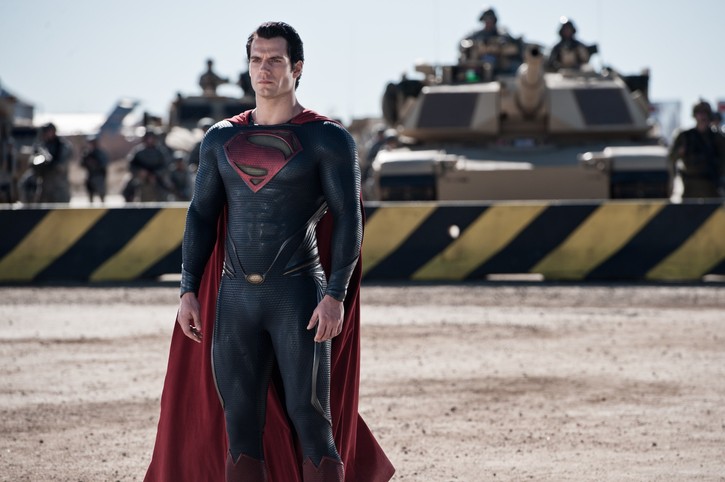
To this day, the Man of Tomorrow is still appealing. It can be seen from his successful crossover into other media like toys, video games, TV shows and of course movies. This was reaffirmed most recently by the smashing success of this summer’s film Man Of Steel, which rebooted and reinvigorated the Superman movie franchise. Now headlines are being generated for each new development on the upcoming sequel which looks to be a springboard for a Justice League film. Still, as successful as Man Of Steel was, the film had many detractors who decried the changes made to the character and his situation. But looking back on his long history, Superman has always been a dynamic, changing  character. Today’s version is very different from 1930s version.

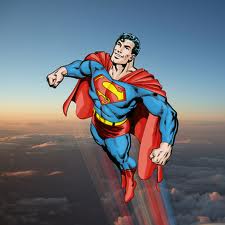
People often think of John Byrne’s run in the Superman comics  in the ’80s when it comes to reboots. But the jim lee supermanMetropolis Marvel’s history shows that he has constantly been changed even during his early years. At first, Superman couldn’t fly, Lex Luthor and Kryptonite didn’t come along until much later and Superman used phone booths to change into his costume–a quaint notion with today’s fans! Even the way he looked back in the ’30s was different than the iconic look he’s had until The New 52 reboot came along and did away with his red trunks. All this proves is that the character’s enduring success is because of his ability to adapt to the times while at the same time, his character’s core remains the same. Detractors often wind up accepting these changes once they realize that the essence of the character is still there. That is why Superman will continuing winning over new fans and be a part of our culture for more than another 75 years.

Lewis T. Grove & José Soto

*NOTE: The above art was done by the following iconic artists: John Byrne, Joe Shuster, Dan Jurgens and Jim Lee.

Remembering Photo Novels

bsg bookDuring the ’70s and early ’80s photo novels (sometimes called movie novels) were popular movie or TV tie-in book adaptations. Following the format of a comic book, these adaptations used picture stills instead of artwork to tell a story. Either word balloons or off-panel dialogue were used and the photo novels were an innovative concept that didn’t go for the traditional adaptation that were sometimes a chore to read.

In an age before the VCR or DVD or even the digital download these books were great for fans who wanted to relive in a small way the experience of watching their favorite film or TV show. And there were hundreds of stills that were never seen before. The best books were the large format adaptations of Alien and Outland since the larger book size meant the pictures were bigger. Of course, the trade off was the cover price ($8.95 for Alien as opposed to $2.95 for Star Trek: The Motion Picture!).

Sadly, as new technologies emerged and print costs went up these types of books were discontinued in the early ’80s, trek pagealthough one was made for The Blair Witch Project in 2000. Many knew something was amiss when the Star Trek II: The Wrath Of Khan photo novel came out in black and white. The obvious reasoning behind this move was to cut production costs while keeping the book at a reasonable price for consumers. While it featured terrific and rare stills from the movie, the thing wasn’t in color and not visually appealing.

On a side note, photo novels are still produced for online viewing. The BBC’s website has several for Classic Doctor Who stories. There are also fan-made and professional photo novels with original stories that are online for Star Wars and other properties. Comic book artist and writer John Byrne announced in June this year of his intent to make an original Star Trek photo novel.

page 2There weren’t many photo novels produced (no Star Wars, darn it!) during its heyday, but they are great collectibles for anyone who can find them or unforgettable gifts for fans.

The list includes: Alien, Buck Rogers In The 25th Century (the pilot TV film released in theaters), Close Encounters Of The Third Kind, Outland, The Lord Of The Rings (the animated version), Invasion Of The Body Snatchers (the 1978 remake), The Rocky Horror Picture Show, Star Trek: The Motion Picture, Star Trek II: The Wrath Of Khan, The Incredible Hulk (TV pilot), Battlestar Galactica (the TV pilot), and assorted Star Trek episodes (“Amok Time”, “The Trouble With The Tribbles”, The Deadly Years”, among others).

Waldermann Rivera

Doctor Who Celebrates Its Fiftieth Anniversary

doctor who

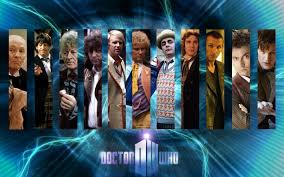
Doctor Who fans are still aglow over the recent fiftieth anniversary special “The Day Of The Doctor”, and for good reason!  It was inventive, frenetic and most of all it was  downright cool in so many ways. More importantly, “The Day Of The Doctor” was a loving tribute to the fifty-year-old program

Who’s Who?

For anyone who hasn’t watched, Doctor Who is about the adventures of a time-traveling alien called the Doctor, who can go anywhere in time and space. As a Time Lord, he often winds up in some misadventure while defending Earth and is accompanied by a long line of (mostly) human Companions. When the show first aired in the BBC back in 1963, it was more pedestrian than the madcap pace exuberated by hartnellthe modern show. The Doctor was played by William Hartnell, a distinguished older actor who was more cerebral  and sedate than his successors. Doctor Who was always plagued by low budgets and production values, which didn’t help its stature of being a children’s show. Still, it had an unmistakable charm and its youthful audiences loved the show. This happened after the show began steering away from historical dramas and introduced goofy aliens that were played by actors in bargain-basement costumes.

This status stayed with the show for many years and over many incarnations of the Doctor. You see, once Hartnell left the program in 1966, he was ingeniously recast. The Doctor was an alien, so it was established that he could regenerate into another person at the time of his death. Each Doctor that followed him was more and more outrageous in demeanor and attire, probably culminating in Colin Baker’s eye-hurting, multi-colored waist coat and his flamboyantly overbearing behavior.  But this concept allowed each actor to add his own touch to the character, making the Doctor a rather complex person for this kind of show. It was probably why Doctor Who began to catch on past the kids.

tom baker

The first significant introduction to American audiences of Doctor Who was the Tom Baker era from 1974 to 1981. His Doctor was distinguished by an overlong, multicolored scarf, and a huge afro. While he was quite daffy, Baker’s Doctor exhibited a cunning, intellectual side that was masked by his eccentric behavior. Still, the show was bogged down with horrible special effects and production values. While the show won many fans, there were just as many who dismissed Doctor Who as kiddie fare.

Eventually, Doctor Who was cancelled in 1989 and the property laid dormant until 1996 when Fox aired a TV movie pilot that attempted to jumpstart the franchise. The film was actually good, but controversial with many longtime fans, who bemoaned the semi-reboot. For instance, the Doctor revealed he was half-human and shockingly enough he had a romantic moment with his Companion. Egad! Sure, it sounds silly but fans can be recalcitrant whenever changes are made. The movie didn’t lead to a series and so the attempt at restarting the franchise was stillborn.

Who’s Back

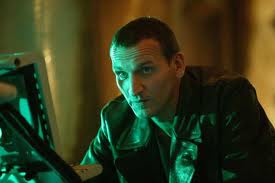
nine docBut like any good intellectual property, Doctor Who refused to die. Finally in 2005, a brand new series was launched that rejuvenated the stale franchise. Now Doctor Who had updated effects, the characters were dynamic and relatable and the stories were more adult. The ramifications and intricacies of time travel were explored in episodes like “Father’s Day”, “Blink”, and “The Name Of The Doctor”.  Others had outlandish plots best explained by their episode titles–”The Stolen Earth”, “Dinosaurs On A Spaceship” and “Let’s Kill Hitler”. Some others where actually heartfelt like “The Doctor’s Wife” where the Doctor’s spaceship attained a corporeal, sentient form . To its credit, the show still retained its sense of whimsy and charm. Episodes featured many unique images like the Doctor soaring through the air in a carriage pulled by a flying great white shark (!), or him and his Companion riding a motorcycle up a glass tower. For every lighthearted episode, there were those that were quite chilling, adventurous, wondrous, and more importantly, thought provoking.

A very important change made to the modern Doctor Who is that the Doctor is the last of his kind. His race, from the planet Gallifrey, along with their mortal enemies, the Daleks, had died off fighting in a Time War. The Doctor, as played by Christopher Eccleston, was more morose and subdued. It was even reflected in his dark attire. He was clearly suffering from survivor’s guilt and was wracked by what he did in the Time War (it was revealed that he destroyed both races). However, by the end of his run, Eccleston’s Doctor (the Ninth Doctor) seemed to be recovering thanks to the help of his Companions Rose Tyler (Billie Piper) and Captain Jack Harkness (John Barrowman).

Edgier, More Emotional Doctors

This change into a more optimistic demeanor was fully expressed with the next Doctor brilliantly portrayed by David Tennant. The Tenth Doctor was exploding with youthful energy and charm. He often rambled on at a mile per second and had an impish way about him. One couldn’t help but be delighted by his antics. Yet, the Tenth Doctor once in a while unmasked a haunted and frightful demeanor that was unsettling to watch. This was underlined by Tennant’s ability to convey someone who was much older than he appeared.

hi res bike

His successor Matt Smith also had this uncanny ability. But, being that he was the youngest person to portray the Doctor, that ancient quality shown in his eyes and mannerisms added to the dichotomy of the Doctor. Now that Peter Capaldi will be the new Doctor come the next Christmas special (“The Time Of The Doctor”), some of his conflicting aspect will be toned down since Capaldi is an older actor.

But what does that mean for Clara Oswald (Jenna Coleman)? She will seem more like a daughter next to Capaldi. It’s doubtful there will be any romantic tension a la Rose Tyler, who started falling for the Tenth Doctor once he came into the picture. Perhaps Clara will soon leave the show. However, River Song (Alex Kingston) seems more compatible with Capaldi’s Doctor since the actress is closer in age to him.

Continue reading

John F. Kennedy: Time Travelers & Alternate Historians’ Favorite Subject

kennedyThe myth and aura of President John F. Kennedy has permeated many aspects of our culture, including the worlds of fantasy and science fiction. This is due to the circumstances of his tenure as U.S. president and his assassination. Even though the Space Age began before he took office, JFK helped invigorate the nation’s space efforts with his pledge to land a man on the moon by the end of the ’60s. His short time in office also saw the closest moment to date of a full-scale nuclear war with the Cuban Missile Crisis. Then there is the tragedy of his assassination that even today is fraught with controversy.

Needless to say, almost all of these stories have to do with either time travel scenarios or alternate history. Often, the time travel yarns lead to alternate timelines where the slain president is never killed in 1963. Ironically, it turn out that JFK living past that fateful day usually leads to a disastrous timeline. It’s interesting to note this considering the admiration that many have for the slain leader. Of course, the reason is because these stories need some drama.

Literary Speculations

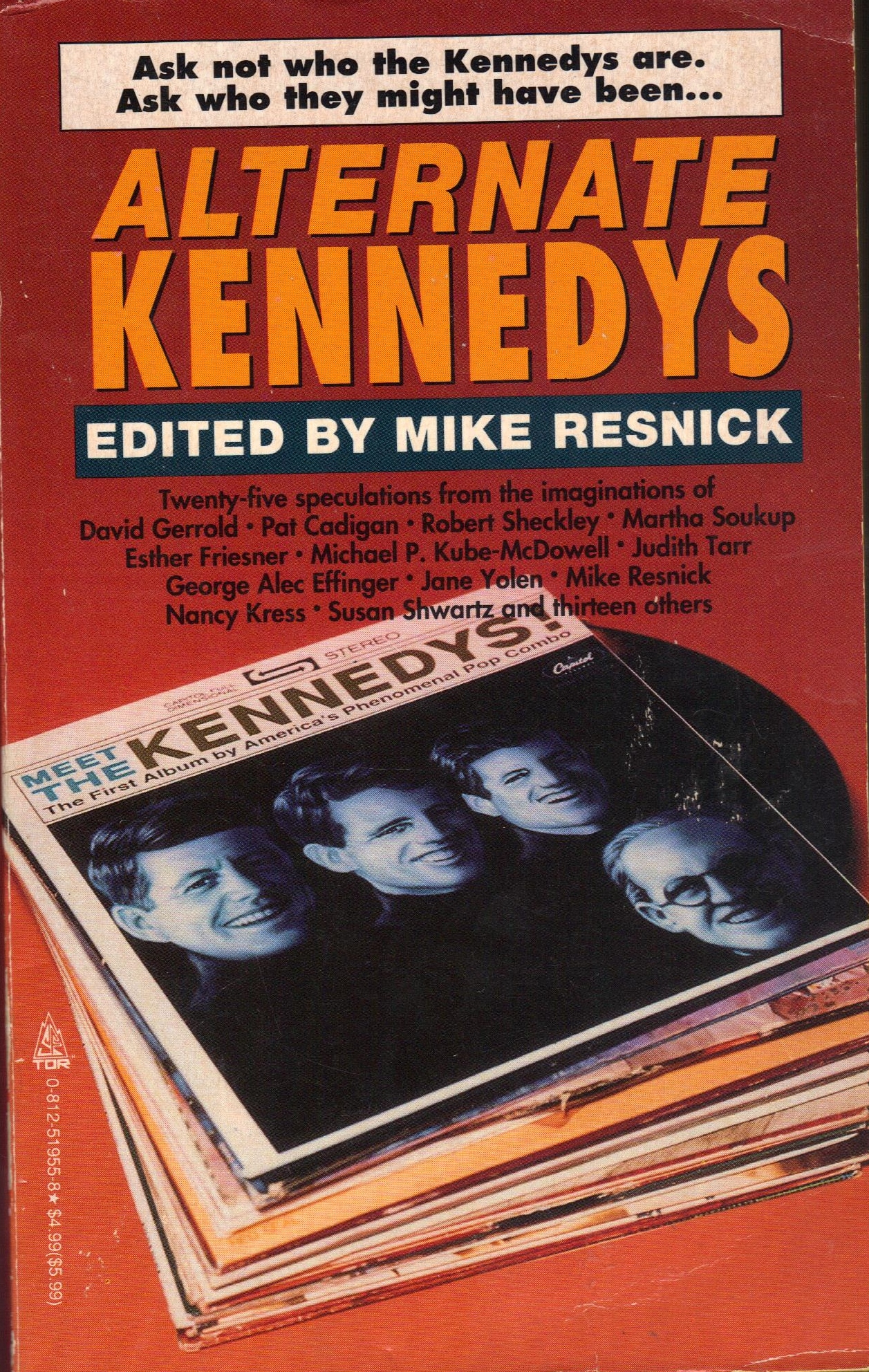
alt kennedys.jpgThere are too many sci-fi and fantasy books to list here that explore JFK and altered history. Some notable entries include Alternate Kennedys, a collection of short stories that featured alternate history accounts, as well as decidedly fantasy and comedic tales of JFK and his family. Some of the better stories in that collection are “The Winterberry”, “The Kennedy Enterprise” (in this tale, the Kennedy brothers are the big stars of a famous sci-fi TV franchise), “A Fleeting Wisp Of Glory”, and “Prince Pat”.

Stanley Shapiro penned a time travel book called A Time To Remember, which was made into a TV film Running Against Time that starred Robert Hays as a professor who wants to save his brother from dying in the Vietnam War. So he goes back in time to save JFK and thus prevent that war from happening.

Another novel about JFK living past 1963 being detrimental to history is Prologue by Greg Ahlgren. In this book, JFK never died and wound up pulling out of Vietnam. This decision led to the communistic takeover of the world, causing the book’s protagonists to travel in time back to JFK’s era and rewrite history.

One recent, high-profile work is Stephen King’s novel 11/22/63 where the story’s main character time travels to the past and stops Oswald. The resulting timeline leads to George Wallace, and later Hillary Clinton, into becoming presidents and the Vietnam War escalating into nuclear war.

jfk king

Putting aside the fantastic novels and stories, recently many historians have written essays and books seriously exploring alternate timelines about JFK. Many of them are well worth reading for history buffs and fans of alternate history. The most recent example is If Kennedy Lived: The First And Second Terms Of John F. Kennedy: An Alternate History by Jeff Greenfield, a followup to his essay collection Then Everything Changed. In that latter collection of essays, Greenfield explored a timeline where Kennedy was killed before he was inaugurated. This terrible event led to the Cuban Missile Crisis becoming a nuclear war.

Getting back to fiction, there are novels about  alternate versions of the Cuban Missile Crisis. In these accounts the crisis turned into full-scale nuclear war between the U.S. and the Soviet Union, leading to terrifying results. They include Resurrection Day by Brendan DuBois and When Angels Wept: A What-If History Of The Cuban Missile Crisis by Eric G. Swedin. Continue reading

The Hunger Games & The Movie On Fire

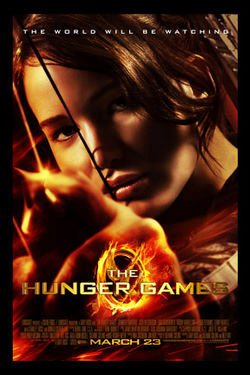
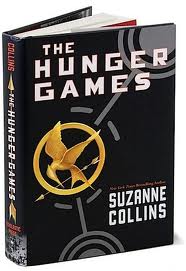
HungerGamesPoster “Up, up, up. It’s going to be a big, big, BIG day!” This was how I started the morning of March 22, 2012; almost expecting to wake up to a knock on the door by the manically upbeat Effie Trinket herself. Instead it was by my fellow fans getting ready for the midnight premiere of The Hunger Games. For months we had been eagerly awaiting the movie release based on the popular and controversial young adult novel of the same name by Suzanne Collins. We couldn’t wait to finally see District 12, the gritty Hob, the dreaded arena, the wickedly fashionable Capitol, and just how much violence would make it into a PG-13 rating. As a Panemaniac myself, I was excited to see if the book-to-screen adaptation would burn like an inferno, or fizzle out into ashes.

I was drawn into the futuristic dystopian world that Collins had created in her book, where reality television has taken a twisted new edge to entertain its audience with a blood sport. In The Hunger Games, Panem is a nation in what used to be known as North America. It consists of twelve districts and ruled over by a totalitarian government from the Capitol, located in the Rocky Mountains. As a punishment for a long-past, failed uprising, once a year each district must hold a lottery to chose one boy and girl between the ages of 12 to 18 years old. These “tributes” are forced to compete in a nationally televised event called “The Hunger Games.” Like gladiator games enjoyed in ancient Rome, the tributes not only have to battle one another, but any lethal obstacle thrown at them by the Gamemakers. Twenty-four contestants enter the arena, but only one can survive to be the winner.

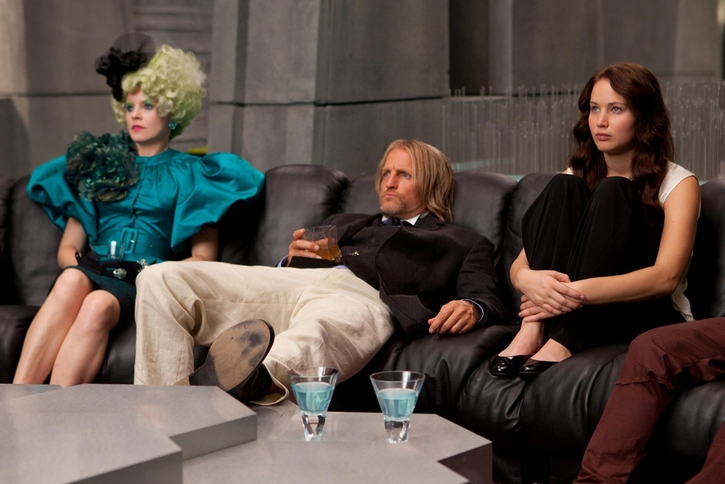
We follow the journey of Katniss Everdeen, a sixteen-year-old girl from District 12, a coal-mining town in the poorest part of Panem. Due to the tragic death of her father she is forced to break the Capitol’s law and hunt for game in order to save her family from starvation. In this world, the Capitol keeps such strong food regulation on the districts that many people are literally starving to death.hunger games book Katniss uses her wits and her hunting skills with her father’s bow and arrows to provide food for her mother and younger sister, Primrose. When her sister’s name is drawn for the 74th Hunger Games, Katniss volunteers as the female tribute, saving her sister, but condemning herself to death. Along with fellow tribute, Peeta Mellark, and their unstable mentor Haymitch Abornathy, they try to find a way to survive against all odds, but at a terrible cost.

I was intrigued by the author’s view of how easily a society could break down. Panem is a society that has become so desensitized by excess and ignorance that they celebrate the slaughter of innocent children as if it were the Super Bowl. Meanwhile, the districts’ citizens live without the comfort of having so much as a steady meal. I was also disturbed by the haunting idea of teenagers being taken from their families and forced to kill other children, or be killed themselves. Collins drew me into this world with her complex characters, descriptions of food and fashion, and her ultimate tale of love and just how far one is willing to sacrifice for freedom.

?????????????In anticipation for the movie, many of us showed up to the theater dressed as our favorite characters. It was the complex range of characters that really made me fall in love with this story. Right away, I was thrilled with the casting choices. Jennifer Lawrence was perfect as the tough and clever Katniss. Josh Hutcherson made us pine for the puppy dog-eyed Peeta Mellark. Amandla Stenberg as Rue, made us ache at the mere sight of her angelic face. And Lenny Kravitz stole the show as fashion genius Cinna simply by being himself. Sadly, there were a few characters that had been toned-down to keep things more suitable for the audience. Although Woody Harrelson was a convincing Haymitch, he was much more subdued than his tormented, alcoholic book version. Elizabeth Banks as Effie Trinket was not nearly as over the top as her wardrobe. Even worse, their most memorable quotes had been altered or dropped completely, leaving out major developments in their characters.

???????????????

Certain adaptations by director Gary Ross were actually better than the print version. Instead of telling the story through Katniss’ inner monologue, we got to see events from multiple points of view. The charming Stanley Tucci made the Hunger Game’s emcee, Caesar Flickerman, a very minor part in the book, unforgettable. And while Seneca Crane had been little more than a name to us, Wes Bentley and his dapper Capitol-stylized beard could not have enough screen time.

The downside was the too-fast-paced speed of the film. Scenes rushed past before we could emotionally deal with them. I had hoped to see more details of certain things fans would recognize in the novel. The blood bath in the arena was not nearly as violent as what we had imagined. The deaths, while agonizing to watch were not as painful as the shaky camera work. Mostly it just ended up causing headaches. I was disappointed that Ross did not express how the people of the districts were truly desperate for food. It is difficult to get an American audience to think of what it’s like to be really hungry. And finally, the romance, or lack thereof, between Peeta and Katniss was never developed. We left the film not knowing if it just was all for the Games or not.

I was pleased with this film. It was not perfect and there were things that could have been improved, but it was an exciting ride. I’m looking forward to the story continuing in The Hunger Games: Catching Fire.

Jennifer Drucker