Recast Daredevil


Bit by bit, Marvel Entertainment is reclaiming its film properties under their own Marvel Studios. The latest acquisition is the blind superhero Daredevil. As recently as this summer Fox, who had the rights to the Daredevil property, tried to greenlight a Daredevil reboot but were unable to pull it off.

Whether or not Marvel Studios will launch their own reboot remains to be seen, but it seems likely given Daredevil’s popularity. Obviously Ben Affleck and the original cast won’t reprise their roles so who would be the best choices to play Daredevil and his gritty supporting cast? These are some possibilities:

 Ben Urich: The hard-nosed Daily Bugle reporter and Daredevil ally needs to be portrayed by someone who exudes integrity and intelligence. Tony Shalhoub should be offered the role in a Daredevil reboot.

 Stick: Daredevil’s blind mentor and sensei who taught him how to fight and use his extraordinary senses was a genuine old bad ass. Many online fans have opined that Scott Glenn would make a great Stick and frankly they are correct.

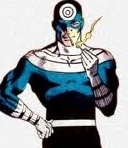
Bullseye/”Benjamin Pointdexter”: The mysterious master assassin and skilled marksmen is Daredevil’s deadliest adversary. The best actor for Bullseye has to give off a psychotic, vicious presence. He is someone who can be terrifying with his nihilistic demeanor and ability to make anything into a weapon. Jackie Earl Haley, who played a rebooted Freddie Krueger and Rorschach in Watchmen, makes a perfect Bullseye.

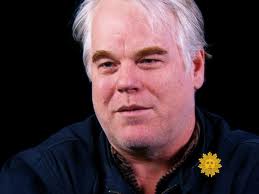
 Kingpin/Wilson Fisk: Daredevil’s greatest and most insidious enemy is a rotund powerhouse and master crime lord. Michael Clarke Duncan was an excellent Kingpin in Daredevil, sadly he’s no longer with us so he cannot reprise the role in a Daredevil reboot. Among the many other choices left to play the Kingpin, Philip Seymour Hoffman is the top pick (assuming he’s willing to shave his head or at least wear a bald cap), the actor is large and can do menacing villains, plus he’s one of the best actors around.


 Elektra Natchios: As a master assassin and Daredevil’s conflicted lover, Elektra needs to be played by someone who is strikingly beautiful and athletic. The wrong choice will doom the character from the start. That is one reason many say the original Daredevil didn’t work. There are plenty of superb candidates out there but Olivia Wilde is a dead ringer for Elektra. Tron: Legacy showcased her talents, looks and athletic prowess so she can do the role in her sleep.


 Karen Page: At first seen as a traditional secretary who later became Matt Murdock’s girlfriend, Karen Page has had a tortured history in the comic books. She eventually fell from grace, became a junkie who sold out Murdock’s secret identity before finally being killed off. She’s a tortured soul who needs to be portrayed by an actress who is beautiful and can do pathos. Emilie de Ravin, as seen on Lost, can break ground by bringing Karen Page to life on the big screen for the first time.

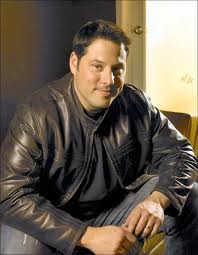
 Foggy Nelson: Matt Murdock’s law partner and best friend, Foggy seemed like the comic relief sorely needed by the grim comic book. But the slightly overweight lawyer was written as a complex, sympathetic person and one of Murdock’s strongest allies, who was often there for him when times were tough. Foggy Nelson shouldn’t be played strictly for laughs; check out the extended cut of the original Daredevil to get an idea of how he should be portrayed. For that reason, fan favorite Greg Grunberg seen in Alias and Heroes is an excellent pick for Foggy Nelson.

 Daredevil/Matt Murdock: Casting the blind superhero isn’t an easy task. Directors can’t just go with any stud actor. The person to take over the role of Matt Murdock from Ben Affleck needs to present viewers with a man possessing inner toughness, while having a conflicted nature. At the same time, this actor has to be able to pull off the lawyer act, in other words, he needs to be believably smart and convicted. At one point, one of the assigned directors of Fox’s failed reboot was interested in Tron: Legacy’s Garrett Hedlund. Although he’d be fine as Murdock, a better choice would be James Badge Dale. For comparison check out his roles in 24 (he played Jack Bauer’s junior partner in season three), The Pacific and Lexicon. Dale has all the qualities needed to play Matt Murdock and Daredevil.

The following enemies while not as prominent as say Bullseye would still make interesting secondary foes in a Daredevil reboot. The right casting and writing would make them very memorable. Also, the evil ninja group The Hand must make an appearance at some point in a reboot.

The Gladiator/Melvin Potter: Dwayne Johnson

Mister Fear/Larry Cranston, Alan Fagan: Bob Odenkirk

The Owl/Leland Owlsley: Oliver Platt

The Purple Man/Zebediah Killgrave: Robert Knepper

Typhoid Mary/Mary Walker: Milla Jovovich

José Soto
Humanity Vs. Vampires: Our Advantages, Their Weaknesses

In many forms of media, vampires have been feared by humans and for good reasons. But one frightening element about them is their physical superiority to mere humans. Vampires in most stories possess superhuman strength, speed and reflexes. They’re also semi-telepathic and can fly, not to mention are nearly immortal. Recent tales have vampires living in complex secret societies and only tolerate humans who they consider to be glorified cattle.

So if it came down to it, how would humanity fare if vampires decided to take over? Well it wouldn’t be an automatic victory for vampires.

Think about it, sure vampires have all these fantastic powers but they have a severe weakness­­ ­— they’re vulnerable to sunlight. At best, as in the original Dracula novel, vampires while able to survive in the daytime are very weak. At worst, see an episode of True Blood or Being Human were vampires literally burst into flame when exposed to sunlight. If they were to actually exist that could be why they haven’t come out and conquered us. If there were an open war between humans and vampires, humans only need to wait until dawn to open coffins containing the vampires and expose them to direct sunlight. One thing that sunlight contains is ultraviolet radiation. Perhaps that radiation can be weaponized for night battles.

They have other weaknesses as well. Traditionally, they’re sensitive to garlic, holy water and religious symbols like crosses. Modern vampire tales like those written by Anne Rice have it that those so-called weapons are useless and have no effect on vampires. In Stephen King’s Salem’s Lot, it’s stated that for a cross to work, the human bearing it must have religious faith. However, vampires in modern tales are still vulnerable to wooden stakes and sometimes silver (as seen in True Blood where the metal is used to incapacitate the night creatures).

Aside from sunlight and wooden stakes, a good beheading is a guaranteed way to kill vampires. Just ask the Winchester Brothers in Supernatural. In that TV show, beheadings are the only way to kill vampires, which early in the show’s run were considered an endangered species.

Movies like Blade and The Lost Boys feature heroes who come up with unique and clever adaptations of vampire weaknesses. For instance, the young heroes in The Lost Boys filled up ordinary water guns with holy water. Let’s not get into how formidable Blade was with his weapons. He was a bonafide one-man army against the undead with all the stabbing weapons and guns. In True Blood and the books the show is based on (known as The Southern Vampire Mysteries by Charlaine Harris) vampires openly exist alongside humans, so police and militia groups routinely use wooden bullets against vampires along with silver. In one of the recent episodes when the Vampire Authority began to run amok, a human general threatened them. He revealed that humanity’s armies had already devised weapons to be used in the event of a war with the undead. Viewers got a taste of what a war would look like in second season episodes of True Blood where a radical, armed religious group threatened to wipe out vampires.

So if a state of war were to occur, humanity though physically outmatched has many aces up its collective sleeves. It’s been implied in many modern stories that humans far outnumber vampires which is one reason why they haven’t tried to conquer the planet. In the case of war, the huge numbers of humans will be a decided advantage and don’t forget that time and time again, we have shown an ability to adapt and refine battle tactics.

Probably the only way that vampires can counter humanity is in the form of a fast spreading virus. There are many page-turning books about a world overrun by vampires. The most famous one is Richard Mathesen’s I Am Legend, which was adapted three times into film. In I Am Legend, a pandemic is responsible for turning Earth’s population into vampire-like creatures. Other recent books that explore this theme of a virus transforming people into vampires are Justin Cronin’s The Passage and The Strain by Guillermo Del Toro and Chuck Hogan.

The recent film Daybreakers is also about a world where a virus transforms humans into vampires. The outbreak was so severe that in the space of a few years, vampires had overrun human civilization, reducing the few humans left into cattle.

But unless a virus  quickly devastates humanity in the same way as shown in I Am Legend, don’t be so sure to count out humanity if war broke out against vampires. Sure one on one, a human probably cannot beat a vampire but it’s being demonstrated in these tales that a vampire can lose.

Waldermann Rivera

The Final Chapter Of Fringe Is A Bold Departure

The fifth and final season of the TV show Fringe premiered this past weekend and it’s a radical departure from the previous four seasons.

In last season’s episode “Letters Of Transit”, the show deviated from its normal format, which is normally about a federal team that investigated bizarre science phenomena. Instead “Letters Of Transit” jumped ahead to the year 2036 and presented a world taken over by the enigmatic Observers. These unusual, telepathic, bald-headed men in black suits have appeared in every single episode of the show, often in the background unnoticed. It was eventually explained that they were humanity’s descendents from a far future where the Earth had become uninhabitable. This was why they arrived in 2015 and conquered our society as was shown in a dream sequence at the beginning of the fifth-season premiere episode “Transilience Thought Unifier Model-11”.

It seemed as if “Letters Of Transit” might’ve been a special one-off episode but by the end it was clear that many questions were unanswered and there weren’t any resolutions. Clearly Fringe‘s producers intended to continue the story, which was a huge risk because at that time the show was nearly cancelled. Luckily, the gamble paid off and Fringe was renewed to conclude the storyline.

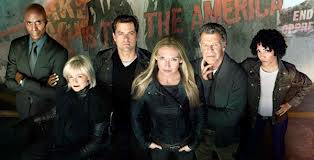
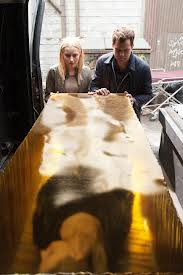
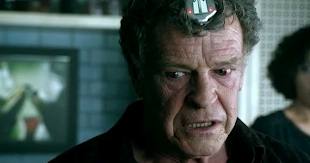
However, from looking at “Transilience Thought Unifier Model-11” it is apparent that the rest of the show will take place in the future. Though the head-spinning cases that the Fringe Team worked on may be gone and their agenda has drastically changed, the beloved characters are still around. Daffy Walter Bishop (John Noble), his son Peter (Joshua Jackson), and FBI Agents Olivia Dunham (Anna Torv) and Astrid Farnsworth (Jasika Nicole) were kept in suspended animation and thawed out to speak to help save the world from the Observers.

Regarding the Fringe Team, viewers were still treated to its quirky nature and saw new nuances to their characters. Walter Bishop still calls Astrid by various nicknames and continues to be absent minded. Meanwhile, Peter and Olivia wrestle with guilt over not being able to stop the Observer’s invasion back in 2015 and losing their daughter during that time. Now reunited and aided by Peter and Olivia’s grown-up daughter Henrietta (Georgina Haig), the team is forced to work in the dystopic New York underground and come up with a way to defeat the Observers.

The world they come into isn’t brave but new and disturbing. The Observers are everywhere and maintain an iron grip on the world with their advanced technology. Expression and free will are discouraged as humanity is slowly being ground under in a police state. Many aspects of the world (represented by New York City) seem the same but with more advanced technology and a feeling of decay setting into civilization. One startling image was that of New York’s Central Park, which has been paved over and turned into a huge processing plant to pump carbon monoxide into the atmosphere. It turns out our air is too oxygen-rich for the Observers.

It was intriguing to see in these two future episodes how things change in the future. Whereas before, Fringe presented a parallel Earth in some episodes for fans to wonder over that world’s differences from ours, this time we learn about our future. If the Fringe Team manages to defeat the Observers, and they probably will, one can only imagine what will be shown as Fringe concludes. Even though the show now takes place in 2036, hopefully more flashbacks to the modern era will be shown. This bold departure in the show’s format is a bit startling but very welcome and illustrates Fringe‘s dynamic nature.

Lewis T. Grove

2012 Doomsday Scenarios: Month Nine

As intriguing as it is to conjure up many doomsday scenarios, one common worry is the likelihood of them. But one scenario is especially disconcerting because it’s entirely plausible and based on recent events all too likely. What is it? What is the greatest threat? Why us, of course, and it need not be anything exotic, all the ingredients for an apocalypse are right here.

Doomsday Scenario No. 4: Our Own Worst Enemy

Take a pick, there are so many mundane yet deadly ways to bring about our downfall. The result may not necessarily mean humanity’s extinction or the end of the world but our way of life, our society, order itself can easily topple due to the following:

Social Unrest & Despots

Look around the news and see all the upheavals and strife throughout the world. The Middle East as always seems to be on the precipice of Armageddon with all the saber rattling, riots and terrorist attacks. Here in the West we think we’re somewhat inoculated from all that anarchy. But it’s always there. In the U.S. there is brewing antagonism between those on the left and right. It is a powder keg that isn’t going away. All it takes is for some protestor or anarchist or an overwhelmed officer or citizen to light the fuse. Back in the 1960s the controversial Vietnam War nearly led to a civil war in the U.S. In fact, throughout U.S. history there have been many tenuous moments with the worst being the Civil War. The country and others will always be dealing with keeping order. In Star Trek: Deep Space Nine there was a two-part episode “Past Tense” where Ben Sisko accidently time travels to the 2020s and takes part in the social movement called the Bell Riots. It’s stated in those episodes that the aftermath of that deadly period of time led to positive societal changes and ultimately the founding of the Federation.

Though social discourse can lead to positive changes, other times it can usher in dark historic chapters. Sad examples of that includes Germany, Cambodia, Bosnia and Rwanda where evil despots and their minions rose to power and unleashed horrendous genocides against others.

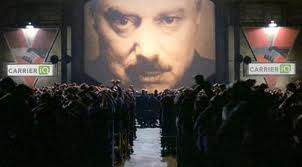
In science fiction, there are countless novels and films dealing with future dictators coming to power and creating totalitarian societies. One of the more famous sci-fi dictators is Khan from Star Trek, but the original show often made references to future human despots named Krotus and Lee Kuan. The most famous dictatorships is in George Orwell’s 1984, where citizens live under perpetual surveillance and paranoia. In Allen Steele’s Coyote novels, North America is ruled in the late 21st century by an extreme right-wing government and later by a left-wing power. Both of which spurred the migration to the habitable moon Coyote. The popular book and film The Hunger Games details the totalitarian country Panem, which arose from the ashes of the U.S. sometime in the future. In The Handmaid’s Tale, a theocratic dictatorship rules what was once the U.S. and persecutes its citizens. Another instance of harsh theocratic rule comes in Octavia Butler’s Parable Of The Sower where non-Christians are placed in re-education camps in a North America withered by poverty and scarce resources.

Scarce Resources

One underlying cause of war and societal stress boils down to resources. Right now, energy is the primary resource that is driving and hampering our civilization. There is the issue of oil and finding a viable alternative. The problem with oil is that it is becoming scarce and contributes to global warming. Until a successful alternative is found, we’re stuck with it. The Persian Gulf War was fought because Iraq’s conquest of Kuwait and threat to Saudi Arabia would’ve affected oil production and global economies.

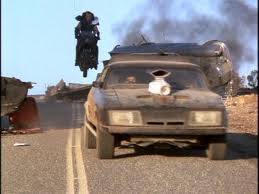
There is a special that often runs on the National Geographic channel called Aftermath: When The Oil Runs Out that explores what would happen if that event occurred. Basically, civilization is turned upside down as martial law then conflicts and famine strike the world.  In the Road Warrior, major battles are fought between factions over dwindling gasoline supplies.

But energy isn’t the only resource to fight over. There is food, land, and raw materials. Native Americans were driven off their ancestral lands by Americans in order to exploit the riches found in those lands. Avatar was of course a metaphor for what happened with the Native Americans. However, a now plentiful resource is on its way to becoming scarce and tomorrow’s most sought after commodity: water. Many predict that wars will be fought in the near future over dwindling water supplies. Cameron Stracher’s book The Water Wars depicts a future where the scarcity of fresh water decimates society.

Economic Meltdown

The U.S. is in the grip of Great Recession while Europe is facing an economic collapse. This is a genuine cause for alarm since the specter of an economically devastated nation will have a cascading effect. Just look at the Great Depression to get an idea of what will happen. Mass migration, social strife, riots, overwhelmed communities, the list goes on. And it’s a prime opportunity for radicals and dictators to gain power. Basically chaos will reign unhindered. Many sci-fi works like the TV mini-series The Fire Next Time predict that economic collapse will come from extraordinary events, with The Fire Next Time it was global warming. In the TV show Dark Angel, the U.S. was in the midst of a crippling depression caused years before by an EMP detonation. While those factors will indeed destroy economies, mundane events like the current housing crises can just as easily disrupt our global economy.

In Norman Spinrad’s novel Russian Spring, America is a nation in economic decline while Russia is experiencing an economic renaissance and has become the de facto super power in the world. The consequence is that some of the main American characters wound up leaving the U.S. for better opportunities abroad.

On the other hand, there is a fear that corporations will dominate our governments. Many would say that has happened already. Transnational corporations control the world in Kim Stanley Robinson’s Mars trilogy, and this concept was seen in the film Rollerball. If  governments give up sovereignty to companies, what would happen to our rights?

State Of War

The idea of world peace is a noble one, but no matter how many times it seems to be on the horizon, our dark side emerges. Today many are rightfully concerned by the threat of Iran acquiring nuclear weapons and a military response. It’s believed this could cause World War III. But the Middle East isn’t the only tinderbox to potentially ignite a Third World War. One could easily begin in Asia as China gains more power. Already there are new tensions between China and Japan. Then there is the issue of Taiwan, the U.S. is committed to protecting it from China. Plus, look at North Korea, the people there live in complete despair yet seem all too eager to die for their insane leaders.

The fictional Oceania in 1984 always seemed to be in some state of war as its citizens were constantly whipped up into a war fervor over that country’s rivals. H.G. Wells novel The Shape Of Things To Come, showcases a world under the grip of a decades-long, alternate account of World War II that lasted much longer than in real life. Eventually civilization collapses and is reformed under a so-called benign dictatorship that brings order.

Conclusion

The above are just some issues that our society faces. Humanity needs to undergo a fundamental change to purge dark impulses. Perhaps an evolutionary step is needed where it becomes ingrained not to give in to our hatred and fear. That will take a very long time and much more misery. Maybe a cataclysmic event will do it, which is what happened with the Vulcan culture in Star Trek. The Vulcans are renowned for their peaceful ways but only true fans know that once they were a barbaric race that nearly killed themselves off with nuclear wars. Only by turning to a new belief system, in their case logic, did they save themselves.

Looking back at history, it’s apparent that society is always straddling between order and peace and war and chaos. The fact that we’re aware of our faults and are trying to fight them is a reason to hope for a better tomorrow.

Major Plot Holes Throw Looper For A Loop

Joseph Gordon-Levitt and Bruce Willis team up the film Looper, a rather disappointing time-travel thriller, which is too bad because the potential was there for it to be phenomenal. Gordon-Levitt stars as Joe who is an assassin in the year 2044. He lives in Kansas and his job is to kill people sent bound and gagged from the future. Joe explains that thirty years from his present time travel is discovered but is instantly outlawed. The only ones who use it are criminal organizations who use it to send their targets back into the past because it is nearly impossible to dispose of a body in the future.

Joe lives a happily empty criminal life until one day he discovers that his next target is actually himself from the future. His future self is played by Bruce Willis and he does a credible job of portraying a supposedly reformed criminal that is trying to save his skin and rewrite history. When the Gordon-Levitt Joe first confronts his future self, the Willis Joe manages to escape with a mission at hand. The Gordon-Levitt Joe is targeted by his employers who now want to kill him and his future self, yet instead of going on the run, he still wants to kill his future self, hoping he will get in good graces again. This doesn’t make much sense, nor does much of the movie.

One flaw with Looper is that it adds too many subplots. For instance, the future version of Joe not only wants to stay alive but wants to do a Terminator and find and kill the child version of the criminal boss that had him sent back to the past. Enter Emily Blunt as Joe’s love interest. She plays a farmer and a mother named Sara whose son Cid is future Joe’s target. So the Gordon-Levitt Joe hides out in her farm waiting for his future version to turn up while building a relationship with the mother and son. But the plot twists don’t end there, in the future a mutation appears among people that allows telekinesis and Cid happens to be an especially powerful mutant.

Honestly, when this development turned up, Looper strayed away from its original premise and came off as an uninspired X-Men movie. Another thing is that it’s difficult to find anyone sympathetic in the movie, even the boy Cid isn’t likeable. He looks like a perfect Damien for a new version of The Omen.  Joe is largely an unrepentant killer and drug addict. Joe’s future version is more cold blooded whose excuse for the Terminator rampage is that his future wife will be killed by Cid’s people. Unlike the Terminator films, it never is shown how bad Cid will become so no one can really root for the future Joe to kill this child. A word of caution, despite the trailers promising an action-packed spectacle, Looper has very little in the way of action. There are some chase and fight scenes but they lack energy and urgency.

Then there are the mechanics of the premise. If illegal time travel is used by criminals why are they worried about disposing of bodies, wouldn’t it be more of a crime to be caught using time travel technology that can be used to rewrite history? Why kill the targets when they come back? No one bothers to interrogate them to learn about the future, one would think that a criminal wouldn’t at least want to pull a Biff Tannen and learn sport scores to get rich! Why send them only thirty years back? The film never establishes that there is a limit to how far back a target can be sent. So why not send them to a preshistoric past or to the middle of some great catastrophe?

Looper has some good points. The production design showcasing a decaying U.S. and an opulent China was well done and it was refreshing to see a film not take place in a futuristic New York or Chicago. Joseph Gordon-Levitt also gets kudos for playing subtly a young version of Bruce Willis. Of course, he doesn’t look like the Willis we’ve seen back in Moonlighting but there are some slight resemblances and Gordon-Levitt shows enough of Willis’ mannerisms to pull the feat off. Looper tried to be different but in the end maybe someone should’ve gone back in a temporal loop to fix the screenplay before filming began.

Lewis T. Grove