Earlier this month I was at the New York Comic Con and came across two persons giving out business cards with a website printed on them. I didn’t think much about it, everyone and their mother were giving out cards, mini-posters and other doodads to promote their film, comic, fill in the blank.
Anyway, I went home went, through my stash and found that card and decided to go to the printed website and was surprised to find a terrific fan film set in the Ghostbusters world mashed up with Harry Potter. The gist of it is that this rookie Ghostbuster down on her luck is recruited to go to Hogwarts on a mission. The only thing I didn’t like is that it sets up a big adventure and already I can’t wait. Give it a look-see, it’s worth the click!
Call me a sissy, a punk, whatever, I don’t care. I refuse to watch Paranormal Activity 3.
It’s not to say I think this franchise sucks or is like all the other horror franchises that have been beaten to the ground like the Saw and Friday the 13th films. I think the first Paranormal Activity released two years ago, scared me so much that I just don’t think I can bear to watch the further hauntings/adventures of Katie. I had a hard time sleeping for weeks! That film just gets you scared because the hauntings happen when you’re at your most vulnerable point, when you are sleeping. How can you defend yourself when you’re in that state? For anyone who doesn’t know, the first film was about a series of video tapings of a young couple being haunted late at night by an unseen, demonic force that grows more and more malevolent as the film progresses. A real slow burn.
Sure, I know a lot of you may laugh this off and say it’s just a film, not even based on a supposedly true event like The Amittyville Horror but the implications the films bring up that by trying to contact the other side you not only invite the unwanted evil forces into your life but empower them as well. That’s just how good the first film was, and from what I’ve heard the second film is more or less the same thing but still effective. Now I’m learning that the newest film is just as scary.
As much as I wanted to see the second film I couldn’t even watch the trailer on a full screen. By chance I caught a quick clip of a commercial of Paranormal Activity 3 the other night and it shows a video taping of some lady being levitated off the ground. That was enough for me. Sorry I like to sleep peacefully at night.
This is probably a testament as to how effective the first film was, which is arguably the best “found footage” movie since The Blair Witch Project (and Cloverfield). I don’t know maybe one of these days, I’ll steel myself enough to watch the other two films.
This time of year, all you see are countless shows and movies featuring vampires and zombies. True Blood, The Vampire Diaries, Twilight, Dawn of the Dead and The Walking Dead for example. They’re very popular so why isn’t there a craving for werewolves?
Sure they pop up as supporting characters or villains in vampire productions (see True Blood, Being Human, Underworld and Twilight) but it seems like any attempt to have werewolves as the main draw falls flat.
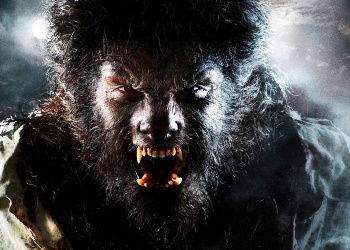
The most recent example was last year’s film The Wolfman that came and went without much notice. In fact, I believe the last breakout films about them were The Howling and An American Werewolf in London (and their sequels were awful). That was back in the ’80s when their makeup was revolutionary. Maybe it has to do with the way they are usually shown nowadays. Often they use obvious CGI or actual wolves whereas vamps and zombies are done with makeup that still carries the day. Filmmakers need to perfect a new way of presenting werewolves that doesn’t look like CGI.
The Undead Reach New Heights
Some may argue that since the ’90s vampires have been portrayed as very sexual and alluring hence their popularity. That take on vampires actually began with Bela Lugosi’s portrayal of Dracula back in the ’30s. But it wasn’t until Anne Rice’s vampire books that the concept of sensual, tortured vampires truly took off then went to an entire different level of popularity when the Twilight phenomenon started. The result was that the vampire became the superstar of the monster world leaving werewolves and others biting the dust. In terms of novels, there are many werewolf romance novel but they have yet to capture the public’s eye like Twilight has.
For zombies, they appealed to those wanting pure horror soaked with blood and guts and a dash of the apocalypse. When it comes to gore, werewolves can’t compete with cannibalistic zombies in the ick factor. As everyone knows the modern zombie genre started with George Romero’s classic Night of the Living Dead film and its sequels. Zombies also gained a strong presence with other media like Max Brooks’ World War Z novel, Robert Kirkman’s comic book The Walking Dead and numerous video games such as Resident Evil and House of the Dead. How can a poor werewolf compete with hordes of the undead rampaging through the streets? It’s gotten so bad that a recent episode of Spike TV’s show Deadliest Warrior featured a matchup of vampires against zombies with hardly a mention of lycanthropes.
Sign Of The Times
Many say that the public’s fascination with creatures of the underworld has to do with the times. Modern zombies are seen as a statement about modern materialistic society. IOW we are the undead; mindless drones who only consume. They’re also the great equalizer in the so-called social class struggle. As they feed on the rich and poor alike without regard, zombies have shown that we are all equal when it comes to food. Werewolves aren’t associated with the end of civilization and the one thing they had over zombies, being fast and savage, has been co-opted by recent zombie films.
Vampires not only explore themes of forbidden sexuality but of adapting to the new age while lamenting the old world and its more dignified culture. But the werewolf theme of man losing his humanity and giving in to his bestial nature is a compelling subject. Being Human explored this very well to the point that the werewolf protagonist is a well developed and sympathetic character. Other examples include The Wolfman, Marvel Comics’ Werewolf By Night and the American Werewolf films. There have been attempts to explore the sexual aspects of werewolves, most notably Neil Jordan’s film In The Company Of Wolves and Mike Nichols’ Wolf with mixed results. The gist of werewolf sexuality is the attraction to the rough, bestial nature of someone cursed as a werewolf. The ultimate good girl likes bad boy concept.
Nice Werewolves Finish Last?
Sookie Stackhouse in True Blood has a fascination with the werewolf Alcide that goes beyond her love for Bill and Eric. The attraction could be because Alcide comes off as more human and kinder than the vampires in the show and books. In many of these incarnations, the main character is shown to be a really nice, meek middle class person who uncontrollably releases the primal side. The film Wolf embraces this theme as Jack Nicholson’s character succeeds in life when he embraces his bestial side and stops letting others step all over him. Or take David Naughton’s character in An American Werewolf In London who is a comical, everyday kind of guy who transforms into a murderous lycanthrope with tragic results. The entire concept can be interpreted as an examination of how humanity is cut off from their true bestial selves that need expression.
It’s difficult to pinpoint why werewolves haven’t quite captured the general public’s eye like all the apocalyptic zombies and emo vampires. Perhaps it’s because werewolves aren’t the undead just specialized shape-shifters. Everyone is fascinated with death and the afterlife and zombies and vamps give us a glimpse of this in a way that werewolves cannot. Maybe it has to do with timing and frankly I wonder how much longer the vampire and zombie fascination will continue. To me it seems we’re oversaturated and the public’s attention will eventually shift to something else.
But the real reason for the lack of popularity probably has to do with the story itself. Recently there isn’t a truly captivating character or storyline that grabs the current zeitgeist. It can happen out of the blue; times and taste will change and the lycanthropes will capture the public eye with a crossover novel, game or film. They’ll get their moment in the moon before long.
The cinemas may be flooded with prequels, sequels, remakes and reboots, but The Thing is a worthy companion to John Carpenter’s 1982 classic film of the same name. Both films follow the source material (John W. Campbells novella Who Goes There?) more closely than Howard Hawks’ film from the ’50s.
The storyline is fairly simple, American paleontologist Kate Lloyd (Mary Elizabeth Winstead) joins a Norwegian research team in Antarctica when the Norwegians uncover a crashed alien craft frozen in the ice. They excavate the ship and bring back the icy remains of an extra-terrestrial that thaws out and displays the ability to genetically mimic any life form, including humans. Much like Carpenter’s film, this one plays a suspenseful and paranoid case of cat and mouse as the humans are picked off one by one by the Thing.
It was a wise move to place the movie in the Norwegian station since it helps make this film a good companion piece to Carpenter’s version. And equally wise to hire Dutch film director Matthijs van Heijningen, since portions of the film were filmed in Norwegian, and someone with equal Proto-Germanic language and cultural background would understand Norwegian characters, the movie cast and culture. There are some good nuances with the Norwegians by having them converse among themselves in their native language since it helps make this film different while adding to the paranoia that pervades the humans.
Both versions deal with two reactions to our human situation; 1) the group paranoia of who is the enemy and 2) infectious diseases. The paraonid theme from the ’82 version reflects aspects of the Cold War of not knowing who is the spy. With the 2011 version, today’s identity theft problem is similar to what the Thing does. The difference is the Thing is a biological ID thief. Regarding diseases, back in 1982, AIDS was just emerging and most of the world was uninformed about the disease. Today we know AIDS spreads through bodily fluid contact which is how the Thing replicates and takes over humans in the 2011 film version.
But the real highlight was Winstead’s performance who has the same inner strength that Sigourney Weaver had in Alien. Much like Ripley, Lloyd at first doesn’t seem like a natural leader, but over the course of the film, her expertise helps the team to survive and more and more the leadership role is entrusted upon her. Her cleverness helps her in determining who is human or not just by observation and her quick theories of what the Thing is doing, proven right during the course of the movie.. Lloyd is a driving force which illustrates how this film is character driven.
Other standouts are the gorgeous cinematography which makes the scenes look like a National Geographic IMAX film and the music by Marco Beltrami. His score perfectly replicates the ’82 soundtrack. We also get to see the inside of the ship, we see a detailed autopsy and how on a cellular level the Thing replicates, and the effects were a fine blend of practical effects and CG.
This version also helps fill in the blanks and show how the aftermath that Carpenter’s characters discovered came to be. Be sure to stick around during the end credits to see how this film leads to the ’82 version.
Overall, this movie is on par with Carpenter’s classic thanks to Winstead’s character and her performance.
Despite the success of the New 52 comic books from DC Entertainment’s DC Comics division, I’m still not seeing an ability by TPTB to consolidate their superhero properties into one source material. I’m a lifelong comic book fan, with a professional background in branding and licensing. I look at superhero properties not only as a fan but also as a brand manager. Here are a few problems I still see superhero companies like Marvel and DC struggling with:
1) Superhero properties must be cross referenced and cross compatible. There isn’t one clear, solid mass consolidation of the characters across all major media- film, TV, video games, animated series and their related merchandising ventures. This goes for DC, Marvel and, to a certain degree, other comic book companies who overextend their properties. I think they’re taking the wrong approach. This is brand management failure in the making. By that I mean that there are too many versions and variants of characters and their costumes and storylines and it dilutes the core characters. At DC, they have a big problem: Why isn’t Superman’s costume and storyline from the regular comic books seamlessly tied into the 90’s Superman Animated Series, the CW’s Smallvile, DC Universe Online game and the new upcoming Superman movie? BTW, the next Superman movie has no relation with the past films, and is being produced as a relaunch/remake because Superman Returns wasn’t a big hit. Noticing how The Dark Knight made more money, Warner Bros. want the new Superman movie to be “darker.” Unfortunately, they are all standalone, independent works with no consideration on how any one of these iterations relate to each other.
Footnote: DC Comics editorial, Superman writer Geoff Johns and artist Gary Frank superbly consolidated elements of the Superman movies and his past comic book iterations. Frank was allowed to illustrate Superman in the likeness of the late Christopher Reeve; the crystalline Krypton- designed for director Richard Donner’s Superman by brilliant production designer John Barry, was incorporated into comic book Kyptonian architecture. The movie’s three Kryptonian villains (General Zod, Ursa and Non) finally appeared in the comic books. While General Zod originated in the ’50s comics, Ursa and Non were created for the movies. It was Johns’ inspired idea to suggest they include all Kryptonian costumes designed by all comic book artists from the ’40s to present time, explaining that Krypton’s fashion was as diverse as Earth’s and what Kryptonians wore depended on their guild. Kryptonian fashion illustrated by John Byrne, Curt Swan, Gene Ha and from the films were all finally intermixed successfully. With the relaunch it’s unknown if they’ll keep that Kryptonian integration.
2)Too many %^$#**&$@ iterations of one character. Marvel suffers from this with all their properties. How many Wolverine comics are out there? There’s a title called Dark Wolverine and it’s not even the regular version of the character. And Logan once a proud loner is now in a whole bunch of teams! (Previously, he joined only the X-Men, that was the charm of it!) My question is: How does the comic book relate to the ’90s X-Men animated series, or 20th Century Fox’s X-Men movies, multiple X-Men video games, and other animated series? And now that’s happened with Spider-Man (the underdog loner) and all his different costumes. And let’s not forget there are two different Marvel Universes- the mainstream Marvel Universe and the Ultimate Universe. I know the reason behind it- sales and profits. Spider-Man and Wolverine are fan favorites. Marketing execs must love these infinite variations of the popular Marvel character since they can sell more comic books and toys, but it is confusing and turns away new readers.
3)Cost prohibitive and time prohibitive story lines. I go across comic book aisles and see special event comics and multiple tie-ins and special issues (Blackest Night, Secret Invasion, DC’s numerous Crisis events and tie ins) and it turns me away. It’s unaffordable! It seems as if the larger companies are targeting upper middle class and upper class readers because the average fan cannot afford to buy so many comics just to get a complete story.
4)DC needs to scale back the amount of comics even more per month. Until the New 52, each month DC put out 52 regular titles, plus many four- and twelve- issue miniseries, and event comics for the tie ins and TBPs. Now they relaunced the DC Universe and cut back the number of monthly comic books to just 52. But it’s still too many comics to afford at $2.99 or $3.99 for each comic book. To read the full interrelaed story, the average buyer needs to spend $150 a month, and that’s for the New 52 comics alone! What about your favorite comics from Marvel, Dark Horse, IDW, or Dynamite? But even if the prices were lower the bottom line is that the average fan doesn’t have time to read every single monthly comic book that comes out per month. It’s impossible. We have to pick and choose what we read and often it feels like we aren’t getting the full experience because no one is picking up every single tie-in. This was a problem when the comic book companies flooded the marketplace with too many titles and eventually everything imploded as a backlash from the speculator boom and the industry still hasn’t recovered from that. Back in the ’60s Marvel had a very manageable lineup with about twelve titles per month. It was easy for readers to jump aboard, experience the full Marvel Universe and not feel overwhelmed. Remember the adage, less is more!
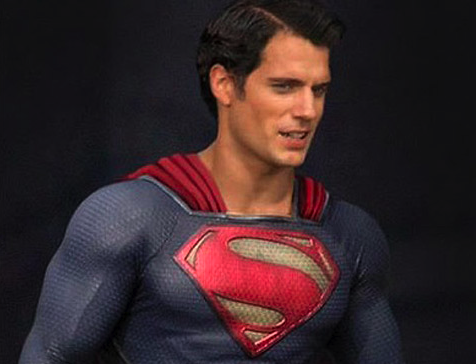
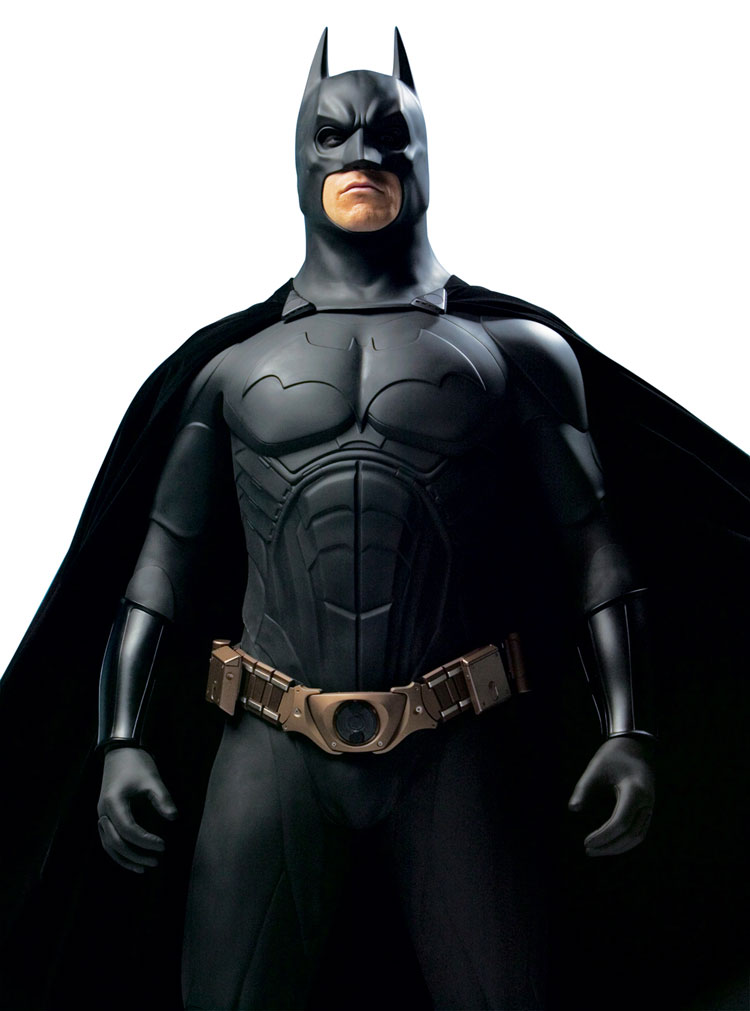
5)Superhero costumes need to be consistent to maintain strong branding. Getting back to the New 52, one big example of this problem is the Superman outfit. In Zach Snyder’s upcoming film, the colors are way off; it looks bluish grey with red violet and no red trunks. In the New 52 comic books, the costume has the right red and blue colors, but no red trunks, just a red belt. And a collar, which seems to be a superhero prerequisite in DC’s New 52. Superman’s outfit is still not consistent from one medium to another. Unfortunately the producers of the new Superman movie, and DC Entertainment clearly didn’t want the classic costume meaning the costume differs from the one Supes wears in the New 52. The result is that already many fans aren’t happy. The same thing happened with Green Lantern. They made a choice with the film to have the costume appear organic and that was fine, it worked. But they should’ve used that costume when they rebooted the New 52 Green Lantern comic book. As a matter of fact, many fans expected they would do that, and were disappointed. DC had the perfect chance and pretext last month with the relaunches to do this but they didn’t. They need to realize that the movie medium is the strongest medium and should be the strongest point of reference.
6)Superhero Genre: We need to understand that superheroes aren’t a medium they are a genre that spans several media. This was proven back in the ’40s when Superman became a radio star and ceased to be confined to the comic book medium. What should be done is to just pick the version that is most popular, whether they be the movie version or the comic book version. In other words, all media should be cross-referenced to be compatible, with the highest priority given to the look of the costumes. This doesn’t mean that story isn’t important but comic books are more of a visual medium so the costume and visuals can’t be screwed up.
7)Executive-level decisionmass consolidation of the characters and stories across all major mediums. This has to come from the top execs of WB and Disney sending directives to DC Entertainment and Marvel respectively. For example, the likeness of an actor portraying the superhero or villain should be used in the comics, toys, etc. This can be expensive in terms of royalty but it just means they need to better negotiate this when coming up with the contract.
8 )Power to the (fans and consumer) people! Another thing the companies can do is have some kind of fan base council (with power and influence) that report to the big guns as to what is popular and what isn’t based on direct feedback from fans who can provide comments or answer polls. This will help bring about the highest level of consumer satisfaction.
9)Price and online incentives: The price of a paper copy New 52 comic is the same as it is with the digital copy. The digital copy has no enhanced features. Why not? DC is missing out on a huge online opportunity: Incentives for digital comics could be online content like official character websites, commentary, videos, etc. Senior level direction is needed to map out where everything is in terms of the characters’ bios. Online charts and maps should be provided to help new readers understand what is going on, draw them in and appreciate any character’s rich history.
Conclusion:
There has to be one pure version of the property, and looking at this from a branding perspective, the property is still muddled. The standalone, independent business model that superhero companies are following is a bad idea. Their properties must be cross-referenced and cross compatible for all mediums, and whichever company has the guts to carry out this properly will win in the long run.