DC Wins The TV War…For Now, Part Two

trio

The rivalry between DC Comics and Marvel Comics has many fronts in media like toys, films, video games, etc. But as it stands right now, DC Entertainment dominates the television medium with its current slate of TV shows on the air and their plans for additional programs coming in the near future.

DC’s Television Summit

Once Smallville ended in 2011, a void needed to be filled by DC Entertainment in terms of having a superhero presence in the TV landscape. Rather than mining the Superman/Batman lore, the decision was made to showcase DC’s proto justice leagueother heroes and it was a wise choice. For some time, DC and Warner Bros. fell into a crutch and relied too much on Superman and Batman to represent DC in other media. This was understandable since those were the company’s two biggest heroes. It makes perfect business sense to take advantage of the popularity of those heroes. The problem, though, is that with all the marketing and attention focused on Batman and Superman, DC’s other heroes were left out and helped give the impression that the rest of the DC roster consisted of second stringers. That couldn’t be farther from the truth. The DC universe is populated by many captivating heroes and villains and the problem was that the company wasn’t taking full advantage of that notion. Marvel, and specifically Marvel Studios, faced a similar problem but for different reasons. They didn’t have the film rights to Spider-Man or the X-Men, so they had to rely on their lesser known properties. It turned out for the best, otherwise we wouldn’t have gotten live-action adaptations of Guardians of the Galaxy or Thor.

In DC’s case, they too were forced to look elsewhere since the Superman well had run dry with Smallville and Batman was considered off limits because of the Dark Knight films. Thus, DC Entertainment looked to an urban vigilante that had many of Batman’s characteristics – Green Arrow.
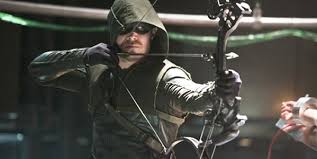
Arrow aimsAll things considered, he is a solid alternative for Batman when it came to being featured in a live-action TV show. After all, both are urban crimefighters without superpowers and use specialized weapons. When Arrow premiered in 2012, it presented a more grounded, realistic world for the superhero. In the first season, the main character, who wasn’t even called Green Arrow (in one episode his alter ego, played by Stephen Amell, thought that name Green Arrow was “lame”), wore a practical uniform with only a hoodie and grease paint to conceal his identity. Moving away from fanciful superhumans allowed Arrow to concentrate more on character development and street-level fight scenes. This meant that it was more inviting and relatable for casual viewers.

What the producers of Arrow did correctly is that they embraced the DC universe. They weren’t afraid to name drop places like S.T.A.R. Labs and Blüdhaven. Likewise, the series featured recognizable DC characters like Amanda Waller (head of the Suicide Squad), Slade Wilson and even the Batman villain Ra’s al Ghul and his League of Assassins. It was enough bones thrown to DC fans to keep them glued to their TVs. Arrow then took a step further and introduced superpowered characters in its second season thanks to this strength-enhancing drug called Mirakuru and the introduction of Barry Allen (Grant Gustin), whose Flash origin occurred at the end of one of the Arrow episodes.

arrow flash

This naturally led to The Flash spinoff that premiered recently. Taking a lighter tone than Arrow, The Flash is more of a throwback to the fast-moving comic books with outlandish supervillains, while utilizing the same kind of engrossing subplots that Arrow uses. What’s more is that both shows are definitely in the same universe. Although the concept of a shared universe isn’t new in TV shows, this was the first time this was done for superhero shows (not counting The Six Million Dollar Man and The Bionic Woman) and it’s exciting to watch characters appearing in both programs with even more allusions to a wider world.

Both Arrow and The Flash are huge hits on The CW network and should be around for the long haul. Gotham, a show set in the title city and taking place after the killing of Bruce Wayne’s parents, is a hit on Fox. In fact, it pulls in more ratings than The CW superhero shows but that is due to the wider audience that Fox has compared gordonto The CW. Even though Gotham is a hit, there should be some caution because it’s on Fox, so there isn’t any guarantee that it will last as long as if it was on The CW. That is a problem that DC and Warner Bros. faces. Sure they can put anything on The CW, a fledging network, but it won’t reach as large an audience as in the major networks. But on the big networks, there is more pressure to succeed. Already, Constantine airs on NBC and has dismal ratings–it was recently announced that the show won’t go beyond initial 13 episodes and its fate is unknown. Constantine’s rating woes are due to its time slot: Fridays at 10 pm. How can any show succeed on that slot? It probably would’ve been better if it aired on a cable network where it could’ve thrived and be allowed to be darker like its comic book counterpart.
Continue reading

DC Wins The TV War…For Now, Part One

 old DC

One of the great corporate rivalries is the one between the comic book giants Marvel Comics and DC Comics. It’s a competition that has spilled over to other media. When it comes to films, Marvel has won the war on that front due to the monumental successes of their Marvel Cinematic Universe (MCU) films. However, take a quick glance at the current TV schedule. From looking at that and television history, it’s obvious that DC has won the TV War…for now.

Head Start

In reality, DC had the war won for decades now. This goes way back to the 1950s with the success of the first TV show based on Superman. That would be, of course, the landmark series Adventures of Superman, which starred George Reeves. It’s well known that the series was very popular and helped cement Superman’s legendary status in pop culture. Marvel at that time period didn’t even exist, nor did their most popular heroes because the company was concentrating on non-superhero comic books.

Following the cancellation of Adventures of Superman, the next DC superhero to bask in the television spotlight was Batman. Beginning in 1966, Batman was an instant hit and a genuine pop culture phenomenon. Starring Adam West and Burt Ward as Batman and Robin, the show was a decidedly goofy sendup of comic books and introduced characters like the Joker and Catwoman to non-comic book readers. Although, it was and is still popular, many decried the way Batman belittled the Caped Crusader and comic books in general.

wonder woman

In the 1970s, there were a few TV shows and specials based on DC Comics superheroes. The best known was Wonder Woman, starring Lynda Carter and it aired from 1975 to 1979. The show wasn’t as cheesy as Batman, nor as popular, but it was noted for its pro-feminist stance since the title character was a superhuman woman. The women’s lib messages obviously went over the heads of most younger viewers, who were enamored with Lynda Carter and her skimpy outfit.

Other TV shows airing in the 1970s were strictly aimed at children like Shazam! and The Secrets of Isis. In fact, these half-hour programs only aired on Saturday mornings and had limited appeal.

Around this time period, Marvel got into the hulk showact with the premieres of TV shows and TV films based on their characters. The first superhero to make a live-action appearance was Spider-Man, who made non-speaking appearances on The Electric Company. Some of the Marvel TV films and shows were truly awful like Captain America and The Amazing Spider-Man, which thankfully did not last long as a series. But a couple were actually decent like Doctor Strange and Marvel’s biggest hit on TV The Incredible Hulk. Airing in November 1977 and starring Bill Bixby and Lou Ferrigno, the TV film was a big hit and led to a successful TV series the following year.

Second Wind

superboyThe decade that followed, the 1980s, was slow for comic book properties on TV. After The Incredible Hulk was cancelled in 1982 there wouldn’t be another superhero TV show until the syndicated program Superboy debuted in 1988. Coming after the film disaster Superman IV: The Quest for Peace, Superboy was a welcome respite for fans who just wanted to see good, old-fashioned superheroics and teenage angst. Plus, Superboy was a competent place holder until DC and its parent company Warner Bros. could bring out another Superman TV series or film.

On a side note, there were a trio of TV films that continued the Hulk’s adventures and the first two introduced live-action versions of Thor and Daredevil. The Hulk and his alter ego David Banner actually died at the end of the third film, but there were plans to do more TV films. However, those ended after Bixby’s untimely death in 1993.

The humongous success of the film Batman in 1989 helped jumpstart new DC-based TV shows in the 1990s. Not wanting to rest with the success of Superboy, Swamp Thing: The Series premiered on the basic cable channel USA Network in 1990, while a show based on the comic book Human Target aired briefly on ABC in 1992.

old flashThere were two shows that made the largest impact in that decade. They were The Flash and Lois & Clark: The New Adventures of Superman. The Flash, starring John Wesley Shipp, premiered in the fall of 1990 fresh off the success of Batman and seemed to copy the stylistic direction of the Tim Burton film. Even though it only lasted one season, the show is revered by fans because of its fun stories, dazzling effects, and character work. Lois & Clark: The New Adventures of Superman, which aired on ABC, was targeted more towards women since it concentrated more on the relationship between Lois Lane (Teri Hatcher) and Clark Kent (Dean Cain). The superhero aspects of Superman took a back seat to the romantic shenanigans and it was laden with light humor. Of course, this displeased some fans, but it was still a successful program.

As for Marvel, the 1990s was a decade best left forgotten. There were DOA pilots based on Power Pack, Generation X and Nick Fury. As for the syndicated show Night Man, the less said about it the better.

Animation Dominion

young justiceAs DC dominated the television medium, there was another TV venue that it conquered. That was with their animated TV shows. Since the 1960s, there have been numerous TV shows that aired on Saturday mornings and on syndication based on DC’s superheroes. DC enjoyed early successes like Superfriends in the 1970s, but their animated shows weren’t acclaimed until Batman: The Animated Series premiered in 1992. Boasting memorable characters, villains and plots, the show was a huge hit and led to other superior animated gems like Batman Beyond, Superman: The Animated Series and Justice League. DC’s animated renaissance probably culminated with the recent Young Justice. It just lasted two seasons, but its smartly written scripts, mature themes, and complex character development won wide appraisals from fans and critics.

In this venue, Marvel actually presented itself as a viable counterpart to DC since the 1960s with series based on Spider-Man, the Hulk, the Avengers and other stalwarts. The results were quite admirable in many instances, but DC on the whole produced more noteworthy animated TV shows.

New Century, New Renaissance

As DC celebrated their animated successes in the 1990s, the live-action field was stagnant after the cancellation of Lois & Clark in 1997. There was an infamous pilot made for the Justice League that thankfully never made it into a series. It can be found on Youtube for anyone that is curious.

The live-action drought ended a few years later in 2001 with Smallville. This long-running show starred Tom Welling as Clark Kent in his teenage years and early twenties. It ran on The WB and later The CW networks and explored many aspects of the Superman mythos while concentrating on Clark’s emotional development and how he came to be Superman. It had its faults like the producers’ insistence of “no tights, no flights”, which meant Clark never put on his iconic Superman suit. (The final episode doesn’t count since he was never fully shown wearing it.) This was strange because many other superheroes featured on Smallville like Green Arrow, the Justice Society and Supergirl were allowed to fully embrace their comic-book roots. The Warner Bros. network tried to capitalize on the success of Smallville with other programs, but weren’t successful. Efforts included the short-lived Birds of Prey in 2002 and a pilot for Aquaman.

Around the time that Smallville came to an end, the superhero genre exploded in theaters. Super hits like The Dark Knight, Iron Man, and The Avengers cemented the permanence of arrowsuperhero films. As it goes, whenever there is a mammoth box office hit, TV executives take notice and follow suit. Warner Bros. and DC took advantage of the heightened interest in superheroes and produced many TV shows. Not all of them bore fruit like pilots for Aquaman and Wonder Woman, or another iteration of Human Target, but others blossomed and are now hit shows. These include Arrow, The Flash, Gotham and to a lesser extent Constantine. And that is just the beginning.

José Soto and Lewis T. Grove

To Be Continued

Marvel Mythbuster

stan lee

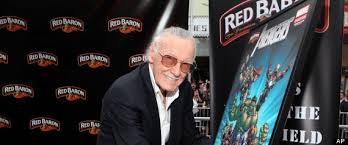
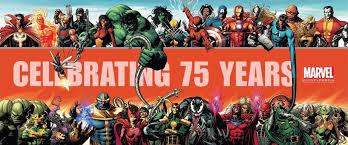
Amidst all the celebration of Marvel Comics’ 75th anniversary is the notion that famed writer Stan lee singlehandedly created the entire lineup of the Marvel Universe. That couldn’t be farther from the truth.

His biggest collaborator in the early days was Marvel Comic’s co-creator Jack Kirby. Kirby was not only the dynamic, genius penciler with fantastic layouts and renditions, he was more than a co-plotter on stories “written” by Stan Lee.

Stan allowed his artists to plan out the full issue after just speaking with them for a few minutes or having a one kirbysentence plot. It was up to Jack to find the action, the comedy, the tragedy, the pacing and the tone as he was also creating the art. So, by saying that Jack was a co-plotter is not giving Jack enough credit. Together Stan and Jack created the X-Men, the Avengers, the Fantastic Four and all the supporting characters and villains that appeared in those books during Marvel’s origin years- the early 1960s. Stan also had other collaborators too, such as Steve Ditko, co-creator of Spider-Man and Dr. Strange, and he had a similar working relationship with Ditko.

As the Marvel universe began to take shape during the ’60s, which was known as the Silver Age of comic books, other artistic collaborators followed– Gene Colan, John Buscema, Bill Everett, Wally Wood, Jim Steranko, all embellished upon the house of characters that Jack, Stan, and Steve built. So for accuracy’s sake remember as we celebrate Marvel Comics’ 75th anniversary, although he was a critical part in the formation of the Marvel Universe, Stan Lee did not create the Marvel Universe all by himself.

 Steven L. Walterson

Reasons Why The Marvel Superheroes Are Still Successful

marvel 75

The 20th century needed a new group of heroes that reflected then-modern sensibilities. During the Golden Age of comic books, superheroes belonging to DC Comics (then named National Periodical Publications) such as Superman, Batman, and Wonder Woman fulfilled this need with their wild superhuman exploits that captured the imagination. By the post-war era in America, DC’s superheroes were pretty much the standard: the Establishment.

By attempting to have the most likeable characters, DC’s superheroes had no character or emotional flaws, and the stories gravitated towards plot-driven, farcical adventures rather than character-driven stories.

In the wake of DC’s success, other comic book companies were founded and tried to emulate DC. Out of the many companies, only Timely Comics had staying power and here we are celebrating the 75th anniversary of that company that will later become Marvel Comics.

The Flawed, Science Heroes: Comics changed forever with the start of the so-called Marvel Age. The birth of the Marvel Universe took place in the early 1960s. This was a period that people were in awe with all of the wonders of science and space exploration. The Space Race and the Cold War were on the minds of the people. The Zeitgeist was the fear of the imminent Red Invasion and the Promise of Science- where will it take us?

perez marvelThe core of the first generation of Marvel superheroes were essentially Science Heroes. With the exception of Dr. Strange, the rest of the Marvel Universe was largely a world of weird science and science fiction. Spider-Man, Fantastic Four, Captain America, Giant-Man, the Wasp and the Hulk were Radioactive Heroes. Peter Parker was bitten by a radioactive spider. The astronauts from Reed Richard’s group were exposed to cosmic rays during their maiden voyage into outer space. In an unfortunate accident, Dr. Bruce Banner was hit with the full blast of Gamma Rays. Tony Stark built an electronic-laden armor with tons gadgets and abilities. Captain America was a patriotic hero that survived World War II by being frozen due to his exposure of Vita-Rays; part of the catalyst that transformed Steve Rogers from a skinny kid to an athletically proportioned hero. Giant Man and the Wasp benefitted from Hank Pym’s size magnification and reduction experiments, along with side studies in insect communication and gene splicing.

Great concepts- ahead of its time- but what made the Marvel Universe different, however, was not only the science aspect, but rather the fact that these Marvel heroes were emotionally flawed, imperfect, and fallible. Tragedy strikes as often as victories. Moral dilemmas were as large as the threat.

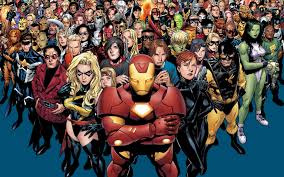
Spider-Man wins the battle with the big bad villain, but he can’t get enough money for his rent and he blew a date with either Gwen Stacy or Mary Jane Watson. Captain America is back in the modern world, but he feels lost like a fish out of water. marvel heroesThe X-Men have astounding abilities, but they are persecuted and feared by society, who view mutants as aberrations, and treat them as outcasts. The Fantastic Four’s Thing has great power, but he also has this great fear that his blind girlfriend Alicia won’t accept him if she ever regained her sight and found him ugly. But the Thing- AKA Ben Grimm, is very human despite his rough exterior, with a heart that endeared him to readers. Dr. Strange was a callous, money-loving jerk; a celebrity physician until a terrible traffic accident ended his career. This gave him pause to reflect and improve on his past behavior as he was now invested to learn the mystic arts to save the world from an ancient evil. And the list goes on and on with the great flaws that these characters have, but that is what made these characters appealing. That in particular was something that comic book readers became very attuned to, and why they identified with them. Continue reading

The Vampires Of The Strain

eichorst ready to eatVampires have been defanged lately. At least on TV and film. Both medium have been filled with overly romantic or brooding, misunderstood loners that filled the roles of the infamous night creatures. In reality, the vampires in Twilight and True Blood among other presentations were really just metaphors for social and emotional themes like teenage alienation, bigotry and even the gay rights movement. As good (or bad) as these presentations were, it was clear that the vampire mystique was diluted and strayed far from the creatures’ legendary horror roots.

Fortunately, The Strain corrects that problem by presenting the vampires in the TV show as the horrific and repulsive monsters they’re supposed to be.

Based on the book of the same name by Guillermo Del Toro and Chuck Hogan (both of whom executive produce the show as well), The Strain is starts off as a medical mystery but by the end of its first season is a straight up horror tale as a deadly infestationplague ravages modern-day New York City. In just a matter of days, many of the city’s inhabitants are turned into vampires by means of a quick-acting virus spread by aggressive parasitic worms. These tiny creatures are found in vampires and burrow into humans whenever a vampire bites them or simply by coming into physical contact with a vampires’ body fluids.

When infected by these disgusting worms that quickly multiply in the body, a person feels like he or she is suffering from a bad cold. In reality a horrid metamorphosis occurs where sexual organs atrophy and fall off, skin turns deathly pale and gray,  and a craving for blood ensues. By this time, the infected’s personality is largely gone, and are driven by a desire to ingest blood and pass on the virus. Infecting and draining someone else is done through a hideous, long tendril that shoots out of their mouths with grabbers and teeth at the end. Seeing this happen in each episode never loses its shock value and it’s very disturbing.

tongue attack

It’s a unique twist on the way vampires attack their victims and makes logical, pseudo-scientific sense. This method is somewhat reminiscent of the xenomorph creature in the Alien films with its elongated tongue that sports its own tiny, fanged mouth only the vampire’s tongue is much longer and faster. The way the vampires attack their victims takes away any notion of twisted romantic eroticism. The vampires in The Strain don’t try to seduce humans. They have no sexual interest in them and reproduce asexually by transmitting the worms. The end result is that the supernatural aspect of these bloodsuckers are downplayed and instead scientific explanations are given as to how they exist and operate.

Most vampires shown are nearly mindless the mastercreatures driven by instinct. At best, the common vampires display a sort of hive intelligence and carry out psychic commands from the Master, the vampire leader. Meanwhile, a select few retain the personalities of their former lives and possess intelligence and the ability to talk. These special vampires are able to pass themselves off as human through elaborate makeup. That is because a fully fledged vampire has deathly grey skin, no hair, or nose and are bald with pointed ears. They’re also incredibly strong, quick and fast healing.

But Del Toro and Hogan didn’t just toss out all the old traditions with their takes on vampires. They do share a trait with the traditional vampires in that they lull many victims to let down their guards. This happens when a recently transformed vampire is drawn to a former loved one. The intended victim will see that the shuffling creature is acting odd and barely speaking. The vampire will swiftly attack and noisily drain the suckervictim’s blood using its tongue as a fleshy straw and leave the now-infected person in a death-like state. Shortly thereafter, the victim’s DNA is rewritten and the person is now a vampire. Also, the vampires on The Strain  have many of the traditional vampire weaknesses such as being vulnerable to silver and direct sunlight. The show’s heroes use the same tried and true methods of fighting vampires like sunlight exposure, blades for beheadings or silver. But innovative twists are used like UV lamps in the absence of sunlight and nail guns that fire silver nails.

The vampires in The Strain are innovative while being a throwback to their original portrayal across centuries. They’re hideous, disgusting and there isn’t anything romantic about them. They have more in common with the shuffling, mindless and disfigured zombies seen in TV shows and films these days. The end result is that the vampires have become something to be feared again.

José Soto