Good Boy and Other Pets In Horror Films and TV Shows

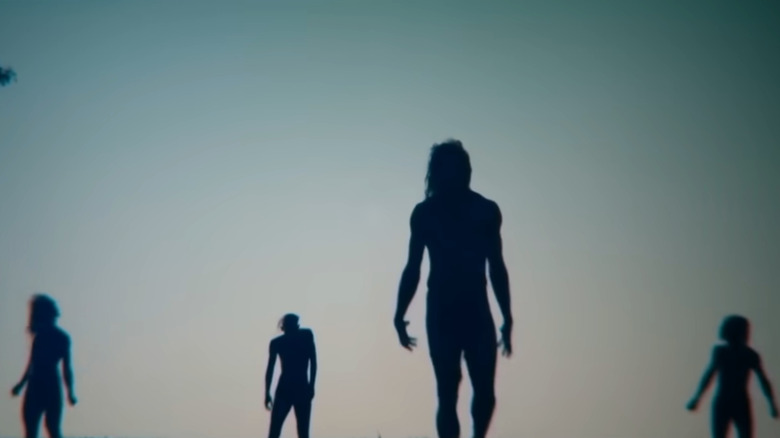
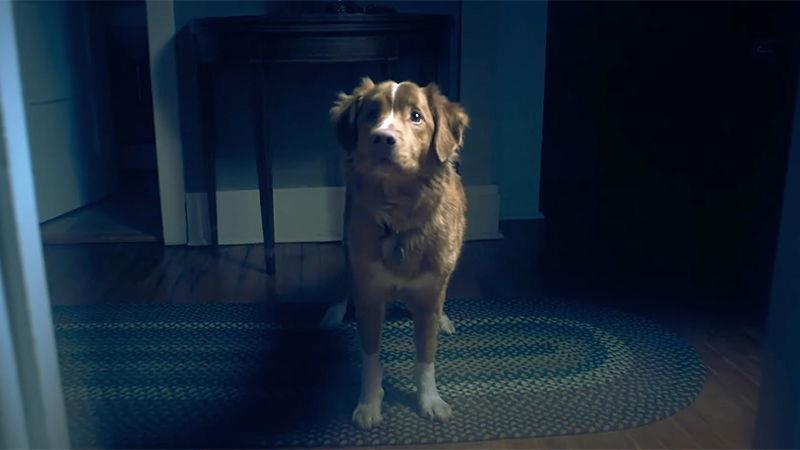
Indy, the canine star of the horror film Good Boy, brings attention to the presence of beloved pets in various horror films and TV shows. It can be said their inclusion is way to raise the stakes of the terror faced by the film’s main characters, as with Good Boy. But these animals can have more complex roles in horror films and TV shows.
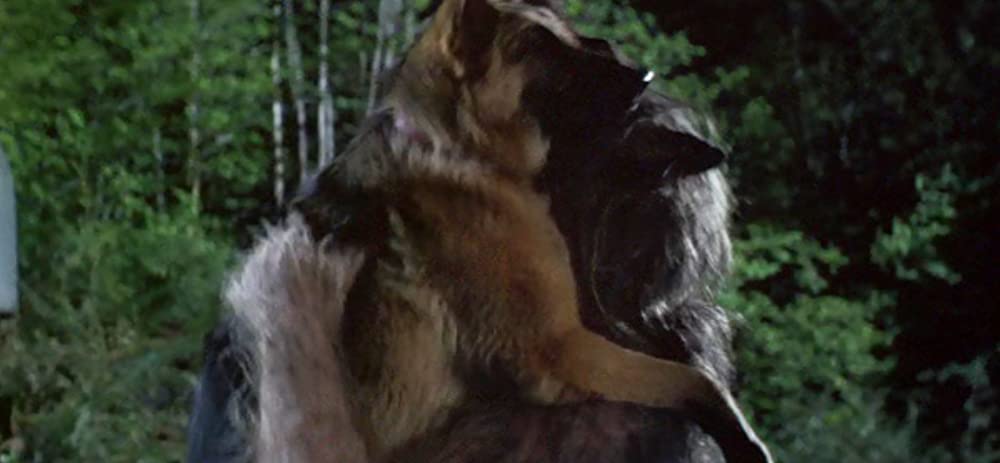
Other times, the animals wind up playing a pivotal or even a heroic role as with Nanook, the malamute that helps his owner fight off the title vampires in The Lost Boys. In Nanook’s case, his crow-pleasing moment came when he pushed a vampire into a tub full of holy water and garlic. Another example is the dog Thor in Bad Moon. It’s another horror film told from the POV of a dog, in this case, Thor faces off against a werewolf, who tragically was his owner when in human form. Then there is the title character in Frankenweenie, a dead dog who was revived by his grieving owner. Also, let’s not forget Kojak (formerly “Big Steve”), a retriever featured in The Stand who wound up playing an important role late in the TV mini-series when he helped care for the main character Stu Redman after he was badly injured.

These pets are often imperiled by the supernatural forces that threaten the main characters, and sadly these beloved animals wind up becoming victims. There are too many to go into here, but some standouts include Tank, the terrier, from V/H/S 2, Churchill, the cat in Pet Semetary, and Samantha, the German shepherd in I Am Legend, who gave her life defending her owner against mutants before she had to be put down when she began to mutate.
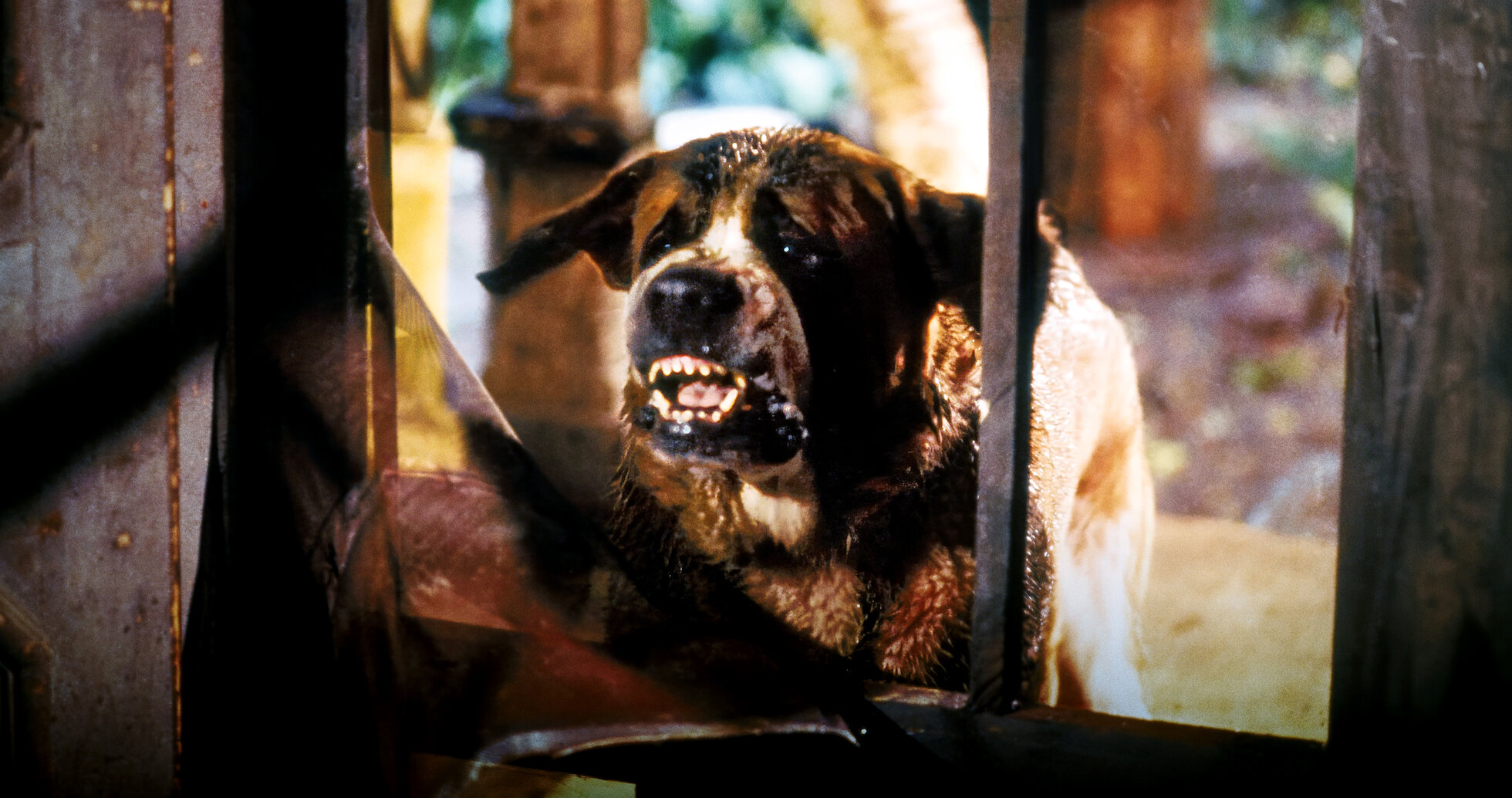
On the other hand, there are many horror films and TV shows where the beloved family pet becomes a source of danger to humans. The best example of this is with Cujo, where a docile St. Bernard becomes a vicious killer that threatens his owner and her child. Other examples include several dogs in Day of the Animals, various pets in the TV show Zoo, and the title dog in Man’s Best Friend.

We get very alarmed and feel uneasy whenever beloved pets put themselves at risk to defend their human families. It is second nature for dogs to act as guardians for us even though they are at risk whenever tackling the supernatural. This was very prevalent in Good Boy as Indy tries his best to protect his owner Todd from a malevolent spiritual force that haunts Todd. It must be mentioned that the animals’ ability to sense the supernatural before the humans could make them more vulnerable to looming threats.  What was even more distressing in Good Boy was that only Indy was aware of this evil force and was unable to communicate this danger to Todd unlike another human.
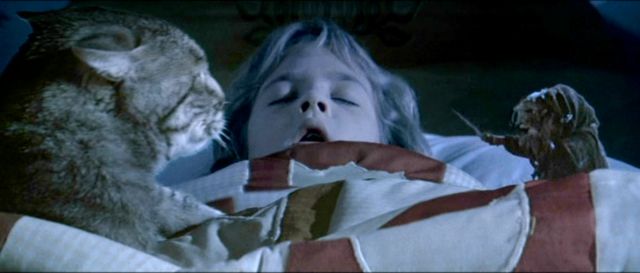
The inability to adequately communicate with humans is part of what makes the animals’ dilemma so engaging. Another example of this was in the film Cat’s Eye, where a stray cat is involved in three separate stories, and becomes the hero in the last segment. In that story, the cat (now named “General”) defends a young girl from an evil troll trying to steal her soul. What made General’s job more difficult was that he was the only one who sensed the troll’s presence, and he could not communicate to the girl’s parents about her imperilment.  

What made Good Boy such a standout from your standard haunted house story was that the film was told from the POV of Indy. We are able to empathize with Indy not just because he was a loveable dog but because of how his worldview was presented. We never fully see the faces of the human characters or hear their dialogue clearly; Indy is also able to get into the dark corners of his owner’s home to get more details about the otherworldly threat, which a person could never do. Essentially, through Indy’s eyes, we get a better sense of the ghostly presence haunting Indy’s owner.
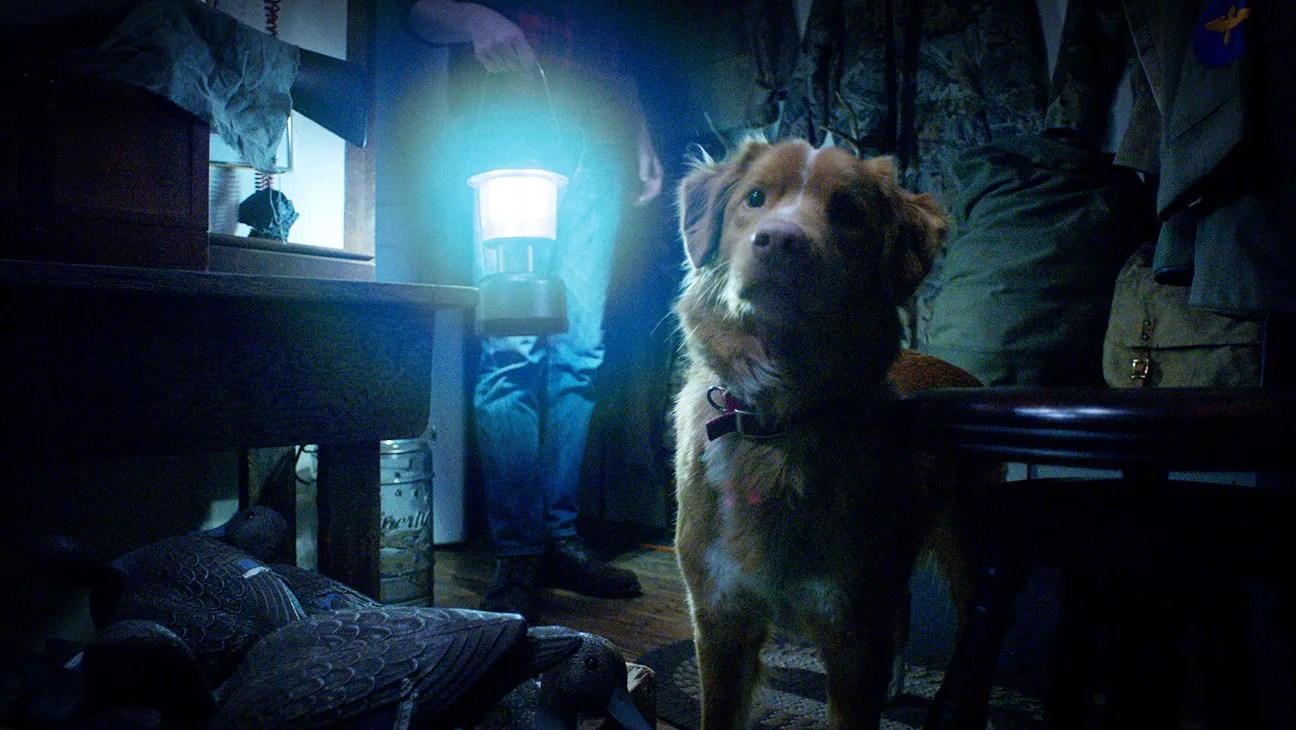
Also, the stakes of danger are raised since Indy is more vulnerable to the supernatural presence. Unlike a human who could find out how to combat the supernatural threat and use tools, Indy and other animals only have their own instinct and natural abilities to combat the threat. Sometimes that is not enough. That is why films and TV shows featuring pets like Good Boy are so captivating.
Alien: Earth Crashes Down To Earth

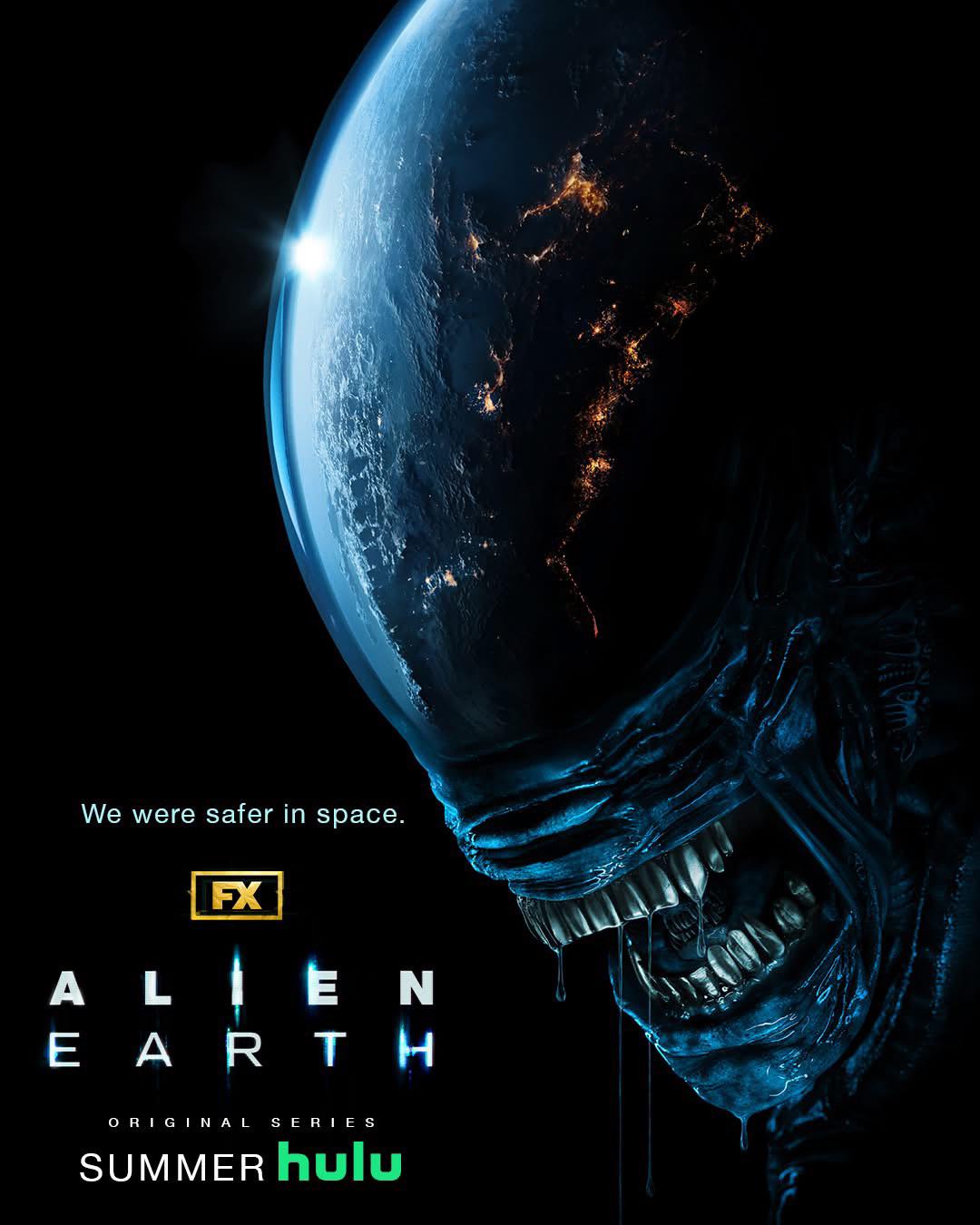
Given that the Alien franchise has been around for nearly 50 years, it was surprising that until Alien: Earth, no TV show was made about the famous sci-fi horror IP. One would think that more effort would have gone into making the first Alien TV show much better than it turned out.

Alien: Earth was created by Noah Hawley (the writer and producer of Legion and Fargo) and takes place a couple of years before the first Alien film, around 2120. It expands upon the universe created in Alien by showcasing life on Earth and answering many questions about this universe while raising many more questions.

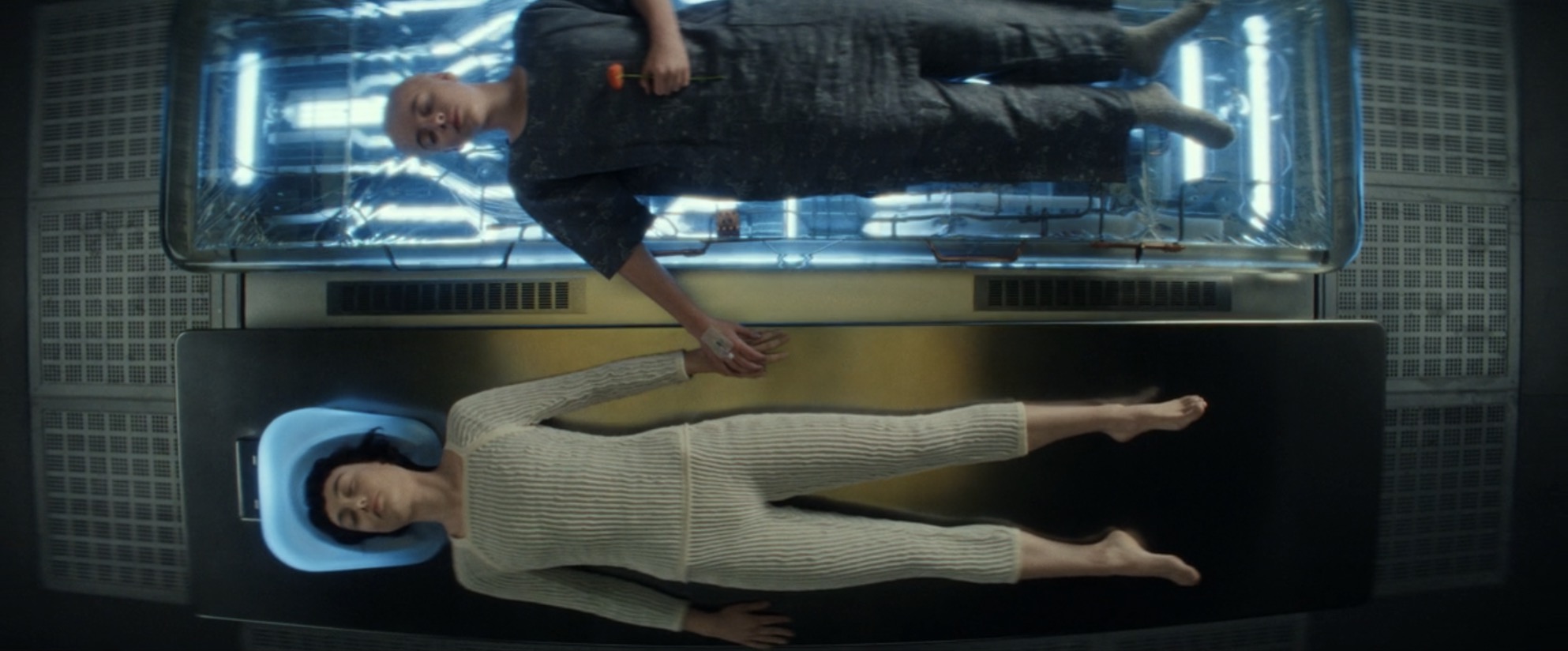
The TV show focuses on Wendy (Sydney Chandler), a prototype hybrid and her evolution. She and other hybrids (nicknamed the Lost Boys after Peter Pan) differ from the synthetic people shown in other Alien films in that originally they were dying children whose consciousness were transferred into synthetic human bodies, which makes them in essence immortal. Wendy and the Lost Boys were created by the corporation called Prodigy, which is based in Asia, and is owned by a douchey trillionaire tech bro called Boy Kavalier (Samuel Blenkin).

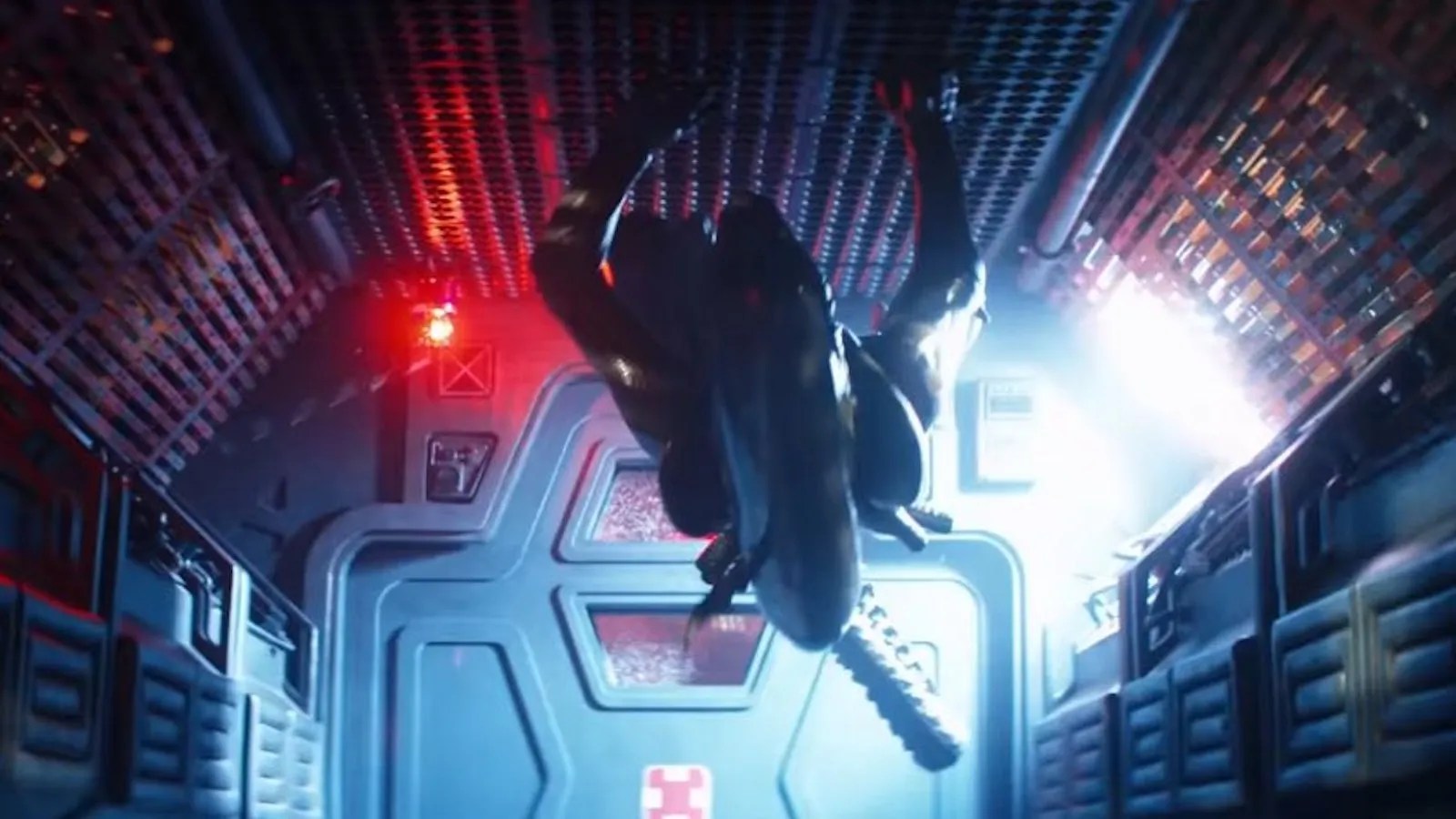
Kavalier covets the extraterrestrial biological specimens collected in a spaceship owned by rival company Weyland-Yutani and he arranges for the spaceship to crash land in Prodigy territory on Earth so his corporation could claim the specimens as salvage. As it turns out, one of the dangerous organisms is the famous xenomorph that made the franchise so revered.

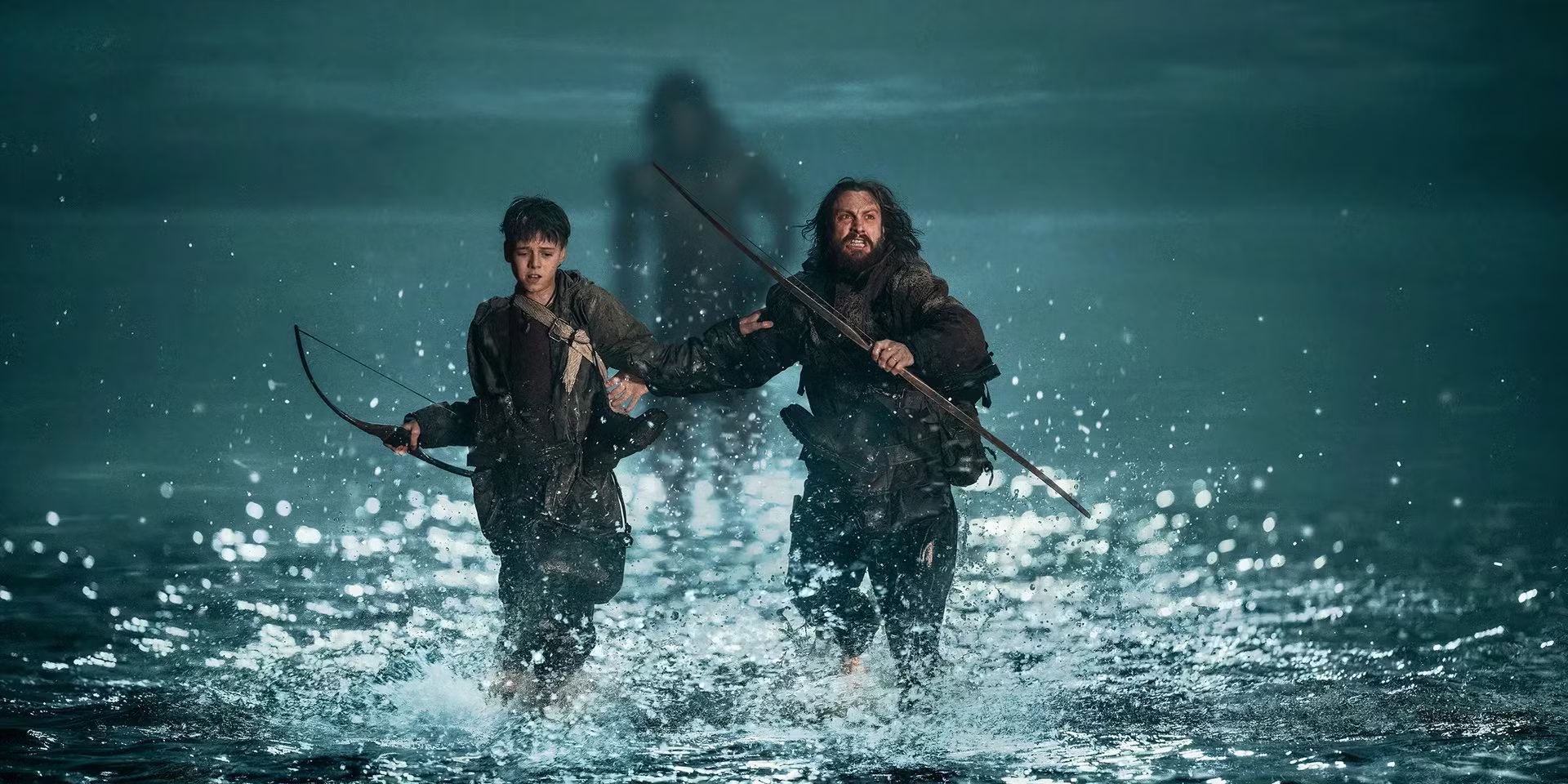
When the Weyland-Yutani spaceship crashed in the Prodigy city New Siam, one of the first responders to arrive at the scene was Wendy’s brother Joe Hermit (Alex Lawther), who is soon endangered by a xenomorph that is now loose in the crash site. After Wendy learns of this, she volunteers to go to the crash site to help collect the alien specimens with Prodigy soldiers and rescue her brother. Once Hermit is rescued and the aliens are captured, Kavalier has the alien creatures brought to his private Neverland Island, where Wendy and the Lost Boys are based, to study the creatures. Of course, as things go in Alien stories, things get out of hand as the xenomorph and other alien creatures break loose from captivity and imperil not just the people on the island but the entire planet. Meanwhile, Wendy and the other hybrids go through existential crises as they struggle to find meaning in their new lives as hybrids.

There are many great and promising elements in Alien: Earth, such as the fact that it feels like it is part of the franchise and captures the mood and atmosphere of the films. The special effects are truly outstanding, as well as the production design. More importantly, Alien: Earth truly fleshes out the universe it takes place in with new characters, explaining the overall makeup of the Alien universe, and by introducing new kinds of synthetics and aliens.

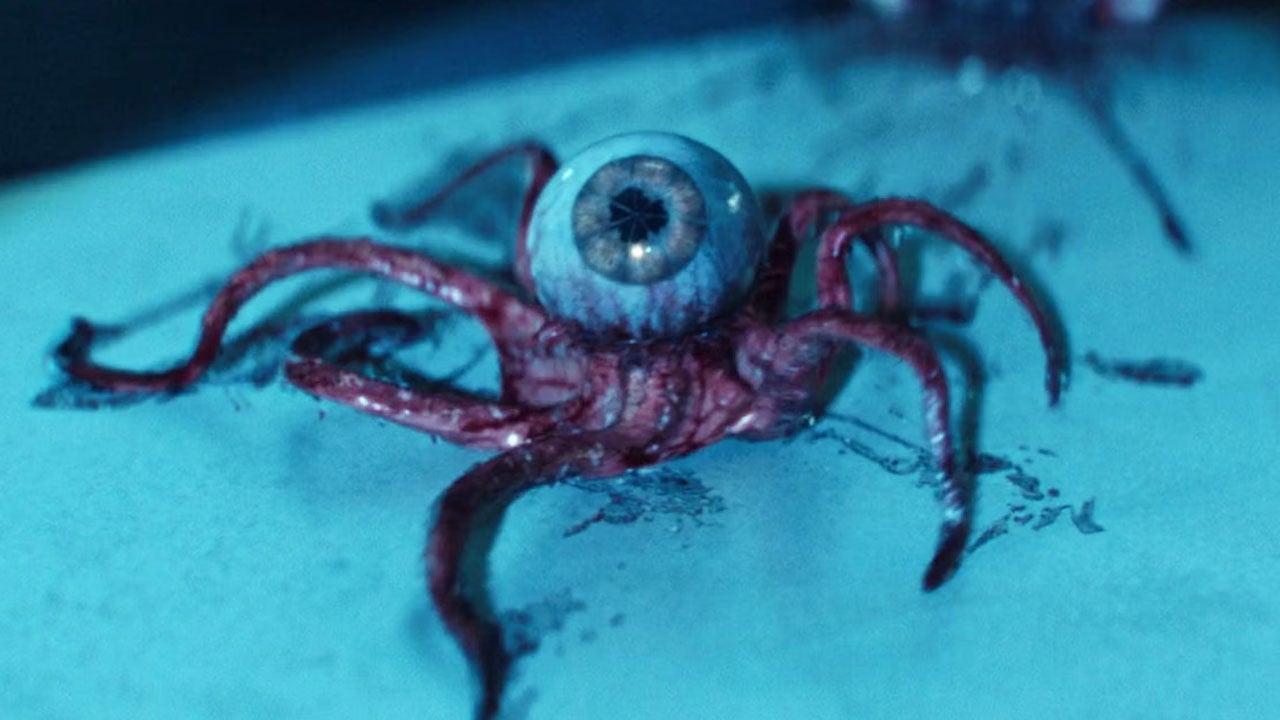
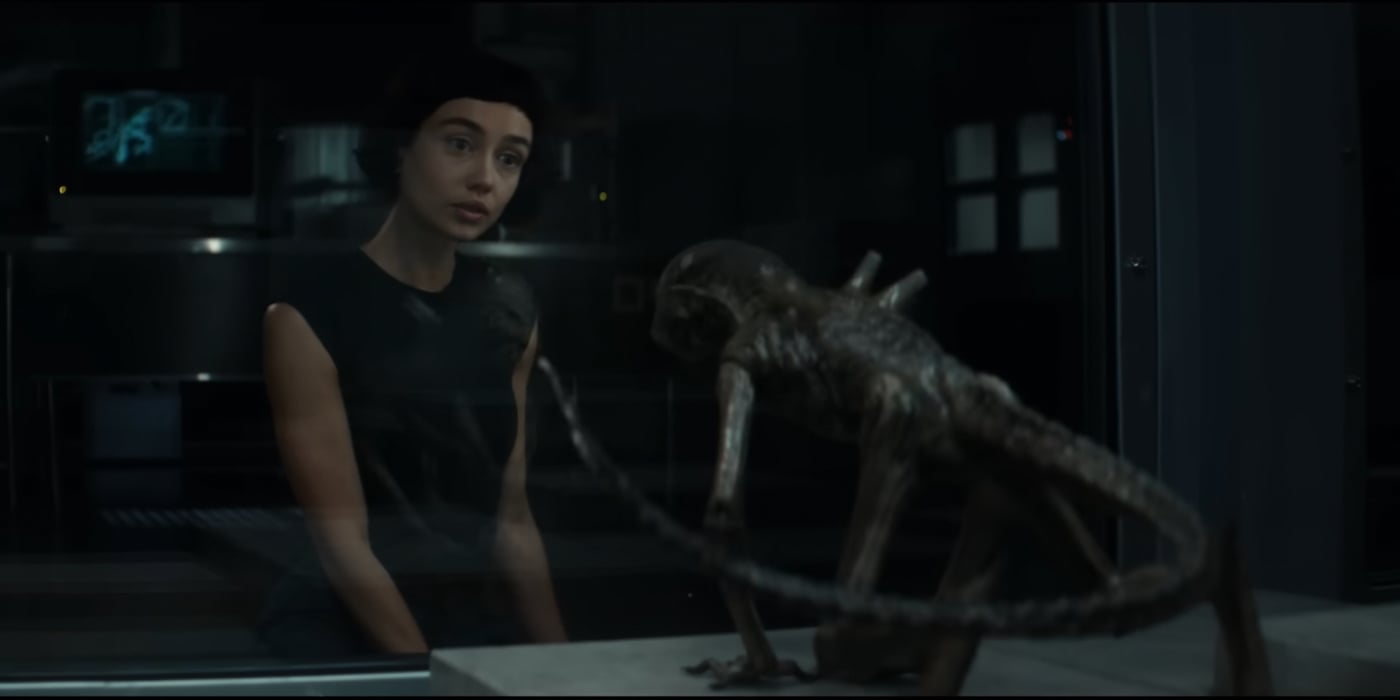
The TV show introduced unique and terrifying alien creatures that rival the xenomorphs for deadliness and reinforce how hostile space is to humanity. The most terrifying creature is something called the trypanohyncha ocellus, a tentacled eyeball that kills its victims and takes over their bodies by forcibly burrowing itself into the victims’ eye socket. What was more disturbing by this cyclopean horror was that it clearly displayed a high level of intelligence and helped created the chaos throughout the show.

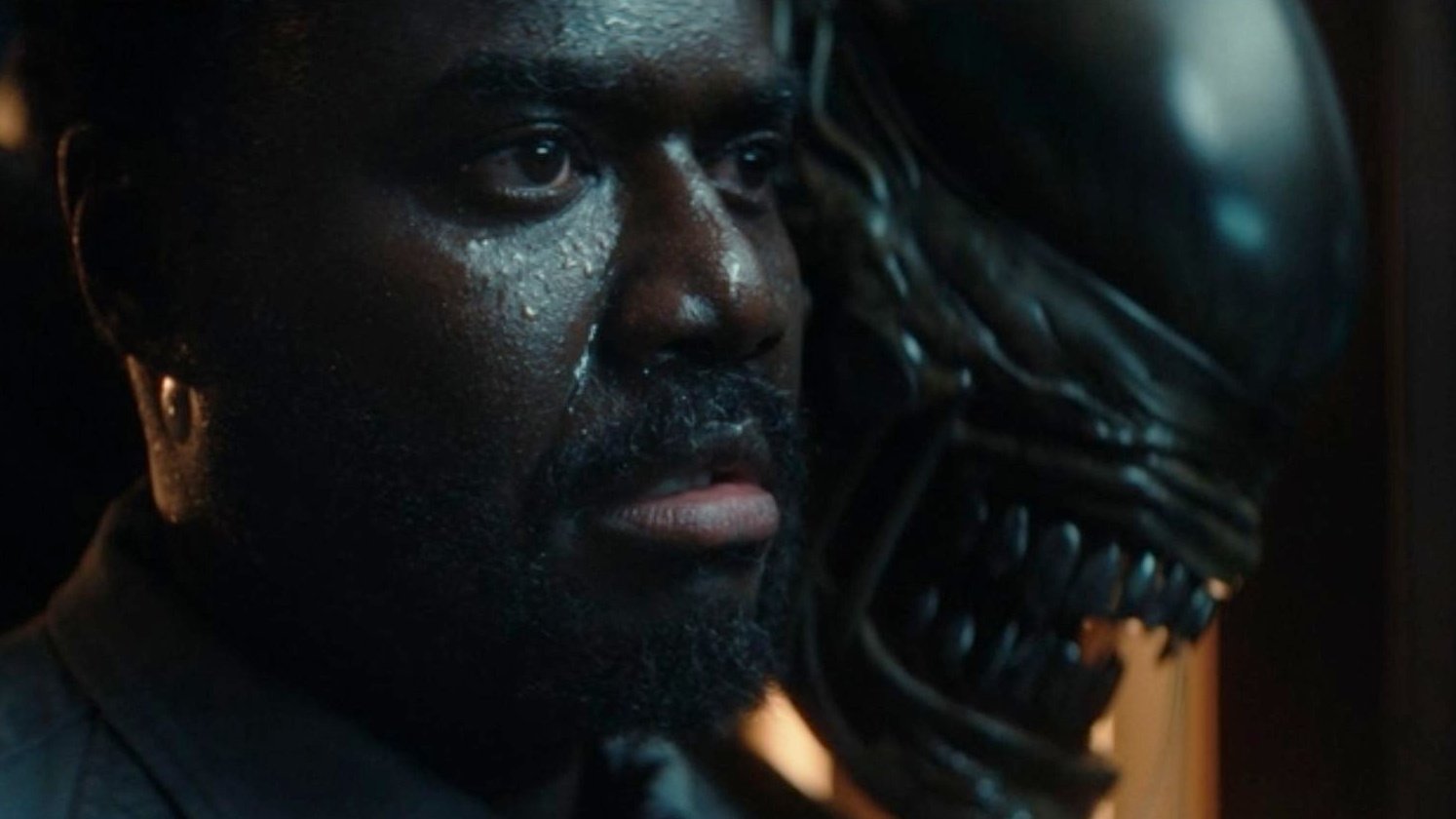
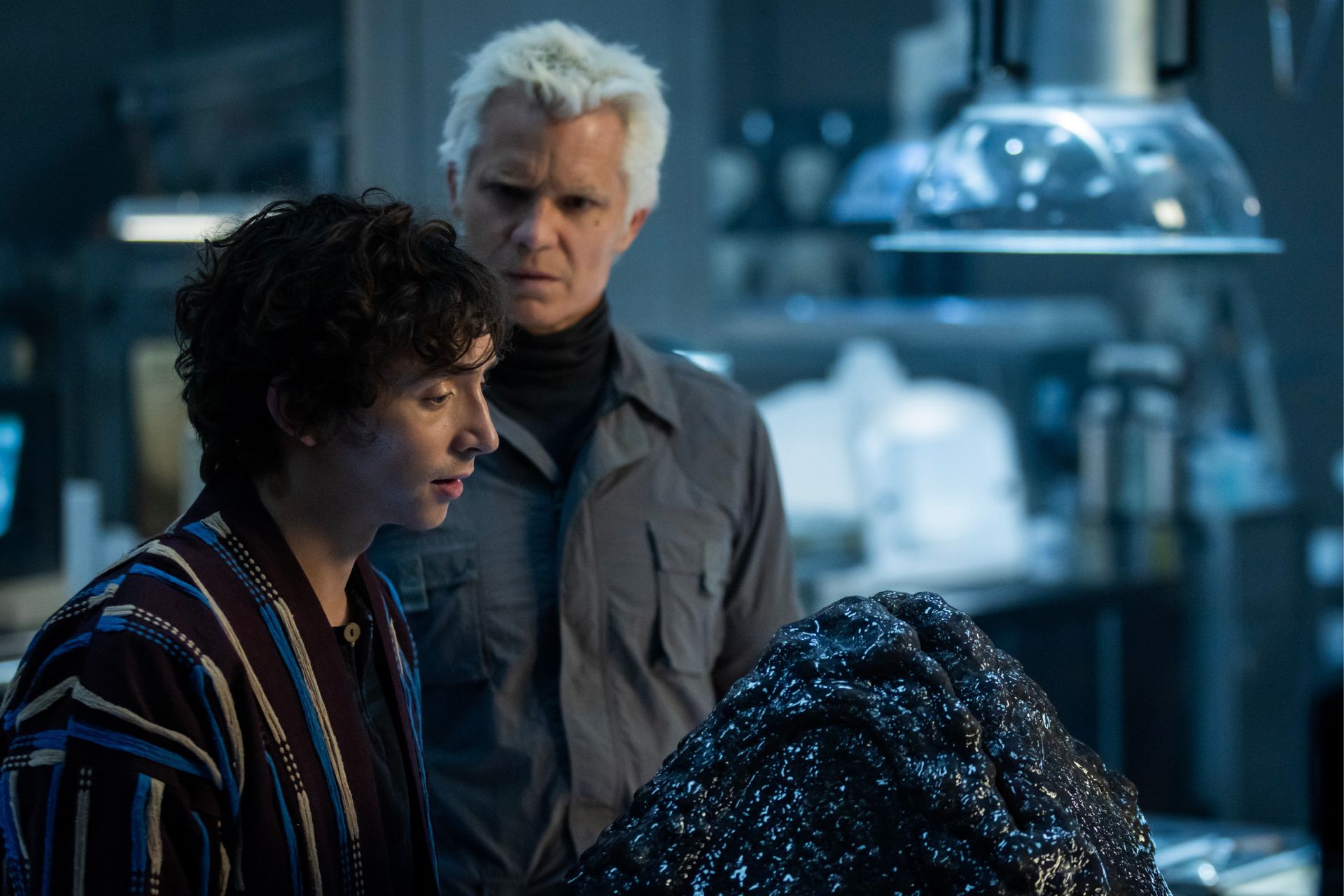
As for the synthetic beings, the most interesting ones were Kirsh (Timothy Oliphant), a classic synthetic who is naturally distant and dismissive towards humans, and operates as one of Prodigy’s chief scientists and Wendy’s trainer. Another is Morrow (Babou Ceesay), who is actually a cyborg, meaning that he is technically human but with cybernetic implants. He was the only survivor from the crashed Weyland-Yutani spaceship and has a rather tragic backstory Morrow only exists to complete his mission of bringing the specimens to his company and he will stop at nothing to achieve his goal. The episode “In Space, No One…” was a flashback episode that showcased Morrow’s time onboard the spaceship before it crashed and gave us much of his backstory. Being that the episode was in essence a remake of Alien and emulated the look and feel of the classic film, it was easily the best episode of the season.

While all this sounds promising, the payoff was ultimately disappointing, which is regrettable since there is a lot to commend about Alien: Earth.

There are glaring problems with the show, namely with the scripts were characters behave stupidly and there are enough plot holes to drive the Nostromo through them. Here is just one example: the xenomorph is now bulletproof no matter how many times it’s shot. Many characters are poorly written with some being downright irritating. The worst offender is Kavalier, who is so annoying with his one-dimensional nature and dirty bare feet. There was this scientist who does not seem to notice that her husband had gone missing (he was killed by a facehugger in an episode) and never mentions him.

It seems as if Hawley is more interested in exploring the synthetic beings instead of focusing on the alien creatures, which is puzzling since the show is supposed to be about aliens and it left us with many questions about the xenomorphs and other aliens. The thing is that the exploration of artificial beings has been done better many times in other TV shows. There are too many Lost Boys who are thinly developed with heavy-handed references to Peter Pan and frankly their immature behavior got irritating after a while. Wendy’s motivations were all over the place. First she is confused about whether or not she is human, then she’s trying to discover who she is, then she is disdainful of humanity. Her arc was very inconsistent, then to make matters worst, the show turned her into some kind of God-level being by giving her the ability to control all electronics and then the xenomorphs themselves. For some reason, Wendy is able to communicate with the aliens (in many dumb looking scenes where she opens her mouth and chitters at the creatures) and turns the xenomorphs into her pets. This robs the xenomorph of its infamous savagery and deadly nature. During scenes where a xenomorph follows her commands it appears far less threatening than in the films and the way these scenes were shot in bright light did not help either.

Alien: Earth starts off with much promise and has genuine moments of creepiness and intensity, but it starts to lag in pace midway through its too short season. It created many situations that were not fully developed and the payoff by its final episode “The Real Monsters” was lacking as the show crashed back to Earth. What sucks even more is that many questions were unanswered and we will probably have to wait for at least two years before we get any answers, that is if Alien: Earth is renewed, but few will care by that point.

José Soto

Jaws: Still Terrified Of The Water 50 Years Later

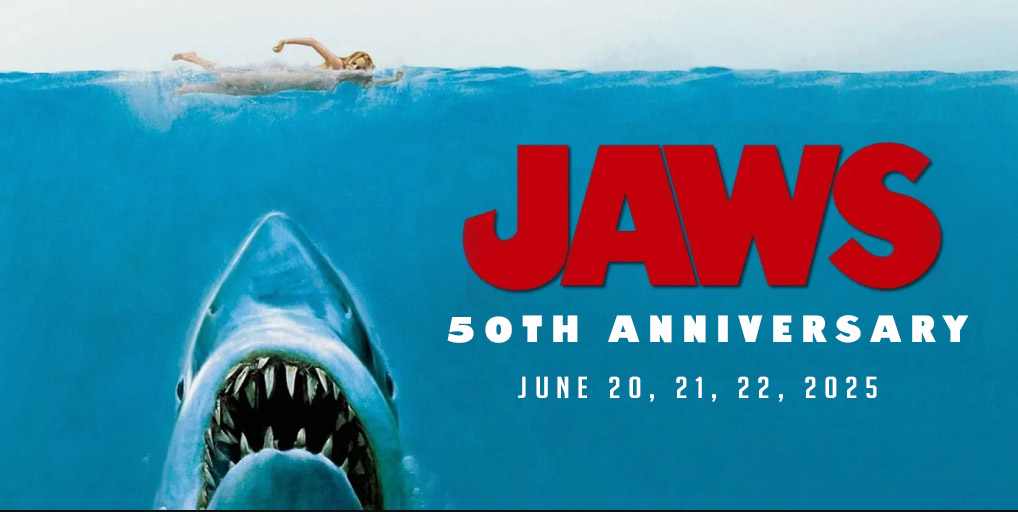
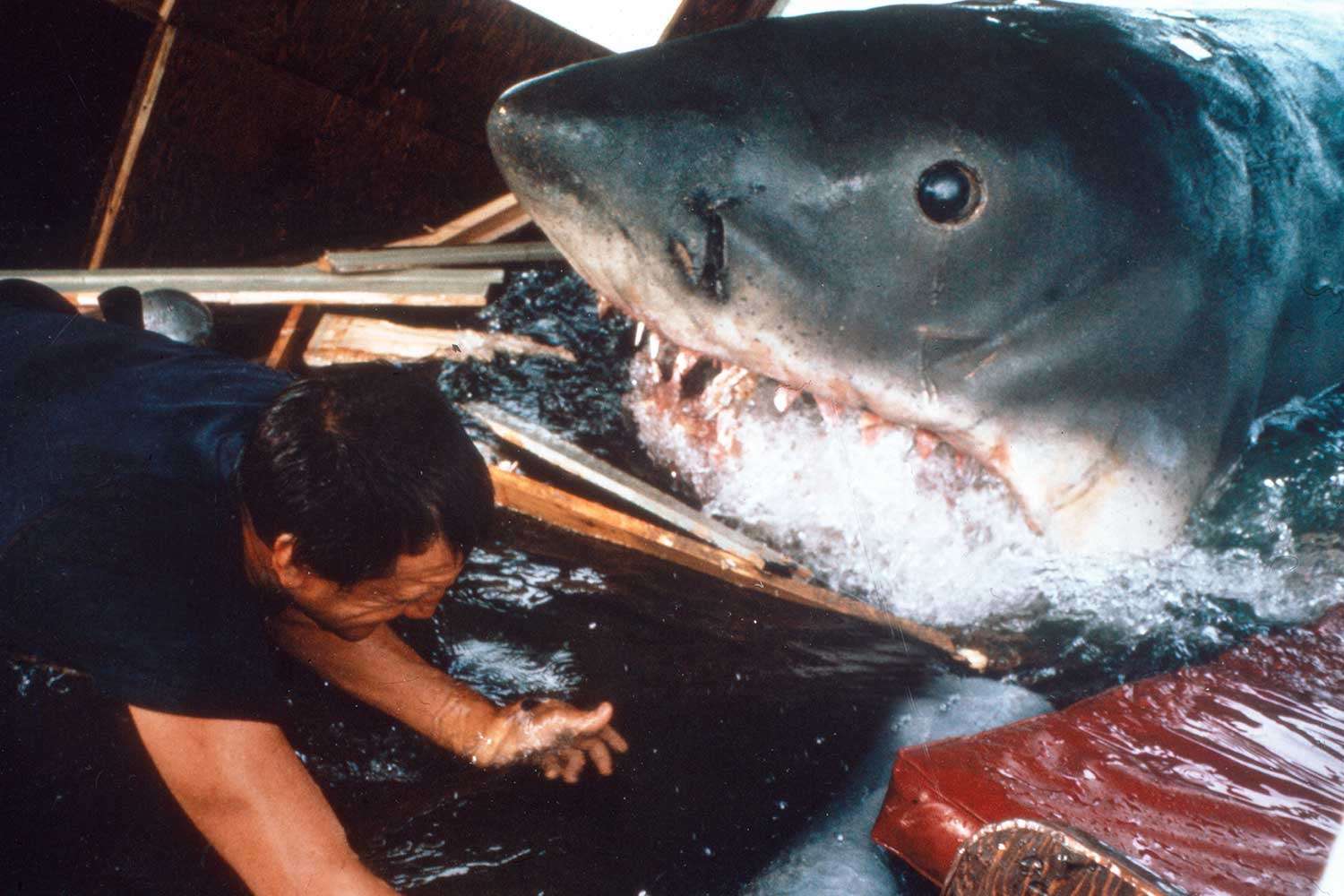
One of the things this summer movie season will be remembered for is for being the 50th anniversary of the first blockbuster summer movie, Jaws. It’s not an exaggeration to say this movie changed the film industry forever.

The 50th anniversary of Jaws was this past June, but the film is having special screenings in theaters this Labor Day weekend to celebrate the event. If you’re lucky, your local theater will have the film in 3D or some other upscale format like IMAX. What is surprising is that the upscale of the film actually holds up and the genius of the filmmakers, including its director, is the reason why with the way the scenes were filmed.

Everyone knows Jaws was one of master director Steven Spielberg’s earliest works and is still considered one of his finest films. Thanks to his brilliant directing skills, Jaws was elevated from a standard thriller into a masterpiece of adventure and horror. Plus, it made many viewers afraid or at least wary about going into the water during beach visits.

Jaws excelled at creating a sense of dread and unease with the way the ominous ocean was filmed as it hid the terror of the great white shark that feasted on the hapless citizens of Amity. This uneasiness with the mysterious ocean hit us right at the start of the film when a drunk young woman foolishly went for an evening swim; something you must never do, sharks and other water predators are at their most active at this time. She was attacked by an unknown, unseen force that turned out to be an unusually large great white shark that would go on to terrorize the town of Amity. The scene where she was attacked was punctuated with unsettling dark imagery, John Williams’ iconic score and the fact we never saw the shark. Not revealing the shark until later exploited our fear of the unknown, and increased our anticipation of finally seeing it when the film’s heroes, Amity Police Chief Martin Brody (Roy Scheider), marine biologist Matt Hooper (Richard Dreyfuss), and the salty shark hunter Quint (Robert Shaw), confronted the great white terror.

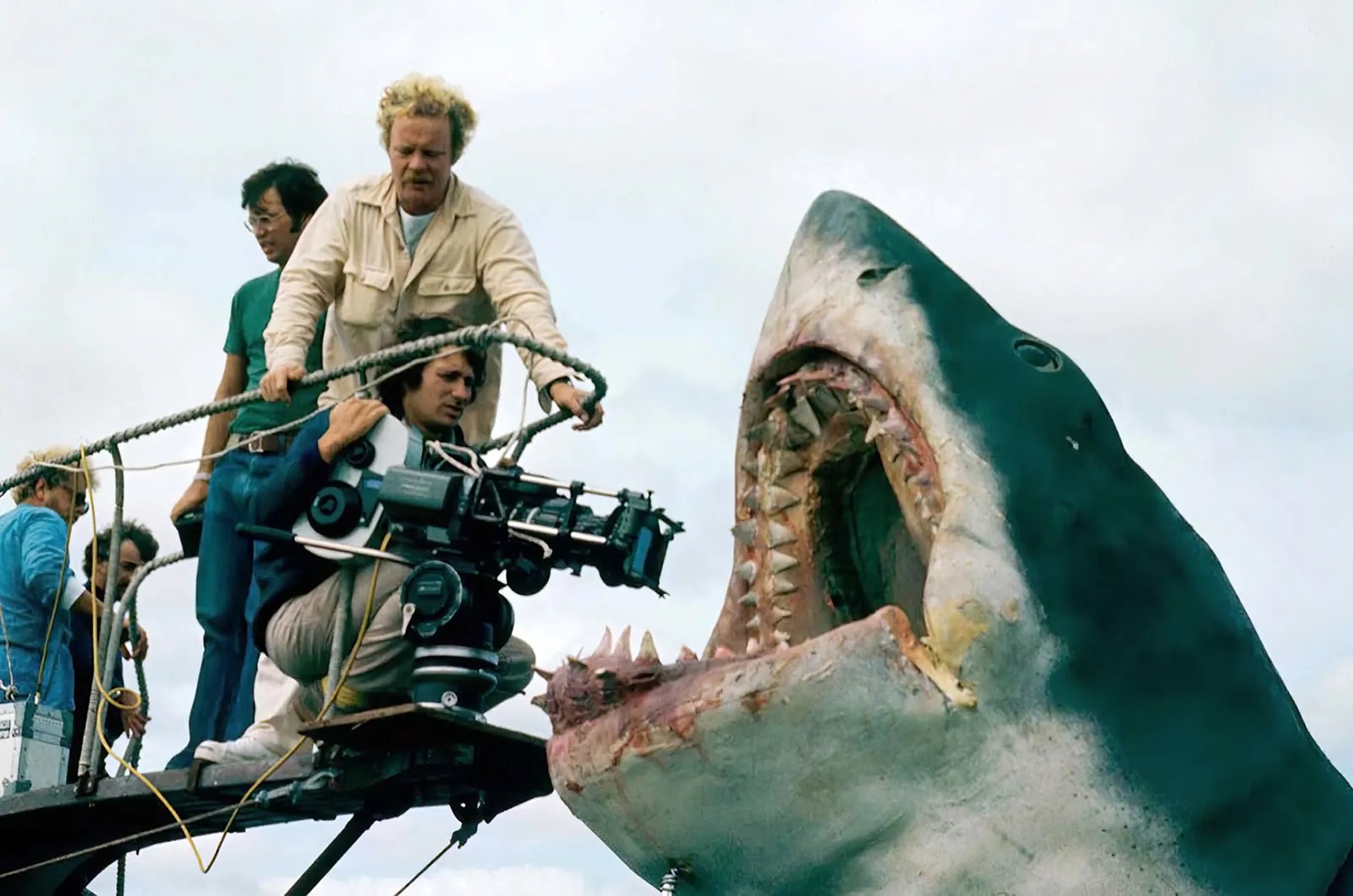
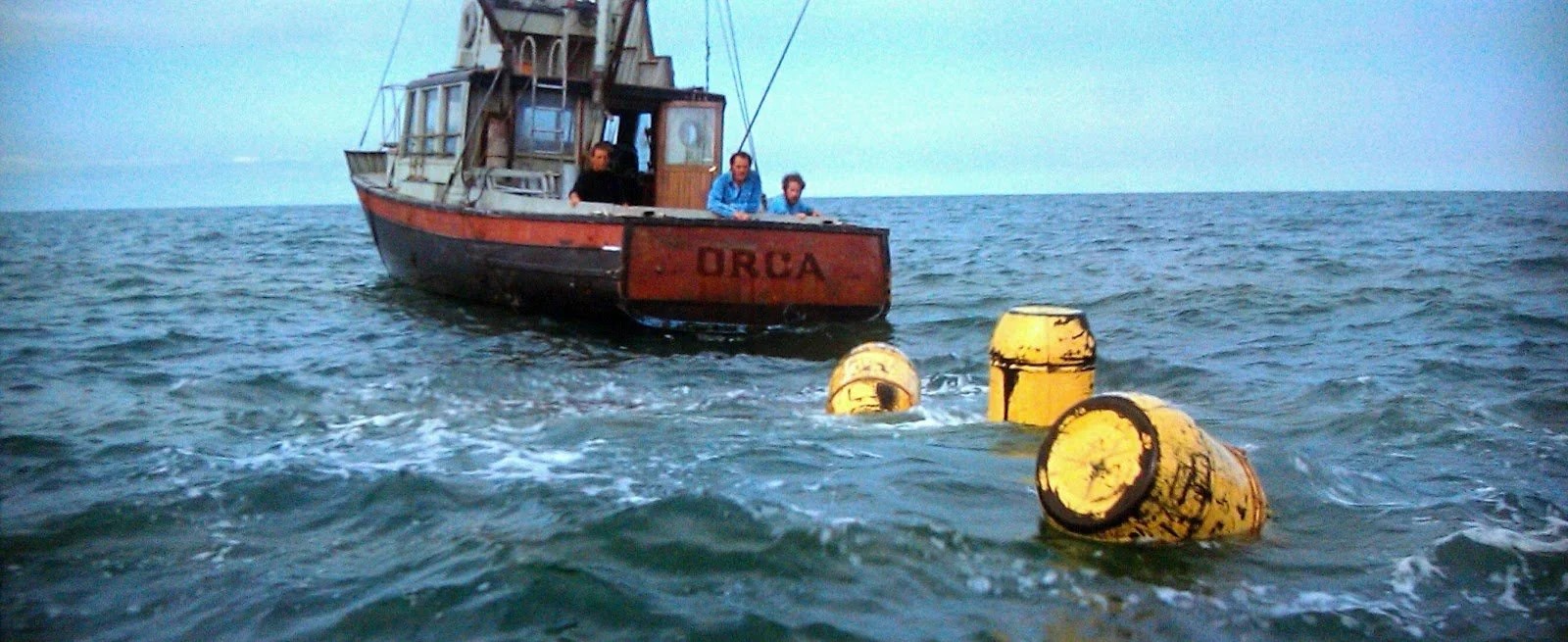
An important reason why Jaws worked so well was that Steven Spielberg was forced to keep the shark offscreen for most of the film. That was because the mechanical shark built for the film rarely worked and Spielberg had to work around this by implying the shark’s presence. You would hear the haunting bars of John Williams’ Jaws theme to announce the shark’s presence, just offscreen. You would see quick shots of the shark’s fin or a blurry image of the shark just underneath the surface or later in the film when the shark was speared with lines attached to barrels. These were supposed to keep the shark close to the surface as the film’s heroes hunted it. However, it wasn’t too long before the film’s heroes realized the barrels not only were not effective, but whenever the barrels bopped up to the surface, their presence signaled the approach of the invisible enemy and added to the scenes’ tension and suspense.

Spielberg’s challenge with creating suspense and keeping the shark hidden until the pivotal final act helped forge his directing skills early in his career. Of course, he had a miserable experience directing the film and avoided directing films set in the open ocean afterwards. In fact, he was so bothered by his experience that it was only recently that he was able to bring himself to watch the film. He admitted to liking the film. Who knows what he could do with the film if he made it today?

What is incredible about Jaws and one reason why it is held in such high esteem today was that after a few inferior sequels, there have not been any attempts to remake or reboot it. Yes, there are other skilled directors that could film a theoretical Jaws remake today, but they would have to compete with the mystique of the original film. How could a remake distinguish itself and improve upon perfection?

As mentioned above, a major reason why the 1975 film still terrifies us today is because it exploited our collective fear of the unseen. Most directors today would be too tempted to have a CG shark popping out of the water every five minutes. Sure, today’s special effects could easily have the shark out in the open in nearly every scene, but it would not work. We’ve seen this with films like The Meg, the Sharknado films, and Deep Blue Sea, though the latter film has its merits. So, while it is tempting to pine for a Jaws remake it is best for now to leave that idea alone and enjoy the original classic…even though it will leave you too afraid to go into the water 50 years after its release.

The Probability Of 28 Days Later

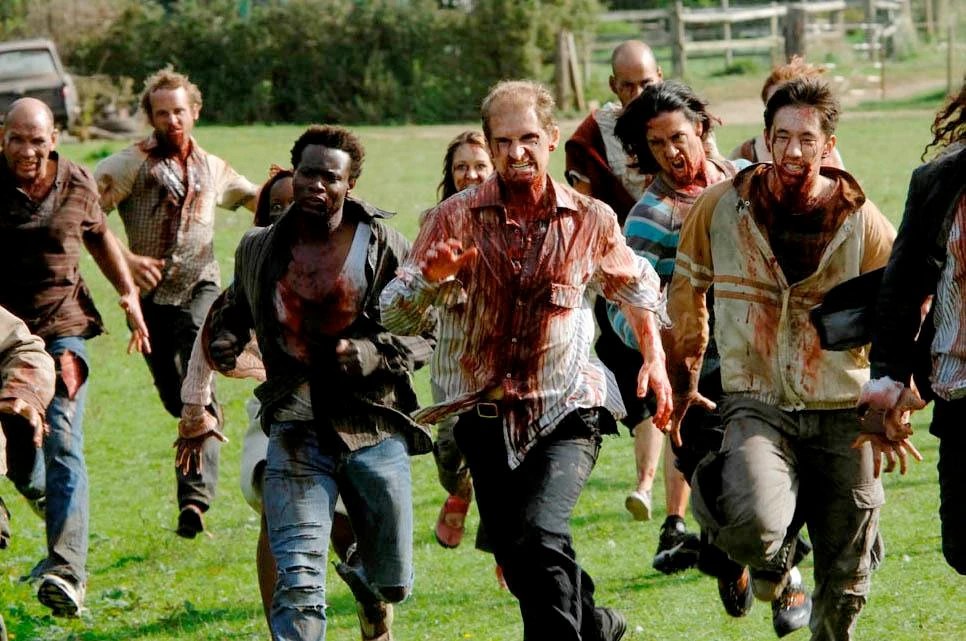
28 Years Later is the latest entry into the 28 Days Later franchise that jumpstarted the zombie genre over 20 years ago. While technically, the “infected” savages that attack humans are still human and not zombies, they are still deadly savages that quickly overran a nation. The premise in the first film is that an artificial virus derived from the Ebola virus is let loose from a lab and soon wipes out the United Kingdom. This happens in the space of about 28 days as the virus was highly contagious and fast spreading. Once infected, the victims of the Rage Virus, turn into mindless, rage-fueled savages in mere seconds and lose all their humanity as they kill anyone within reach. As terrifying as it seems, is this possible? Not just the virus itself, but the entire premise of the films which culminate in 28 Years Later with the UK and Ireland under permanent quarantine from the outside world.

One of the most disturbing aspects of the Rage Virus is by how quickly it turns victims into murderous monsters in seconds. But this is hard to believe. Sure, this is just a film which requires a suspension of belief, but viruses are not capable of having an instant effect in host bodies. Yes, it can rapidly spread in a host body and symptoms can appear quickly, but viruses need some time to manifest. In reality, an infected person will have some time, as short as hours, to remain cognizant and quarantine or kill themselves to protect their loved ones. So while it’s possible that viruses can quickly spread, as we saw with COVID-19, they would not overrun a country the size of the UK within a month. Not with symptoms being so noticeable. Maybe if the virus mutates to be less noticeable and a viral mutation is something that is shown in 28 Years Later.

Then there is the quarantining of the UK. Again as we’ve seen with COVID-19, cutting off communities, even nations won’t stop the spread of a virus. It will slow it down, but in the end, given how interconnected we are, the Rage Virus would’ve been much more widespread by at least in the timeframe of the first sequel 28 Weeks Later. Actually, this was shown to be the case at the end of that film when it’s revealed that the infected reached Paris, France. On the other hand, given how deadly the Rage Virus is, you can bet the world would have gone to great lengths to keep it from spreading. Also, since the UK is largely a group of islands, in theory the spread of the virus could at least be slowed down with a quarantine, but it would not last. Do not be surprised if future sequels have the virus spreading throughout the world.

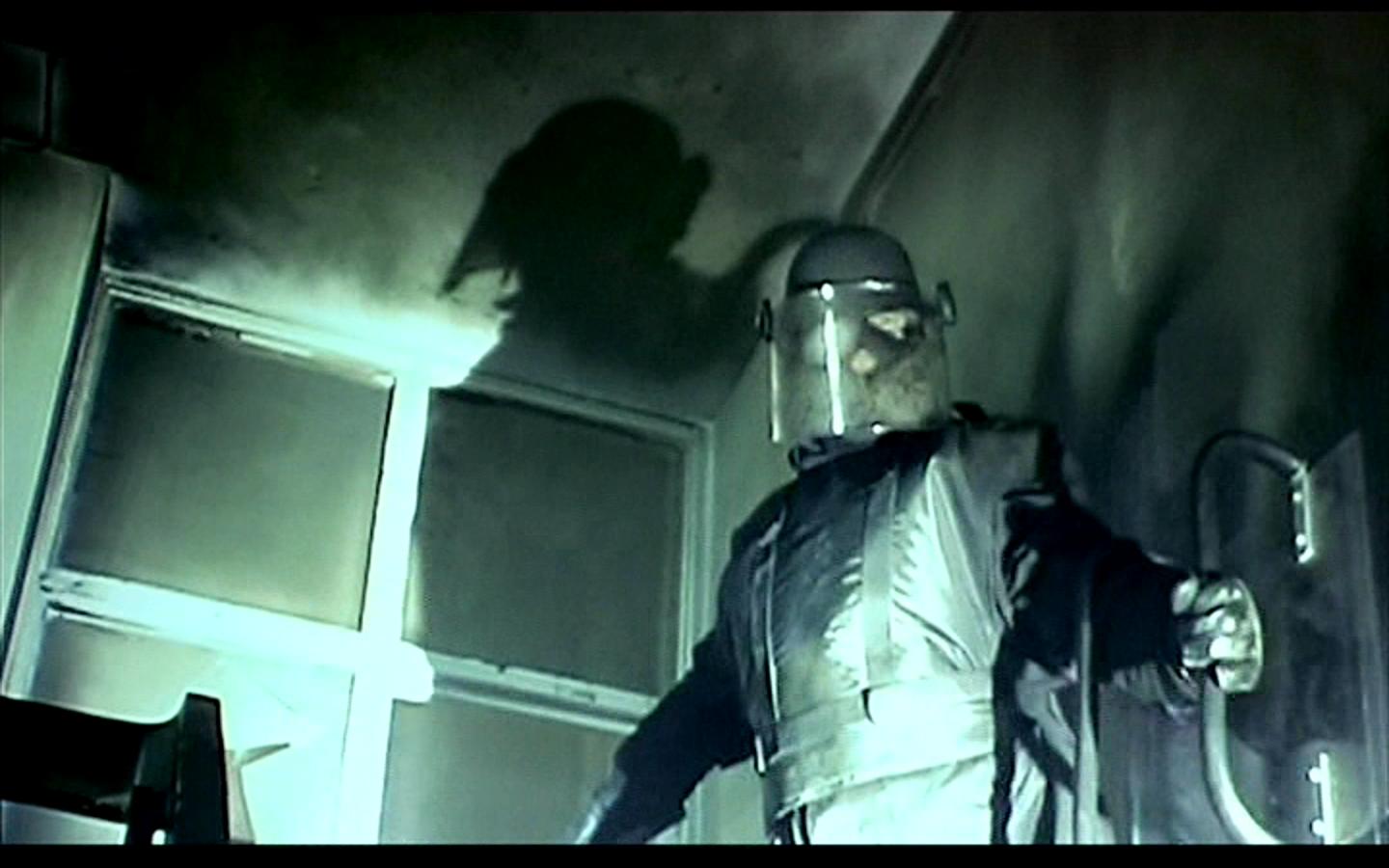
When it comes to curbing the virus’s spread, as most of us resorted to wearing face masks and did not deny the virus during the pandemic, people would have adapted to wearing full face masks to keep infectious fluids from entering the body. Of course, this would not protect them from the murderous wrath of an infected who would tear and bite them. Then again perhaps most people would have started wearing protective clothing or body armor. We actually saw one of the main characters doing this in the first film.

Another puzzling point in the franchise is that there seems to be little to no effort to fight the Rage Virus in the scientific field. Aside from a plot point in 28 Weeks Later where the U. S. Army doctor wants to study an asymptomatic victim, before everything went to hell, there is not any mention of attempts to combat the virus. As we saw with the recent real-life pandemic, our society threw massive resources to find a way to treat COVID-19 and were able to devise vaccines in months. Shouldn’t a vaccine have been developed to curb the Rage Virus, especially in the years that passed up to the latest film? We see in the sequels that it is possible to be asymptomatic of the virus and in 28 Years Later, an uninfected child is born from an infected mother. It would probably be difficult to find a cure as we see with AIDS and other viruses, but a vaccine would certainly have been created 28 years after the first film.

Is the Rage Virus and what happens after it spreads likely in the real world? Most likely, no. But the chances are not zero. The virus was artificially created in the film, so who knows if in the future some fool will create a similar virus and it gets loose in our world. It is a disturbing thought and part of the reason why the 28 Days Later films are so captivating while being horrifying.

Independent Comics Are The Way Forward

The two big comic book companies, DC Comics and Marvel Comics, rule the comic book market and have done so for decades. But their reign right now is largely due to inertia and for decades comic book fans complained about the Big Two and the saturation of the market with superhero comics. It seemed as if it would be that way for a long time…and it still is at this point. However, this status quo is overdue for a shakeup and it is probably going on right now with independent comics.

To the outside world, what captures the headlines are the latest (non) developments with superheroes, like someone dying and coming back to boost sales, a newly relaunched title with a brand-new number one just to flood markets with variant covers, and so on. Also, back issue sales are still dominated by older superhero titles and will continue to do so. But what has captured fans’ attention has been the proliferation of independent comics from various publishers that for the most part don’t feature superheroes but cover a wide range of subjects. From straight horror to sci-fi to fantasy to crime dramas, there are actually a wide selection of comic books in your local comic shops (LCS) or available digitally. Many non-fans and casual fans are understandably surprised at the many choices available of comics to read and enjoy.

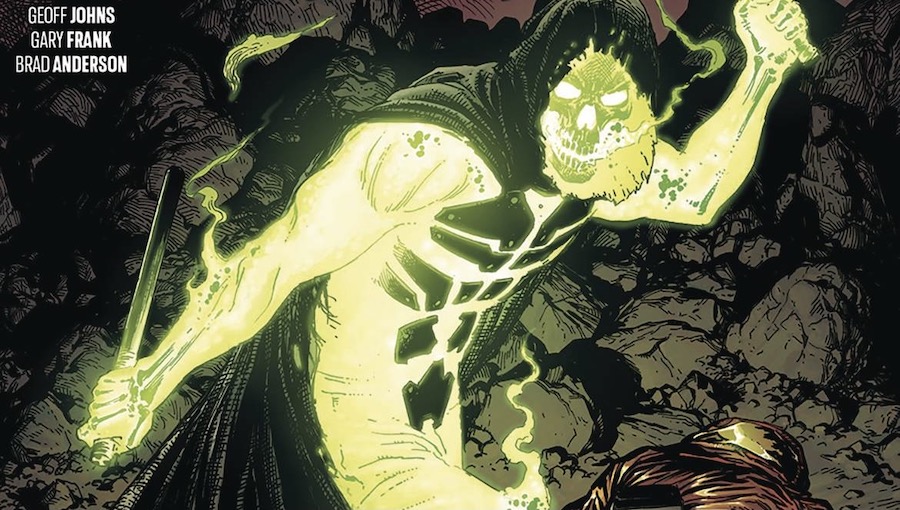
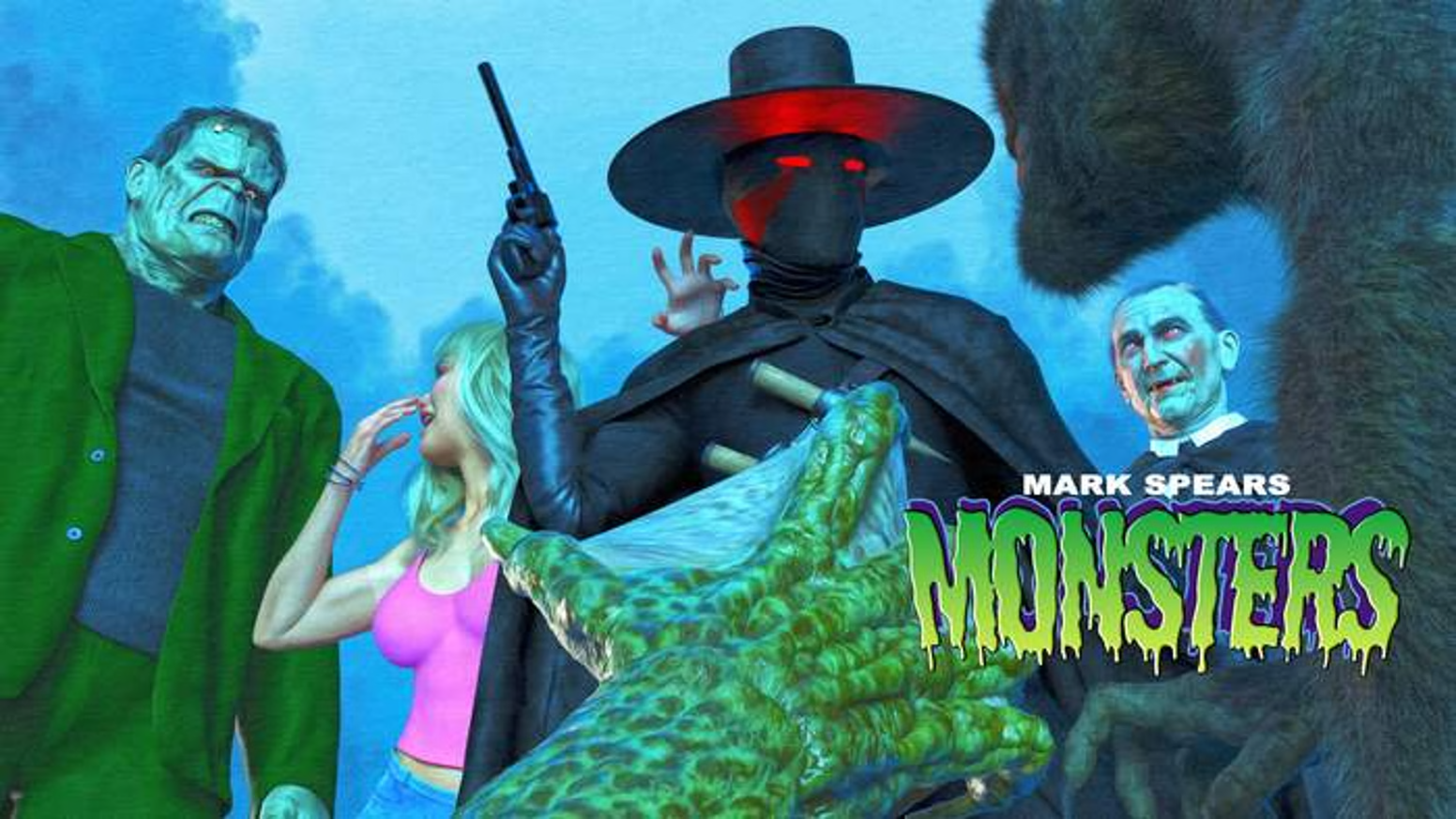
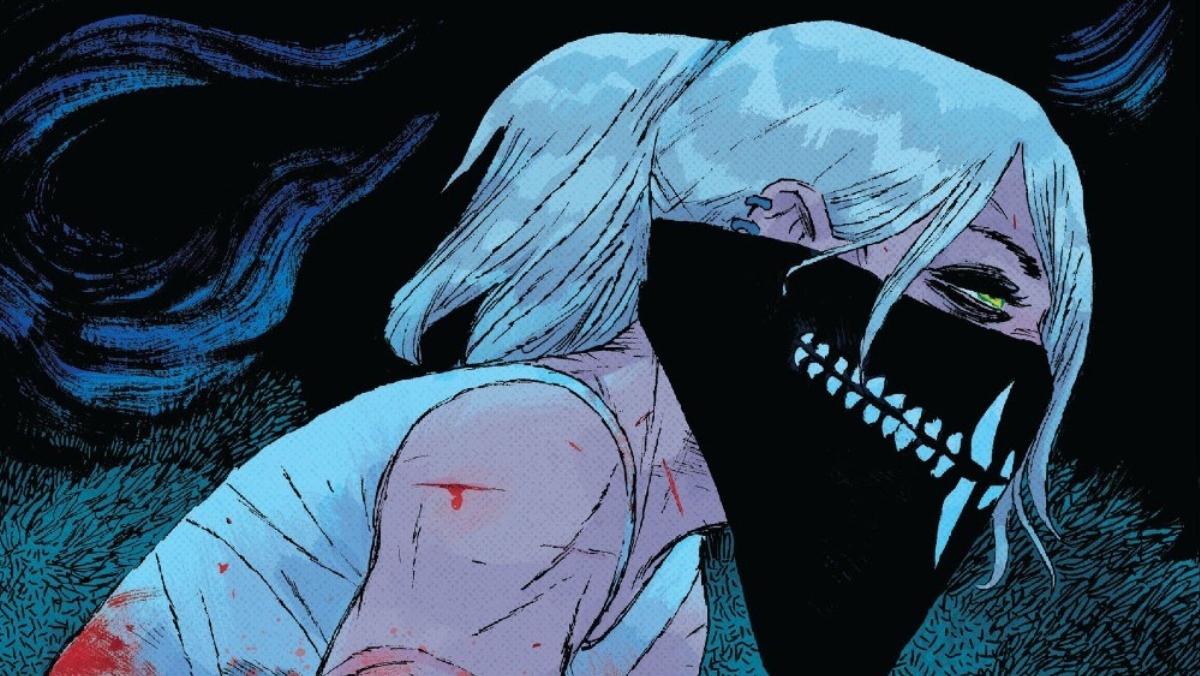
Right now the hot comic is Mark Spear’s Monsters, a beautifully drawn comic put out by Keenspot that features many classic monsters in painted art that evokes Alex Ross but with Spears’ own unique style. Other popular comics include Feral, Geiger, Monstress, A Vicious Circle, Invincible, Conan the Barbarian, Saga, Eight Billion Genies, The Infernals, Something is Killing the Children, Local Man, Transformers and G.I. Joe. None of these titles are superhero-based, except for Invincible, Local Man, and maybe Geiger. The latter is more of a post-apocalyptic tale of a radioactive loner/warrior, while Local Man is a fresh grounded take on Image Comics’ superheroes. Yes, Transformers, Conan the Barbarian, and G.I Joe are based on popular IP, but they are not based on superheroes.

What’s an even more interesting development is that movie and TV studios are turning more and more to comic books not based on superheroes to adapt as they see the potential in the stories. There have been successful film and TV adaptations of non-superhero comics like The Walking Dead, Road to Perdition, 300 and Sin City, but be prepared for an onslaught of even more adaptations. Right now, there are efforts to adapt Eight Billion Genies and Something is Killing the Children, which at the very least would make great animated films.

Of course, not every independent comic is a winner, not all the concepts pan out or their stories peter out after a few issues, but there are many more titles to choose from and more will come. Right now, Image is arguably the leader when it comes to non-superhero comics, with other publishers rising such as Dynamite Entertainment, Dark Horse Comics, Boom! Studios and IDW Publishing. Originally, Image began with superhero comics that to be honest were sup par and most of them are no longer around. But Image took a chance with writers and artists who were able to present their own unique visions and stories and it paid off well for the publisher and comic book fans.

Sure, the LCS and online catalogs are flooded with superhero titles from DC and Marvel, but more and more, a shopper will see that there is much more product in the comic book medium to choose from. Even if at some point in the future, Marvel or DC falter, which won’t happen for a long time, other publishers will take over and dominate the market with either their own superheroes or better yet, other genres. The groundwork is already in place and eventually the independent comics will overtake the superhero genre. Independent comic books today offer something for every taste, which is a sign of a healthy medium that will be with us for a good while.