Season Three Of The Walking Dead Concludes, Part I

Editor’s Note: For those of you who haven’t visited our other site Deadloggers, here’s a brief recap of the second half of the third season of The Walking Dead

daryl-merle

Brothers In Arms

Episode Nine: The pre-credits scene of episode nine of The Walking Dead, “The Suicide King”, opens in the fights arena as the bandaged Governor (David Morrisey) leaves Merle Dixon (Michael Rooker) and his captured brother Daryl (Norman Reedus) to slug it out to the death. The crowd, hungry for action, spurs them on. The Governor’s thugs hover around the arena with harnessed walkers –part of the sport – as Merle pulverizes his younger brother, calling out his declarations of loyalty to Woodbury. Unbeknownst to the crowd, Merle instructs Daryl to follow his lead in escaping as the two turn on the surrounding walkers. Suddenly, Rick Grimes (Andrew Lincoln) and the rescue team raid the arena, throwing smoke bombs and firing shots as they enable Daryl and Merle to slip out …

governorPost-credits, Merle leads the rescue team out of Woodbury, curiously leaving an open hole in the fence. They meet up with Glenn (Steven Yeun), Maggie (Lauren Cohan), and Michonne (Danai Gurira) on the outskirts. Both Michonne and Glenn are incensed that Merle has joined them and both need to be restrained due to their anger. Merle, however, seizes the opportunity to jibe Michonne, sneering a variety of politically incorrect taunts until Rick knocks him unconscious. Heading back to the prison, an argument ensues. Daryl vehemently wants his brother in the group – claiming they need the muscle against the Governor  – but is against Michonne’s presence.  Glenn – his face still red and bruised from Merle’s beating – is opposed to Merle but wants Michonne to stay. Rick, meanwhile opposes the presence of both. Daryl understands Rick’s thinking, and declares that Merle and him will leave the group and fend for themselves. Grabbing his gear, he joins his brother – now awake – and they disappear into the forest. Rick, meanwhile, snaps at Michonne, warning her that the moment she is patched up she is on her own…

Please click on the link to Deadloggers to continue reading about Episode Nine.
rick-walkers

Increasing Tensions

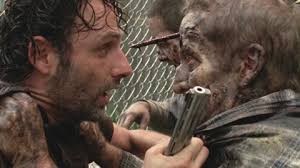
Episode Ten: In the pre-credits scene of the episode “Home”, former sheriff’s deputy Rick Grimes takes a break from manning the prison barricades in order to scope the perimeter. Using his binoculars, he spots a few stray walkers, but then discovers an odd sight: his dead wife Lori (Sarah Wayne Callies), her back turned, standing over hers and T-Dog’s graves in the prison yard. Dressed in white, she stands erect, radiating a spectral, ethereal beauty. Rick grabs his rifle and feverishly heads out to confront her only to find her gone, having re-appeared outside the prison gates. Drenched in sweat and consumed with longing, he finally reaches her. Lori strokes his cheek as they gaze at one another, face-to-face. Michonne, alerted to this curiosity, closes the gate behind him and watches, shocked, as she realizes Rick is deep inside a powerful hallucination…

Post-credits, Andrea (Laurie Holden) visits the Governor in his Woodbury apartment and finds him apologetic and insecure over his eroding leadership skills. Complimenting her over her impromptu speech to the citizens (in the previous episode, “Made to Suffer”), he declares his plans to abdicate and offers to make her his successor. Andrea, stunned at the revelation, is speechless…

Outside the prison, the now-independent Merle and Daryl Dixon are hiking through the forest. Unsuccessful at finding food, there is growing tension and a general lack of agreement between the brothers. Daryl wants to return to the prison, although Merle assures him that the Governor has already annihilated the survivors, leaving Daryl in somewhat of a funk…

merle-daryl

Continuing on, sweaty and gasping for air in the thick humidity, Merle continues taking shots at Daryl, this time over what he perceives are his poor navigational skills. Alerted by noises that shatter the morning calm, Merle laughs it off as animals getting intimate although Daryl recognizes it as a baby crying. Hurrying in the noise’s direction, they spot a horrifying sight: a desperate Hispanic family is trapped on a bridge, surrounded by a herd of walkers moving in for the kill. Daryl races in to help, while Merle remains behind, mocking his brother’s valiant tendencies and yelling after him to “stay put”…

Please click on the link to Deadloggers to continue reading about Episode Ten. Continue reading
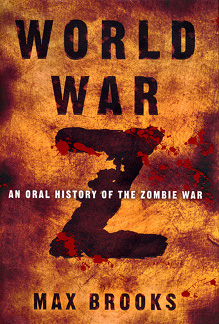
The Must-Read Book For The Summer: Max Brook’s World War Z


world war z coverTrends come in cycles. Recently the popular culture has seen the return of an old and familiar staple, the zombie. The Hollywood ghouls started out in the spooky black and white classics of the 30s and 40s, but they were branded into the baby boomer consciousness via George Romero’s 1968 classic Night of the Living Dead. To be fair, they’ve never been away much since, thanks to Living Dead‘s various sequels, semi-sequels, and remakes. But in 2002 British film wunderkind Danny Boyle gave the genre a shot of adrenalin with 28 Days Later, about a deadly virus ravaging London and turning survivors into hyperkinetic, psychotic killers. For zombie fans, the die was cast.

In 2003 writer Max Brooks – son of Mel Brooks and Anne Bancroft – wrote The Zombie Survival Guide (TZSG), a tongue-in-cheek “how-to” on surviving a zombie onslaught as society breaks down. TZSG was a New York Times best –seller thanks to its dark humor and occasional light tone. The book’s characteristics, however, did not mask the fact that underneath the surface it contained some very useful survival information, and it’s easy to see that Brooks did his research. His work must have fuelled a thirst somewhere, because a month later Image Comics began publishing Robert Kirkman’s The Walking Dead (now a hit TV series on the AMC cable network), describing the adventures of survivors of a zombie apocalypse.  The undead were officially back in style.

Not to be outdone, Brooks took zombies one step further and in 2006 came out with World War Z (WWZ), describing the entire history of a massive, deadly zombie onslaught – a war, basically between humans and the undead (“Z” for zombie, if you haven’t yet figured that out). The zombies are the same as those in TZSG, making the book a follow-up of sorts.  According to Brooks, zombies are humans re-animated by an incurable disease, spread by a zombie bite or having open pores exposed to zombie tissue. Taking a page from Romero’s model, they are slow, brainless creatures completely devoid of intelligence, whose sole instinct is to eat live flesh. They are incapable of tiring, cannot drown, and can only be killed by a blow to the head.

Other than that, WWZ is very different in style and tone than its slim predecessor. Patterned in structure after Studs Terkel’s classic oral history of WW2, The Good War, WWZ is not one story per se like Kirkman’s comic but rather a series of individual accounts telling the story from the initial sudden outbreak to mankind’s victory and the sad, weary aftermath.  The book’s narrator (in whose voice Brooks writes), a member of the (fictional) United Nations Post War Committee, is commissioned to interview survivors from mankind’s war against zombies.  Like a twisted travelogue, Brooks shuttles around the world, as survivors running the gamut from military, clergy, health services, government officials, security, and ultimately the average citizen describe their experience and the ghastly horrors they witnessed.

In a chilling opener, the story begins quickly but methodically. In a remote, rural province in China, a young boy goes diving for sunken booty with his father. His father is pulled down by something unknown and the boy escapes but is nipped on the heel.  The poor infected lad becomes “patient zero”, infecting others and kickstarting the zombie pandemic. Once the infection goes beyond the village, it acts as an out-of-whack Rube Goldberg contraption, setting in motion a chain of events that will change the world.  Infected Chinese refugees begin streaming across the border into Central Asia. Others fly out to Europe, bringing the infection to the continent. The Chinese government feverishly tries to halt the spread and invents a military crisis involving Taiwan to mask their armed build up and activities.  Only after hitting the poor South African ghetto townships does the world begin to take notice, calling it the “African Rabies”.  Israel is one of the first to respond, imposing a national quarantine, granting entry only to uninfected Jews and Palestinians, and calling out the Israel Defense Forces for border security.

Through the illegal organ trade, the infection reaches Brazil and once in Mundus Novus it begins to wreak havoc.  Zombies rip through an unprepared United States, as corruption, government incompetence, and overconfidence result in some heavy bungling and widespread deaths. Millions all over the world begin fleeing their homes for safety, as the “Great Panic” begins. At a major, decisive battle in Yonkers, New York, American soldiers fight a massive and frightening wave of undead as if they were fighting living soldiers. Using inappropriate techniques against an undead army – such as attempting to “demoralize them” – they fail miserably and the American forces are brutally defeated on live TV. Other countries encounter similar disastrous results and world civilization as we know it begins to crumble. Continue reading

Star Trek Movie Retrospective–Star Trek: First Contact

“The line must be drawn HERE! This far, no farther! I…will make them PAY for what they’ve done!”

Captain Jean-Luc Picard ranting about the Borg

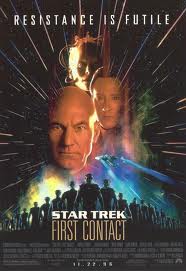
posterWhen producers started making the eighth Star Trek film, they knew it had to deliver big. The previous film was successful but received criticisms over its quality. So for Star Trek: First Contact they brought out the big guns in the form of the Borg, the most popular villains on the TV show Star Trek: The Next Generation (TNG). And it worked.

It opens with a close up shot of Captain Jean-Luc Picard (Patrick Stewart) looking straight ahead. The camera pulls back to reveal he’s inside the nightmarish machinery of a Borg vessel. What’s worse is his transformation into one of them and losing his identity. The Borg are a cold, and nearly invincible cyborg race made up of assorted aliens that are forcibly converted using painful looking cybernetic implants. They seek the perfect union between machine and life and assimilating other races to achieve this objective.

cast

Picard eventually wakes up from the nightmare, which was a flashback to his ordeal in the classic two-part episode “The Best Of Both Worlds”. He’s onboard his new ship, the Enterprise-E and receives news that the Borg have returned to Federation space. However, instead of being ordered to join an assembled armada to fight the Borg, he is to patrol the Romulan Neutral Zone with his ship.

He and his crew are visibly restless about their orders. Later as they carry them out, his first officer Will Riker (Jonathan Frakes) complains about the orders, Picard tells him that Starfleet feels that his own experiences with being turned into a Borg will compromise his ability to fight them.

Just then he and the crew pick up transmissions from the fight. Things aren’t going well for the Starfleet armada, it’s losing badly to the Borg. Having heard enough, Picard decides to disobey orders and join the fight, with his crew behind him. The Enterprise-E then warps off at its highest speed to Earth.

borg battle2

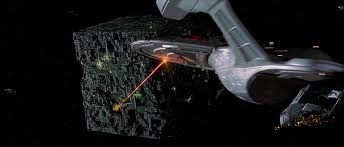
The very next scene features a mammoth and imposing Borg cube that fills the screen, accompanied by a booming score, as it nears our planet. It’s slammed by weapons fire from Starfleet ships. Unlike “The Best Of Both Worlds” the ships are putting up a better fight, but are still losing. New and eye-catching Starfleet ships abound, one of them is the Defiant, the scrappy escort vessel seen in the TV show Star Trek: Deep Space Nine (DS9). Commanding the Defiant is the Klingon Lt. Commander Worf (Michael Dorn), who in between films, joined DS9. His damaged ship is caught in a tractor beam from the cube.

borg battleThe  Enterprise-E suddenly joins the fray, rescues the Defiant and beams aboard its survivors. Moments later, Worf joins his old comrades at the bridge, completing the film reunion. Picard takes command of the fleet and orders a simultaneous barrage of weapons fire at specific spots on the cube.

In a spectacular display, the Starfleet ships fire a vicious volley at the Borg cube and destroy it. However, before it explodes, the cube releases a smaller, sphere-shaped vessel that rushes towards Earth.

The Enterprise-E is on its tail as a temporal vortex opens up in front of the Borg sphere that leaves behind borg earthan energy wake that washes over the Enterprise-E.  After the sphere disappears into the vortex, the horrified crew of the starship see the Earth before them become Borgified. The planet’s colorful landmasses are transformed into one continuous field of metallic grey.

They  deduce that the sphere traveled to Earth’s past and assimilated the planet. The ship’s android operations officer Lt. Commander Data (Brent Spiner) theorizes that the wake protected them from being changed with the altered timeline. Before the vortex can close, Picard orders the Enterprise-E to go through it.

The sphere emerges from the vortex and begins attacking a small, rundown town in Montana. The Enterprise-E arrives a few minutes later and destroys the sphere. They learn they’re in the mid 21st century, April 4, 2063 to be exact, about ten years after World War III. Based on that information, Picard realizes that the Borg want to stop Zefram Cochrane, the human inventor of warp drive technology, from successfully testing Earth’s first warp drive ship, the Phoenix. Its flight on the next day will attract the attention of a passing Vulcan ship, which will then travel to Earth. The resulting peaceful first contact will eventually lead to the founding of the United Federation of Planets.

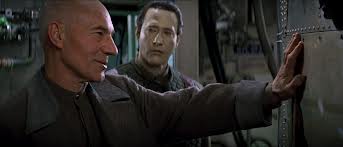
Fearing the worst, Picard with an Away Team beams down to the town, which actually has a missile complex. picard dataEven though most of the personnel in the complex are dead, Cochrane’s assistant and co-pilot Lily Sloane (Alfre Woodard) is found alive but suffering from radiation poisoning. She’s taken back to the ship for treatment by Chief Medical Officer Dr. Beverly Crusher (Gates McFadden) while Picard looks for Cochrane. The Phoenix (actually a converted nuclear missile) is damaged but repairable.

Throughout the film, Picard was able to hear Borg voices in his head, a residual effect of his ordeal after being assimilated. He hears them again and returns to the ship with Data, while having Riker beam down to continue looking for Cochrane. Chief Engineer Geordi LaForge (Levar Burton) also beams down with a team to repair the Phoenix and continue with the planned flight.

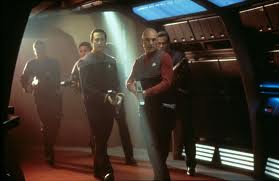
Back on the Enterprise-E, the bridge crew discover that they are losing control over several systems and cannot contact main engineering. It soon becomes apparent that there are Borg drones onboard the starship. The captain theorizes that before the sphere was destroyed several Borg must’ve beamed onboard undetected to assimilate the starship. Acting quickly, Picard orders Data to lock out the main computer and heads to main engineering with a security team. Picard’s plan is to puncture the warp core’s plasma coolant tanks, which will flood engineering and liquefy all organic matter, namely the Borg’s organic parts.

ee corridors

When they get near their destination, several Borg drones, many of whom are assimilated crewmembers, attack Picard’s detail. They’re forced to retreat but Data is captured.

During his retreat, Picard runs into Lily, who evacuated sickbay and separated from Crusher’s medical team after the Borg broke into the medical facility. Lily doesn’t know what is going on and orders Picard at phaser point to be taken back home. PIcard is able to convince her that she is on a ship from the future and takes her with him to a holodeck. They briefly hide there while a 1940s detective story simulation plays until two Borg enter the holodeck. Picard begins to exhibit his inner rage and transforms into a movie action hero while killing them with a holographic Tommy gun. Then he retrieves a neural processor from one of the corpses to learn the Borg’s plans.

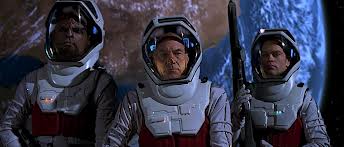
outer space fightOne of them is to use the ship’s deflector to contact other Borg for reinforcements. This leads to one of the film’s most suspenseful moments: a dangerous battle with the enemy outside on the ship’s outer hull. They’re truly inhuman with their capability to function without spacesuits, while Picard, Worf and a redshirt named Hawk (Neal McDonough) donned sleek, white EV suits.

Continue reading

Idiotic Twist Ruins The Governor In The Book The Walking Dead: Rise Of The Governor

Warning: The review/rant below contains major spoilers about the Governor in The Walking Dead: Rise Of The Governor novel.

bookI just finished reading or rather wasted my time with the horror book The Walking Dead: Rise Of The Governor written by the creator of The Walking Dead comic book Robert Kirkman and Jay Bonansinga.

It was worse than Michael Crichton’s Sphere!

The thing that gets me about the book is that I was really enjoying this; I’m a recent convert to The Walking Dead phenomenon thanks to the excellent TV show on AMC. I think that the character of the Governor (played on the show by David Morrisey) is one of the best villains I’ve ever seen. As soon as I could I went to the local comic book shop and picked up the graphic novels. I saw the book The Walking Dead: Rise Of The Governor and decided to buy the book too.

The book focuses on Philip Blake, his daughter Penny, his brother Brian, and Philip’s friend Nick. As you probably know Philip Blake becomes the Governor and his daughter becomes a zombie or as they say on the show and comic book a walker or biter.

It starts off showing the group when the walker outbreak began and their struggles to find safe shelter. There are a few times where you think Penny will get bitten by a walker but it never happens. Instead, Kirkman wrote a nice twist, she gets killed by crazy living people then turns into a walker.

The Walking Dead: Rise Of The Governor had the characters facing many hardships, building up to Penny’s death that makes Philip become angry and crazy and logically becoming the Governor. You really see that as he captures two of the attackers that killed Penny, locks them up and tortures them every day. His brother Brian was a wimp throughout the book and Nick was often the voice of reason.

Spoiler time: Philip gets really crazy and kills a woman to feed to walker Penny. Nick tells Brian he can’t stand it anymore and a fight between Philip and Nick happens. Around this time, they wind up staying in the town of Woodbury, the same place that the Governor rules as seen in the comics and show. When they first arrive at the town, the place is controlled by Major Gene Gavin, a lunatic National Guardsman who calls himself the Major and abuses the residents. Continue reading

The Non-minees For Best Picture Oscar

2001 empire

Traditionally, genre films have been snubbed by the Oscars, that is a given. But in recent years, such films have snuck into the list of nominees. A few years back Avatar, Inception, District 9  and the film versions of The Lord Of The Rings received Best Picture nominations. Most know that the fantasy epic The Lord Of The Rings: The Return Of The King actually won for Best Picture in 2003.

While that is all well and good, there are numerous worthwhile sci-fi, fantasy, animated and horror films that were ignored by the Academy of Motion Picture Arts and Sciences at least when it comes to the most valued prize, the Best Picture pick. The following are notable genre classics throughout the decades that should’ve at least received a nomination for Best Picture.

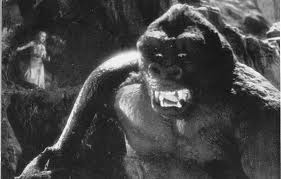
1930s-1940s: Frankenstein (1931) is still revered today as a genuine horror and sci-fi masterpiece with Boris kongKarloff’s iconic performance as the Creature. King Kong (1933) was a groundbreaking film that influenced many generations of filmmakers to this day with its unforgettable, dreamlike scenes that transported viewers into a lost world filled with a giant gorilla and dangerous dinosaurs.

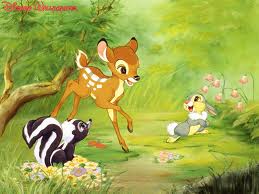
Although Walt Disney received a special Oscar for Snow White And The Seven Dwarves (1937), the film failed to be nominated for Best Picture. What was nominated instead of the groundbreaking first full-length animated film? Such well-regarded classics like Test Pilot and Alexander’s Ragtime Band–note the sarcasm. Disney’s followup animated masterpieces Pinocchio (1940) and Bambi (1942) were also ignored by the Academy when it came to announcing the Best Picture nominations.

bambi

But the Academy wasn’t too dense, in this time period a few fantasy films received Best Picture nominations starting with Lost Horizon (1937), The Wizard Of Oz (1939) and It’s A Wonderful Life (1946).

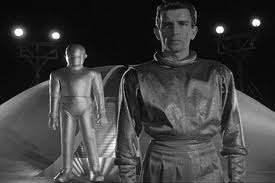
1950s-1960s: Many nominated films in these two day earth stilldecades were either musicals or dramas. Unlike the previous decades there weren’t any genre films recognized with the exceptions of Walt Disney’s Mary Poppins, Doctor Doolittle (both of which are really musicals) and Stanley Kubrick’s Dr. Strangelove Or: How I Learned To Stop Worrying And Love The Bomb. Horror and animated films were for the virtually absent among the list of Oscar nominees. Sci-fi films in this time period began to grow out their zero-budget, infantile trappings. There was an explosion of sci-fi films in the 1950s, many of them worthy of recognition by the Academy like The Day The Earth Stood Still (1951), War Of The Worlds (1953), Forbidden Planet (1956) and The Incredible Shrinking Man (1957). But the Academy members failed to see the merit of these films, which are still fondly revered.

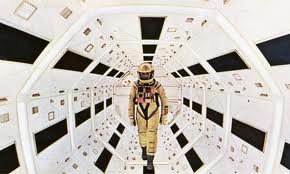
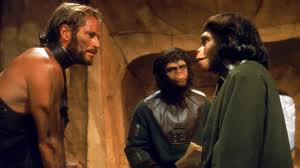
planet of apesKubrick’s next film after Dr. Strangelove is considered by most people as the greatest sci-fi film ever made. Yet 2001: A Space Odyssey (1968) was largely ignored by the Oscars. The other important sci-fi masterpiece that came out in the same year Planet Of The Apes was also snubbed by the Oscars except for a special makeup Oscar. By the way, does anyone know what won that year for Best Picture? Oliver! Another musical snoozefest and films that were nominated included Rachel, Rachel and The Lion In Winter. Are any of these films venerated by film lovers today? Thought not. Continue reading