Ever since the announcement of new standalone Star Wars films there has been much speculation as to what characters will see their own movie. Aside from which characters these films would cover, there have been musings as to when these Star Wars standalone films take place. In between the trilogies? After Return Of The Jedi?
Yoda will have one made, and hopefully it will focus on his younger days hundreds of years before the two trilogies, perhaps similar to the Knights Of The Old Republic series of comic books and games. Seeing him in his youthful prime, perhaps like Luke Skywalker was in A New Hope and The Empire Strikes Back should be a treat and fun to watch. Imagine him not being so wise or powerful, it would be a new way of presenting Yoda before he became a Jedi Master.
It was announced that Han Solo will also be getting his own Star Wars standalone movie. It will probably focus on his younger days and maybe show how he got his ship the Millennium Falcon from Lando Calrissian. Perhaps the movie will show how he met up with Chewbacca, as well as his early run ins with Jabba the Hutt and the Empire. This sounds like an interesting film and could be based on the series of novels that focused on this time period. Those include A.C. Crispin’s Han Solo trilogy (The Paradise Snare, The Hutt Gambit and Rebel Dawn) and the first Han Solo books written in the late ’70s/early ’80s by Brian Daley (Han Solo At Stars’ End, Han Solo’s Revenge and Han Solo And The Lost Legacy).
Boba Fett will also be starring in a Star Wars standalone film, for all we know Joe Johnston will get his wish and be picked as the director. I think it should take place after Return Of the Jedi and show how he survived falling into the sarlaac pit. This would alleviate many upset fans that were unhappy to see their favorite bounty hunter so carelessly killed off. One possibility is it could flashback to his early days after Attack Of The Clones and show how he became such a feared bounty hunter.
I am hoping that Darth Maul gets his own film as well and it could show he became such a ferocious fighter and sith lord. Maybe the story of the novel Shadow Hunter where he takes down the Black Sun crime syndicate could be used. His early interactions with Darth Sidious would be interesting to see.
The droids R2-D2 and C3PO could have their own film as well, as there is a precedence with the Droids animated series. Seeing how they managed to survive from Revenge Of The Sith to A New Hope could have them going across the galaxy and interacting with all sorts of characters from this era could be neat.
Finally, another no brainer is a Star Wars standalone film for fan favorite Jar Jar Binks–just kidding! 🙂
According to The Wrap and other sources, J.J. Abrams is set to direct Star Wars: Episode VII. Despite earlier proclamations about his loyalty to the Star Trek films and ruled out a directing gig for Star Wars, it’s seems to have been a smoke screen to throw off people, especially snoopy journalists. The Wrap also claimed that Ben Affleck was strongly considered for the job. Maybe he’ll have a chance with Episode VIII.
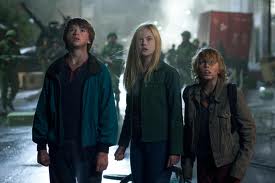
J.J. Abrams has the credentials for this directing job. He created the acclaimed series Lost and even in that show his fan-worship of Star Wars came about, especially during season five when Hurley was stuck on the island in the 1970s and tried to write an improved screenplay for The Empire Strikes Back. He also co-created the just concluded sci-fi show Fringe and has a good track record as a director. While his first big-screen job was on Mission Impossible III, he came to prominence when he directed the reboot of Star Trek and then Super 8. In fact, one of the complaints about Star Trek was that it felt more like a Star Wars film with the big-action scenes and spectacular special effects. If anything, that film proved that he was one to seriously consider for a new Star Wars film. Regardless, he should be credited for bringing the franchise back from the dead even if it came in a slick package. It still worked. Fans should also look at Super 8, which showed that the director could helm believable and sympathetic characters, something that the Star Wars films need at this point. In other words, Abrams can bring out fine performances from his actors.
Abrams has said in the past that Star Wars was his passion and it makes sense that someone like him should direct the start of the next trilogy. He can be seen by many as a solid choice to direct the next Star Wars film but he has his detractors. Already the forums are burning up with statements of lens flares polluting Star Wars: Episode VII. Some people have reacted with a shrug and a “whatever” to this news. Some feel that his films are largely superficial and fail to deliver satisfying conclusions. Those are the fans that J.J. Abrams has to win over. Still Disney could’ve done far worse. At least it won’t be Zack Snyder.
One more thing, this probably means that a new director will be needed for another Star Trek film. Most likely Star Trek Into Darkness could be J.J. Abrams’ last Trek film because he’ll be busy.
Ever since George Lucas sold Lucasfilm and the Star Wars property to the Walt Disney Company, there has been a barrage of speculation over who will direct the films in a newly announced Star Wars trilogy.
Recent reports have it that J.J. Abrams and Guillermo Del Toro allegedly turned down offers to meet with Disney to discuss directing the new films. There have been other reports of directors who either are or aren’t interested in helming a new Star Wars film. Meanwhile, actor Jason Flemyng blurted recently that his friend and noted genre director Matthew Vaughn (the director of Kick-Ass and X-Men: First Class) was picked to direct Star Wars: Episode VII.
Whether or not that is true, there are other notable directors that are well suited for the gig. Aside from current rumored frontrunners like Jon Favreau, Joe Johnston and Brad Bird, it’s time to point out some candidates that haven’t been mentioned but are worthwhile contenders.
Alonso Cuarón would be a solid choice. His resume include three genre films (Harry Potter And The Prisoner Of Azkaban, Children Of Men and the forthcoming Gravity) and the first two show a distinct, engrossing and moody style that would fit in nicely with an Empire Strikes Back-style Star Wars film. Cuarón should definitely be considered for a darker themed film.
Kenneth Branagh, who directed Thor, Mary Shelly’s Frankenstein, and several Shakespearean dramas, is a worthy candidate. His films have gravitas but more importantly are generally entertaining. This was best shown with Thor and Branagh has the skills to do a big-budget sci-fi spectacular with heart and emotion.
Sam Raimi could shoot up to the top of the list if his Disney film Oz, The Great And Powerful becomes a hit. He also has a terrific lineup of popular genre films under his belt like the Evil Dead and Spider-Man trilogies. Most likely a Star Wars film directed by Raimi would be very humorous, full of frantic energy and could be just the thing to help boost the Star Wars franchise.
Neil Blomkamp should be tossed into the list because ever since his film District 9 was released and received so much acclaim, geeks all over the Internet keep touting him for every potential genre film. So why not here? Besides his background as a 3D animator and his talent as a director should put him on the short list. BTW that prawn mechanical battle suit in District 9 looks like it would blend in well in a Star Wars film.
Last year saw a batch of some truly great films and…some major disappointments. But we fans always look ahead to what’s coming out next year. This year isn’t an exception, however, there will be less genre offerings especially when compared to some stellar and exciting films due in 2014 and 2015. This means there are few guaranteed, must-see event films like The Avengers for this year. Still there are some potential nuggets that look or sound promising and who knows? One of them or something else may pleasantly surprise us.
10. Evil Dead
We’ve been burned by some recent, unnecessary remakes but this one is produced by Sam Raimi and Bruce Campbell, the director and the star respectively of the original films. The recent trailer promises the same outrageous thrills, scares and gore that made the originals (in)famous. Only this time the production look more professional and therefore more cringe inducing. (Release Date: April 12)
9. Warm Bodies
This zombie movie seems to be in the same humorous vein as Shaun Of The Dead and Zombieland. Warm Bodies is told from the POV of young male zombie who slowly starts to become human again after meeting a potential meal and falling in love with her (!). Warm Bodies looks very promising and unique, which should help it stand out from the crowded field of zombie movies. (Release Date: February 1)
8. Oz, The Great And Powerful
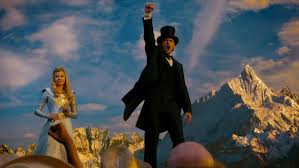
Director Sam Raimi attempts to put behind his Spider-Man films with this prequel of sorts to The Wizard Of Oz. The film focuses on the man who became the sought after wizard of that mythical land. The casting of James Franco as the future Wizard seems like a good choice and the magical landscape and characters shown in the trailers are very stunning and colorful. Can’t wait for the revelation of the Wicked Witch of the East! (Release Date: March 8)
7. Pacific Rim
Fan favorite Guillermo Del Toro returns to the directing chair (his last film was in 2008) in this ode to kaiju (giant monsters) films. Pacific Rim concerns itself with a world being decimated by giant monsters and humanity fighting back by constructing giant robots that are operated by humans inside. Truthfully, Pacific Rim seems like a mix of Transformers and Cloverfield but in a good way. (Release Date: July 12)
6. Oblivion
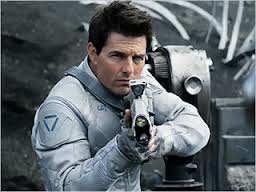
This Tom Cruise vehicle is directed by Joseph Kosinsky, whose last work was the unexpectedly good Tron: Legacy. Cruise plays a lone repairman working in the ruins of an abandoned Earth, and is fixated on the planet and its lost wonders. One day he stumbles upon a mystery when he encounters a beautiful stranger. Sure, based on that premise and what’s shown on the trailer it may seem a lot like WALL-E except it’s with a human instead of a robot, but Oblivion also hints at deeper mysteries such as is Earth really abandoned by humanity? (Release Date: April 12)
5. Thor: The Dark World
Thor surprised many viewers with its refreshing take on superheroes being that it combined superheroics with ancient gods/alien Shakespearean drama and a decent fish-out-of-water element. Even though this sequel isn’t directed by Kenneth Branagh, who did such a great job with the first Thor, what has been revealed, namely Chris Hemsworth reprising his role as the God of Thunder and dark elves as the villains (the head villain is played by former Doctor Who Christopher Eccleston), promises to be a worthy followup. (Release Date: November 8)
4. The Hobbit: The Desolation Of Smaug
The middle part of The Hobbit trilogy comes out at the end of the year and should amp up the adventure quota now that the dwarves’ introduction and exposition about reclaiming their lost kingdom from the dragon Smaug was covered in The Hobbit: An Unexpected Journey. However, that film turned off some fans due to its slow pace and 48 fps ratio that was unsettling for some viewers. Yet it pleased many and is a big hit worldwide. Director Peter Jackson should hope that this middle film in The Hobbit trilogy will be better received than his last middle film in The Lord Of The Rings trilogy. (Release Date: December 13)
3. Gravity
This film about astronauts (Sandra Bullock and George Clooney) stranded on a decaying space station was held over from last year. Officially the reason had to do with upgrading the special effects and a 3D post-conversion. Rumor had it that the preview results were sharply mixed but after some more tweaking, the latest word of mouth is it that Gravity is a stunning piece of filmmaking. Alonso Cuarón, who directed the best sci-fi movie of the last decade (Children Of Men) and one of the better Harry Potter films (Harry Potter And The Prisoner Of Azkaban) directs this suspenseful thriller. (Release Date: October 18)
2. Elysium
Neill Blomkamp, who directed one of the past decades very best science fiction films (District 9), returns to the big screen with his next sci-fi epic. This one stars Matt Damon, Jodie Foster and District 9 vet Sharlto Copley and takes place in 2159. By this time, Earth is overpopulated and dying. While most of the population eke out a miserable existence on the planet, the elite live in a luxurious space station who will stop at nothing to keep the riff raff out of their artificial paradise. Damon plays an ex-con whose mission might upset the unequal balance in society. Based on Blomkamp’s last film and its high caliber of quality, Elysium would’ve rated higher on this list but to date no real details have been released, not even a teaser trailer, so it’s difficult to ascertain how promising Elysium looks. In this film’s defense, at least a couple of photos have been released, which isn’t the case with Gravity. (Release Date: August 9)
1. Star Trek Into Darkness
J.J. Abrams directs his second Star Trek film, as fans know his first Trek film rebooted the long-running franchise. Many have mixed feelings about Abrams’ efforts, the man has admitted he isn’t a Star Trek fan and there are complaints that his previous Trek film seemed more like a Star Wars film. That is because it emphasized action and explosions over ideas and exploration. But Star Trek was an entertaining and rousing success. With Star Trek Into Darkness very little has been revealed about its mysterious plot and villain. What has been revealed is that Captain Kirk (Chris Pine) gets taken down a few pegs and loses command of the Enterprise. But the biggest buzz online has to do with the villain (played by Benedict Cumberbatch), an alleged former Starfleet officer turned terrorist. There are the speculations that he may be a genetic superman like Khan. So far, the lack of information from Abrams and company is helping to fuel interest for Star Trek Into Darkness. (Release Date: May 17)
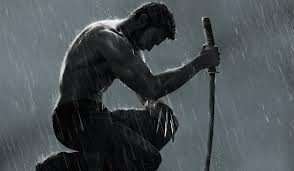
Keep in mind, these release dates will change and may even be pushed back a year. Other films to keep an eye out for include World War Z (some may have noticed that this film was listed in the top 12 in last year’s list of anticipated films, but news of the troubled production kept it out of the list this time, though the trailer looks interesting), Iron Man 3 (will the franchise revive itself after the listless Iron Man 2? The back to basics approach shown in the trailer seems like a step in the right direction), The Hunger Games: Catching Fire(the first sequel to Suzanne Collins’ popular book series and movie about a tough girl surviving a futuristic blood sport), The Wolverine (Marvel’s most popular mutant has an adventure in Japan in his second solo film), Monsters University (Pixar’s newest animated release is a prequel to the hit Monsters, Inc.),After Earth (director M. Night Shyamalan attempts another comeback with this futuristic tale about a father and son stranded on an abandoned, hostile Earth), Area 51 (Paranormal Activity director Oren Peli’s delayed found-footage movie about aliens), I, Frankenstein (Aaron Eckhart plays the title character in modern times who fights to save humanity from immortal forces), The Colony (Bill Paxton and Laurence Fishburne are among dwindling human survivors in a futuristic ice age who must contend with a terrifying threat), Kick-Ass 2 (hopefully it won’t be as graphically gruesome as the comic book mini-series it’s based on), Ender’s Game (an adaptation of Orson Scott Card’s book about a gifted child trained to fight aliens in the future), and Last Days Of Mars (a group of imperiled astronauts on the red planet ).
Batman fans living in the L.A. area were very lucky recently when Warner Bros. held a free Batman exhibit to coincide with last month’s Blu-ray and DVD release of The Dark Knight Rises.
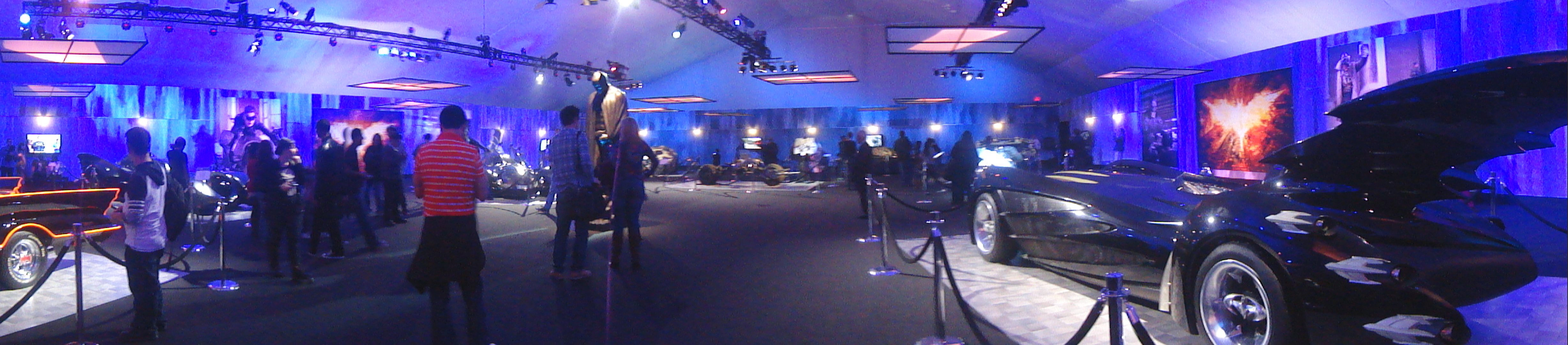
It was called The Dark Knight Legend Exhibit and was held in L.A. LIVE from November 30, 2012 until December 14th, 2012. The exhibit was held under a humongous tent on a parking lot and thanks to all the props, displays, murals and vehicles it had a very moody atmosphere. It was like being in a Batcave of sorts.
Visitors were greeted to large murals of Gotham City as seen in the Christopher Nolan Batman films along with Hans Zimmer iconic music. The first thing to see was beautiful artwork from various artists displayed as if in an art gallery.
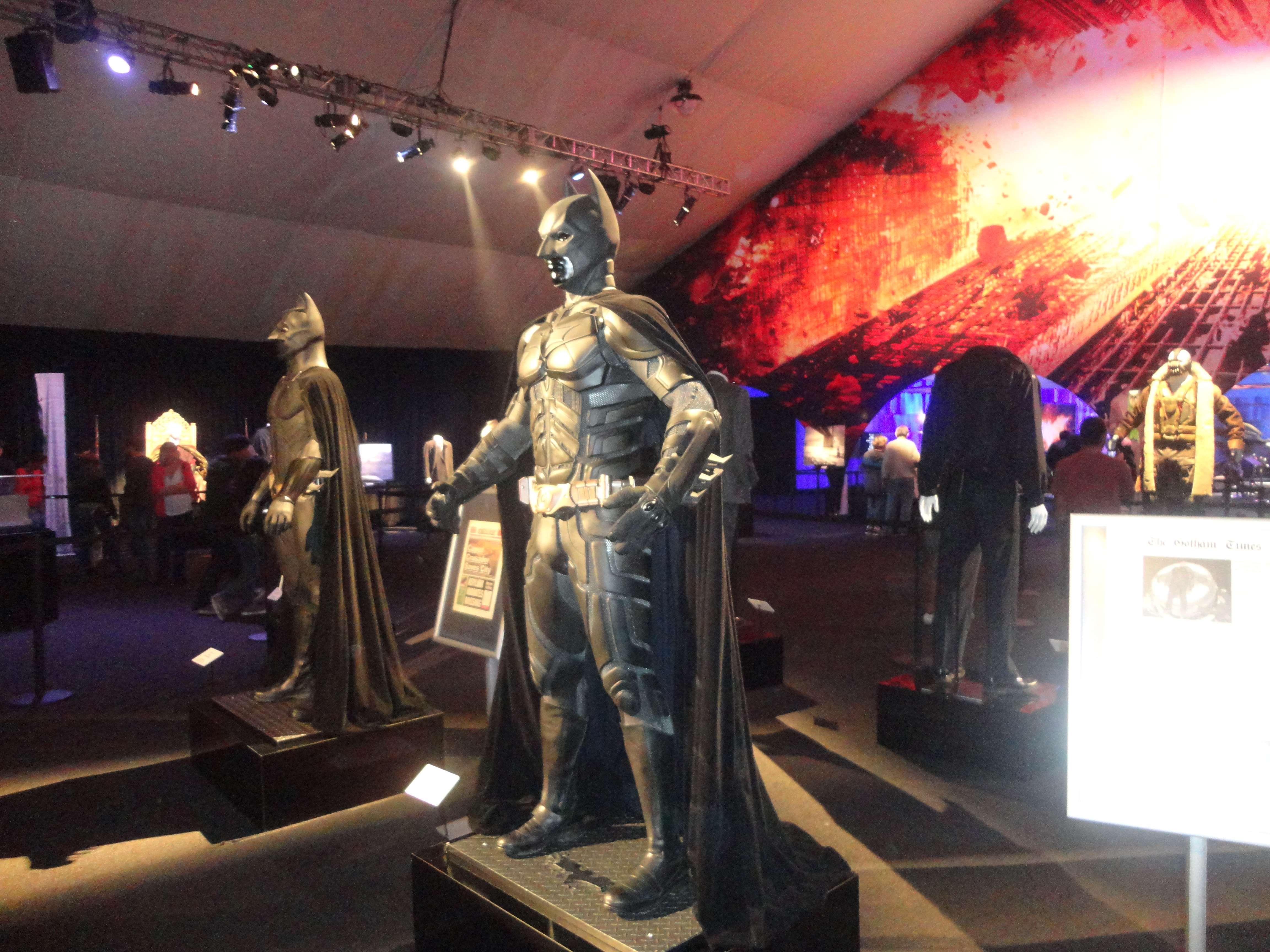
Moving past the art came real eye openers; several mannequins adorned with the costumes from The Dark Knight Rises and Nolan’s other Batman films. Moving deeper into the exhibit revealed assorted props in display cases and costumes worn by other characters in the Batman films. It was a thrill to see outfits worn by Bane, the Scarecrow and, of course, the Joker (the Heath Ledger version). One of the best parts was examining the cool gadgets from Batman’s utility belt and intricate maquettes.
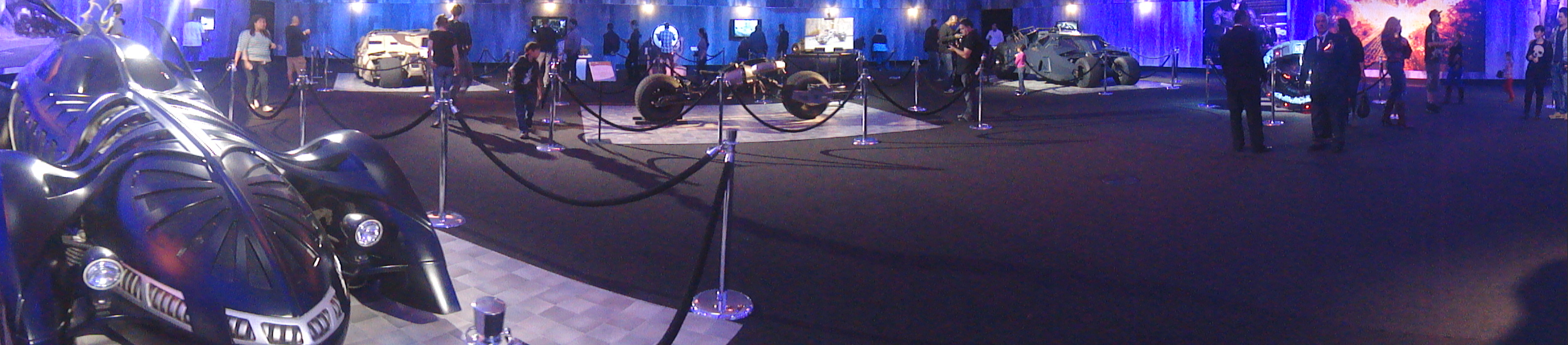
But any Batman fan would say that the highlight of The Dark Knight Legend Exhibit were the prominently displayed vehicles seen in all the Batman films and the 1960s TV show as well. It was great seeing all the different Batmobiles which started off with the 1960s, Tim Burton and Joel Schumacher versions to the tumbler vehicles. They even had a realistic mockup of the neutron bomb seen in The Dark Knight Rises and the Bat Signal too. The only thing missing was the Bat flying vehicle from The Dark Knight Rises. Maybe they didn’t have enough space for it.
There were also videos along the walls featuring interviews with actors and production personnel that could be listened to via headphones. It was a nice way to experience the exhibit, which took about an hour to walk through leisurely.
It’s such a great exhibit that would’ve been enjoyed by more fans who don’t live in L.A. There isn’t any information as to whether or not Warner Bros. will have The Dark Knight Legend Exhibit elsewhere, but it’s something to be considered.

 Yoda will have one made, and hopefully it will focus on his younger days hundreds of years before the two trilogies, perhaps similar to the Knights Of The Old Republic series of comic books and games. Seeing him in his youthful prime, perhaps like Luke Skywalker was in A New Hope and The Empire Strikes Back should be a treat and fun to watch. Imagine him not being so wise or powerful, it would be a new way of presenting Yoda before he became a Jedi Master.
 A.C. Crispin’s Han Solo trilogy (The Paradise Snare, The Hutt Gambit and Rebel Dawn) and the first Han Solo books written in the late ’70s/early ’80s by Brian Daley (Han Solo At Stars’ End, Han Solo’s Revenge and Han Solo And The Lost Legacy).
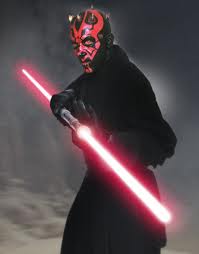 I am hoping that Darth Maul gets his own film as well and it could show he became such a ferocious fighter and sith lord. Maybe the story of the novel Shadow Hunter where he takes down the Black Sun crime syndicate could be used. His early interactions with Darth Sidious would be interesting to see.