Marvel Comics’ Greatest Moments

marvel 75 logo

Marvel Comics turned 75 this year. As we celebrate Marvel’s 75th anniversary, it’s hard to imagine how long the comic book company has been around. Even though Marvel Comics first debuted in 1939 with Marvel Comics #1 (featuring decidedly different superheroes like the Human Torch, Ka-Zar and Namor), the company truly came to its own in the 1960s when writer Stan Lee and artists Jack Kirby and Steve Ditko introduced the world to new and dynamic superheroes.

marvel photo

These masked marvels like Spider-Man, the Hulk, the Fantastic Four, the Avengers and the X-Men quickly captured readers’ imaginations. Without exaggeration, Marvel Comics changed the comic book world and left a permanent mark in popular culture and its characters are still vibrant today. Incredibly enough, it can be said that they’re more popular today than when they were first introduced in the 1960s .

While Marvel superheroes have successfully transitioned into other media like films, toys, games and such, let’s not forget that the core of their appeal are with the comic books. Whether they’re just single stories in individual issues or epic mini-series and story arcs, the following are, based on my opinion, the best stories from Marvel’s 75-year history.

age of apAge Of Apocalypse: Spanning several different X-Men titles over several months, this massive storyline was about an altered reality where Professor X’s assassination in the past led to Apocalypse conquering North America, and Magneto leading the X-Men in a desperate attempt to stop him and correct history. Just seeing the alternate takes of our favorite mutants was a joy to read.

Avengers Disassembled: Boasting top avengers disassembledwriters and artists like Brian Michael Bendis, Paul Jenkins, Robert Kirkman, Steve Epting, Dave Finch and George Perez, this comic book crossover spawned from The Avengers #500-503 into other superhero titles and upended most of the Marvel Universe. The team is literally ripped apart from within by an insane Scarlet Witch. Many heroes are killed and the Avengers were catapulted into new popularity with this controversial story arc.

Born Again: Daredevil has never been lower or a more captivating read than in this classic story arc spanning Daredevil #227-231. That is due to the genius writing of Frank Miller and the art of Dave Mazzucchelli. Daredevil’s worst enemy discovers his secret identity and systematically destroys the blind superhero’s personal world plunging Daredevil into his own worst hell.

The Captain: This underrated Captain America tale by Mark Gruenwald, Tom Morgan and Kieron Dwyer spans Captain America #332-350 and has Steve Rogers abandoning his role as the iconic hero and going underground. Meanwhile, a super patriotic, though unstable, replacement is picked by the U.S. government to take over, but as we see, it’s not easy living up to a legend.

Civil War: Probably the last great mini-series produced by Marvel pits its most iconic heroes against each other. As Iron Man and Captain America took opposite sides against the U.S. government’s superhuman registration act, Marvel Comics was changed forever and the mini-series’ impact is still with us today.

civil war 2

Deliverance: The famous “Demon in a Bottle” story arc from Iron Man #120-128 bravely introduced the notion of a superhero being truly human and becoming an alcoholic. Tony Stark’s (Iron Man) alcoholism would resurface to even greater effect several issues later after his nemesis Obadiah Stane orchestrates a series of attacks. Stark soon became unable to continue being Iron Man and hit rock bottom culminating in Iron Man #182 when a now-homeless Stark battles not only the cold elements, but his own inner demons.

wolverine kittyDays of Future Past: The greatest X-Men story ever made reflected the height of the historic collaboration of Chris Claremont and John Byrne. In this exciting two-part tale from The Uncanny X-Men #141-142, robotic Sentinels have hunted mutants nearly to extinction in the near future, so one mutant is sent back in time to alter history.

The Death of Captain America: One immediate aftermath of the Civil War mini-series was Ed Brubaker’s gut-wrenching examination of the death of an American legend. Coldly assassinated before standing trial, Captain America’s death led to another hero taking up his mantle and a serpentine plot by Cap’s greatest enemies.

The Death of Gwen Stacy: The two-part gwen stacy deathstory from The Amazing Spider-Man #121 & 122 is considered by some as the end of the Silver Age of Comics. This emotional tale about Spider-Man’s nemesis, the Green Goblin, killing his girlfriend  was a gut punch not only for Spider-Man but his many followers who were stunned by the tragedy.

The Doctor Is In: John Byrne wrote and drew some outstanding comic books during his Marvel tenure. Before Deadpool came along, Byrne’s rendition of She-Hulk had her hysterically breaking the fourth wall. In The Sensational She-Hulk #5 story titled “The Doctor Is In” she had to not only contend with Doctor Bong, but with literally walking across comic book pages (ads included). Marvel Comics was rarely funnier than with this particular issue.

The Hulk Vs. The Thing: Marvel is known for how often its superheroes fight each other. This early story from Fantastic Four #25 & #26 is one of the best since its primarily a battle royale between two of Marvel’s strongest titans. The Stan Lee-Jack Kirby classic is at the same time a story about determination and fighting against the odds, in particular with the Thing.

spidey trapped

If This Be My Destiny…!: The story arc from The Amazing Spider-Man #31-33 had Spider-Man run through exhausting trials to gather serum for his dying aunt. His quest culminated in issue #33 with a story titled “The Final Chapter!”.  In the issue, our hero is trapped under tons of steel and rubble and in danger of drowning with the serum just out of reach. Spider-Man has to find the fortitude to free himself and his effort was memorably inspiring.
Continue reading

The Terminator: The 30-Year-Old Sci-Fi Masterpiece

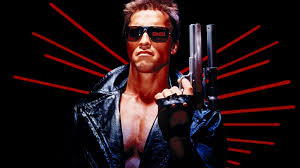
poster 2Thirty years ago, howling winds among the blackened ruins of Los Angeles in the year 2029 AD and a flying machine of death and destruction began James Cameron’s 1984 classic science fiction action thriller The Terminator. This film was a landmark for the director as well as its star Arnold Schwarzenegger and began one of cinema’s best known sci-fi franchises. It has many great qualities that many films have since tried to emulate. Such as its pulse pounding pacing and action, as well as the many interesting themes it explores (i.e.: the conflict between man and machine and the idea of fate and whether it can be altered).

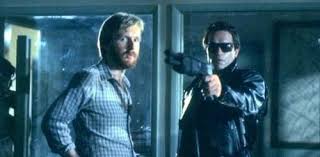
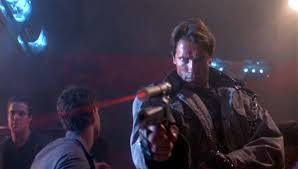
The story involving a ruthless killer cyborg laser scopeplayed by Schwarzenegger coming from the future to kill a waitress called Sarah Connor (played very well by Linda Hamilton), the mother of the future human resistance leader John Connor, examines the idea of humanity losing control of the technology it created. All of this is done through the lens of classic ’80s high-powered action and gun battles.  One of the memorable things about The Terminator is how uncompromising it is. The brutal nature of the terminator is on full display as he coldly executes his targets and relentlessly pursues Sarah. This is also explained quite well by her protector Kyle Reese (another excellent performance by Michael Bien), a soldier sent back from the future to protect her. He tells her quite bluntly that the machine will not ever stop until she is dead.

sarah and kyle

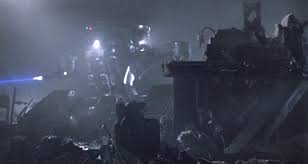
Any discussion of The Terminator would not be complete without mentioning the fantastic future war sequences that start the film and are seen in flashbacks throughout. It showed a scary post-apocalyptic landscape of a city destroyed by nuclear fire, and massive hunter-killer machines trying to wipe out any humans that appear as if they were rats. This is all seen through the eyes of Kyle Reese, and when he is shown getting back to a human hideout, the hunter killersense of misery and despair among the surviving humans only heightens the tension. It makes his mission to protect Sarah and ensure that humankind has a fighting chance all the more important and desperate. It also demonstrates the terrifying nature of terminators as one infiltrates the hideout and mercilessly slaughters anyone nearby. This is paralleled by the present-day terminator walking into a police station and killing everyone he sees in an effort to get at Sarah. Speaking of Sarah, the film well presented the theme of a once-timid character who finds her inner resolve and becomes a completely changed person. By the end of the film, Sarah Connor is just as determined and full of fight as the machine that is stalking her.

cameron and arnoldAll of these qualities are why the movie is still admired and seen 30 years after its release. The Terminator stands out among many of its decade’s other action films. It propelled James Cameron and the cast to stardom and led to him directing other favorites like Aliens, The Abyss, Titanic and Avatar. It cemented Schwarzenegger as an international star and created a fascinating universe that was further developed in three sequels, books, comic books and a TV show that expanded on the world of the super computer Skynet bent on humanity’s destruction. This world will be revisited in next year’s Terminator: Genisys.  Hopefully, it will be as action packed and exciting as the classic 1984 original that is still the best of the series and will endure for years to come as a sci-fi masterpiece.

C.S. Link


Star Trek At 48

trek trioThis weekend marks the 48th anniversary of the premiere of the very first Star Trek episode on TV. The celebrations are unquestionably low key; I couldn’t even find any acknowledgement of this on the startrek.com website. But I expect things will be very different in two years time. At least, that is what we Trek fans hope. By then, it will be the fiftieth anniversary and we know for certain that at the very least a Star Trek film will be out in two years.

That is much better than what happened during the iconic show’s fortieth anniversary. Nothing happened then. Paramount Pictures didn’t put out a film because of the failure of Star Trek Nemesis, while CBS Television Studios also followed suit since Star Trek: Enterprise was just canceled a year before on UPN.

Cinematic Rebooting

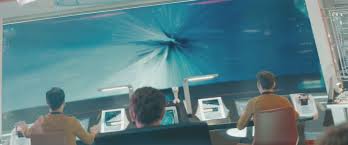
During that time period both companies felt that the Star Trek franchise needed a rest from the public eye. As we all know, Paramount rebooted the film franchise in 2009 with Star Trek and its sequel Star Trek Into Darkness was released last year. While both films were successful, there is a feeling of unease among a large segment of the fanbase. Under director J.J. Abrams’ guidance, they feel as if Star Trek has strayed far from what it’s meant to be; a story of space exploration and encountering the unknown. Instead, they say that the past two films were just modified Star Wars films. That is a hard viewpoint to argue against, since the films emphasized action and thrills over the more cerebral fare that creator Gene Roddenberry championed when he created the original show and Star Trek: The Next Generation (TNG).


The Star Trek reboot was supposed to reinvigorate the franchise and raise public awareness, but how successful was that goal? How much in the public eye is Star Trek? It’s there for sure but a lot of attention is being paid these days to the latest superhero film or the return of Star Wars, while any news of the upcoming Star Trek sequel gets shrugs. This was really clear when Paramount announced this year that the screenwriter for the past two Star Trek films, Roberto Orci, was tapped to direct the next sequel. He isn’t a big-name director, actually he hasn’t directed anything at all. Yet, he is being entrusted by Paramount to guide the next Star Trek film, which is coming out in the fiftieth anniversary of the original series. You would think that with that much attention the franchise will receive then, that the film studio will want to ensure that a topnotch director will handle the reins. But who knows? Maybe Orci will deliver the kind of Star Trek film its fans have been clamoring for.

enterprise viewscreen Continue reading

Coyote: Allen Steele’s Gateway Novel To A Bold New World

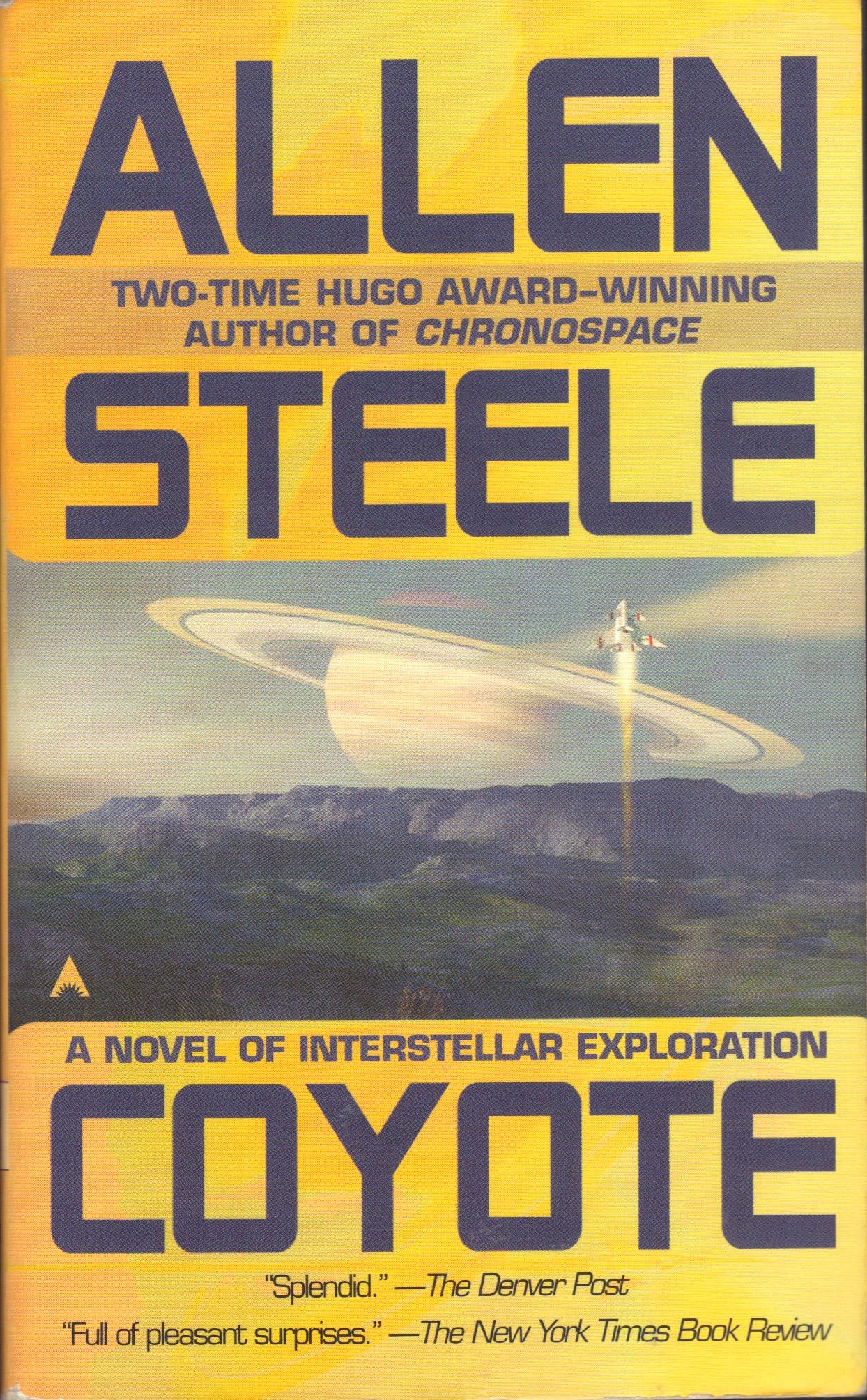
Some of the best sci-fi books to read during the summer months are those from author Allen Steele’s Coyote universe. Starting from Coyote and concluding with Coyote Destiny, these books explore a few tried and tested themes seen in science fiction literature. Chiefly among them are the ideas of man versus nature and of man versus his government, which are first seen in the first novel of the series Coyote. Subtitled “A Novel of Interstellar Exploration” this book deals with a group of space colonizers who rebel against an evil American government in the late 21st century and like the early pilgrims in our history, set out for a new land or rather a new planet.

coyote 1Actually this novel that was published back in 2003 is a collection of short stories that have been gathered into one book which explains the episodic nature of the novel. It’s not a complaint since each storyline while self contained and sometimes focusing on some characters does advance smoothly the overall story and gives a good perspective on the aspects of colonizing an alien world.

The book opens with the main characters on Earth. In the future, the United States has fallen and replaced by an ultra conservative dictatorship called the United Republic of America. It’s a dismal place where the government represses people, is fighting guerillas and separatists and is isolated from the world. The U.R.A. is also launching a colony starship with colonizers to its destination being Coyote, a moon that can support life and orbits the planet Bear in the 47 Ursae Majoris system. Unknown to the tyrannical U.R.A. is that the starship’s captain Robert E. Lee – – yes, he’s a descendant of the actual Lee from our history, and a group of conspirators plan to hijack the ship during its voyage. It won’t really spoil anything to say that they succeed and that the reason they do so is that his group wanted to escape the government and they figured that their destination was beyond the grasp of the U.R.A.

Before they arrive on Coyote, the novel spends a segment on the actual voyage. The starship, the U.R.S.S. Alabama, won’t reach Coyote for 230 years so the crew goes into biostatis, a type of induced hibernation. Unfortunately, one of the crewmembers, Leslie Gillis, is awakened only three months into the journey. Unable to go back into biostasis, Gillis is condemned to spend the rest of his life in solitude on board the ship or commit suicide. He chooses the former and the novel details how he spends time which was surprisingly interesting. One plot point which is brought up and so far never resolved is the fact that Gillis finds evidence of alien intelligence in the form of a passing spaceship. Steele never reveals in Coyote what was it that Gillis spotted and it’s frustratingly tantalizing.

Midway through the book, the colonists coyote maparrive and the rest of the story deals with the hardships they face in settling in the new world. Steele wisely spends some time going over the alien environment that while Earth-like is still an alien world. It makes the world of Coyote seem like a character unto itself. One way this was shown was when it’s shown  that the world has longer seasons. This adds to the hardships the colonists face since a month lasts about ninety days so winter for instance is that much longer.

The story shifts to Carlos Montero a teenager who sets out with his girlfriend Wendy Gunther and his friends to explore the world’s vast equatorial river system. This plot doubles for a coming-of-age story which is heartfelt at times without being too saccharine. The story becomes more intense as his decision to take a Twain-inspired trip and his reckless behavior leads to death and Carlos is forced to become a man. Part of the way he does this is by his continuing the journey solo to find himself and spare his companions more hardship. The story at the same time doubles as a fascinating travelogue of Coyote as Carlos explores it and ultimately as a man makes a hard choice over what to do with his life.

From reading the novel it’s fairly obvious that it’s a retelling of our American history right up until the Revolution. The last part of the novel is a set up for the sequels. Another starship arrives and brings humans ready to share the spoils in the world the characters worked so hard to settle. This, of course, sets up the future conflicts seen in Coyote Rising and Coyote Frontier. The final two books in the series open up the Coyote universe as contact is made with alien civilizations. This premise spun off a trio of novels that largely take place away from Coyote: Spindrift, Galaxy Blues and Hex. Those books themselves are just as fascinating to read. On the whole, all these books are well written, never dull and are definite page turners. In other words, prime summer reading for sci-fi fans. It will take a while to go through all of them, but it’s best to start with Coyote, the one that started it all. With this first book, readers will easily find that Allen Steele has created an engaging story, world and cast of characters that warrant these sequels and spinoffs.

José Soto

Batman: 75 Years Old & More Popular Than Ever

batman 75

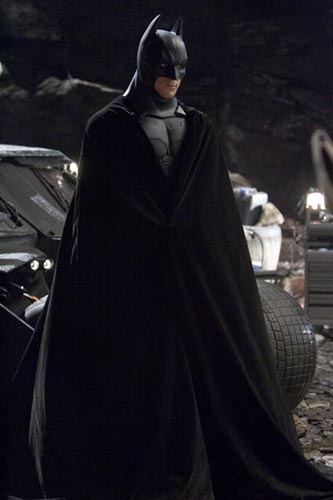
Batman is celebrating his 75th anniversary this year so let’s take a look at why this character has such an enduring legacy. Batman is a very versatile character that seems to be at home in any era. He got started in 1939 during the Depression and has gone through many changes during the years. One just has to look at his comic books through the decades, the Batman TV series of the ’60s and The Dark Knight film of 2008 to see how easily and successful Batman can be and reflect the times that he is existing on. This means he appeals to a wide audience and will continue to attract fans and not become irrelevant regardless of whether he appears in either comics or movies. Another trait that makes the Caped Crusader interesting is the fact that he has no superpowers.

All of his strengths and arsenal are the result of years of training and brain power. He does not have the luxury of a mutation or any outside force to give him his powers. Batman batman 2does it the hard way. This means he can be more vulnerable, but also somewhat more relatable as well. This doesn’t mean that he is not just some wag with a cheap costume. He uses his many resources to make himself into a first class fighter and detective with a formidable arsenal (like the always cool Batmobile or Batwing) to fight crime.

Any discussion of Batman’s popularity must also include his rogues gallery of villains, some of the most interesting in the genre. Obviously the best one is his nemesis the Joker, the insane killer clown. Who wouldn’t be afraid of that? Not to mention other classic characters like The Penguin, the Riddler, his former ally Harvey Dent a.k.a. Two-Face and his sometime love interest Catwoman. All are in their own right fascinating characters who are in some ways as popular as Batman himself. These iconic characters all show up in highly successful comics, movies and video games that are some of the best to have been created.

The 1989 Batman movie was a phenomenon that foreshadowed the super hero craze of today, which includes the critically acclaimed Dark Knight trilogy. He is so popular that he will be featured in the upcoming sequel to Man Of Steel and the eventual Justice League film. The Caped Crusade has also conquered the world of animation with many excellent animated series like Batman Beyond and Beware The Batman.

ccccIn regards to other media, the Batman: Arkham video game series for the PS3/Xbox 360/Wii U and soon for next gen systems is widely regarded as one of the best to feature a super hero that has ever been created. These include Batman: Arkham Asylum, Batman: Arkham City, Batman: Arkham Origins, and Batman: Arkham Knight. All of this illustrates why Batman is still, after 75 years, a very popular and relevant character that will continue to entertain audiences for years and decades to come.

C.S. Link