For All Mankind Looks Ahead By Going To The Past

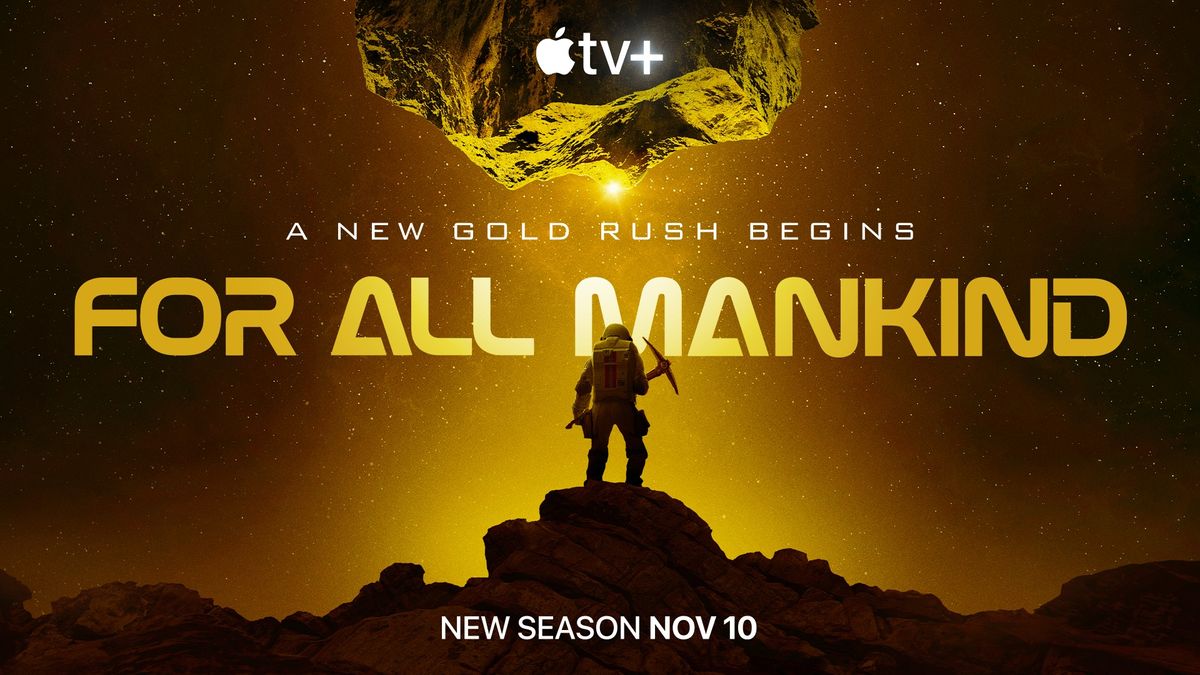
The fourth season of the alternate history TV series, For All Mankind, just concluded with a typical speculative flourish that defines the program.

Streaming on Apple TV +, For All Mankind was co-created by Ronald D. Moore and explores a reality where the Soviets reached the moon before the United States could. Instead of stagnating as in our reality, in this alternate world, the United States is inspired to keep pushing the boundaries in space exploration. In each subsequent season, the series jumps ahead roughly every decade and we see how much of an impact the Soviet moon landing has in the world. A lunar station is established in the 1970s, which further fuels the space race between the world powers of the Soviet Union and the United States. Naturally, this also fuels the Cold War which now extended into outer space as seen in season two when the two world powers nearly went to war on the moon during the 1980s.

By the third season, tensions cooled between the two powers in the 1990s. A new space race to reach Mars and the struggles of those who reached the red planet were the focus of the third season. This brings us to the fourth season which just concluded. Taking place in the early 2000s, the fourth season of For All Mankind presents a world where Al Gore is the U.S. president, the Soviet Union continues to exist, John Lennon is still alive and there are only three Star Trek TV shows (!), but as with the previous seasons, the TV show focuses on several characters affected by the alternate space race.

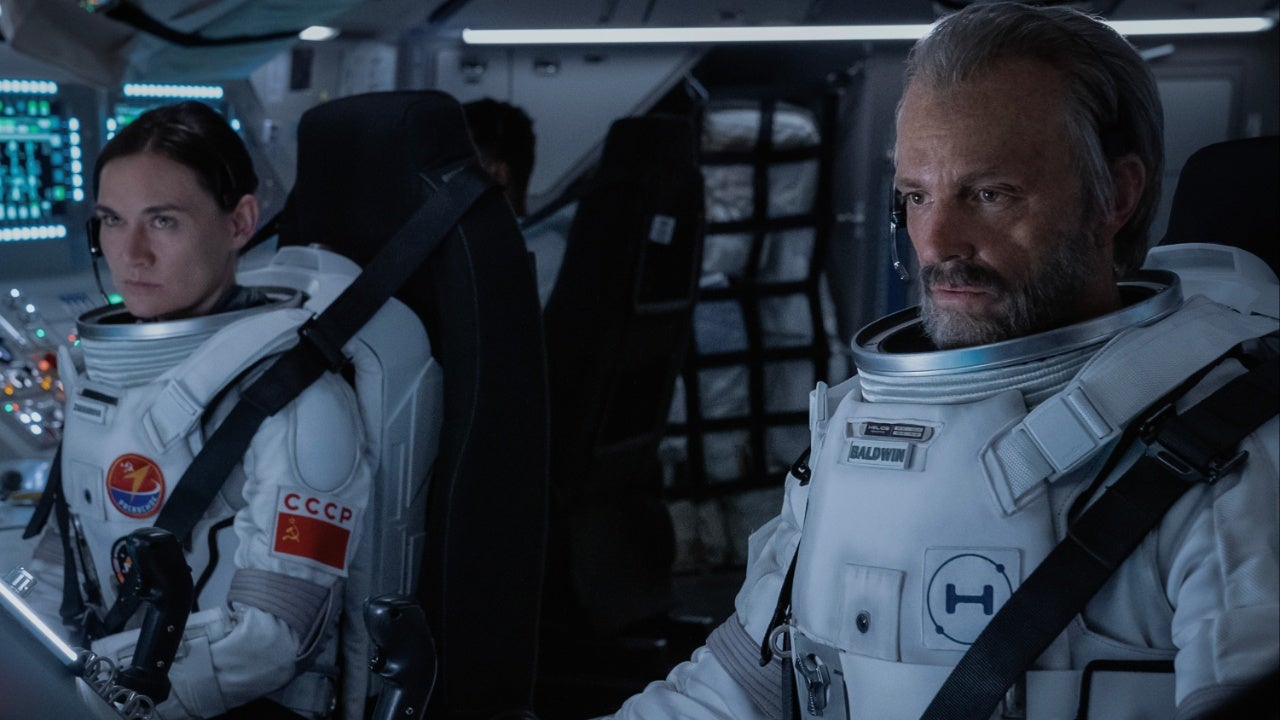
The heart of For All Mankind is the aging astronaut Ed Baldwin (Joel Kinnaman). In the first season, Baldwin had the opportunity to land on the moon on Apollo 10 before the Soviets, but never took it, much to his regret as Alexei Leonov landed on the moon shortly after Baldwin’s mission. Baldwin winds up involved in crititcal points in NASA’s space exploratory efforts such as being commander of the Jamestown lunar station, helping to defuse tensions with the Soviets in the second season during a space shuttle flight, and as the commander of the commercial mission to land on Mars and establish a colony there in the third and fourth season. Despite his many achievements, Baldwin struggles to find meaning in his life, to adapt to a quickly changing world and he does not even want to return to Earth after spending many years on Mars. By the fourth season, Baldwin is facing his twilight years and determined to make a difference. He does this by latching onto the quest to keep the human Martian colony from withering out.

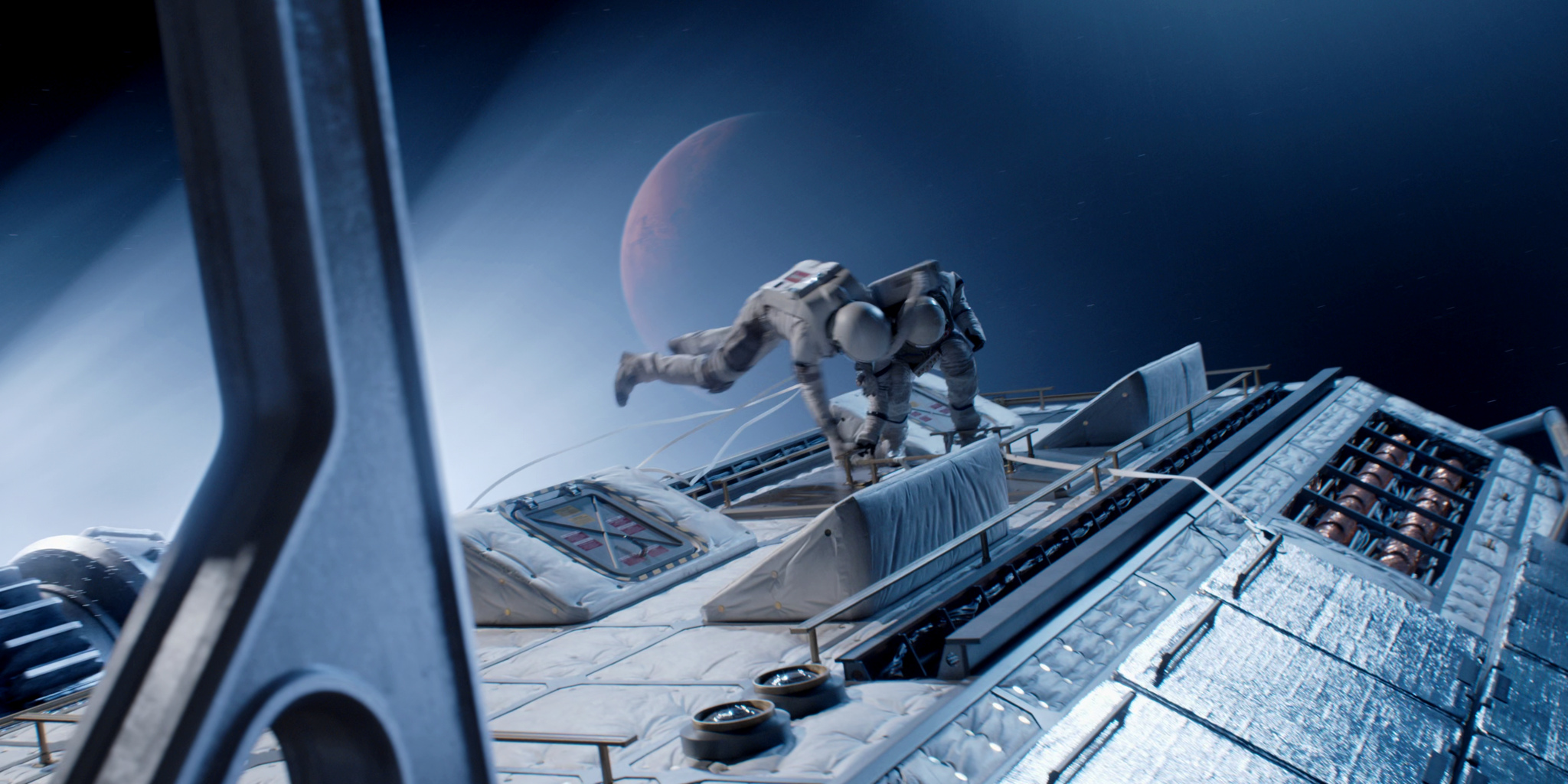
In the fourth season, a large asteroid, called Goldilocks, is discovered drifting towards Mars that is rich in iridium. After a lot of deliberation, the M-7, a conglomeration of seven world powers, including the U.S. and the Soviets, decided to have the asteroid diverted into Earth orbit for immediate rewards and riches. Dev Ayesa (Edi Gathegi), an Elon Musk-type and owner of the corporation Helios Aerospace, has a vision of humanity expanding into the solar system and beyond. He realizes that if the Goldilocks asteroid is diverted to Earth that any interest in developing Mars and exploring space will wither and die as the world powers will be busy enriching themselves with the asteroid in Earth orbit. He comes up with a plan to essentially hijack the asteroid and have it orbit Mars instead in order to force Earth to keep investing in the red planet.

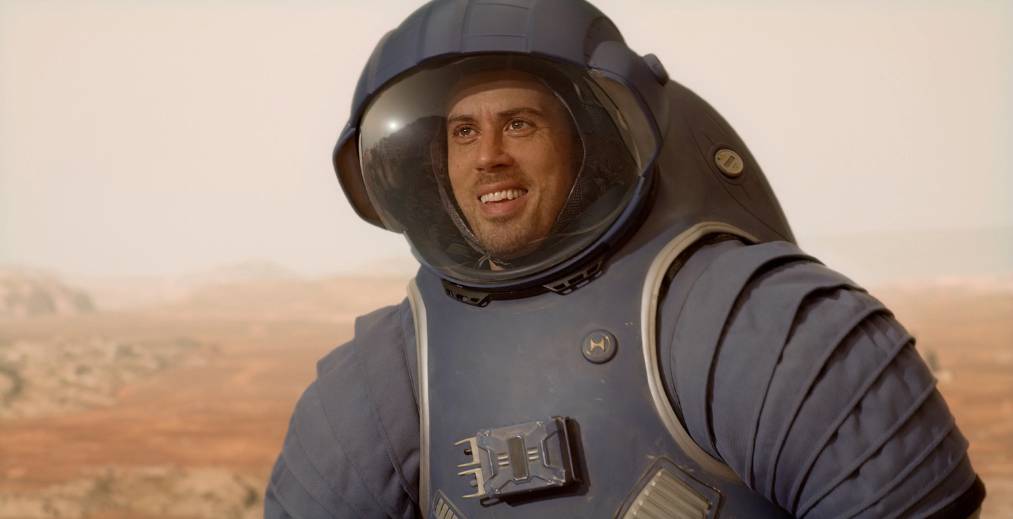
As this is going on, there is a labor struggle in the Martian colony best represented by Miles Dale (Tobey Kebbel), a former oil platform worker turned Martian laborer. In the reality of the TV show, fossil fuels have been phased out of use in the world as new energy technologies made them obsolete. While this may be great for the environment, many workers in the fossil fuel field had to find new means of employment. Dale relocated to Mars for a new opportunity, but the realities and frugality of Helios forced him to run a black market operation in the colony. Underlining these labor struggles is the fact that many of the laborers including Baldwin see Mars as their home not Earth, which means this could be the beginning of Mars eventually becoming an independent world.

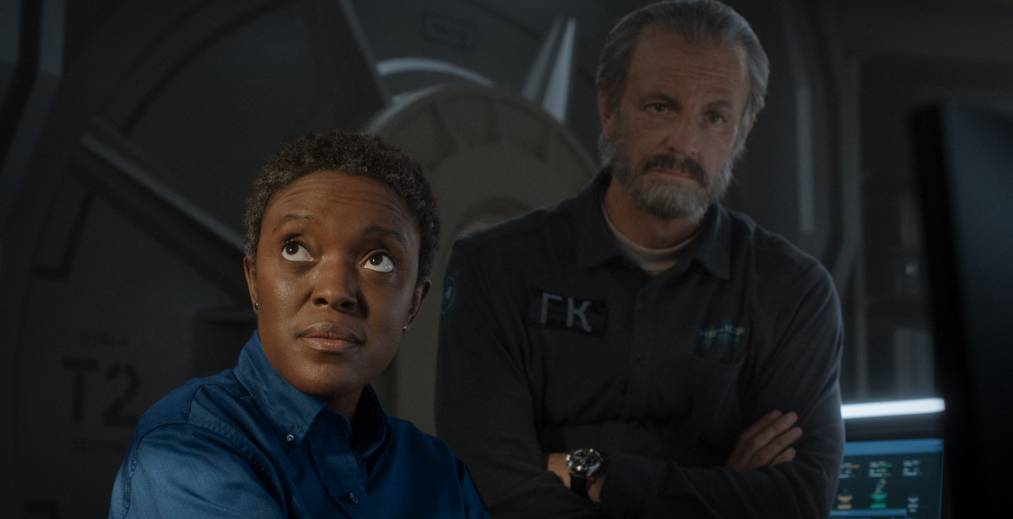
Trying to keep the Martian colony running smoothly is Commander Danielle Poole (Krys Marshall), a Black woman who was one of the first woman astronauts for NASA in the 1970s. As Baldwin is the rebellious heart of For All Mankind, Poole is the soul of the show as we see from her POV how radically different this reality is from our own since women and people of color were able to advance in society much more quickly compared to our own. Like Baldwin, Poole is very relatable but for different reasons. While Baldwin is a sympathetic relic struggling to fit into the new order, Poole is an empathic and level-headed, by-the-book leader who is the moral center of the show. As these situations go, Poole is brought out of retirement to command the Martian colony and becomes embroiled in the labor struggle that morphs into a revolution of sorts on Mars.

In the backdrop of the fomenting Martian revolution, we also follow the stories of several NASA personnel. The most interesting is Margo Madison (Wrenn Schmidt), the first woman to be mission controller of NASA. During the TV show she was forced to work for the Soviets and commit treason by providing them with the secrets of American space technology. In the just-concluded season, Margo, who was believed to have been killed in a domestic terrorist bombing, comes out of hiding from the Soviet Union and has to decide what she will do with her life and how she can contribute to humanity’s space efforts. Her situation brings her into conflict with her protogee, Aleida Rosales (Coral Peña), who also is a woman of prominence in NASA.

What makes For All Mankind so captivating to watch is how it balances interesting personal stories with wider geopolical developments in this world that is distinctly different than ours. We see the impact of how a Soviet moon landing further accelerates society and technology. It’s obvious that we have the capability to have advanced in space exploration but our society lacks the drive to take us there. It’s disheartening that while there is a thriving colony on Mars in the TV show, real-life efforts show how far behind we are. We cannot even manage to return to the moon as we learned recently when the Artemis mission was delayed, yet again.

In some ways, even though we see that this is not a perfect society, it seems to be a better world than our own. Many issues have been addressed much earlier in this timeline such as the struggles of people of color , women, and members of the LGBTQ+ community. Advances in techonolgy are casually noted such as the use of the Internet and cell phones which began in the 1980s, and the rapid development of alternatives to fossil fuels. On the other hand, this altered world has its own problems such as it seems as if socialism/communism has spread throughout the world thanks to the continued exitence of a despotic Soviet Union (in the fourth season of the TV show, Gorbachev was overthrown by hard-line communists). One simple but intriguing tool the TV show uses is that of the montage. At the start of each season, a montage quickly brings viewers up to date on developments of the world, such as the results of presidential elections and pop culture news.

These developments would be meaningless if For All Mankind never presented how these events affected its characters. We see the wonders and struggles of this altered world through their eyes and react accordingly. One of the show’s strengths is that is able to smoothly introduce new characters while moving away from older characters as the show jumps ahead in time. It’s unknown if Baldwin and some other older characters like Poole will continue to be a part of the series though it’s unlikely. In a flashforward tease shown in the season finale, we find ourselves in 2012 without any indication if Baldwin and the others are still alive or active. With regards to the fourth season, For All Mankind continued to soar with its look at a past that is more futuristic than our own. Many episodes and plot lines were fascinating and built up to an intense and cathartic season finale.

At this time, it is unknown if For All Mankind has been renewed for a fifth season, though it is one of the more popular TV shows on Apple TV +. Not only would it be great if we’re given a fifth season taking place in the 2010s but a sixth season that takes place in this decade and beyond. Who knows, maybe we’ll see the Jovian system being colonized or perhaps of the first steps to faster-than-light travel as humanity begins to contemplate traveling to other star systems. If all goes well Ronald D. Moore and his colleagues will be able to conclude this captivating look at an alternate world of true space exploration.

José Soto

Godzilla Minus One = Plus One Greatness

Some may scoff the latest Godzilla film, Godzilla Minus One, as just another kaiju flick with battling monsters, goofy plots, and bad acting. But they will be very surprised by what Godzilla Minus One offers since it is one of the greatest Godzilla films ever made.

Evoking the serious and somber tone of the original Godzilla from 1954, Godzilla Minus One is much more than a giant kaiju film about rampaging monsters standing in for deadly forces of nature. It is also a film that studies the impact of war on former soldiers and civilians. With that in mind, the film takes the time to get viewers to become involved with the storyline of its human characters who have a surprising amount of depth and story arcs.

The film opens in the last days of World War II on a Japanese island that serves as repair depot for kamikaze planes. Kōichi Shikishima (Ryunosuke Kamiki) is a kamikaze pilot who lost his nerve and sets down on the island and pretends his plane needs repairs. During nightfall, the depot is attacked by a dinosaur-like monster called Godzilla by the locals. This version of Godzilla is considerably shorter than the giant walking skyscraper we’re used to seeing. This one is about the size of a large t-rex, but is quite deadly. Shikishima cannot bring himself to attack the rampaging beast that soon kills nearly everyone at the depot. Carrying this guilt with him, Shikishima struggles to adapt to civilian life in the midst of a decimated Japan after the war ends. A couple of years later, he meets Noriko Oishi (Minami Hamabe), who struggling to survive with her adopted child Akiko, who was orphaned during the war. The three form a fragile family that soon begin to strive after both adults find jobs and meaning. Shikishima works on a minesweeper boat and bonds with his shipmates. He is compelled to accept his new family and to marry Noriko, but his wartime past still haunts him. At this time a U.S. nuclear test in Bikini Atoll mutates Godzilla, who soon appears in Japan’s waters as a gigantic destructive force that emits radiation through its breath and is able to quickly heal itself from deadly injuries.

After a terrifying encounter with the creature, Shikishima’s surivor guilt and post-traumatic stress disorder kick into overdrive as he is plagued by inner demons over his inability to act in the past. Before long Godzilla makes landfall and decimates the Japanese city of Ginza before disappearing into the ocean. But everyone knows the behemoth will return and take all measures to destroy the kaiju before it returns. This also provides Shikishima with the drive to earn a measure of self redemption by confronting the monster once and for all.

Godzilla Minus One is full of drama and tension as we witness Shikishima’s story and the terrifying might of the monster. Obviously, Godzilla is a metaphor for the destructive force of war and this is done so well in the film. His rampages are very terriying and humbling as humanity and society are laid to waste by the kaiju. The scenes of mass destruction are also anchored by the compelling human stories as the survivors of World War II struggle to rebuild their lives and society. That is why it is disheatening to see the fragile peace created by Shikishima and his friends torn apart so easily by Godzilla. We actually care about these people, they are not random background characters who we casually dismiss when the monster stomps about a city. At the same time, the film also evokes Jaws in its depiction of the casual banter of shipmates who then confront a terrifying underwater beast that functions a colossal prehistoric shark.

The only quibble with the film is that it takes great lengths to explain why the American or even the remnants of the Japanese military did not try to confront the monster more openly. Despite shoutouts about Cold War fears, this does not seem realistic, especially if the behemoth that destroys a city is breathing out deadly radioactive fire. You can bet the U.S. military would have gotten involved when this was discovered. It is also implausible that the Japanese military would have a hands off attitude when it came to fighting Godzilla. Instead, the final confrontation is left up to “private citizens” who take matters into their own hands. This just seems unrealistic.

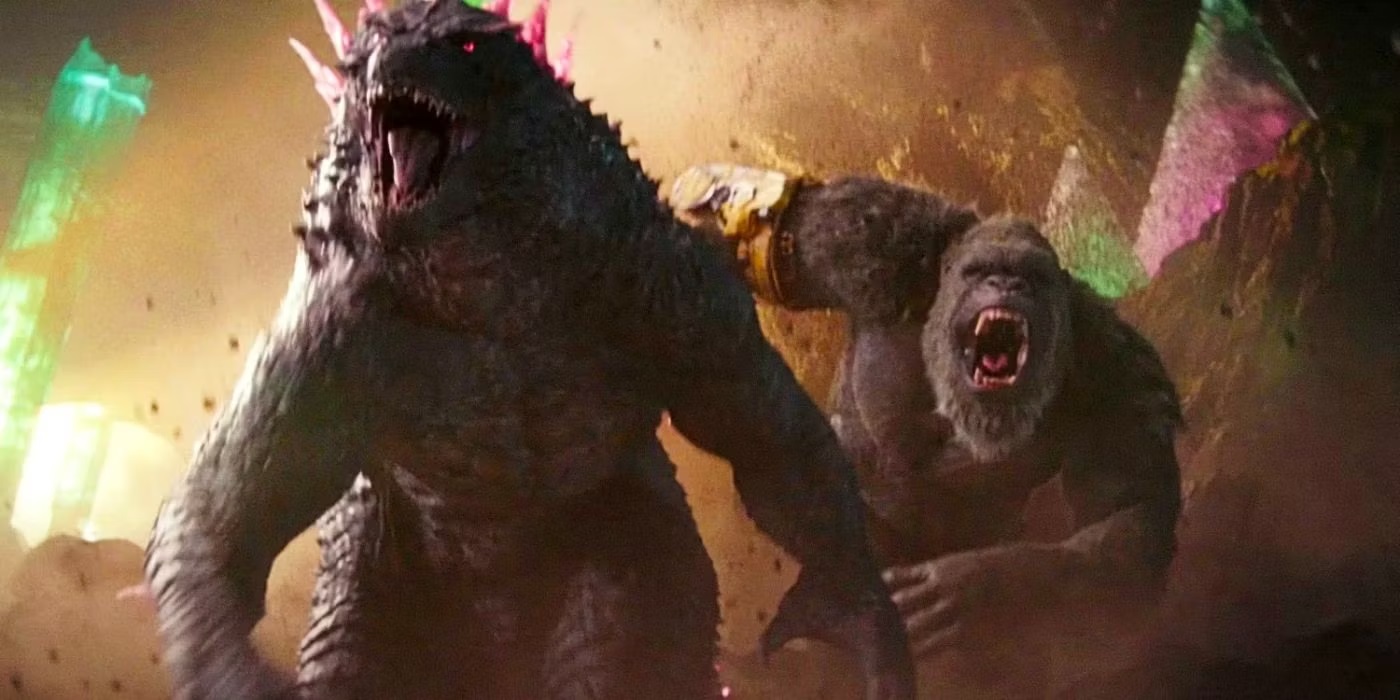
Unlike most Godzilla films, Godzilla Minus One boasts excellent production values from special effects that easily rivals what comes out of Hollywood to engaging performances from the actors. Much of the credit has to go to its director and screenwriter Takashi Yamazaki, who also supervised the stunning special effects. Yamazaki has a great eye for filmmaking and other kaiju productions should emulate what he has accomplished. It is clear that the Monsterverse films could use the talent of Takashi Yamazaki, who would bring levity and depth to their films. As much fun as the Monsterverse films are Godzilla Minus One elevates the kaiju genre to a much higher level. Then again Hollywood being the way it is would dilute the talent of this director.

It is stunning to know that after 70 years, it is still possible to create an excellent Godzilla film. Godzilla Minus One has set a new standard for Godzilla films that will be difficult to match, but it could inspire other equally impressive kaiju films.

José Soto

The Glorious Purpose Of Loki

The just-streamed final episode of the second season of Loki concluded the mind-bending time travel storyline that ran throughout the show’s two seasons.

Starring Tom Hiddleston as the title character, Loki has turned out to be a genuine surprise. Instead of being the Marvel Cinematic Universe (MCU) version of Doctor Who with Loki running around different time periods, the show instead carefully examined the numbing logistics of time travel and philosophy. More poignantly, Loki was a thoughtful character study of the main character, a villainous Asgardian god who turned into an anti-hero before completing his transformation by the end of the final episode into a tragic hero. MAJOR SPOILERS will follow.

The second season of Loki began immediately after the first season where the Loki variant, Sylvie (Sophia Di Martino), killed the enigmatic He Who Remains (Jonathan Majors) in the final episode “For All Time. Always”. This murder unraveled time itself since He Who Remains controlled time through his organization the Time Variance Authority (TVA). Throughout history the TVA prevented or pruned branching timelines from deviating out of the so-called Sacred Timeline.

As timelines began to develop and branch off in the second season, this created many variants of He Who Remains, most notably Kang the Conqueror (as seen in Ant-Man and the Wasp: Quantumania) and Victor Timely, a meek 19th century inventor/charlatan. Loki also became unstuck in time and time slipped throughout the premiere second season episode. When he jumped into the future, he saw that the TVA was destroyed when the Temporal Loom was overloaded by rapidly multiplying timelines. The Temporal Loom is an enormous machine that gathered the timelines (seen as never ending tendrils) and combined them into a single controlled stream, hence the Sacred Timeline. In order to help fix the Loom, the temporal aura of He Who Remains or his variant was needed to access the Loom’s controls. This set Loki and the TVA off on a mission in the season’s first half to track down Victor Timely.

The second season was as bizarre, zany, and thought provoking as the first one, except it focused more on the characters of Loki and his associates. We learned a lot about Loki’s best friend Mobius (Owen Wilson), an easy-going TVA bureaucrat, who had a simple and enjoyable life before he was forcibly recruited into the TVA. We also were introduced to Ouroboros or O.B. (Ke Huy Quan), a quirky and energetic repair person who is an expert on temporal mechanics. His energy and good will was infectious thanks to Quan’s brilliant performance.

Despite Loki and the TVA’s efforts, the Loom is destroyed and the TVA along with it. In the penultimate episode “Science/Fiction” Loki finds himself traveling to different timelines and encounters his friends and their lives before the TVA. After meeting with Sylvie, Loki admits his love for his companions and that he does not want to be alone. This was a major emotional breakthrough for him and a harbinger for his ultimate tragic fate.  Loki realizes he can control his time slipping and transport himself to the moment before the Loom is destroyed at the end of the episode.

Continue reading

The Five Nights at Freddy’s Movie, Critics Loathe it, Fans LOVE it

It’s no secret that Blumhouse Productions’ Five Nights at Freddy’s (FNaF) went through a rough development over the last eight years. Despite all the waiting, fans are as anxious as ever to see Freddy and the gang on the big screen, so the question becomes: is it a good movie? As a huge FNaF nerd, (I am literally listening to Blumhouse’s official Five Nights at Freddy’s song playlist on Spotify as I’m writing this), I would say absolutely; this is THE near-perfect Five Nights at Freddy’s movie. However, not even I can ignore the fact that it can be very off putting to any potential newcomers to the franchise. This review will begin spoiler-free and will move into the spoiler territory following a brief warning.

Let’s start on the story, shall we? The general story follows Mike (Josh Hutcherson) as he struggles to keep custody of his little sister Abby (Piper Rubio) in a losing custody battle against his aunt Jane (Mary Stuart Masterson). Following an incident at his last job, Mike visits a career counselor, hoping to land a solid job; this job, as you could guess, would be a nighttime security position at the now-abandoned Freddy Fazbear’s Pizza, a family pizza restaurant in the style of Chuck E. Cheese . We follow Mike through the five nights at his job as his life seems to keep going downhill.

The overall story is really good, but is very confusing and difficult to follow at times. I really wish that this movie wasn’t as short as it was because I think it really could’ve benefited from a longer runtime; at least an extra 25 minutes longer. To general audiences, the story, while being a little all over the place, is still enjoyable (and surprisingly heartwarming?). To critics, however, this movie’s story is absolutely unacceptable for their “marvel quality” of expectations when it comes to grand storytelling.

Moving onto what most people were anxious for, the level of scariness. Honestly, Five Nights at Freddy’s as a whole isn’t that scary, (maybe because I’ve been here since the beginning), as it heavily relies on cheap jump-scares as its main scare tactic. The movie, however, is scarier than the newer games, and maybe even more than the original games, in my opinion. It surprisingly lacks many jump-scares, but some of them get you GOOD. There were also some moments that caught me off guard, as I would never expect to see them in a PG-13 Five Nights at Freddy’s movie. I’ve seen critics complain that this movie lacked massive amounts of gore and blood, but newsflash, the games themselves already lack this. The games don’t have to resort to gore, as it nails atmospheric dread and horror. One of the movie’s strengths is that it is able to introduce a threatening aura to the cute and cuddly robot friends.

Speaking of cute and cuddly, the animatronics in this movie were both menacing and adorable. Blumhouse was able to make scary scenes involving Freddy, Bonnie, Chica, Foxy, and Cupcake while also adding scenes that emphasized the more child-like nature of the robots. The one thing that I am happy about is that no one is criticizing the animatronics, as they are absolutely spectacular in this movie. I really liked every prop used in this movie, moving past just the animatronics. Honestly, they were all so likable, that its genuinely a struggle to choose a personal favorite, but if I had to, it’d be Bonnie :]

The acting is really good but could’ve been improved upon. Mike, Abby, Vanessa (Elizabeth Lail), Max (Kate Conner Sterling), the animatronics, and the children were really well acted, and I wouldn’t want any of them replaced. The weakest performance, in my opinion, is sadly Matthew Lillard’s Scott Raglan. I know this is a more controversial opinion, but I just thought they could’ve touched upon some of his scenes; in no way was it bad, but it could’ve been a little better. Blumhouse also nailed down how the animatronics moved, striking a perfect balance between freakishly smooth movements and stiff, robotic movements.

The music is amazing and fits perfectly with the atmosphere of the movie. They also had a great selection of non-original tracks, using 80’s music like “Talking In Your Sleep” and “Celebration”. I admit, I was a little worried when it came to the music selection of this movie, but I think fans won’t be disappointed with the tracks they included. The humor of this movie is also on point, getting many laughs from me, my family, and the entire theater. FNaF creator Scott Cawthon’s humor is funny and I’m glad they allowed him to make jokes of the same caliber with the script he co-wrote.

I think it’s time to move on to the objective flaws this movie has. I felt that the pacing was way too fast in the beginning and ending of the movie. Scenes are practically whizzed past you at lightning speed with little to no time to digest them, as you have to swallow more story in the new scene in front of you. The middle of the movie seems to find its footing on pacing, but for the next movie, assuming we get one, Blumhouse and Scott Cawthon really should focus on getting the pacing right.

Another issue is the storytelling itself. As I said before, the film’s story is fundamentally confusing, and the film only double downs on this trait. This wouldn’t be much of a problem if there were enough scenes explaining seemingly major plot points. I will expand upon certain scenes in a spoiler post later on, but if you are stepping into FNaF for the first time, be prepared to feel like an idiot walking out of the theaters. Hell, as a nine-year fan myself, I’m still trying to process the plot fully in my head.

Overall, the Five Nights at Freddy’s movie was made with fans as a number one priority, and that’s a great thing! It does struggle to bring newcomers in however, and completely misses the mark in the critics’ expectations. I am really happy that this movie finally came out and am beyond satisfied with the finished product. The most saddening thing about this movie is that its being bashed on move-rating websites when it does not deserve score that low. I understand why people may not like the movie with the number of flaws it has, but I think people are being way too harsh towards Blumhouse and Scott Cawthon. If you are a fan, you need to watch this in theaters; if you’re a casual fan, its probably best to stream the movie on Peacock, but everyone should give it a shot!

Angelo Soto

Ahsoka Is An Incomplete Star Wars TV Show

The latest Star Wars TV show streaming on Disney+, Ahsoka, just concluded its first season which left many questions unanswered while providing lots of member berries for Star Wars fans. Whether or not that is bad or good would depend if you are a fan of Star Wars: The Clone Wars and Star Wars: Rebels.

Ahsoka is for the most part an enjoyable and even riveting Star Wars TV show with great characters, special effects and expands the Star Wars lore. On the other hand, its pace is uneven with some episodes feeling wooden and stilted thanks to timid direction and it crams in so many characters and sub-plots that could not possibly be resolved in eight episodes. Guess what? Many of the sub-plots were left unresolved. This gave the impression that Ahsoka was merely a prologue for a larger storyline. Evidence for this is the fact that a Star Wars film is being planned that will combine the stories and characters from Ahsoka and most of the recent Star Wars TV shows. That’s very ambitous, but after viewing the final episode, the overral feeling is that the TV show is incomplete.

Rosario Dawson stars as the title character, Ahsoka Tano, a former Jedi who embarks on a quest with her former Jedi apprentice Sabine Wren (Natasha Liu Bordizzo) to find their fellow Jedi Ezra Bridger (Erman Esfandi), who is trapped in another galaxy along with their formidable enemy Grand Admiral Thrawn (Lars Mikkelson). During their adventures the duo uncover a plot by members of the defeated Galactic Empire who are trying to bring Thrawn and his army to the main Star Wars galaxy in order to conquer the New Republic and restore the Empire. With the officials of the New Republic unwilling to help them, Ahsoka, Wren and their Jedi droid Huyang (David Tennant) set off on their own to stop the plot, in addition to rescuing their friend.

If this sounds complex, then you are correct. Anyone watching the series will be able to follow along with its storyline, but there is a nagging feeling that there are so many details and nuances that will go over the heads of casual viewers. The very first Star Wars film was like this, but it was easier to follow and was more engaing. A major flaw with Ahsoka was that the early episodes were a chore to watch thanks to its deliberate pace and line delivery.

This is concerning because the worst episode was the first one and it not only set the way Ahoska was presented but it was directed by Dave Filoni, the major producer of the recent Star Wars TV shows, including the acclaimed animated TV shows. He helped expand the Star Wars lore with Star Wars: The Clone Wars and Star Wars: Rebels, but his live-action directorial effort fell short and what’s worse is that he will direct the Star Wars film that combines these stories and characters. He was largely responsible for the creation and cultivation of Ahsoka Tano and his attempt to bring her to life was disappointing. Throughout the TV show, Ahsoka would stand around, fold her arms and take long moments to reply to others. This Ahsoka is not anything like the quippy and spirited young Jedi that first appeared in Star Wars: The Clone Wars and won the hearts of many fans. This older live-action version of Ahsoka is so stiff and stoic that Sabine easily steals the show with her emotional journey to become a Jedi. Sabine has more emotion and heart and it was easy to identify with her, especially since she had such a poor connection to the Force that Jedi tricks and skills were a chore for her.

The fact that we identified more with Sabine than Ahsoka is a another fault with Ahsoka given that the show is named after her. This is a troubling trend with many Star Wars TV shows like The Book of Boba Fett and the third season of The Mandalorian. Like with those TV shows, there was even an episode where Ahsoka barely appeared. There are too many moments where it feels as if this show is in reality the fifth live-action season of Star Wars: Rebels. It might have served the TV show and Star Wars fans better if it was retitled. This is a disservice to Ahsoka since she is one of the most captivating Star Wars characters.

Ahsoka was allowed the spotlight in the fifth episode, which largely focuses on her as her mind enters an interdimensional realm called the World Between Worlds where time and space are not linear. There she meets the spirit of her mentor Anakin Skywalker (Hayden Christensen) as they end up in past battles during the Clone Wars. This was thrilling for fans of Star Wars: The Clone Wars as they finally got to see these two Jedi interacting in live action during that war. More importantly, these sequences provided fascinating insights into Ahsoka and her feelings towards Anakin Skywalker knowing that he ultimately became Darth Vader. With the way this episode showcased her guilt about Anakin and the Clone Wars, it was probably the best one in the series.

Continue reading