Dark Matter Is The Multiversal Journey We’ve Been Looking For

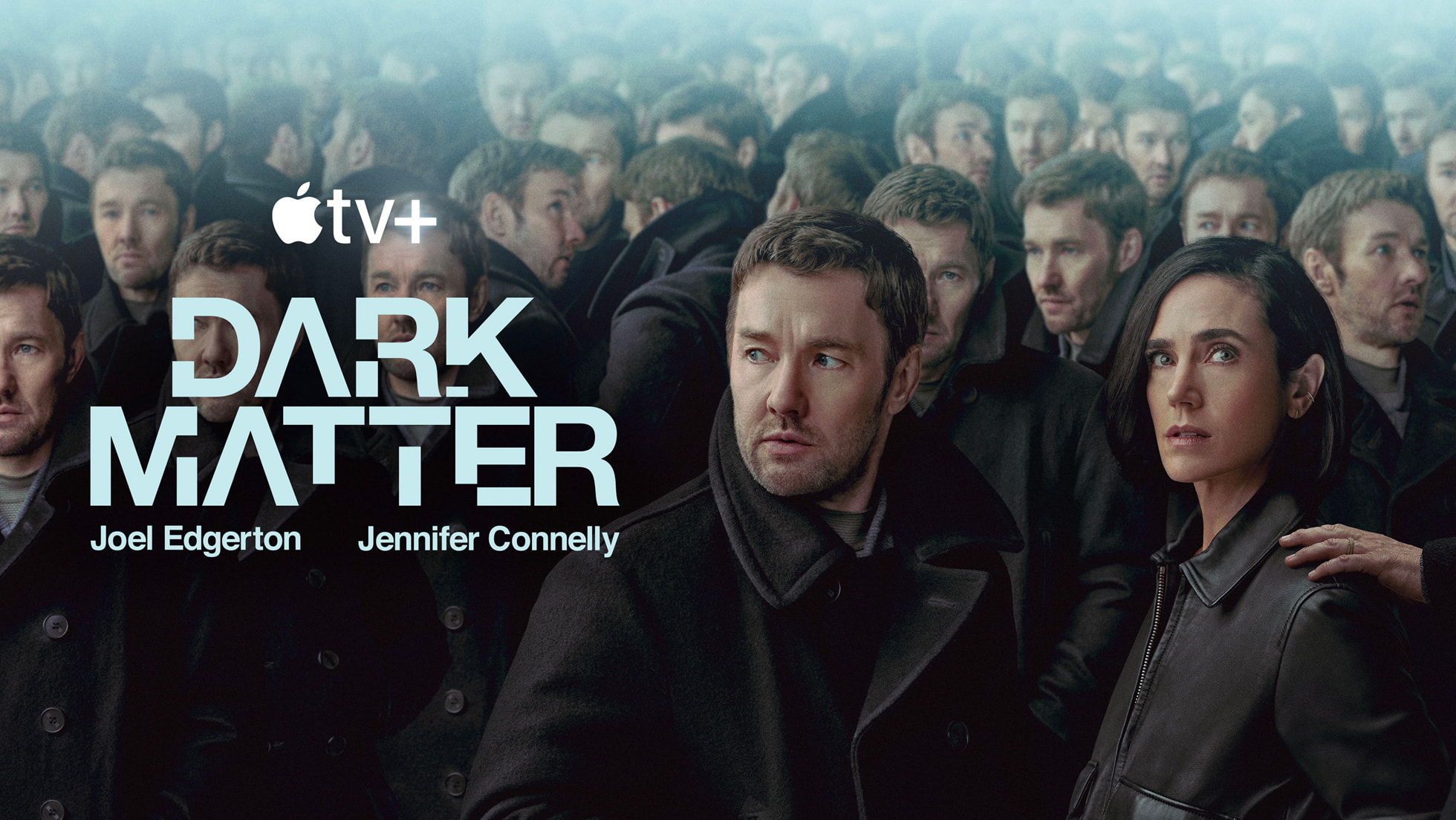
Dark Matter, currently streaming on Apple TV+, just concluded its first season as it took viewers on a mind-numbing journey throughout the multiverse.

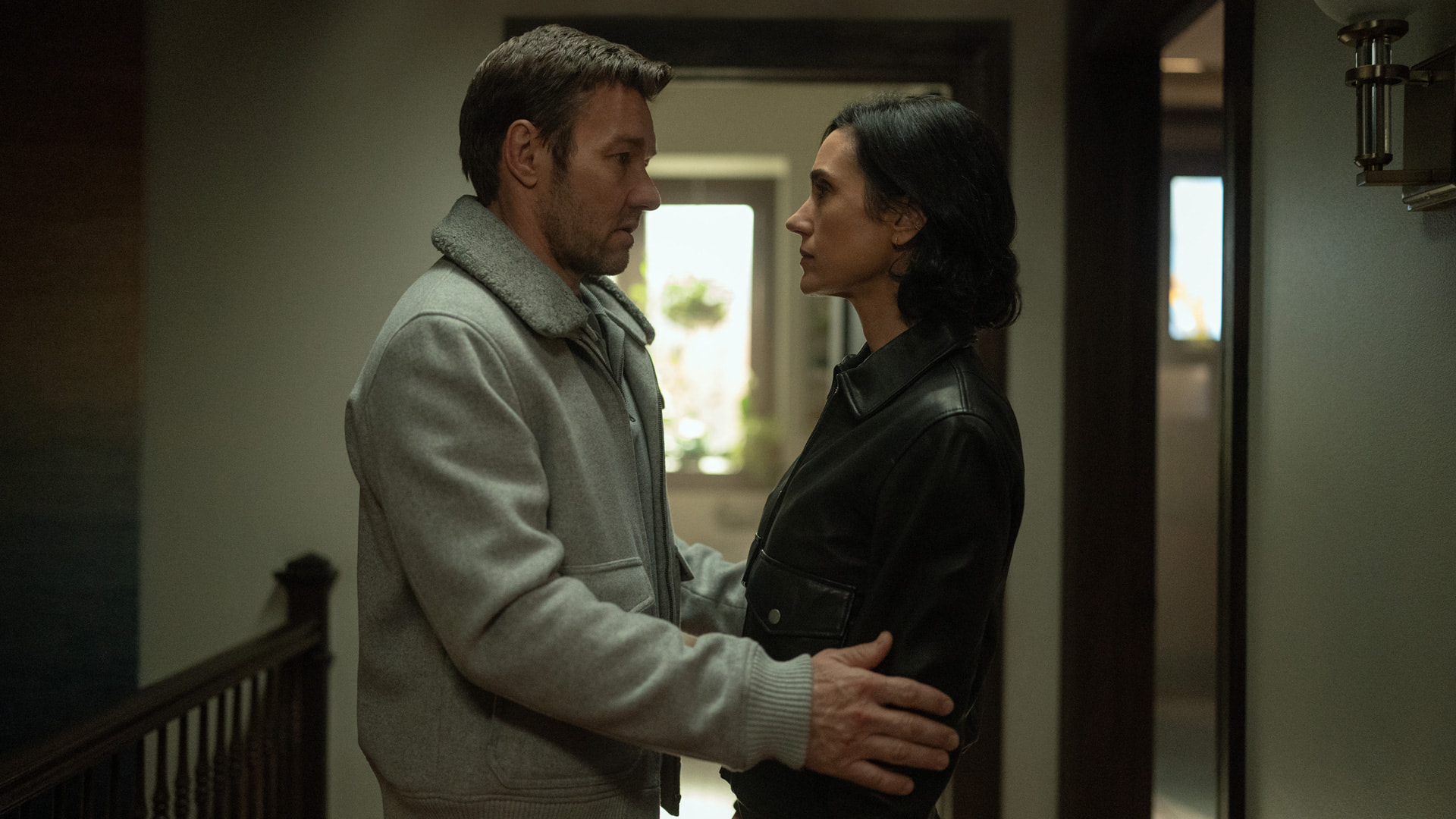
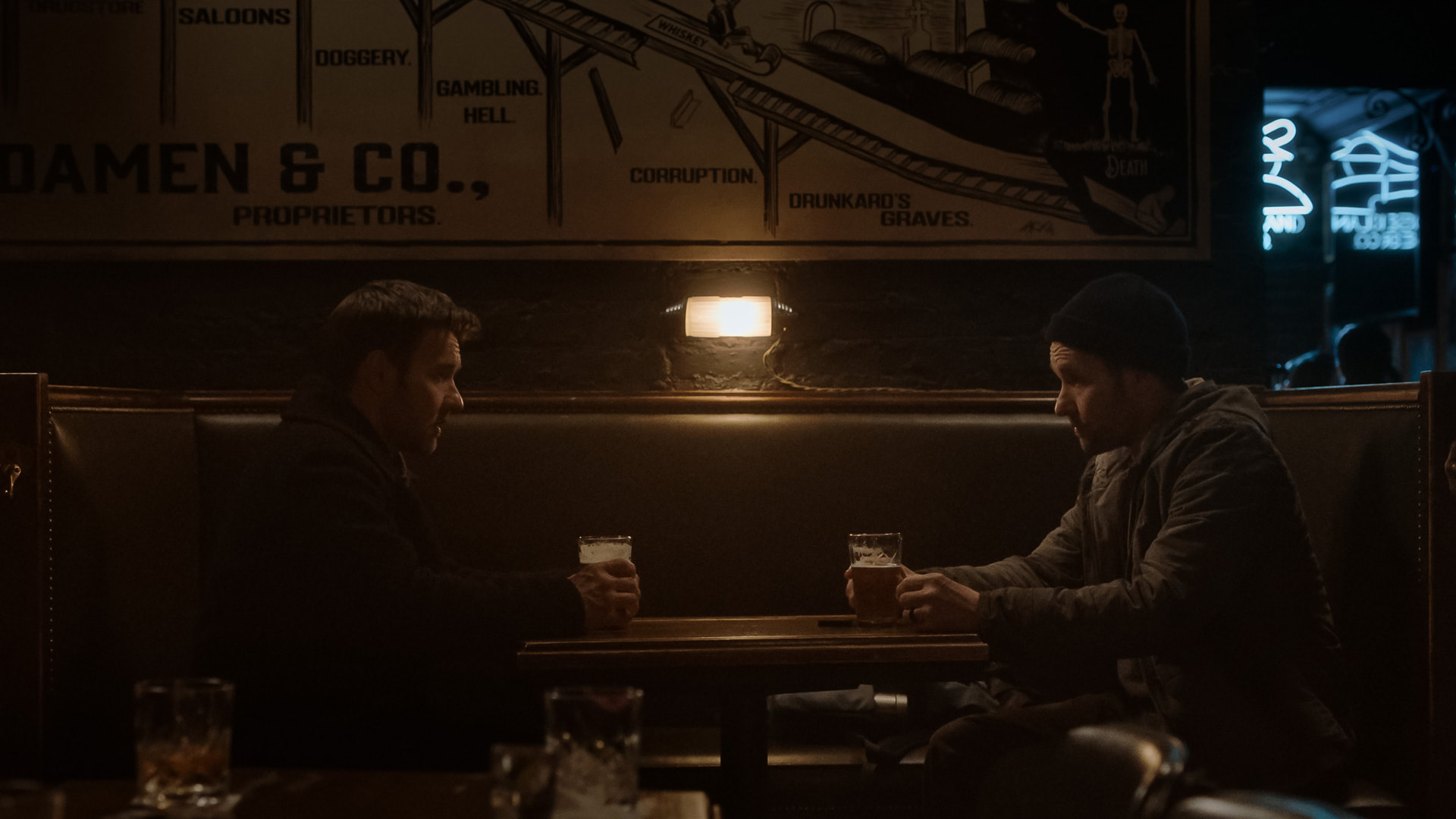
Based on the novel by Blake Crouch, Dark Matter tells the story of Jason Dessen (Joel Edgerton), a mild-mannered physics professor who is kidnapped one night by a stranger and left in a world not quite like his own. It is revealed that the stranger is himself. Actually this is an alternate version of Jason from another reality who switches places with Jason. In the alternate reality, Jason is a world-famous scientist who built a machine that lets people travel to other universes. This alternate Jason forced the original Jason to switch places because of his life which he covets. The original Jason is married to Daniela (Jennifer Connelly) and has a teenage son, Charlie (Oakes Fegley), which is something the alternate Jason doesn’t have in his universe.

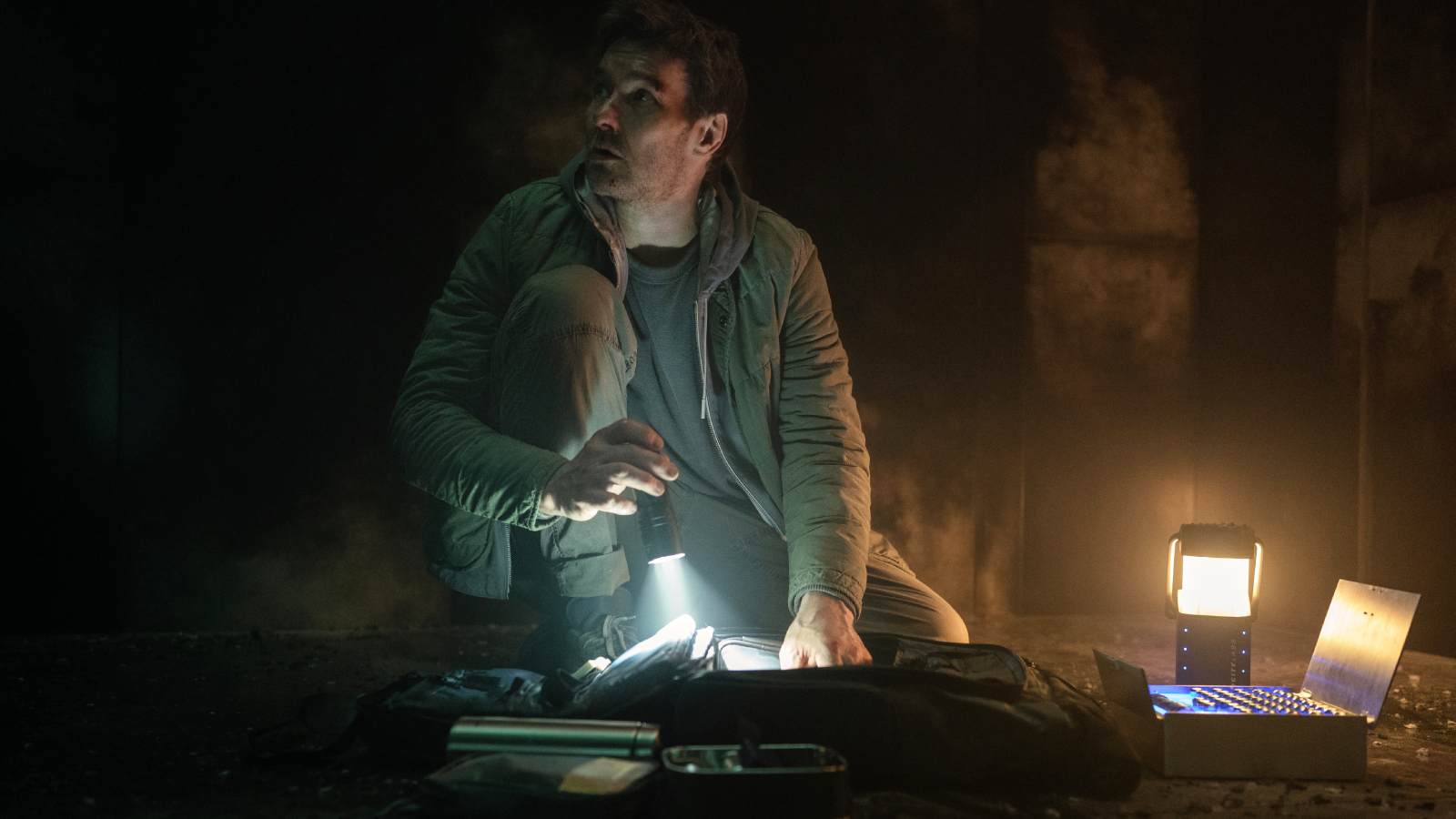
As the alternate Jason tries to fit in to the original Jason’s more mundane life, the original Jason with the help of the alternate Jason’s girlfriend, Amanda Lucas (Alice Braga), goes on a life-altering journey throughout the multiverse as he attempts to find his way home.

The concept of the multiverse was a somewhat obscure subgenre of sci-fi books but has recently gained popularity in mainstream media. The most famous examples were the TV show Sliders and the award-winning film Everything, Everywhere, All at Once, and Doctor Strange in the Multiverse of Madness. Whereas both films approached the multiverse concept at different extremes, Dark Matter manages to take a more centered approach that doesn’t go overboard with weird universes of talking rocks or holding back on the multiverse concept.

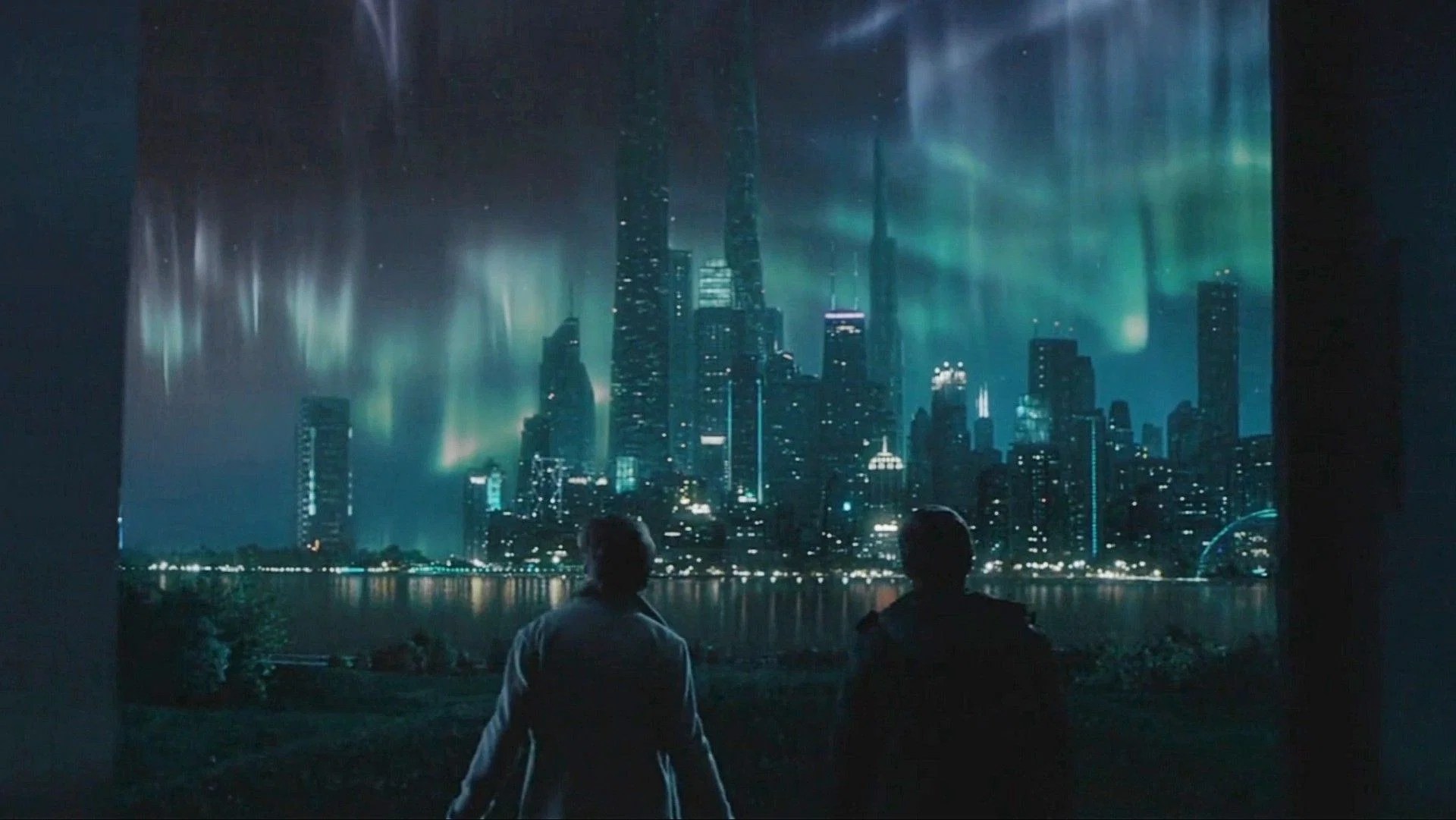
At first, the TV show takes place in two universes, but soon goes into a wild journey throughout the multiverse as Jason and Amanda explore universes that are either mundanely different, such as Danila having blonde hair or extreme, as seen where the duo are trapped in a world frozen over in an ice age.

Strongly supporting these journeys is the great performance by Joel Edgerton who is able to convey different subtleties to his characters. What was interesting was that while the alternate Jason is the show’s antagonist, he is not some mustache-twirling villain. He only wants a chance to live on the road he did not take. In his world, he let Daniela go years ago and came to regret it. What makes him so much scummier is his inability to let her go and move on with Amanda. We cannot help rooting and sympathizing with the original Jason as he discovers that each world he visits is not his own. It was painful to see him falling apart as he sees alternate versions of his family dying or never existing.

The other actors, especially Connelly and Braga, also turn in memorable performances, as each of them grapple with the consequences of Jasons’ journeys and actions. It was always interesting to see the alternate versions of the people in Jason’s life, which made each episode so watchable.

Equally as enthralling were the journeys themselves. Thankfully, the worlds they visited were not the cliche alternate worlds were the Nazis won World War II or Barack Obama never became the U.S. president. The TV show instead concentrated on having the characters visit worlds with either tiny differences from Jason’s or were wildly different. One brief but terrifying visit had Jason and Amanda nearly killed as they stepped into a world which had no atmosphere. An intriguing twist to these journeys was the realization that each world any character visited was influenced by their state of minds, which made Jason’s goal of getting home that much harder and desperate. Complicating his journey is the growing relationship he has with Amanda, which leads him to recognize his hopeless situation yet he remains committed to his world and Daniela and Charlie.

As fascinating as the journeys were, what made each of them so engaging were Jason’s reactions to them. We sympathize with him as each journey leads to bitter disappointment or pain. We know each heartbreak taxes Jason and we could only hope that the setbacks do not have dire effect on his mind and soul.

Dark Matter took a wild twist in its final episodes that could be confusing to viewers not paying enough attention. But the last episodes were intensely riveting and enthralling for viewers who have followed Jason’s odyssey. It’s not certain if there will be a second season for Dark Matter, even though there were a few potential plot threads that could be followed up if the series continued. Still, Dark Matter concluded in a satisfying manner and whether or not it gets cancelled the series merits watching by fans of multiverse stories and fine sci-fi.

Furiosa Excitingly Expands The Mad Max Saga

It’s unfortunate that Furiosa: A Mad Max Saga is not doing well in theaters because it is a truly great sci-fi action piece and a worthy prequel to Mad Max: Fury Road. But given how great the film is, it is certain that it will join that club of films that were initial box-office bombs and become revered as classics later on, as it happened to Blade Runner, The Thing, Edge of Tomorrow, The Suicide Squad, and so on.

Furiosa: A Mad Max Saga as its title suggests is the background story of Furiosa, the breakout character of Mad Max: Fury Road. As a prequel to that film, it begins back when Furiosa (first played by Alyla Browne, then later by Anya Taylor-Joy) was a young girl who was kidnapped from her idyllic garden home by barbaric raiders. For anyone who isn’t familiar with the world of Mad Max, these are post-apocalyptic films that take place in Australia, which is a barren desert wasteland full of roving gangs that prey on the weak. After seeing her mother killed by the gang that snatched her, Furiosa harbors a personal hatred against the gang and its leader Dr. Dementus (Chris Hemsworth), a charismatic, yet brutish thug. Seeing Furiosa as a stand-in for his long-lost children, Dementus comes to think of her as his own daughter.

Living a nomadic hunter-gatherer existence, Dementus’ gang encounters the savage society of Immortan Joe (Lachy Hulme), who we last saw in Mad Max: Fury Road. After tense negotiations between Dementus and Immortan Joe, Furiosa was traded to Immortan Joe, who intended to raise her to be one of his wives. However, Furiosa escaped that fate, and masquerading as a young male she joined one of Immortan Joe’s pit crews with her desire to return to her home and killing Dementus being her driving force.

Director George Miller, who introduced us to the world of Mad Max, has wowed us again with this captivating, brutal and exciting post-apocalyptic tale of vengeance and survival. The film is visually and tonally similar to Mad Max: Fury Road but differs in that the former film told a tighter story that moved as fast as the vehicles featured in the film. Furiosa: A Mad Max Saga tells a more sprawling story that spans years and features many characters, a lot of them returning from Mad Max: Fury Road. Even Mad Max himself pops up in a cameo though he is portrayed by Tom Hardy’s double.

While an expansion and exploration of the world of Mad Max is always welcome, doing so robs Furiosa: A Mad Max Saga of that feeling of intensity and non-stop action that made Mad Max: Fury Road so beloved. Make no mistake, there is a lot of action in Furiosa: A Mad Max Saga but there is also a lot of character development as we bear witness to seeing the brutal transformation of Furiosa as she starts off as an innocent yet skilled child into a hardened nearly feral survivor who desperately holds on to lost dreams. As such, the film time between the major action scenes are much longer, although the epic car chases and battles are well worth the wait. The best sequence comes around the halfway point of the film that involves another one of those scenes where motorized gangs besiege a souped-up supply tanker called a War Rig that is armed to the teeth. The scene lasts about 15 minutes and is worth the price of admission alone thanks to George Miller’s skillful talent for delivery pulse-pounding action.

Anya Taylor-Joy does a great job as Furiosa as she takes on some of the characteristics of Mad Max in that she rarely speaks and adopts a savage loner persona. The other actors like Hemsworth are just as memorable in their roles with the standouts being Tom Burke and Charlee Fraser. Burke portrays Praetorian Jack, the sympathetic driver of a war rig that serves as a prototype to Mad Max’s character and could explain why Furiosa eventually bonded with Max. Meanwhile, in her brief presence as Furiosa’s mother, Fraser, was outstanding in her performance as a skilled warrior who went above and beyond to save her daughter. Even though she was not successful, her sacrifice left a solid impression on young Furiosa.

Exploring the world of Mad Max is a welcome idea although the filmmakers should now think beyond epic car chases and battles in deserts. What else is going on in this world? What about the coastline of the continent or beyond? It’s too bad the film is not performing well because it is unlikely we will revisit this world in the near future.

Furiosa: A Mad Max Saga is a spectacular entry into the Mad Max Saga that does what it sets out to do: provide the origin story of Furiosa in a kinetic and engaging fashion that exemplifies George Miller’s cinematic style.

Rebel Moon, Part Two: The Scargiver Is A Perfect Reason For Not Giving Directors Free Reign

Well, Madame Web actually has a competitor for the worse film of 2024. That would be Rebel Moon, Part Two: The Scargiver for those fortunate enough to not have seen it.

Director Zack Snyder’s hardcore fans keep insisting that Snyder should be allowed to do whatever he wants with his films. They claim that his vision for the DC Extended Universe (DCEU) was stymied by idiotic studio heads who then ruined his films and the rest of the DCEU. However, Snyder’s latest film is a textbook cautionary example of what happens when a director is given carte blanche creative control over a film.

Rebel Moon, Part Two: The Scargiver, which streamed last week on Netflix, is the sequel to Rebel Moon, Part One: A Child of Fire that streamed last December. The storyline is based on a failed pitch for a Star Wars film and it is about a young woman named Kora (Sofia Boutella) who lives in a quiet farming colony on a moon that has to recruit a team to help her colony fend off an invasion by the evil Imperium. It’s essentially a sci-fi remake of Seven Samurai (which has been done before with Battle Beyond the Stars), as she recruits eccentric warriors to defend her colony. The first film was OK with excellent production values and cinematography although the script was derivative of other sci-fi tropes, and man, it was full of slow-mo shots. It was hoped by critics that part two would be a huge payoff for the setup, but that did not turn out as expected.

Instead of giving a satisfying and coherent conclusion, Snyder goes all out and indulges in the worst aspects of his cinematic bag of tricks. The film just oozes needless slow-mo shots of people farming, walking, or making any kind of motion. It was slow-mo porn! The film also boasted too many exposition dumps that brought the film’s story into a screeching halt. The scenes were the characters stopped in their tracks to give us extended back stories were clumsily done and were too long thanks to…slow-mo shots. What was worse is that these character expositions did little to endear us to Kora and her team of misfit warriors. The decisions made by the characters in their back stories often did not make sense and in the end none of the stories made the characters memorable. This was clear when not only was there no sympathy for any heroic characters when they died but it was hard to tell who they were during the well-staged battle scenes.

To its credit, Rebel Moon, Part Two: The Scargiver, had great special effects and design that evoked Warhammer 40,000 and of course Star Wars. The final boss battle between Kora and Admiral Noble (Ed Skrein) was well choreographed as they fought with their lightsabres, or whatever the swords are called in the Rebel Moon universe (help us but more films are planned) and Anthony Hopkins was brilliant as the voice of the Jimmy the rebel robot. But logic of the epic battles in the final act did not make sense. How could an advanced intergalactic force fail to detect simple farmers hiding out with weapons? How is it the main heroes are able to take out scores of armored enemy soldiers armed with axes and clubs? This was worse than when the Ewoks defeated the Empire’s forces in Return of the Jedi. All these flaws would have been forgivable if 1) we cared about the characters and 2) the battles engaged us. In other words, the battles were boring, the worst possible insult for action scenes.

While derivative from the start, Rebel Moon, Part Two: The Scargiver had the potential to be a rousing action film that would have been Zack Snyder’s answer to Star Wars. Instead we have to give credit to Lucasfilm for having the wisdom to turn down Snyder’s pitch.

The problem with the two Rebel Moon films boils down to the fact that Zack Snyder was given too much creative freedom and he overindulged his worst cinematic impulses. Yes, Snyder is a very talented director but he needs firm guidance when executing his films. So, if there are more Rebel Moon films, Snyder will have to either control himself or allow himself to be guided by objective partners.

José Soto

Godzilla x Kong: The New Empire Is Pure Goofy Fun!

Well, no one can say Godzilla x Kong: The New Empire can be compared to Godzilla Minus One, but it was still fun.

The latest film installment in the Monsterverse cinematic universe reunites everyone’s favorite kaijus Godzilla and King Kong, who last faced each other in Godzilla vs. Kong. That film left the two titans living in two different worlds: Kong in an underground realm called Hollow Earth while Godzilla remained on the surface and as the undisputed king of the monsters. Godzilla x Kong: The New Empire takes place a few years later where Godzilla starts stomping around the world, destroying cities while battling other kaijus, and absorbing radiation to charge himself up. This catches the attention of the Monarch Organization, which monitors the behemoth kaijus throughout the world that have made their presences known in the Monsterverse.

Ilene Andrews (Rebecca Hall) is a linguist at Monarch with an adopted daughter Jia (Kaylee Hottle), who is the sole remaining member of her tribe that lived on Skull Island. Jia has been having visions that serve as a warning and Ilene recruits a podcaster, Bernie Hayes (Brian Tyree Henry), to decipher Jia’s visions, He figures out that the visions are a distress signal from Hollow Earth. Meanwhile, down below on Hollow Earth, Kong is trying to find other giant apes like him and eventually discovers a tribe of such apes, but they are hostile and ruled by a giant, red-furred tyrant called the Skar King.

After King Kong comes up to the surface world to get his tooth infection taken care of by a free-spirited veterinarian called Trapper (Dan Stevens)—yes, that actually happened, Ilene, Jia, Bernie and Trapper voyage to Hollow Earth to find the source of the distress call. Once there, the four run into the last remaining members of Jia’s tribe who are telepaths and they learn that long ago, the Skar King and his ape tribe tried to conquer the surface world, fought Godzilla and were trapped in Hollow Earth.

During his encounter with the giant ape tribe, Kong is bested by the Skar King and is forced to flee with his new-found friend, Suko, a young, red-furred giant ape that is patterned after Grogu or Baby Groot. The human quartet from the surface world run into Kong who was badly injured during his fight with the Skar King and his forces. As Trapper treats Kong, the rest have to find a way to get Godzilla back to Hollow Earth to help Kong fight the Skar King, who plans to escape to the surface to conquer it.

Yes, this admittedly sounds goofy, and it is. But Godzilla x Kong: The New Empire is so damn entertaining and it’s simply a fun watch that is fast paced and exciting. Basically, this is the quintessential film for you to turn off your brain, not question the film’s logic and just go with it. By the end of the film, anyone will be rooting for our heroes during the climatic battle with the Skar King and his minions. That battle was actually pretty epic and the film is a throwback to the more juvenile Godzilla films from the ‘60s and ‘70s that we all enjoyed as kids. The script is obviously the weakest part of the film, but everything else was well done. Who cares about collateral damage as famous landmarks and cites are destroyed as these giants tussle? How many people were killed as King Kong and Godzilla faced off in Cairo? Never mind that the Pyramids of Giza were destroyed! Or that the film copies elements from popular films and TV shows like The Avengers or The Mandalorian. Leave those concerns home and keep munching your popcorn as the film makes you feel like a little kid again. This is the kind of film to not think too deeply about and have a laugh-filled blast.

The actors give it their all with their limited character development, while King Kong is the clear star of the film.  His dialogue-free scenes give him a lot of pathos as the lonely giant gorilla tries to find others of his kind and dealing with the fact that when he does so it was not what he expected. Godzilla’s screen time was not as prominent as in other Monsterverse films, but that’s okay. His scenes are awesome to watch, although some of them were silly like when he uses the Roman Coliseum as his resting place to get some shuteye. Yet, he and Kong still inspire much respect whenever they display the full might of their power.

While Godzilla x Kong: The New Empire is just goofy, surface-level fun, it is unfortunate that the film came out after the more serious Godzilla Minus One and even Monarch: Legacy of Monsters, the TV show set in the Monsterverse and is required viewing for fans of the film franchise. It can be too easy to dismiss these kaiju films especially the ones from the Monsterverse as silly nonsense, but they can achieve a more mature and thoughtful tone, which was seen with the first Monsterverse film, 2014’s Godzilla. Of course, many complained that that film was too serious and didn’t feature enough monster destruction. Fair enough, but it seems as if the recent offerings have swung too hard in the other direction to the point that they cannot be taken seriously. Monarch: Legacy of Monsters struck a fine balance and if more Monsterverse films are made they should emulate the mood of the TV show. The filmmakers should aim for something higher instead of playing it safe and reveling in epic kaiju battles. But enough of that griping, just go see Godzilla x Kong: The New Empire and have some fun.  

Dune, Part Two Is Truly An Epic Cinematic Experience

Visionary director Denis Villeneuve’s Dune, Part Two concludes his epic live-action adaptation of the sci-fi classic novel, Dune, with a sweeping flourish. At the same time, by splitting the adaptation into two films Villeneuve is able fully flesh out the scope of the novel, which was impossible to do with just one film, as we saw with David Lynch’s film from 1984.

Picking up immediately after the first film, Dune, Part Two, further develops the saga of young Paul “Muad’Dib” Atreides (Timothée Chamolet), the heir to House Atreides and future messiah to the Fremen people of the planet Arrakis. Now, it must be said that you need to have seen Dune, Part One, or be at least aware of the situations in the story. Basically, in the far future, humanity has spread throughout the universe with the aid of a substance called spice mélange that enables humans to perform complex intergalactic navigation. This spice can only be produced on the desert planet called Arrakis, which becomes the center of a dispute between two royal houses, House Atreides and House Harkonnen. In the first film, the Atreides were assigned by the emperor of the Known Universe to administer Arrakis and harvest the spice, but they were ambushed by the forces of the Harkonnens. This led to the death of Paul’s father, Duke Leto, and with the downfall of his House. By the end of the first film, Paul and his mother, Lady Jessica (Rebecca Ferguson) fled to the deep desert and were adopted by the nomadic Fremen.

If any of this sounds complex, then you are correct, and there is much more to the story. This complexity has made the novel nearly impossible to adapt in the past, yet Denis Villeneuve was able to pull it off while adding his own stamp to the story. It’s similar to what Peter Jackson was able to do with his adaptation of The Lord of the Rings trilogy.

Where the first Dune film was devoted to setting up the complex worldbuilding and multiple characters, the second film centers on Paul’s rise to power as the Kwisatz Haderach, the messianic savior of the Fremen who will liberate their world from outside forces. However, Paul is wracked with doubt because of prophetic visions he has that reveal that billions of people throughout the universe because of his followers. In Dune, Part Two, Paul ingratiates himself to the Fremen and rises to prominence among them as they fight the Harkonnen forces on Arrakis as many of them see him as the fulfillment of the Kwisatz Haderach prophecy. He also begins a romantic relationship with Chani (Zendaya), a brave and lethal Fremen fighter who is skeptical of the Fremen’s religious deference to Paul and even the Fremen religion. It is revealed that the religion was developed by Lady Jessica’s matriarchal order the Bene Gesserit in order to control the Fremen.

Like the novel, the films, especially Part Two, explore the perils of religious fanaticism as it blinds followers who will only see what they want to see. In this case, despite Paul’s early protestations that he is not their savior, many Fremen refuse to heed him and twist their logic to justify their beliefs. The analogies to today’s religious strife are quite obvious and damning but illuminating. Even more incredible is that how closely the film translates the same cautionary themes about religion from Frank Herbert’s novel which came out over 50 years ago, and demonstrates the timeless nature of the book.

There are a few distinct departures from the novel that won’t be spoiled but may upset Dune fans, but the basic plot structure of the novel remains, such as Paul’s development, and the intergalactic politics that turns its attention to the barren Arrakis that turns out to be the most important world in the universe. For non-fans who enjoy rich and intricate political storylines, Dune is basically Game of Thrones set in space, except that it should be the other way around since Dune novel came out decades before the fantasy epic.

While Villeneuve was able to successfully translate the dense story, what is even more impressive with Dune, Part Two is its epic nature that puts other adaptations to shame. Many of its visuals are clearly inspired by Lawrence of Arabia, which itself has many of the same themes as with Dune: an outsider who joins desert people and becomes their liberator.

The visuals and cinematography are just gorgeous to witness, as they engross you completely into the rich alien worlds. Also impressive were the performances by the actors who imbue their characters with complexity. Along with Chamalet and Zendaya, Javier Bardem as the Fremen leader Stilgar and Austin Butler as the psychotic Feyd-Rautha Harkonen were excellent in their roles. Many scenes were heart stopping and instantly iconic, like Paul’s first ride on a giant sandworm, the Fremen attack on the Harkonnens or Paul’s duel with Feyd-Rautha. Together, all these elements have been able to create a true cinematic experience that will be remembered for years to come and prove that serious sci-fi can be a vehicle for a complex and enriching film.

Summing up, Dune, Part Two is one of the very best sci-fi films ever made thanks to its complex themes and visual richness that rivals the greats. Needless to say, it must be experienced on the biggest screen possible.

José Soto