2012 Doomsday Scenarios: Month Ten

Among the many well-known apocalyptic worries, the idea of supernatural creatures rising up and destroying our world, while hardly unlikely, captivates many people.

Doomsday Scenario No. 3: Vampires, Zombies & Monsters, Oh My!
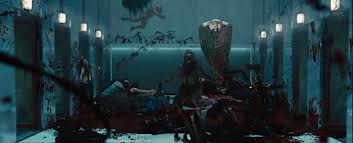
Supernatural monsters have been a mainstay in many cultures going back centuries. They were convenient scapegoats for things that went wrong and filled in the dark void of the shadows. These monsters either won so that a moral could be learned or were vanquished by the forces of good. Lately, stories have appeared where the monsters have triumphed and defeated humanity en masse. Certain monsters are more popular than others and fit into a doomsday scenario more easily than others. Of course, these supernatural monsters are impossible, right? Well science fiction has found ways to make them plausible.

Vampires In The Blood

The stylish and grotesque vampires have populated many blood curdling tales for centuries. As true creatures of the night, vampires arose from their coffins after sunset to prey on the living. The way to become a vampire isn’t to just die but to be bitten by one. That suggests that these creatures probably transmit a virus that transforms a living person into a vampire.
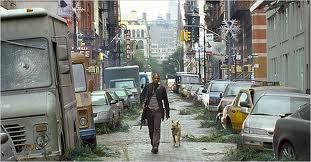
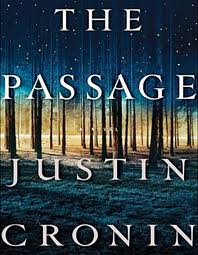
Richard Matheson’s classic novel I Am Legend has a vampiric virus decimating humanity and resurrecting them as vampires and taking over the world. The book and the films based on it (The Last Man On Earth, The Omega Man and most recently I Am Legend) presented us with an empty, decimated world with a sole human survivor and his desperate fight not just against countless vampires but to develop a cure.  There are other works about viruses that turns people into vampires and imperils the world. Two books that come to mind are The Strain by Guillermo Del Toro and Chuck Hogan and The Passage by Justin Cronin. The Passage is set in the near future where a virus quickly transforms most of humanity into vampire-like creatures who take over the world. The anthology novel Under The Fang features several short stories about humanity conquered by vampires.
As for films about vampires ruling the world, in addition to I Am Legend, there was Daybreakers, which took place a few years after a virus turned most of humanity into bloodsucking creatures. Daybreakers showed a world literally turned upside down as the vampire denizens populated major cities, but lived underground away from the sun and basically carried on with their lives. They just needed to farm the few remaining humans for nourishment. A variant of the vampire virus is the sci-fi film Lifeforce, which was based on the book The Space Vampires by Colin Wilson. This time vampire-like aliens were brought back to Earth by astronauts and it wasn’t blood that the aliens fed on. It was the titular lifeforce of people. As an added bonus, many of their victims also became vampiric and hunted humans for their lifeforce.
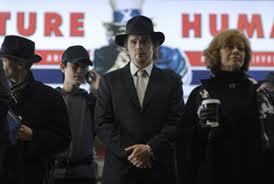
Zombie Apocalypse
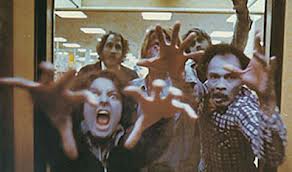
The undead flesh eaters are undeniably the most popular monsters to use for post-apocalyptic tales. Look no further than the hit AMC series The Walking Dead. It wasn’t always so, until the late 1960s zombies were relegated to stale horror yarns usually dealing with voodoo. Then George Romero came along and changed the sub-genre forever. His classic film Night Of The Living Dead gave us a world on the brink of a societal breakdown as undead corpses roamed the countryside and feasted on the living.
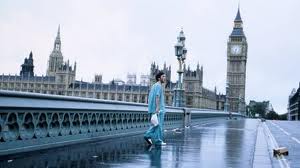
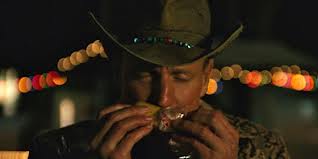
Romero directed sequels that were very popular but the zombie apocalypse genre didn’t reach maturation until around the millennium, which coincided nicely with all the jitters about the coming apocalypse. Video games like Resident Evil, comic books like The Walking Dead, books like World War Z and films like 28 Days Later (not technically about zombies but it follows the same route) reinvigorated and amped up the zombie genre. The zombie apocalypse is so prevalent in pop culture that even the CDC put out  a comic book detailing how they would deal with such an event. Zombies are perfect metaphors for the chaos and decay that will follow the fall of civilization as humans are displaced as the apex predators. Also these stories are useful for illustrating how we would behave during the downfall of society. Will we return to our savage ways? Will we use our pluck and ingenuity to survive? How much stress can we withstand before we break down completely? And how will we find that perfect Twinkie? (Note: see Zombieland for more on that last question.)
Monsters, Etc.
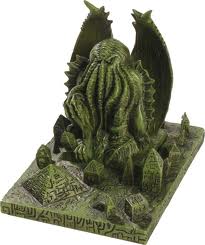
Humanity has always feared monsters as seen in various mythologies. This morbid fascination continued well into modern times with countless books, stories and movies about monsters both large and small terrorizing the world. An often used motif is that of an ancient, slumbering giant that is awoken by modern humans and then wrecks destruction across the world. Godzilla is an excellent example and best personifies the Japanese kaiju films. But Godzilla had predecessors that need to be mentioned. One of the earliest modern imprisoned monsters is the famous Cthulhu first written about in H.P. Lovecraft’s short story “The Call Of The Cthulhu”.  An ancient entity described as part human, part dragon and part octopus, the Cthulhu had a cult that wanted to unleash the giant monster onto our world. This entity has been alluded to in other works by Lovecraft.
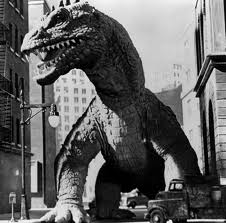
In film, the very first giant monster to be unleashed was the fictional rhedosaurus in The Beast From 20,000 Fathoms. Loosely based on Ray Bradbury’s short story “The Fog Horn”, the rhedosaurus was a dinosaur woken up by a nuclear blast and thus threatened the world not just with its destructive path but by its radioactive emissions. Destructive monsters have since plagued the silver screen with the Japanese kaiju films and American works like Q, Gremlins, John Carpenter’s In The Mouth Of Madness, Reign Of Fire, Cloverfield, The Cabin In the Woods and the upcoming Pacific Rim. In these films, the giants were mysterious and awakened inadvertently by humanity. Once unleashed they outmatched our military might and upended civilization as they destroyed cities and killed many people. Often entire cities and famous landscapes are decimated as seen in Cloverfield. And sometimes it was shown that the monsters won as the misshapen horrors from In The Mouth Of Madness  or the dragons in Reign Of Fire overran the world.
Seed Of The Walking Dead

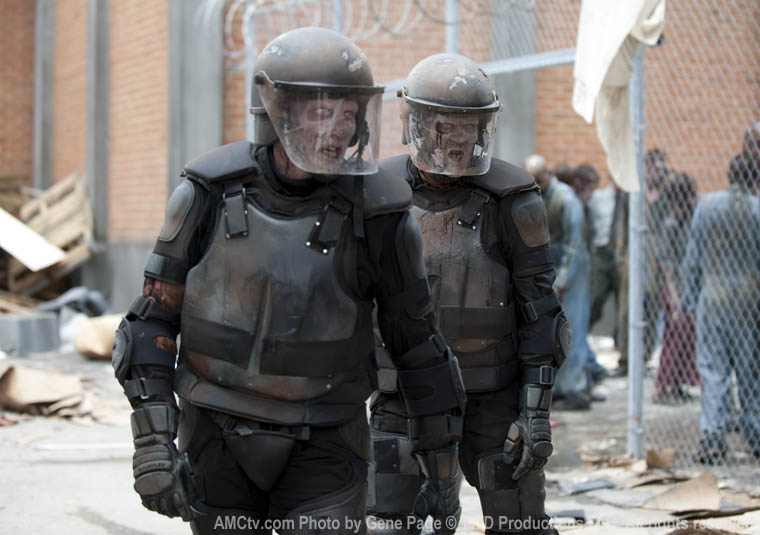
AMC’s The Walking Dead, now in its third season, centers on Rick Grimes (Andrew Lincoln), a former deputy sheriff from Georgia leading a small band of survivors to safety in the aftermath of devastating zombie apocalypse. Called walkers (they roam endlessly and never tire), the moaning, decaying, zombies are a deadly lot, as they shuffle in wandering herds, seeking live flesh. The first two seasons, a ratings and critical smash, showed Rick and a diverse band of survivors seeking safe refuge while fighting walkers, other survivors, and each other. The Walking Dead is loosely based on the comics of the same name, and uses it as a springboard rather than adhere to it faithfully; this approach enables plenty of twists, surprises, new characters, and red herrings.

Law-and-order man Rick Grimes has the heart of a lion, a classic good guy so pure in his outlook and valiant in his mission he’s more like a knight from a medieval tale or a hero from a Greek myth. Joining Rick are his pretty wife Lori (Sarah Wayne Callies), his pre-teen son Carl (Chandler Riggs); Daryl (Norman Reedus), a redneck archer/tracker/outdoorsman and Rick’s wingman; Glenn (Steven Yeun), a Korean delivery boy turned resourceful street rat; T-Dog (Irone Singleton), a tough, stocky black guy; Carol (Melissa McBride), a gentle widow, having lost her husband and daughter in seasons one and two; elderly Hershel (Scott Wilson), an upright, religious country vet in whose farm the survivors sought refuge; Hershel’s two daughters Maggie (Lauren Cohan), romantically linked with Glenn, and the emotionally-troubled Beth (Emily Kinney); Andrea (Laurie Holden), a former lawyer, whose character developed over the first two seasons from a jangled bundle of nerves to a straight shooter; and the newest addition, the mysterious katana-wielding Michonne (Danai Gurira).

In last season’s exciting finale, “Beside The Dying Fire”, the walkers overran Hershel’s farm, killing his daughter and son-in law, and exiling the hapless survivors. Separated from the group, Andrea is saved by the laconic Michonne, while Rick asserted his indisputable leadership (or “Rick-tatorship”, as fans are calling it).

In season three’s premiere, “Seed”, the slam-bang pre-credits sequence opens with a twisted mockup of Lost, where the camera spirals away from a walker’s eye – cold, reptilian, lifeless. Seeking refuge, Rick and the survivors burst into a simple country house. Fanning out like a well-oiled SWAT unit (including Carl), they secure the house by killing that walker and other undead inhabitants. Just as they settle in, T-Dog spots a herd of walkers converging on the house. The survivors grab their gear and flee…

Later on, while hunting food, Rick and Daryl spy the prison shown in last season’s “Besides The Dying Fire”. Realizing its potential for refuge, Rick devises a plan with the group to clear the yard of walkers and break into the prison (the second time this episode where we see the survivors work brilliantly as a team). Reveling in the safety of the prison yard, they whoop and holler with joy at the open space. In the morning, they clear out a ravaged, overturned cell block and settle in.

Meanwhile, we get our first glimpse of Michonne since her brief introduction last season. Entering a dilapidated pharmacy in a small town, she coolly beheads walkers while finding aspirin for Andrea, who is sick and resting safely in a nearby meat locker. Andrea urges Michonne to abandon her, but Michonne refuses. Then the two women along with Michonne’s two chained, pet-like, armless and jawless walkers set out.

Back in the prison, the survivors find an ammunition stash and prepare to clear out the rest of the prison, in hopes of finding the cafeteria and infirmary. Armed and ready, they light the way through the unlit, ghoulish cell block by flashlight, stepping over bloody and decaying corpses while Glenn marks their trail with spray paint. At the far end of the block, they stumble into walkers; in the ensuing chaos, Glenn and Maggie separate from the others; Hershel backs up to locate them and is bitten in the leg by a walker. Reuniting, the group quickly finds safety, where Rick, in an attempt to halt the spreading infection, unsheathes a hatchet and amputates Hershel’s leg below the knee. Hearing noises, they look up, and realize they are not alone; they are being watched by live prisoners… Continue reading

Humanity Vs. Vampires: Our Advantages, Their Weaknesses

In many forms of media, vampires have been feared by humans and for good reasons. But one frightening element about them is their physical superiority to mere humans. Vampires in most stories possess superhuman strength, speed and reflexes. They’re also semi-telepathic and can fly, not to mention are nearly immortal. Recent tales have vampires living in complex secret societies and only tolerate humans who they consider to be glorified cattle.

So if it came down to it, how would humanity fare if vampires decided to take over? Well it wouldn’t be an automatic victory for vampires.

Think about it, sure vampires have all these fantastic powers but they have a severe weakness­­ ­— they’re vulnerable to sunlight. At best, as in the original Dracula novel, vampires while able to survive in the daytime are very weak. At worst, see an episode of True Blood or Being Human were vampires literally burst into flame when exposed to sunlight. If they were to actually exist that could be why they haven’t come out and conquered us. If there were an open war between humans and vampires, humans only need to wait until dawn to open coffins containing the vampires and expose them to direct sunlight. One thing that sunlight contains is ultraviolet radiation. Perhaps that radiation can be weaponized for night battles.

They have other weaknesses as well. Traditionally, they’re sensitive to garlic, holy water and religious symbols like crosses. Modern vampire tales like those written by Anne Rice have it that those so-called weapons are useless and have no effect on vampires. In Stephen King’s Salem’s Lot, it’s stated that for a cross to work, the human bearing it must have religious faith. However, vampires in modern tales are still vulnerable to wooden stakes and sometimes silver (as seen in True Blood where the metal is used to incapacitate the night creatures).

Aside from sunlight and wooden stakes, a good beheading is a guaranteed way to kill vampires. Just ask the Winchester Brothers in Supernatural. In that TV show, beheadings are the only way to kill vampires, which early in the show’s run were considered an endangered species.

Movies like Blade and The Lost Boys feature heroes who come up with unique and clever adaptations of vampire weaknesses. For instance, the young heroes in The Lost Boys filled up ordinary water guns with holy water. Let’s not get into how formidable Blade was with his weapons. He was a bonafide one-man army against the undead with all the stabbing weapons and guns. In True Blood and the books the show is based on (known as The Southern Vampire Mysteries by Charlaine Harris) vampires openly exist alongside humans, so police and militia groups routinely use wooden bullets against vampires along with silver. In one of the recent episodes when the Vampire Authority began to run amok, a human general threatened them. He revealed that humanity’s armies had already devised weapons to be used in the event of a war with the undead. Viewers got a taste of what a war would look like in second season episodes of True Blood where a radical, armed religious group threatened to wipe out vampires.

So if a state of war were to occur, humanity though physically outmatched has many aces up its collective sleeves. It’s been implied in many modern stories that humans far outnumber vampires which is one reason why they haven’t tried to conquer the planet. In the case of war, the huge numbers of humans will be a decided advantage and don’t forget that time and time again, we have shown an ability to adapt and refine battle tactics.

Probably the only way that vampires can counter humanity is in the form of a fast spreading virus. There are many page-turning books about a world overrun by vampires. The most famous one is Richard Mathesen’s I Am Legend, which was adapted three times into film. In I Am Legend, a pandemic is responsible for turning Earth’s population into vampire-like creatures. Other recent books that explore this theme of a virus transforming people into vampires are Justin Cronin’s The Passage and The Strain by Guillermo Del Toro and Chuck Hogan.

The recent film Daybreakers is also about a world where a virus transforms humans into vampires. The outbreak was so severe that in the space of a few years, vampires had overrun human civilization, reducing the few humans left into cattle.

But unless a virus  quickly devastates humanity in the same way as shown in I Am Legend, don’t be so sure to count out humanity if war broke out against vampires. Sure one on one, a human probably cannot beat a vampire but it’s being demonstrated in these tales that a vampire can lose.

Waldermann Rivera

Top Ten Season Finales

As the traditional TV network season dies down, many shows will conclude their seasons with memorable finales. Many sci-fi, fantasy and horror shows have had some of the most-talked about finales that included thrilling cliffhangers, WTF revelations and dramatic game-changing developments. WARNING: Major Spoiler Alerts Ahead.

10. “Lucifer Rising” Supernatural (Season Four); Sam and Dean Winchester are betrayed by their allies who want to bring about the coming apocalypse by unleashing Lucifer upon the Earth.

9. “How To Stop An Exploding Man” Heroes (Season One); the show fell apart after its terrific first season but many episodes from that season are still great including the season finale that featured several super-powered heroes confronting the power-stealing villain Sylar.

8.Zero Hour” Star Trek: Enterprise (Season Three); the conclusion of the season-long Xindi arc finds Captain Archer and the Enterprise crew on a last-ditch, desperate gamble to prevent the alien Xindi from destroying Earth. Aside from all the action and ship battles, the episode had a surprise ending which unexpectedly stranded our heroes on an alternate Earth during World War II.

7. “Over There, Part 2” Fringe (Season Two); Olivia Dunham and Walter Bishop continue their mission in the parallel Earth to retrieve Peter Bishop. Viewers are treated to a fascinating look at another Earth with doppelgangers, advanced tech, quarantine zones and many alternate cultural Easter eggs, plus a nefarious plot to destroy our universe. The cliffhanger was pretty nifty too with Olivia trapped in the parallel universe while her sinister double takes her place.

6. “Die Me, Dichotomy” Farscape (Season Two); the show’s main character, lost-in-space astronaut John Crichton, had a neural chip implanted in his brain by his enemy Scorpius in order to access Crichton’s hidden knowledge about wormholes. Throughout the episode, Crichton battles himself as the chip asserts control of his mind and makes him attack his friends and results in the death of his would-be lover Aeryn Sun. After a doctor finally removes the chip, Scorpius appears, takes the chip and leaves behind a helpless, broken Crichton on the operating table so he can live with the agony of what happened.

5. “Chrysalis” Babylon 5 (Season One); this season finale would prove to be the swan song for the show’s main character Jeffrey Sinclair (replaced off-screen in season two by John Sheridan) as ominous events unfold. Sinclair’s station security chief unsuccessfully attempts to stop a conspiracy to assassinate the Earth Alliance president. His efforts leave him shot and in critical condition. Meanwhile, the mysterious aliens called the Shadows emerge and attack an outpost of one of the major races, thus setting the stage for a deadly galactic war. Towards the end, Sinclair’s ally D’Lenn undergoes a physical transformation to fulfill a prophecy as Sinclair laments elsewhere that “nothing’s the same anymore.”

4. “Lay Down Your Burdens, Part II” Battlestar Galactica (Season Two); fleetwide presidential elections are held pitting President Roslyn against the enigmatic Baltar. An issue of the election and the series itself is whether or not the fugitive humans should abandon their quest to find Earth and settle down in a discovered habitable world. The episode jumps ahead more than a year later and shows how miserable the humans are living in their makeshift shanty towns. Things get much worse when their enemies, the robotic Cylons, arrive on the planet and the humans’ new leader Baltar surrenders the colony to the Cylons.

3. “Through The Looking Glass” LOST (Season Three); the final minutes are a true game changer for LOST. The castaways are trying to find their way off the mysterious island as flashbacks show a despondent Jack Shephard back in L.A. at the end of his road. For a while it was the standard format for the series, feature flashbacks on certain characters while advancing the present-day plotline. However, aside from the foretold death of a popular character, LOST stunned fans with the revelation that the episode’s flashback was actually a flash forward and that Jack was desperate to return to the island.

2. “Call To Arms” Star Trek: Deep Space Nine (Season Five); the peaceful Federation goes to war with the Dominion in this exciting season-ender. This development is a first for the Star Trek shows, which often preached peace above all. Viewers were treated to an effects-laden spectacular as hordes of Dominion ships attacked the Deep Space Nine space station. The episode ended with so many outstanding closers, each of which would’ve sufficed as any show’s final moments. For example, the episode could’ve just ended with Captain Sisko’s speech to his Bajoran colleagues that he will return, or with Dominion lackey Gul Dukat being “welcomed” to the station, or with Dukat’s discovery of Sisko’s baseball indicating that Sisko and company are coming back. The episode then topped itself with a final breathtaking scene of Sisko’s Defiant warship joining a vast Starfleet/Klingon armada ready to do battle.

1. “The Best Of Both Worlds, Part 1” Star Trek: The Next Generation (Season Three); this was the first and best cliffhanger shown on Star Trek: The Next Generation. The cybernetic and invulnerable Borg race begin an invasion into Federation territory with the goal of reaching Earth. Despite their best efforts, the Enterprise and its crew are nearly powerless to stop the Borg, which leads to a crisis of confidence faced by Captain Picard. Meanwhile, First Officer Riker has to contend with an overly ambitious officer/Borg specialist who is out for his job. The tension runs way overboard as Picard is kidnapped by the Borg but the true jaw-dropping moment comes when the Enterprise crew attempt a rescue. They find that Picard has been horribly transformed into a Borg, who then coldly orders the Enterprise crew to surrender. Equally as chilling was Riker’s three-word response, which ends the episode…to be continued.

Honorable Mentions:

“Besides The Dying Fire” The Walking Dead

“Redemption” Star Trek: The Next Generation

“The Jem’Hadar” Star Trek: Deep Space Nine

“Basics, Part I” Star Trek: Voyager

“The Parting Of The Ways” Doctor Who

“Shock Theater” Quantum Leap

“The Fall Of Night” Babylon 5

“The Day We Died” Fringe

“Evil Is Going On” True Blood

Waldermann Rivera

The Dark Tower Returns

It’s been eight years since the final installment of The Dark Tower was released. For those who haven’t read them, Stephen King’s seven-book epic of The Dark Tower told a fantasy-science fiction saga with horror elements of a mythical gunslinger named Roland Deschain in the far future and his interdimensional quest to save reality from falling into chaos. Since the last book fans have been clamoring for more visits to the world of Roland and his ka-tet (or band of apprentice gunslingers). Based on the way the final book The Dark Tower ended it seemed as if the final word was written. But the ending, without giving anything away, had a cyclical nature. Fans pondered if there were more books or stories coming. In fact, King said back in 2009 regarding the series that “It’s not really done yet. Those seven books are really sections of one uber-long novel.” Well, now there is a brand new Dark Tower book to devour. The Wind Through The Keyhole has finally arrived and devotees can add this volume to King’s masterworks.

Many of the beloved characters from the saga are featured in this volume like Eddie and Susannah Dean, Jake Chambers, Oy the billy-bumbler and of course, Roland Deschain the last gunslinger. According to promos and samples released, The Wind Through The Keyhole takes place between the fourth and fifth volume of The Dark Tower saga. What is interesting is that while the book is promoted as a Dark Tower novel, it almost seems as if this novel can stand on its own while still taking place in the that universe.

When it begins, Roland and his ka-tet are on their way from the Emerald City (where the fourth book ended) to Calla Bryn Sturgis (where the fifth book takes place) but have to take refuge from a storm. While in their shelter, Roland recounts a tale to his friends that took place when he was much younger. In that story, young Roland is sent on a mission to investigate a killer shape shifter and meets a young boy. Hoping to calm him, Roland tells him a bedtime story-a story within a story. So in many ways, The Wind Through The Keyhole is like Wizard And Glass where that book went into Roland’s early days as well while using modern Roland and his ka-tet as a framing device. While the novel may not add anything to the overall story of The Dark Tower it promises to provide a fascinating look at Roland’s world.

Regardless of the book’s narrative, its release is a cause of celebration for many readers. Probably the biggest question they have is will there be more lost tales? Stephen King teased many with the idea that the entire saga hasn’t been revealed yet. Then again, he could’ve been alluding to the comic books released by Marvel that dwelled on his younger days. At this point there isn’t any way to know for certain if we’ve heard the last of Roland Deschain. Hopefully we haven’t.

Lewis T. Grove