A Look Back At Star Trek: Voyager

It has been 30 years since the first episode of Star Trek: Voyager debuted, yet it is still fondly remembered today, especially when it is compared to many modern Star Trek TV shows. Let’s take a look back at Star Trek: Voyager as its 30th anniversary is celebrated.

Flagship Show

Star Trek: Voyager was the flagship TV show of the fledgling United Paramount Network (UPN) that launched on January 16, 1995, with the airing of “Caretaker” the pilot episode of Star Trek: Voyager. When the TV show premiered it was largely anticipated though many fans had reasonable reservations about yet another Star Trek TV show. After a decades-long drought, fans were inundated with TV shows starting with Star Trek: The Next Generation (TNG), which was followed by Star Trek: Deep Space Nine (DS9), and then Star Trek: Voyager. It was supposed to address complaints Paramount Pictures executives had about DS9 for straying too far from standard Star Trek.

Showrunner Rick Berman, who also ran TNG and DS9, was reportedly hesitant to produce another Star Trek TV show that would run concurrently with DS9. However, the Paramount Pictures executives were adamant about creating another Star Trek TV show that more closely followed the standard starship-visiting-planets formula to help launch UPN. Given this task, Berman and his associates sought to differentiate Star Trek: Voyager from other Star Trek TVshows.

A Lost Crew in Space

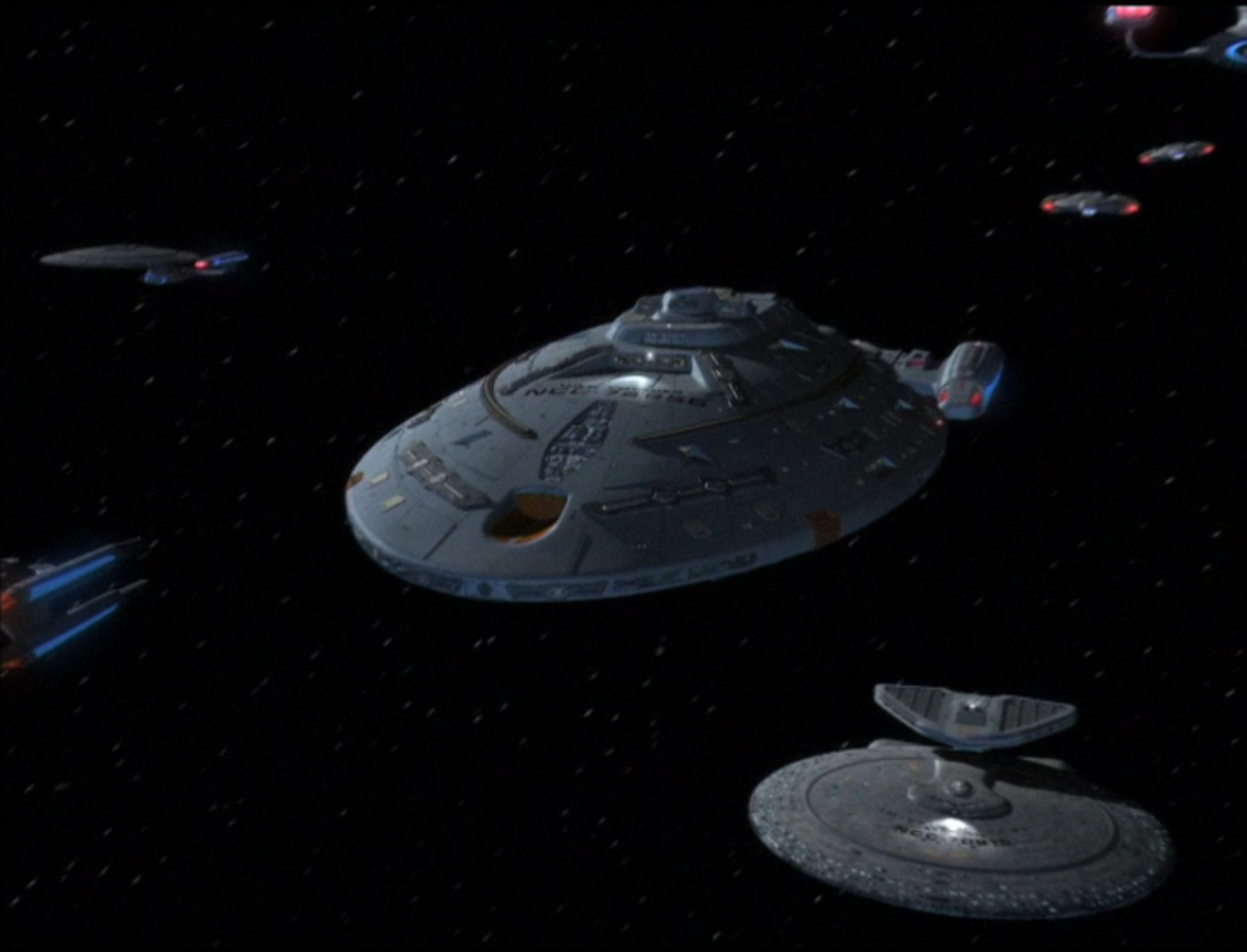
The premise was fairly simple, a starship called Voyager from the United Federation of Planets and Earth is flung to the far corner of the galaxy (the Delta Quadrant) with a crew made up of Starfleet officers and renegade Maquis freedom fighters (more on them later). With limited resources and on their own, the Voyager crew has to find a way back home while exploring on the side and encountering strange new worlds, yada yada.  

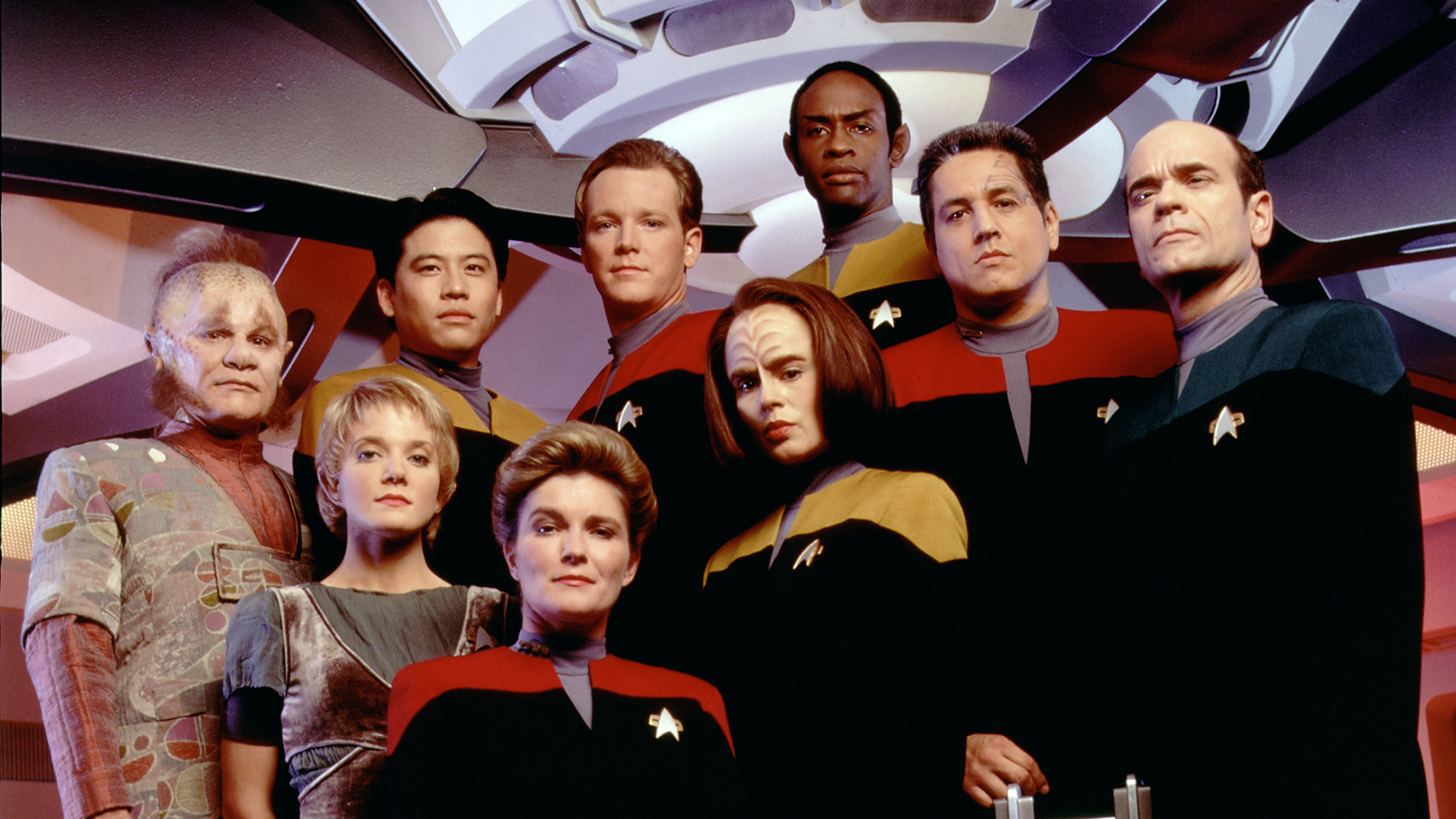
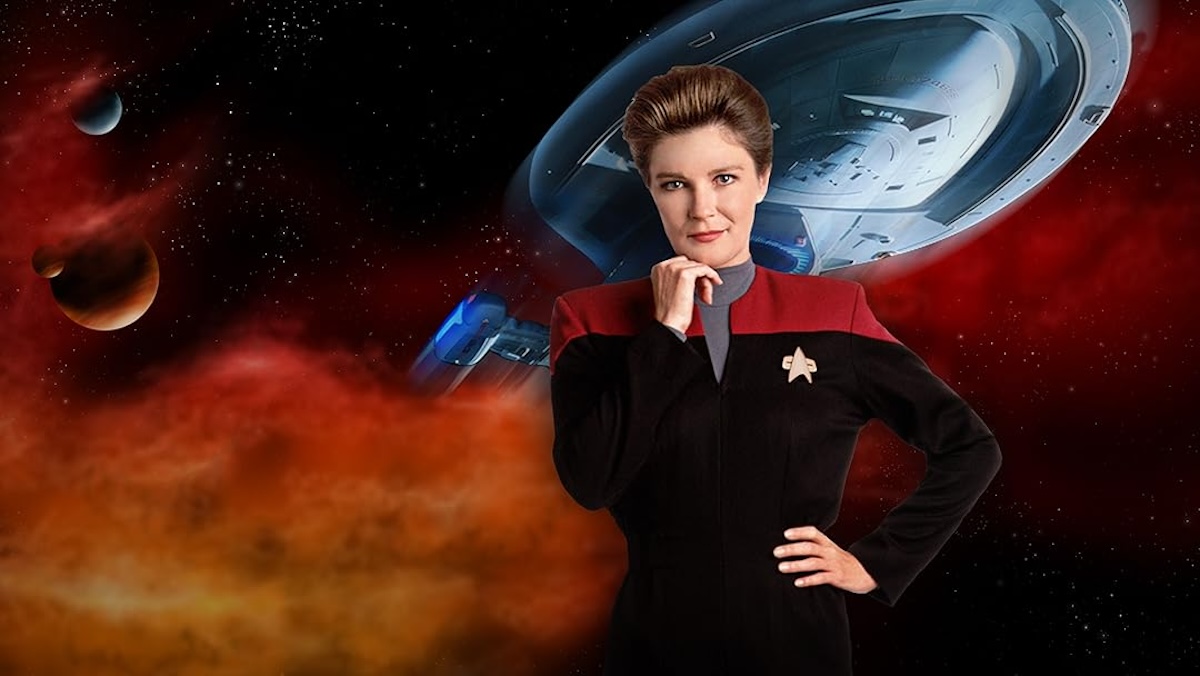
Kate Mulgrew starred as Captain Kathyrn Janeway, who commanded the Voyager and was dedicated to upholding Starfleet’s ideals while protecting her crew. At the time of her casting, there was a lot of hoopla and celebration because the main character of a Star Trek TV show was a woman. Other characters included the ship’s first officer, Chakotay (Robert Beltran), the leader of the Maquis and a former Starfleet officer, Tuvok (Tim Russ), the ship’s stoic Vulcan security officer, Tom Paris (Robert Duncan McNeill), a disgraced former Starfleet officer who gets his chance at redemption by serving as Voyager’s helmsman, B’Elanna Torres (Roxann Dawson), a half-Klingon Maquis member who became Voyager’s chief engineer, Harry Kim (Garrett Wang), a young Starfleet ensign on his first assignment, and the Doctor (Robert Picardo), a holographic medical program that performed the duties of the ship’s chief medical officer.

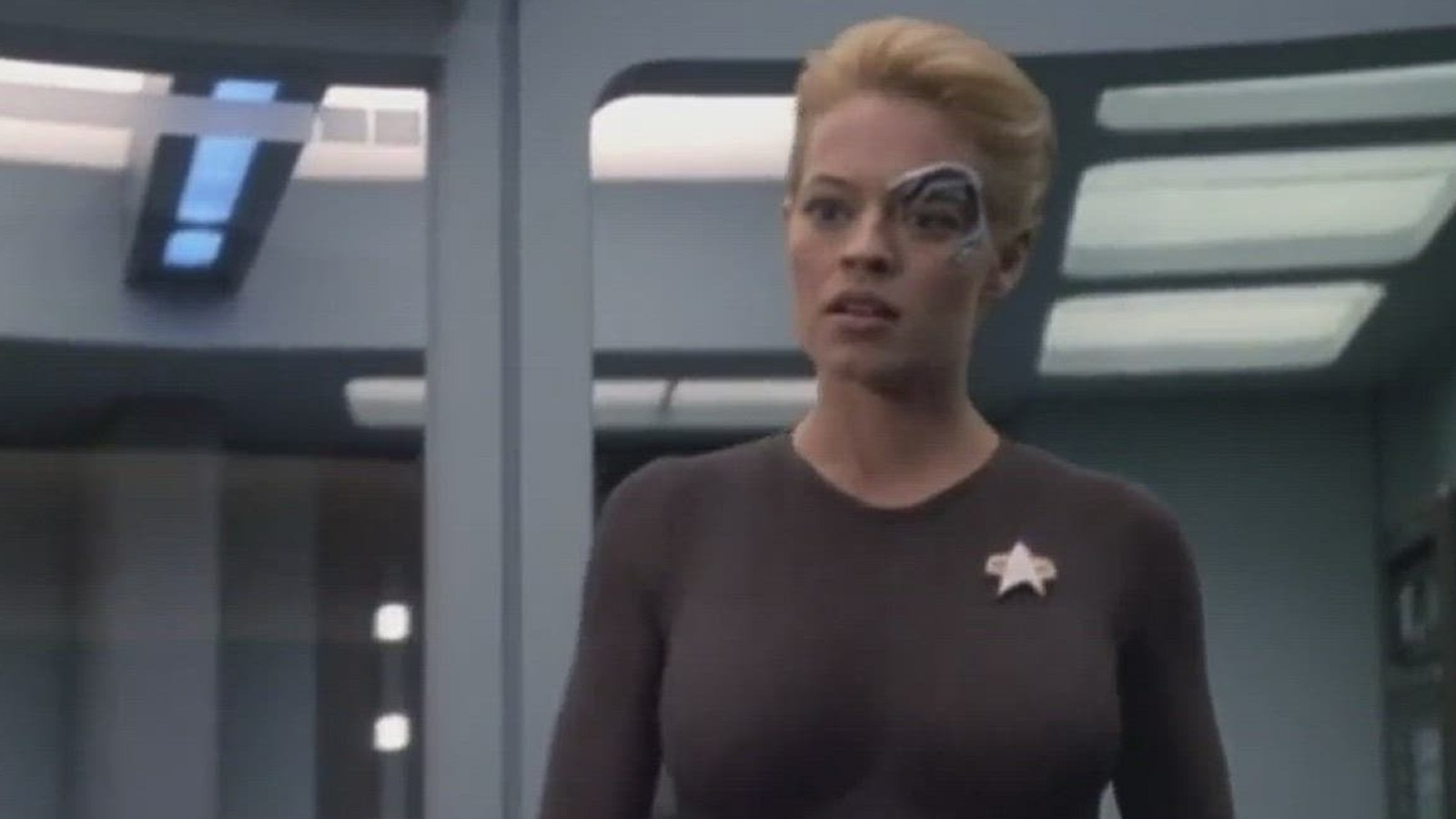
At the end of “Caretaker”, Voyager picked up two alien shipmates who are native to the Delta Quadrant and bring needed knowledge about the local space. They are Neelix (Ethan Phillips), a Talaxian drifter who ends being the ship’s cook and ambassador of sorts, and his girlfriend Kes (Jennifer Lien), an Ocampan who operates as the Doctor’s medical assistant and helps the program develop a personality. As the series progressed, it added Jeri Ryan to the cast as the former cybernetic Borg drone called Seven of Nine while Lien departed the series. Seven of Nine became the show’s breakout character thanks in part to the performance of Ryan as she served as the show’s version of Spock. In other words, a stoic outsider who questioned humanity while discovering her own.

Essentially, the TV show combined aspects of the original Star Trek and Lost in Space, and it worked for the most part. Yet, there was glaring issues with the TV show which turned out to be a harbinger for the creative drought the Star Trek franchise was beginning to suffer from at that time.

Continue reading

William Shatner Reunites With Leonard Nimoy For One Last Time In 765874: Unification

There have been numerous fan-made and unofficial Star Trek shorts and films made throughout the years that celebrated the legacy of Star Trek. Some of the more memorable efforts featured the actual actors from the Star Trek TV shows who reprised their famous roles. The latest effort, 765874: Unification, stands out from the rest not just for its production values or topnotch CGI special effects, but because it stars William Shatner in what will most likely be his final performance as Captain James T. Kirk as he reunites with the late Leonard Nimoy as Spock.

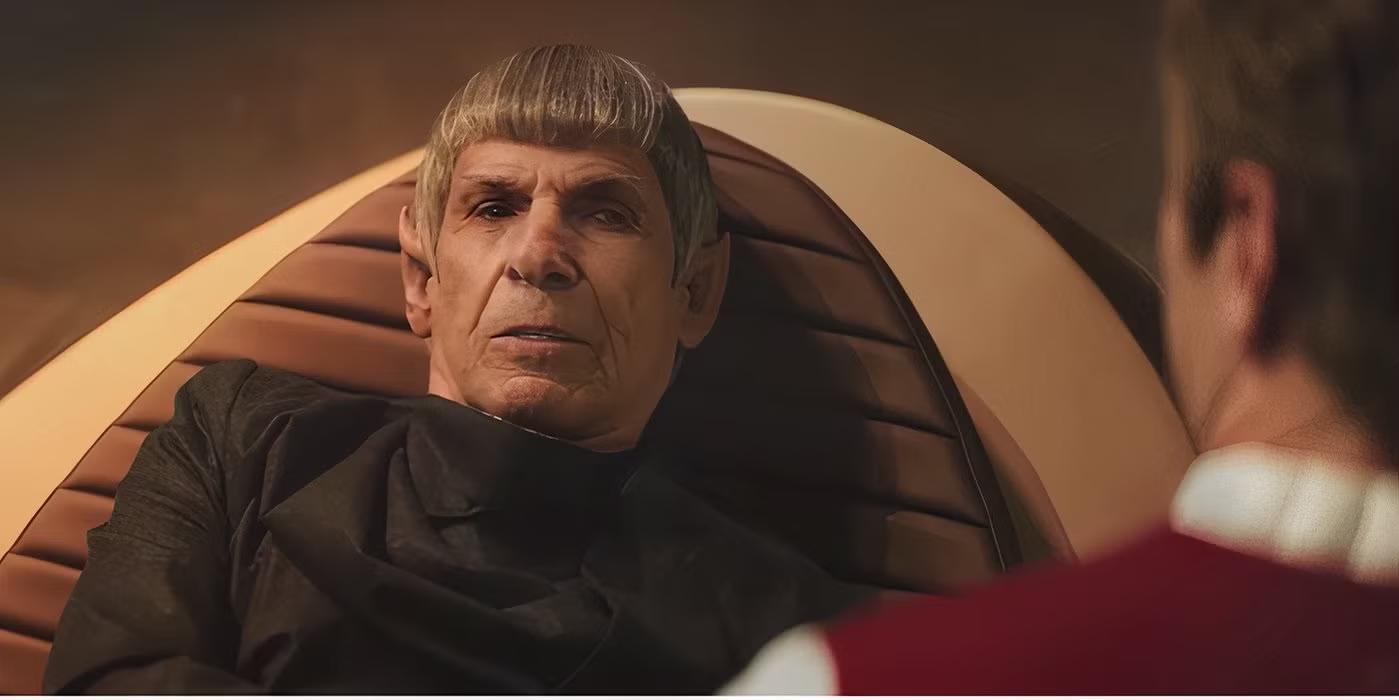
Directed by Carlos Baena, 765874: Unification is produced by the VFX studio OTOY in conjunction with the Roddenberry Archive and was released on the heels of the 30th anniversary of the film Star Trek Generations. It serves as a bookend or an epilogue or a post-credits scene to that film as it finally shows us Kirk and his best friend Spock reuniting after their deaths. It is also a sequel of sorts to OTOY’s previous short film, 765874: Regeneration, which featured Leonard Nimoy as Spock reacting to the death of Captain Kirk.

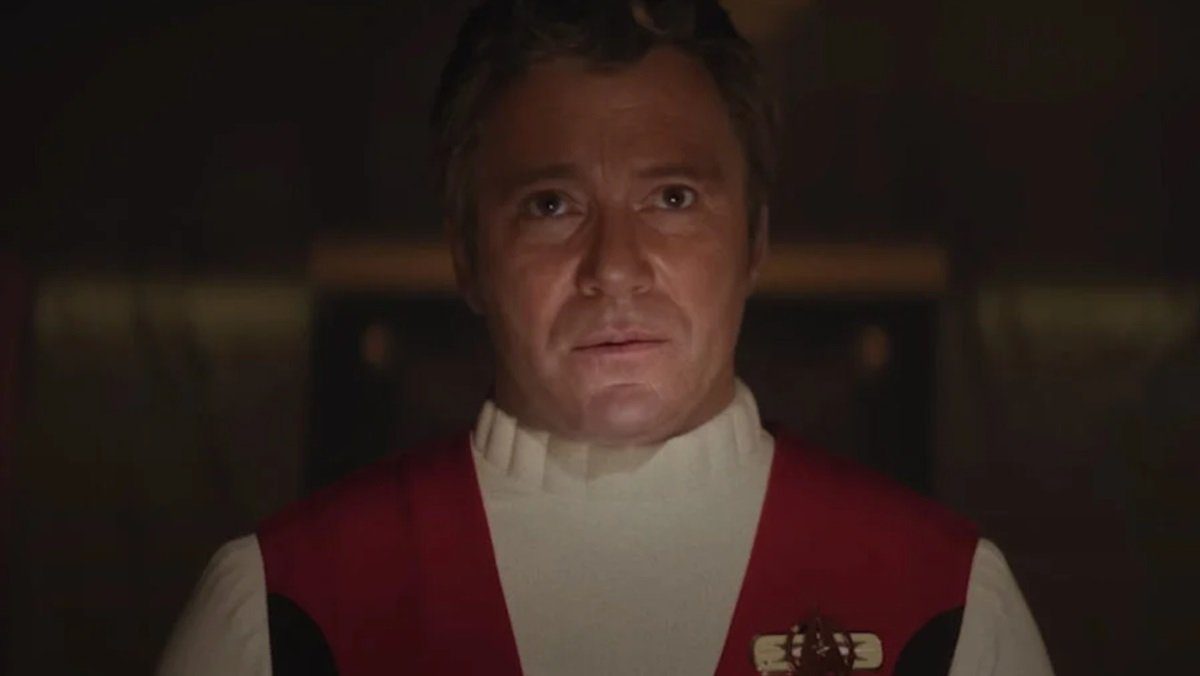
Taking place in the afterlife, moments after Kirk died in Star Trek Generations, the film stars Shatner and Sam Witwer as Kirk, who is jaw-droppingly rendered with CGI and live-action performances. Basically, Kirk wanders through a heavenly afterlife that is similar to what he experienced in the Nexus from Star Trek Generations. During his journey, he comes across many people from his life including Saavik (reprised by Robin Curtis who was digitally aged into an old woman). The film also features numerous Star Trek Easter eggs and characters such as Gary Mitchell (reprised by Gary Lockwood in a performance that was obviously rendered through CG), who plays a role in guiding Kirk during his first moments after his death.

Eventually, Kirk encounters the alien Starfleet officer Yor, who was briefly featured in the Star Trek: Discovery episode “Terra Firma”. For anyone who hasn’t seen that episode, it was revealed that Yor was originally from the Kelvin Universe (the alternate reality where the J.J. Abrams’ Star Trek films take place in) and was stranded in the Star Trek Prime Universe until his death.

As Trek fans know, Spock (as portrayed by Leonard Nimoy) was stranded in the Kelvin Universe and remained there until his death of old age (as noted in Star Trek: Beyond).

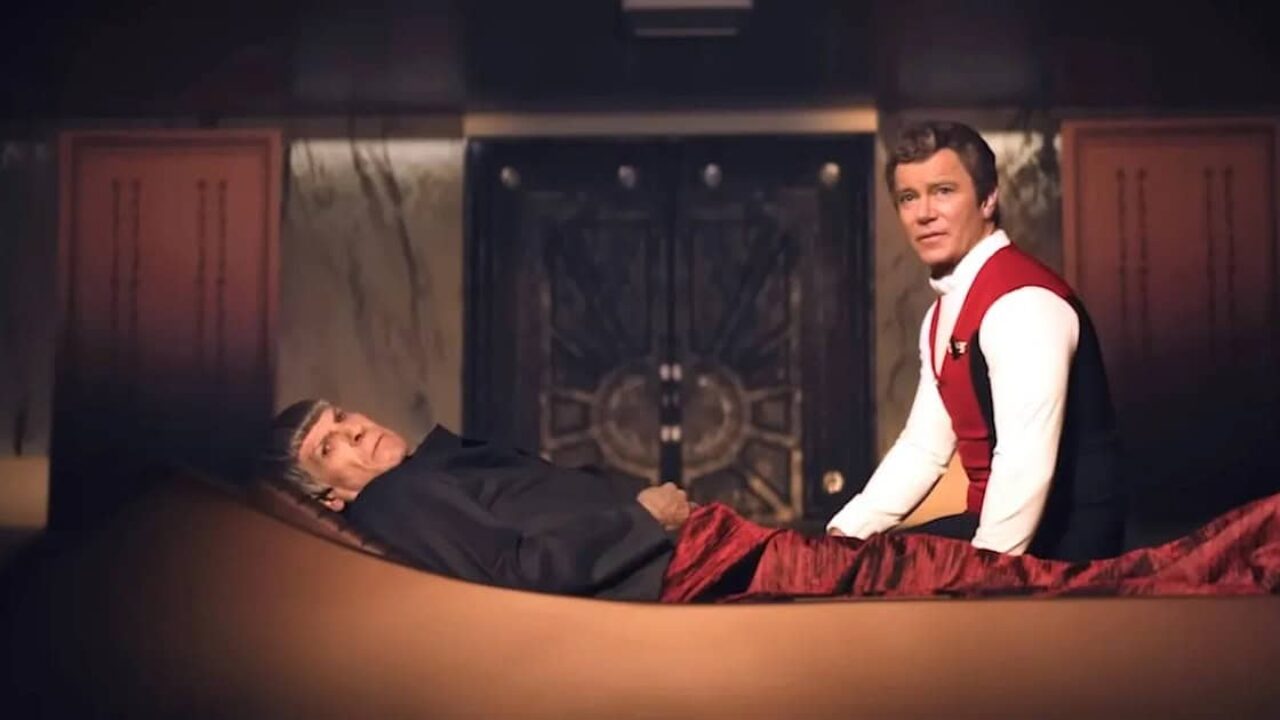
Yor serves as a conduit for Kirk to enable him to crossover into the Kelvin Universe. In the final moments of 765874: Unification, Kirk appears at the deathbed of Spock as the two old friends silently watch the sun set with the promise of a new adventure awaiting the both of them in the afterlife.

Aside from the nearly perfect special effects, what made the film stand out was its lack of dialogue, aside from a brief voiceover by Kirk taken from Star Trek II: The Wrath of Khan. But words were not necessary, Shatner and Witwer were able to convey genuine emotions as Kirk explores the afterlife filled with wonder and surprise.

Still, the special effects are just amazing and feature the best use ever of de-aging and CGI to render Kirk as we last saw him in Star Trek Generations and as the more youthful version of the starship captain seen in the original series. The only times the effects falter are in two shots where Kirk walks awkwardly in profile. But other than that bravo to OTOY for their work!

Yes, the use of CGI to bring Spock back to life (through CG and a live-action performance by Lawrence Selleck) and de-aging Shatner and others is controversial for some. But for others, this film is a fitting tribute to the brotherly bond between Kirk and Spock that spans time, space and life itself. Afterall, death cannot destroy relationships or bonds.

More importantly, the short film is a love letter to Star Trek fans, especially those who still appreciate the older more iconic iteration of the sci-fi franchise and have fond memories of those early films and TV shows. After so many years, it feels great to see these two Star Trek legends together for one last time.

Needless to say, whether or not it’s official or canon, 765874: Unification finally gives us the opportunity to say farewell to these two characters as we see the Shatner and Nimoy versions of Kirk and Spock have a final performance together. Using the afterlife as the vessel for their unification is an appropriate and dare say, logical, way to close this chapter of their existence and the landscape for their next great adventure.

José Soto

Dark Matter Is The Multiversal Journey We’ve Been Looking For

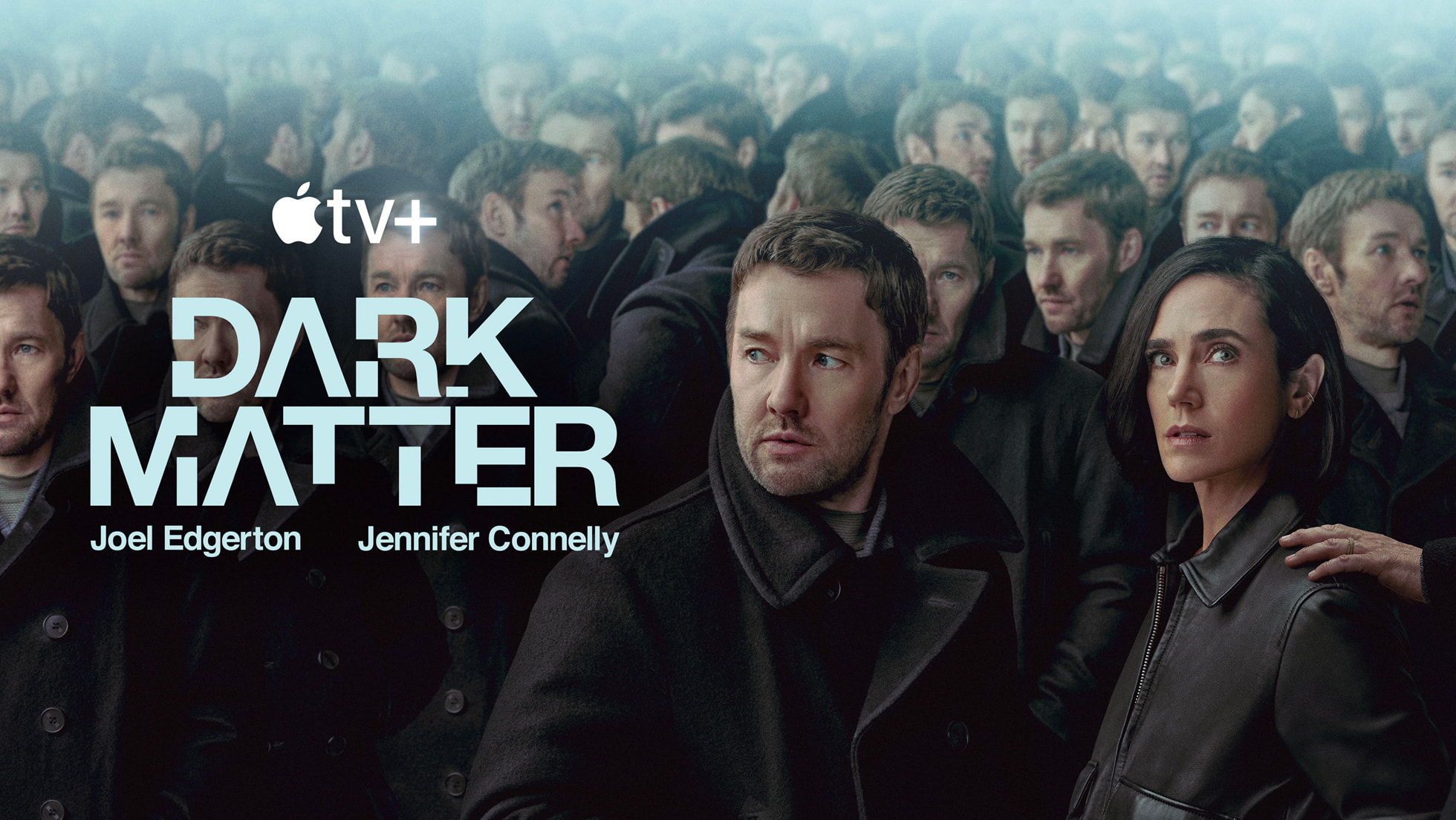
Dark Matter, currently streaming on Apple TV+, just concluded its first season as it took viewers on a mind-numbing journey throughout the multiverse.

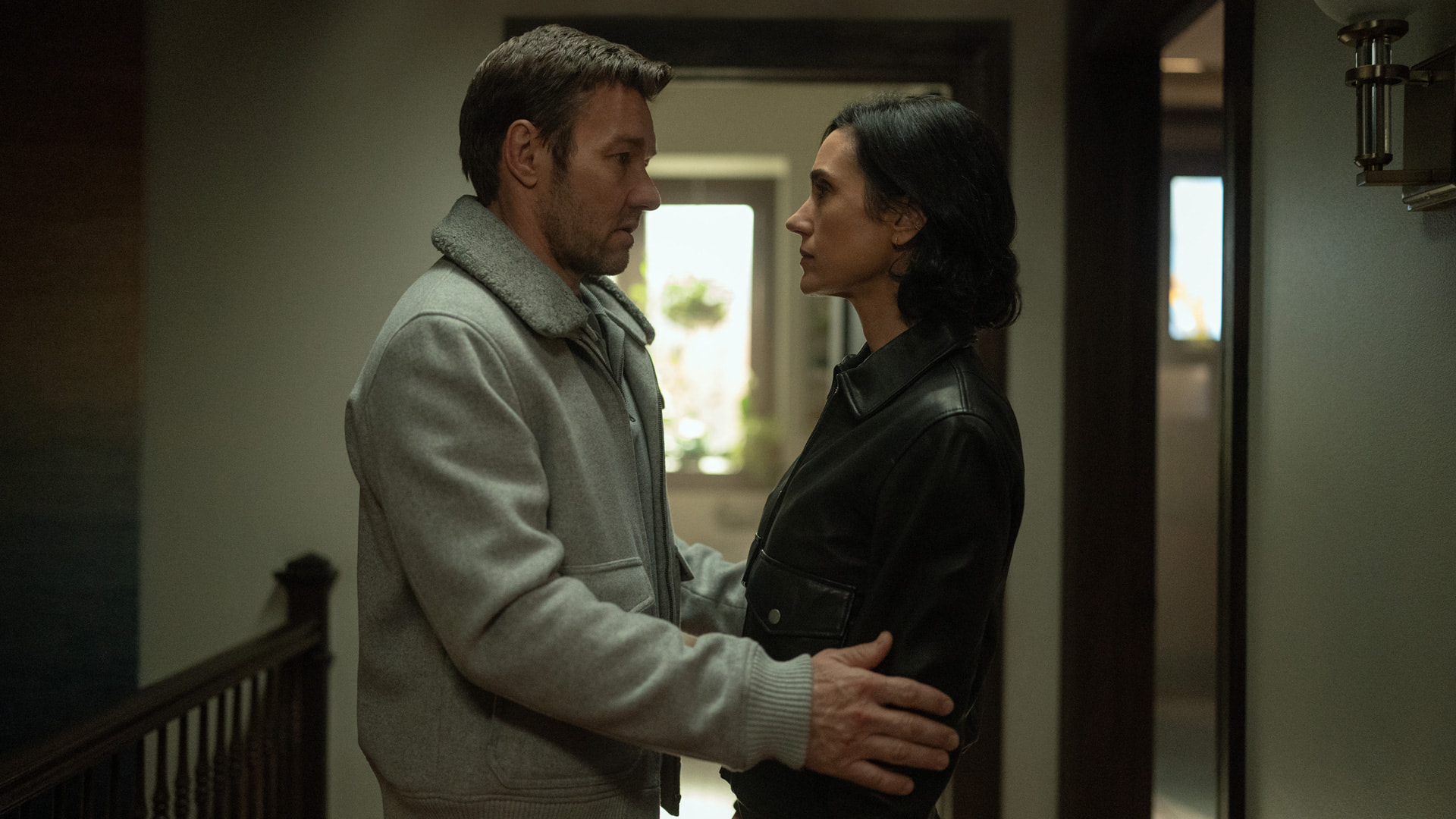
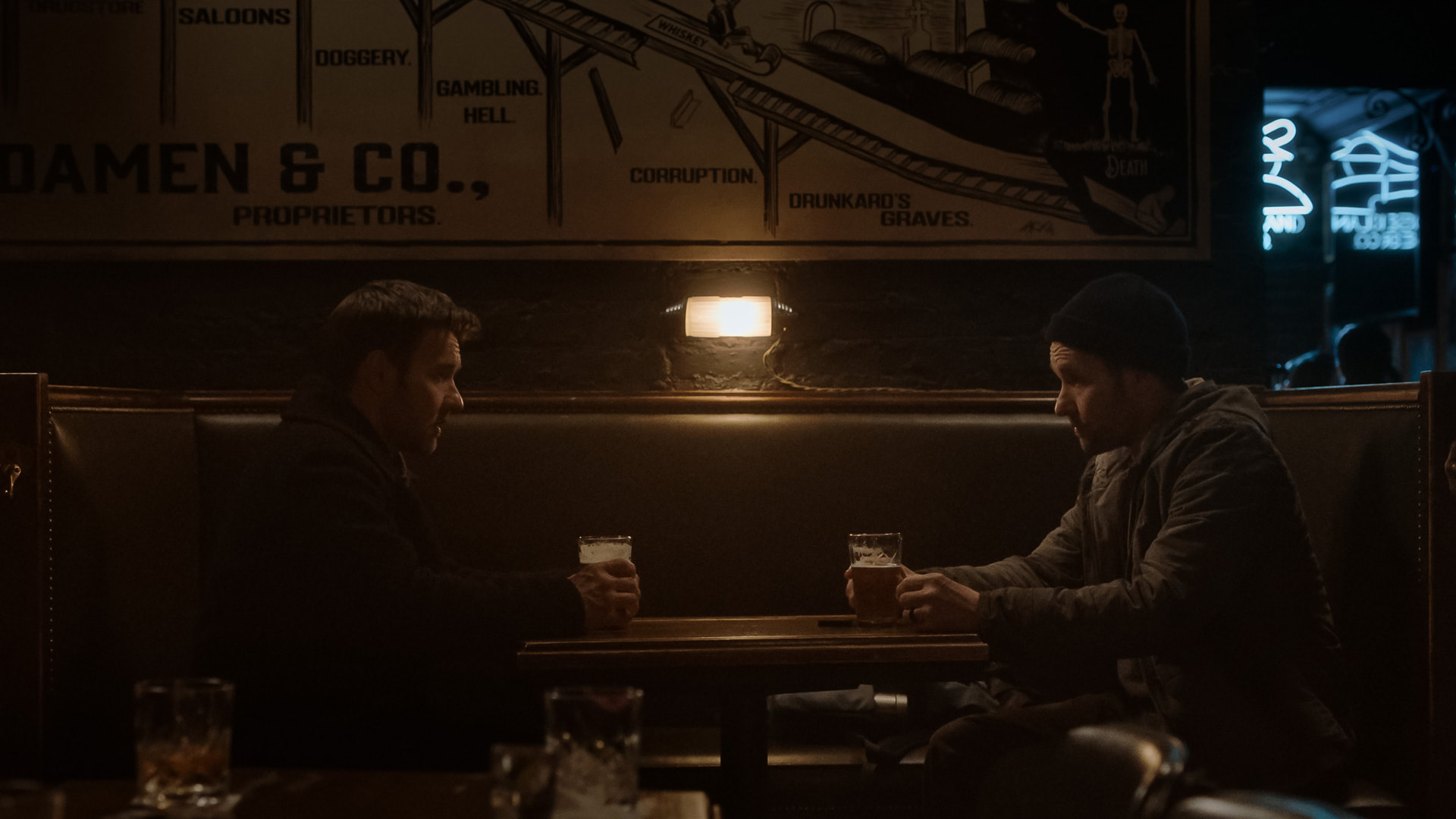
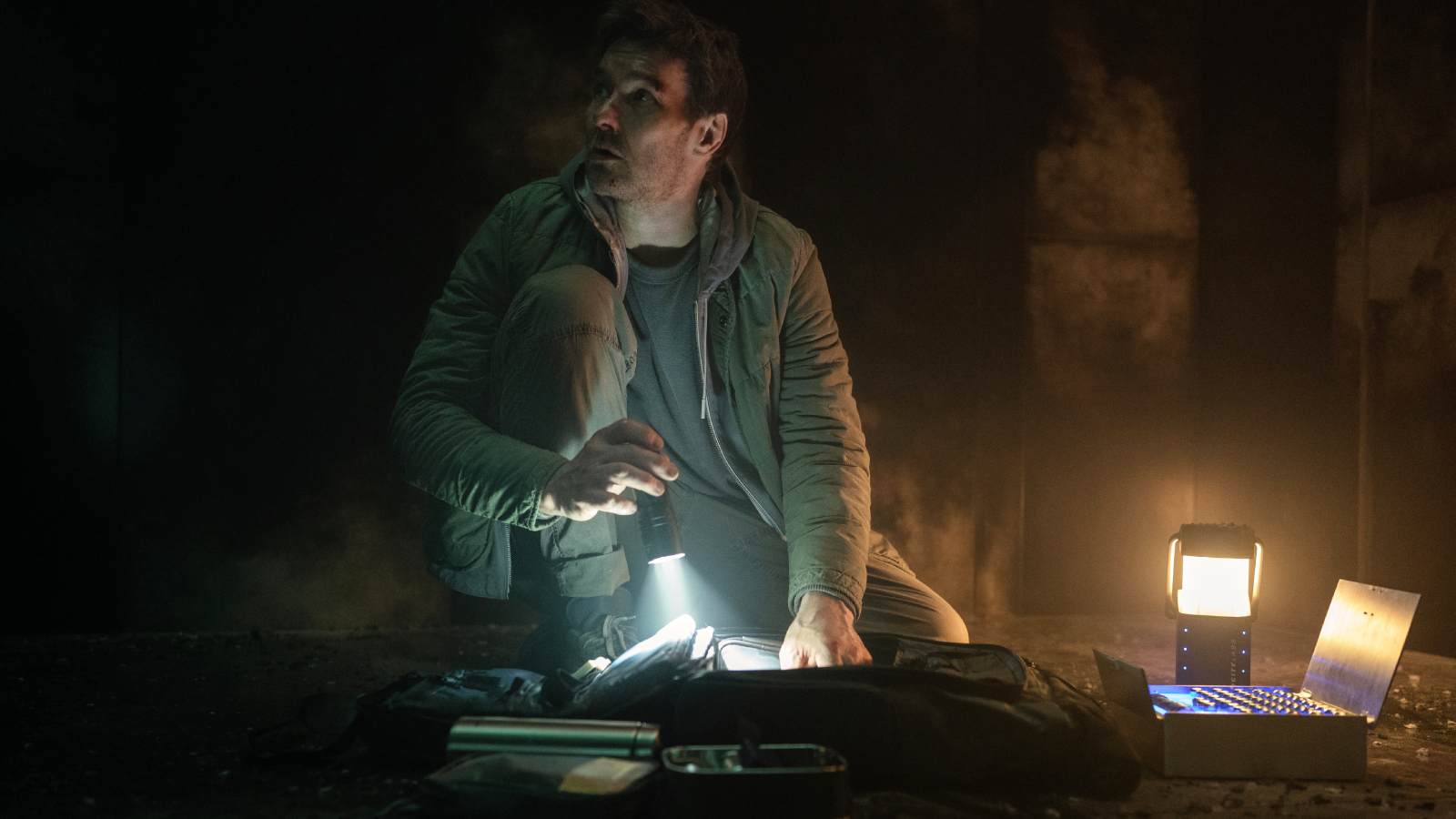
Based on the novel by Blake Crouch, Dark Matter tells the story of Jason Dessen (Joel Edgerton), a mild-mannered physics professor who is kidnapped one night by a stranger and left in a world not quite like his own. It is revealed that the stranger is himself. Actually this is an alternate version of Jason from another reality who switches places with Jason. In the alternate reality, Jason is a world-famous scientist who built a machine that lets people travel to other universes. This alternate Jason forced the original Jason to switch places because of his life which he covets. The original Jason is married to Daniela (Jennifer Connelly) and has a teenage son, Charlie (Oakes Fegley), which is something the alternate Jason doesn’t have in his universe.

As the alternate Jason tries to fit in to the original Jason’s more mundane life, the original Jason with the help of the alternate Jason’s girlfriend, Amanda Lucas (Alice Braga), goes on a life-altering journey throughout the multiverse as he attempts to find his way home.

The concept of the multiverse was a somewhat obscure subgenre of sci-fi books but has recently gained popularity in mainstream media. The most famous examples were the TV show Sliders and the award-winning film Everything, Everywhere, All at Once, and Doctor Strange in the Multiverse of Madness. Whereas both films approached the multiverse concept at different extremes, Dark Matter manages to take a more centered approach that doesn’t go overboard with weird universes of talking rocks or holding back on the multiverse concept.

At first, the TV show takes place in two universes, but soon goes into a wild journey throughout the multiverse as Jason and Amanda explore universes that are either mundanely different, such as Danila having blonde hair or extreme, as seen where the duo are trapped in a world frozen over in an ice age.

Strongly supporting these journeys is the great performance by Joel Edgerton who is able to convey different subtleties to his characters. What was interesting was that while the alternate Jason is the show’s antagonist, he is not some mustache-twirling villain. He only wants a chance to live on the road he did not take. In his world, he let Daniela go years ago and came to regret it. What makes him so much scummier is his inability to let her go and move on with Amanda. We cannot help rooting and sympathizing with the original Jason as he discovers that each world he visits is not his own. It was painful to see him falling apart as he sees alternate versions of his family dying or never existing.

The other actors, especially Connelly and Braga, also turn in memorable performances, as each of them grapple with the consequences of Jasons’ journeys and actions. It was always interesting to see the alternate versions of the people in Jason’s life, which made each episode so watchable.

Equally as enthralling were the journeys themselves. Thankfully, the worlds they visited were not the cliche alternate worlds were the Nazis won World War II or Barack Obama never became the U.S. president. The TV show instead concentrated on having the characters visit worlds with either tiny differences from Jason’s or were wildly different. One brief but terrifying visit had Jason and Amanda nearly killed as they stepped into a world which had no atmosphere. An intriguing twist to these journeys was the realization that each world any character visited was influenced by their state of minds, which made Jason’s goal of getting home that much harder and desperate. Complicating his journey is the growing relationship he has with Amanda, which leads him to recognize his hopeless situation yet he remains committed to his world and Daniela and Charlie.

As fascinating as the journeys were, what made each of them so engaging were Jason’s reactions to them. We sympathize with him as each journey leads to bitter disappointment or pain. We know each heartbreak taxes Jason and we could only hope that the setbacks do not have dire effect on his mind and soul.

Dark Matter took a wild twist in its final episodes that could be confusing to viewers not paying enough attention. But the last episodes were intensely riveting and enthralling for viewers who have followed Jason’s odyssey. It’s not certain if there will be a second season for Dark Matter, even though there were a few potential plot threads that could be followed up if the series continued. Still, Dark Matter concluded in a satisfying manner and whether or not it gets cancelled the series merits watching by fans of multiverse stories and fine sci-fi.

Ray Bradbury Takes His Place Among The Stars

The science fiction and fantasy world lost a true visionary today with the death of Ray Bradbury. The man was a true poet who penned some eloquently profound stories and novels. Among his greatest works are Fahrenheit 451, Something Wicked This Way Comes, The Martian Chronicles, I Sing The Body Electric, R Is For Rocket and The Illustrated Man. His short stories are well regarded by critics and readers and were adapted for comic books (notably EC Comics), TV shows like The Twilight Zone, plays and films. They include “the Flying Machine”, “There Will Come Soft Rains”, “The Fog Horn” (which inspired The Beast From 20,000 Fathoms), and “A Sound Of Thunder”. The latter of which popularized the time travel paradox concept of the Butterfly Effect.

Bradbury also wrote the screenplays for John Huston’s film adaptation of Moby Dick, the film adaptation for Something Wicked This Way Comes, Alfred Hitchcock Presents, The Ray Bradbury Theater (which he hosted), and more. Ray Bradbury won an Emmy award for his script The Halloween Tree, which was based on his book of the same name. He also won numerous awards and citations including a 2007 Pulitzer Prize Special Citation.

Born in Illinois in 1920, Ray Bradbury was a dreamer who inspired many to dream and look up to the stars and wonder at the beauty of our universe. Even at an early age, his writing gift was evident and he soon began publishing numerous short stories. While many of his works are lyrical and inspiring, he also didn’t shy away from exploring humanity’s darker side. Many stories served as warnings about ourselves, while offering a glimmer of hope.

This is probably best presented with his masterpiece Fahrenheit 451, which is a personal favorite, in the futuristic society of that novel, books and all literature are outlawed as the populace is deliberately kept ignorant by the government to better control them. Bradbury played with many ironies in his body of work, and Fahrenheit 451 wasn’t an exception. In the book, firemen aren’t used to put out fires, rather they create fires as they storm into the homes of suspected book owners and set libraries on fire. While the majority of the book is a bleak look at how shallow and empty we can be, Bradbury provided a main character (the fireman Guy Montag) who slowly comes to his senses about the horror of book burning. Montage redeems himself (and society at large) by becoming part of an underground movement to bring literature back to society in order to save it.

Bradbury’s contributions to the world of literature and science fiction and fantasy cannot be measured. While Ray Bradbury may no longer be with us, his spirit is now rightfully in the heavens above us and his works will continue to inspire many for as long as there are dreamers and visionaries.

José Soto

The Term “SCI-FI”

When I was a kid, growing up in the Amazon in South America, I was far away from Hollywood, USA , where great superhero and space adventures were chronicled in film and other media. I must say that as much as I missed the developed comforts that the U.S. can offer, I liked the weather and the people down there. The only thing that made me stand out in general conversation topics was that instead of talking the usual futbol , or politica , I tried to start the conversation with superheroes and space heroes. The usual reaction I got from the locals after tolerating my monologue for an hour is “mucha fantasia!” or “too much fantasy!” The mindset there is reality-oriented. I’m sure they love reality TV.

One of the movie magazines I brought with me to South America had articles with the termSci-Fi . As a little kid, it’s amazing how a little term boggled my elementary school attempts for pronunciation. “Skee-Fee?” “Sky-Fy?” Boy, lots of gray brain matter at work there. A helpful parenthesis in the article related the term sci-fi to science fiction. Oh! That’s what it was! Duh! I’m a true genius!

I began collecting more sci-fi magazines, books and comic books. Before long I had a sizable collection and was amassing a fair knowledge of sci-fi and superhero stories. I even had a few issues of Famous Monsters of Filmland. Back to that later.

Years afterward, and back in the good ol’ USA , I was working for a publishing company in New York City. One of their publications was a general science fiction magazine. Their science fiction editor always had a fit when we said “sci-fi.” We used to listened to his tantrums. The same one from last Tuesday LOL. A mental list of anger-management classes crossed my mind during his rants. He argued that it was incorrect to say “sci-fi” (surrounded by piles and piles of magazines paperbacks, statuettes and toys of that favorite genre of his — the sci-fi genre, thank you very much.) He said that was a term coined by Forrest Ackerman, but it’s not a real term. (Try telling that to the ‘not-a-real-term’ Channel; that was before it started to drift away from its roots and changed its name to Syfy). As much as we liked this fellow, he just needed to lighten up a bit! All joking aside, I have much respect for this editor friend of mine, and I wish him well.

Almost ten years later, I had moved to Los Angeles. I found out that Forrest Ackerman (who first coined the term sci-fi) , publisher of the cult favorite Famous Monsters of Filmland magazine, was living here in L.A. I spoke to him by phone and he invited me to his Museum of Sci-Fi in Hollywood. He was in his late 80’s, but he was gracious to give me a tour of his museum for me.

We spoke about some of my genre-related projects.  I told him they were my own attempt at capturing the essence of sci-fi, which for me was a way to telling stories related to current events and the social commentary of our time, fueled by wild imagination. It’s too much fantasy indeed, but I like it!

After giving me a tour of his best collections (my favorite was the Metroplis robot Maria) we sat down to listen to his great career. He actually told me how he came up with the term  sci-fi. “In 1954” he explained, “that word was first heard in this world. I was riding around in my car with the radio on and some mention was made of ‘hi-fi.’ Since ‘science fiction’ had been on the tip of my tongue since Hugo Gernsback introduced it in 1929 (in his science fiction mag Science Wonder Stories), I looked in the rearview mirror, stuck out my tongue and there, tattooed on the end of it was . . . SCI-FI!”

What a great anecdote to cap off a pleasant visit; he was such a nice guy. Sadly, Forrest Ackerman passed away in December 2008, but I feel honored to have met him and we should all thank him for coming up with that wonderful term. So that’s how my sci-fi term comes full circle. Hope you enjoyed it. Too much fantasy, man!

GEO

Visit GEO’s website: www.coroflot.com/geodesigns/portfolio