Captain America: The First Avenger Celebrates Marvel’s Premier Hero

Captain America: The First Avenger at its very best makes audiences emotionally invested in the core character of Steve Rogers a.k.a. Captain America. That’s largely in part to Director Joe Johnston, who shows a clear love and respect for the character and the Marvel-ous world of Cap and the casting of Chris Evans as the title character.

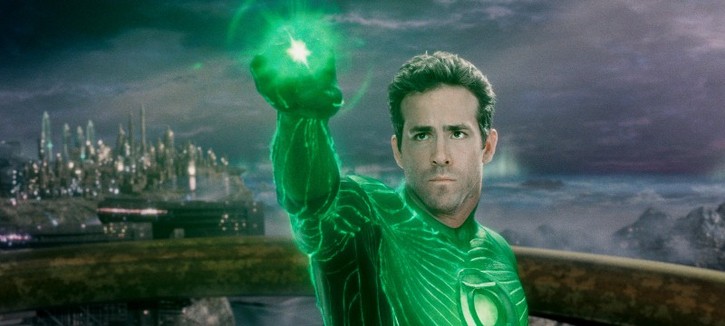
Not since Christopher Reeve was picked as Superman or Robert Downey, Jr. took on the reins of Iron Man or Chris Hemsworth picked up Thor’s hammer has a casting decision been so perfect. There were some doubts among fans as to the casting of Chris Evans for Steve Rogers , but he pulls it off in a big way. Forget about Ryan Reynolds as Hal Jordan/Green Lantern. Reynolds had the look but no personality. Evans, however, makes you care about his character, he just nails it and that is the biggest and most pleasant surprise about the film.

Regarding Johnston, Marvel Studios was very wise in giving him the director’s chair and his track record bears him out. Johnston provides plenty of action but heart as well. From what I’ve read, he took on the assignment under the condition that the film be set in World War II, which is faithful to the original stories. And also that he be given reign in casting, setting the look and other aspects. The f/x were top notch and successfully blends CGI with practical effects, you could tell a lot of care was placed in getting the film just right. Johnston creates a larger-than-life world of fantastic and bizarre Nazi super weapons, film montages that are reminiscent of Raiders of the Lost Ark that harkens back to that era and a rousing score by Alan Silvestri.
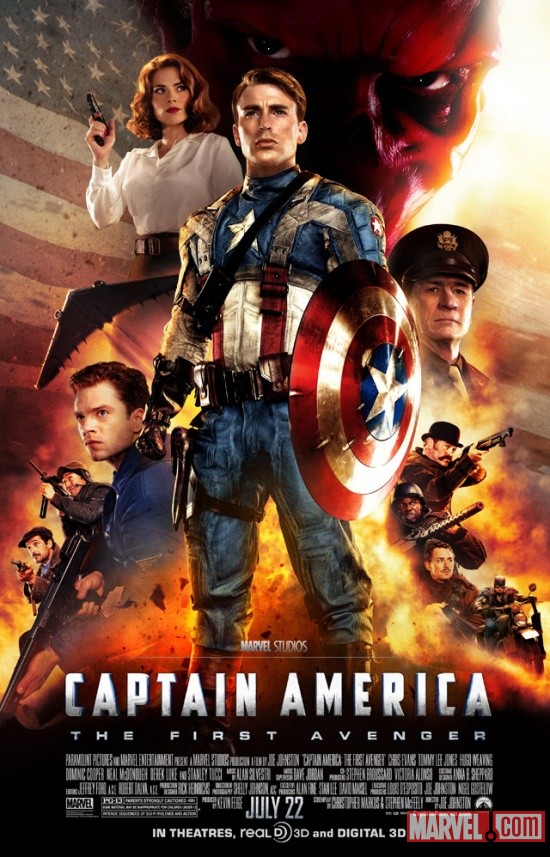
For those not familiar with the character, Captain America (created by Joe Simon and Jack Kirby) was originally a World War II-era 4F reject from Brooklyn who desperately wanted to serve his country. Volunteering for an experimental U.S. Army program, Rogers is physically transformed into the ideal super soldier, becoming a bulked up, athletic fighter who dons the patriotic duds of his country in war. At first he is used by the army as a celebrity in USO shows in Europe because he is considered too valuable to risk in combat. Then his true calling comes when he meets his arch nemesis the Red Skull (Hugo Weaving), a disfigured uber Nazi who establishes his own evil organization called Hydra in order to conquer the world. Teaming up with Bucky Barnes (Sebastian Stan) and Peggy Carter (Hayley Atwell), Captain America sets out to find the Skull’s bases and defeat the Skull. Not to worry you don’t have to be a die-hard fan to enjoy and understand this movie.

As for Marvel fans, well they should take notice, to me this is the most Marvel Universe-centric film to date. It’s the fourth stake of movie tent pole that sets up audiences for next summer’s film The Avengers–arguably the most ambitious and grandest superhero film. You will get plenty of Easter eggs such as references to the original Human Torch, SHIELD, Iron Man and others (and as you’ve heard it’s vital to stick around after the credits to not just see Cap’s final fate but to get a teaser for next year’s Avengers movie). More importantly, this film combines four distinct aspects of the main character. We get the original 1940s version created by Simon and Kirby, complete with the triangular shield; then there’s the kinetic and iconic version done by Stan Lee (who has a very sweet cameo) and Kirby from the 1960s; then there are aspects of the brutal and gritty Ultimates Captain America imagined by Mark Millar and Bryan Hitch, and finally the recent version done by Ed Brubaker and Steve Epting. It was a tricky task but the filmmakers were able to reinvent Cap by picking the best parts of those four different interpretations. Some liberties were taken with altering Cap and his supporting cast but they were for the best. Examples of that include tying the Red Skull’s origin more closely to Cap’s and making his sidekick Bucky older and grittier, which is more in tuned with the current version of that character.

IMO, a superhero film like Captain America: The First Avenger only comes along about every 40 years and is easily on my top three list of superhero films. It’s the most profound and emotional portrait of a Marvel hero that I’ve seen. The enthusiastic audience reaction in the theater where I saw it is a testament to the joy and thrills anyone will get from watching this film. Needless to say it’s the best of the four superhero flicks released this summer.

GEO
Falling Skies Ahead


Last month, TNT premiered Falling Skies,  the new Dreamworks sci-fi series executive produced by Steven Spielberg about survivors of a modern-day alien invasion.

Unlike what its teaser commercials suggested, Falling Skies’ pilot did not feature the typical initial alien arrival, contact and pyrotechnic invasion scenario. Rather it begins several months after the aliens (called “skitters”) have wiped out the world’s armies and have laid waste everywhere. This is clearly not Independence Day  or even Battlestar Galactica in terms of big budget effects scenes. This can be disappointing for some but it’s a different take and risky, while also being budget conscious. And it largely works.

Why? It’s a good hook for audiences who have to be able to catch up with what is going on. Here’s the skinny, the show takes place in and around Boston and focuses on the efforts of a ragtag group of civilians, soldiers and recruits who form a militia group called the Second Massachusetts to fight back against the aliens. Apparently the humans in the show are just as much in the dark as the viewer is when it comes to knowing who the aliens are or why they came to Earth. To its credit the show gives out adequate morsels of information about the situation and characters to keep you interested.

Jumping into the middle of the premise helped draw me into the characters’ storyline since everything wasn’t laid out. Unfortunately, this approach was used to a much greater effect in AMC’s excellent series The Walking Dead.  That show had more engaging and memorable characters. Also, at times Falling Skies gets a little too preachy or sentimental. Additionally, some of the military stuff seems far-fetched specifically when it comes to logistics (having soldiers sleep indoors but not civilians? Nice way to sow resentment, plus doesn’t that leave civilians more vulnerable to the aliens?).

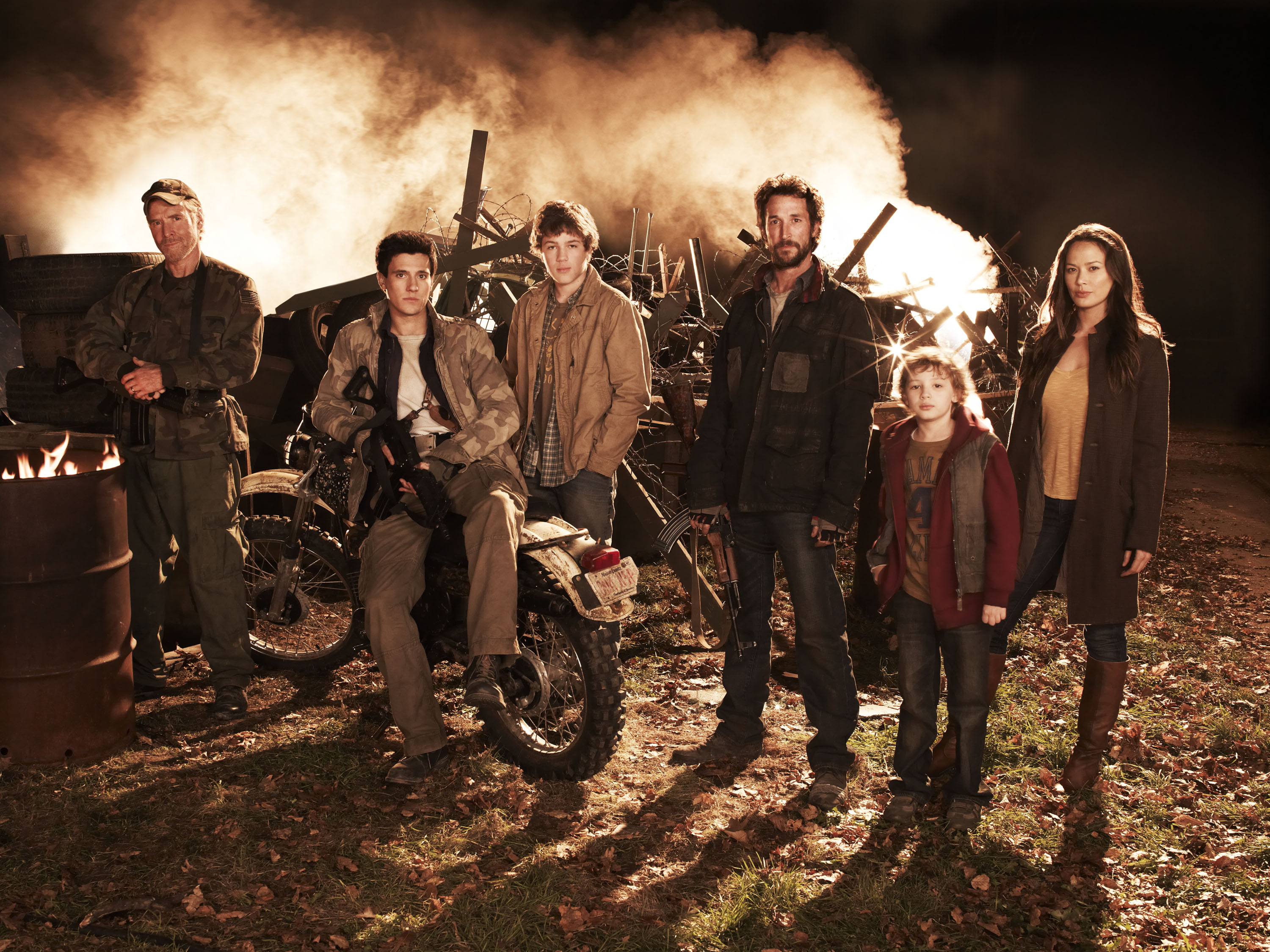
As the main character of the show, it falls on Tom Mason (Noah Wyle), a widowed history professor and second in command of the militia group,  to be the reason why audiences tune in. He’s got an interesting story, his wife was killed recently by aliens and one of his three sons has been kidnapped and turned into a zombified slave for the aliens through a horrifying biomechanical device attached to his back (in the show, children are being taken by the aliens and turned into a labor force through these devices). So his driving focus is to rescue his son. Yet it can be a challenge to be invested in Mason. I think it’s because sometimes he comes off as too moral, too optimistic while everyone around him is all doom and gloom. He spouts off analogies about history showing that invading forces are always repelled by indigenous populations but no one seems to take him seriously when he does that, not even histwo other sons. This doesn’t quite gel with the survivor mentality that pervades many of the show’s characters.

But in Falling Skies’ defense the characters are already becoming more fleshed out. Mason has shown a grittier side, and it appears that he probably projects this image for his children’s sake (though being that his youngest son already wants to join him on missions makes me wonder how successful Mason is, but I get the feeling that will be explored). Also, some of the other characters are beginning to stand out. Chiefly Moon Bloodgood’s Anne Glass, a pediatrician who becomes the group’s chief doctor and moral compass, Will Patton’s Captain Weaver, the no-nonsense commanding officer of the group who struggles to keep his people (and especially Mason) focused on the larger goal of winning the war, and Colin Cunningham’s John Pope, an ex-convict and former gang leader who was captured in the pilot for kidnapping Mason and others in exchange for weapons. In lots of ways, Pope comes off as a loose but effective cannon in the same vein as was Michael Ironside’s Ham Tyler in V.

The production values are remarkably good, effectively conveying a destroyed landscape that just barely resembles towns and cities. I also like the attention to local detail in regards to Boston’s geography which adds authenticity. The special effects are top notch and a blessing considering how poor they were in some recent TV shows.

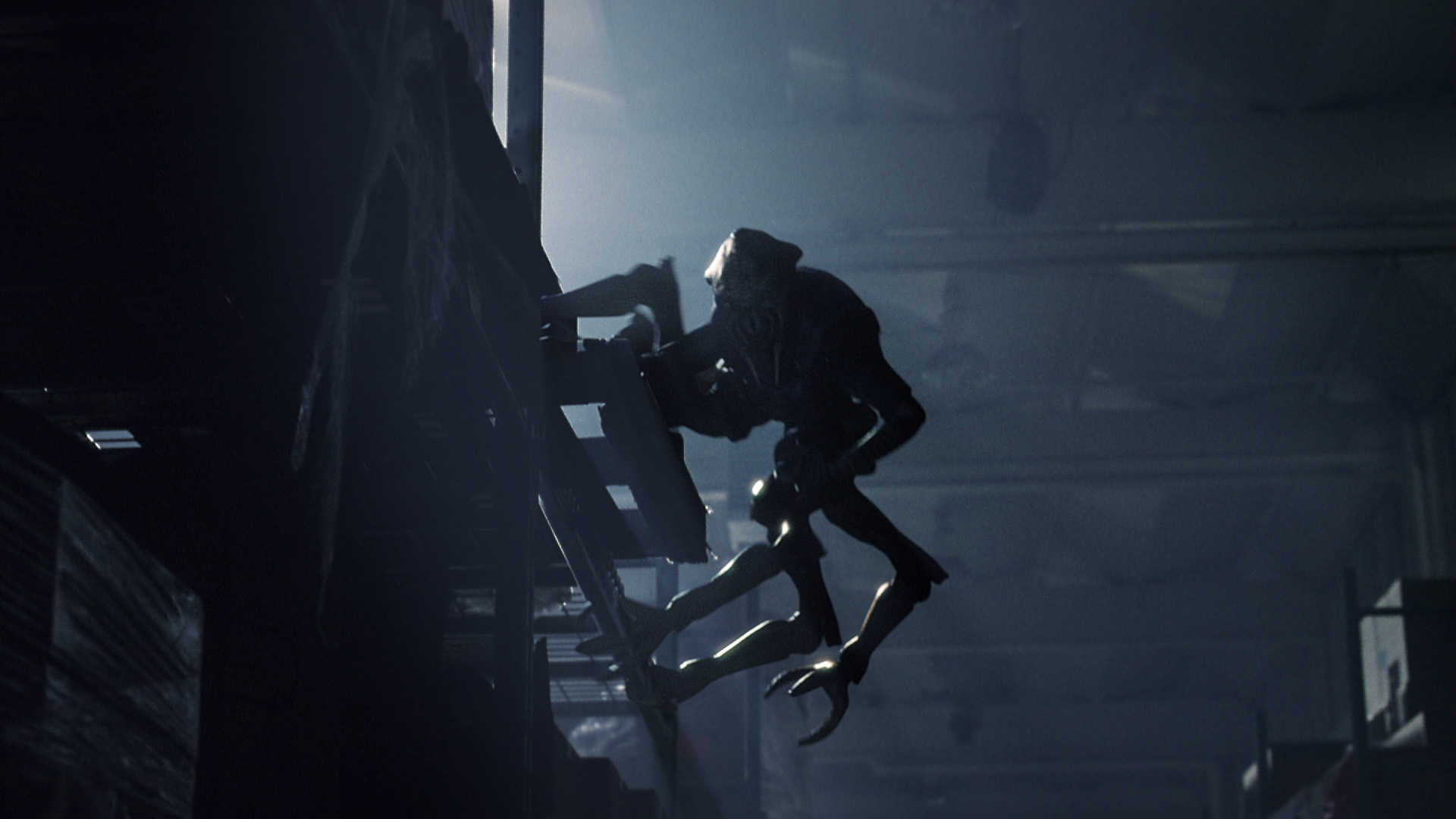
It’s really great that the skitters are shown to be non-bipedal creatures, a rarity for TV shows, and are an excellent special effect. However, the mechanical soldiers that the skitters use look more like obvious CGI. Many scenes are too dark and sometimes hard to follow. But it does add to the tension that’s sometimes felt in those scenes. Perhaps it’s to hide the budgetary constrictions but hopefully this will change in the future.

On the whole, I think Falling Skies is a good, entertaining show with potential. The growing pains are obvious.  It doesn’t hit the ball out of the ballpark like The Walking Dead did but it feels like a solid score. At this point early into the series, making a final judgment is premature however I’m devoting time to keep watching and see how it plays out, and that’s a good sign.

J.L. Soto

Images courtesy of TNT, cast photo by Frank Ockenfels

Reasons Behind Alien Invasions

Ever since H.G. Wells’ masterpiece War of the Worlds made its debut, people have always been drawn to the concept of aliens invading our world. Given our history it’s easier to believe that alien visitors won’t be benevolent, which is why Stephen Hawking recently warned about trying to seek out extra-terrestrial civilizations. This fascination continues to this day as seen with TNT’s new cable series Falling Skies and recent films like Skyline, Battle: Los Angeles and Transformers: Dark of the Moon. As we watch or read about would-be world conquerors (and how intrepid humans hatch schemes to repulse the invaders), one thing comes to mind given what we know about space. Why invade us?

Let’s look at some reasons offered in books, films, and other media:

Location, location, location. The aliens’ world is dying and they need new turf to call their own and our world is best able to fit their needs. The most famous example of this was the premise of War of the Worlds. There are many things wrong about this idea. One is that it’s doubtful that our unique biosphere will be compatible with an alien species. Think of Pandora the planet in Avatar, yes it had an oxygen atmosphere but the air was toxic to humans due to the concentration of other elements, not to mention the gravity was different. These kind of problems will be faced by alien conquerors, meaning our planet in the long run isn’t suitable. In fact, at the end of Wells’ book this proves to be the case since Earth’s bacteria kill the invading Martians. The only solution is to terraform the Earth into one resembling the aliens’ habitat. Good examples of that are found in David Gerrold’s War Against the Chtorr books and in War of the Worlds.

A deeper problem arises from a military conquest angle where Earth is prized just to gain territory for an interstellar empire. Space is huge, really huge. It’s pretty hard to believe that in all that space, the aliens can’t find a world much closer to their own to occupy and/or terraform rather than spending resources to come all the way out here. The Martian invaders in Wells’ book are of course an exception to that idea when considering how close they are to us.

Slave Labor. In the current episodes of Falling Skies, Earth’s children are fitted with biomechanical devices and are forced to do manual labor for the aliens. While this premise is terrifying, especially for parents, and is a good motivator for the human heroes, again it’s not very practical. Any alien civilization that can travel such far distances would have a technology advanced enough to not need manual labor. Even today, as robotics and other technology improves, we have less and less need for manual labor. It’s easier to build machines to do our bidding rather than having to be concerned for feeding and caring for a human laborer. That’s one issue facing car makers and other manufacturers today.

Pre-emptive. Think of the rationale behind the Iraq War but applied on a galactic scale. Or better yet remember Klaatu and Gort from The Day the Earth Stood Still. An advanced alien culture is aware of our existence, keeps tabs on us to see how we’re advancing socially and technologically. If they conclude that we could become a serious threat once we achieve FTL, they may decide to fight us here instead of there. Luckily, depending on how you look at it, we haven’t advanced enough so far to constitute a cosmic shock and awe campaign.

Our Bling and Other Goodies. Let’s get one thing straightened out, any self-respecting sci-fi fan and science geek knows that all our precious metals and other materials can be easily found in space. That includes water. Yes the water we’ve found on nearby moons is frozen, but melting it isn’t a big deal. Need some H2O? Just mine any nearby comet. Heck aliens would have an easier time building a refinery on Europa and leave us alone. For all we know they may be there already. This fatally shoots down the rationale behind V and Battle: Los Angeles.

Back in May, National Geographic channel aired a special called When Aliens Attack that looked at how a plausible alien invasion would happen. In one segment the reason behind an invasion was discussed and scientists on the show pointed out the above and added that the two thing we have here that no one to date has found in the universe are proteins and chlorophyll. So in other words we’re a food or fuel source for invaders. That kind of goes with the mindset of the aliens seen in Independence Day  (which by the way, celebrates its 15th anniversary this July) who were described as a race of locust-like beings that razed planets for resources and moved on.

What about procreation? Here’s the typical premise, the alien race is dying out and their key to survival is somehow procreating with us or using our DNA to create a hybrid race. This theory is cited by UFO followers to explain cases of alien abductions. In films, this was used by Invasion of the Body Snatchers, Species and  John Carpenter’s The Thing, among others. The problem with this theory is that the idea of procreating with an alien life is impossible. Our planet’s life forms have DNA that is not in any way compatible with extra-terrestrial DNA and vice versa. Sure they may have the technology to overcome this but if they do possess such tech why not apply it much closer to their home instead of traveling thousands of light years to get cow samples? Even if they needed our unique biological makeup, aliens with such advanced technology don’t need to invade us en masse, just take some samples, replicate it and move on.

However, we may have some kind of cultural or biological attribute that may be prized by an alien civilization. The Borg in Star Trek are a good example of this mind set. They set about conquering worlds just to assimilate unique biological and technological attributes that they’ve encountered. There was an issue of Amazing Spider-Man (issues 269-270) where Spider-Man fought the alien Firelord who traveled all the way to Earth just to get some pizza and caused calamity to get it. (Can’t blame him on that account). Then again it would be a lot easier to just negotiate trade with us. It’s easy to imagine that humans would trade a year’s supply of chocolate or complete Beatles collection in exchange for FTL drives.

Predatory Culture. This could be plausible. An advanced race may be ingrained warriors or conquerors whose society is based on predation. They wiped out the game preserves near their world and are looking for easy, new or challenging pickings and that happens to be us. Maybe they’re just bored or have a sadistic streak like kids that get their jollies from terrorizing bugs in the backyard. The Klingons, and the Predators are great examples. Another motivator may be religious like the alien Covenant in the Halo games. There the aliens find humanity to be blasphemous and engage in a holy war against Earth. What could be saving us for the moment from alien predators and fanatics is that some other advanced civilization rose up to counter them before they arrived anywhere near Earth, like the Green Lantern Corps. Another saving grace is our distance. We are kind of out in the boondocks when it comes to galactic location. Is it worth the trouble traveling all the way out here? See the running theme so far?

Sure we complain about how hard it is to travel to the stars but that could be buying us time for when we do have first contact. Perhaps by the time a malevolent race discovers us and sees that we won’t be an easy conquest, they’ll move on. Keep our fingers crossed.

J.L. Soto

Is The Bubble Bursting On Superhero Films?

It seemed not too long ago that any kind of film dealing with superheroes made oodles of money and if the profits weren’t as astronomic as say The Dark Knight or Spider-Man then they were at least respectable.

But lately this hasn’t been the case which has been seen so far with this summer’s slate of box office superheroic offerings.  Three comic book-based films have been released Thor, X-Men: First Class (XFC) and Green Lantern. Their box office take has been interpreted by industry experts and insiders from either being merely respectable to disappointing.

Thor’s opening weekend take was $65 million and to date its total domestic earnings are just under $180 million and considering that the film has dropped out of the top ten and the upcoming slew of films one has to wonder if it will reach over $200 million. While certainly nothing to sneeze at (especially if its foreign earnings are accounted, bringing its totals to over $400 million to date) Thor has earned less than the original Iron Man.

As for XFC, the feeling is that while its highly regarded with great reviews, its domestic box office earnings after nearly a month in release is only in the $120 million dollar range. It opened on June 3 with $55 million which was the weakest among the X-Men films including X-Men Origins: Wolverine.

But perhaps the biggest and most surprising disappointing earner has to be Green Lantern.  With a budget in the $150-$200 million range and a dearth of publicity and the anticipation that it would be one of Warner Bros.’ tent pole films this summer, the film earned $53 million in its opening weekend.  Add to that its overseas take has been notably underwhelming (earning in its first week less than $20 million). With upcoming potential box office champs like Cars 2, the third Transformers  flick and the final Harry Potter it’s hard to see how it can remain competitive.

The same concern about the upcoming competition must be applied to the final summer superhero film to come Captain America: The First Avenger. By releasing it on July 22, Paramount, its studio, probably hopes to avoid the competition. But given that by late July the box office starts to simmer down and that it misses an obvious patriotic July 4 weekend release it does suggest a certain lack of confidence in its money-making potential and its ability to compete with the heavyweights. Maybe if Bin Laden had been killed around now that might helped build up enthusiasm among movie goers to Captain America.

Now there are plenty of explanations to go around for the underwhelming numbers. The most obvious one is that there are too many similar films competing at the same time which goes to the old supply and demand rule. That is something that studios have to seriously consider when planning release dates. Maybe if this summer’s films had been spaced further apart the results would’ve been different. This is something that must be frustrating for Marvel Studios since its Thor had to directly compete with XFC, which was released by Fox meaning that the Marvel’s characters had to face off against each other in theaters.

Another is that these films are based on second-tier comic book characters. However, the fact that although they’re  based on relatively unknown characters (outside of the comic book fan world)  and still made that much money is nothing to sneeze at. Just look at the fact that films released last year based on obscure characters (Kick-Ass, Scott Pilgrim Vs. The World, and Jonah Hex) either underperformed or were box office disasters and that was despite the fever pitch Internet chatter that the first two film properties generated.

In the past decade not every film based on a comic book hero has been a Dark Knight-type box office champion. The Punisher films are considered to be disappointments. Ghost Rider didn’t exactly set the world on fire. Both Hulk films merely did OK and he is a more recognizable character than say Green Lantern. Daredevil’s box office earnings barely made over $100 million. And Superman Returns, despite a massive marketing push by Warner Bros., just cracked the $200 million mark. But it’s usually a safe bet that a film based on a popular hero is a healthy return for the investment. Examples of that are the recent Batman films, and the Spider-Man and X-Men trilogies.

The other explanation for the so so box office is of course the quality of the films. Many of the above mentioned films weren’t well regarded by fans and critics alike. In the case of Kick Ass, despite favorable reviews, almost no one has heard of the character so it was difficult to generate the buzz that someone more well known would guarantee. With XFC, its earnings may unfortunately be due to ill timing and franchise burnout. The previous mutant offerings (X-Men: The Last Stand and the Wolverine film) have been derided by fans and critics and soured many to the X-Men franchise. While XFC is a step to rectify past blunders it may be too early to have an X-Men film out. Perhaps Fox should’ve let the franchise rest a while to build up demand (one problem with letting franchises based on Marvel Comic characters rest is that Disney now owns the comic book company and many studios that have certain Marvel properties must make films or else lose the rights to Disney. They will only let them go if they no longer deem them profitable) . Maybe the film lacked, aside from Magneto and Professor X, recognizable and popular characters like Wolverine and Storm.  Still what this summer’s superhero flicks have earned despite their handicaps is impressive in some ways and can’t be considered outright flops. So it really just serves as a caution for studios and a reminder that there are only so many comic book fans that can support a market for superhero films.

But next year will be the critical test to see if the bubble has burst. Why? Because the heavyweights are coming back. A new Batman film, reboots for Spider-Man and Superman and perhaps the biggest test, The  Avengers film featuring Iron Man, Hulk, Thor and Captain America. If these films have disappointing sales then it can truly said that the bubble has burst.

J.L. Soto