Toy Story: The Animated Masterpiece That Changed Animated Films

Thirty years ago, Toy Story was released in theaters by Pixar, which at that time was its own independent company owned by Steve Jobs. The animated masterpiece instantly caught everyone’s attention with its revolutionary 3D animation that changed animated films forever.

3D or computer animation existed before Toy Story, of course, but the film about toys that come to life whenever their owners are not around, was the first feature-length film to exclusively use this kind of animation. The use of computers in animated films had been going on for years since the 1980s and 1990s. Disney used computers on a wider scale with its traditional animated classics like Aladdin and Beauty and the Beast, but those films were still two-dimensional and by the mid-90s that kind of animation had reached its peak in what could be done with it as an art form. The world of animation was ripe for new approaches.
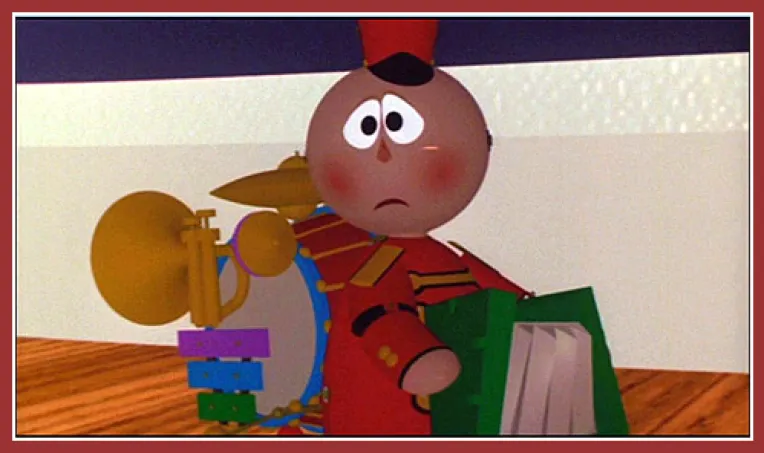
Enter John Lasseter, the creative genius behind Pixar. Working with a team of innovative artists and computer technicians, Lasseter experimented with 3D animated film shorts that caught the eyes of many film studios, especially Disney. Some of the films like Tin Toy, Knick Knack and Luxo, Jr. stood out with the pioneering use of 3D animation. In fact, Tin Toy won the Academy Award for Best Animated Short Film, the first 3D-animated film to do so. As Pixar created and released these shorts, they prepared themselves to produce a full-length animated film, which turned out to be Toy Story. At this time, Disney was eager to work with Lasseter and proposed that he create a feature-length film that Disney would distribute, to which Pixar agreed.

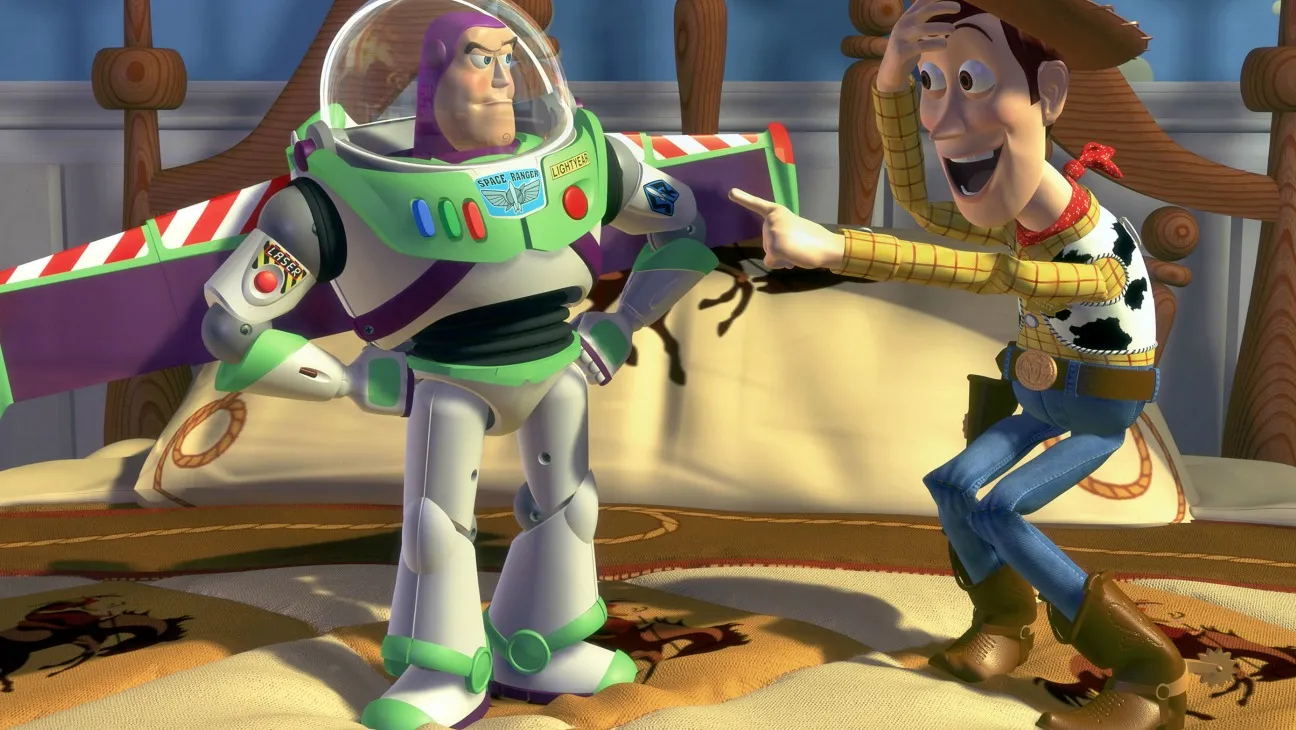
At first, Pixar’s first animated film was supposed to be a sequel to Tin Toy and would have featured the title character and his dummy companiion trying to find their way into the hands of children. But Disney was not happy with the script and after much retooling, the Tin Toy characters were replaced with the original creations Woody the cowboy doll and Buzz Lightyear the high-tech electronic doll. They had clashing personalities which generated genuine laughs, but had to work together to find their way to their child owner.
Turning Toy Story into an animated buddy film with two completely different characters sparring with each other then becoming great friends was an inspired decision. This development injected a lot of heart and humor into the script and gave the two lead characters distinct personalities that most viewers could relate to. For instance, Woody was the leader of the toys owned by the child, Andy. His status is threatened with the arrival of Buzz Lightyear, the new hot toy on the block that quickly becomes Andy’s favorite toy. Woody is jealous and resentful towards Buzz as he lost his status and his actions cause both he and Buzz to be lost and the two have to find a way back to Andy’s home. What also helped tremendously was the casting of vocal actors Tom Hanks and Tim Allen to play Woody and Buzz. Both actors had great vocal chemistry with each other and comedic timing that rivaled many classic comedy duos.

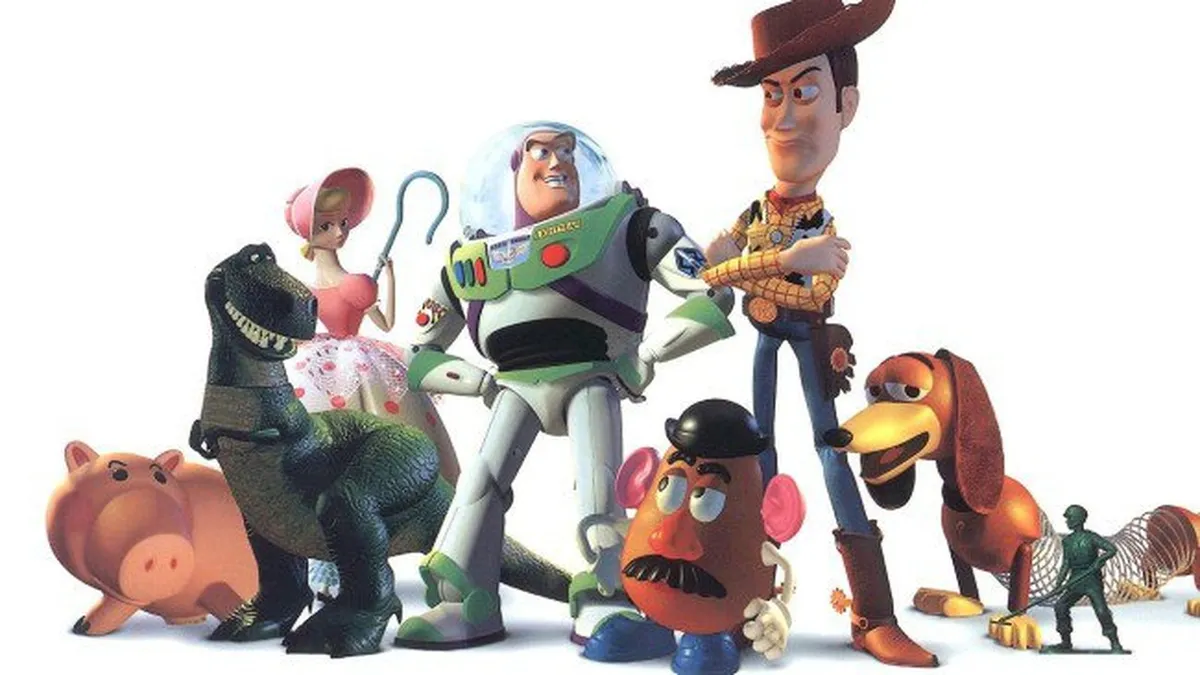
The film featured many other memorable characters voiced by great actors that embedded the toys with a lot of personalities. Take for instance the legendary comedian Don Rickles who played Mr. Potato Head or R. Lee Ermey as Sargeant, the no-nonsense military leader of the tiny green plastic army men. Seeing many classic and real-world toys appearing in the film was a hysterical and brought back many memories for adults and joy to children. A large part of the film’s appeal was that both adults and children could equally enjoy it, and this became one of Pixar’s strongest selling points with their future films.
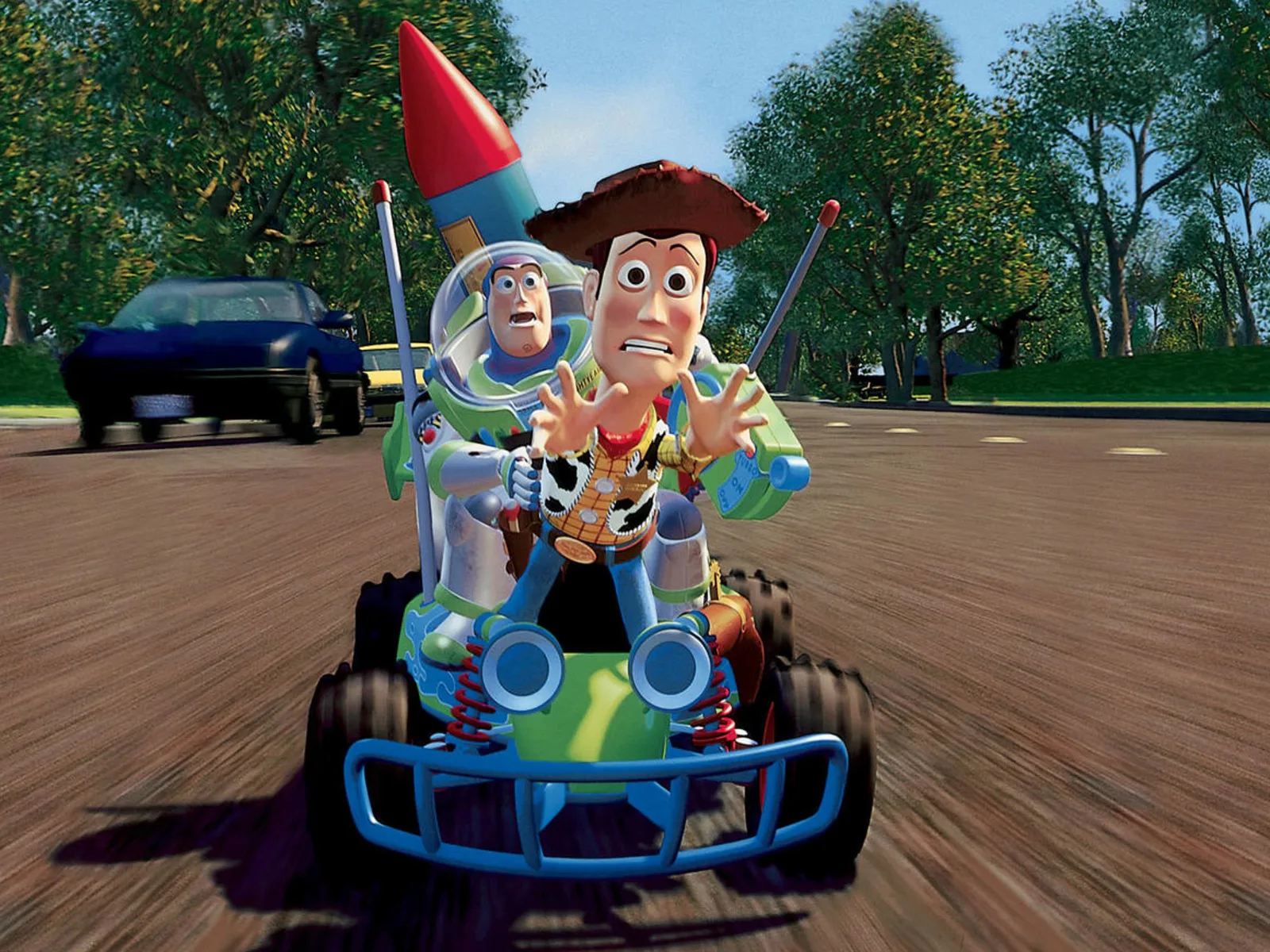
Toy Story was an instant hit and a bonafide classic when it was released in theaters on November 22, 1995 as it caught the imagination of viewers. While the computer animation was a distinct selling point, what made the film so beloved was its script, direction and characters who are still relevant to this day. There is even a Toy Story 5 that will be released next year. That is fortunate because while the 3D animation was revolutionary for its time, some of the animation does look a bit dated, especially when it came to depictions of humans.

Of course, the success of Toy Story inspired many film studios to rush out with their own computer animated films to varying degrees of success. Some like Dreamworks and Illumination produced their own classic films but few could capture the magic and whimsy of Toy Story. Still, regardless of quality, the early computer animated films crowded out traditional 2D-animated films and even Disney jumped on the bandwagon with their own 3D-animated films. But it would take Disney some time to create their own films that rivaled Pixar’s in terms of quality. Unfortunately, the success of Toy Story spelled the end of traditional 2D-animated films, at least with American films. The last traditional animated film that Disney released was The Princes and the Frog in 2009. It’s true that there are many advantages with 3D animation, but it is a mistake to completely discard two-dimensional animation. What these studios have failed to realized is that the success of Toy Story and other quality Pixar films, including the Toy Story sequels, was not solely due to its animated technique but because of the story and characters. Hopefully one day, a visionary creator at a major studio will be able to produce a quality two-dimensional animated feature length film that will be successful.
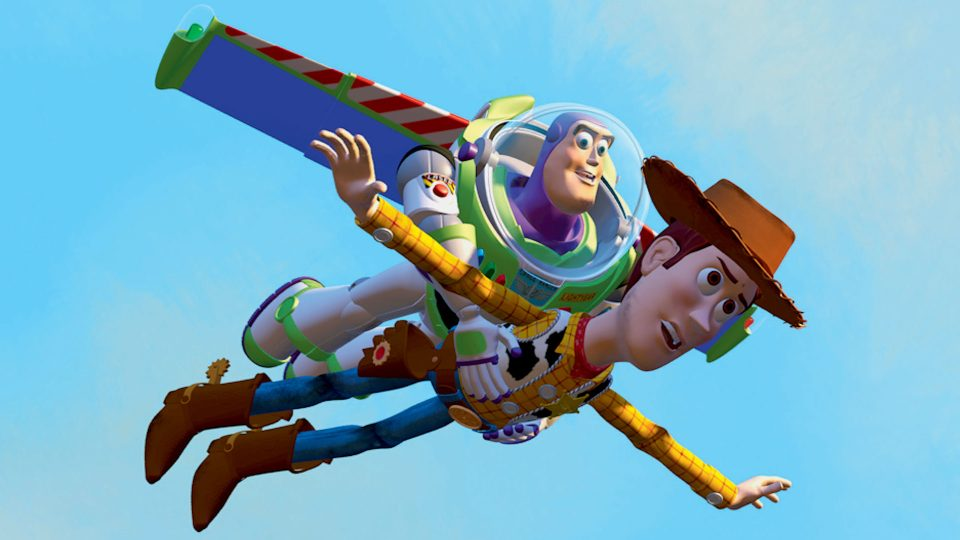
Much like Snow White and the Seven Dwarves was revolutionary in its day and changed films by introducing the concept of full-length animated films, so did Toy Story. It is not an exaggeration to say that Toy Story revolutionized animated films when it premiered 30 years ago as we are still feeling the impact of the classic film that is just as enjoyable as when it was released 30 years ago.
Jaws: Still Terrified Of The Water 50 Years Later

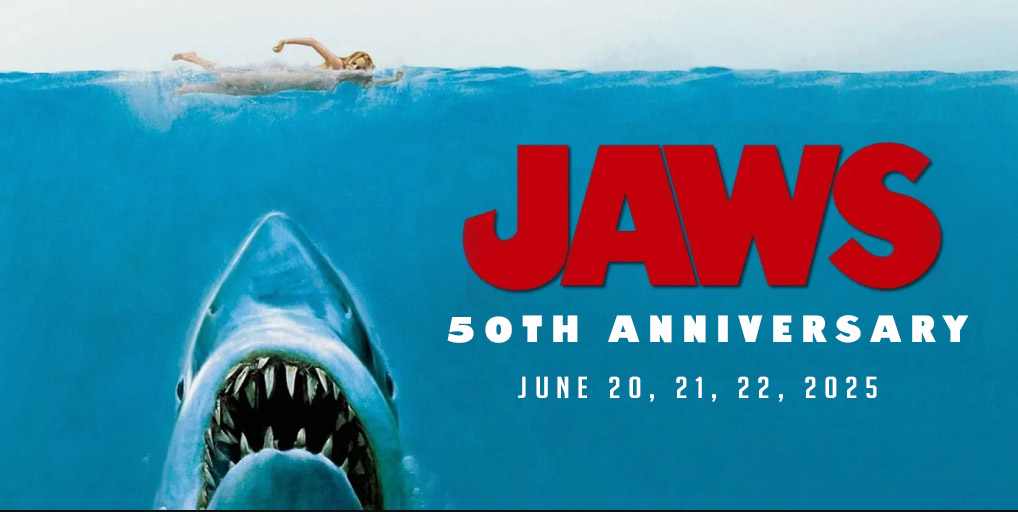
One of the things this summer movie season will be remembered for is for being the 50th anniversary of the first blockbuster summer movie, Jaws. It’s not an exaggeration to say this movie changed the film industry forever.

The 50th anniversary of Jaws was this past June, but the film is having special screenings in theaters this Labor Day weekend to celebrate the event. If you’re lucky, your local theater will have the film in 3D or some other upscale format like IMAX. What is surprising is that the upscale of the film actually holds up and the genius of the filmmakers, including its director, is the reason why with the way the scenes were filmed.

Everyone knows Jaws was one of master director Steven Spielberg’s earliest works and is still considered one of his finest films. Thanks to his brilliant directing skills, Jaws was elevated from a standard thriller into a masterpiece of adventure and horror. Plus, it made many viewers afraid or at least wary about going into the water during beach visits.

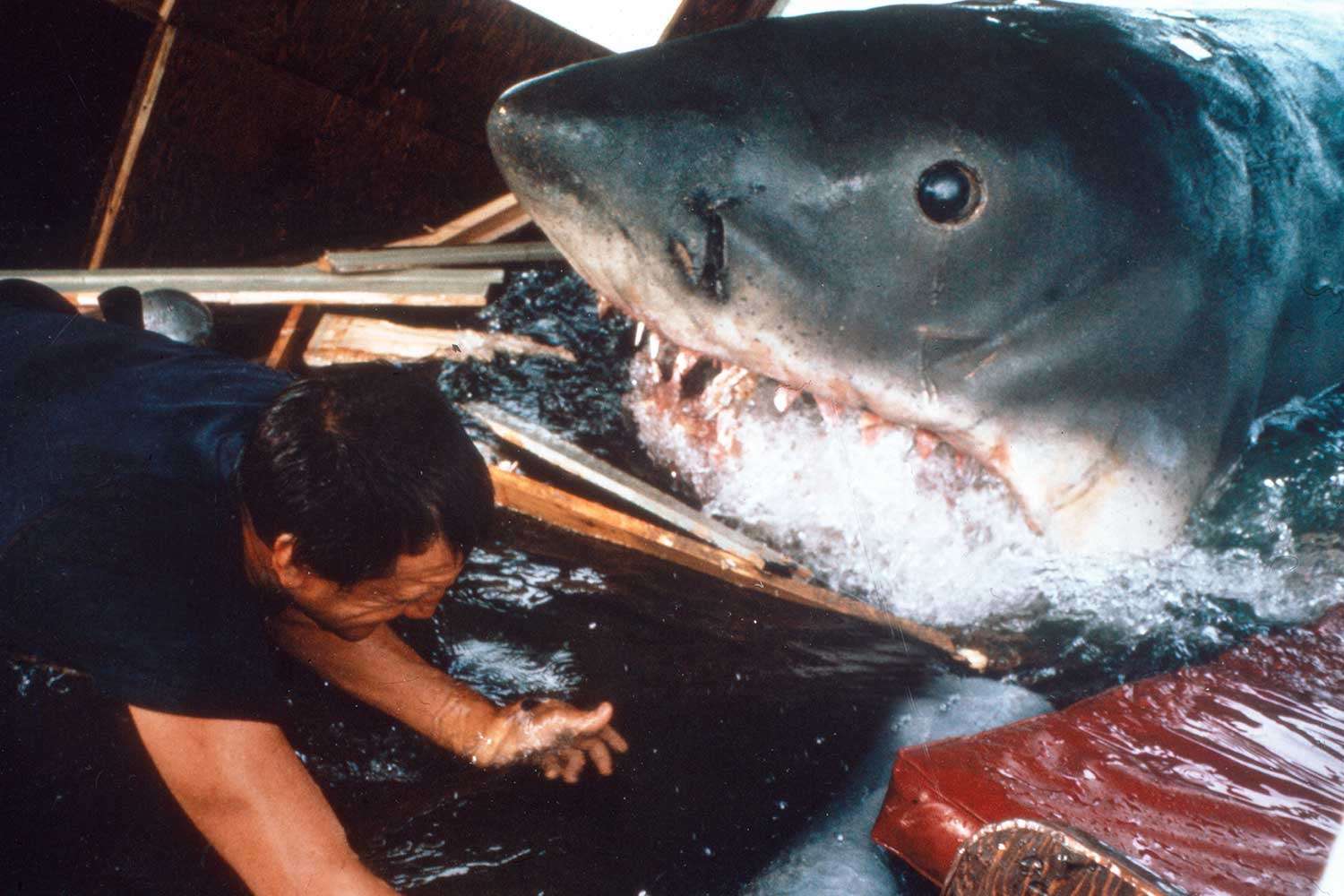
Jaws excelled at creating a sense of dread and unease with the way the ominous ocean was filmed as it hid the terror of the great white shark that feasted on the hapless citizens of Amity. This uneasiness with the mysterious ocean hit us right at the start of the film when a drunk young woman foolishly went for an evening swim; something you must never do, sharks and other water predators are at their most active at this time. She was attacked by an unknown, unseen force that turned out to be an unusually large great white shark that would go on to terrorize the town of Amity. The scene where she was attacked was punctuated with unsettling dark imagery, John Williams’ iconic score and the fact we never saw the shark. Not revealing the shark until later exploited our fear of the unknown, and increased our anticipation of finally seeing it when the film’s heroes, Amity Police Chief Martin Brody (Roy Scheider), marine biologist Matt Hooper (Richard Dreyfuss), and the salty shark hunter Quint (Robert Shaw), confronted the great white terror.

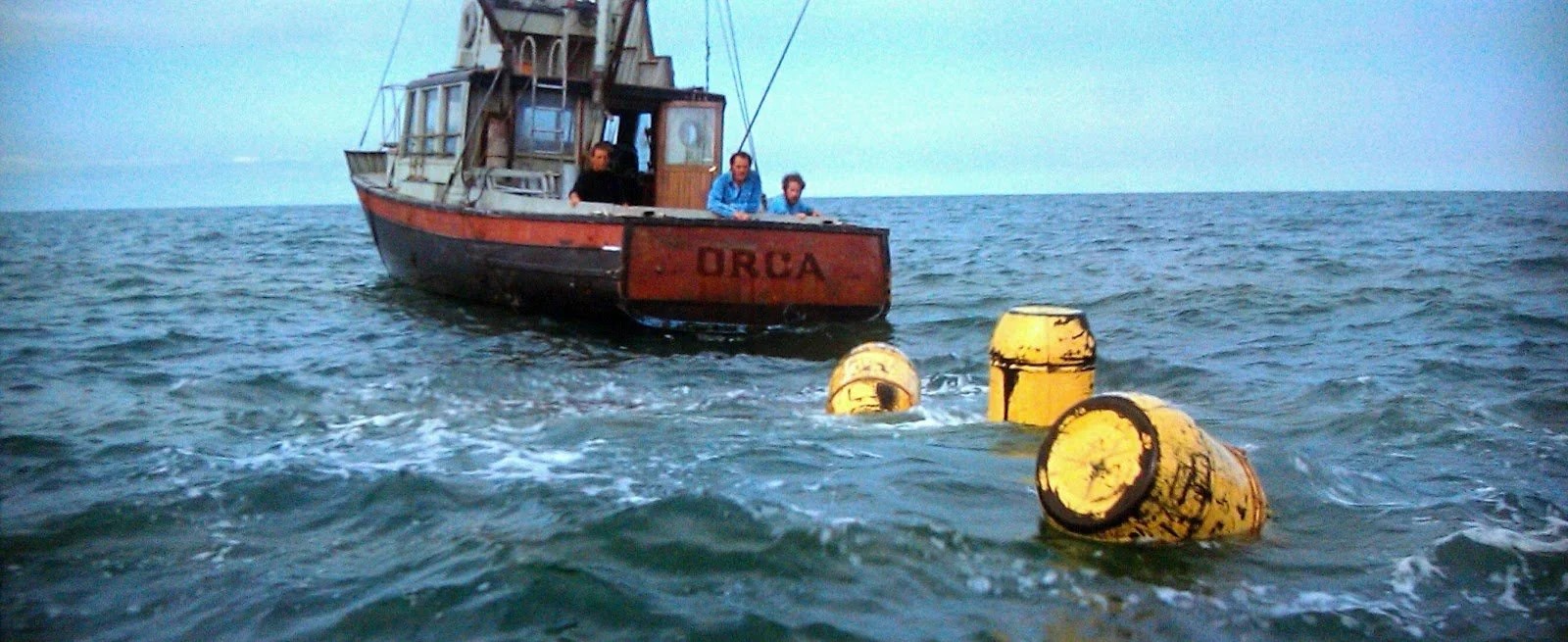
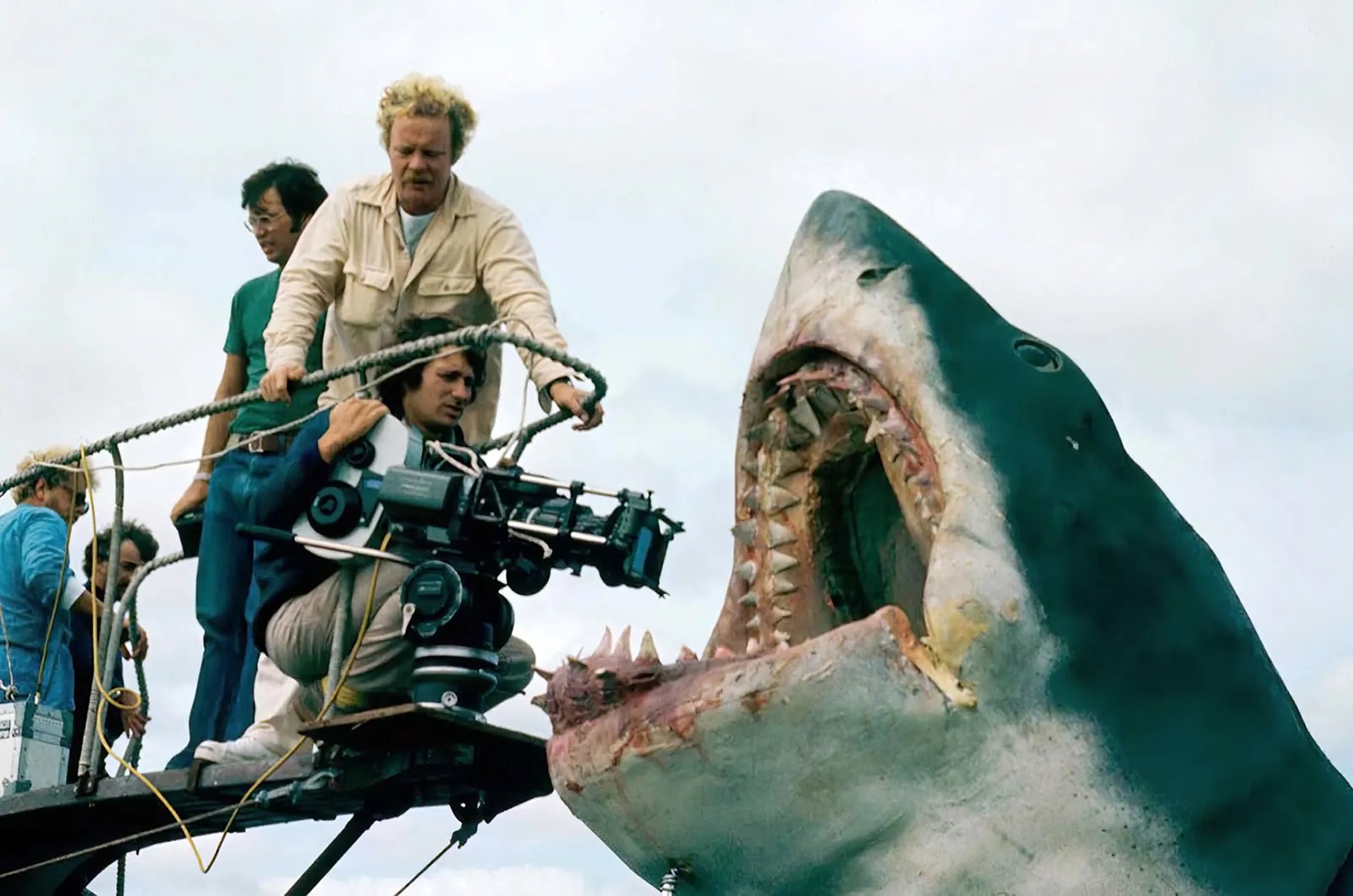
An important reason why Jaws worked so well was that Steven Spielberg was forced to keep the shark offscreen for most of the film. That was because the mechanical shark built for the film rarely worked and Spielberg had to work around this by implying the shark’s presence. You would hear the haunting bars of John Williams’ Jaws theme to announce the shark’s presence, just offscreen. You would see quick shots of the shark’s fin or a blurry image of the shark just underneath the surface or later in the film when the shark was speared with lines attached to barrels. These were supposed to keep the shark close to the surface as the film’s heroes hunted it. However, it wasn’t too long before the film’s heroes realized the barrels not only were not effective, but whenever the barrels bopped up to the surface, their presence signaled the approach of the invisible enemy and added to the scenes’ tension and suspense.

Spielberg’s challenge with creating suspense and keeping the shark hidden until the pivotal final act helped forge his directing skills early in his career. Of course, he had a miserable experience directing the film and avoided directing films set in the open ocean afterwards. In fact, he was so bothered by his experience that it was only recently that he was able to bring himself to watch the film. He admitted to liking the film. Who knows what he could do with the film if he made it today?

What is incredible about Jaws and one reason why it is held in such high esteem today was that after a few inferior sequels, there have not been any attempts to remake or reboot it. Yes, there are other skilled directors that could film a theoretical Jaws remake today, but they would have to compete with the mystique of the original film. How could a remake distinguish itself and improve upon perfection?

As mentioned above, a major reason why the 1975 film still terrifies us today is because it exploited our collective fear of the unseen. Most directors today would be too tempted to have a CG shark popping out of the water every five minutes. Sure, today’s special effects could easily have the shark out in the open in nearly every scene, but it would not work. We’ve seen this with films like The Meg, the Sharknado films, and Deep Blue Sea, though the latter film has its merits. So, while it is tempting to pine for a Jaws remake it is best for now to leave that idea alone and enjoy the original classic…even though it will leave you too afraid to go into the water 50 years after its release.

Commemorating Star Wars Episode III 20 Years Later

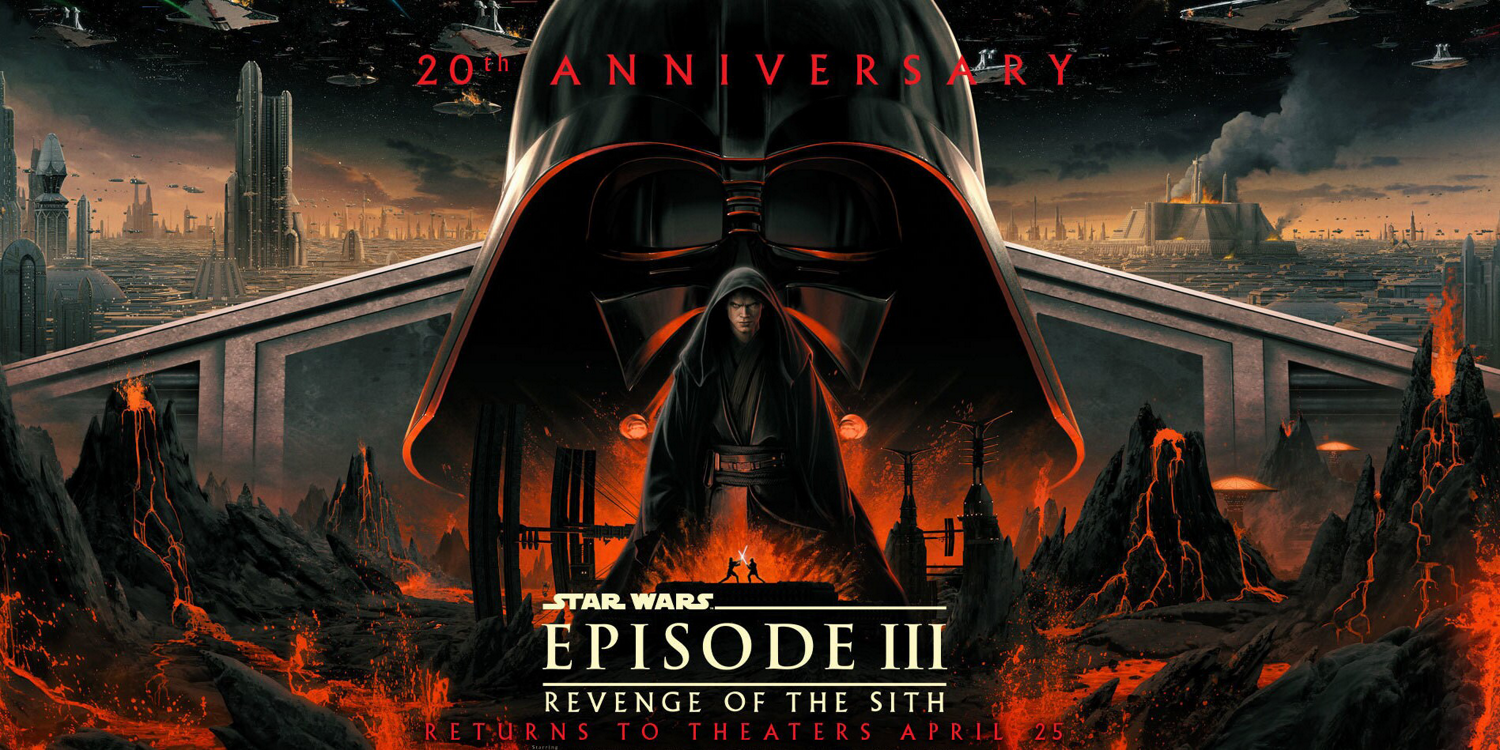
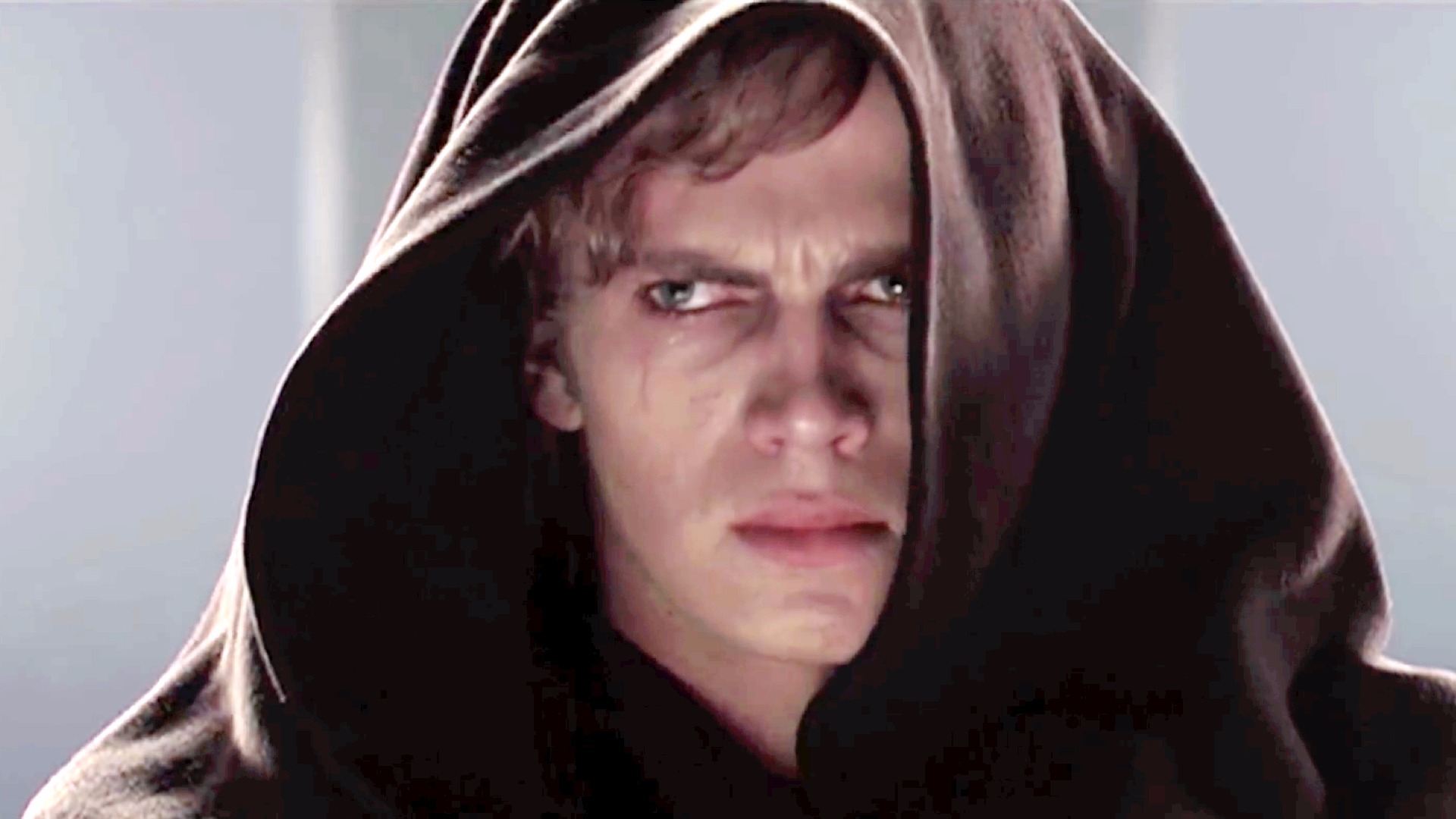
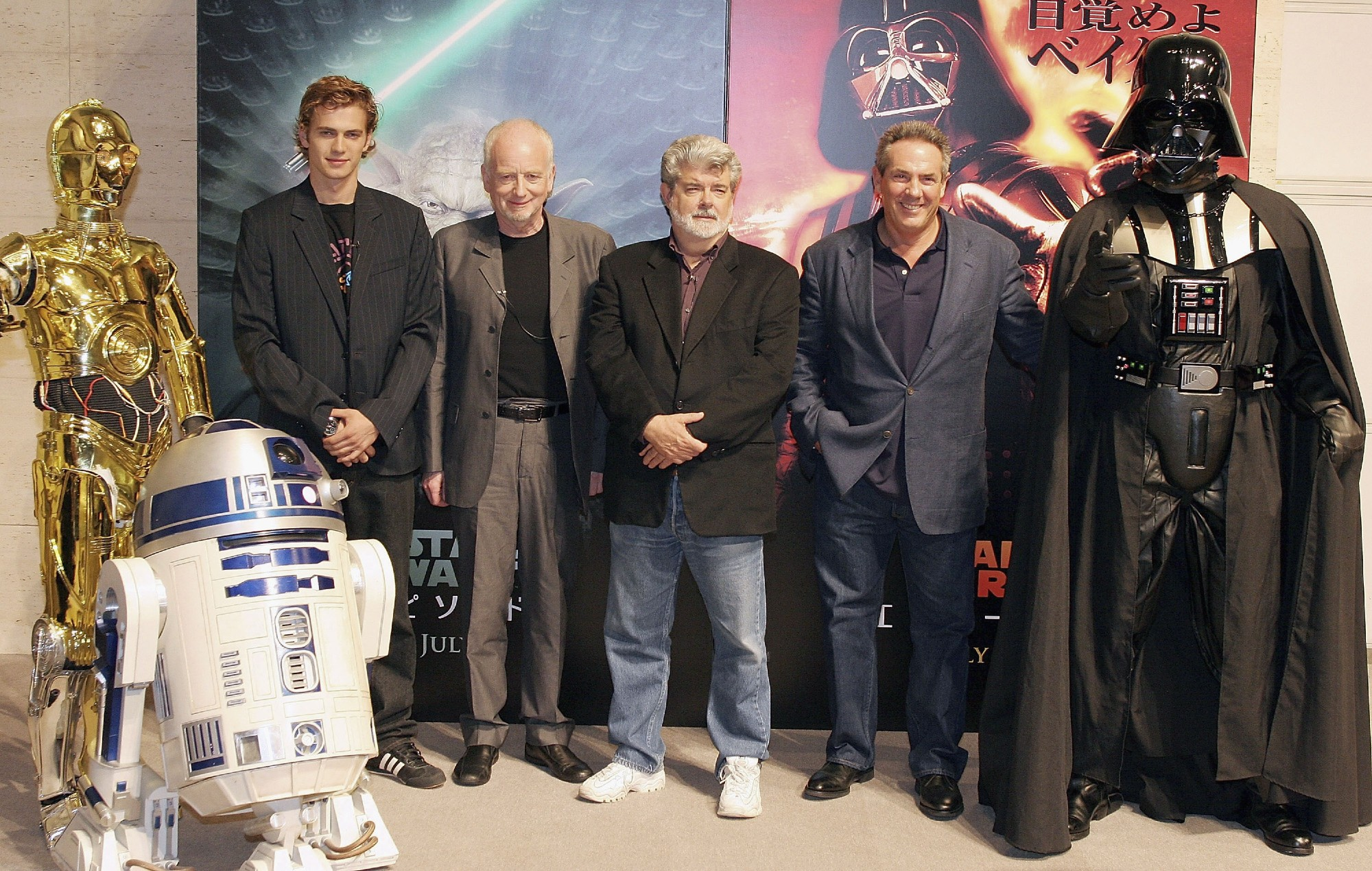
This year marks the 20th anniversary of Star Wars Episode III: Revenge of the Sith, arguably the best of the Star Wars prequels and the culmination of Anakin Skywalker’s fall to the Dark Side of the Force.

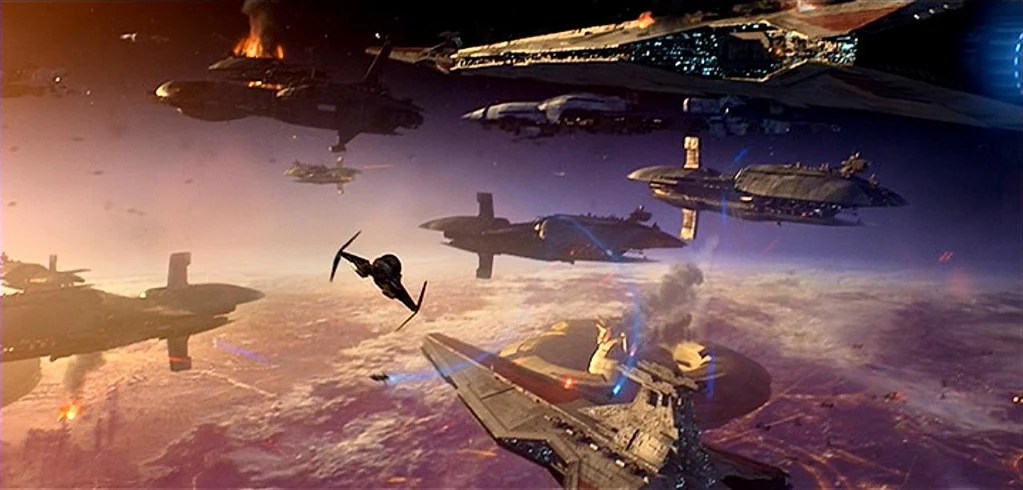
The film starts with a bang as we see Anakin and his mentor, Jedi Master Obi-Wan Kenobi rushing to rescue Chancellor Palpatine, the leader of the Galactic Republic who was kidnapped by Separatist forces in the skies above the Republic’s capital world of Coruscant. The opening space battle is a spectacular highlight as we see the Jedi duo flying among enormous capital ships wrecking havoc on one another. This scene is one I’ve rewatched countless times and is a great way to set up the rest of the film. When the Jedi finally reach the Separatist flagship and find the Chancellor, Anakin’s descent to evil is hinted at as he brutally executes Count Dooku at the urging of Palpatine, after an intense lightsaber duel.

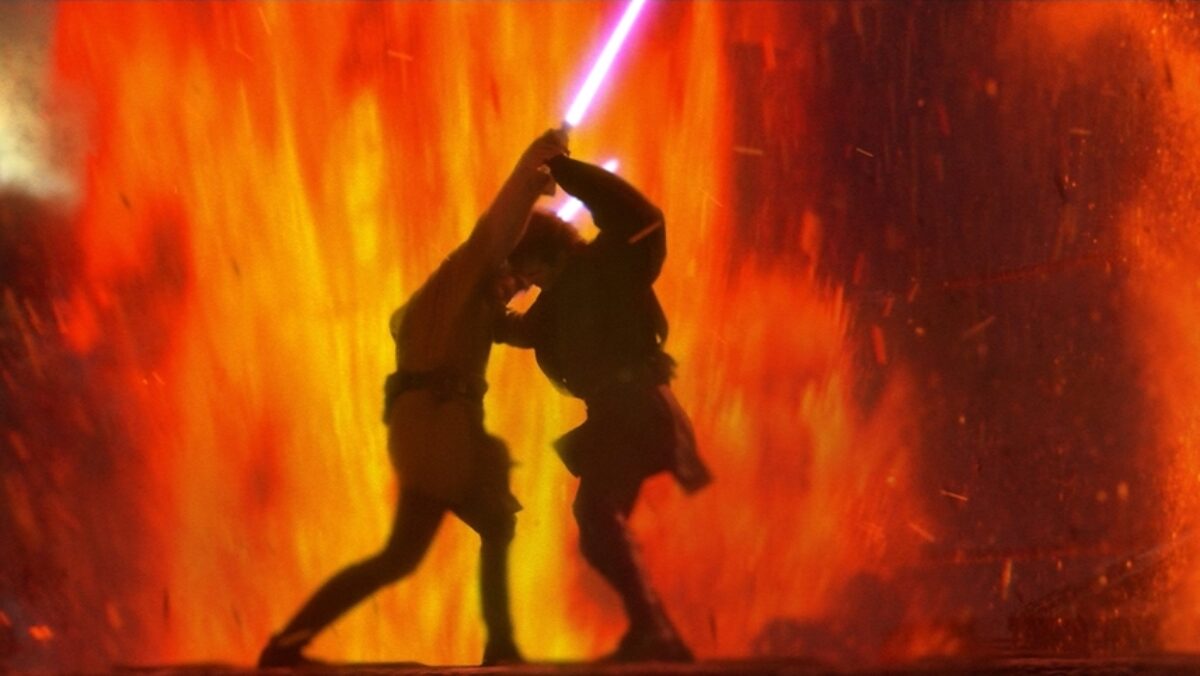
His future as a Sith Lord is further orchestrated by Palpatine as he convinces Anakin that his wife, Padme, will die unless he learns the secrets of the Dark Side, and he turns on his fellow Jedi. The final confrontation with his friend Obi-Wan on the lava world of Mustafar is both exhilarating and emotional as a heartbroken Obi-Wan is forced to mortally wound Anakin and leave him to die while castigating him for turning on everything they fought for. Palpatine eventually arrives and finds Anakin on the brink of death and, using medical droids and surgical procedures, turns him into the fearsome and legendary Darth Vader, who is now trapped in a prison of body armor that keeps him alive. Padme’s death due to Anakin’s force choke, her trauma at giving birth to their twins Luke and Leia, and Vader’s reaction to the news of this event, is the emotional high point of the film and sets up the classic original Star Wars trilogy as Obi-Wan and his ally Bail Organa takes the twins to safety on the planets Alderaan and Tatooine.

One of the many strengths of the film is the foreboding tone that is set when we see the manipulation that Anakin is subjected to from Palpatine, as well as the Jedi being set up for their downfall which is shown when Anakin marches on the Jedi temple flanked by Clone Troopers who then kill all the Jedi there, including young Jedi students. The many battlefields of the Clone Wars is another great thing we witness in this movie, such as the clone army battling the separatist droids on the Wookie home world Kashyyyk, re-introducing fan favorite Chewbacca to the Star Wars universe in this era. As well as the conflict on the arid planet Utapau, where Obi-Wan finally eliminates Separatist droid General Grievous. This happened after a thrilling chase scene that has Obi-Wan riding on a gigantic lizard named Boga in pursuit of Grievous who is riding on his personal wheel bike. This is something that Star Wars excels at, blending different genres and circumstances, fantasy and science fiction that somehow works. This imaginative vision of director George Lucas comes to fruition the most in this film as this is the last movie he directed, and it seems he finally was able to shake off the issues that surrounded the first two prequel films. The Phantom Menace when it was released was criticized for what some saw as a childish tone with Jar Jar Binks flailing around. This is completely absent in Revenge of the Sith. The feeling of impending doom for the Republic and the Jedi is palpable as we finally see the events hinted at in the original trilogy: Anakin’s fall, his final duel with Obi-Wan, the extermination of the Jedi Order, and Palpatine’s rise to be the evil Emperor that we first saw in Return of the Jedi. Attack of the Clones was seen as an improvement but still had issues with the somewhat clumsy romantic subplot between Anankin and Padme. Again, this is not the case in Revenge of the Sith, as the focus is on the cruel fate that awaits Padme at the hands of her husband, which is haunting to witness.

The reputation of Star Wars Episode III: Revenge of the Sith has only improved in the years since its release on May 19, 2005. It has the reputation of being the best prequel film, which is well deserved and it also led to later Star Wars releases such as the highly regarded Star Wars: The Clone Wars TV show and Star Wars: Rebels. I think it is right up there with A New Hope and The Empire Strikes Back when rating the various Star Wars movies. It has the right balance of being a more sophisticated story while still having the excitement and adventure a Star Wars movie needs to have. The special effects were top notch as always, and we see new ships and vehicles introduced such as ARC-170 starfighters, V-Wing starfighters, Droid Tri-fighters and Clone Turbo tanks. This is something that was missing from the sequel trilogy which basically just had X-Wings and TIE fighters from the original films with new paint jobs. The lightsaber duels were also the best of any of the movies, with Anakin vs. Dooku, Obi-Wan vs. Grievous, and finally the long-awaited duel between Anakin and Obi-Wan, which did not disappoint. It was a furious and intense battle with a backdrop of searing lava that is fantastic to witness. The inevitable outcome of it brings the prequel saga to a close and guaranteed that the film earned its place in Star Wars lore as an epic finish to the story that Lucas started so many years ago.

The celebration and acclaim that Star Wars Episode III: Revenge of the Sith is receiving on its 20th anniversary is well deserved, and it will be no surprise to see it get the same kind of praise and acknowledgment on its 30th anniversary and well beyond.

C.S. Link

A Look Back At Star Trek: Voyager

It has been 30 years since the first episode of Star Trek: Voyager debuted, yet it is still fondly remembered today, especially when it is compared to many modern Star Trek TV shows. Let’s take a look back at Star Trek: Voyager as its 30th anniversary is celebrated.

Flagship Show

Star Trek: Voyager was the flagship TV show of the fledgling United Paramount Network (UPN) that launched on January 16, 1995, with the airing of “Caretaker” the pilot episode of Star Trek: Voyager. When the TV show premiered it was largely anticipated though many fans had reasonable reservations about yet another Star Trek TV show. After a decades-long drought, fans were inundated with TV shows starting with Star Trek: The Next Generation (TNG), which was followed by Star Trek: Deep Space Nine (DS9), and then Star Trek: Voyager. It was supposed to address complaints Paramount Pictures executives had about DS9 for straying too far from standard Star Trek.

Showrunner Rick Berman, who also ran TNG and DS9, was reportedly hesitant to produce another Star Trek TV show that would run concurrently with DS9. However, the Paramount Pictures executives were adamant about creating another Star Trek TV show that more closely followed the standard starship-visiting-planets formula to help launch UPN. Given this task, Berman and his associates sought to differentiate Star Trek: Voyager from other Star Trek TVshows.

A Lost Crew in Space

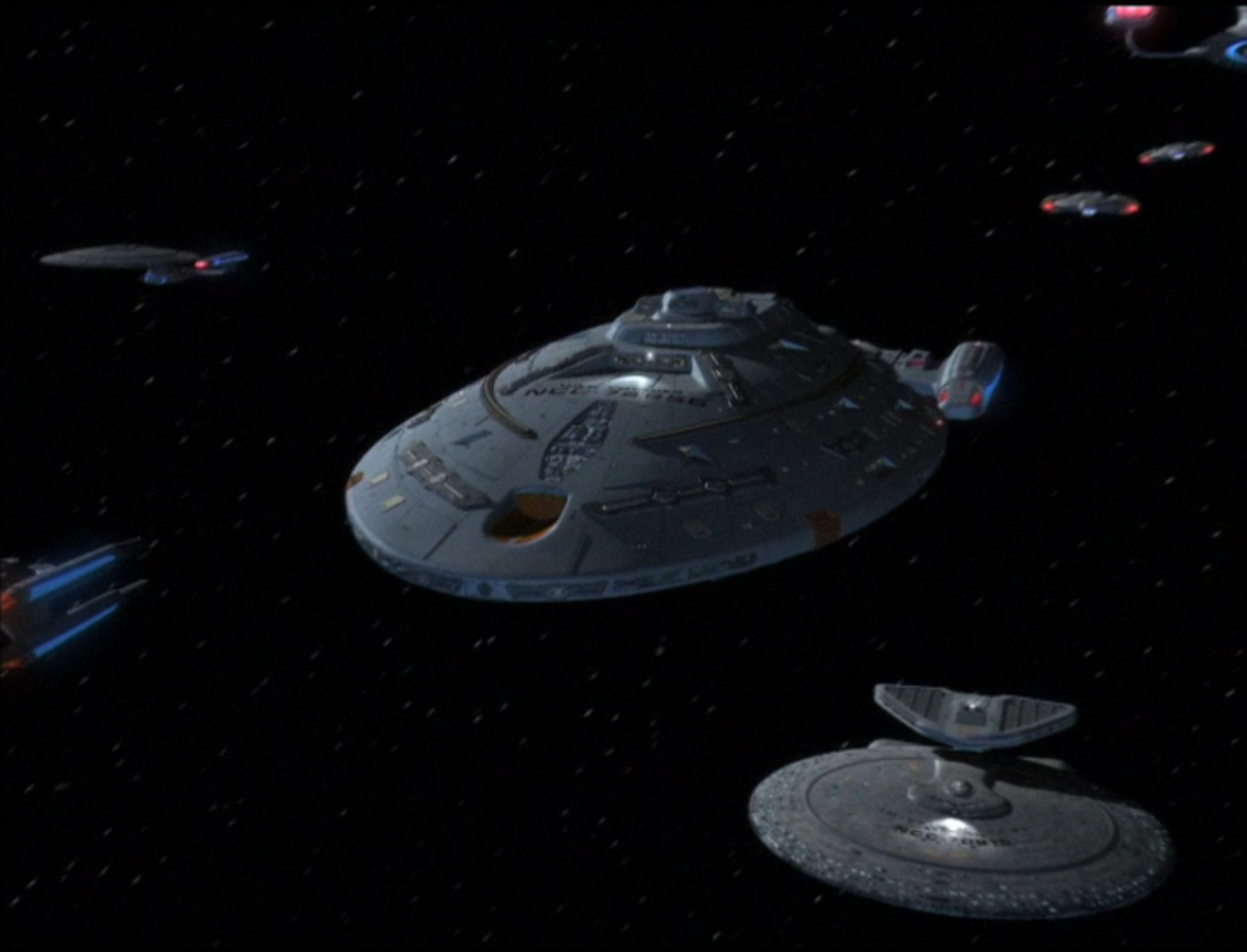
The premise was fairly simple, a starship called Voyager from the United Federation of Planets and Earth is flung to the far corner of the galaxy (the Delta Quadrant) with a crew made up of Starfleet officers and renegade Maquis freedom fighters (more on them later). With limited resources and on their own, the Voyager crew has to find a way back home while exploring on the side and encountering strange new worlds, yada yada.  

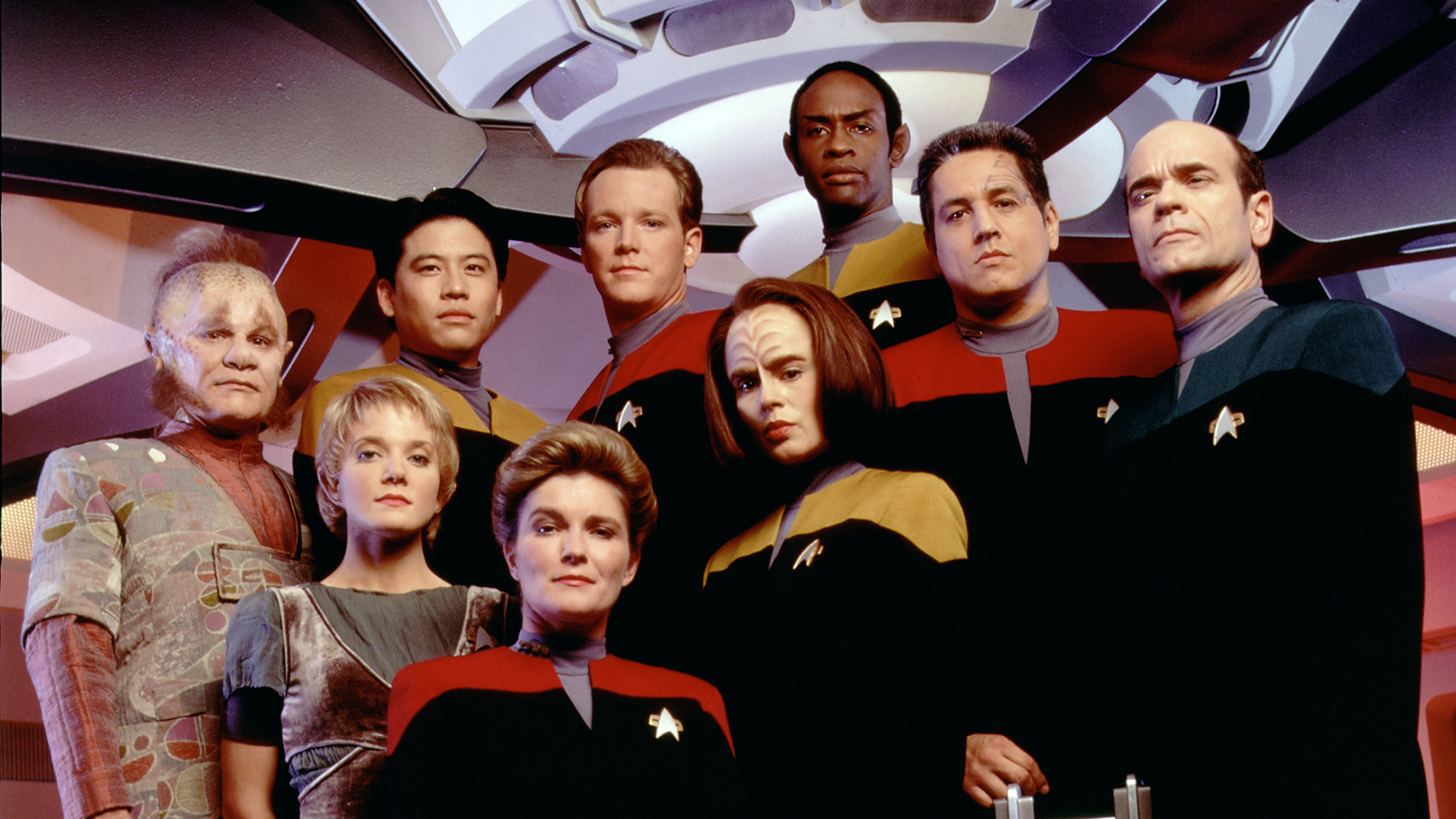
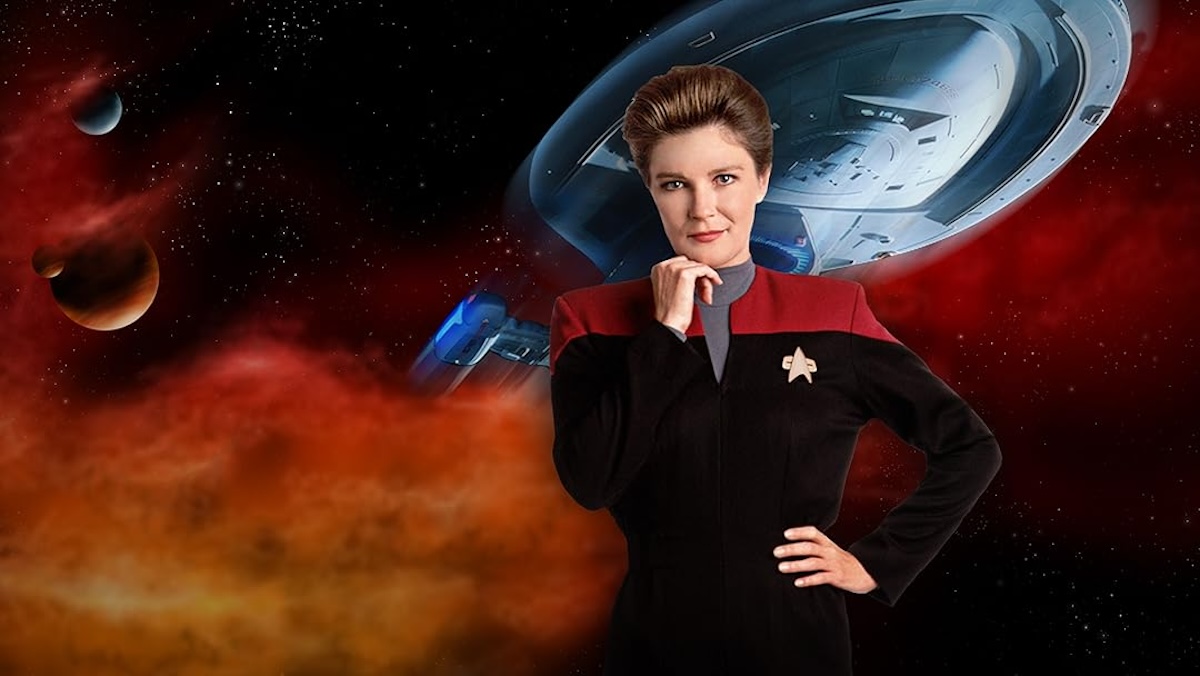
Kate Mulgrew starred as Captain Kathyrn Janeway, who commanded the Voyager and was dedicated to upholding Starfleet’s ideals while protecting her crew. At the time of her casting, there was a lot of hoopla and celebration because the main character of a Star Trek TV show was a woman. Other characters included the ship’s first officer, Chakotay (Robert Beltran), the leader of the Maquis and a former Starfleet officer, Tuvok (Tim Russ), the ship’s stoic Vulcan security officer, Tom Paris (Robert Duncan McNeill), a disgraced former Starfleet officer who gets his chance at redemption by serving as Voyager’s helmsman, B’Elanna Torres (Roxann Dawson), a half-Klingon Maquis member who became Voyager’s chief engineer, Harry Kim (Garrett Wang), a young Starfleet ensign on his first assignment, and the Doctor (Robert Picardo), a holographic medical program that performed the duties of the ship’s chief medical officer.

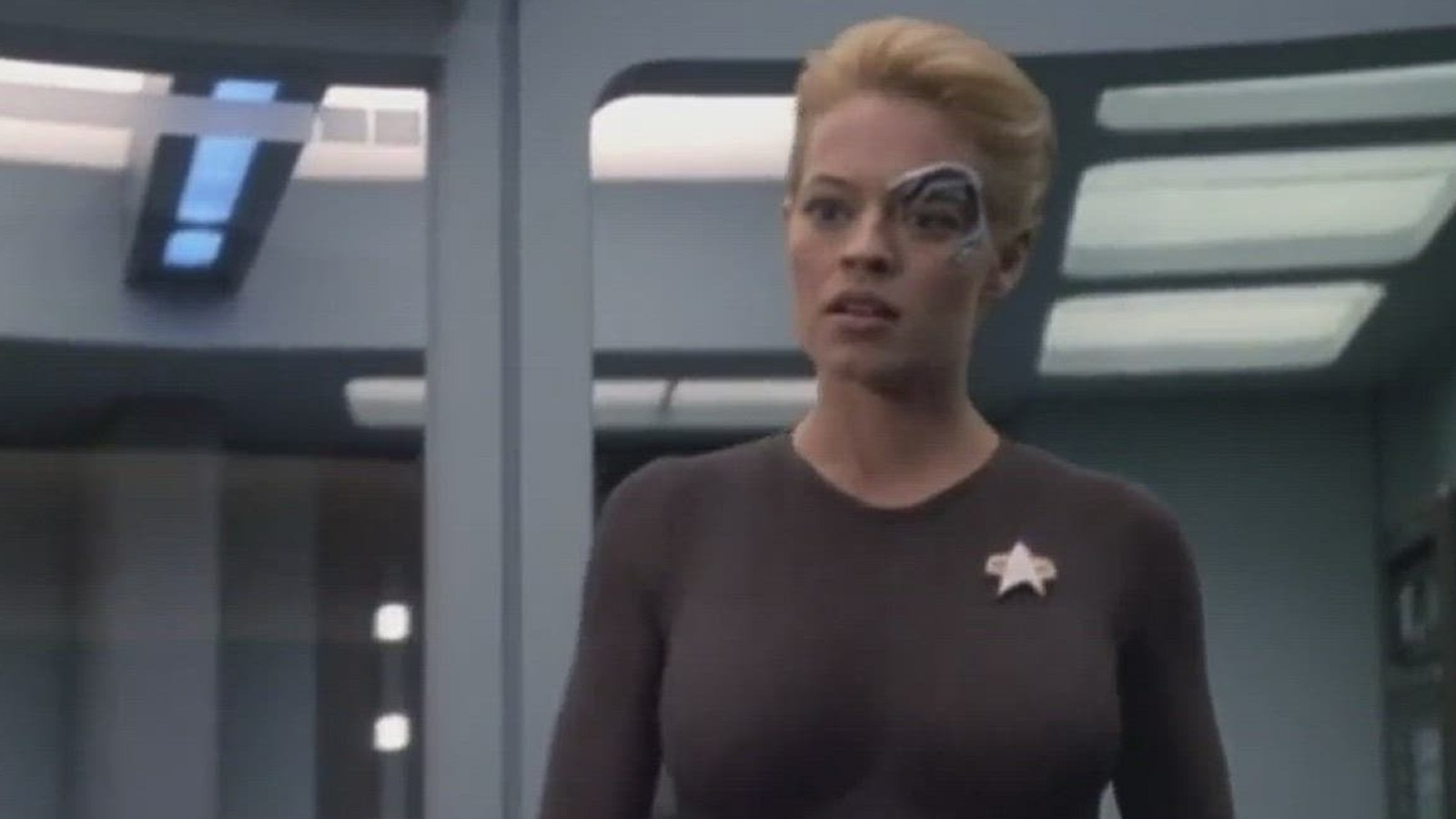
At the end of “Caretaker”, Voyager picked up two alien shipmates who are native to the Delta Quadrant and bring needed knowledge about the local space. They are Neelix (Ethan Phillips), a Talaxian drifter who ends being the ship’s cook and ambassador of sorts, and his girlfriend Kes (Jennifer Lien), an Ocampan who operates as the Doctor’s medical assistant and helps the program develop a personality. As the series progressed, it added Jeri Ryan to the cast as the former cybernetic Borg drone called Seven of Nine while Lien departed the series. Seven of Nine became the show’s breakout character thanks in part to the performance of Ryan as she served as the show’s version of Spock. In other words, a stoic outsider who questioned humanity while discovering her own.

Essentially, the TV show combined aspects of the original Star Trek and Lost in Space, and it worked for the most part. Yet, there was glaring issues with the TV show which turned out to be a harbinger for the creative drought the Star Trek franchise was beginning to suffer from at that time.

Continue reading

Exploring The Land Of The Lost

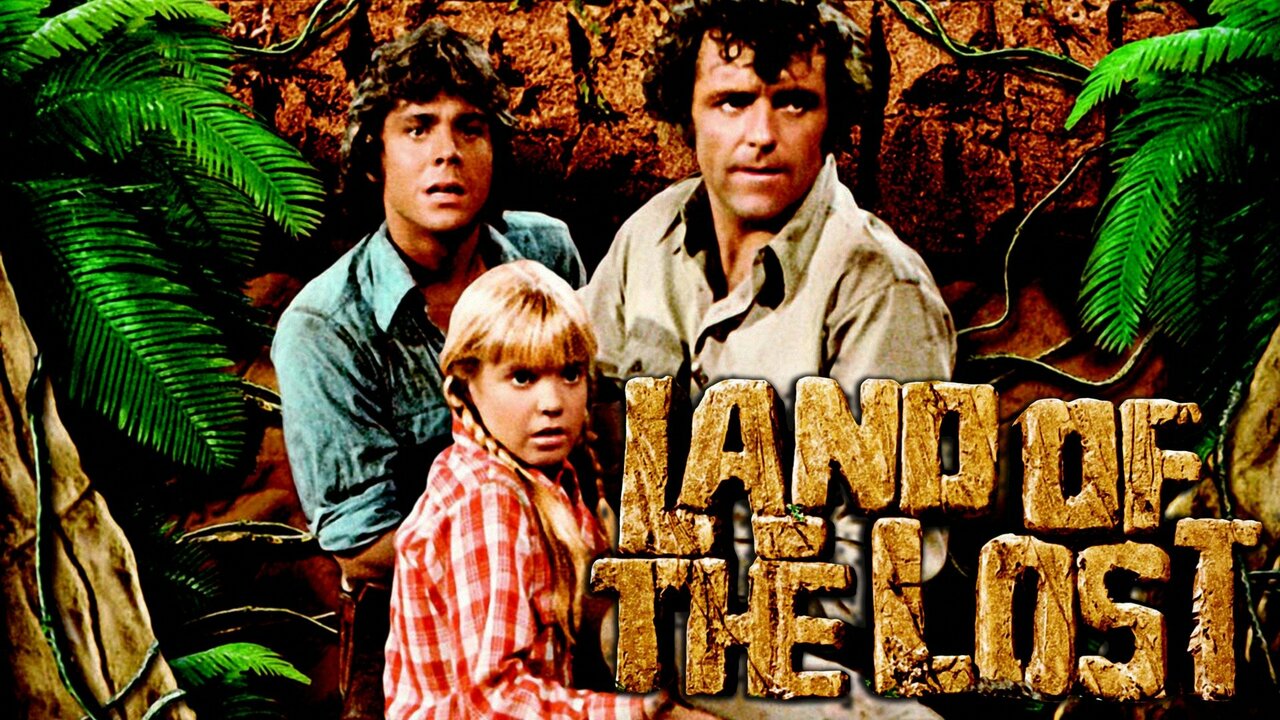
Fifty years ago, the children’s program Land of the Lost premiered on Saturday morning on the NBC television network and surprised many viewers with its well written and imaginative scripts. Even though the production was undeniably low budget and the acting by some of the performers was a bit over the top, Land of the Lost quickly won over many fans thanks to its spirited presentation. The TV show was produced by Sid and Marty Kroft who ruled the Saturday morning TV landscape in the ’70s with many fantasy and comedic live-action programs. Land of the Lost stood out and was their best production because it ditched the juvenile humor seen in their other programs and focused on drama and sci-fi elements. Even though it was a program aimed at children, Land of the Lost had an unexpected mature and serious tone that was appealing to anyone.

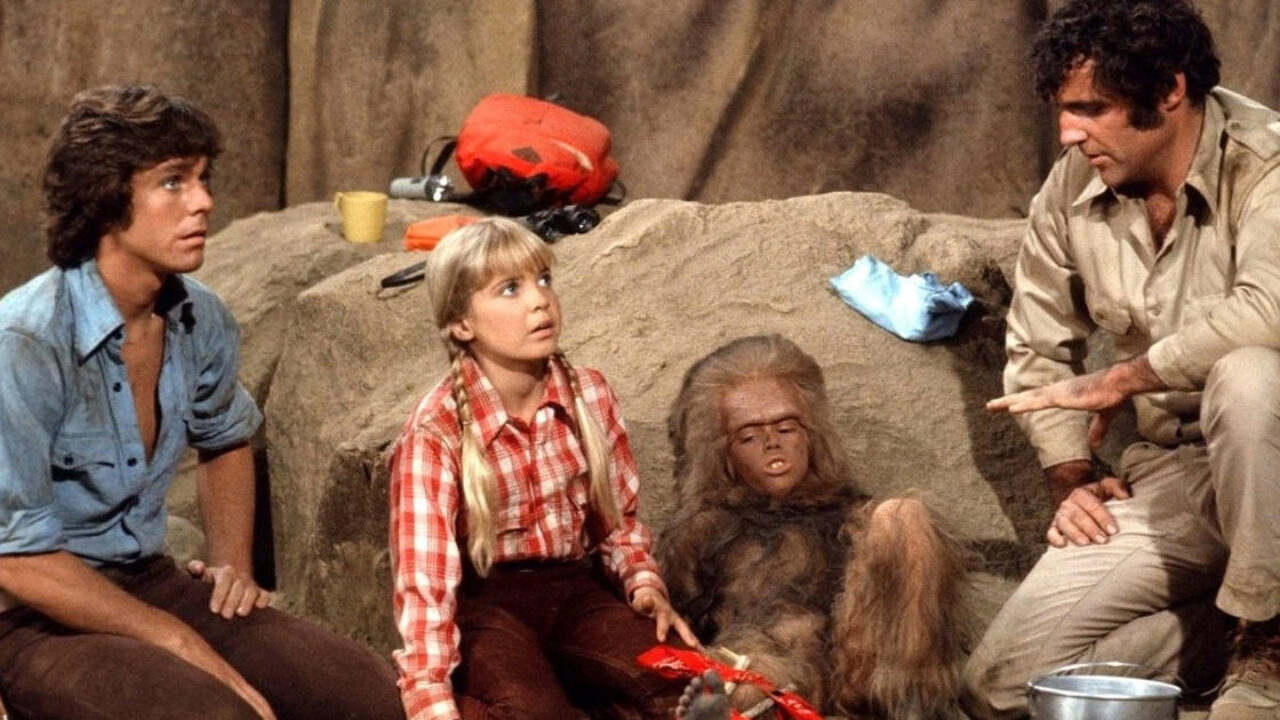
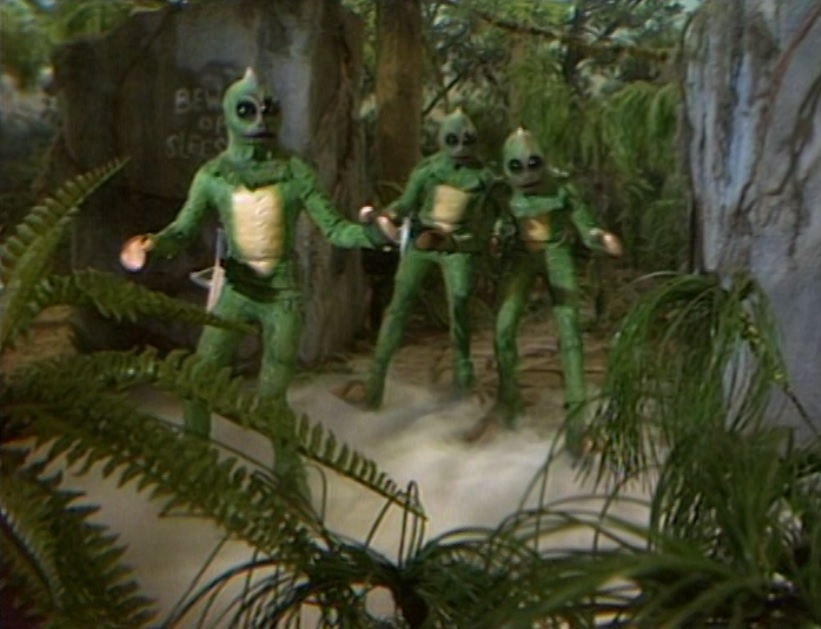
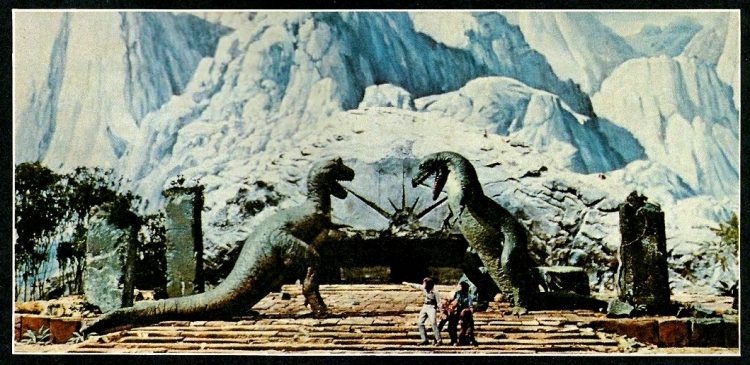
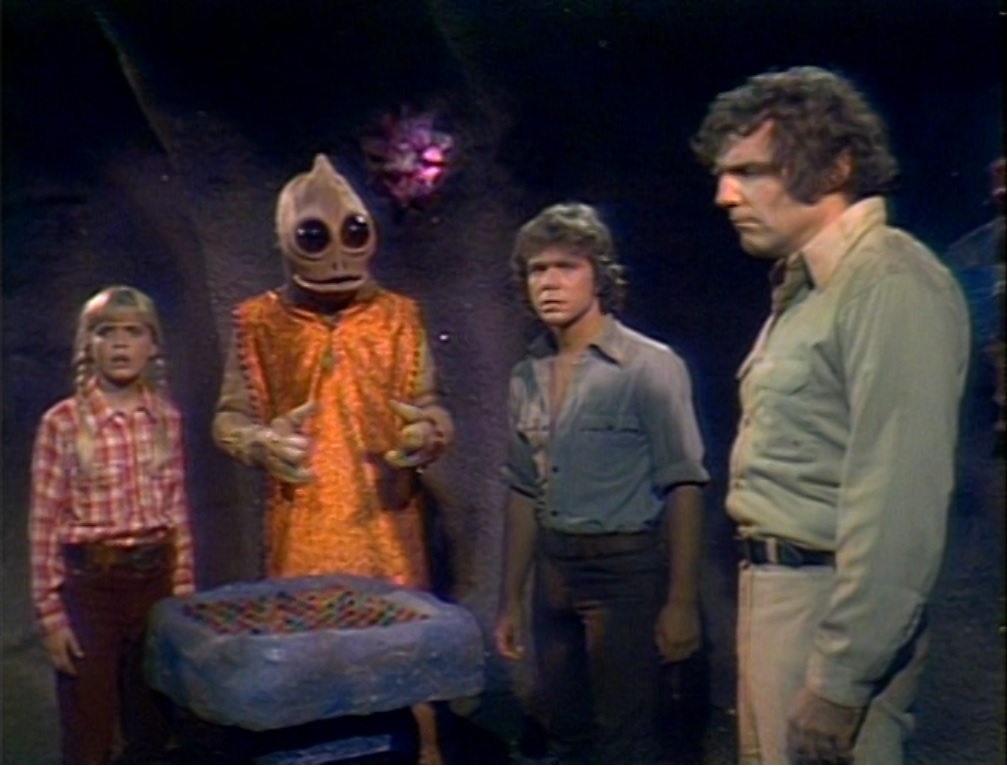
The TV show followed the adventures of the Marshall family, Rick (Spencer Milligan) and his children, Will (Wesley Eure) and Holly (Cathy Coleman), who while out whitewater rafting in the Grand Canyon fell through an interdimensional portal that transported them to a timeless world full of dinosaurs. Trapped in the lost land, the trio struggled to survive while trying to find a way home. During their adventures the Marshalls encountered many unusual denizens including Cha-Ka (Phillip Paley), a member of the Pakuni, a primitive tribe of ape-like humanoids, and Enik (Walker Edmiston), an advanced reptilian/insect-like humanoid who was also trapped in the Land of the Lost. What made Enik’s backstory so fascinating was that his race the Altrusians actually devolved into the savage Sleestaks, who were the dominant species in the Land of the Lost. The Marshalls usually met other travelers from different eras who wound up trapped in the land and often found a way to return to their own time period.

The episodes were devoted to plots about environmentalism, family strife, survival and surprisingly imaginative sci-fi concepts, especially time travel. During the show, the Marshalls discovered these interdimensional constructs called pylons that could transport anyone who entered them into different dimensions including modern-day Earth, though navigating them was difficult. These devices were used to explain why Rick Marshall left the show (in reality Mulligan was removed from the TV show due to conflicts over merchandising) as the father was whisked back to Earth unexpectedly at the start of the third season and replaced by Uncle Jack Marshall (Ron Harper). As Jack explained to his nephew and niece, he was trying to find his brother and his children and followed the same route that stranded the Marshalls in the lost land.

By the third season, the scripts were less imaginative and more geared toward children. The storylines took on more fantastical elements as Uncle Jack, Will and Holly encountered the Medusa, fire-breathing dimetrodon, a unicorn and the ghostly captain of the Flying Dutchman ship. Still the first two season were very thought provoking as the Marshalls met an eerie translucent alien called the Zarn, mysterious human visitors, and alternate versions of themselves. One of the reasons why the scripts stood out was because many of them were written by acclaimed sci-fi authors like Ben Bova, Norman Spinrad, Theodore Sturgeon and Larry Niven. Star Trek scriptwriter David Gerrold was the story editor in the first season and recruited fellow Star Trek writers like D.C. Fontana, Margaret Armen and even Walter Koenig to write a few episodes.

Thanks to its dramatic tone, the stories that focused on survival were more impactful and viewers felt the constant dangers the Marshalls faced as they dealt with carnivorous dinosaurs, environmental dangers, temporal and interdimensional dilemmas and the barbaric Sleestaks. One haunting episode, “The Search” had Will and Holly struggling to save their father who was electrocuted by crystals that operated the pylons. Anyone watching it could sense the desperation and panic from the siblings who were forced to face the possibility of their father dying. Another eerie episode “Split Personality”, had the Marshalls encountering alternate versions of themselves who were frozen in time and needed their help.

Even though the series never had a concluding episode, due to the temporal nature of Land of the Lost it can be argued that the Marshalls did find their way back home in the first season finale episode called “Circle”. Inside one of the pylons, the family was able to return back to their home but it was revealed they were trapped in a Mobius loop and another version of themselves wound up trapped in the Land of the Lost by the time the episode concluded. So in a sense, at least one version of the Marshalls returned home and subsequent episodes followed their variants.

In the decades since Land of the Lost stopped airing, the program has maintained a cult following thanks to a heavy syndication run that lasted many years. There were two attempts at remaking Land of the Lost. One included another TV show that aired for two seasons and featured the Porter family who were stranded in another dimension inhabited by dinosaurs and Sleestaks. Then there was a feature film in 2009 that starred Will Ferrell and as expected by the casting was more comedic. The film was a major dud with critics and fans and flopped at the box office. It also featured one of Leonard Nimoy’s last voice performances as he portrayed Enik. Sadly, the film ignored the dramatic survivalist aspects of the original Land of the Lost and insulted the memory of the original with its moronic humor. Regardless of how the remakes were received, Land of the Lost still has many devoted fans who appreciated the bright scripts and its imaginative, dramatic tone that engaged viewers.

José Soto