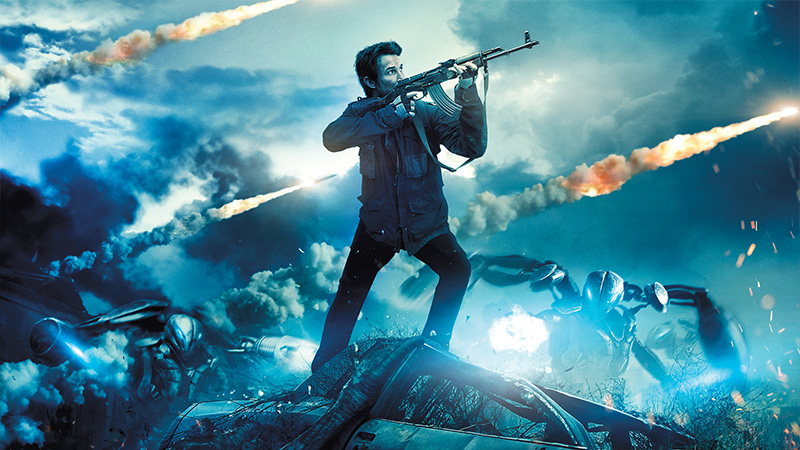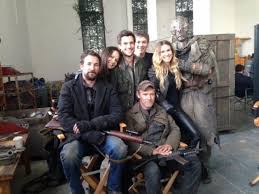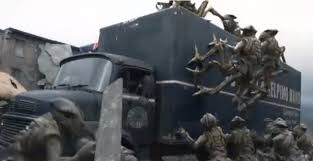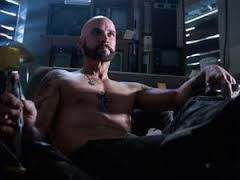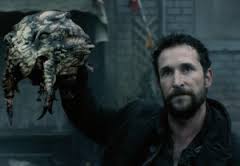

After five seasons the TNT TV series Falling Skies has come to a conclusion. Executive produced by Steven Spielberg, Falling Skies told the saga of the Mason family and a ragtag group of human fighters resisting an alien occupation of Earth. It was a rocky road getting to its endgame with unexpected highs and lows.
Looking back at Falling Skies, it could be seen that it was trying to emulate the same post-apocalyptic feel of the more superior The Walking Dead, but it couldn’t achieve those lofty goals. Still, it was for the most part entertaining to watch.
The first three seasons were easily the best for Falling Skies since the show displayed a desperate, squalid atmosphere where the freedom fighters were always on the run and for the most part were just staying one step ahead of the alien Espheni and their minions. As the show progressed so too did the humans.
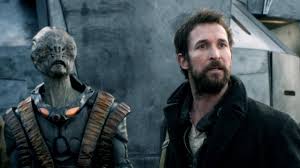
Led by Tom Mason (Noah Wyle), his wife Anne (Moon Bloodgood) and Col. Dan Weaver (Will Patton), the human fighters got better at fighting the aliens and were able to set up a provincial government thanks to the help of alien allies called the Volm, represented by one of the coolest TV aliens, Cochise (Doug Jones). Despite its limited budget, Falling Skies was generally entertaining, well acted and had some impressive production values. The set design was extremely dark and disheveled, which sold the fact that the American countryside was decimated by the alien invaders. The show had its faults such as delving too much in Mason family drama that involved Hal’s three sons, and the stories and characters were uneven.
Regrettably, Falling Skies took a turn for the worst in its fourth season, which was just a symptom of its behind-the-scenes hurdles where the show went through many showrunners. How bad was it? Well, one of the worst sci-fi clichés was used: the alien/human hybrid who prematurely ages into a young adult and has superpowers. Then the show’s characters were split up; some were put into a ghetto where Tom Mason became a vigilante superhero (I’m not making this up), then one of his sons wound up in an alien youth camp where the children were being indoctrinated to welcome the alien conquerors. If the aliens had conquered Earth why go through all this trouble?
Luckily, Falling Skies improved somewhat in its final season. It became grittier and darker even though the writing and character motivations were all over the place. Take for example, the character of John Pope (Colin Cunningham), who was first introduced as a villainous biker type then became an antihero. During the final season, Pope decided to go back to his murderous, evil ways and was after Tom Mason. At that point, Pope became like Jason Voorhees and was impossible to kill. He would show up in the last few shows in an extended cameo and be unceremoniously dispatched only to turn up alive in the next episode. This went all the way into the final episode, but at least his final scenes were actually effective thanks to Cunningham’s acting ability.
It was easy to tell that the showrunners wanted to wrap up the show in the last episodes, which is why things felt so rushed. But what was maddening, was the insistence of introducing and then ignoring new characters. Some were interesting, others were forgettable. Like with Pope, this trait went on into the final episode “Reborn” where a new biker type entered the picture (Jeff Fahey), who basically provided off-screen cannon fodder.
The final battle between the humans and the aliens showed its budgeted limitations with much of the action happening off-screen and with sound effects. But at least “Reborn” ended on a satisfactory note, even if it won’t go down as a great finale. Looking at its pluses and minuses, the final episode represented the entirety of Falling Skies. Some good ideas with uneven execution, but on the whole, the show was a decent diversion on TV for the summer.
“You were the Chosen One! It was said that you would destroy the Sith, not join them! Bring balance to the Force, not leave it in darkness!” –Obi-Wan Kenobi
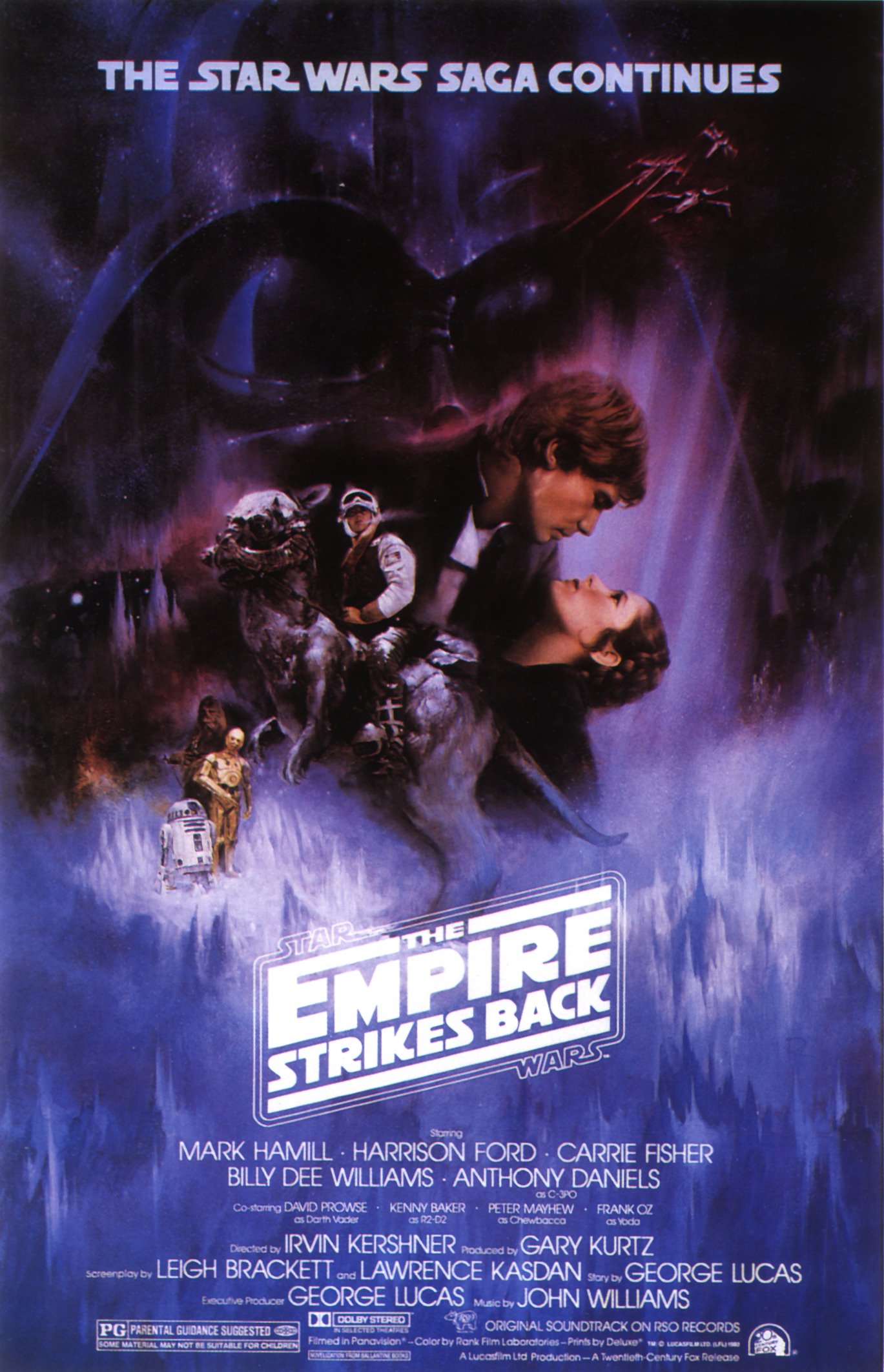
Sometimes the cliché is true; third time is the charm. After the poor reception of the first two Star Wars prequels, filmmaker George Lucas finally hit his directorial stride that he lost long ago with the final prequel Star Wars Episode III: Revenge of the Sith. The result of his efforts? The most underrated and darkest Star Wars film to date.
Star WarsEpisode III: Revenge of the Sith takes place during the last days of the Clone Wars. The opening scrawl literally opens with the word “War!” then explains that the galaxy-wide conflict between the Galactic Republic and the Separatist Alliance has been devastating to the Republic. The Separatists, led by the Sith Lord Count Dooku (Christopher Lee) and his second-in-command the cyborg General Grievous (Matthew Wood), have kidnapped Chancellor Palpatine (Ian McDiarmid), the leader of the Republic. As the Separatists leaders try to flee Coruscant, the capital planet of the Republic with their hostage, a massive and ultimately decisive battle breaks out between two opposing space armadas over Coruscant.
Amidst the cluttered, epic space battle, two Jedi Knights, Obi-Wan Kenobi (Ewan McGregor) and Anakin Skywalker (Hayden Christensen), take their small fighter ships and infiltrate Grievous’ battlecruiser where Palpatine is being held. The Jedi fight their way to the captive chancellor. They soon confront Dooku and engage in a lightsaber duel where Obi-Wan is knocked unconscious, but they younger Jedi is able to defeat the Sith Lord. At Palpatine’s urging, Anakin beheads a surprised Dooku after some hesitation.
As Anakin tries to escape with Palpatine and Obi-Wan in tow, by this time, the battlecruiser has taken on severe damage from the space battle and is losing orbit. General Grievous manages to escape in a shuttle, leaving Anakin to pilot the battlecruiser and crash land it on the citified planet.
Later, amidst the celebration among Palpatine and other politicians over Dooku’s death and the war concluding, Anakin steals away to rendezvous with his wife Senator Padmé Amidala (Natalie Portman), whom he secretly married in defiance to Jedi rules that forbids romantic relationships. She reveals that she is pregnant, and although he is excited at first, that night he has dreams where she dies during childbirth, which unsettles him.
General Grievous arrives on the planet Utuapo, his base of operations, and confers via hologram with the Sith Lord Darth Sidious. The cloaked figure orders him to bring other Separatists leaders to the volcanic planet Mustafar and announces that soon he’ll have a younger, more powerful replacement for Dooku.
At the Jedi Temple on Coruscant, Anakin confides with Jedi Master Yoda (Frank Oz) about his premonitions. Yoda warns him about being obsessed with his visions and adds “The fear of loss is a path to the dark side.” The wizened Jedi tells Anakin that death is a part of life and those that die become one with the Force and that the living shouldn’t mourn them and to let go of his fears. Anakin is clearly unsatisfied with Yoda’s advice.
Later, Anakin meets with Palpatine, who appoints him to be his representative to the Jedi Council. This is against Jedi procedure since they make such appointments. The young Jedi is happy, thinking that he’ll become a Jedi Master, but is angered later by the Council. The other Jedi state that while they accept the appointment and he can sit in the Council, he won’t be made a Jedi Master. After the Council meeting concludes, Obi-Wan reveals to Anakin that the Council allowed the appointment because they want the young Jedi to report to them about Palpatine’s dealings. They no longer trust the chancellor who is amassing more executive powers and has stayed in office past his term. Anakin is disturbed by this but Obi-Wan reminds him that the Jedi are loyal to the Senate not its leaders and to not to let his friendship with Palpatine cloud his judgment.
At night, Anakin joins Palpatine at an opera and learns of Grievous’ location. The chancellor adds that he distrusts the Jedi and thinks that they want to overthrow him . Anakin admits his faith with the Jedi has been shaken lately. Then they engage in a philosophical discussion about the similarities between the Jedi and the Sith. Palpatine asserts to an intrigued Anakin that both sides crave power, but that the dark side of the Force is more powerful and gives one control over life and death.
Anakin later attends a Council meeting and reports that Grievous is on Utuapo and that Palpatine wants him to capture the cyborg leader. The Council members overrule him and assign Obi-Wan to go instead. Anakin is visibly displeased over their decision, but says nothing. Afterwards, he accompanies Obi-Wan to a space port where the two men reaffirm their friendship and separate on good terms.
Obi-Wan arrives on Utapau and confronts Grievous. The four-armed cyborg tries intimidating the Jedi with his prowess by wielding four lightsabers simultaneously. Obi-Wan coolly counters Grievous with his adept lightsaber skills. Then a newly arrived clone army attacks the droid army guarding Grievous and the Separatist base. Grievous tries escaping, but is pursued by the Jedi, who catches up to him and the fight ensues. It ends with Obi-Wan shooting the cyborg dead with an “uncivilized” blaster.
Anakin reports to Palpatine the news about Obi-Wan’s confrontation. In the conversation, Anakin admits his disillusionment with the Jedi and the chancellor starts manipulating him. He reveals that he is a practicioner of the dark side of the Force and that Anakin could learn so much more if he embraced the dark side. Horrified about the revelation, he leaves and informs Jedi Master Mace Windu (Samuel L. Jackson) about the chancellor’s true nature. Windu tells him to wait in the Council chambers while he and other Jedi leave to confront the Sith Lord.
Windu and three other Jedi Knights arrive at Palpatine’s office and try to arrest him. But the chancellor is surprisingly fast and kills three of the Jedi with his lightsaber except for Windu. Anakin rushes over to the office in time to see the two men in battle. Windu disarms Palpatine, but the Sith Lord unleashes Force lightning from his fingers at Windu. The Jedi is able to deflect the lightning bolts, which splash back and disfigures Palpatine. Windu realizes that the chancellor is too dangerous and must be killed. Anakin argues that Palpatine should be allowed to live and stand trial. Undeterred, Windu prepares a killing stroke but is stopped by Anakin who dismembers his hand. This gives Palpatine the opportunity to kill Windu with his Force lightning.
Anakin is dismayed at what he’s done. He realizes that he has no place with the Jedi now. Palpatine asks him to become his apprentice and the young man accepts as long he helps him save Padmé. The chancellor agrees and renames him Darth Vader. Palpatine tells him that all the Jedi are enemies of the Republic and must be killed. He orders him to kill the Jedi at the Temple and the remaining Separatist leaders on Mustafar.
As Anakin, now Darth Vader, leads a clone army into the Jedi Temple, Palpatine broadcasts a special command, Order 66, to every clone trooper spread out throughout the galaxy. The clones mercilessly and abruptly turn on their Jedi commanders and decimate the ancient order. The only ones who escape execution are Obi-Wan on Utapau and Yoda, who is on the Wookie planet Kashyyk leading a battle against droid troops. Yoda is able to flee the planet thanks to the help of loyal Wookies, including Chewbacca (Peter Mayhew).
The Jedi Temple is in flames as Vader and the clones kill all the Jedi there, including young children, the sole witness to the atrocity is Senator Bail Organa (Jimmy Smits) who went to the Temple to see what was happening. Organa later sends Obi-Wan a holographic message warning about him the slaughter and to meet with survivors at certain coordinates. Meanwhile, Vader goes home and lies to Padmé that the Jedi tried to overthrow the Republic. Then he leaves her for his mission to go to Mustafar and end the war.
Obi-Wan and Yoda meet at Organa’s ship and plot to return to the Temple and intercept a broadcast for all surviving Jedi to return to Coruscant. Once they arrive, Obi-Wan is able to change the message into that of a warning. From security footage, they learn that Anakin has betrayed them. At the same time, Organa and Padmé attend a session in the senate where Palpatine denounces the Jedi and that in order to maintain order he has to reorganize the Republic into a Galactic Empire. After viewing the footage, the two Jedi decide to confront Palpatine and Vader. Yoda, the stronger of the two, will face Palpatine, while Obi-Wan will confront his former apprentice. From there, the two Jedi separate to confront their foes in battles that will literally decide the fate of the galaxy.
Josh Trank’s directorial career is in serious jeopardy since Fantastic Four has not only flopped, but has become an infamous failure, thanks in part to his ill-conceived tweet on the eve of the troubled film’s release that disavowed it as not his work. This added fuel to the fire about his professionalism and merits as a filmmaker. These developments have led many to question if he has the right temperament for the business. It’s too early to tell how this will play out, but one thing that can’t be denied is that with his first film Chronicle he displayed promising talent with a movie that mashed the superhero and found-footage genres. Here is a review.
The “found footage” sub-genre may elicit many groans and complaints from moviegoers. While Chronicle at first didn’t seem all that different from films of this type with its slightly mundane first act when it introduced stereotypical characters, it turned out to be a refreshing viewing experience. Unlike most “found footage” movies, this wasn’t a horror film, but rather about three teenage boys who developed telekinetic powers and how it affected them. Before long the film turned out to be a pleasantly surprising with its plot development and execution.
The main camera used in Chronicle is operated by one of the boys, Andrew Detmer (Dane DeHaan), a shy, emo type who picks up the hobby of videotaping his life. Andrew clearly doesn’t have a happy life in school or at home. He’s shunned and picked on by bullies, his father’s a violent alcoholic and his mother is dying of cancer. At some point, he goes to a rave party with his outgoing cousin Matt Garetty (Alex Russell), and they run into the ultra-popular Steve Montgomery (Michael B. Jordan), who’s running for school president. The three leave the party and discover a hole in the ground near the party. After hearing strange sounds coming from it they descend into the hole to investigate. Deep down they encounter a crystalline structure of unknown origin that pulses and causes them to have nosebleeds.
The movie jumped ahead in time to where the trio are experimenting with their newly acquired telekinetic powers. They treat it as a fun diversion and bond together while carrying out pranks with their powers. But it soon becomes clear that their powers are increasing and that Andrew’s inner demons causes him to become more and more malicious with his powers.
That was the best twist with the film. We’ve all been expecting to see the lovable shy loser get super powers and then run off to save the world. Sadly, this doesn’t happen with Andrew, he’s clearly not Peter Parker, as he uses his abilities to hurt others. But, the character was so well presented and three dimensional that despite his increasingly violent actions, one can’t help but sympathize with his situation, while fearing him. Andrew thought that the powers would change his life for the better, but they haven’t. He is still unpopular, his father continues berating him and he cannot save his mother.
In the meantime, Matt and Steve defy the popular jock stereotypes and become more sympathetic. Matt soon realizes that they have to be responsible with their powers. This doesn’t mean he wants them to fight crime, only to not use the powers to harm living things. This difference in opinion will ultimately lead to a clash between the two cousins. Kudos goes to the three actors who play the three friends, the bond they share over their secret powers and the joy they have at first is apparent and one can’t help but marvel at their telekinetic displays.
Whereas something as simple as levitating a ball may seem humdrum in an X-Men film, in Chronicle it truly came off as a marvel. With that said the final act of the film was jaw-dropping thanks to its special effects that put more expensive superhero films to shame in the wow factor as a major battle takes place in the skies over Seattle.
Put aside any complaints about Fantastic Four when considering Josh Trank’s debut film. Chronicle is still a well-made production that showed promise and indicated that Josh Trank would have a memorable filmmaking career. Trank should be commended for Chronicle’s execution because the “found footage” technique added to the reality of what moviegoers saw before their eyes. Unfortunately, as terrific as Chronicle was, Trank suffered the sophomore curse big time with his disjointed Fantastic Four. It is a poorly made film that has clear evidence of studio tampering (as seen by the haphazard third act) and it’s so-called grounded and gritty take of Marvel Comics’ superheroes was misguided from the start. It proves that undertaking a big-scale production was too much for the young director. However, if given another chance to direct a smaller production like Chronicle, Trank might be able to develop his skills and find some redemption.
After torturing myself from watching FantasticFour, the new cash grab reboot by 20th Century Fox to hold on to the film rights to Marvel Comics’ legendary superhero team, I’m convinced that the film studio doesn’t know what to do with this franchise. How bad was FantasticFour? Let’s put it this way, not only does it make the Tim Story Fantastic Four films seem like Christopher Nolan’s Dark Knight Trilogy films, but I would rather watch Batman & Robin again than sit through this monstrosity one more time. Seriously, at least those films can be enjoyed on an “it’s so bad, it’s hysterical” level while drunk or high. This dreary, dour film doesn’t even have that guilty pleasure value.
I’m not exaggerating when I say this film is an insult to the Fantastic Four and to superhero films. It’s obvious that almost everyone involved in this film from director Josh Trank to the actors don’t respect the source material or have a clue as to what made the comic book work. At least, Tim Story had enough sense to pay homage to the comic books and captured many parts of it like the banter, the feeling of family, the sense of fun. All of that is missing here. The cast has no synergy, there isn’t any joy or excitement or even adventure with this reboot. Instead Josh Trank gives us a pretentious and sloppily slapped together mess that is evidence that control of the film was taken away from him in post production. Not that it helped.
There are half-hearted attempts in the first third to create some character developments, but then they’re dropped. For instance, when Johnny Storm (Michael B. Jordan) is confronting his father Franklin (Reg. E. Cathey, who gives the best performance in this cesspool), there is a hint that he is jealous of his adopted sister Sue (Kate Mara), but it’s never brought up again. Remember how Johnny would always tease Ben Grimm in the comics and earlier films? That only happens once, at the end. That’s right, and it Johnny’s sole attempt at humor came off as being mean-spirited for no good reason. The opening third tries to copy Spielberg’s sense of wonder, but all I got where endless scenes of people looking at blueprints and computer screens and Reed Richards (Miles Teller) wandering around hallways and spouting exposition. It isn’t until forty five minutes into a ninety-minute film that the characters get their powers and basically not do much with them until the end.
Then without warning, Fantastic Four becomes a poor man’s David Cronenberg body horror film, which was kind of intriguing, but undeveloped especially with Ben Grimm (Jamie Bell). What could’ve been a good showcase for him is a lost opportunity and that’s a @!#$ shame because in this muddle there is a nugget of something that could’ve been stellar. The other attempt at body horror is actually quite laughable. When Reed Richards is first shown all stretched out on an exam table like a Stretch Armstrong doll I couldn’t stop rolling my eyes on how silly he looked.
Finally, Fantastic Four completely goes off the rails in the final third that tries to be an action superhero film, but collapses when the villain Victor Von Doom (Tobey Kebbell) appears. This version of Dr. Doom incredibly redeems the Tim Story version! Doom here just shows up in the last fifteen minutes or so, blows up people’s heads with telekinesis and screams corny lines about the evils of humanity. He doesn’t look menacing but like a stupid combo of the Mummy and a metallic Freddy Krueger. This Doom has none of his comic book counterpart’s bravado and power. The only merciful thing to say about Dr. Doom is that his screen time is so short you can take a bathroom break when he first appears and he’ll gone by the time you return. BTW, most of those clips you’ve seen in the trailers don’t appear in the finished film.
Oh God, I have a headache right now thinking about the film. I’m going to pull out my old Fantastic Four DVDs to wash out the memories of witnessing this summer’s real Trainwreck. I think I’ll also go see Ant-Man again this weekend for good measure. With that let me conclude this review with an open letter to 20th Century Fox:
Dear Fox:
Your company has struck out three times with the Fantastic Four. Each time you tried to improve the film franchise you only dug the grave deeper for the First Family of Marvel superheroes. Now you have released what will be known as one of the worst superhero films. You clearly don’t understand why they launched the Marvel Comics phenomenon and this reboot is a disrespect to the First Family and its fans.
By refusing to let the rights go back to Marvel and making bad films, you’re ruining your reputation and good will. Honestly, I’m questioning if I should bother to pay money to see more X-Menfilms and their spinoffs.
You’ve tried, but we’re getting diminishing returns here. Be honest with yourself and your shareholders. The bottom line is the dollar, but by continuing to produce these insulting adaptations you are alienating viewers and are putting your future profit at risk.
OK, keep the X-Men franchise, you’ve done good with it for the most part and there’s word that you want to do a TV show based on those mutants. Well, since you need to negotiate with Marvel for the TV rights, why not earn some cred and give the Fantastic Four rights back to Marvel? Don’t be a tool and hold onto the rights for another five or seven years then crank out another piece of crap out of spite. Just let it go.
Please pardon the pun in the article title, but Marvel Studios has done it again with their latest film Ant-Man. This film suffered through many behind-the-scenes obstacles and hurdles, the most dire was the sudden departure of Ant-Man’s original director, the fan-favorite Edgar Wright. Expectations were low for this film, seriously, a film about a guy who can shrink himself and talk to ants? It didn’t really work in the old Marvel comic books (created by Stan Lee, Larry Lieber, and Jack Kirby), so how could this concept translate to the screen?
Well, kudos has to go to Marvel Studios for pulling off another exciting and fun superhero film that leaves you begging for more.
Ant-Man is a heist film that is funny and full of thrills as it tells the story of Scott Lang (Paul Rudd), a cat burglar who has been released from prison after serving a sentence. He’s a down-on-the-luck extremely likeable fellow who just wants to reconnect with his daughter Cassie (Abby Ryder Forston), but can’t catch a break or a steady job.
His buddy Luis (Michael Peña), another ex-con, hooks him up with a caper to break into an old millionaire’s home and rob his safe. When Scott does this he discovers a strange suit in the safe that belongs to Hank Pym (Michael Douglas) and soon finds out that Pym was testing him.
Pym discovered years ago how to shrink himself using the suit and wants to keep that technology out of the wrong hands. Unfortunately, his protégé Darren Cross (Corey Stoll) forced Pym out of his own company and is on the verge of recreating the shrinking technology. What’s worse is that the unethical Cross is willing to sell the technology in the form of a beefed-up armored suit called Yellowjacket to the highest bidder for military use. Feeling desperate, Pym recruits Scott to don the shrinking suit, use its capabilities to infiltrate Pym’s former company and bring down Cross’ efforts.
This may seem familiar to anyone who has seen your average Marvel Cinematic Universe film (MCU) , but that’s just on the surface. Whereas the other MCU film this year, Avengers: Age of Ultron, felt bloated and choppy, Ant-Man is a fast-moving joyride that has a bubbly sense of fun. You instantly root for the good guys and find it so easy to laugh at many of the gags and jokes. Director Peyton Reed deserves so much credit for naturally bringing the humor to this film and that is due to his comedic film credentials. Kevin Feige, the Marvel Studios mastermind, is owed a pat in the back by fans everywhere for helping to not only keep the production going after Wright left, but for finding the right person to direct Ant-Man.
Something as silly as a guy who shrinks and talks to ants actually makes sense in this film… it works! That is because this film wisely chose to use the character of Scott Lang and made the film a very loose adaptation of David Michelinie and John Byrne’s re-interpretation of the character from Marvel Premiere #47-48 (“To Steal an Ant-Man!”) where the concept’s full potential was realized. Ant-Man used his powers in a unique fighting style where he would instantly shrink and grow to normal size, which confused enemies. Well, this approach is used in this film and Wright deserves credit for bringing forth that concept, which thankfully Marvel utilized. These fight scenes were electrifying and breathless because they haven’t been seen on screen before. The closest film that can compare to this is Innerspace, an underrated gem from the ’80s.
Aside from the brilliant special effects and the tight and competent direction, Ant-Man is such a winning film thanks to all the actors who bring their A-game to the film. From Paul Rudd’s affable Scott to Evangeline Lily’s stunning presence as Hope Van Dyne to Michael Douglas who just shines as Pym. He nearly steals the film thanks to his gravitas and unexpected comedic timing. You just buy him as the angst-ridden Pym and as to why he doesn’t like Tony Stark.
Yes, there are references to the MCU and even some swipes against the Avengers. But these Easter eggs (listen for a quick Spider-Man reference!) embellish the film and don’t feel forced. Make sure to stay until the very end of the credits to get an idea of how Scott Lang fits within the entire MCU as the final scene sets up the next MCU offering. Like with the other MCU films Ant-Man is part of something larger, but at the same time it’s a smaller scale film, and that’s a compliment. It gives Ant-Man a more intimate, relatable aspect that is perhaps matched by the Netflix series Daredevil.
The fact that Ant-Man is firmly entrenched in the MCU may seem as detriment to some, especially those that may be tiring of superhero films. But like last year’s Guardians of the Galaxy, Ant-Man is a bubbly and pleasurable romp.