Digital Comics Rising

It’s pretty obvious that the world of digital comics is expanding at a phenomenal rate. As tablets and smartphones become more commonplace it won’t be too long before the number of readers of digital comics could eclipse that of regular paper comics.

Companies like DC and Marvel sell digital downloads and even offer free downloads to sample their comics. And it’s very easy to download comics. Just download an app with Comixology, iVerse Media’s Comics + or even from comic book companies themselves. In fact, Marvel, DC, IDW, Dark Horse and others also offer free apps.

After downloading the apps, just sign up for a free account. Readers are taken to the sites’ main menu where they can buy comic books. There are literally thousands of titles to choose from, no more running around to different comic book stores to find that elusive issue that is sold out everywhere. A simple search button will yield instant results. At this point the sites don’t have complete collections but the library is growing so it won’t be inconceivable to have a complete collection of Fantastic Four digitally.

Once they’re downloaded, the comics go into the cloud so they can’t be lost even if you’re device is damaged. Anyone can go into a friend’s laptop or desktop and view their own comics. While comics can be read on traditional computers, reading them on mobile devices is the way to go becausenow the digital comics are as portable as regular paper comics. What’s more is that images can be enlarged to better appreciate the art and a simple swiping of fingers allows page turning to be easier than regular comics. Plus readers don’t have to worry about being careful with reading mint comics and the online comics don’t have any ads to skip over.

Before buying comics, readers are given a preview of a couple of pages to sample the comic. This can be a disadvantage to regular paper comics where a reader can conceivably skim through the entire issue before deciding to buy the comic. But many times, companies offer several-page previews or even an entire first issue which gives one a better idea of what they’re going to buy.

These free downloads are an excellent way to preview comics or characters. DC jumped at this opportunity by offering downloads of popular characters and calling them for example Flash 101, which offers origins and first appearances of characters, complete with cover galleries. It’s a great introduction for new readers and DC should use this concept more with their lesser known characters.  One can only wonder why Marvel isn’t doing this.

DC certainly has the edge when it comes to digital comics. It seems as if they wholeheartedly embraced the concept especially when they launched The New 52 earlier this year when they relaunched their titles on paper and digital on the same day. These digital comics revived DC’s sales, in fact, for September 2011 they were the only company to have reported a sales increase of 1000% that is simply incredible.

However, not all is perfect with digital comics. To really compete, digital comics must offer more for the same price. For example a paper comic is $2.99 or $3.99 and that is supposedly due to production and print costs. Then why are online comics the same price? Sure if one is patient, individual issues usually drop in price weeks later, but why should the costs be the same on the first day of issue? If companies are to charge the same price then incentives should be offered. This could include creator commentaries, scripts, galleries and sketches. The comics should have a toggle button pencil inks and even one to remove the word balloons so readers can really appreciate the artwork.

Companies need to take advantage of the interactive features that are possible with online comics. One thing that can be done is to include live, real-time reader comments and updates. This means that a reader can finish a book then be able to comment on the issue which will show up immediately in that book’s commentary section.

While currently downloaded comics offer suggested links to similar titles, the comics should offer a link to a superhero homepage, that is that homepage would explain who is the character, show maps and galleries and databases on characters and story arcs. In DC’s case, offer a link to their 101 introductions or include it with the initial download of a particular comic. Annuals should be annotated with sound f/x which could be an incentive to buy them.

Perhaps the Justice League annual, the deluxe edition, can have voice actors, CG effects, sound effects, original music composed and conducted for the annual; the penci/inlk/color/word ballon toggle, interviews with the editor, writer, artists, dropdown reader commentary (the letters page), link to the Hall of Justice where you can get a converged version of the 101s, like Superman 101 will present not only comics, but TV shows, animation, gaming, trailers, and movie versions. Also polls asking for opinions of a particular issue, character, or villain, etc.
 
Also, DC Universe online should converge with the New 52. And of course, any new mass media creation should be cross compatible with other media, meant to tie unto an integrated universe. 
 
They could have started with the Green Lantern movie and linked him with the future formation of the Justice League. DCUO could have merged the Ryan Reynolds GL into the game. That’s the big picture examples of how digital comics can further evolve.
 
Check out this video from the annual big idea conference TED, which stands for Technology, Enternatinent, Developers:


Here they show what an ebook can do. DC & Marvel really should exploit the best that tech has to offer to show that a superhero story can envelope a convergence of media.

There is still room to grow with digital comics. Perhaps some of these suggestions could be utilized to fully realize digital comics’ potential. In the end this could be what saves comics.

José Soto and GEO

Superhero Brand Management 101: One Pure Version Needed


Despite the success of the New 52 comic books from DC Entertainment’s DC Comics division, I’m still not seeing an ability by TPTB to consolidate their superhero properties into one source material. I’m a lifelong comic book fan, with a professional background in branding and licensing. I look at superhero properties not only as a fan but also as a brand manager. Here are a few problems I still see superhero companies like Marvel and DC struggling with:

 1) Superhero properties must be cross referenced and cross compatible. There isn’t one clear, solid mass consolidation of the characters across all major media- film, TV, video games, animated series and their related merchandising ventures. This goes for DC, Marvel and, to a certain degree, other comic book companies who overextend their properties. I think they’re taking the wrong approach. This is brand management failure in the making. By that I mean that there are too many versions and variants of characters and their costumes and storylines and it dilutes the core characters. At DC, they have a big problem: Why isn’t Superman’s costume and storyline from the regular comic books seamlessly tied into the 90’s Superman Animated Series, the CW’s Smallvile, DC Universe Online game and the new upcoming Superman movie? BTW, the next Superman movie has no relation with the past films, and is being produced as a relaunch/remake because Superman Returns wasn’t a big hit. Noticing how The Dark Knight made more money, Warner Bros. want the new Superman movie to be “darker.”  Unfortunately, they are all standalone, independent works with no consideration on how any one of these iterations relate to each other.

 Footnote: DC Comics editorial, Superman writer Geoff Johns and artist Gary Frank superbly consolidated elements of the Superman movies and his past comic book iterations. Frank was allowed to illustrate Superman in the likeness of the late Christopher Reeve; the crystalline Krypton- designed for director Richard Donner’s Superman  by brilliant production designer John Barry, was incorporated into comic book Kyptonian architecture. The movie’s three Kryptonian villains (General Zod, Ursa and Non) finally appeared in the comic books. While General Zod originated in the ’50s comics, Ursa and Non were created for the  movies. It was Johns’ inspired idea to suggest they include all Kryptonian costumes designed by all comic book artists from the ’40s to present time, explaining that Krypton’s fashion was as diverse as Earth’s and what Kryptonians wore depended on their guild. Kryptonian fashion illustrated by John Byrne, Curt Swan, Gene Ha and from the films were all finally intermixed successfully. With the relaunch it’s unknown if they’ll keep that Kryptonian integration.

2) Too many %^$#**&$@ iterations of one character. Marvel suffers from this with all their properties. How many Wolverine comics are out there? There’s a title called Dark Wolverine and it’s not even the regular version of the character. And Logan once a proud loner is now in a whole bunch of teams! (Previously, he joined only the X-Men, that was the charm of it!) My question is: How does the comic book relate to the ’90s X-Men animated series, or 20th Century Fox’s X-Men movies, multiple X-Men video games, and other animated series? And now that’s happened with Spider-Man (the underdog loner) and all his different costumes. And let’s not forget there are two different Marvel Universes- the mainstream Marvel Universe and the Ultimate Universe. I know the reason behind it- sales and profits. Spider-Man and Wolverine are fan favorites. Marketing execs must love these infinite variations of the popular Marvel character since they can sell more comic books and toys, but it is confusing and turns away new readers.

3) Cost prohibitive and time prohibitive story lines.  I go across comic book aisles and see special event comics and multiple tie-ins and special issues (Blackest Night, Secret Invasion, DC’s numerous Crisis events and tie ins) and it turns me away. It’s unaffordable! It seems as if the larger companies are targeting upper middle class and upper class readers because the average fan cannot afford to buy so many comics just to get a complete story.

4) DC needs to scale back the amount of comics even more per month. Until the New 52, each month DC put out 52 regular titles, plus many four- and twelve- issue miniseries, and event comics for the tie ins and TBPs. Now they relaunced the DC Universe and cut back the number of monthly comic books to just 52. But it’s still too many comics to afford at $2.99 or $3.99 for each comic book. To read the full interrelaed story, the average buyer needs to spend $150 a month, and that’s for the New 52 comics alone! What about your favorite comics from Marvel, Dark Horse, IDW, or Dynamite? But even if the prices were lower the bottom line is that the average fan doesn’t have time to read every single monthly comic book that comes out per month. It’s impossible. We have to pick and choose what we read and often it feels like we aren’t getting the full experience because no one is picking up every single tie-in. This was a problem when the comic book companies flooded the marketplace with too many titles and eventually everything imploded as a backlash from the speculator boom and the industry still hasn’t recovered from that. Back in the ’60s Marvel had a very manageable lineup with about twelve titles per month. It was easy for readers to jump aboard, experience the full Marvel Universe and not feel overwhelmed. Remember the adage, less is more!

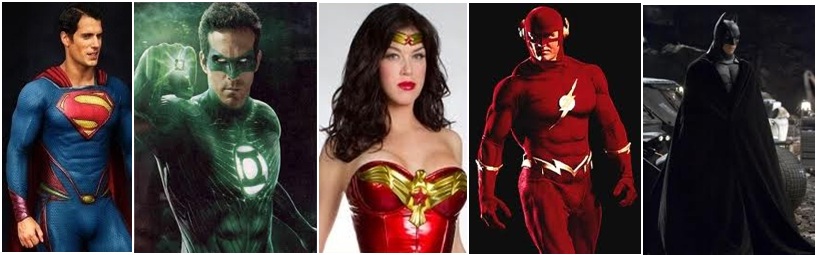
5) Superhero costumes need to be consistent to maintain strong branding. Getting back to the New 52, one big example of this problem is the Superman outfit. In Zach Snyder’s upcoming film, the colors are way off; it looks bluish grey with red violet and no red trunks. In the New 52 comic books, the costume has the right red and blue colors, but no red trunks, just a red belt. And a collar, which seems to be a superhero prerequisite in DC’s New 52. Superman’s outfit is still not consistent from one medium to another. Unfortunately the producers of the new Superman movie, and DC Entertainment clearly didn’t want the classic costume meaning the costume differs from the one Supes wears in the New 52. The result is that already many fans aren’t happy. The same thing happened with Green Lantern. They made a choice with the film to have the costume appear organic and that was fine, it worked. But they should’ve used that costume when they rebooted the New 52 Green Lantern comic book. As a matter of fact, many fans expected they would do that, and were disappointed. DC had the perfect chance and pretext last month with the relaunches to do this but they didn’t. They need to realize that the movie medium is the strongest medium and should be the strongest point of reference.

6) Superhero Genre: We need to understand that superheroes aren’t a medium they are a genre that spans several media. This was proven back in the ’40s when Superman became a radio star and ceased to be confined to the comic book medium. What should be done is to just pick the version that is most popular, whether they be the movie version or the comic book version. In other words, all media should be cross-referenced to be compatible, with the highest priority given to the look of the costumes. This doesn’t mean that story isn’t important but comic books are more of a visual medium so the costume and visuals can’t be screwed up.


7) Executive-level decision mass consolidation of the characters and stories across all major mediums. This has to come from the top execs of WB and Disney sending  directives to DC Entertainment and Marvel respectively. For example, the likeness of an actor portraying the superhero or villain should be used in the comics, toys, etc. This can be expensive in terms of royalty but it just means they need to better negotiate this when coming up with the contract.

8 )Power to the (fans and consumer) people! Another thing the companies can do is have some kind of fan base council (with power and influence) that report to the big guns as to what is popular and what isn’t based on direct feedback from fans who can provide comments or answer polls. This will help bring about the highest level of consumer satisfaction.

 9) Price and online incentives: The price of a paper copy New 52 comic is the same as it is with the digital copy. The digital copy has no enhanced features. Why not? DC is missing out on a huge online opportunity: Incentives for digital comics could be online content like official character websites, commentary, videos, etc. Senior level direction is needed to map out where everything is in terms of the characters’ bios. Online charts and maps should be provided to help new readers understand what is going on, draw them in and appreciate any character’s rich history. 

Conclusion:

 There has to be one pure version of the property, and looking at this from a branding perspective, the property is still muddled. The standalone, independent business model that superhero companies are following is a bad idea. Their properties must be cross-referenced and cross compatible for all mediums, and whichever company has the guts to carry out this properly will win in the long run.


GEO

Visit GEO’s websites:

 http://geo-designs.deviantart.com/
and
http://www.coroflot.com/geodesigns

Thor Is Better Than Iron Man!

There’s the other blu-ray release this week, Marvel Studios’ Thor, which came off as a pleasant, unexpected surprise when released in theaters this past May. Why was it better than it seemed? Blame it on marketing, maybe (man did those awful heavy metal riffs at the end of the trailer nearly kept me away from the movie). But it looked very uninspiring in the trailers as some run-of-the-mill fantasy romp. Instead the film was a clever re-imagining of the Marvel character while celebrating its larger-than-life Kirbyesque landscape.

In the comic books, Thor is the God of Thunder from Norse myth. While the comics also state that he and his fellow Asgardians are more or less extra-terrestrials, this film full on states this as fact. The result is one of the more imaginative alien cultures shown on film. Basically, their technology is so advanced that it seems almost like magic to us. For example the famed Rainbow Bridge which leads to other realms is for all intents and purposes a sort of wormhole machine and it looked spectacular on the big screen.

More importantly, director Kenneth Brannaugh’s science-based vision of the Asgardian world is so rich that it fires any viewer’s imagination. Right away, I was able to conceptualize how Thor is probably genetically attuned to his hammer that is itself a probable lightning rod. Despite some misgivings from some about the Earth based scenes, which inject much needed humor, the entire effort pays off and enriches the burgeoning Marvel movie universe.

Why is it better than Iron Man? I could go on forever but I’ll just go over a few points. For starters, the villain Loki is so much better than Iron Man’s Obadiah Stane. Loki could’ve been a Joker rip off but in this film, he’s so calculating and subtle that you can’t help see his side that Thor isn’t entitled to rule Asgard. Stane on the other hand, is your average evil capitalist. Too many Marvel films have them. Another point is that with Iron Man, it takes forever for Tony Stark to actually become don his regular Iron Man armor. In fact, I believe there are only three scenes where he’s in the red-and-gold outfit and this happens after more than hour into the film! With Thor right away you see him using his powers (which is one of the main reasons he gets exiled to Earth) and actually Thor doesn’t bother with a standard origin storyline and that’s a relief. Instead the transformation into a hero has to do with Thor transforming his soul. And one last point is that Iron Man after a fantastic first hour starts to drag once Stark escapes his captors, then it’s waiting until he fights Stane. And that came off as a quickly done robotic fight straight out of a Transformers film. Not with Thor, I know some people complained about his scenes on Earth but to me it added more to his story and only made me wish they spent more time with the fish-out-of water aspect to it.

The film was a big hit and a sequel’s in the works. However, it did seem to get lost in the buzz but that’s because the market is saturated with superhero films. Add to that the crappy 3D conversion that everyone complains about (when will studios realize that cheaply done 3D results in hard-to-see film that will turn off audiences from shelling out moolah for any future films?) and that’s why it wasn’t as big as hit as Iron Man. That’s too bad, but now that it’s on DVD it’s worth a look.

Lewis T. Grove

DC’s Digital and Print New 52: The Game Changer

DC  Comics unveiled this Wednesday their reimagined universe with Justice League #1, (written by Geoff Johns and drawn by Jim Lee and Scott Williams). This isn’t an ordinary reboot per se.

Variant cover to Justice League #1 by David Finch

Rather it’s the next evolution for comic books.  As every comic book fan knows, on August 31, 2011 DC simultaneously released print copies of Justice League #1 and digital downloads of the same issue. While comic book shops received their copies on Tuesday, they weren’t allowed to put them up on shelves until their stores opened the next day. With the digital downloads, however, they were ready for consumers at 12 am  midnight on Wednesday.

That already is one plus side for downloads and in theory this means that everyone, anywhere with Internet connections can get a copy of their favorite comic book.  If you lived in big cities like New York that have many comic book stores it’s fairly easy to find any kind of comic book. But if you live in small towns, often you’d have to travel many miles scouring the landscape for a new release and hoping that the small store you find still has a copy of the release. That is if they even carried it in the first place.

Upcoming Detective Comics #1, Cover by Tony S. Daniel

This could spell trouble for comic book stores. But if they’re smart they can re-tool their business model and possibly gear their stores more to sell merchandise based on the comic books. That’s just one idea. Either way, they need to adapt or go the way of travel agencies and record stores that were decimated by travel websites and iTunes. But for fans and publishers, digital downloads are the way to go. But it’s not without its drawbacks.

First of all, it’s one hundred percent web dependant. If your Internet connection is poor or the signal is cut off you can’t read the comic book. See, if I was living in the Legion of Superhero’s perfect 30th century world where technology was very advanced this wouldn’t be much of a problem. But today, it is still easier for me to walk five feet over to my bookshelf and pick up a print copy than to turn on a computer or tablet or smartphone and search for the same comic book in digital form. Also, there’s no interactivity with the Justice League download. The word balloons and art are static, but on a plus side, there are no ads and the images are hi-res. In fact, the final four pages consist of costume sketches by Lee and Johns.

Being that it’s a protected download, you cannot copy it and send or sell it to a third party. If your friend wants a copy, he or she can’t just borrow a print copy and give it back to you; it has to be bought. For publishers this is a godsend since I think this may help boost sales.

Speaking of that, I believe that the downloads will wind up selling five times more than print copies. Eventually we may see sales totaling about 500,000 per issue versus today’s dismal 20,000-30,000 figure. Of course, I doubt it will equal or top the World War II figures of millions of copies per issue and that’s because there is so much media for comic books to compete with.

Upcoming Action Comics #1, Cover by Rags Morales

A good ripple effect from downloads is that poor-selling titles may have a longer life. Ordinarily, a comic book with low sales would be canceled for economic reasons. But if it switched to being solely a digital download then production costs will be low enough to keep it going. While fans of that title won’t be able to own a print copy, they can at least follow the title on-line.

As downloads and new apps and technologies emerge and come of age, it will be easier for new generations already accustomed to the new technologies to buy downloads and actually prefer it over running down to the store to buy a print copy. This is truly a game changer not only for DC but the comic book industry at large. Now for the perfect connectivity, what’s the name of that 30th century Internet service provider?

GEO

Top Ten Marvel Movie Villains

With Marvel’s superheroes blazing their way across movie screens, one factor for the films’ success is the supervillain(s) the heroes face. As any good storyteller will tell you, the vital ingredient for a gripping yarn is a formidable foe to put the story’s protagonist to the test.

marvel movie villain

Being that the Marvel superheroes have such memorable enemies and that they translate well to the screen it’s one reason why the Marvel films have been successful. Naturally, with future Marvel films coming up, this list will change, but that’s part of the fun in making up these lists. So for now, these are the top ten villains to appear in Marvel movies…and the five worst.

Ivan Vanko10. Ivan Vanko in Iron Man 2 (Mickey Rourke): Combining elements of Whiplash and the Crimson Dynamo for the big screen, Vanko is a cold, deadly and enraged Iron Man foe who was much more engaging than the original film’s Obadiah Stane or this one’s Justin Hammer.

9. Emil Blonsky/The Abomination in The Incredible Hulk (Tim Roth): Come on, the guy had the balls to go up against the Hulk man to man! That’s one tough SOB, and yes when he becomes The Abomination and fights the Hulk it looks like something out of  a video game. But it was a lot more fun than that turgid Ang Lee film.

8. Bullseye in Daredevil (Colin Farrell): One of the bright spots in that film, Bullseye had a maniacal sense of energy, ego and deadliness that upstaged Daredevil and gave him a personal motivation for trying to defeat the title hero.

7. The Red Skull/Johann Schmidt in red skull hugo weavingCaptain America: The First Avenger (Hugo Weaving): A bit one-dimensional but well-played by Weaving  as an uber Nazi whose ambitions elevate his evil to another level altogether.

green goblin spidey 16. The Green Goblin/Norman Osborn in Spider-Man (Willem Dafoe): The outfit stunk otherwise the Goblin would’ve ranked higher. Dafoe, however, gives Osborn his all as a crazed CEO with fantastic gadgets and (aside from the outfit) largely works as a villain.

5. Col. William Stryker in X2 (Brian Cox): Despite not having any powers, Stryker is one terrifying person whose bigotry and fear of mutants is a driving force that threatens the lives of the film’s mutants whether they’re hero or villain.

4. The New Goblin/Harry Osbron in new goblinSpider-Man 2 and Spider-Man 3 (James Franco): A true tragic villain, Harry doesn’t become bad until the end of Spider-Man 2 where the agony of his father’s death and his own inadequacies unhinge him. His hatred for Peter Parker/Spider-Man, the means he goes about seeking vengeance and his final tragic redemption are the best things in the third Spider-Man film.

doctor octopus3. Doctor Octopus/Otto Octavius in Spider-Man 2 (Alfred Molina): The best of the science-driven-mad villains. Molina gives us a very dimensional Doc Ock who isn’t driven by world conquest or revenge but to achieve a scientific goal. Never mind that trying to create his version of fusion threatens the world. Calculating and arrogant even before his accident, Octavius paid the price for his arrogance and was a formidably tough foe for Spider-Man.

2. Loki in Thor (Tom Hiddleston): One loki in thorof the biggest surprises wth Thor is how subtle and crafty Loki came off. It would’ve been easy with a title as God of Mischief to have him be a Norse god version of The Joker and be cackling and chaotic. Instead, thanks largely to Hiddleston’s quiest expressions, Loki is seen sympathetically as the seemingly less-favored son who holds a secret grudge against his brother Thor. The film successfully shows why Loki detests his situation and why he turns on his family; it’s more layered than him finding out his true origin. Rather his envy and anger are due to his own insecurities, Thor’s arrogance and is his validation for taking over Asgard through crafty means.

old magneto1. Magneto/ Erik Lehnsherr in X-Men, X2, and X-Men: The Last Stand ( Ian MacKellen): As one of the deadliest and most powerful villains, Magneto is someone you can’t help empathize with considering his background; he’s a World War II concentration camp survivor. He developed a hatred for non-mutants who persecuted his own kind,  thus making him feel justified in his actions against society. Magneto was usually one step ahead of Professor X and willing to go the extra distance to achieve his goals whether it involved harming a young girl or firing a gun point blank at a cop with his magnetic powers. Despite his age, Magneto was someone to take seriously as a foe and was also the mirror image, in terms of idealogy, of Professor X’s dream of peaceful co-existance with humans. Sadly, many of humanity’s actions throughout the original trilogy only added fuel to his cause and made viewers wonder as to who was truly evil or misguided.

new magnetoSpecial shout outs in no particular order go to Mystique (Rebecca Romijin Stamos) in the X-Men films, Venom/Eddie Brock (Topher Grace) in Spider-Man 3, The Kingpin/Wilson Fisk (Michael Clarke Duncan) in Daredevil, Jared Nomak (Luke Goss) in Blade II, and Magneto/ Erik Lehnsherr (Michael Fassbender) in X-Men: First Class.  Fassbender’s portrayal of Magneto was good enough to make the top ten list but for most of the movie he is actually an anti-hero who only becomes truly villainous by the film’s end.

And now for the five worst. Before getting to the these turds let it be noted that all it takes to sink a film (sometimes singlehandedly) is a poor villain. When coming up with a screenplay attention must be paid to the villain’s motivation, execution and threat level. It’s a hard thing to pull off; when it works you have a great movie when it doesn’t you have a franchise killer. So here they are, the Marvel movie villain Hall of Shame inductees:

5. Howard Saint in The Punisher (John Travolta): You know as a villain you’re in trouble when the colorful assassins you send after the Punisher like the Russian are more interesting than you.

4. Toad in X-Men (Ray Park): Talk about hamming it up! That scene at the Statue of Liberty when Toad tries to mock Storm with his silly dancing earned him a good lightning strike that ensured that he didn’t return in the sequels.

3. Blackheart/Legion in Ghost Rider (Wes Bentley): Boring, boring, boring! Generic demonic foe that looks more like a goth reject than the son of Mephisto. His father was a more intriguing foe yet this film chose to focus instead on this bratty emo.

doctor doom 2005

2. Dr. Doom/Victor Von Doom in Fantastic Four (Julian McMahon): This is miscasting at its worst. McMahon was terrific as the narcissistic plastic surgeon in Nip/Tuck but lacked the gravitas to be Marvel’s most infamous and regal villain. Everyone expected an Eastern European despot but got your standard egotistical CEO and coming so soon after Willem Dafoe’s Green Goblin performance it just drew unfavorable comparisons. In trying to tie his origin with the Fantastic Four and making him a mutated being, this film robs the character of his rich backstory and menace. In this film he’s just a poor Goblin/Magneto/Electro knock-off. He was more like his comic book counterpart, power-hungry and more Machiavellian in the sequel but that film’s awfulness wiped out any improvement made to Doom’s character.

1. Galactus in Fantastic Four: Rise of the Silver Surfer: Destroyer of worlds, nearly omnipotent, a force of nature personified by a giant being with that wonderfully whacky Kirby outfit, that is how fans conceive of Galactus. Do we get this on film? No! We get a cloud. A stormy cloud. Seriously how lazy is this? What’s equally laughable is the filmmakers’ attempt to explain why they went with a cloud, apparently they wanted to leave it up to whoever did a Silver Surfer film to have a free reign designing Galactus. All this did was help to scuttle that film and any followups to the Fantastic Four. The execution reeks of not being imaginative and/or having a limited f/x budget. It was the ultimate payoff that never happened and signified the film’s problems. There was too much going on in the movie to adequately explore the most famous Fantastic Four story, it would have been better to end it with a cliffhanger even if it never happened. It would have left less of a bad taste.

José Soto