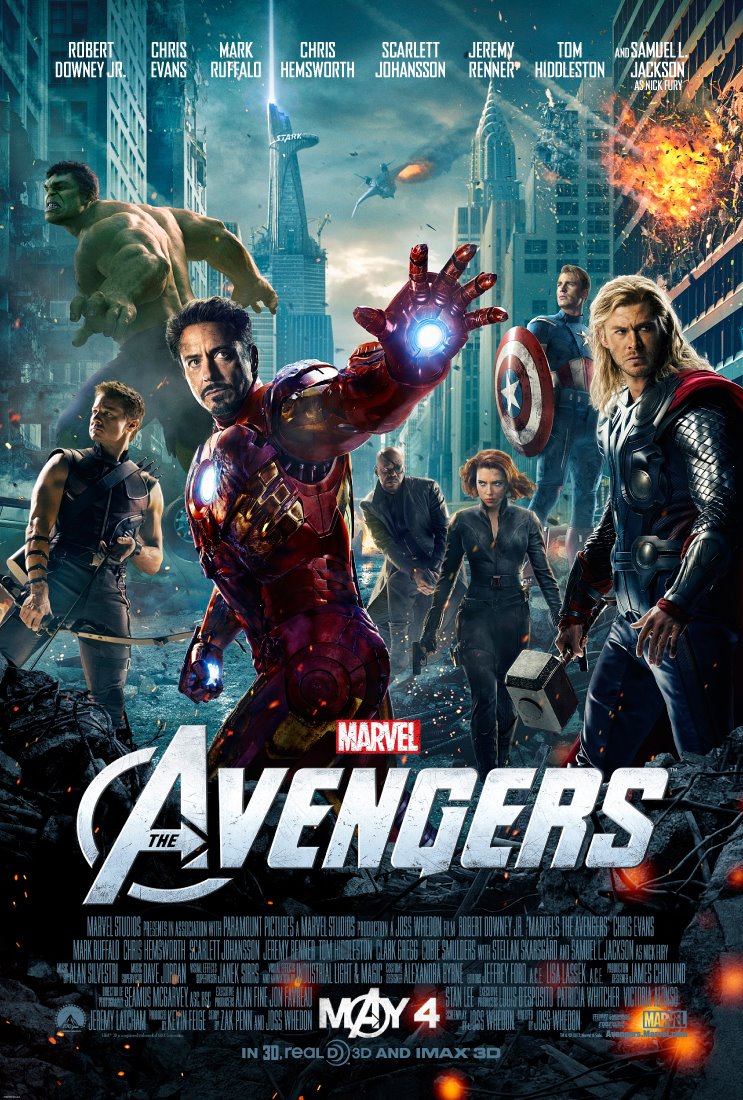
Wow. The new movie The Avengers literally left me breathless and spent after seeing it. Marvel Studios needs to take a well-deserved bow for their efforts throughout the years that culminated in this film. Many had doubts regarding the ability to pull this endeavor off but they are quickly dispelled with The Avengers. It so profusely feels like the climax that had been building up for many years.
Marvel Studios clearly made the right choice with Joss Whedon as the film’s director. He has the filmmaking talent and perhaps, more importantly, possesses a clear love and respect for the Marvel universe and it shows onscreen. But this film isn’t some slavish fanboy production. No, Joss Whedon and the crew had an understanding of how the Marvel universe works, how the Marvel characters behave and how to translate that to the screen and entertain even non-Marvel fans. It is difficult to imagine anyone else achieving what Whedon did and The Avengers will make him a deservedly A-list director. (On a side note, hopefully he will have the clout now to do a Firefly revival. Hey, we can only hope!)
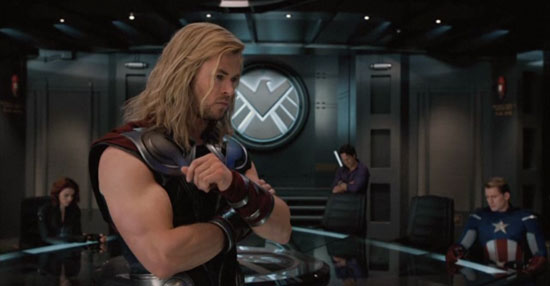
The Avengers jumps right into the action when demigod Thor’s (Chris Hemsworth) nemesis and brother Loki (Tom Hiddleston) arrives at an underground S.H.I.E.L.D. bunker and makes off with an otherworldly and powerful MacGuffin called the Tesseract (that’s the Cosmic Cube seen in many Marvel comics that grants unlimited power to wielders). After Loki escapes from the bunker, S.H.I.E.L.D. director Nick Fury (played by Samuel L. Jackson doing his usual tough-as-nails shtick) assembles a team of super heroes to help him retrieve the Tesseract and stop Loki’s plan to conquer the Earth.
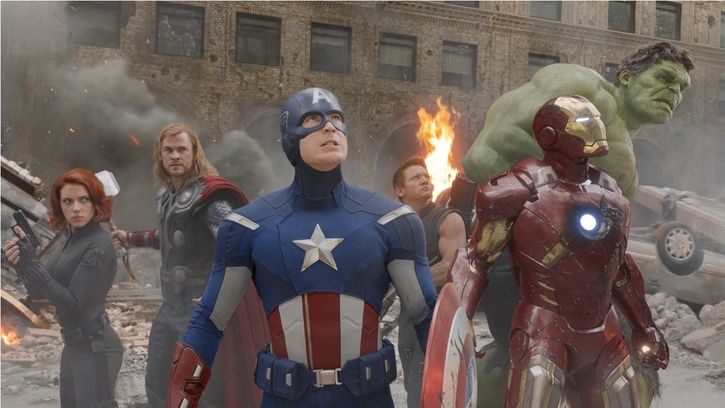
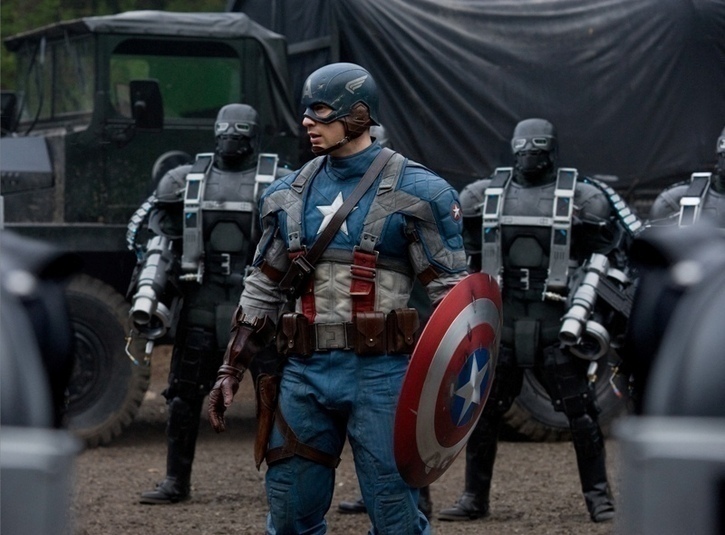
Then the fun begins as beloved characters like Tony Stark/Iron Man (Robert Downey, Jr.), Steve Rogers/Captain America (Chris Evans), Thor, Dr. Bruce Banner/Hulk (Mark Ruffalo, replacing Edward Norton and Eric Bana), Natasha Romanoff/Black Widow (Scarlett Johansson) and Clint Barton/Hawkeye (Jeremy Renner) meet for the first time. In the typical Marvel comics manner, they don’t get along with each other and even come to blows. But they learn to get along and even respect one another just in time to confront Loki and his alien army.
The Avengers is an action-packed bonanza with fantastic characters and that’s before the climatic final third of the film. Taking place in New York City, the beachhead for Loki’s alien invasion, the explosive, multi-tiered battles on the streets and in the skies are simply spectacular. There have been some complaints over how low-budget some previous Marvel Studios productions have been, but here no expense was spared. But unlike some empty, big-budget films, the action was very fluid and easy to follow, but more importantly the audience cared deeply about the heroes as they fought the alien army. Each character, even some minor ones, had their moment to shine. The Avengers could’ve easily been dominated by one or two characters like Iron Man due to the actor’s charisma but Joss Whedon knows how to give the actors just enough time to make their contributions before moving on the next character or plot point.
This film has set new standards for super hero films. One can only wonder how the filmmakers will top themselves (a clear, audience-rousing hint is given during the end credits; Marvel fans will rejoice) or how other studios’ films can compare to this one. Marvel Studios would be wise to retain Whedon for the inevitable sequel or at least use him for other productions. BTW, stick around for the very end, there’s another post-credit sequence. Without giving anything away, it isn’t anything earth-shattering, but rather a cinematic equivalent of having a cigarette or a relaxing drink after being so pumped out by the movie.
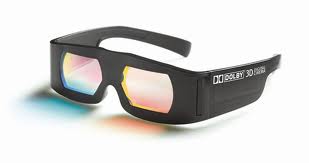
Once considered a novelty gimmick back from the ’50s 3D films look to be a mainstay in modern-day cinema. Specifically, f/x-laden genre spectaculars. It’s gotten to the point that a big-budget sci-fi or fantasy film without the 3D treatment seems to stand out or seem lacking. A prime example of that is the upcoming The Dark Knight Rises.
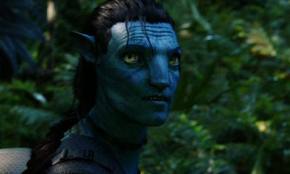
As anyone knows, this all started with the phenomenal success of James Cameron’s Avatar. There had been 3D film releases before Avatar but none of them were as hugely successful as Cameron’s sci-fi epic. Naturally, the film studios attributed Avatar’s success to the revolutionary 3D process that James Cameron utilized and set out to recreate that film’s success at the box office. This is why it seems as if every major genre or animated film is released these days in 3D.
All would be terrific if the 3D used was actually good on a consistent basis.
More and more often, audiences are complaining about the inferior 3D used in many films. Unlike Avatar, which was filmed using 3D cameras, most films released in 3D are post-converted. Usually it seems as if this process was slapped on at the last second and it shows. There are many rants that the films looked dark during some scenes, and actually seemed two dimensional at other times. These complaints were leveled at Clash Of The Titans, Green Lantern and Marvel Studios’ recent super hero films.
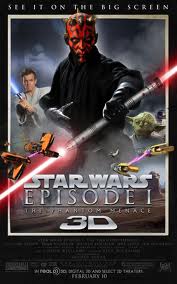
Film studios are in danger of killing any enthusiasm for a 3D film. What makes things worse is that the studios won’t reveal in their ads if the films were truly filmed in 3D or not. Add to that the higher ticket prices and it won’t be long before the bloom is off the rose so to speak. There are signs that this is happening already. Take the ticket sales of the newly released John Carter; despite the promotion that the sci-fi epic was in 3D (it was post-converted according to reports) it wasn’t a big hit. Or better yet, look at how Star Wars Episode I: The Phantom Menace did when re-released last month in 3D. It wasn’t a flop and did respectably but it wasn’t a mega hit. Of course, being that Star Wars Episode I was filmed over a decade ago, one couldn’t expect it not to be post-converted, and in that film’s defense the conversion was actually pretty decent. While some images appeared to be two-dimensional, some scenes looked good and at least there weren’t any scenes that looked dark.
The true 3D process using special cameras is costly, but in the long run, it would benefit studios since they can claim their films are true 3D films rather than something hastily done to earn a quick buck.
The good news is that while many upcoming films are using the post-conversion process, there are more and more films that do use actual 3D. While some of those films may not be appealing to some (feature-length animated films and horror films) they do point to the notion that 3D is becoming more mainstream. Perhaps a day will come when it becomes more economical for studios to produce true 3D films on a regular basis or at least improve the post-conversion process. (This improvement would benefit older films needing conversions like future Star Wars re-releases.)
This website reports which recent and upcoming films are true 3D films and which ones aren’t. The following is a partial list of upcoming films using both types of 3D.
Post-Converted:The Avengers, The Cabin In The Woods, Gravity, Men In Black III, Wrath Of The Titans
Actual 3D:Abraham Lincoln: Vampire Hunter, The Amazing Spider-Man, Brave, The Hobbit, Ice Age: Continental Drift, Madagascar 3: Europe’s Most Wanted, Prometheus, Resident Evil: Retribution
Sure it’s after Christmas, but for us fans of Hallmark ornaments it’s a fun or frustrating time (depending on how successful you are in hunting) for bargains as genre-based ornaments go on sale for half off or more.
As we’re busy gobbling up 2011’s ornaments, let’s look ahead to this year’s ornaments. Most of them will go on sale sometime in July with the rest coming out in October. Incidentally, the full lineup of Hallmark ornaments won’t be officially revealed until this spring. But for now here are the known 2012 ornaments based on cool stuff we like. In other words, this ain’t about fuzzy elves or reindeer!
Star Trek
U.S.S. Enterprise NCC-1701-D
To celebrate the 25th anniversary of Star Trek: The Next Generation, Hallmark is releasing this replica of Captain Picard’s Enterprise. Collectors will know that this ship was produced in 1993. The difference between these two is that this one can be displayed on a stand (similar to Hallmark’s 2006 version of the original Enterprise) and is battery operated. Presumably it will feature lights and sounds; hopefully Jerry Goldsmith’s majestic score will also play when a button is pushed.
Dr. McCoy
The third in the Legends of Star Trek series. This figure of everyone’s favorite Starfleet doctor is a companion piece to the other entries in the series, Kirk and Spock.
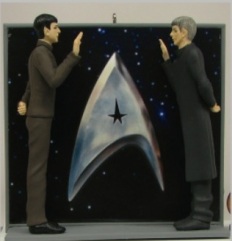
Two Spocks Meet
Not sure what is the official title of this diorama. It’s a recreation of sorts (without the Star Trek delta shield logo in the background) of that scene near the end of the 2009 Star Trek film where the old Spock from the real universe meets his younger alternate self.
Star Wars
If you’re a Star Wars fan then this is your year. Without contemplating any convention exclusives, a total of five ornaments will be released by Hallmark. They include:
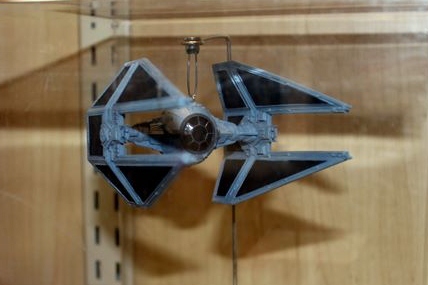
TIE Interceptor
Barely glimpsed in Return of the Jedi (but that’s nothing new when it comes to Star Wars merchandise), nonetheless it will be beautifully detailed as are most Hallmark ship ornaments.
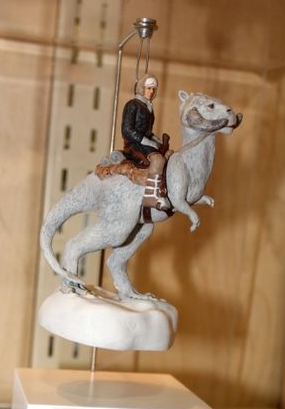
Han Solo on a Tauntaun
From The Empire Strikes Back, Han sporting his winter duds on his soon-to-be doomed riding animal. For any non-fan, the animal is a tauntaun used as beasts of burden by rebel soldiers and personnel on the frozen world of Hoth. Han took this animal out at night to look for his friend Luke who…oh never mind, it looks neat! Trust me it will make a solid gift for a Star Wars fan and it won’t cost a lot either, probably selling for less than $20. Then again from looking at the fact that the ornament has a base which would fit batteries it could mean the price could be jacked up. But it’s still a good gift!
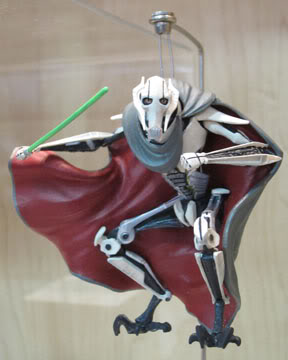
General Grievous
As a fan of this character from Revenge of the Sith and The Clone Wars cartoon, I’ve been hoping they would release this Jedi slayer, which if you’re into the villains of the movies, make a great addition to that collection or on your tree. (A fan can geek out by putting all the Star Wars villains together in one spot!) The cape and lightsabre are a nice touch. Too bad they didn’t have him with all four arms extended, but that would probably make the ornament even more fragile. Future editions can feature his raspy voice.
Darth Maul
This is Maul’s second ornament, the first one was released in 2000 a year after The Phantom Menace came out. Fortunately, the pose is different in this year’s model and not a re-issue with a new paint job. Those kinds of ornaments are reserved for convention to go on sale in the secondary markets for obscene amounts of money.
Lego Stormtrooper
Hot on the heels of the successful Lego Darth Vader ornament comes this one of the white-clad cannon fodder. Perhaps Lego droids or Yoda are up for 2013.
Waldermann Rivera
Please visit our website to continue reading this article!
It’s pretty obvious that the world of digital comics is expanding at a phenomenal rate. As tablets and smartphones become more commonplace it won’t be too long before the number of readers of digital comics could eclipse that of regular paper comics.
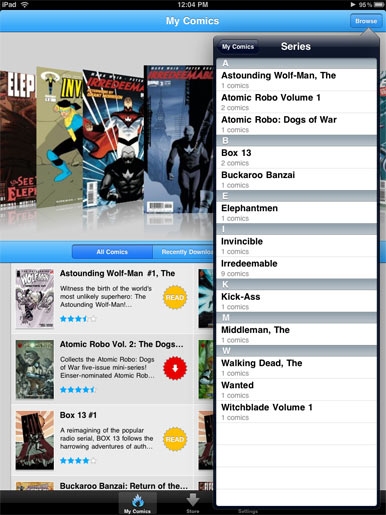
Companies like DC and Marvel sell digital downloads and even offer free downloads to sample their comics. And it’s very easy to download comics. Just download an app with Comixology, iVerse Media’s Comics + or even from comic book companies themselves. In fact, Marvel, DC, IDW, Dark Horse and others also offer free apps.
After downloading the apps, just sign up for a free account. Readers are taken to the sites’ main menu where they can buy comic books. There are literally thousands of titles to choose from, no more running around to different comic book stores to find that elusive issue that is sold out everywhere. A simple search button will yield instant results. At this point the sites don’t have complete collections but the library is growing so it won’t be inconceivable to have a complete collection of Fantastic Four digitally.
Once they’re downloaded, the comics go into the cloud so they can’t be lost even if you’re device is damaged. Anyone can go into a friend’s laptop or desktop and view their own comics. While comics can be read on traditional computers, reading them on mobile devices is the way to go becausenow the digital comics are as portable as regular paper comics. What’s more is that images can be enlarged to better appreciate the art and a simple swiping of fingers allows page turning to be easier than regular comics. Plus readers don’t have to worry about being careful with reading mint comics and the online comics don’t have any ads to skip over.
Before buying comics, readers are given a preview of a couple of pages to sample the comic. This can be a disadvantage to regular paper comics where a reader can conceivably skim through the entire issue before deciding to buy the comic. But many times, companies offer several-page previews or even an entire first issue which gives one a better idea of what they’re going to buy.
These free downloads are an excellent way to preview comics or characters. DC jumped at this opportunity by offering downloads of popular characters and calling them for example Flash 101, which offers origins and first appearances of characters, complete with cover galleries. It’s a great introduction for new readers and DC should use this concept more with their lesser known characters. One can only wonder why Marvel isn’t doing this.
DC certainly has the edge when it comes to digital comics. It seems as if they wholeheartedly embraced the concept especially when they launched The New 52 earlier this year when they relaunched their titles on paper and digital on the same day. These digital comics revived DC’s sales, in fact, for September 2011 they were the only company to have reported a sales increase of 1000% that is simply incredible.
However, not all is perfect with digital comics. To really compete, digital comics must offer more for the same price. For example a paper comic is $2.99 or $3.99 and that is supposedly due to production and print costs. Then why are online comics the same price? Sure if one is patient, individual issues usually drop in price weeks later, but why should the costs be the same on the first day of issue? If companies are to charge the same price then incentives should be offered. This could include creator commentaries, scripts, galleries and sketches. The comics should have a toggle button pencil inks and even one to remove the word balloons so readers can really appreciate the artwork.
Companies need to take advantage of the interactive features that are possible with online comics. One thing that can be done is to include live, real-time reader comments and updates. This means that a reader can finish a book then be able to comment on the issue which will show up immediately in that book’s commentary section.
While currently downloaded comics offer suggested links to similar titles, the comics should offer a link to a superhero homepage, that is that homepage would explain who is the character, show maps and galleries and databases on characters and story arcs. In DC’s case, offer a link to their 101 introductions or include it with the initial download of a particular comic. Annuals should be annotated with sound f/x which could be an incentive to buy them.
Perhaps the Justice League annual, the deluxe edition, can have voice actors, CG effects, sound effects, original music composed and conducted for the annual; the penci/inlk/color/word ballon toggle, interviews with the editor, writer, artists, dropdown reader commentary (the letters page), link to the Hall of Justice where you can get a converged version of the 101s, like Superman 101 will present not only comics, but TV shows, animation, gaming, trailers, and movie versions. Also polls asking for opinions of a particular issue, character, or villain, etc.
Also, DC Universe online should converge with the New 52. And of course, any new mass media creation should be cross compatible with other media, meant to tie unto an integrated universe.
They could have started with the Green Lantern movie and linked him with the future formation of the Justice League. DCUO could have merged the Ryan Reynolds GL into the game. That’s the big picture examples of how digital comics can further evolve.
Check out this video from the annual big idea conference TED, which stands for Technology, Enternatinent, Developers:
Here they show what an ebook can do. DC & Marvel really should exploit the best that tech has to offer to show that a superhero story can envelope a convergence of media.
There is still room to grow with digital comics. Perhaps some of these suggestions could be utilized to fully realize digital comics’ potential. In the end this could be what saves comics.
Despite the success of the New 52 comic books from DC Entertainment’s DC Comics division, I’m still not seeing an ability by TPTB to consolidate their superhero properties into one source material. I’m a lifelong comic book fan, with a professional background in branding and licensing. I look at superhero properties not only as a fan but also as a brand manager. Here are a few problems I still see superhero companies like Marvel and DC struggling with:
1) Superhero properties must be cross referenced and cross compatible. There isn’t one clear, solid mass consolidation of the characters across all major media- film, TV, video games, animated series and their related merchandising ventures. This goes for DC, Marvel and, to a certain degree, other comic book companies who overextend their properties. I think they’re taking the wrong approach. This is brand management failure in the making. By that I mean that there are too many versions and variants of characters and their costumes and storylines and it dilutes the core characters. At DC, they have a big problem: Why isn’t Superman’s costume and storyline from the regular comic books seamlessly tied into the 90’s Superman Animated Series, the CW’s Smallvile, DC Universe Online game and the new upcoming Superman movie? BTW, the next Superman movie has no relation with the past films, and is being produced as a relaunch/remake because Superman Returns wasn’t a big hit. Noticing how The Dark Knight made more money, Warner Bros. want the new Superman movie to be “darker.” Unfortunately, they are all standalone, independent works with no consideration on how any one of these iterations relate to each other.
Footnote: DC Comics editorial, Superman writer Geoff Johns and artist Gary Frank superbly consolidated elements of the Superman movies and his past comic book iterations. Frank was allowed to illustrate Superman in the likeness of the late Christopher Reeve; the crystalline Krypton- designed for director Richard Donner’s Superman by brilliant production designer John Barry, was incorporated into comic book Kyptonian architecture. The movie’s three Kryptonian villains (General Zod, Ursa and Non) finally appeared in the comic books. While General Zod originated in the ’50s comics, Ursa and Non were created for the movies. It was Johns’ inspired idea to suggest they include all Kryptonian costumes designed by all comic book artists from the ’40s to present time, explaining that Krypton’s fashion was as diverse as Earth’s and what Kryptonians wore depended on their guild. Kryptonian fashion illustrated by John Byrne, Curt Swan, Gene Ha and from the films were all finally intermixed successfully. With the relaunch it’s unknown if they’ll keep that Kryptonian integration.
2)Too many %^$#**&$@ iterations of one character. Marvel suffers from this with all their properties. How many Wolverine comics are out there? There’s a title called Dark Wolverine and it’s not even the regular version of the character. And Logan once a proud loner is now in a whole bunch of teams! (Previously, he joined only the X-Men, that was the charm of it!) My question is: How does the comic book relate to the ’90s X-Men animated series, or 20th Century Fox’s X-Men movies, multiple X-Men video games, and other animated series? And now that’s happened with Spider-Man (the underdog loner) and all his different costumes. And let’s not forget there are two different Marvel Universes- the mainstream Marvel Universe and the Ultimate Universe. I know the reason behind it- sales and profits. Spider-Man and Wolverine are fan favorites. Marketing execs must love these infinite variations of the popular Marvel character since they can sell more comic books and toys, but it is confusing and turns away new readers.
3)Cost prohibitive and time prohibitive story lines. I go across comic book aisles and see special event comics and multiple tie-ins and special issues (Blackest Night, Secret Invasion, DC’s numerous Crisis events and tie ins) and it turns me away. It’s unaffordable! It seems as if the larger companies are targeting upper middle class and upper class readers because the average fan cannot afford to buy so many comics just to get a complete story.
4)DC needs to scale back the amount of comics even more per month. Until the New 52, each month DC put out 52 regular titles, plus many four- and twelve- issue miniseries, and event comics for the tie ins and TBPs. Now they relaunced the DC Universe and cut back the number of monthly comic books to just 52. But it’s still too many comics to afford at $2.99 or $3.99 for each comic book. To read the full interrelaed story, the average buyer needs to spend $150 a month, and that’s for the New 52 comics alone! What about your favorite comics from Marvel, Dark Horse, IDW, or Dynamite? But even if the prices were lower the bottom line is that the average fan doesn’t have time to read every single monthly comic book that comes out per month. It’s impossible. We have to pick and choose what we read and often it feels like we aren’t getting the full experience because no one is picking up every single tie-in. This was a problem when the comic book companies flooded the marketplace with too many titles and eventually everything imploded as a backlash from the speculator boom and the industry still hasn’t recovered from that. Back in the ’60s Marvel had a very manageable lineup with about twelve titles per month. It was easy for readers to jump aboard, experience the full Marvel Universe and not feel overwhelmed. Remember the adage, less is more!
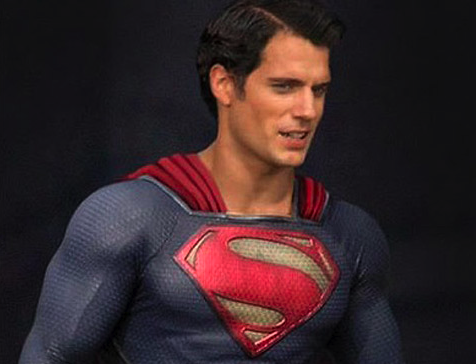
5)Superhero costumes need to be consistent to maintain strong branding. Getting back to the New 52, one big example of this problem is the Superman outfit. In Zach Snyder’s upcoming film, the colors are way off; it looks bluish grey with red violet and no red trunks. In the New 52 comic books, the costume has the right red and blue colors, but no red trunks, just a red belt. And a collar, which seems to be a superhero prerequisite in DC’s New 52. Superman’s outfit is still not consistent from one medium to another. Unfortunately the producers of the new Superman movie, and DC Entertainment clearly didn’t want the classic costume meaning the costume differs from the one Supes wears in the New 52. The result is that already many fans aren’t happy. The same thing happened with Green Lantern. They made a choice with the film to have the costume appear organic and that was fine, it worked. But they should’ve used that costume when they rebooted the New 52 Green Lantern comic book. As a matter of fact, many fans expected they would do that, and were disappointed. DC had the perfect chance and pretext last month with the relaunches to do this but they didn’t. They need to realize that the movie medium is the strongest medium and should be the strongest point of reference.
6)Superhero Genre: We need to understand that superheroes aren’t a medium they are a genre that spans several media. This was proven back in the ’40s when Superman became a radio star and ceased to be confined to the comic book medium. What should be done is to just pick the version that is most popular, whether they be the movie version or the comic book version. In other words, all media should be cross-referenced to be compatible, with the highest priority given to the look of the costumes. This doesn’t mean that story isn’t important but comic books are more of a visual medium so the costume and visuals can’t be screwed up.
7)Executive-level decisionmass consolidation of the characters and stories across all major mediums. This has to come from the top execs of WB and Disney sending directives to DC Entertainment and Marvel respectively. For example, the likeness of an actor portraying the superhero or villain should be used in the comics, toys, etc. This can be expensive in terms of royalty but it just means they need to better negotiate this when coming up with the contract.
8 )Power to the (fans and consumer) people! Another thing the companies can do is have some kind of fan base council (with power and influence) that report to the big guns as to what is popular and what isn’t based on direct feedback from fans who can provide comments or answer polls. This will help bring about the highest level of consumer satisfaction.
9)Price and online incentives: The price of a paper copy New 52 comic is the same as it is with the digital copy. The digital copy has no enhanced features. Why not? DC is missing out on a huge online opportunity: Incentives for digital comics could be online content like official character websites, commentary, videos, etc. Senior level direction is needed to map out where everything is in terms of the characters’ bios. Online charts and maps should be provided to help new readers understand what is going on, draw them in and appreciate any character’s rich history.
Conclusion:
There has to be one pure version of the property, and looking at this from a branding perspective, the property is still muddled. The standalone, independent business model that superhero companies are following is a bad idea. Their properties must be cross-referenced and cross compatible for all mediums, and whichever company has the guts to carry out this properly will win in the long run.





 Starloggers