The recent announcement by Netflix that it will be developing an original TV series bases on the iconic TheLegend of Zelda video game series has caught many by surprise including myself. Nintendo’s only other foray into live action movies or TV based on their games was the not so well received Super Mario Bros. from 1993.
Another odd fact is that there is no major voice acting in the games. Link, the hero of the story doesn’t talk. You only hear him scream or grunt. It will be very interesting to hear him say something for the first time, let alone seeing him portrayed in live action by an actor. Having said that, the fact that their next project is based on Zelda while unexpected, actually makes a lot of sense.
The Zelda universe has a vast and rich mythology that spans almost 20 games released over a span of almost 30 years. Each game is a tale set in a fantasy world called Hyrule, which is somewhat reminiscent of J.R.R. Tolkien’s Middle-earth, populated by goblins, wizards, all sorts of fantastic creatures, and a race of elf-like beings that struggle against the evil Ganon. He is a huge villain obsessed with obtaining the all powerful Triforce, a relic from an ancient time that bestows ultimate power to anyone who has it. Again, very much like the One Ring to rule them all from the epic The Lord of the Rings saga.
The success of both Peter Jackson’s The Lord of the Rings and The Hobbit movies and the HBO TV show Game of Thrones, demonstrate that there is a market for live-action epic fantasy stories. The key to the success of any Zelda show will be who Netflix hires to translate the great stories told in each game to the TV screen. As with movies that are based on books demonstrates, this can be a tricky task. However, since this will be a TV series, it will have many hours to tell any such story, instead of the restricted two- hour-plus limit of a movie. This can definitely be a positive since the saga of The Legend of Zelda is as complex as it is interesting. Hopefully, whoever is hired will be able to do justice to the highly regarded Zelda series, which has set a very high standard for quality in all of its games. Nintendo, who is known for protecting all of their characters should be able to make sure this happens.
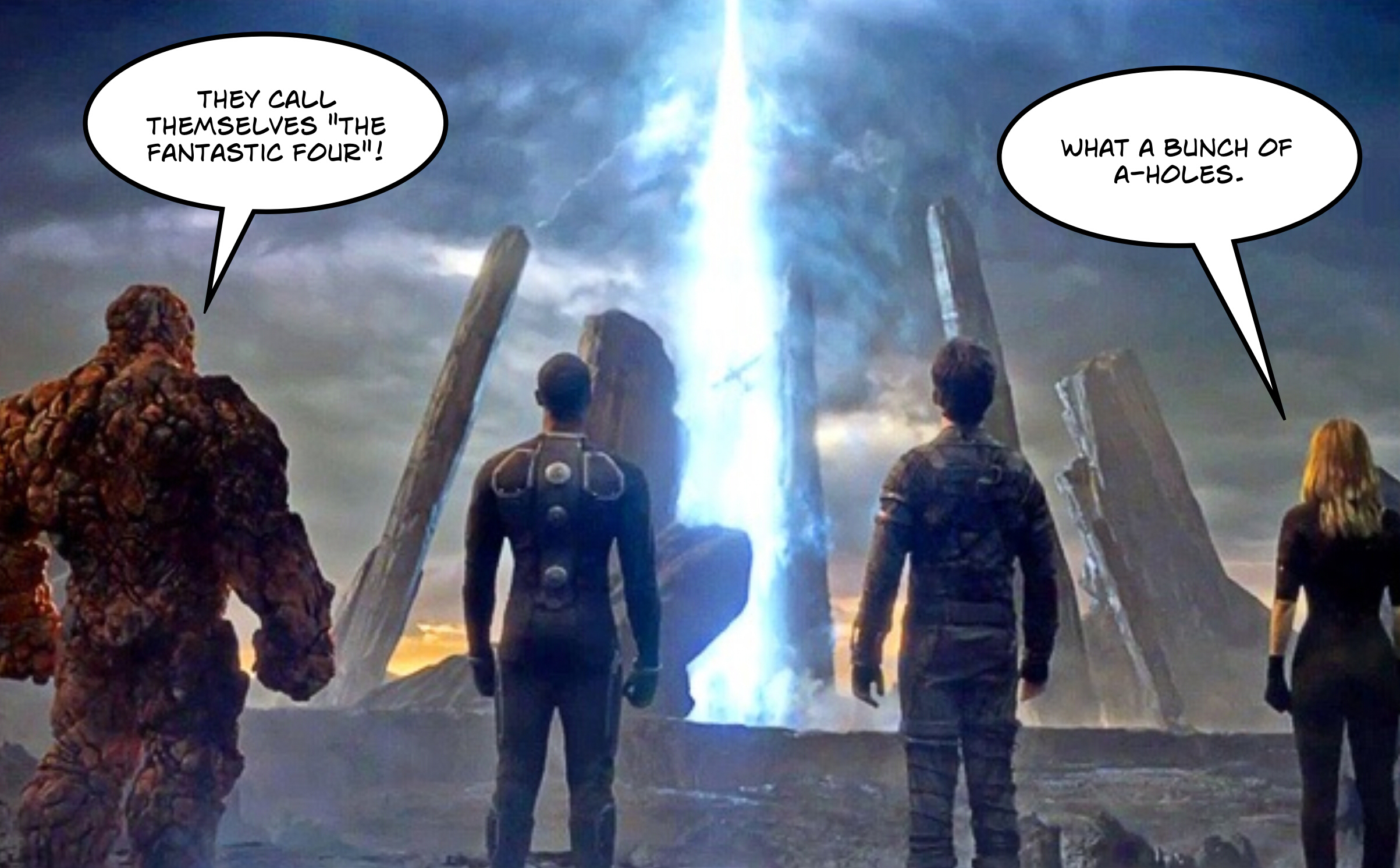
As I’m getting ready to watch the Super Bowl (mostly for the trailers and commercials, I have no stake in the Patriots or the Seahawks), I keep thinking about the trailer for The Fantastic Four that was recently released.
Twentieth Century Fox released it I think to quiet all the complaining from the genre community about how we didn’t have any info (not even an official image) from the controversial reboot. Seriously, they needed to have done that for the longest time and I think some of the animosity towards the film can be blamed on the lack of marketing.
Anyway, looking around the Internet I keep viewing videos and reading articles stating how good the film looks and how we can all breathe easier knowing that director Josh Trank is going to deliver a superb film with a new take on the Fantastic Four.
Honestly, I wasn’t impressed.
When Fox announced the cast last year, I was very skeptical about the film right away from looking at the cast. And I still am. Yes, I do admit that the actors are well regarded like Miles Teller (for his role in Whiplash) and Michael B. Jordan. But as I said in my old post, these actors look too young. It’s undeniable that this reboot is taking its inspiration from the lackluster Ultimate Comics version of the Fantastic Four from last decade. In that version, the team was made up of young prodigies who travel to another dimension and get their powers by doing so. It didn’t work because that family dynamic from the original team was missing. Reed is supposed to be the distant father figure, Ben the grumpy uncle, Sue the mother figure and soul of the team, and Johnny being the young kid brother. I didn’t get that impression from the comic book and I don’t see it in this trailer.
Obviously, something like that can’t be shown in a teaser, but the team is made up of youngsters to attract the Twilight/The Hunger Games crowd and that is a big mistake. Why? This choice to go young undermines a basic core of what made the Fantastic Four work.
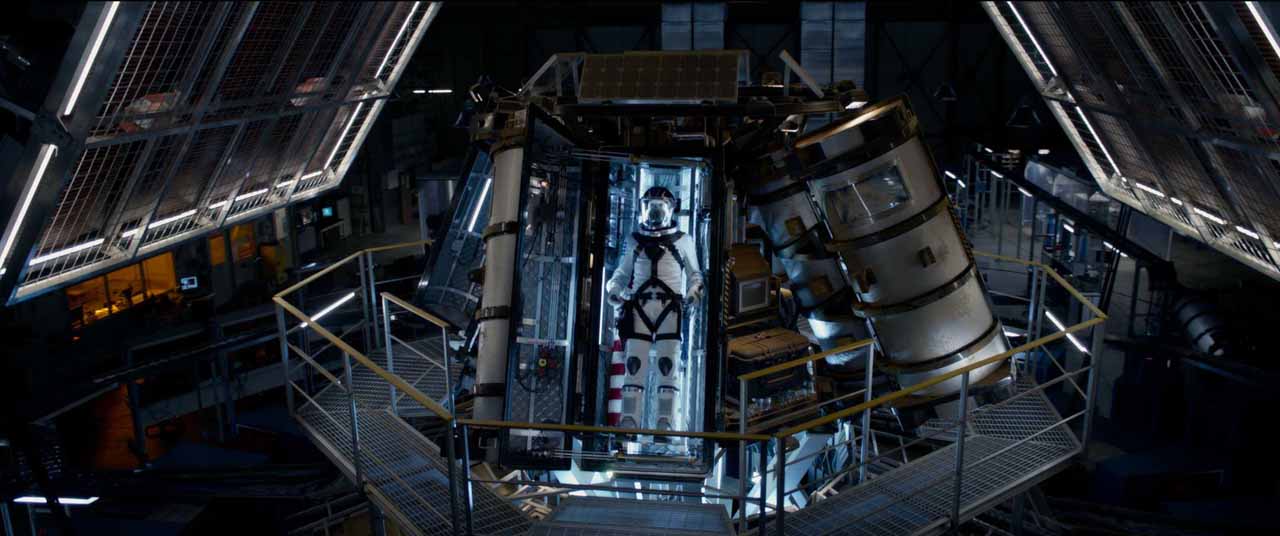
Another vital aspect missing or at least not shown in the trailer was a sense of wonder and good nature. Another reason why the Fantastic Four worked in the comics was for its light humor, fanciful sci-fi, and adventure. Those were missing in the trailer. Instead we were treated to a grim, dour and generic-looking sci-fi film that looks like it could’ve been directed by David Fincher. In past press releases, the filmmakers kept saying this film is supposed to have a more grounded and gritty approach, but that doesn’t work for the team. It seems like Trank and company wanted to copy the look and feel of Christopher Nolan’s Batman films. The film should’ve emulated Guardians of the Galaxy which gave off a fun, adventurous vibe. That would’ve being a better match. Perhaps Fox should’ve offered the film to James Gunn instead. While I’m at it, for all the complaints lodged at Tim Story’s Fantastic Four films at least they captured the essence of the team. It’s just that those films were doomed with bad casting, low budgets and weak scripts.
I’ll admit The Fantastic Four trailer is well shot and doesn’t look like a disaster, but it hit all the wrong buttons for me. I’m not excited about seeing this and I doubt I’ll go to the trouble of seeing it in a theater.
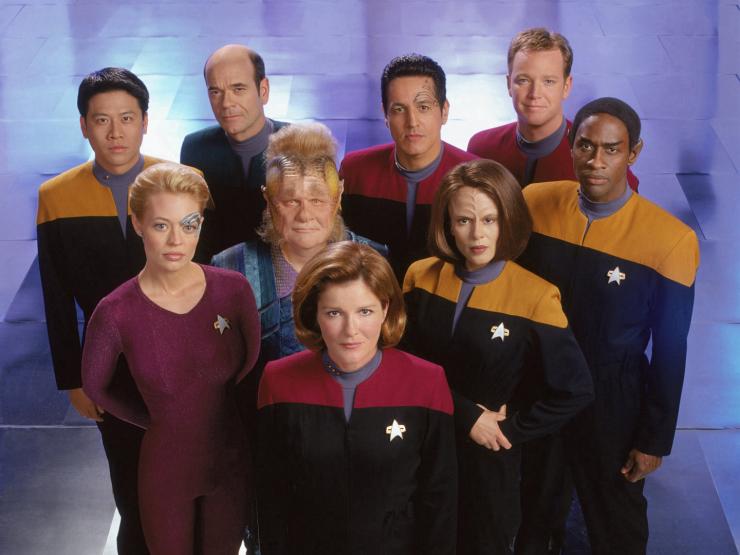
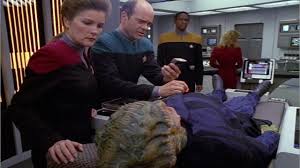
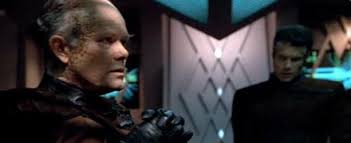
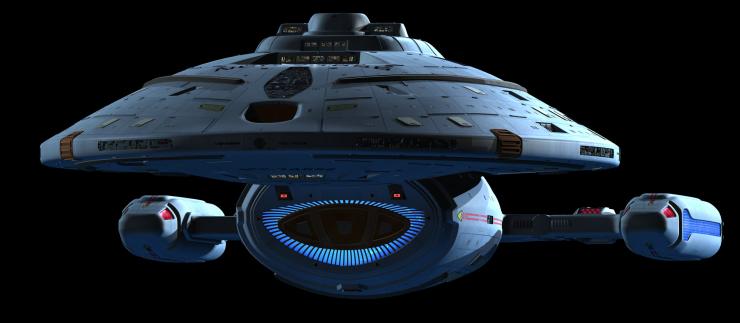
This month marks the 20th anniversary of Star Trek: Voyager, the saga of a lost Federation starship in a distant corner of the galaxy trying to make its way home. Ever since the third Star Trek spinoff made its debut on the UPN channel it’s been considered as an inferior Star Trek show. That is a somewhat unfair claim, although many episodes were formulaic there were many that were worthy of the Star Trek name. These are twenty of the best episodes of Star Trek: Voyager.
20. “The Chute”Voyager crewmembers Tom Paris (Robert Duncan McNeill) and Harry Kim (Garrett Wang) undergo a harrowing ordeal while being held prisoner in brutal space prison.
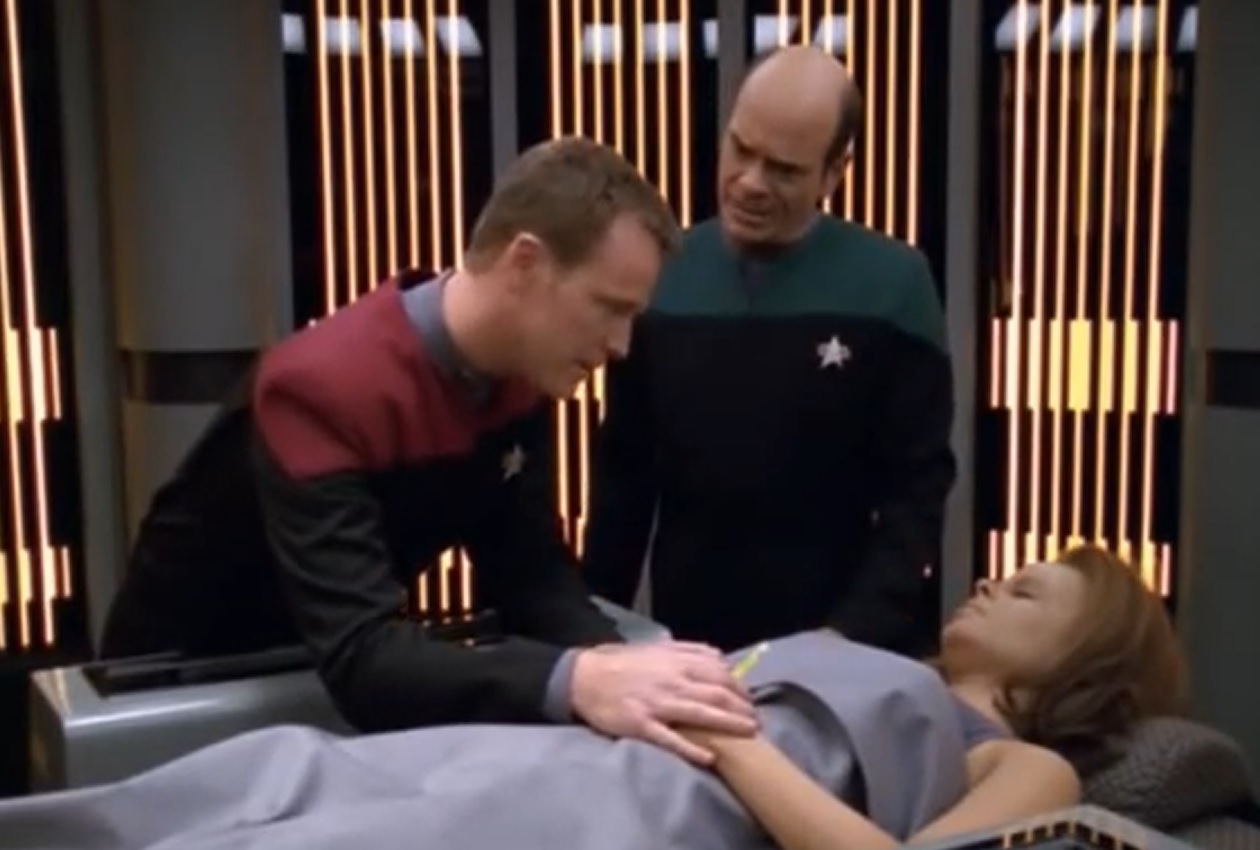
19. “Lineage” B’Elanna Torres (Roxann Dawson) grapples with accepting her half Klingon heritage during her pregnancy since she doesn’t want her unborn daughter to face the same persecution she underwent as a child.
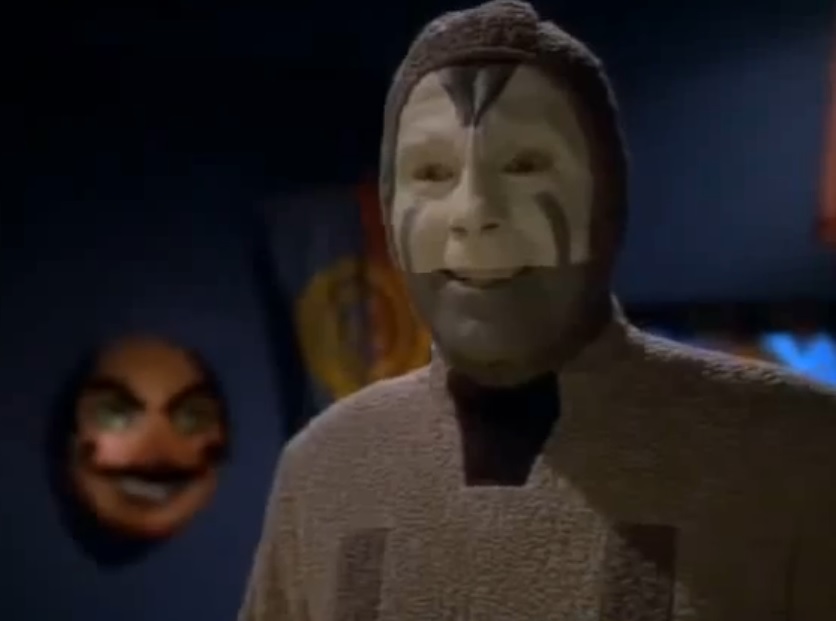
18. “The Thaw” Harry and B’Elanna are mentally trapped in a virtual reality by a malicious clown computer program (Michael McKean), who tortures them to gain release from its cyber trap.
17. “Maneuvers” First Officer Chakotay (Robert Beltran) tries to track down his former lover Seska (Martha Hackett) and her Kazon colleagues after they raid the Voyager and steal transporter technology.
16. “Scorpion, Parts 1 and 2”An exciting two-parter introduced the popular Seven of Nine (Jeri Ryan) as the Voyager is forced into an uneasy alliance with the evil cybernetic Borg against an even deadlier threat–Species 8472.
15. “Relativity” Seven of Nine is recruited by a Federation starship crew from the distant future. Her mission: travel through different time periods to prevent the destruction of the Voyager.
14. “Latent Image” The ship’s Emergency Medical Hologram (EMH) a.k.a. The Doctor (Robert Picardo) discovers that for some reason certain parts of his memories are being erased. His investigations lead to uncovering a tragic moment in his past and his reaction afterwards was very engrossing to watch.
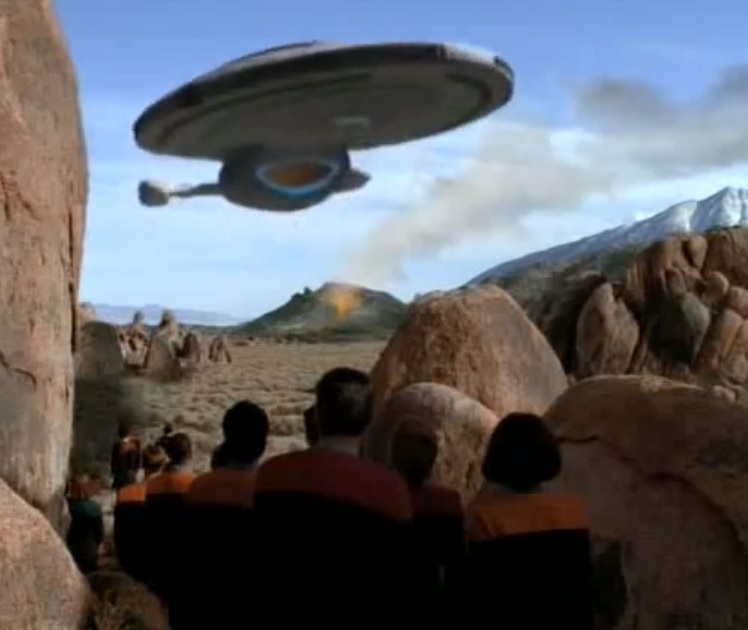
13. “Basics, Parts I and 2” The crew of the Federation starship Voyager have a final conflict with the barbaric Kazons, who coveted the advanced Starfleet ship and its technology. This two-part episode had many thrilling moments and cliffhangers as most of the Voyager crew were defeated and stranded on a primitive world.
12. “Equinox, Parts 1 and 2” The Voyager comes to the aid of another Federation starship also stranded in the distant Delta Quadrant. What is supposed to be a joyous occasion at encountering kindred spirits turns into conflict when the Voyager crew learns of the other crew’s unethical actions against an alien race.
11. “Dark Frontier” Seven of Nine’s background is explored as Captain Kathryn Janeway (Kate Mulgrew) leads efforts to steal Borg technology that will hasten their journey home. During a pivotal raid, Seven is captured by the Borg, who plan a biotech attack on humanity. Meanwhile, Janeway mounts a rescue mission.
10. “Hope and Fear” The sudden appearance of an advanced, unmanned, supposed Federation starship could be the means to finish the Voyager crew’s years-long voyage home or a trap. Guest star Ray Wise excelled in his role as a tortured alien whose race was assimilated by the Borg.
9. “Blink of an Eye” The Voyager is trapped in orbit around a planet with a dense gravitational field. So what passes for hours on Voyager is actually centuries for the planet’s inhabitants, which means that the ship becomes part of that planet’s history as its people advance technologically and socially.
8. “Before and After” An elderly, dying Kes (Jennifer Lien) in the future begins to travel backwards in time to many events including her birth. Among the fascinating future moments explored included a foreshadowing of the Voyager crew’s encounter with the Krenim.
7. “Distant Origin” The premise that some dinosaurs on Earth actually evolved into a spacefaring race was intriguing enough. But this episode’s first contact scenario smartly focused on an allegory of Galileo’s plight as scientific progress and knowledge conflicted with societal and religious dogma.
6. “Deadlock” After going through a technobabble anomaly the Voyager and its crew are duplicated, but both ships are attached to each other. Events dictate that only one ship and crew can survive, but which one? The episode was a novel way of resetting the status quo after disastrous events without using time travel.
5. “Message in a Bottle” The Doctor is transmitted to an advanced Starfleet prototype ship in the Alpha Quadrant in order to make contact with the Federation. Once there, he must join forces with that ship’s EMH Mark 2 (Andy Dick) to fight off Romulans, who have captured the ship.
4. “Course: Oblivion” In this tragic episode, things seem fine at first onboard Voyager. Tom and B’Elanna get married and the ship will reach Earth in a two years. However, it’s soon discovered that the ship is deteriorating, as well as the people onboard. After realizing that they and the ship are just copies of the actual Voyager and crew, it’s a race against time to seek help before it’s too late.
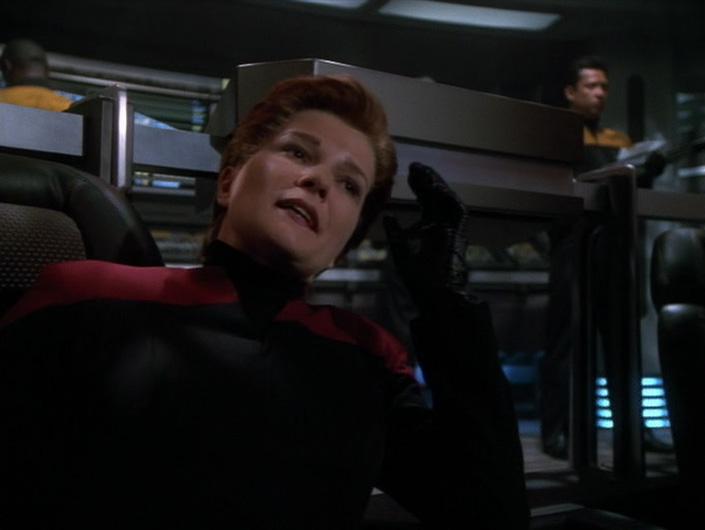
3. “Bride of Chaotica!” A wonderful and whimsical tribute to old sci-fi serials in the tradition of Flash Gordon has the Voyager crew coming to the aid of photonic, extra-dimensional aliens, who are at war with the evil fictional characters from Tom’s holodeck program The Adventures of Captain Proton. Hilarity ensues as the crew assume the overdramatic roles of the program and endure old sci-fi clichés.
2. “Living Witness” In the far future on another planet, a copy of the Doctor is activated by a museum curator (Henry Woronicz), who is fascinated by the “warship” Voyager’s visit to his planet in the distant past. Appalled at the gross inaccuracies about the visit and the Voyager crew, who are shown to be basically space pirates, it’s up to the Doctor to clear his former comrades’ names for history’s sake.
1. “Year of Hell, Parts 1 and 2”Star Trek: Voyager had many epic two-part episodes and this one wasn’t only the best of those, but the best episode for the entire series. The Voyager passes through a region of space controlled by the despotic Krenim. Janeway and the crew soon find out that the Krenim uses time as a weapon by altering timelines. Leading these alterations is Arronax (Kurtwood Smith) a Captain Nemo type obsessed with time tinkering. Over the course of a year, the Voyager is badly damaged and falling apart, but Janeway must find a way to defeat Arronax. “Year of Hell” was riveting and presented a gritty view of a desperate Voyager crew on their own, plus Smith gave a great performance as the tortured Arronax.
Today, it was announced at Midtown Comics in New York City by Marvel Comics’ Editor-in-Chief Axel Alonso and Executive Editor Tom Brevoort that the Marvel Universe will come to an end this May with the new Secret Wars mini-series.
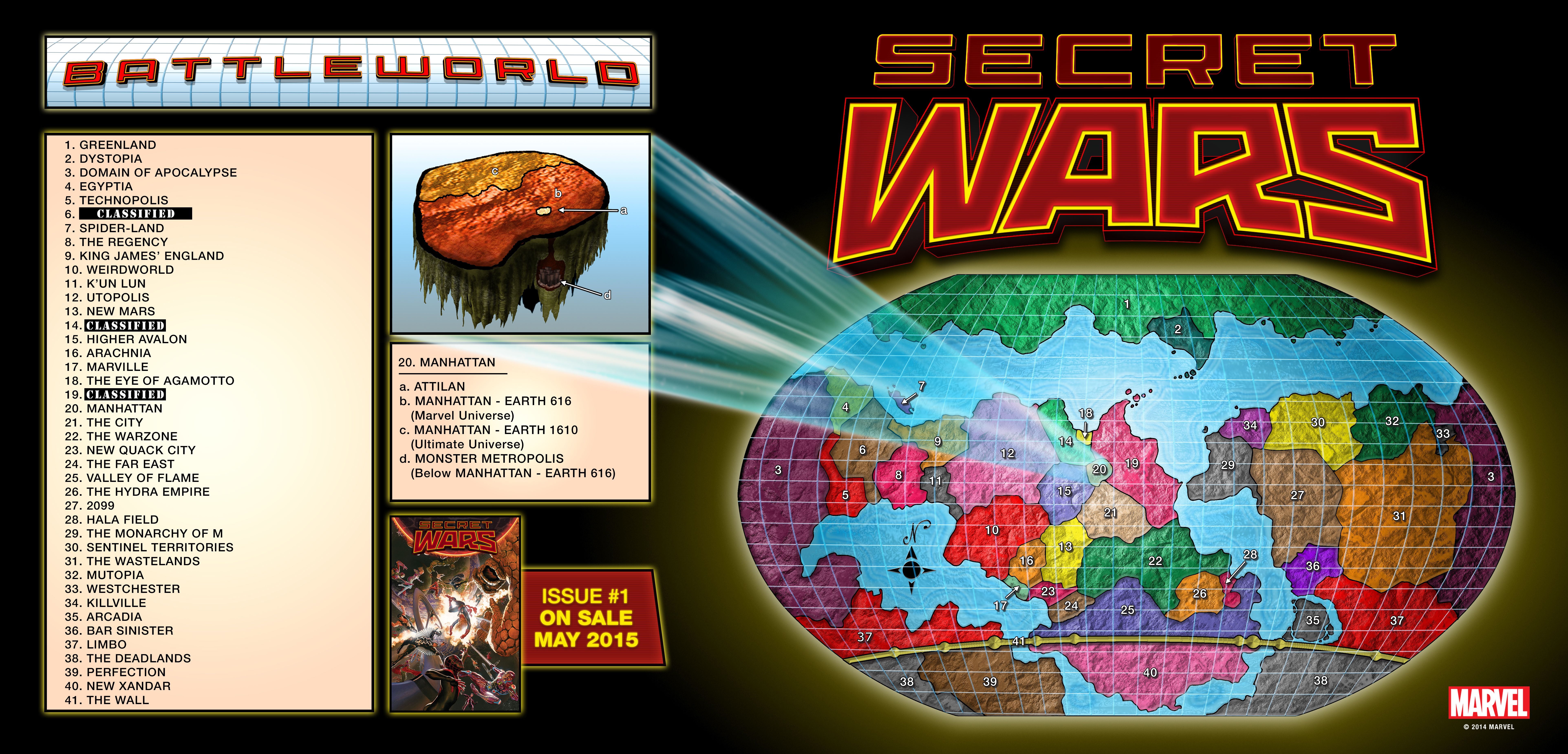
In Secret Wars, segments of different Marvel realities, including the Marvel Universe 616 or the main universe that has been in existence for 75 years will be combined into a new planet called Battleworld. The Marvel editors claimed that from now on this Battleworld will be the new Marvel Universe. Fans of the regular Marvel Comics know that for some time the Marvel superheroes have been dealing with the “Incursion” events, that is where parallel worlds/realities have been colliding with each other. Now it’s the turn of Marvel 616 and the one from the Ultimate comic books as the two realities will smash into one another. The remains of these universes will join other universe segments on Battleworld.
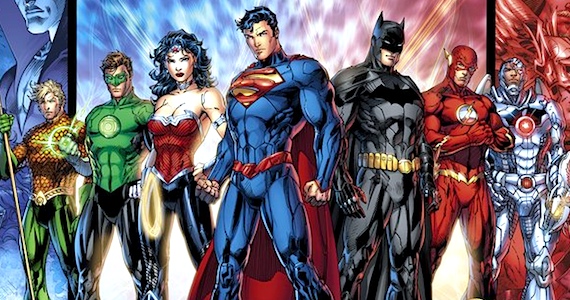
This event can best be described as Marvel’s version of Crisis on Infinite Earths, the famous DC Comics mini-series that sought to eliminate the confusing amount of alternate realities into one single universe. All fans know that the Crisis event was the springboard for DC to revamp their superheroes and titles, which included John Byrne’s updating of Superman, among others.
We can only hope that Marvel has better luck in producing a more coherent universe than DC did. While the event was good on paper, there were many inconsistencies with many DC titles, which led to more mini-series events that tried to rectify this to no avail. Ultimately, DC was able to correct this and present a clean ending to their comics universe and start over completely with the Flashpoint mini-series and The New52 reboot.
With the main Marvel Universe ending, this is undoubtedly a sad turn for fans of the Marvel comic books, but it’s a terrific way of starting over and clearing the plate. For some time, the Marvel Universe had become convoluted with too many characters and realities. Let’s look at the X-Men for example. There are so many different characters, many of which come from alternate futures and dimensions, that it’s daunting for non-regular readers to keep up with. How many storylines have there been in the X-Men comics where someone comes from the future? All these futures are different from one another! How can the future seen in “Days of Futures Past” be reconciled with a future seen in Wolverine: Old ManLogan? Simple, it’s impossible!
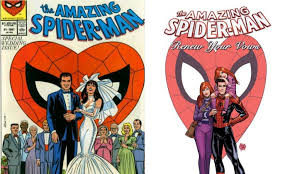
Then there is the mess Marvel made with Spider-Man in undoing his marriage to Mary Jane. Instead of just having the couple get a divorce, a convoluted story was made up (“One More Day”) where Spider-Man went completely out of character and made a deal with the Marvel equivalent of the Devil to save his aunt’s life. This led to a time-travel quirk where he never married Mary Jane and reality in the regular Marvel Universe was altered. The upcoming event “Renew Your Vows” is a good way to rectify this mistake as seen with the preview image of Spider-Man, Mary Jane and their daughter.
Speaking of Spider-Man, the recent Spider-Verse story illustrates how convoluted and crowded the Marvel multiverses have become with the many different versions of Spider-Man.
That is why the end of the Marvel Universe is a good way to streamline things and provide a jumping on point for new readers and lapsed fans who couldn’t keep up with the vast myriad of timelines. As with Spider-Man’s marriage, the clean slate allows for mistakes to be undone and to approach characters and stories with a new, fresh perspective. Then again, how long before alternate reality or future stories begin to come back? Let’s hope it will be a while.
For this year’s Free Comic Book Day event on May 3, Marvel will release free copies of Secret Wars #0 that will bring readers up to speed to the shattering event.
Okay it’s now the year 2015, we first caught a glimpse of this year from the classic film Back to the Future, Part II. As many readers know, in that film Marty McFly (Michael J. Fox) and Doc Brown (Christopher Lloyd) time travel from 1985 to 2015 and spend the first act of the movie in that time period.
The movie obviously showed us what 2015 would be like and no kidding, they got many details wrong. There isn’t any shame in this, Back to the Future, Part II came out in 1989 and the production team made their best guesses as to how the future would be like over twenty years from then. Things where bound to be incorrect.
As wrong as many predictions were, the whimsical look of Hill Valley, CA circa 2015 showcased several nifty products and events that make us wish they were a reality today. Believe it or not some devices and events do exist to an extent, while others don’t and just aren’t practical. Let’s look at some of them:
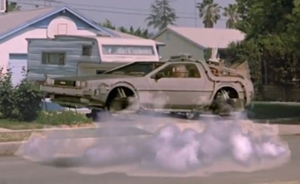
Flying cars: Best represented by Doc Brown’s converted DeLorean, Back to the Future, Part II had the best representation of flying cars seen on film. All the vehicles sure look flashy and seemed convenient. The good news is that flying cars are being tested right now, the bad news is that in the end they may be impractical. Think about it, anyone operating them has to become a pilot and let’s not get into the logistics of actually using them and the headaches they will cause.
Hoverboards: Like flying cars, this device is in the testing phase. Technically they do exist, called the HENDO Hoverboard, it’s a magnetic skateboard that only works on copper surfaces and float an inch above ground. That’s hardly the commonplace item seen in the movie. No doubt that when they do enter the market they will be for the one percenters only and probably won’t be available in pink for a while.
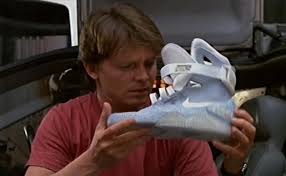
Nikes Air MAGs: Nike is in a race to actually have those famous sneakers worn by Marty McFly ready by the year’s end. Called the Air MAGs, these sneakers were actually recreated in 2011 and look just like the way they did in the film. But sadly, they didn’t self lace themselves.That doesn’t mean that Nike is giving up! The problem is the power source for the sneakers to lace themselves. The shoe manufacturer will probably solve this problem, but expect it to sell for a high price.
Power jackets: Remember that jacket Marty McFly wore that had self-fitting sleeves and dried itself? That would be a neat piece of wardrobe to have, especially if power pants were available with the same features. No more worrying about the expanding waistline and having to get new pants.
Dust repellent paper and fax machines: When Marty bought the infamous sports almanac that listed future winners, the saleslady mentioned that dust repellent paper seemed to be a common feature of books and other periodicals in 2015. Such paper doesn’t exist, but there isn’t a need for it. Digital media in smartphones and tablets are making dead tree products obsolete. In the film, fax machines were in every room in a typical suburban home. OK most homes have fax machines built in printers, but they’re not in every room nor are they needed.
TV blinds: Having blinds doubling as TVs is a nice idea, but the one shown in the older Marty McFly home didn’t have the HD or 3D capabilities that are a must for the flat screens that many of us have.
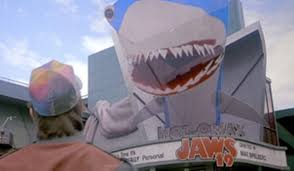
Holomax movies: Best represented by the holographic shark used to advertise Jaws 19, these Holomax movies promised advanced holographic technology with our movies. Clearly, we don’t have that but 3D is now a common feature of big-budget spectacles as well as the super huge IMAX screens. As for Jaws, that franchise remains underwater in the 1980s.
TV glasses: Marty’s daughter, Marlene (also played by Michael J. Fox) was seen in the film donning a pair of sunglasses that let her watch TV and answer phone calls. That is one thing Back to the Future, Part II did get correct since Google Glass and similar smart devices have those features and more.
Rehydrators: Remember when Grandma (Lea Thompson) brought over a tiny pizza pie that she placed in a contraption that grew the food into a normal size meal? Sounds convenient (albeit unappetizing), but the tech doesn’t exist. But fear not, 3D printers can produce food, so very soon we will have a variation of the rehydrator.
Rejuvenation treatments: Prior to the film, Doc Brown underwent a supposed rejuvenation treatment that added years to his life (don’t worry Marty, we didn’t notice the difference either), as for reality: botox anyone?
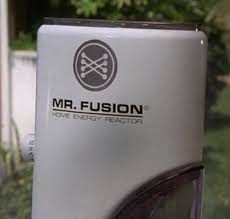
Mr. Fusion: This little household device (that was mounted on the DeLorean and used garbage as fuel) is probably the answer to our energy problems if only we didn’t have to worry about the fact that it’s basically a small nuclear reactor. How safe is such a thing? Imagine nuts, terrorists and other malcontents trying to use Mr. Fusion as a weapon. Perhaps if we embrace nuclear power and can ensure that it’s 100% safe to use, such a device can be invented way down the line. But we’re talking decades from now at the best.
Cubs, lawyers and weather: Some of the funniest moments in the movie are that in 2015 lawyers are abolished, which ensures a faster justice system (as if lawyers and politicians will ever let that happen), the Chicago Cubs win the World Series (the baseball team has a few months to either prove or disprove that notion, but there is a baseball team in Miami, only they’re called the Marlins), and that the weather can be accurately predicted to the minute (given what we know about the weather variables, that is highly unlikely).
 The recent announcement by Netflix that it will be developing an original TV series bases on the iconic The Legend of Zelda video game series has caught many by surprise including myself. Nintendo’s only other foray into live action movies or TV based on their games was the not so well received Super Mario Bros. from 1993.