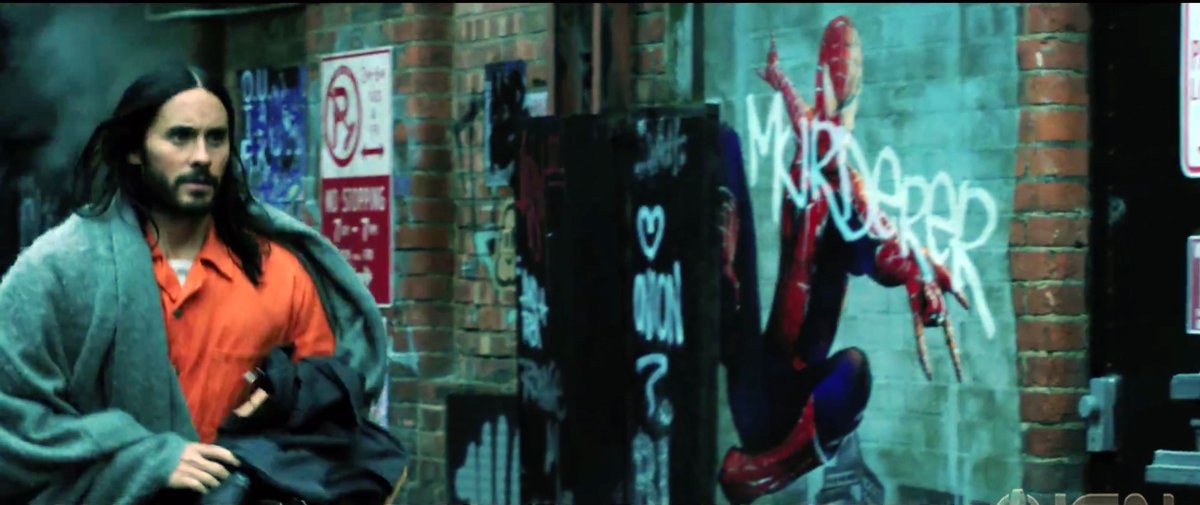
Spider-Man: No Way Home Is The Strongest, Most Emotional Spider-Man MCU Film

Usually the third film in a trilogy is considered the weakest entry even it it is a solid effort. The latest Spider-Man film in the Marvel Cinematic Universe (MCU), Spider-Man: No Way Home, proves otherwise and is actually the strongest entry.

Given the content of the film, it will be nearly impossible to discuss it without going into not just spoilers, but heavy spoilers. So, to be fair to anyone who has not seen this instant classic, this review will only cover broad generalities with more in-depth analysis to follow some other time. There will be some spoilers but only in the broad sense and covers what was revealed in the trailers.

Spider-Man: No Way Home picks ups immediately after the end of the previous MCU Spider-Man film, Spider-Man: Far From Home where Spider-Man’s (Tom Holland) secret identity of Peter Parker was revealed to the world. The aftermath of the revelation is devastating to Peter and those closest to him like his girlfriend, MJ (Zendaya), his best friend Ned (Jacob Batalon), and Peter’s Aunt May (Marisa Tomei).

The loss of privacy and the intrusive nature of the outside world eventually drives Peter to seek magical help from the sorcerer Doctor Stephen Strange (Benedict Cumberbatch). He asks Doctor Strange to cast a spell to make the world forget that he is Spider-Man, and the sorcerer agrees to do it. However, during the casting of the spell, Peter distracts Doctor Strange, which causes the spell to be corrupted.

The result is that Spider-Man villains from alternate film universes are brought to the MCU, in other words, the foes from the earlier, non-MCU Spider-Man films. These include Doctor Otto Octavius, aka Doctor Octopus (Alfred Molina), Green Goblin/Norman Osborn (Willem Dafoe), Electro/Max Dillon (Jamie Foxx), the Sandman/Flint Marko (Thomas Haden Church), and the Lizard/Dr. Curt Connors (Rhys Ifans).

Spider-Man quickly finds out that tackling with the not-quite Sinister Six and his decisions comes with severe consequences that not only imperil him and those around him, but the fabric of the multiverse itself. These developments force him to recognize that with great power comes great responsibility…and sacrifice.

Continue reading

The Lord Of The Rings: The Fellowship Of The Ring 20 Years Later

The Lord of the Rings: The Fellowship of the Ring is celebrating its 20th anniversary this month and looking back, it’s clear now, how influential this highly successful film has become. Peter Jackson’s epic start to The Lord of the Rings (LOTR) trilogy paved the way for a fantasy film revival that is still going strong today and led to similar adaptations such as HBO’s Game of Thrones, Amazon Prime’s The Wheel of Time, and other fantasy-themed films and shows. The Fellowship of the Rings’ success wasn’t a sure thing though, as author J.R.R. Tolkien’s massive novel was deemed unfilmable due to its intricate plot and long back story which spanned thousands of years.

The earliest film version was the animated adaptation from Ralph Bakshi in 1978. Tje animated version of LOTR was well received, but due to time constraints the film only told half the story. Jackson’s take is a fully fleshed out world that showcases his native New Zealand’s beautiful landscapes and scenery that show the viewers what Middle-earth would look like if it really existed. He also takes his time in setting up the tale of the diminutive hobbit Frodo Baggins and his quest to destroy an evil mystical ring created by the sorcerer Sauron. His journey would culminated in casting the ring into a volcanic pit in the dreaded land of Mordor.

The Lord of the Rings: The Fellowship of the Ring starts off by showing some of Tolkien’s back story and the history of Middle-earth where the rings of power were created for men, elves and dwarves, as well as the epic battle against Sauron where he is defeated, but only temporarily. After the battle, the all-powerful one ring was lost and found its way to the distant land of hobbits known as the Shire.

Frodo’s journey begins when the wizard Gandalf arrives at the Shire and enlists him and his companions Samwise Gamgee, Merry and Pippin to accompany Gandalf to Mordor to destroy the one ring which Sauron needs to conquer the world. Along the way, the group encounters the heroic ranger, Strider (later to be known as Aragorn) and the stalwart dwarf, Gimli and his rival the elf, Legolas as they all join forces to become the Fellowship of the Ring. Together they vow to end the threat of Sauron once and for all.

Their journey through the elf kingdom Rivendell and the mines of Moria are all classic set pieces that are fully brought to life and culminate in an epic battle against swarms of orcs (Sauron’s minions) and a final clash between Gandalf and a massive demon known as a Balrog. Fate has the fellowship splinter and go their own way as Frodo and Sam are left to go on alone to Mordor while Strider, Legolas and Gimli race to rescue the other hobbits who were captured by orcs. This sets up the excellent sequel, The Lord of the Rings: The Two Towers, which was just as successful as The Lord of the Rings: The Fellowship of the Ring.

The success of The Fellowship of the Ring was crucial as it paved the way for the subsequent films and established LOTR as a huge cinematic franchise that spawned further adaptations of the earlier Middle-earth book The Hobbit, as well as a new TV series coming from Amazon that will explore the earlier time periods of Middle-earth. It also led to the groundbreaking success at the Academy Awards of the third film in the trilogy The Lord of the Rings: The Return of the King, which won 11 Oscars including Best Picture. This was the first time a genre film won this honor and led to increased respect and awareness for genre films as valid, cinematic art. It was also a blueprint for how book adaptations can be done, even for complex works, such as the recently released Dune or even earlier films like Watchmen.

The film studio New Line Cinema committed to Jackson’s vision and gave him the required financial resources and time to have his ideas come to life and Jackson committed to filming all three LOTR movies back to back, which was a massive undertaking and spanned multiple years. This was seen in throughout all three movies as the details of the imaginary world are incredible to see and experience. Of all three movies, I think The Lord of the Rings: The Fellowship of the Ring is the best one as its story is paced very well and has elicits a whirlwind of emotions for viewers. It has moments of terror, such as when Frodo first encounters the ring wraiths who were hunting him and the ring; instances of wonder when the group arrives at Rivendell; and pure excitement when the Fellowship has its last battle in the mines of Moria. It is also the only time you see all of the main characters together until the end of the last film as they are separated at the end of the first movie and go their own separate ways. Their interaction as a group is a highlight as their differences in personality and stature are humorous and flesh out their characters.

Overall, The Lord of the Rings: The Fellowship of the Ring is a masterpiece film, not just in the fantasy genre, but in all of cinema with superb storytelling mixed with unforgettable characters and stunning visual effects. Its impact is still being felt and will continue to be enjoyed and imitated for decades to come, as will its sequels. Hopefully the upcoming Amazon series will be able to recapture some of the magic that was apparent as soon as Frodo walked out of his home and we saw the Shire and Middle-earth in live action for the very first time.

C.S. Link

The Lineup For The MCU’s West Coast Avengers

Recently while promoting his Disney+ TV show, Hawkeye, actor Jeremy Renner mentioned that he would like to continue playing the title role in a live-action version of the West Coast Avengers. For anyone who is unaware, The West Coast Avengers was a Marvel Comics spinoff title from the main comic book, The Avengers. Originally a mini-series created by Roger Stern and Bob Hall, the title was popular enough to warrant a regular series that lasted for 102 issues in its original run.

Hawkeye was the team leader of an expanded Avengers team situated in the west coast of the United State. The original lineup included his wife Mockingbird, Iron Man, Wonder Man, Tigra, and later on, Hank Pym. Other notable superheroes that joined the team included Moon Knight, the Thing, Spider-Woman, the Vision, Scarlet Witch, and U.S. Agent.

If Marvel Studios were ever to do an adaptation of the West Coast Avengers, what would be its lineup? Will it closely mirror its original comic book counterpart or will it be radically different to showcase currently popular heroes of the Marvel Cinematic Universe (MCU)? Here is a viable roster for the MCU version of the team, which largely includes heroes based in California as shown in their MCU films:

Hawkeye

Played by Jeremy Renner, Hawkeye would be the team leader as in the comics. In the TV show, Hawkeye, Renner has shown he has the role down pat to portray the archer as a seasoned leader with the field experience needed to lead a team. His role as the leader of the West Coast Avengers would allow Hawkeye to stand out and have a stronger presence unlike the original Avengers films.

Ant-Man

Scott Lang as played by Paul Rudd is a natural fit in this team since he is considered, along with Hawkeye, to be an underdog. It does not hurt that Rudd is incredibly popular these days and adds star power to a potential West Coast Avengers film. Ant-Man could fill in the role of comedic relief while demonstrating with his abilities and character that he is not to be taken lightly.

The Wasp

Having Ant-Man’s natural companion as part of the West Coast Avengers’ roster is a must. Unlike the more comedic Lang, Hope Van Dyne as portrayed by Evangeline Lilly in Ant-Man and the Wasp, would be deadly serious combatant who fully utilizes her shrinking and growing powers. At the same time, the Wasp would be a good foil and romantic partner for Ant-Man.

Shang-Chi

Of course, he has to come with the mystical ten rings that will give him that extra oomph in the power department. Ten rings aside, Simu Liu has a natural charisma that will let him shine in an MCU West Coast Avengers film along with his character’s crowd-pleasing fighting skills and mystical background.

Captain Marvel

Marvel Studios’ CAPTAIN MARVEL..Captain Marvel (Brie Larson)..Photo: Film Frame..©Marvel Studios 2019

Captain Marvel’s west coast connection comes from her adventures in Los Angeles in her debut film, which could serve as the hero’s new home base on Earth. Brie Larson’s Carol Danvers/Captain Marvel may be too overpowered, but she could serve as the emergency back up in case of a dire need.

War Machine

Even though Iron Man was a founding member of the West Coast Avengers mini-series, he was not Tony Stark. During this time, James Rhodes took over the Iron Man duties because of Stark’s ordeal with alcoholism. With Stark deceased in the MCU, Don Cheadles’ War Machine would easily fill in that super-tech hero role.

Wonder Man

The last two members shoule be new characters to the MCU and the Hollywood-based actor Simon Williams naturally must be included in the roster. Wonder Man would provide the needed Hulk-level super strength for the team. Also, Nathan Fillion should play him since he was seen as the actor in Guardians of the Galaxy, Vol. 2 when he turned up in a couple of movie posters as part of the film’s many Easter eggs.

Tigra

The other founding member of the West Coast Avengers should be Tigra aka Greer Grant, the former Cat. She has a unique look and skill set with her tiger motif although how she should be presented in live-action is a mystery and may involve radically altering her. As to who should portray her, there are many solid actors, such as Megalyn Echikunwoke, who could project the physicality of Tigra and a ferocious, yet kind nature. Too bad Zoe Saldana already has a role in the MCU, because she would be perfect.

Should anyone else be in the MCU version of the West Coast Avengers? Be sure to leave a comment!

A Look Back At Spider-Man 3

The first two Sam Raimi-directed Spider-Man films are still considered classic superhero films that helped put Marvel Entertainment on the Hollywood map of superhero films.

Then there is Spider-Man 3.

Honestly, the film is not all bad, though it does a lot to earn its infamous reputation, but it is hardly the trainwreck many critics make it out to be. It certainly is not the worse Spider-Man film…that dubious dishonor goes to The Amazing Spider-Man 2. What is frustrating for fans is that Spider-Man 3 has so many elements that would have made a great Spider-Man film, but it is so cluttered thanks to studio interference. Let’s take a look at it’s messy plotline to see for ourselves. Spoilers are ahead.

Spider-Man 3 begins with Peter Parker (Tobey Maguire) reveling in his dual role as the masked superhero Spider-Man. He is on top of his game as New York City, his home base, showers him with praise and cheers. Meanwhile, his girlfriend Mary Jane Watson (Kirsten Dunst), once a rising star of an actress and model, is suffering a career slump. She gets fired from a starring role in a Broadway musical and is eventually forced to work as a singing waitress in a jazz club. Peter thinks little of Mary Jane’s plight and tells her everything will be fine. On one such occasion, the couple are out stargazing in a park and a meteor crashes nearby without either noticing it. From the meteorite, an extra-terrestrial shapeless mass emerges and hitches a ride onto Peter’s moped when Peter and Mary Jane leave the park. Later, the alien life form stays hidden in Peter’s apartment waiting for the right moment.

After Peter decides to propose to Mary Jane, he is attacked by his former best friend Harry Osborn (James Franco). In the previous films, their friendship drifted apart because Harry blamed Spider-Man for the death of his father, the original Green Goblin. After discovering his father’s weapons at the end of Spider-Man 2, Harry modified the weapons and assumed a new identity as the New Goblin. During the fight, Peter, who never changed into his Spider-Man suit, defeats Harry and then takes him to a hospital to be treated for his injuries. During his recovery, Harry has short-term memory loss, but soon regains them and with his hatred of Peter renewed, Harry begins plotting revenge against his former friend.

While this went on, a common thief called Flint Marko (Thomas Haden Church) escaped from jail and tried to evade the police by hiding at a sandy testing site for a particle accelerator. The device is activated with Marko inside it and the criminal’s body is altered as it is fused with the surrounding sand. Marko is only motivated to use his powers as the Sandman to steal money to help pay for his young daughter’s medical bills. This activity soon puts him at odds with Spider-Man.

The superhero by now is suffering several setbacks in his life. He faces new competition in his profession as a freelance photographer for The Daily Bugle newspaper from photographer Eddie Brock (Topher Grace) and his superior photos of Spider-Man. Peter also learns that Marko was actually responsible for the death of his Uncle Ben in the first Spider-Man film and becomes obsessed with finding him. At the same time, tensions grow between him and Mary Jane who feels Peter is not supportive enough. She eventually leaves him after concluding Peter is flirting with a fellow college student, Gwen Stacy (Bryce Dallas Howard). But what Peter does not know is that Harry Osborn forced Mary Jane to break up with him as part of his schemes of vengeance.

Making matters worse is that the alien mass bonds to Peter while he is sleeping in his apartment and forms a black version of his Spider-Man suit, It’s revealed that the alien organism is actually a symbiote that enhances Spider-Man’s strength and…his aggression. Peter quickly adopts a new cocky and hostile attitude that alienates him from everyone as his enemies close in on him.

Continue reading

The Influence of Matt Fraction & David Aja On Hawkeye

As we’re getting ready to watch the upcoming Hawkeye on Disney+ in a few days, many Marvel Comics fans have noticed how much influence the acclaimed comic book Hawkeye had on the show.

Written by Matt Fraction and drawn by David Aja, Hawkeye debuted in 2012 and instantly stood out among the crowded comic book marketplace thanks to the minimalist art from Aja and Fraction’s take on the archer superhero.

Instead of having Clint Barton aka Hawkeye run around and shoot endless supplies of trick arrows, the series grounded the superhero and leaned into his everyman pesonna who had to deal with more mundane problems, more believable villains, and much more relatable to the average reader. This Hawkeye did not wear his silly purple outfit as he dealt with world-ending events, although he kept his purple color scheme with his civilian clothing. He had to grapple with local thugs and more importantly, he could be hurt. Just look at the aftermath of many of his battles in the series where he came away all bandaged up and beaten. Yet, unlike Daredevil, the archer was never dour. though he seemed to suffer from depression.

What made Hawkeye more identifiable and someone to look up to was that in the series he always looked out for the vulnerable little guy. For instance. in the first issue he finds out that the tenants in the building he lived in were terrorized by their landlords, the RussianTrack Suit Mafia. So, Hawkeye helped them out by buying the building and became a kind landlord who was right at home joining the tenants in a barbecue. Later in the issue, he came to rescue of one of the series’ most beloved characters, Lucky the pizza dog, who was cruelly treated by his owner, a member of the Track Suit Mafia. Hawkeye wound up taking the dog from the mobster and adopting him.

On a sidenote about Lucky, check out issue #11, which had the story “Pizza is My Life” and was told entirely from the point of view of Lucky. The way this was done was ingenious and inventive as Fraction and Aja used pictorgrams to illustrate the dog’s thought process as human dialogue faded in and out. The issue won an Eisner Award and it was well deserved. Thankfully, Lucky will appear in the TV series.

Another factor that made the series so memorable was Aja’s art which was very expressive, used bold lines and was similar to David Mazzucchelli’s art in Daredevil during Frank Miller’s “Born Again” story arc. The series used flat colors that conveyed mood and the emotional beat of the characters, which supported the series’ gritty tone.

Of course, what made the 22-issue run exceptional was the teacher/student relationship between Clint Barton and Kate Bishop. The scenes between the two were full of lively banter and quiet reflective moments that explored Hawkeye’s more vulnerable side. Bishop was a great foil to Barton with her spunky attitude and vigor. She was never afraid to call her mentor out when she thought he was in the wrong. Meanwhile, Hawkeye respected the young superhero and readily took her under his wing like he was a protective big brother or uncle. Together they made a great archery team and the way they coordinated their fighting styles was terrific thanks to Aja’s art which made expert use of small panels to convey intense action.

One of the more memorable fight scenes in the series was in issue #3, called “Beating the Odds”, and involved the two in a frantic car chase as they fled the Track Suit Mafia. Anyone who saw the recent preview clip of Hawkeye during the Disney+ Day event could tell that the car chase shown in the clip was inspired by the issue.

Be sure to check out the classic series run in the Hawkeye trade paperbacks which have the 22 issues of the Fraction/Aja run: My Life as a Weapon, Vol. 1, Little Hits, Vol. 2, L.A. Woman, Vol. 3, and Rio Bravo, Vol. 4. Or just pick up the collected works in a single volume. They’re worth every penny and are a nice way to see how classic run influenced the TV show.