Ant-Man Is Another TriumphANT Effort From Marvel

antman poster

Please pardon the pun in the article title, but Marvel Studios has done it again with their latest film Ant-Man. This film suffered through many behind-the-scenes obstacles and hurdles, the most dire was the sudden departure of Ant-Man’s original director, the fan-favorite Edgar Wright. Expectations were low for this film, seriously, a film about a guy who can shrink himself and talk to ants? It didn’t really work in the old Marvel comic books (created by Stan Lee, Larry Lieber, and Jack Kirby), so how could this concept translate to the screen?

Well, kudos has to go to Marvel Studios for pulling off another exciting and fun superhero film that leaves you begging for more.

Ant-Man is a heist film that is funny and full of thrills as it tells the story of Scott Lang (Paul Rudd), a cat burglar who has been released from prison after serving a sentence. He’s a down-on-the-luck extremely likeable scott finds suitfellow who just wants to reconnect with his daughter Cassie (Abby Ryder Forston), but can’t catch a break or a steady job.

His buddy Luis (Michael Peña), another ex-con, hooks him up with a caper to break into an old millionaire’s home and rob his safe. When Scott does this he discovers a strange suit in the safe that belongs to Hank Pym (Michael Douglas) and soon finds out that Pym was testing him.

Pym discovered years ago how to shrink himself using the suit and wants to keep that technology out of the wrong hands. Unfortunately, his protégé Darren Cross (Corey Stoll) forced Pym out of his own company and is on the verge of recreating the shrinking technology. What’s worse is that the unethical Cross is willing to sell the technology in the form of a beefed-up armored suit called Yellowjacket to the highest bidder for military use. Feeling desperate, Pym recruits Scott to don the shrinking suit, use its capabilities to infiltrate Pym’s former company and bring down Cross’ efforts.

ant man

This may seem familiar to anyone who has seen your average Marvel Cinematic Universe film (MCU) , but that’s just on the surface. Whereas the other MCU film this year, Avengers: Age of Ultron, felt bloated and choppy, Ant-Man is a fast-moving joyride that has a bubbly sense of fun. You instantly root for the good guys and find it so easy to laugh at many of the gags and jokes. Director Peyton Reed deserves so much credit for naturally bringing the humor to this film and that is due to his comedic film credentials. Kevin Feige, the Marvel Studios mastermind, is owed a pat in the back by fans everywhere for helping to not only keep the production going after Wright left, but for finding the right person to direct Ant-Man.
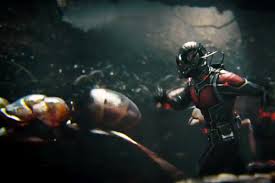
running antmanSomething as silly as a guy who shrinks and talks to ants actually makes sense in this film… it works! That is because this film wisely chose to use the character of Scott Lang and made the film a very loose adaptation of David Michelinie and John Byrne’s re-interpretation of the character from Marvel Premiere #47-48 (“To Steal an Ant-Man!”) where the concept’s full potential was realized. Ant-Man used his powers in a unique fighting style where he would instantly shrink and grow to normal size, which confused enemies. Well, this approach is used in this film and Wright deserves credit for bringing forth that concept, which thankfully Marvel utilized. These fight scenes were electrifying and breathless because they haven’t been seen on screen before. The closest film that can compare to this is Innerspace, an underrated gem from the ’80s.

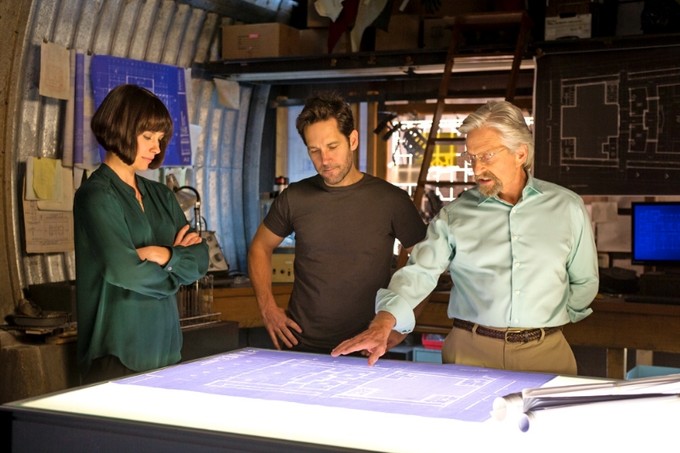
Aside from the brilliant special effects and pyms and langthe tight and competent direction, Ant-Man is such a winning film thanks to all the actors who bring their A-game to the film. From Paul Rudd’s affable Scott to Evangeline Lily’s stunning presence as Hope Van Dyne to Michael Douglas who just shines as Pym. He nearly steals the film thanks to his gravitas and unexpected comedic timing. You just buy him as the angst-ridden Pym and as to why he doesn’t like Tony Stark.
Yes, there are references to the MCU and even some swipes against the Avengers. But these Easter eggs (listen for a quick Spider-Man reference!) embellish the film and don’t feel forced. Make sure to stay until the very end of the credits to get an idea of how Scott Lang fits within the entire MCU as the final scene sets up the next MCU offering. Like with the other MCU films Ant-Man is part of something larger, but at the same time it’s a smaller scale film, and that’s a compliment. It gives Ant-Man a more intimate, relatable aspect that is perhaps matched by the Netflix series Daredevil.

ant rider

The fact that Ant-Man is firmly entrenched in the MCU may seem as detriment to some, especially those that may be tiring of superhero films. But like last year’s Guardians of the Galaxy, Ant-Man is a bubbly and pleasurable romp.

José Soto
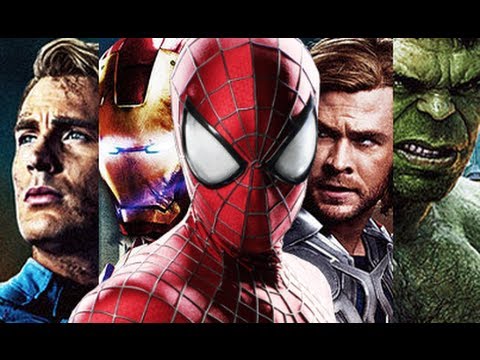
It’s Official Now: Spider-Man Will Join The Marvel Cinematic Universe!

spidey mcuMarvel Studios and Sony Pictures officially announced on February 9 that Spider-Man, the beloved flagship superhero of Marvel Comics, will now be a part of the hugely successful Marvel Cinematic Universe (MCU). It’s clear that the rumors and email leaks about this happening were valid.

This development obviously paves the way for Spider-Man to appear in other MCU films like Avengers: Infinity War and give Marvel tighter control over the character. In addition, this agreement between the two studios will also allow for characters from the MCU like Iron Man or Thor to appear in standalone Spider-Man films.

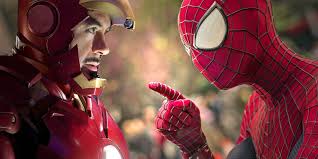
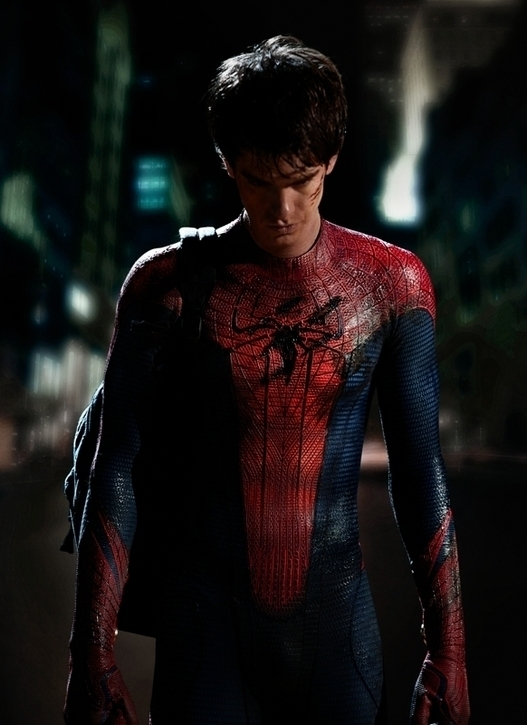
First the plan is for Spider-Man (who sadly will be recast–spidy irongoodbye Andrew Garfield, you were a great Spidey) to appear in an unspecified future MCU film. Then another solo Spider-Man film will be released on July 28, 2017 that will be a co-production between the two studios with Marvel’s Kevin Feige and Amy Pascal overseeing the film. The announcement didn’t make clear which film Spider-Man will appear in, but undoubtedly he is a shoo-in for Avengers: Infinity War, Part I. That film is due to come out in 2018 so that means he can probably make his debut appearance in next year’s Captain America: Civil War! That would be just amazing (pardon the pun) since Spider-Man was an integral part of the comic book mini-series of the same name last decade. UPDATE: The Wall Street Journal has reported that Spider-Man will indeed make his MCU debut in the third Captain America film.


From glancing at the MCU and Sony’s original film schedule, the next Spider-Man film, originally scheduled for 2018, has been bumped up a year earlier. The new schedule pushes back the new Thor film, Thor: Ragnarok, to November 3, 2017 and the Black Panther debut film will now come out in 2018. The domino effect continues as Captain Marvel will now premiere on November 2018 and the Inhumans movie has been re-scheduled for 2019.

One film that may have been lost altogether is the Sinister Six film that was supposed to come out next year and directed by Drew Goddard. In the joint announcement there wasn’t any mention of that movie’s fate, which was to feature Spider-Man’s greatest foes teaming up to defeat him. Perhaps Goddard may be assigned to direct the next Spider-Man film instead.

Also unclear is whether or not plans to do a film about the Black Cat will go forward. Given the crowded production plate, there may not be any room for that character now, which is probably for the best. While a vital character in the Spider-Man mythos, the Black Cat may be unfairly compared to the more well-known Catwoman by average moviegoers who don’t follow comics.

live civil warOverall, this is hands down very exciting news that pumps new blood into the floundering Spider-Man film franchise. Now he is back where he belongs with the right people making sure we get the best Spider-Man on film. And that is how it should be because Spider-Man is Marvel’s best known and popular superhero. So, it only makes sense that Marvel Studios handle Spider-Man. Just look at what they have accomplished to date. Starting with Iron Man and continuing with Guardians Of The Galaxy, Marvel Studios have shown that they produce the most faithful and spirited big-screen adaptations of their superheroes. In the end, it benefits both studios. Sony still retains their film rights to Spidey, but pass on the logistics of putting out a quality film to another studio that has proven they have the talent to produce a topnotch Marvel superhero film. Marvel Studios gets a bonafide superstar added to their roster who can help pave the way for a Phase Four of their MCU because let’s face it by the end of the decade some of the actors currently playing our favorite heroes may either want to move on or be too old by then to realistically play the characters. Who better than Spider-Man, who will probably be recast with a much younger actor, to help spearhead the MCU in the future?

?????????????????????????????????

This development also demonstrates the tenacity of Marvel Studios and Disney. Systematically, they have steadily regained the film rights for many of their characters. With Spider-Man now in their clutches, the only big name characters not under Marvel’s direct control are the X-Men and the Fantastic Four. Trying to regain the rights to the X-Men from 20th Century Fox will be much harder to pull off if not impossible given the frosty relations Marvel has with Fox and the continuing success the latter film studio has had with the revitalized mutant film franchise. That could be the main reason why Marvel seems to be de-emphasizing the mutant heroes lately. But as for the Fantastic Four…that would depend on how Fox’s reboot is received. If it flops, then Marvel has a stronger hand in getting them back. If it succeeds, then it will be quite some time before the Fantastic Four joins Spider-Man and the rest of the Marvel Universe on film.

For now though, let’s celebrate this film development.

José Soto


Requiem For A Spider-Man Reboot

parker

As we all know, the latest buzz going around the ‘net has been about the leaked emails from Sony Pictures and in particular the future of the Spider-Man film franchise. We learned that Sony and Marvel Entertainment came agonizingly close to having Spidey appearing in 2016’s Captain America: Civil War and in other Marvel Cinematic Universe (MCU) movies. Additionally, the emails it’s clear that the Sony executives were up in arms over where to go forward with the franchise.

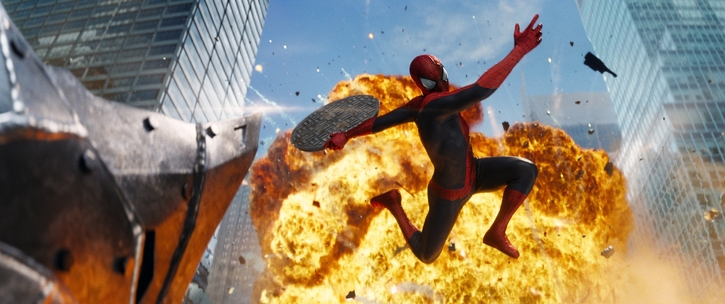
TSpidey MCUhe Amazing Spider-Man 2 underperformed (and for good reason!) last summer in theaters and took a vicious beating from critics and fans over its convoluted script and having too many characters. The emails prove that Sony knows something is wrong with the franchise, and also demonstrate how they badly lack any creative solutions. Let’s look at their idea for an Aunt May film which would reveal her secret life. Really? That is one dumb idea. Why not have a kid-friendly film starring Ms. Lyons the dog? Then there was the notion of making an animated comedy film about Spidey. That would go over as well as that Broadway play. Or how about a movie about an unnamed female superhero? Sorry, but other film studios are coming out with high profile superheroines like Wonder Woman and Captain Marvel. Seriously, these kinds of ideas make the planned Sinister Six movie to be a brilliant move!

What’s worse is that The Amazing Spider-Man 2’s reception has cast a doubt on continuing the franchise to the point that the planned Venom movie is all but dead and now the likelihood of a Sinister Six film is in doubt. The fragile nature of these films underscore how much the Spider-Man film franchise is in trouble. Announcement after announcement fail to drum up any interest among fans or worse hostility. The only Marvel property that generates more hostility is next year’s Fantastic Four reboot. Smelling blood in the water, many fans are ripping apart the two recent Spider-Man films and a war cry has started for Sony to sell the film rights back to Marvel. That’s regrettable. The reboot had some good parts and shouldn’t be completely disregarded, especially the first film.

From Highlight To Casualty

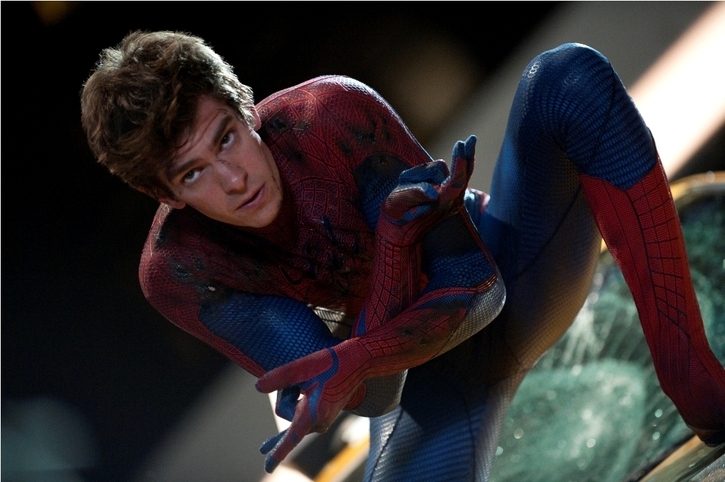
What the reboot got correct is that the ????????????????????????films moved away from Sam Raimi’s Silver Age-inspired films that were kind of goofy and a bit dated. The new Peter Parker, played excellently by Andrew Garfield, wasn’t a textbook nerd anymore. He was more of a loner, an outsider, and he seemed more modern. Peter was someone who had trouble connecting with the world around him until that famous spider bite changed his life. And the way Spider-Man was presented was just spot-on perfect. He was brash, wise cracking, nimble and at times it seemed like pages from a comic book were literally put on the silver screen without missing anything. Then there was the near-perfect chemistry between Peter and his love Gwen Stacy (Emma Stone). Some may wonder why Marc Webb, a director known for a romantic comedy – (500) Days of Summer – was picked to direct the rebooted films. Part of that had to be with the success he had with (500) Days of Summer, a genuinely funny and affecting movie that was a chick flick for guys. Webb was able to convey a moving romance between Peter and Gwen and they were the highlights of the rebooted films. However, other parts of the films had severe faults, like cartoony villains and haphazard editing, which is why it’s likely that Webb won’t come back for future Spider-Man films. Continue reading

DC Wins The TV War…For Now, Part Two

trio

The rivalry between DC Comics and Marvel Comics has many fronts in media like toys, films, video games, etc. But as it stands right now, DC Entertainment dominates the television medium with its current slate of TV shows on the air and their plans for additional programs coming in the near future.

DC’s Television Summit

Once Smallville ended in 2011, a void needed to be filled by DC Entertainment in terms of having a superhero presence in the TV landscape. Rather than mining the Superman/Batman lore, the decision was made to showcase DC’s proto justice leagueother heroes and it was a wise choice. For some time, DC and Warner Bros. fell into a crutch and relied too much on Superman and Batman to represent DC in other media. This was understandable since those were the company’s two biggest heroes. It makes perfect business sense to take advantage of the popularity of those heroes. The problem, though, is that with all the marketing and attention focused on Batman and Superman, DC’s other heroes were left out and helped give the impression that the rest of the DC roster consisted of second stringers. That couldn’t be farther from the truth. The DC universe is populated by many captivating heroes and villains and the problem was that the company wasn’t taking full advantage of that notion. Marvel, and specifically Marvel Studios, faced a similar problem but for different reasons. They didn’t have the film rights to Spider-Man or the X-Men, so they had to rely on their lesser known properties. It turned out for the best, otherwise we wouldn’t have gotten live-action adaptations of Guardians of the Galaxy or Thor.

In DC’s case, they too were forced to look elsewhere since the Superman well had run dry with Smallville and Batman was considered off limits because of the Dark Knight films. Thus, DC Entertainment looked to an urban vigilante that had many of Batman’s characteristics – Green Arrow.

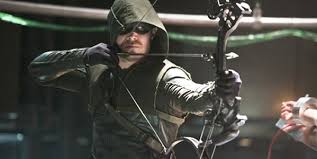
Arrow aimsAll things considered, he is a solid alternative for Batman when it came to being featured in a live-action TV show. After all, both are urban crimefighters without superpowers and use specialized weapons. When Arrow premiered in 2012, it presented a more grounded, realistic world for the superhero. In the first season, the main character, who wasn’t even called Green Arrow (in one episode his alter ego, played by Stephen Amell, thought that name Green Arrow was “lame”), wore a practical uniform with only a hoodie and grease paint to conceal his identity. Moving away from fanciful superhumans allowed Arrow to concentrate more on character development and street-level fight scenes. This meant that it was more inviting and relatable for casual viewers.

What the producers of Arrow did correctly is that they embraced the DC universe. They weren’t afraid to name drop places like S.T.A.R. Labs and Blüdhaven. Likewise, the series featured recognizable DC characters like Amanda Waller (head of the Suicide Squad), Slade Wilson and even the Batman villain Ra’s al Ghul and his League of Assassins. It was enough bones thrown to DC fans to keep them glued to their TVs. Arrow then took a step further and introduced superpowered characters in its second season thanks to this strength-enhancing drug called Mirakuru and the introduction of Barry Allen (Grant Gustin), whose Flash origin occurred at the end of one of the Arrow episodes.

arrow flash

This naturally led to The Flash spinoff that premiered recently. Taking a lighter tone than Arrow, The Flash is more of a throwback to the fast-moving comic books with outlandish supervillains, while utilizing the same kind of engrossing subplots that Arrow uses. What’s more is that both shows are definitely in the same universe. Although the concept of a shared universe isn’t new in TV shows, this was the first time this was done for superhero shows (not counting The Six Million Dollar Man and The Bionic Woman) and it’s exciting to watch characters appearing in both programs with even more allusions to a wider world.

Both Arrow and The Flash are huge hits on The CW network and should be around for the long haul. Gotham, a show set in the title city and taking place after the killing of Bruce Wayne’s parents, is a hit on Fox. In fact, it pulls in more ratings than The CW superhero shows but that is due to the wider audience that Fox has compared gordonto The CW. Even though Gotham is a hit, there should be some caution because it’s on Fox, so there isn’t any guarantee that it will last as long as if it was on The CW. That is a problem that DC and Warner Bros. faces. Sure they can put anything on The CW, a fledging network, but it won’t reach as large an audience as in the major networks. But on the big networks, there is more pressure to succeed. Already, Constantine airs on NBC and has dismal ratings–it was recently announced that the show won’t go beyond initial 13 episodes and its fate is unknown. Constantine’s rating woes are due to its time slot: Fridays at 10 pm. How can any show succeed on that slot? It probably would’ve been better if it aired on a cable network where it could’ve thrived and be allowed to be darker like its comic book counterpart.

Continue reading

Marvel Comics’ Greatest Moments

marvel 75 logo

Marvel Comics turned 75 this year. As we celebrate Marvel’s 75th anniversary, it’s hard to imagine how long the comic book company has been around. Even though Marvel Comics first debuted in 1939 with Marvel Comics #1 (featuring decidedly different superheroes like the Human Torch, Ka-Zar and Namor), the company truly came to its own in the 1960s when writer Stan Lee and artists Jack Kirby and Steve Ditko introduced the world to new and dynamic superheroes.

marvel photo

These masked marvels like Spider-Man, the Hulk, the Fantastic Four, the Avengers and the X-Men quickly captured readers’ imaginations. Without exaggeration, Marvel Comics changed the comic book world and left a permanent mark in popular culture and its characters are still vibrant today. Incredibly enough, it can be said that they’re more popular today than when they were first introduced in the 1960s .

While Marvel superheroes have successfully transitioned into other media like films, toys, games and such, let’s not forget that the core of their appeal are with the comic books. Whether they’re just single stories in individual issues or epic mini-series and story arcs, the following are, based on my opinion, the best stories from Marvel’s 75-year history.

age of apAge Of Apocalypse: Spanning several different X-Men titles over several months, this massive storyline was about an altered reality where Professor X’s assassination in the past led to Apocalypse conquering North America, and Magneto leading the X-Men in a desperate attempt to stop him and correct history. Just seeing the alternate takes of our favorite mutants was a joy to read.

Avengers Disassembled: Boasting top avengers disassembledwriters and artists like Brian Michael Bendis, Paul Jenkins, Robert Kirkman, Steve Epting, Dave Finch and George Perez, this comic book crossover spawned from The Avengers #500-503 into other superhero titles and upended most of the Marvel Universe. The team is literally ripped apart from within by an insane Scarlet Witch. Many heroes are killed and the Avengers were catapulted into new popularity with this controversial story arc.

Born Again: Daredevil has never been lower or a more captivating read than in this classic story arc spanning Daredevil #227-231. That is due to the genius writing of Frank Miller and the art of Dave Mazzucchelli. Daredevil’s worst enemy discovers his secret identity and systematically destroys the blind superhero’s personal world plunging Daredevil into his own worst hell.

The Captain: This underrated Captain America tale by Mark Gruenwald, Tom Morgan and Kieron Dwyer spans Captain America #332-350 and has Steve Rogers abandoning his role as the iconic hero and going underground. Meanwhile, a super patriotic, though unstable, replacement is picked by the U.S. government to take over, but as we see, it’s not easy living up to a legend.

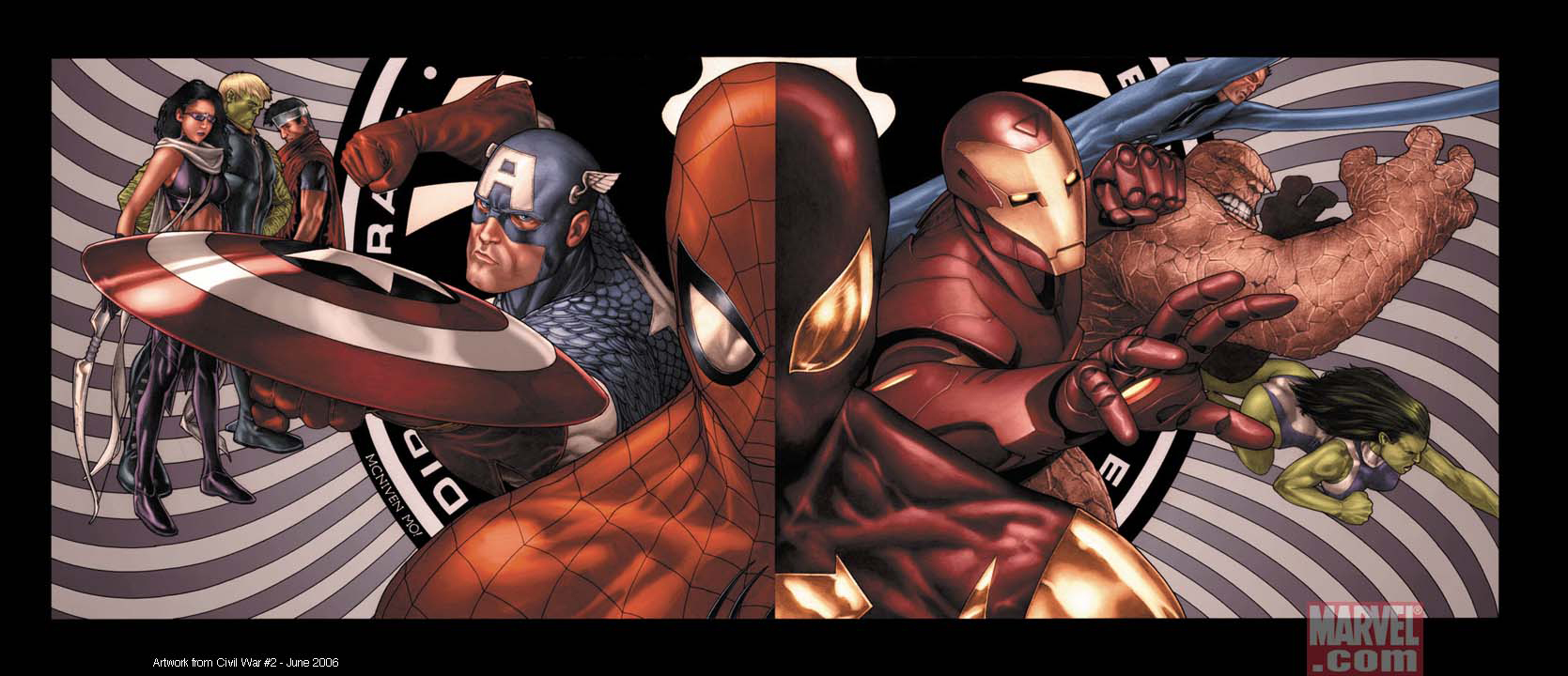
Civil War: Probably the last great mini-series produced by Marvel pits its most iconic heroes against each other. As Iron Man and Captain America took opposite sides against the U.S. government’s superhuman registration act, Marvel Comics was changed forever and the mini-series’ impact is still with us today.

civil war 2

Deliverance: The famous “Demon in a Bottle” story arc from Iron Man #120-128 bravely introduced the notion of a superhero being truly human and becoming an alcoholic. Tony Stark’s (Iron Man) alcoholism would resurface to even greater effect several issues later after his nemesis Obadiah Stane orchestrates a series of attacks. Stark soon became unable to continue being Iron Man and hit rock bottom culminating in Iron Man #182 when a now-homeless Stark battles not only the cold elements, but his own inner demons.

wolverine kittyDays of Future Past: The greatest X-Men story ever made reflected the height of the historic collaboration of Chris Claremont and John Byrne. In this exciting two-part tale from The Uncanny X-Men #141-142, robotic Sentinels have hunted mutants nearly to extinction in the near future, so one mutant is sent back in time to alter history.

The Death of Captain America: One immediate aftermath of the Civil War mini-series was Ed Brubaker’s gut-wrenching examination of the death of an American legend. Coldly assassinated before standing trial, Captain America’s death led to another hero taking up his mantle and a serpentine plot by Cap’s greatest enemies.

The Death of Gwen Stacy: The two-part gwen stacy deathstory from The Amazing Spider-Man #121 & 122 is considered by some as the end of the Silver Age of Comics. This emotional tale about Spider-Man’s nemesis, the Green Goblin, killing his girlfriend  was a gut punch not only for Spider-Man but his many followers who were stunned by the tragedy.

The Doctor Is In: John Byrne wrote and drew some outstanding comic books during his Marvel tenure. Before Deadpool came along, Byrne’s rendition of She-Hulk had her hysterically breaking the fourth wall. In The Sensational She-Hulk #5 story titled “The Doctor Is In” she had to not only contend with Doctor Bong, but with literally walking across comic book pages (ads included). Marvel Comics was rarely funnier than with this particular issue.

The Hulk Vs. The Thing: Marvel is known for how often its superheroes fight each other. This early story from Fantastic Four #25 & #26 is one of the best since its primarily a battle royale between two of Marvel’s strongest titans. The Stan Lee-Jack Kirby classic is at the same time a story about determination and fighting against the odds, in particular with the Thing.

spidey trapped

If This Be My Destiny…!: The story arc from The Amazing Spider-Man #31-33 had Spider-Man run through exhausting trials to gather serum for his dying aunt. His quest culminated in issue #33 with a story titled “The Final Chapter!”.  In the issue, our hero is trapped under tons of steel and rubble and in danger of drowning with the serum just out of reach. Spider-Man has to find the fortitude to free himself and his effort was memorably inspiring.

Continue reading