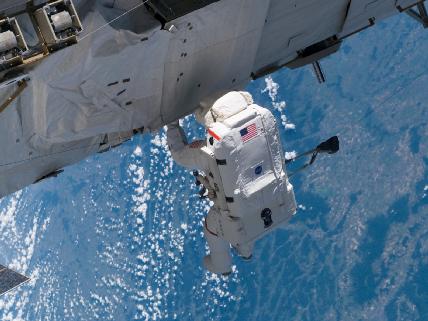
De-Extinct Dire Wolves: We’re One Step Closer To Jurassic Park

The news about the dire wolf being de-extinct came very suddenly and surprisingly yesterday. The idea of using biotechnology to bring back extinct animals had been the stuff of many imaginative sci-fi stories, notably with Jurassic Park and the films the novel inspired. The announcement by Colossal Biosciences that they actually revived an extinct species now made a science fiction concept a science fact.

The method behind the de-extinction was fairly straightforward. The company extracted DNA from a fossil skull and tooth of dire wolves and was able to analyze the genome. After that, Colossal Biosciences used gene editing on the cells of a gray wolf to create dire wolf embryos and implanted them into a surrogate dog.

The first two dire wolves were born on October 1, 2024 and named Romulus and Remus, and a third one, named Khaleesi, after the Game of Thrones character, was born two months ago. As the pups grew their different physical characteristics from gray wolves were undeniable. Sporting distinctive thick white fur, unusual vocalizations and larger body proportions they still exhibited wolf-like behavior such as stalking, hunting and howling. Fortunately the trio are healthy and kept safe in a private, undisclosed nature sanctuary where they could live in peace.

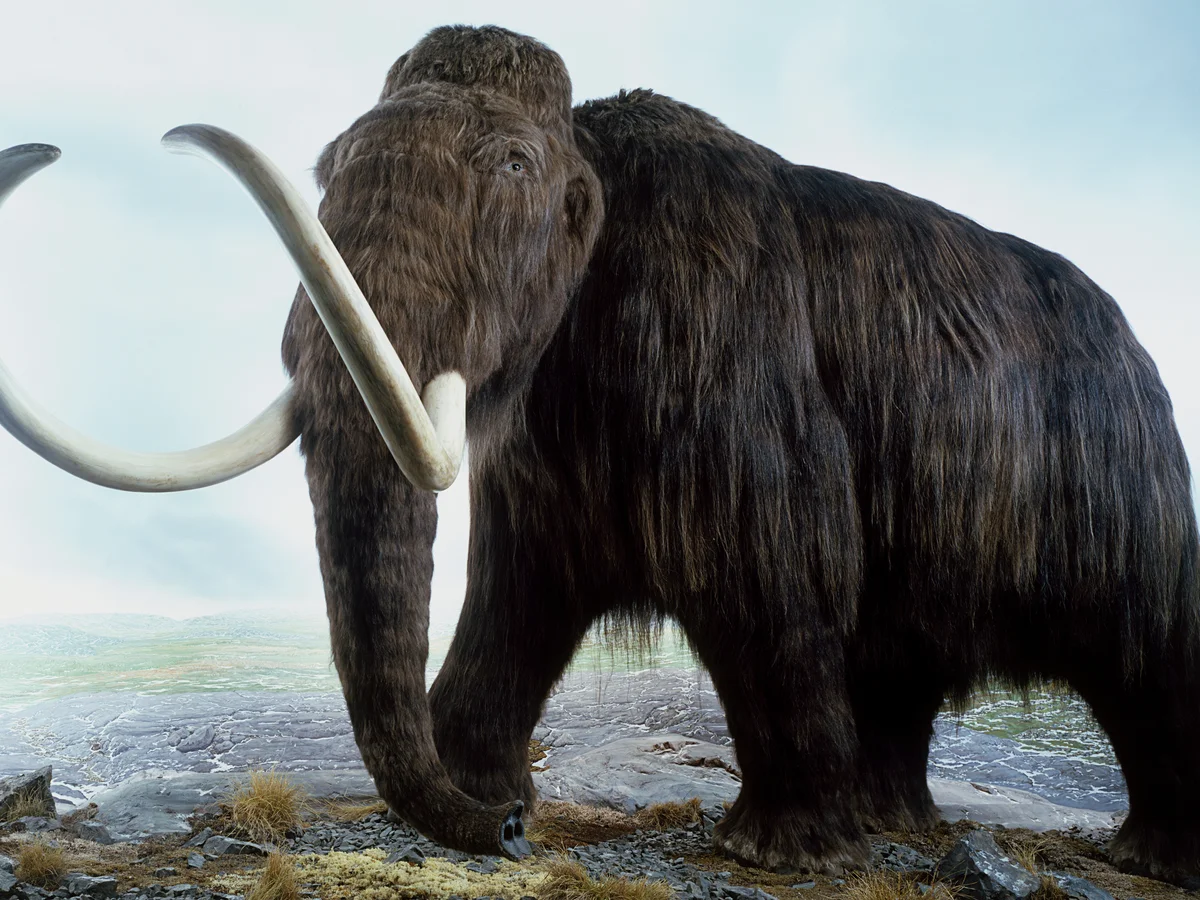
With the success of the dire wolf being de-extinct, Colossal Bisociences is moving ahead with their plans to de-extinct the thylacine, the dodo bird and the wooly mammoth.

As exciting as this sounds we are still a long way from de-extincting dinosaurs if it is even possible since extracting dinosaur DNA is impossible. There are also ethical issues that have come up with the unbelievable feat by the company. Namely, what is the point of bringing animals back from extinction? We already have a difficult time keeping living species of animals alive in our increasingly crowded world. Where can these animals go? What role will they serve in Earth’s ecosystem, considering that many of their previous roles have been taken by modern animals? Right away, these animals will have to compete with modern animals and humans for resources in an Earth with dwindling supplies and land space. Then there would be intense pushback from people who would not approve of the de-extinction or of re-introducing them to the wild. We have seen this already when wolves were re-introduced into many parts of North America as they threatened livestock.
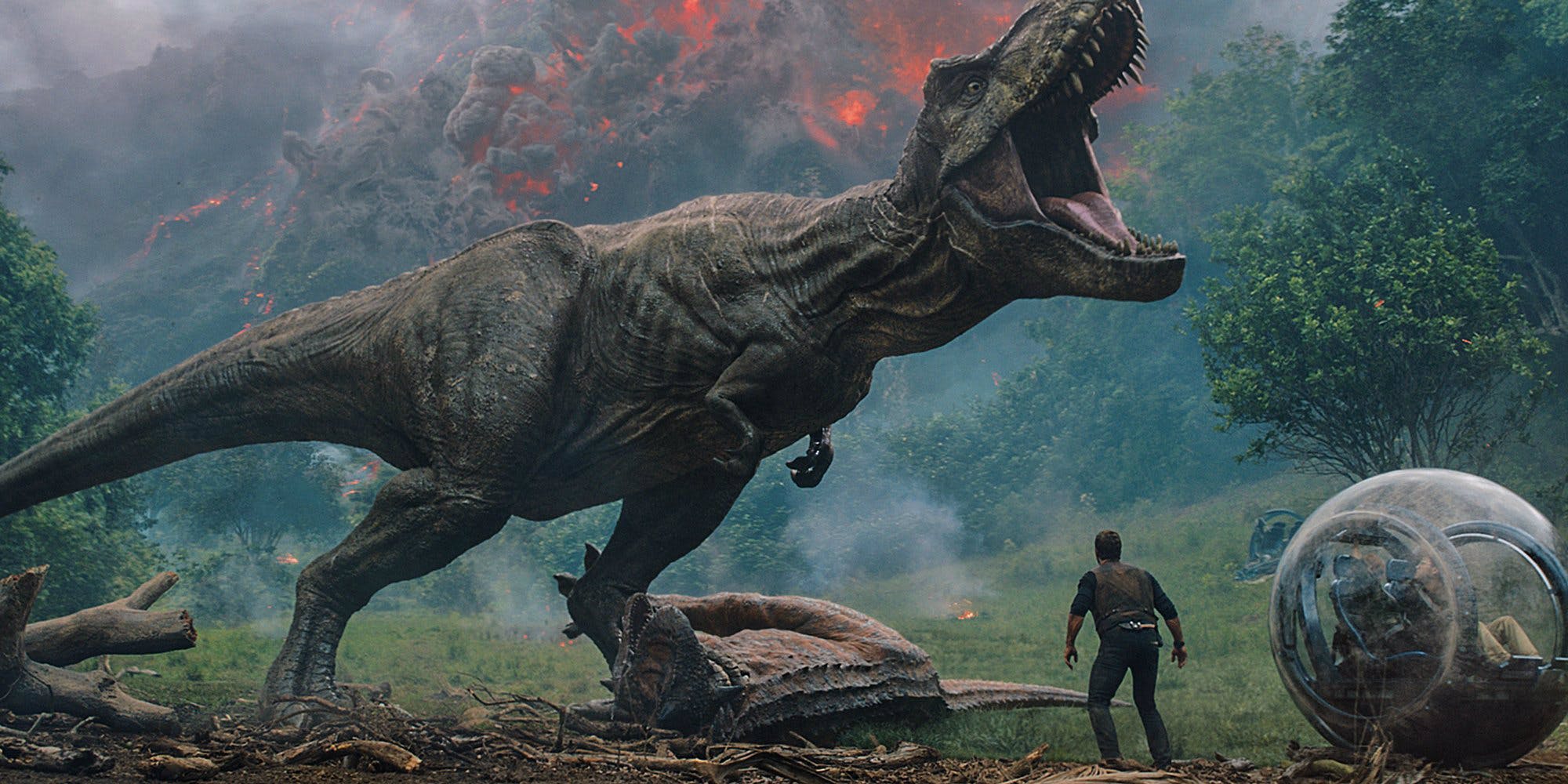
Jurassic-World-Fallen-Kingdom-Volcano-and-T-Rex

A likely scenario is that these de-extinct animals would not be allowed to live in the wild and forced to live out their lives in zoos, which would enrage opponents. Then there is the worst case scenario of nature running amok and well, we’ve seen the Jurassic Park and Jurassic World films. In other words, their re-introduction would have unpredictable and unwanted results.

There is the argument that we have no way to know how to properly raise these animals since we can only guess as to how they lived. Romulus, Remus and Khaleesi seem to be behaving like wolves, but is that because they have wolf DNA? This would make them a new hybrid species and not true dire wolves, which are distant relatives of modern gray wolves. The same situation would apply to recreated mammoths and other prehistoric extinct animals. The first mammoths would more likely be Asian elephants with outward mammoth characteristics, and the same would go for the dodo and others.
Colossal Biosciences has stated that they intend to apply their technology to help preserve current animal species such as elephants that are more and more endangered as they face loss of habitats from human encroachment and hunting by poachers.

Despite the legitimate concerns about de-extincting animals there are arguments for doing this. Proponents claim that de-extinct animals can fill in roles that are vacant in ecosystem. For example, the thylacine was an apex predator in Tasmania and Australia and their re-introduction into the ecosystem would help keep in check the populations of prey animals. Other proponents claim that mammoths would be able to help preserve the tundra in Asia with their foraging and in a way arrest climate change. That is very far fetched to be sure, and calls to mind Stephen Baxter’s book Icebones, which was about cloned mammoths on Mars. This argument about using de-extinct animals to keep ecosystems healthy is valid. Also, since humans were responsible for the extinction of animals like the thylacine, Stellar’s sea cow and the passenger pigeon, they have a moral obligation to try to bring back these species if there is a need for them in an ecosystem.

No matter where anyone sides in the argument, it is important to note the responsibility we all bare with using science and co-existing with other species in our fragile world. Still, the revelation that dire wolves have been de-extinct is exciting as it demonstrates that extinction isn’t forever.
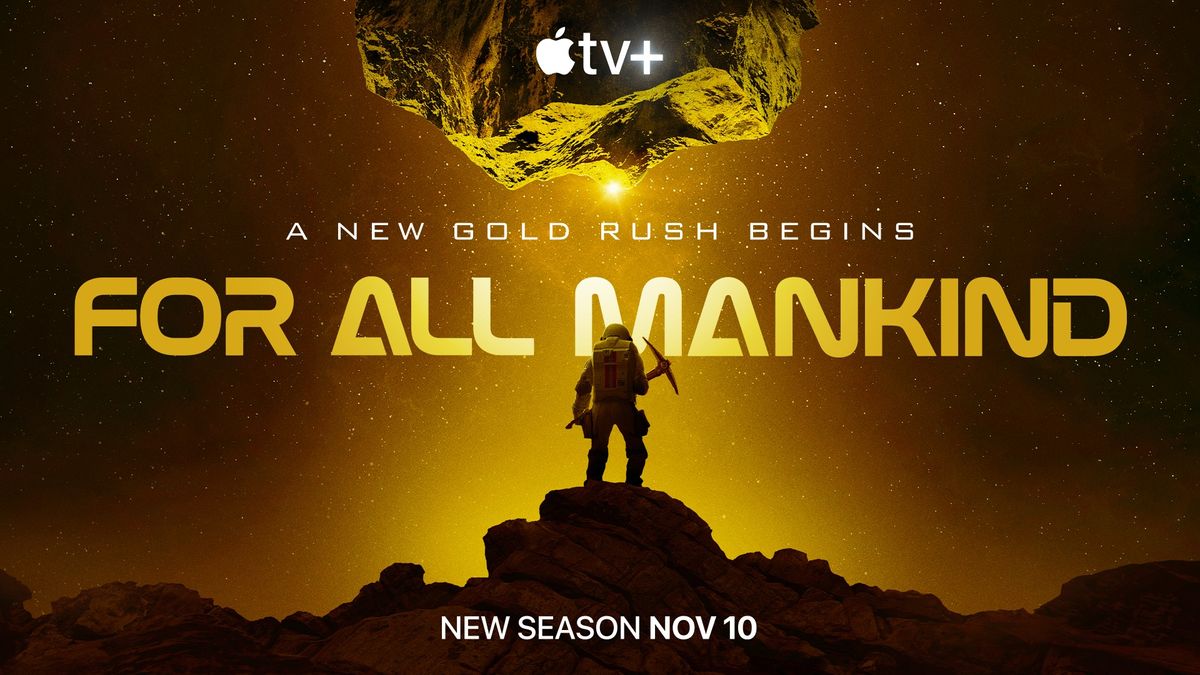
For All Mankind Looks Ahead By Going To The Past

The fourth season of the alternate history TV series, For All Mankind, just concluded with a typical speculative flourish that defines the program.

Streaming on Apple TV +, For All Mankind was co-created by Ronald D. Moore and explores a reality where the Soviets reached the moon before the United States could. Instead of stagnating as in our reality, in this alternate world, the United States is inspired to keep pushing the boundaries in space exploration. In each subsequent season, the series jumps ahead roughly every decade and we see how much of an impact the Soviet moon landing has in the world. A lunar station is established in the 1970s, which further fuels the space race between the world powers of the Soviet Union and the United States. Naturally, this also fuels the Cold War which now extended into outer space as seen in season two when the two world powers nearly went to war on the moon during the 1980s.

By the third season, tensions cooled between the two powers in the 1990s. A new space race to reach Mars and the struggles of those who reached the red planet were the focus of the third season. This brings us to the fourth season which just concluded. Taking place in the early 2000s, the fourth season of For All Mankind presents a world where Al Gore is the U.S. president, the Soviet Union continues to exist, John Lennon is still alive and there are only three Star Trek TV shows (!), but as with the previous seasons, the TV show focuses on several characters affected by the alternate space race.

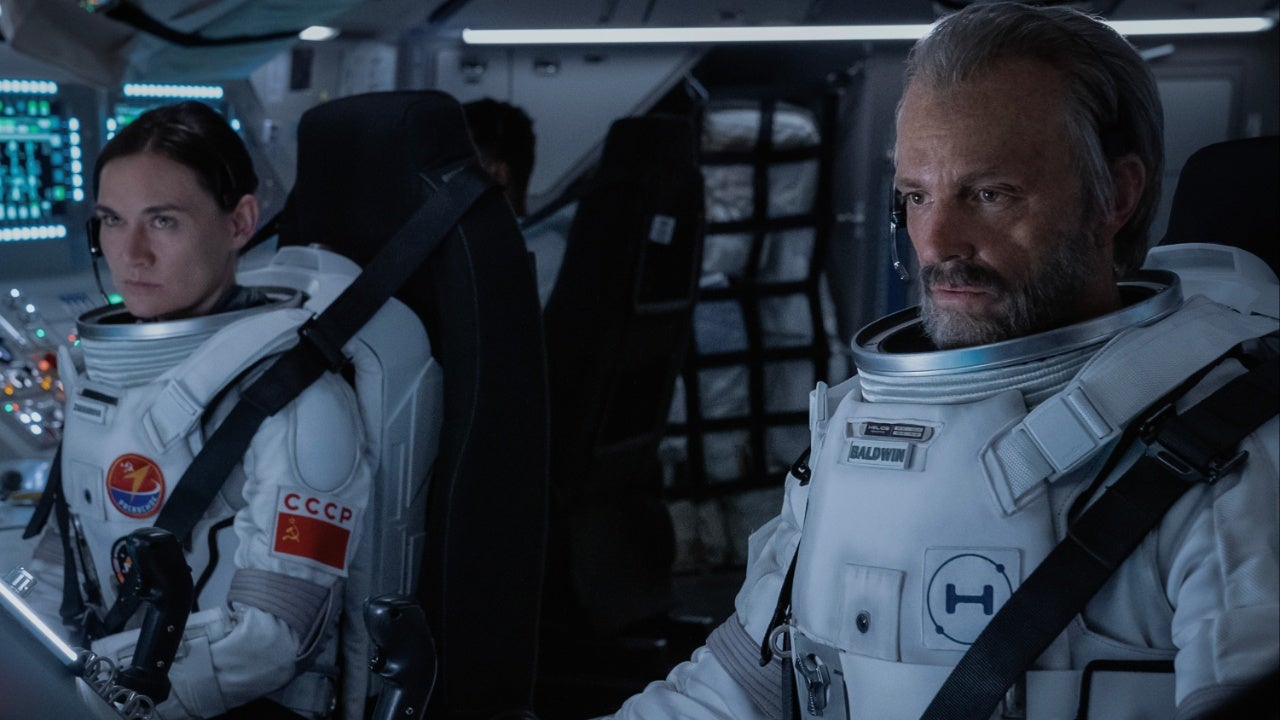
The heart of For All Mankind is the aging astronaut Ed Baldwin (Joel Kinnaman). In the first season, Baldwin had the opportunity to land on the moon on Apollo 10 before the Soviets, but never took it, much to his regret as Alexei Leonov landed on the moon shortly after Baldwin’s mission. Baldwin winds up involved in crititcal points in NASA’s space exploratory efforts such as being commander of the Jamestown lunar station, helping to defuse tensions with the Soviets in the second season during a space shuttle flight, and as the commander of the commercial mission to land on Mars and establish a colony there in the third and fourth season. Despite his many achievements, Baldwin struggles to find meaning in his life, to adapt to a quickly changing world and he does not even want to return to Earth after spending many years on Mars. By the fourth season, Baldwin is facing his twilight years and determined to make a difference. He does this by latching onto the quest to keep the human Martian colony from withering out.

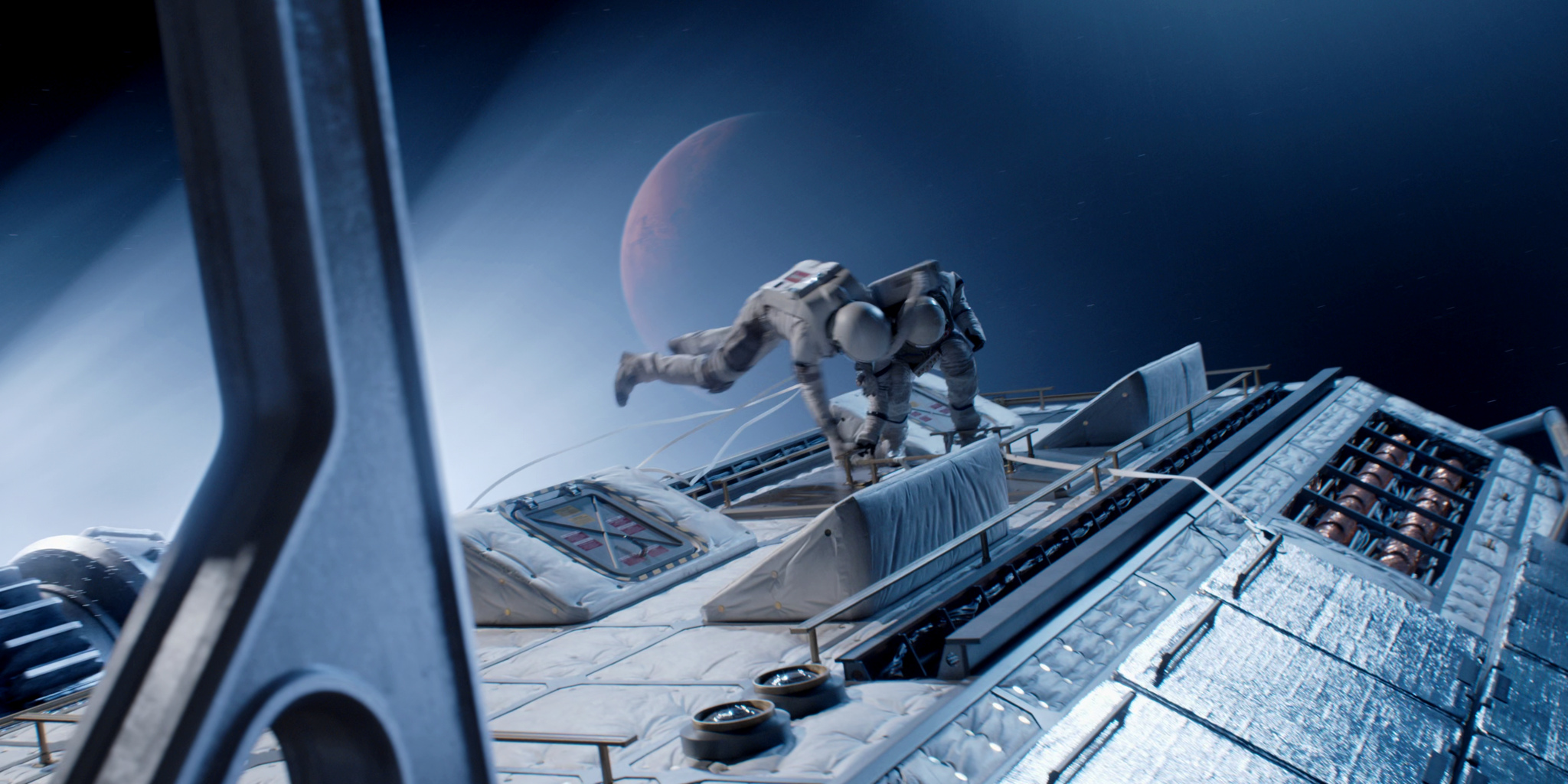
In the fourth season, a large asteroid, called Goldilocks, is discovered drifting towards Mars that is rich in iridium. After a lot of deliberation, the M-7, a conglomeration of seven world powers, including the U.S. and the Soviets, decided to have the asteroid diverted into Earth orbit for immediate rewards and riches. Dev Ayesa (Edi Gathegi), an Elon Musk-type and owner of the corporation Helios Aerospace, has a vision of humanity expanding into the solar system and beyond. He realizes that if the Goldilocks asteroid is diverted to Earth that any interest in developing Mars and exploring space will wither and die as the world powers will be busy enriching themselves with the asteroid in Earth orbit. He comes up with a plan to essentially hijack the asteroid and have it orbit Mars instead in order to force Earth to keep investing in the red planet.

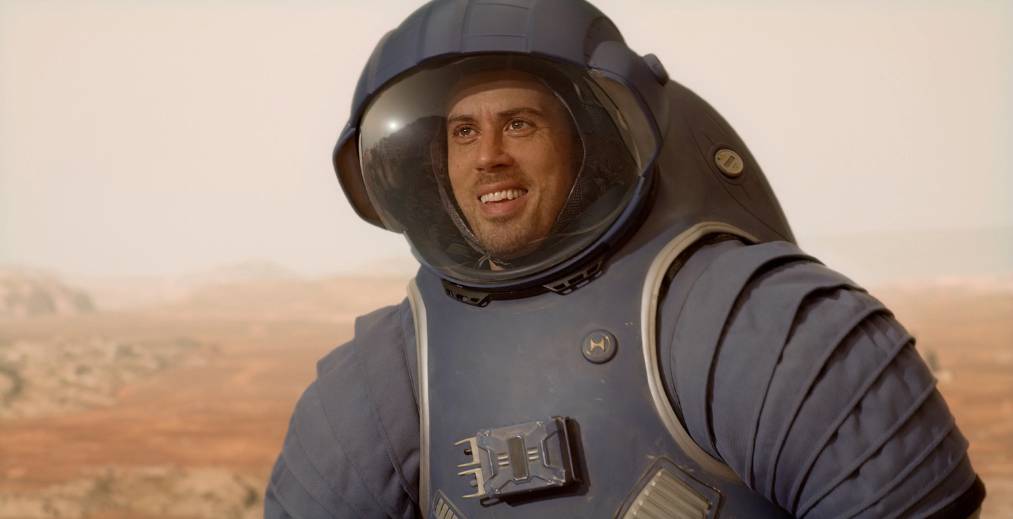
As this is going on, there is a labor struggle in the Martian colony best represented by Miles Dale (Tobey Kebbel), a former oil platform worker turned Martian laborer. In the reality of the TV show, fossil fuels have been phased out of use in the world as new energy technologies made them obsolete. While this may be great for the environment, many workers in the fossil fuel field had to find new means of employment. Dale relocated to Mars for a new opportunity, but the realities and frugality of Helios forced him to run a black market operation in the colony. Underlining these labor struggles is the fact that many of the laborers including Baldwin see Mars as their home not Earth, which means this could be the beginning of Mars eventually becoming an independent world.

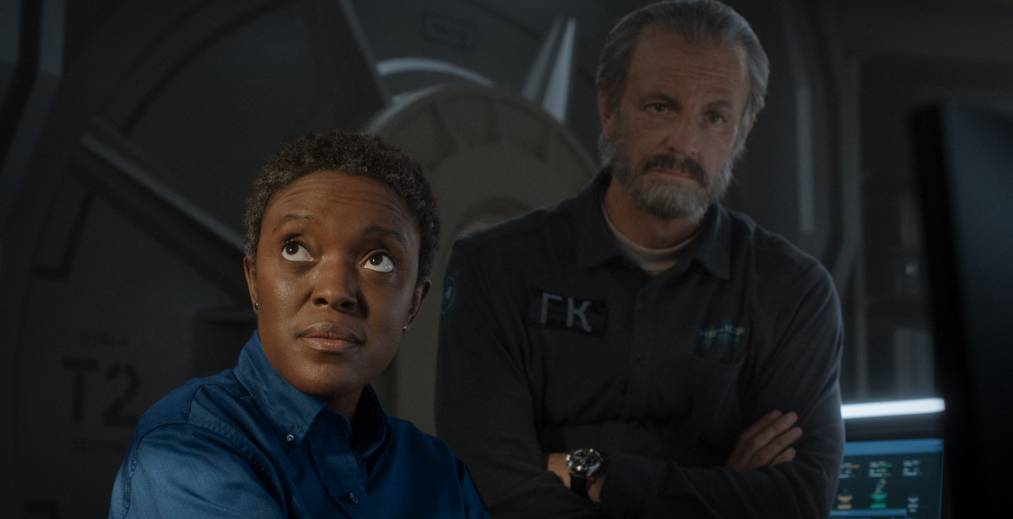
Trying to keep the Martian colony running smoothly is Commander Danielle Poole (Krys Marshall), a Black woman who was one of the first woman astronauts for NASA in the 1970s. As Baldwin is the rebellious heart of For All Mankind, Poole is the soul of the show as we see from her POV how radically different this reality is from our own since women and people of color were able to advance in society much more quickly compared to our own. Like Baldwin, Poole is very relatable but for different reasons. While Baldwin is a sympathetic relic struggling to fit into the new order, Poole is an empathic and level-headed, by-the-book leader who is the moral center of the show. As these situations go, Poole is brought out of retirement to command the Martian colony and becomes embroiled in the labor struggle that morphs into a revolution of sorts on Mars.

In the backdrop of the fomenting Martian revolution, we also follow the stories of several NASA personnel. The most interesting is Margo Madison (Wrenn Schmidt), the first woman to be mission controller of NASA. During the TV show she was forced to work for the Soviets and commit treason by providing them with the secrets of American space technology. In the just-concluded season, Margo, who was believed to have been killed in a domestic terrorist bombing, comes out of hiding from the Soviet Union and has to decide what she will do with her life and how she can contribute to humanity’s space efforts. Her situation brings her into conflict with her protogee, Aleida Rosales (Coral Peña), who also is a woman of prominence in NASA.

What makes For All Mankind so captivating to watch is how it balances interesting personal stories with wider geopolical developments in this world that is distinctly different than ours. We see the impact of how a Soviet moon landing further accelerates society and technology. It’s obvious that we have the capability to have advanced in space exploration but our society lacks the drive to take us there. It’s disheartening that while there is a thriving colony on Mars in the TV show, real-life efforts show how far behind we are. We cannot even manage to return to the moon as we learned recently when the Artemis mission was delayed, yet again.

In some ways, even though we see that this is not a perfect society, it seems to be a better world than our own. Many issues have been addressed much earlier in this timeline such as the struggles of people of color , women, and members of the LGBTQ+ community. Advances in techonolgy are casually noted such as the use of the Internet and cell phones which began in the 1980s, and the rapid development of alternatives to fossil fuels. On the other hand, this altered world has its own problems such as it seems as if socialism/communism has spread throughout the world thanks to the continued exitence of a despotic Soviet Union (in the fourth season of the TV show, Gorbachev was overthrown by hard-line communists). One simple but intriguing tool the TV show uses is that of the montage. At the start of each season, a montage quickly brings viewers up to date on developments of the world, such as the results of presidential elections and pop culture news.

These developments would be meaningless if For All Mankind never presented how these events affected its characters. We see the wonders and struggles of this altered world through their eyes and react accordingly. One of the show’s strengths is that is able to smoothly introduce new characters while moving away from older characters as the show jumps ahead in time. It’s unknown if Baldwin and some other older characters like Poole will continue to be a part of the series though it’s unlikely. In a flashforward tease shown in the season finale, we find ourselves in 2012 without any indication if Baldwin and the others are still alive or active. With regards to the fourth season, For All Mankind continued to soar with its look at a past that is more futuristic than our own. Many episodes and plot lines were fascinating and built up to an intense and cathartic season finale.

At this time, it is unknown if For All Mankind has been renewed for a fifth season, though it is one of the more popular TV shows on Apple TV +. Not only would it be great if we’re given a fifth season taking place in the 2010s but a sixth season that takes place in this decade and beyond. Who knows, maybe we’ll see the Jovian system being colonized or perhaps of the first steps to faster-than-light travel as humanity begins to contemplate traveling to other star systems. If all goes well Ronald D. Moore and his colleagues will be able to conclude this captivating look at an alternate world of true space exploration.

José Soto

Star Trek: The Exhibition at the Kennedy Space Center

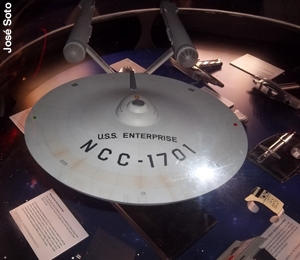
The traveling exhibit Star Trek: The Exhibition is currently running through this summer at the Kennedy Space Center (KSC) as part of the Center’s Sci-Fi Summer. Showcasing the world of Star Trek, the Sci-Fi Summer program presents how the science fiction world of Trek helped to influence the development of our technology. It’s a great place to go if you are a Star Trek or science fiction fan not just because of the Trek-themed exhibits and attractions but because it melds that sci-fi aspect to NASA’s real life world. You get to see where we’ve been and how far we have to go.

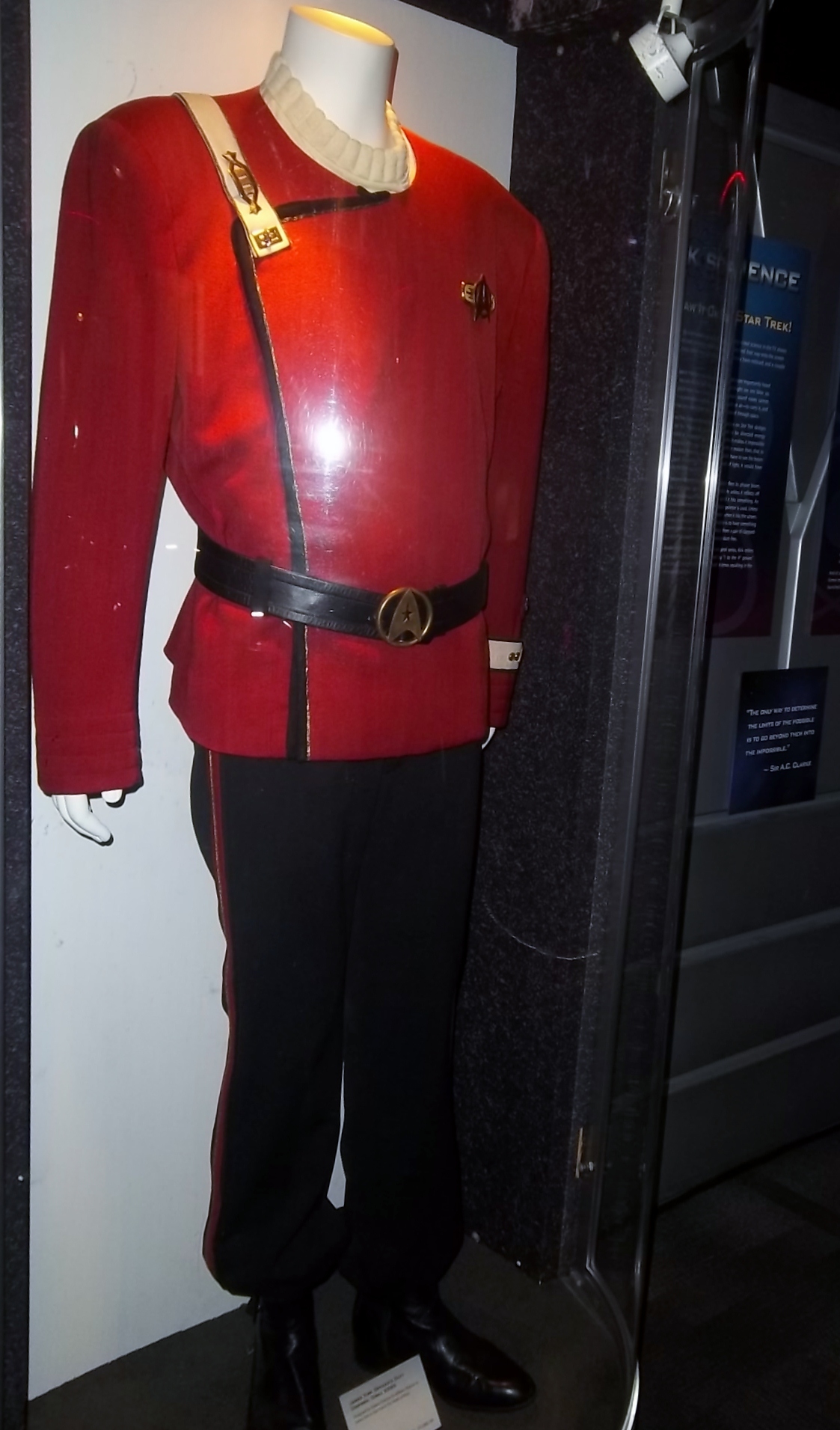
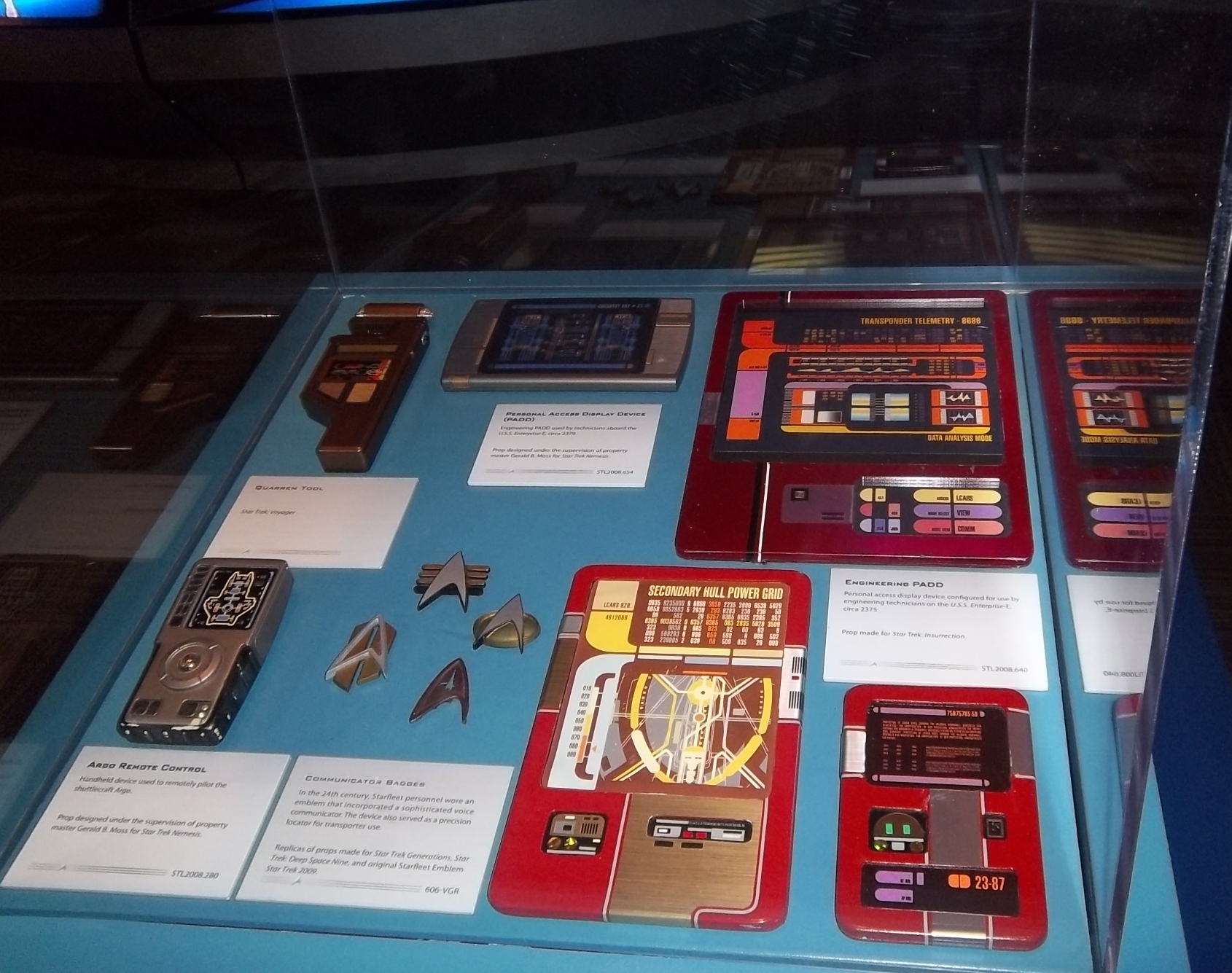
Star Trek: The Exhibition features a scale model of the Enterprise, and the actual props and costumes used in the Star Trek shows and films. At the KSC, the exhibit is broken up into two different buildings. One where IMAX films are shown (and is currently presenting Transformers: Dark of the Moon in 3D) has a room dedicated to the original Star Trek series, though props and costumes from the Kirk-era films can be seen. The highlight is a well-detailed replica of the original Enterprise bridge complete with dedication plaque, consoles and the captain’s chair that anyone can sit on for golden photo opportunities.

At another building near the tour bus terminal is a larger exhibit room dedicated to Star Trek: The Next Generation,  as well as Star Trek: Deep Space Nine and Star Trek: Voyager. This exhibit displays a mock-up of the Reman Scorpion fighter craft seen in Star Trek: Nemesis and partial recreations of the Enterprise D’s sickbay and engine room. There are models,  numerous props and costumes worn and used by the actors and a Klingon chair that you can sit on (there are also captain chairs from the Enterprise B and D but those are roped off). Additionally one side of the exhibit’s wall has a mural with a detailed timeline of NASA and Trek history. The opposing wall displays the costumes. A nice touch to this exhibit were two actors dressed as Vulcans from the far future who stayed in character and interacted with visitors. The uniforms they wore were the ones worn by 29th century Starfleet officers as seen in the Voyager episode “Relativity.”

The KSC has Trek costumes and factoids peppered throughout the facility with several famous delta shield symbol on the grounds that act as arrows to guide visitors to Trek-related exhibits and attractions. For example one path lead sto the rocket garden where a floor painting shows how large the Enterprise ships are in comparison to the horizontally displayed Saturn 1B rocket. It’s staggering to consider how large the Trek ships are when you walk the length of the rocket. There was so much to see at the KSC that one could easily spend an entire day on the grounds. Continue reading

NASA’s Next Chapter Awaits

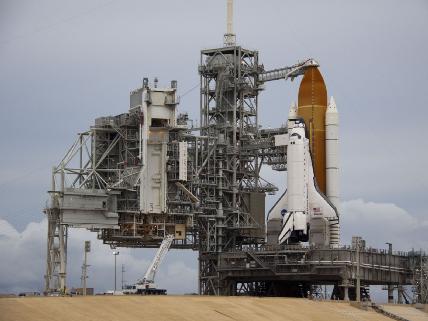
The space shuttle Atlantis lifted off today on its final shuttle mission closing a 30-year chapter in NASA’s manned space program. Looking around the news casts obsessed with Casey Anthony, the dismal jobs report, and other headlines it was hard to find substantial mention of Atlantis’ mission to the International Space Station (ISS).

This just underscores the sad state of America’s space program and it seems as if the shuttle fleet is being retired with a whimper. It’s almost as if NASA and the government want to downplay the fact that there are no concrete future plans.

After President Obama all but scuttled NASA’s manned space program, the agency has been left grasping at straws to remain relevant. Meanwhile Russia, China and other nations are pushing on with their space efforts. So why not us? Blame it on cost-cutting politicians, an apathetic public and NASA’s bureaucracy; there are plenty of reasons. But it could be traced to a lack of long-term planning.

Back in the 1960s, President Kennedy proclaimed his famous goal of landing a man on the moon before the decade ended. Then the U.S. was in a very public space race with a very competitive Soviet Union. One added impetus was that the Russians were winning. It fired the public’s imagination and will for America to forge ahead despite setbacks like the Apollo 1 tragedy. Once Armstrong and Aldrin landed on the moon, everyone celebrated and collectively went on the next thing. NASA’s budget was slashed and bit by bit the agency’s ambition withered; goals like sending astronauts to Mars by the 1980s went by the wayside. The most recent setback was with Obama effectively killing the agency’s plans to return to the moon in a few years.

Now with the shuttle fleet retired, current plans are to develop a new successor to the mammoth Saturn rockets, building spacecraft that can leave Earth’s lower orbit and vague plans to reach an asteroid by 2025 and orbit (not land on) Mars in the 2030s. Frankly that is too far away in time to capture the public’s imagination. For all the hand wringing by NASA, the fact is that the technology to send people to Mars and colonize our moon exists today, actually it has existed for years. What kept that from happening was the lack of will from everyone. Politicians didn’t want to invest their capital on projects that paid off way into the future, NASA seemed to be more interested in conducting tests in space that the average Joe didn’t care about, and the public complained about the costs and necessity of the space program. In truth, the budget for the space program is very small compared to other expenses. To do away with it completely won’t cure our financial woes.

NASA needs clear goals that regains the public’s interest, and more importantly the drive to push the envelope. It may take another nation pulling off a genuine feat to light America’s fire again. Perhaps commercial space craft development will do it (the company SpaceX has plans for a test run to the ISS this year). Or maybe the sight of American astronauts piggybacking on Russian space capsules might do something to boost our motivation. For now though, the next chapter in the U.S. manned space program is still on the launch pad.

J.L. Soto

Reasons Behind Alien Invasions

Ever since H.G. Wells’ masterpiece War of the Worlds made its debut, people have always been drawn to the concept of aliens invading our world. Given our history it’s easier to believe that alien visitors won’t be benevolent, which is why Stephen Hawking recently warned about trying to seek out extra-terrestrial civilizations. This fascination continues to this day as seen with TNT’s new cable series Falling Skies and recent films like Skyline, Battle: Los Angeles and Transformers: Dark of the Moon. As we watch or read about would-be world conquerors (and how intrepid humans hatch schemes to repulse the invaders), one thing comes to mind given what we know about space. Why invade us?

Let’s look at some reasons offered in books, films, and other media:

Location, location, location. The aliens’ world is dying and they need new turf to call their own and our world is best able to fit their needs. The most famous example of this was the premise of War of the Worlds. There are many things wrong about this idea. One is that it’s doubtful that our unique biosphere will be compatible with an alien species. Think of Pandora the planet in Avatar, yes it had an oxygen atmosphere but the air was toxic to humans due to the concentration of other elements, not to mention the gravity was different. These kind of problems will be faced by alien conquerors, meaning our planet in the long run isn’t suitable. In fact, at the end of Wells’ book this proves to be the case since Earth’s bacteria kill the invading Martians. The only solution is to terraform the Earth into one resembling the aliens’ habitat. Good examples of that are found in David Gerrold’s War Against the Chtorr books and in War of the Worlds.

A deeper problem arises from a military conquest angle where Earth is prized just to gain territory for an interstellar empire. Space is huge, really huge. It’s pretty hard to believe that in all that space, the aliens can’t find a world much closer to their own to occupy and/or terraform rather than spending resources to come all the way out here. The Martian invaders in Wells’ book are of course an exception to that idea when considering how close they are to us.

Slave Labor. In the current episodes of Falling Skies, Earth’s children are fitted with biomechanical devices and are forced to do manual labor for the aliens. While this premise is terrifying, especially for parents, and is a good motivator for the human heroes, again it’s not very practical. Any alien civilization that can travel such far distances would have a technology advanced enough to not need manual labor. Even today, as robotics and other technology improves, we have less and less need for manual labor. It’s easier to build machines to do our bidding rather than having to be concerned for feeding and caring for a human laborer. That’s one issue facing car makers and other manufacturers today.

Pre-emptive. Think of the rationale behind the Iraq War but applied on a galactic scale. Or better yet remember Klaatu and Gort from The Day the Earth Stood Still. An advanced alien culture is aware of our existence, keeps tabs on us to see how we’re advancing socially and technologically. If they conclude that we could become a serious threat once we achieve FTL, they may decide to fight us here instead of there. Luckily, depending on how you look at it, we haven’t advanced enough so far to constitute a cosmic shock and awe campaign.

Our Bling and Other Goodies. Let’s get one thing straightened out, any self-respecting sci-fi fan and science geek knows that all our precious metals and other materials can be easily found in space. That includes water. Yes the water we’ve found on nearby moons is frozen, but melting it isn’t a big deal. Need some H2O? Just mine any nearby comet. Heck aliens would have an easier time building a refinery on Europa and leave us alone. For all we know they may be there already. This fatally shoots down the rationale behind V and Battle: Los Angeles.

Back in May, National Geographic channel aired a special called When Aliens Attack that looked at how a plausible alien invasion would happen. In one segment the reason behind an invasion was discussed and scientists on the show pointed out the above and added that the two thing we have here that no one to date has found in the universe are proteins and chlorophyll. So in other words we’re a food or fuel source for invaders. That kind of goes with the mindset of the aliens seen in Independence Day  (which by the way, celebrates its 15th anniversary this July) who were described as a race of locust-like beings that razed planets for resources and moved on.

What about procreation? Here’s the typical premise, the alien race is dying out and their key to survival is somehow procreating with us or using our DNA to create a hybrid race. This theory is cited by UFO followers to explain cases of alien abductions. In films, this was used by Invasion of the Body Snatchers, Species and  John Carpenter’s The Thing, among others. The problem with this theory is that the idea of procreating with an alien life is impossible. Our planet’s life forms have DNA that is not in any way compatible with extra-terrestrial DNA and vice versa. Sure they may have the technology to overcome this but if they do possess such tech why not apply it much closer to their home instead of traveling thousands of light years to get cow samples? Even if they needed our unique biological makeup, aliens with such advanced technology don’t need to invade us en masse, just take some samples, replicate it and move on.

However, we may have some kind of cultural or biological attribute that may be prized by an alien civilization. The Borg in Star Trek are a good example of this mind set. They set about conquering worlds just to assimilate unique biological and technological attributes that they’ve encountered. There was an issue of Amazing Spider-Man (issues 269-270) where Spider-Man fought the alien Firelord who traveled all the way to Earth just to get some pizza and caused calamity to get it. (Can’t blame him on that account). Then again it would be a lot easier to just negotiate trade with us. It’s easy to imagine that humans would trade a year’s supply of chocolate or complete Beatles collection in exchange for FTL drives.

Predatory Culture. This could be plausible. An advanced race may be ingrained warriors or conquerors whose society is based on predation. They wiped out the game preserves near their world and are looking for easy, new or challenging pickings and that happens to be us. Maybe they’re just bored or have a sadistic streak like kids that get their jollies from terrorizing bugs in the backyard. The Klingons, and the Predators are great examples. Another motivator may be religious like the alien Covenant in the Halo games. There the aliens find humanity to be blasphemous and engage in a holy war against Earth. What could be saving us for the moment from alien predators and fanatics is that some other advanced civilization rose up to counter them before they arrived anywhere near Earth, like the Green Lantern Corps. Another saving grace is our distance. We are kind of out in the boondocks when it comes to galactic location. Is it worth the trouble traveling all the way out here? See the running theme so far?

Sure we complain about how hard it is to travel to the stars but that could be buying us time for when we do have first contact. Perhaps by the time a malevolent race discovers us and sees that we won’t be an easy conquest, they’ll move on. Keep our fingers crossed.

J.L. Soto