John F. Kennedy: Time Travelers & Alternate Historians’ Favorite Subject

kennedyThe myth and aura of President John F. Kennedy has permeated many aspects of our culture, including the worlds of fantasy and science fiction. This is due to the circumstances of his tenure as U.S. president and his assassination. Even though the Space Age began before he took office, JFK helped invigorate the nation’s space efforts with his pledge to land a man on the moon by the end of the ’60s. His short time in office also saw the closest moment to date of a full-scale nuclear war with the Cuban Missile Crisis. Then there is the tragedy of his assassination that even today is fraught with controversy.

Needless to say, almost all of these stories have to do with either time travel scenarios or alternate history. Often, the time travel yarns lead to alternate timelines where the slain president is never killed in 1963. Ironically, it turn out that JFK living past that fateful day usually leads to a disastrous timeline. It’s interesting to note this considering the admiration that many have for the slain leader. Of course, the reason is because these stories need some drama.

Literary Speculations
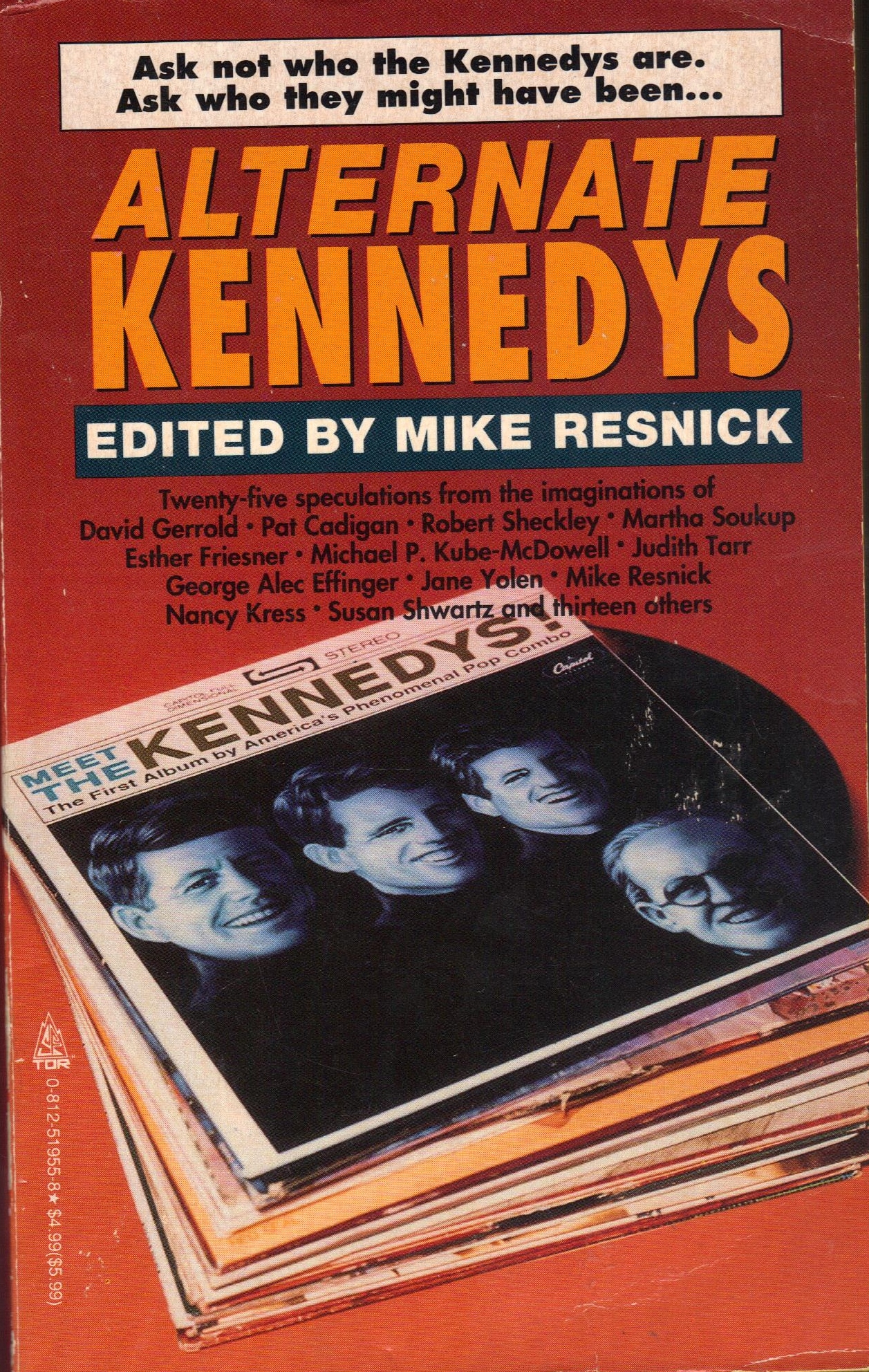
alt kennedys.jpgThere are too many sci-fi and fantasy books to list here that explore JFK and altered history. Some notable entries include Alternate Kennedys, a collection of short stories that featured alternate history accounts, as well as decidedly fantasy and comedic tales of JFK and his family. Some of the better stories in that collection are “The Winterberry”, “The Kennedy Enterprise” (in this tale, the Kennedy brothers are the big stars of a famous sci-fi TV franchise), “A Fleeting Wisp Of Glory”, and “Prince Pat”.

Stanley Shapiro penned a time travel book called A Time To Remember, which was made into a TV film Running Against Time that starred Robert Hays as a professor who wants to save his brother from dying in the Vietnam War. So he goes back in time to save JFK and thus prevent that war from happening.

Another novel about JFK living past 1963 being detrimental to history is Prologue by Greg Ahlgren. In this book, JFK never died and wound up pulling out of Vietnam. This decision led to the communistic takeover of the world, causing the book’s protagonists to travel in time back to JFK’s era and rewrite history.

One recent, high-profile work is Stephen King’s novel 11/22/63 where the story’s main character time travels to the past and stops Oswald. The resulting timeline leads to George Wallace, and later Hillary Clinton, into becoming presidents and the Vietnam War escalating into nuclear war.

jfk king

Putting aside the fantastic novels and stories, recently many historians have written essays and books seriously exploring alternate timelines about JFK. Many of them are well worth reading for history buffs and fans of alternate history. The most recent example is If Kennedy Lived: The First And Second Terms Of John F. Kennedy: An Alternate History by Jeff Greenfield, a followup to his essay collection Then Everything Changed. In that latter collection of essays, Greenfield explored a timeline where Kennedy was killed before he was inaugurated. This terrible event led to the Cuban Missile Crisis becoming a nuclear war.

Getting back to fiction, there are novels about  alternate versions of the Cuban Missile Crisis. In these accounts the crisis turned into full-scale nuclear war between the U.S. and the Soviet Union, leading to terrifying results. They include Resurrection Day by Brendan DuBois and When Angels Wept: A What-If History Of The Cuban Missile Crisis by Eric G. Swedin. Continue reading

The Star Trek Movies Ranked, Part II

Continuing this ranking of Star Trek films, we go from the undeniable classics to the lesser entries in the Star Trek film series. They range from being just okay to junk best seen on Mystery Science Theater 3000. As explained in the previous article, tier three films have their flaws but also boast some admirable qualities about them. Meanwhile, the tier four flicks are absolute junk that should only be seen by hardcore fans or the morbidly curious who want sleep aids.

Tier Three

7. Star Trek III: The Search For Spock (1984): The second Star Trek sequel has so many elements going for it, but for some reason it doesn’t search for spocktake off. After the triumph of Star Trek II, this direct sequel is a huge letdown. Trying to follow up Star Trek II is a difficult task and try as it did, Star Trek III couldn’t equal it, much less top it. For me, it’s hard to pinpoint why this film is a misfire, but for all the important plot developments it doesn’t have much passion.

In this sequel, James T. Kirk (William Shatner) and his core Enterprise crew risk everything, including their careers, to retrieve Spock’s (Leonard Nimoy) body from the Genesis Planet. Once there, they discover that he’s resurrected and now have to save him. There are many pivotal events in this movie; the Enterprise is destroyed, someone close to Kirk is killed, while his best friend comes back to life, and careers are jeopardized. Yet, most of these events feel ho-hum. One thing will happen, the characters reflect about it, then it’s on to the next development.

enterprise blows up

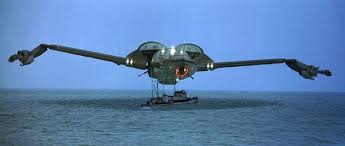
On the other hand, Star Trek III is not to be missed, not just because of what happens in the movie, but for its merits. The character interactions are fantastic and the actors all turn in solid performances. The villain of Star Trek III, a Klingon commander (Christopher Lloyd) is quite menacing and Lloyd plays him more nuanced than your typical Klingon, which was refreshing. The final battle between him and Kirk was also satisfying to watch. Production wise, Star Trek III hits the right marks and this is the movie that introduces the ubiquitous and iconic Klingon bird-of-prey ship and the Excelsior-class starship. Compared to the other films, Star Trek III is a good, but not an outstanding entry in this series.

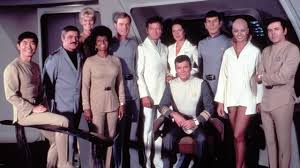
crew8. Star Trek: The Motion Picture (1979): I’ll be frank and say this movie is boring in many parts. Yet, there is so much that I like about it. It is the one film that stays truest to creator Gene Roddenberry’s vision for Star Trek and humanity in the future. Out of all the films, this one is the most cerebral and takes its influence from pre-Star Wars films like 2001: A Space Odyssey, and it does so to a fault.

In the first Star Trek movie, an enormous, destructive energy cloud is headed towards Earth and a newly refitted Enterprise is dispatched to confront it. The lead up to encountering the cloud was pretty good. Remember, when the film came out, we hadn’t seen the original crew in anything since the series ended in 1969. So, the film reveled in re-introducing Star Trek’s many iconic characters like James T. Kirk, Spock and McCoy (DeForest Kelley). That reunion aspect worked very well thanks to Jerry Goldsmith’s majestic and triumphant score, special effects that still hold up today and the cast’s acting prowess–they’re clearly comfortable in their familiar roles.

Well, we’re building up to when the Enterprise confronts the energy cloud. The movie is self-indulgent at parts, enterprise refitbut it’s moving along. Then midway through it, the film comes to a snoozing halt after the first encounter reveals that the cloud is hiding an immense artificial entity that is seeking its creator. Overly long scenes of people staring at special effects plague the movie. They’re pretty to look at, but after a few minutes, it becomes overkill and enough is enough! There is a lot of pondering throughout, in fact, there’s too much of it. But in spite of its faults, Star Trek: The Motion Picture has an ethereal, contemplative quality that is hard to dismiss.

9. Star Trek: Nemesis (2002): This is probably the most underrated Star Trek film in the batch, which is unfortunate. Due to its dismal reception at the box office and with fans, this would turn out to be the last film to feature The Next Generation crew. It does have major faults, such as its by-the-numbers execution and that it outright cannibalizes plot elements from the TV show Star Trek: The Next Generation and Star Trek II. At one point, it was the best ripoff of the first Star Trek sequel until Star Trek Into Darkness came along.

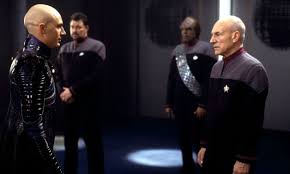
s3Captain Jean-Luc Picard (Patrick Stewart) is ordered to take the Enterprise-E to the enemy Romulan homeworld and meet that empire’s new leader in a peace initiative. This leader turns out to be Shinzon (Tom Hardy), a young clone of Picard and he has a major beef with Picard and the Federation. Shinzon’s unclear motives are one of the weakest elements about Star Trek: Nemesis and that is vital since this film’s premise hangs on the villain. He just lacks the gravitas to be an effective foil for Picard. What’s worse is his lack of reason for wanting to attack the Federation. All Shinzon does is spout corny lines about being Picard’s opposite. It’s probably the film’s clumsy attempt at addressing the theme of duality. Adding to that theme is a redundant sub plot involving the android Data (Brent Spiner) and his duplicate, which already happened n the TV series. The action is unexpectedly flaccid considering that the director (Stuart Baird) was known for helming action films.

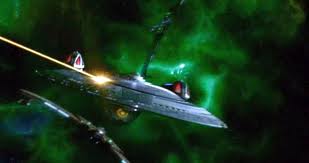
Still, this film has some merits. It features interesting character scenes and it exudes an atmosphere of impending change. The scene where the Enterprise-E is rammed enterprise fightsagainst Shinzon’s warship is pretty cool though, but a major character’s death doesn’t generate much of a reaction from me. It felt forced and trite since it tried to evoke Spock’s death in Star Trek II. With all that, somehow, it serves as a decent wrap up for films featuring The Next Generation crew.  At the very least, the film isn’t dull and has superb special effects and the last score done by composer Jerry Goldsmith. Continue reading
The Star Trek Movies Ranked, Part I

Star Trek movies have been with us since the late ’70s and have received very mixed reactions. Some are revered as the very best of sci-fi films, while others received vicious barbs from fans and critics alike. Now that there is an even dozen films, it’s time to rank them in order.

The way my rankings work are basically four tiers. The first tier includes genuine classics that still hold up today and are iconic; the second tier features films that are undeniably enjoyable and worth watching, though they have their faults; the third tier is filled with flawed but noteworthy movies that have some good qualities and are sometimes underrated; the fourth tier, naturally is littered with the bottom-dwelling movies that are just terrible with little to recommend about them.

Tier One

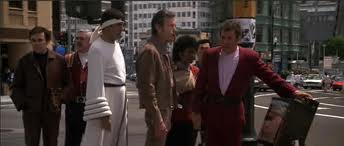
1. Star Trek IV: The Voyage Home (1986): I know this may shock most fans who expected Star Trek II to be the number pick. Choosing the trek 4 sfvery best Star Trek film was quite difficult and honestly, it’s more of a tie between the two films. To those that would argue that Star Trek II is the best one, you won’t get an argument from me, but time and time again I keep going to the fourth film in the franchise.

Why? To me this one showed the original cast and filmmakers at the top of their game. Everything was top notch with this film: production values, special effects, acting, and the story. The movie which was about the original Enterprise crew time traveling to San Francisco in the late 20th century to find whales was a great example of a fish-out-of-water yarn. We got to see the crew out of their element, yet persevering in the strange environment of the past. The movie presented a lighter, more comedic side but it was still exciting and engaging. It also showed that a Star Trek film didn’t need a scene-chewing villain to carry a film.

klingon ship

Finally, this film allowed all of the cast members to have their moment in the sun. They contributed to the story and had many outstanding scenes. Still, William Shatner, Leonard Nimoy and DeForest Kelley were the highlights, especially Shatner. His James T. Kirk wasn’t morose as in previous films, he was more confident, surprisingly funny and showed off his famous romantic, charming demeanor. By the film’s end, you feel completely satisfied. The crew had a new ship, Kirk was doing what he was meant to do and there was the promise of new beginnings as the Enterprise-A headed out to the unknown.

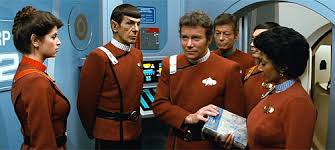
2. Star Trek II: The Wrath Of Khan (1982): On a different day I might’ve ranked this as so many do, as the best Star Trek film ever made. trek 2This is still the most important film in the franchise because it’s the one that saved it in its infancy. After the wooden and pedestrian debut film, there was doubt another expensive Star Trek film would ever be made. The filmmakers’ challenge was to put out an exciting, edge-of-your-seat thriller that would leave people talking about it for a long time to come. And they succeeded.

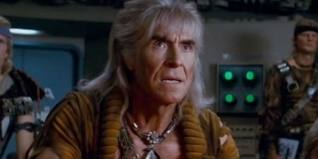
One of Kirk’s enemies from the original show, Khan (Ricardo Montalban), commandeers a Starfleet ship and goes on a warpath against Kirk. He blames our hero for marooning him on a desolate planet and wants Kirk to suffer as he did. And boy khandoes he give it to Kirk. The battle of wits between the two adversaries became famous thanks in part to the performances from both actors. This is Shatner’s best performance as a Kirk, who finally faces middle age, while Montalban clearly relishes his role as the battered but regal Khan. His character is undeniably one of the best movie villains of all time.

Even though the special effects and Nicholas Meyer’s direction are exemplary, what makes the film endure is its focus on the characters and its themes about dealing with your past, the destructiveness of vengeance and facing the future with dignity. So why isn’t this my favorite Star Trek film? Well, it nearly is and on some days I’ll admit it. But the film feels a bit ponderous and pompous at times. The script tends to go overboard with its constant quoting from classic literature. Then there’s Spock’s (Nimoy) death, while it’s eloquent and heartfelt, given that the character returns in later films, the death feels a bit empty. Those are just minor quibbles though and this movie is a must-see classic for everyone.

picard borg queen3. Star Trek: First Contact (1996): It’s not only the best Star Trek film that features The Next Generation cast but one of the franchise’s very best efforts. Director Jonathan Frakes (who also plays Riker) and the production team hit all the right marks in this great Star Trek film. Its success started with this well-written time travel/alien invasion saga.

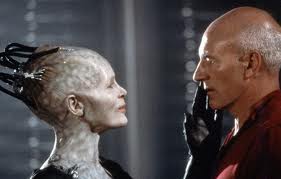
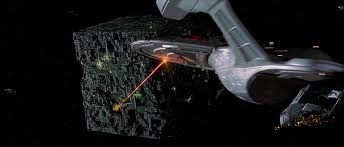
Capt. Jean-Luc Picard (Patrick Stewart) and his Enterprise-E crew time travel to Earth’s mid-21st century to prevent the evil cybernetic Borg from conquering the planet. Successfully incorporating action and horror elements, Star Trek: First Contact was both exciting and suspenseful with a morality tale about obsession and dealing with destiny. This film is full of so many cool moments. One of the best was when the experimental warp ship the Phoenix launches from a missile silo as its pilot, Zefram Cochrane (James Cromwell) blasts Steppenwolf’s “Magic Carpet Ride”. Another was Picard’s histrionic ranting about the Borg, which forced him to look within himself. The Borg themselves are presented as the fearful, unrelenting force they were meant to be. The movie’s main villain, the Borg Queen (Alice Krige), is one of the more interesting and unique foes. She isn’t some revenge-minded madwoman but is cold, calculating, and with a strange allure.

borg battle

As with the better films, this one showcased many of the supporting characters and featured smile-inducing nods and cameos from the other Star Trek shows. The best one had to be the cameo of Star Trek: Voyager’s EMH (Robert Picardo) who appears as the Enterprise-E’s own EMH. One of his lines is also a nice tribute to Dr. McCoy. After falling short with the previous entry Star Trek Generations, the filmmakers had to get the franchise back on track and succeeded with this one. Everyone involved is to be lauded, from the actors, to the composer, to the production team and, of course, the director, who like Nimoy understood Star Trek. Continue reading

Top Ten Utopian Films

Star Trek future London

One of the niftiest things about sci-fi films are the eye-popping portraits of the future. Most recently, audiences were floored by the breathtaking futuristic cityscapes seen in Star Trek Into Darkness. Keep in mind, that for dramatic reasons, things may not be perfect in these futuristic utopias. In fact, sometimes with these paradises there are significant drawbacks about them and the cost of paradise is often steep. Still, from flying cars to robotic servants, these films best showed how humanity can create a future to strive for.

Buck Rogers in the 25th century10. Buck Rogers In The 25th Century: A utopian vision inspired by late ’70s deco! The pilot for the TV show was shown in theaters before the proper series started. Tackiness takes on a new meaning in this future society with wise-cracking robots, skin-tight outfits and cheesy sets. But thanks to unfrozen astronaut Buck Rogers (Gil Gerard), things like disco, basic military tactics and boogying down make a comeback!

9. Gattaca: Imagine a future with Gattacamodern architecture from the 1950s, turbine cars and where you get all the social and employment opportunities just for being you. Yes, you can live out your dreams…as long as you’re genetically pure. It’s a haven for the one-percenters. For the rest of us created the old fashioned way, well, we’re shit out of luck. But that doesn’t stop Vincent Freeman (Ethan Hawke) from achieving his dreams in this tech noir thriller by passing himself off as one of the genetically pure.

I Robot8. TIE: I, Robot/Bicentennial Man: Both films dealt with the nature of evolving androids in the future. They featured sprawling and impressive skylines, servant androids, and nifty, futuristic vehicles. In lots of ways, life is the same as it is today in the films except with the technological advances. Life isn’t perfect and androids and robots must grapple with their civil rights. This is dramatically shown in I, Robot where the robots attempt a takeover. But overall, the futures in those films seem enjoyable.

Logan's Run apartment

7. Logan’s Run: More cheesy, ’70s-based, sci-fi trappings! Humanity’s remnants live in an underground city connected by a rail system, making it all look like something from Disney World’s Tomorrowland. In Logan’s (Michael York) futuristic society, life is pleasant and hedonistic with casual sex and drug use. No one has any cares except for their looks. The only drawback is that once you reach your thirtieth birthday, you’re euthanized.

6. Demolition Man: Welcome to San Angeles, a city rebuilt from Demoliton Man on patrolthe ashes of Los Angeles, San Diego and Santa Barbara. Along with clean streets and civil order, Taco Bell is the winner of the Franchise Wars and courteous behavior is strictly enforced. Also, crime is so rare that when a master criminal from our present (Wesley Snipes) is thawed out he creates chaos since cops in the future can’t cope. Enter John Spartan (Sylvester Stallone), a roguish policeman from the same time period, who is also unfrozen in order to stop him.

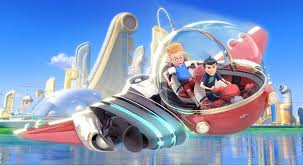
meet the robinsons5. Meet The Robinsons: Young inventor Lewis time travels to the year 2037, which is a time period heavily influenced by Tomorrowland. There, he meets the wacky titular family and contends with a mysterious villain from his past. Lewis also experiences a colorful world filled with curvy skyscrapers, genetically enhanced frogs, flying bubble cars, robots and even cloned dinosaurs. It’s a bit like The Jetsons, but much cooler looking.

4. 2001: A Space Odyssey: Unfortunately, most of the nifty innovations and tech showcased in that monumental 2001 part 2film weren’t available by the time the actual year of 2001 came along. That year would’ve been better if we had some of the inspiring developments depicted in Kubrick’s masterpiece like space planes, commonplace space travel, a moon base, and super-advanced AIs. On second thought, we’re probably better off without the super smart and neurotic AIs like HAL 9000.

Minority Report

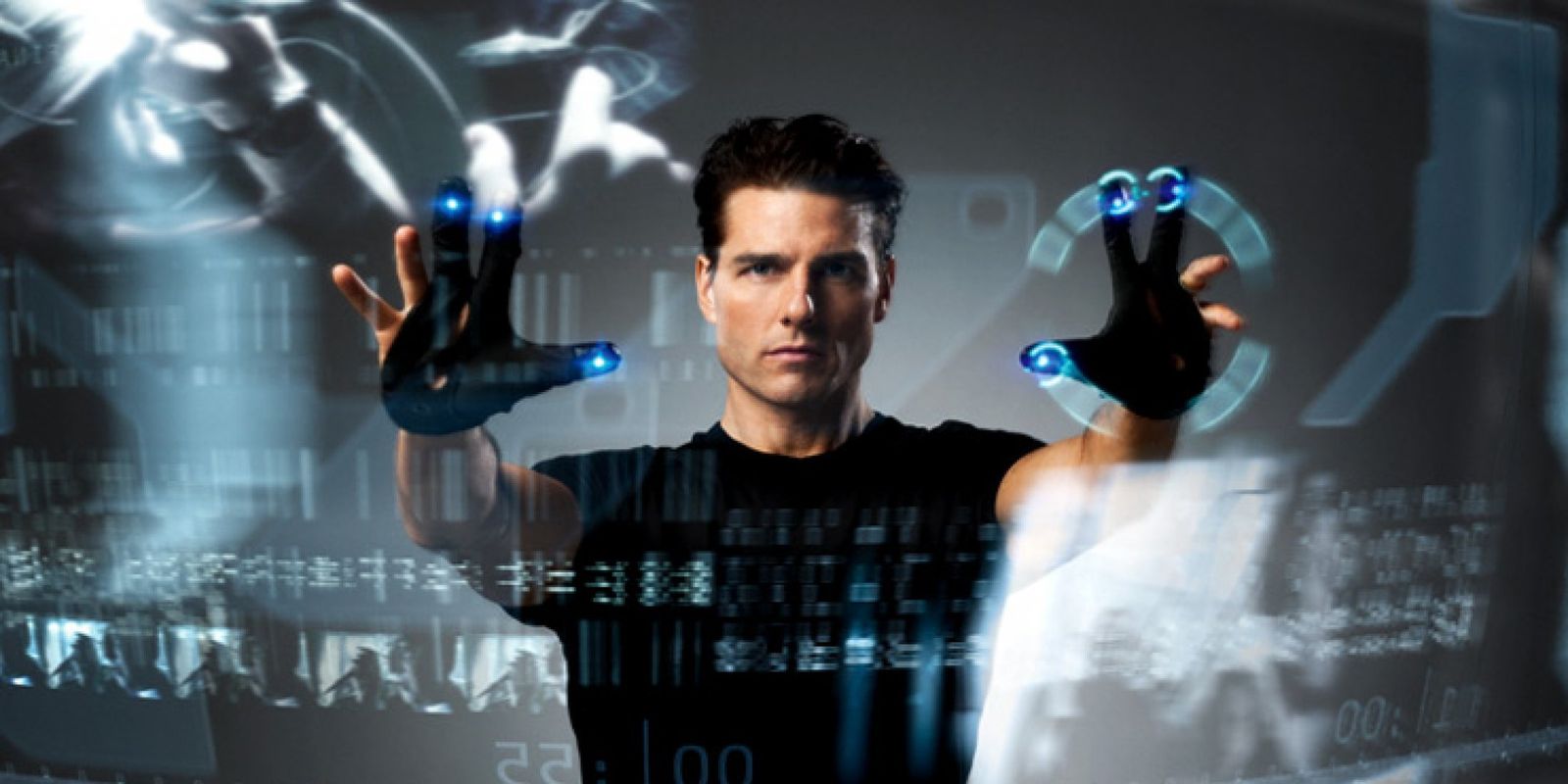
3. Minority Report: Director Steven Spielberg worked with futurists to create a believable and probable future stocked with stupendous technologies and inventions. Sure we have no privacy and eroded civil rights in Washington, D.C., circa 2052 thanks to the PreCrimes police force led by Jon Anderson (Tom Cruise). But take a gander at Minority Report’s amazing depictions of the future. Personalized holograms for customers in stores, electronic papers, glass-based computers, jetpacks, and robotically controlled cars that can scale walls. It all makes that future seem bearable to live in.

Hill Valley BTTF Future

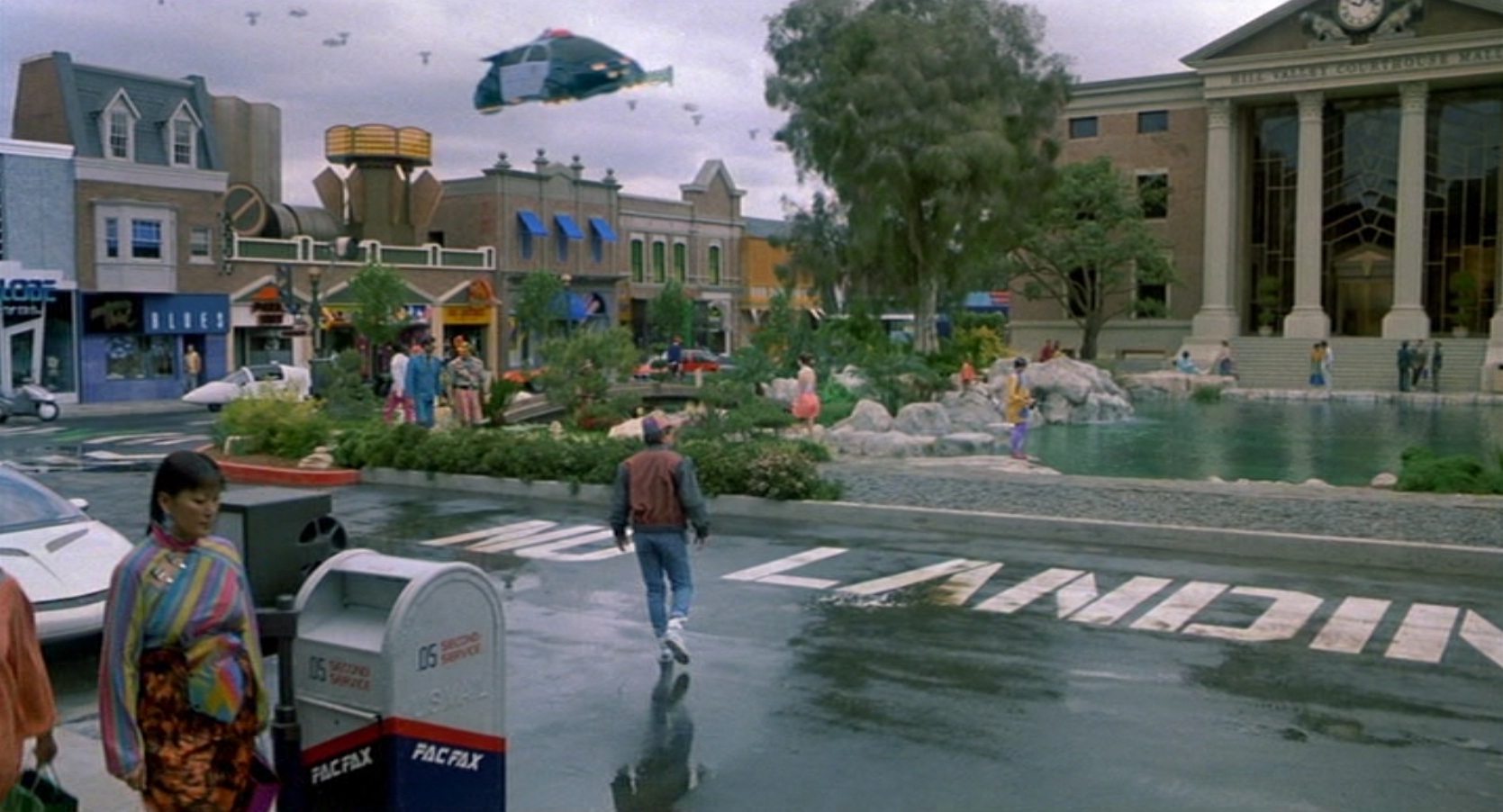
2. Back To The Future, Part II: What’s not to love about the optimistic future seen in this follow up to the first Back To The Future? Start with the cool-looking flying cars that clog skyways. You can convert your old cars to fly for just $39,999.95; it’s a steal! Next move on to dehydrators, holofilms, dust repellant paper, and hoverboards by Mattel (just avoid using them over water. All these innovations were part of a whimsical look at Hill Valley, CA, circa 2015. Even the clothing is uber cool–power Nikes with auto laces and jackets that adjust to your size! Worried about crime? No need to, with lawyers being abolished, justice is swift and efficient. Just watch out for those tranks, lobos and zipheads!

Starbase 11. Star Trek films Beginning with Star Trek: The Motion Picture and continuing most recently with Star Trek Into Darkness, Star Trek films have shown audiences pleasant and sometimes astounding images of our future. From Earth all the way to deep in the galaxy, humans have made san franciscoincredible social and technological advances. Gone are war, disease and poverty. Innovations like faster-than-light space travel, transporters, replicators and holodecks enrich humanity. The Star Trek films also displayed an Earth in the 23rd and 24th centuries that look clean and pristine. Take a look at the dazzling cityscapes of London and San Francisco in the latest Star Trek film. They set the bar for breathtaking and enviable views of the future. Of course, humans have to deal with Klingons, Borg and other alien bad guys. But with the likes of James T. Kirk (William Shatner, Chris Pine) and Jean-Luc Picard (Patrick Stewart), humanity can breathe easier. 😀

Lewis T. Grove

Top Ten Sci-Fi Theme Park Rides & Attractions

star quea

The highlight of any visit to a theme park for sci-fi fans are the sci-fi based rides and attractions. Whether derived from popular movies and TV shows or original creations, these rides and attractions feature top-notch effects and thrills and bring these fantastic worlds to life.

There has been some exciting developments regarding theme park attractions; notably Disney’s acquisition of the Star Wars franchise. Rumors are rampant that there will be a major expansion devoted to Star Wars in Disney’s Hollywood Studios. Meanwhile Universal Studios is celebrating their latest sci-fi attraction, Transformers The Ride–3D.

It may be thrilling to contemplate tomorrow’s attractions, but many memorable rides have stood the test of t10000time despite featuring outdated technology. What made them classics were how well they were executed or captured the mood of a film or TV show. This list celebrates past and current rides and attractions that fire up the imagination.

Please note, rollercoaster rides were left off the list because frankly, theming most rollercoaster rides are a waste. When riding those vomit rides, riders are zipping by so fast and hard on the tracks that no one can properly view or admire the rides’ sci-fi trappings.

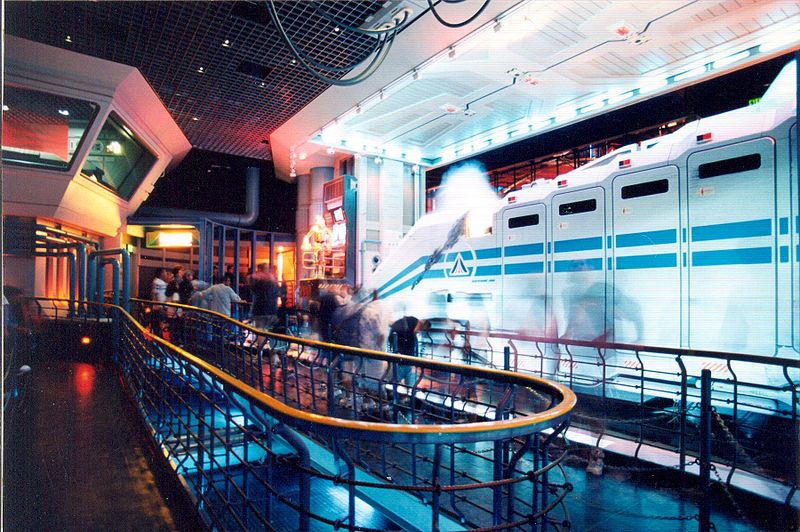
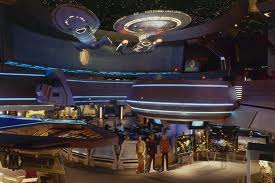
10. Borg Invasion 4D (Star Trek: The Experience): This attraction was basically a 3D movie but wrapped around it was an interactive storyline where guests visited a Starbase that came under a Borg attack. Guests were then “evacuated” by Starfleet personnel into an escape shuttle, which was the movie itself.

dinosaur

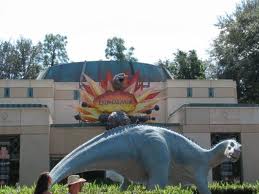
9. Dinosaur (Disney’s Animal Kingdom): Originally called Countdown To Extinction, the ride’s name was changed to its current title when the film Dinosaur came out in 2000. The premise is that a time-traveling jeep goes back in time to rescue an iguanodon, while the vehicle must avoid audio-animatronic dinosaurs, meteors and other dazzling effects. The herky-jerky ride is pretty rough but the sudden chaotic moves add to the excitement and suspense.

8. The Timekeeper (Magic Kingdom): The attraction was one of those Circlevision 360 movies Disney has all over Epcot’s World Showcase where standing audiences have a film played all around them. The Timekeeper was an android (voiced by Robin Williams) who transports the audience, Jules Verne and H.G. Wells throughout time. The finale that takes place in a futuristic Paris was simply stunning and immersed guests into a futuristic world.

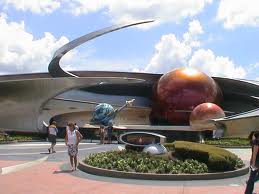
mspace7. Mission: Space (Epcot): According to some astronauts, this ride does a great job of recreating a rocket launch. Centrifugal forces do a number on riders enclosed in narrow, claustrophobic stations that simulate a spaceship being launched and escaping Earth’s gravity.  Riders play specific parts as team members on their way to Mars. Mission: Space is so rough that a milder version of the ride had to be introduced.

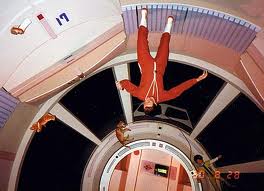
6. Horizons (EPCOT Center): This long-gone pavilion at EPCOT horizonsCenter was a nifty dark ride that showed how early visionaries viewed our future (with nods to A Voyage To The Moon). The latter part of the ride showcased families living in futuristic environments like onboard a space station. The finale allowed riders to choose from three different future environments (desert, ocean and outer space) to explore.

5. Back To The Future: The Ride (Universal Studios): Possibly the greatest old-style simulator ride of all time before innovations like 3D were added to these types of rides. Visitors at Doc Brown’s (Christopher Lloyd) Institute of Future Technology had to ride a modified time-traveling DeLorean to chase down another DeLorean driven by Biff Tannen (Thomas F. Wilson). Huge IMAX screens and especially rough rides added to the illusion that the vehicles were time-traveling to different eras.

4. Terminator 2 3D: Battle Across Time (Universal Studios Florida): The 3D effects in this attraction still hold up today and the pre-show presentation is fun to watch. What is interesting is that it is the final time that director James Cameron worked with the stars from Terminator 2: Judgment Day, Arnold Schwarzenegger, Linda Hamilton, Edward Furlong and Robert Patrick.  In the attraction, a Cyberdyne Systems demonstration of their new primitive T-70 robots are interrupted by Sarah and John Connor, as well as the T-1000. Fortunately, the heroic T-800 Terminator comes to the rescue as the attraction seamlessly blends live-action and 3D effects.

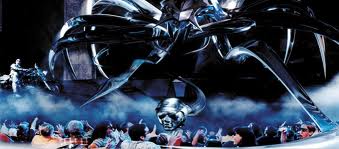
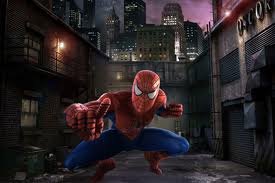
spider ride3. The Amazing Adventures Of Spider-Man (Islands Of Adventure): This ride uses different technologies (3D, pyro effects, simulators, etc.) to create one of the most exciting rides ever. Riders board a news vehicle and encounter Spider-Man as he battles Doctor Octopus, Hobgoblin, Electro and others throughout New York City.  Riders are literally thrown into the dizzying, aerobatic action when Doctor Octopus uses an anti-gravity rifle to elevate the ride vehicle over skyscrapers, as he and his cohorts battle Spider-Man. It’s all a  wondrous blending of different effects that throws riders into the action. The way Spidey lands on the vehicle is still thrilling after multiple rides. The Spider-Man ride recently underwent an HD upgrade that adds even more eye-popping depth to the experience.

2. Star Tours: The Adventures Continue (Disney’s Hollywood Studios/Disneyland): This update of the vader 3doriginal Star Tours keeps the simulator ride refreshing by offering several different scenarios. The premise is largely the same, riders visit the Star Tours station and board a Starspeeder vehicle. This time, the droid C-3P0 accidently becomes the pilot of the vehicle that captures the interest of imperial forces, who are looking for a Rebel spy onboard the vehicle. Sometimes Darth Vader himself tries to seize the vessel using the Force The Starspeeder narrowly escapes and takes off to safely deliver the Rebel spy through random locations. They range from the ice planet Hoth to the desert planet Tatooine. Another bonus is that the ride is in 3D, but Star Tours: The Adventures Continue is so great that it doesn’t need the gimmick.

1. Klingon Encounter (Star Trek: The Experience): It really is a star trek expshame that Star Trek: The Experience closed because not all fans were able to go to Las Vegas to experience the Klingon Encounter ride/attraction. Guests were seemingly transported onboard the Enterprise D as it comes under attack by rogue Klingons. Thanks to the faithfully recreated details of the ship, including the bridge, guests were made to feel as if they were actually onboard Captain Picard’s ship. The actors who interacted with guests as Enterprise officers helped sell this illusion, as well as the shuttle ride that concluded the attraction. No other ride or attraction went to this level to immerse a guest and make him or her feel as if they’re part of the storyline. Paramount or CBS should really try to bring this encounter back somehow–but they should pick someplace more compatible instead of Vegas.

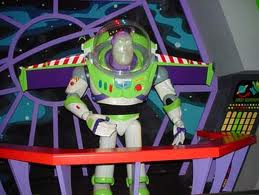
Honorable Mentions: The original Star Tours (Disneyland), Body Wars (EPCOT Center), The ExtarTERRORestrial Alien buzzEncounter (Magic Kingdom), E.T. Adventure (Universal Studios), Jurassic Park: The Ride (Universal Studios Hollywood), Buzz Lightyear’s Space Ranger Spin (Magic Kingdom), Transformers The Ride–3D (Universal Studios Hollywood), Honey, I Shrunk The Audience! (Epcot), and Men In Black: Alien Attack (Universal Studios Florida)

José Soto