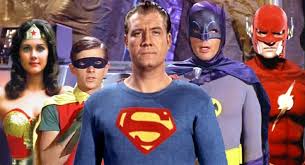
DC Wins The TV War…For Now, Part One

 old DC

One of the great corporate rivalries is the one between the comic book giants Marvel Comics and DC Comics. It’s a competition that has spilled over to other media. When it comes to films, Marvel has won the war on that front due to the monumental successes of their Marvel Cinematic Universe (MCU) films. However, take a quick glance at the current TV schedule. From looking at that and television history, it’s obvious that DC has won the TV War…for now.

Head Start

In reality, DC had the war won for decades now. This goes way back to the 1950s with the success of the first TV show based on Superman. That would be, of course, the landmark series Adventures of Superman, which starred George Reeves. It’s well known that the series was very popular and helped cement Superman’s legendary status in pop culture. Marvel at that time period didn’t even exist, nor did their most popular heroes because the company was concentrating on non-superhero comic books.

Following the cancellation of Adventures of Superman, the next DC superhero to bask in the television spotlight was Batman. Beginning in 1966, Batman was an instant hit and a genuine pop culture phenomenon. Starring Adam West and Burt Ward as Batman and Robin, the show was a decidedly goofy sendup of comic books and introduced characters like the Joker and Catwoman to non-comic book readers. Although, it was and is still popular, many decried the way Batman belittled the Caped Crusader and comic books in general.

wonder woman

In the 1970s, there were a few TV shows and specials based on DC Comics superheroes. The best known was Wonder Woman, starring Lynda Carter and it aired from 1975 to 1979. The show wasn’t as cheesy as Batman, nor as popular, but it was noted for its pro-feminist stance since the title character was a superhuman woman. The women’s lib messages obviously went over the heads of most younger viewers, who were enamored with Lynda Carter and her skimpy outfit.

Other TV shows airing in the 1970s were strictly aimed at children like Shazam! and The Secrets of Isis. In fact, these half-hour programs only aired on Saturday mornings and had limited appeal.

Around this time period, Marvel got into the hulk showact with the premieres of TV shows and TV films based on their characters. The first superhero to make a live-action appearance was Spider-Man, who made non-speaking appearances on The Electric Company. Some of the Marvel TV films and shows were truly awful like Captain America and The Amazing Spider-Man, which thankfully did not last long as a series. But a couple were actually decent like Doctor Strange and Marvel’s biggest hit on TV The Incredible Hulk. Airing in November 1977 and starring Bill Bixby and Lou Ferrigno, the TV film was a big hit and led to a successful TV series the following year.

Second Wind

superboyThe decade that followed, the 1980s, was slow for comic book properties on TV. After The Incredible Hulk was cancelled in 1982 there wouldn’t be another superhero TV show until the syndicated program Superboy debuted in 1988. Coming after the film disaster Superman IV: The Quest for Peace, Superboy was a welcome respite for fans who just wanted to see good, old-fashioned superheroics and teenage angst. Plus, Superboy was a competent place holder until DC and its parent company Warner Bros. could bring out another Superman TV series or film.

On a side note, there were a trio of TV films that continued the Hulk’s adventures and the first two introduced live-action versions of Thor and Daredevil. The Hulk and his alter ego David Banner actually died at the end of the third film, but there were plans to do more TV films. However, those ended after Bixby’s untimely death in 1993.

The humongous success of the film Batman in 1989 helped jumpstart new DC-based TV shows in the 1990s. Not wanting to rest with the success of Superboy, Swamp Thing: The Series premiered on the basic cable channel USA Network in 1990, while a show based on the comic book Human Target aired briefly on ABC in 1992.

old flashThere were two shows that made the largest impact in that decade. They were The Flash and Lois & Clark: The New Adventures of Superman. The Flash, starring John Wesley Shipp, premiered in the fall of 1990 fresh off the success of Batman and seemed to copy the stylistic direction of the Tim Burton film. Even though it only lasted one season, the show is revered by fans because of its fun stories, dazzling effects, and character work. Lois & Clark: The New Adventures of Superman, which aired on ABC, was targeted more towards women since it concentrated more on the relationship between Lois Lane (Teri Hatcher) and Clark Kent (Dean Cain). The superhero aspects of Superman took a back seat to the romantic shenanigans and it was laden with light humor. Of course, this displeased some fans, but it was still a successful program.

As for Marvel, the 1990s was a decade best left forgotten. There were DOA pilots based on Power Pack, Generation X and Nick Fury. As for the syndicated show Night Man, the less said about it the better.

Animation Dominion

young justiceAs DC dominated the television medium, there was another TV venue that it conquered. That was with their animated TV shows. Since the 1960s, there have been numerous TV shows that aired on Saturday mornings and on syndication based on DC’s superheroes. DC enjoyed early successes like Superfriends in the 1970s, but their animated shows weren’t acclaimed until Batman: The Animated Series premiered in 1992. Boasting memorable characters, villains and plots, the show was a huge hit and led to other superior animated gems like Batman Beyond, Superman: The Animated Series and Justice League. DC’s animated renaissance probably culminated with the recent Young Justice. It just lasted two seasons, but its smartly written scripts, mature themes, and complex character development won wide appraisals from fans and critics.

In this venue, Marvel actually presented itself as a viable counterpart to DC since the 1960s with series based on Spider-Man, the Hulk, the Avengers and other stalwarts. The results were quite admirable in many instances, but DC on the whole produced more noteworthy animated TV shows.

New Century, New Renaissance

As DC celebrated their animated successes in the 1990s, the live-action field was stagnant after the cancellation of Lois & Clark in 1997. There was an infamous pilot made for the Justice League that thankfully never made it into a series. It can be found on Youtube for anyone that is curious.

The live-action drought ended a few years later in 2001 with Smallville. This long-running show starred Tom Welling as Clark Kent in his teenage years and early twenties. It ran on The WB and later The CW networks and explored many aspects of the Superman mythos while concentrating on Clark’s emotional development and how he came to be Superman. It had its faults like the producers’ insistence of “no tights, no flights”, which meant Clark never put on his iconic Superman suit. (The final episode doesn’t count since he was never fully shown wearing it.) This was strange because many other superheroes featured on Smallville like Green Arrow, the Justice Society and Supergirl were allowed to fully embrace their comic-book roots. The Warner Bros. network tried to capitalize on the success of Smallville with other programs, but weren’t successful. Efforts included the short-lived Birds of Prey in 2002 and a pilot for Aquaman.

Around the time that Smallville came to an end, the superhero genre exploded in theaters. Super hits like The Dark Knight, Iron Man, and The Avengers cemented the permanence of arrowsuperhero films. As it goes, whenever there is a mammoth box office hit, TV executives take notice and follow suit. Warner Bros. and DC took advantage of the heightened interest in superheroes and produced many TV shows. Not all of them bore fruit like pilots for Aquaman and Wonder Woman, or another iteration of Human Target, but others blossomed and are now hit shows. These include Arrow, The Flash, Gotham and to a lesser extent Constantine. And that is just the beginning.

José Soto and Lewis T. Grove

To Be Continued
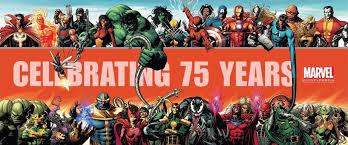
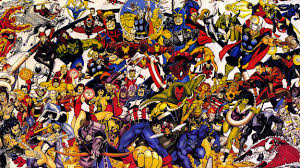
Reasons Why The Marvel Superheroes Are Still Successful

marvel 75

The 20th century needed a new group of heroes that reflected then-modern sensibilities. During the Golden Age of comic books, superheroes belonging to DC Comics (then named National Periodical Publications) such as Superman, Batman, and Wonder Woman fulfilled this need with their wild superhuman exploits that captured the imagination. By the post-war era in America, DC’s superheroes were pretty much the standard: the Establishment.

By attempting to have the most likeable characters, DC’s superheroes had no character or emotional flaws, and the stories gravitated towards plot-driven, farcical adventures rather than character-driven stories.

In the wake of DC’s success, other comic book companies were founded and tried to emulate DC. Out of the many companies, only Timely Comics had staying power and here we are celebrating the 75th anniversary of that company that will later become Marvel Comics.

The Flawed, Science Heroes: Comics changed forever with the start of the so-called Marvel Age. The birth of the Marvel Universe took place in the early 1960s. This was a period that people were in awe with all of the wonders of science and space exploration. The Space Race and the Cold War were on the minds of the people. The Zeitgeist was the fear of the imminent Red Invasion and the Promise of Science- where will it take us?

perez marvelThe core of the first generation of Marvel superheroes were essentially Science Heroes. With the exception of Dr. Strange, the rest of the Marvel Universe was largely a world of weird science and science fiction. Spider-Man, Fantastic Four, Captain America, Giant-Man, the Wasp and the Hulk were Radioactive Heroes. Peter Parker was bitten by a radioactive spider. The astronauts from Reed Richard’s group were exposed to cosmic rays during their maiden voyage into outer space. In an unfortunate accident, Dr. Bruce Banner was hit with the full blast of Gamma Rays. Tony Stark built an electronic-laden armor with tons gadgets and abilities. Captain America was a patriotic hero that survived World War II by being frozen due to his exposure of Vita-Rays; part of the catalyst that transformed Steve Rogers from a skinny kid to an athletically proportioned hero. Giant Man and the Wasp benefitted from Hank Pym’s size magnification and reduction experiments, along with side studies in insect communication and gene splicing.

Great concepts- ahead of its time- but what made the Marvel Universe different, however, was not only the science aspect, but rather the fact that these Marvel heroes were emotionally flawed, imperfect, and fallible. Tragedy strikes as often as victories. Moral dilemmas were as large as the threat.

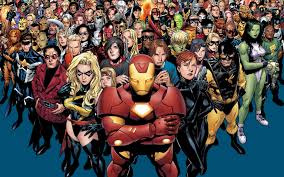
Spider-Man wins the battle with the big bad villain, but he can’t get enough money for his rent and he blew a date with either Gwen Stacy or Mary Jane Watson. Captain America is back in the modern world, but he feels lost like a fish out of water. marvel heroesThe X-Men have astounding abilities, but they are persecuted and feared by society, who view mutants as aberrations, and treat them as outcasts. The Fantastic Four’s Thing has great power, but he also has this great fear that his blind girlfriend Alicia won’t accept him if she ever regained her sight and found him ugly. But the Thing- AKA Ben Grimm, is very human despite his rough exterior, with a heart that endeared him to readers. Dr. Strange was a callous, money-loving jerk; a celebrity physician until a terrible traffic accident ended his career. This gave him pause to reflect and improve on his past behavior as he was now invested to learn the mystic arts to save the world from an ancient evil. And the list goes on and on with the great flaws that these characters have, but that is what made these characters appealing. That in particular was something that comic book readers became very attuned to, and why they identified with them. Continue reading

Marvel Wins The Movie War…For Now, Part One

Avengers sup

Sorry DC Comics fans, but with the runaway success of the recently released Guardians Of The Galaxy film and the announcement that the upcoming film Batman v. Superman: Dawn Of Justice won’t directly compete with the third Captain America film, it’s pretty clear that Marvel Entertainment has won the Comic Book Movie War over its rival DC Entertainment.

DC’s Early Success

For years DC was at the apex of comic book-based films thanks to Superman then Batman dominating the box office. Marvel wasn’t even a contender; it was consigned to bargain-basement FFshlock efforts like Captain America, The Punisher and Roger Corman’s The Fantastic Four, which wasn’t even released. It seemed like Marvel just couldn’t get its act together and was floundering with its attempts to put something out into theaters much less TV. Meanwhile, DC had solid hits with its flagship heroes and films that although were flawed, were generally well received.

supe lexDC’s advantage was that it was (and is still) owned by the studio giant Warner Bros., which had the deep pockets to finance the superhero films. This was why the Superman and Batman films looked so good. In their day, they had big budgets with big-name stars, directors and the best special effects and production people working hard to put out quality efforts. The best Marvel could muster was getting Dolph Lundgren to star as the Punisher.

Fans asked for years where were the big-budget adaptations of Marvel’s best heroes? While Batman tore through theaters where was Spider-Man? Well, Marvel was just a comic book company then that went through many owners who didn’t know a thing about expanding into other media, specifically film and TV. Then there was the legal mess over who had the rights to produce a Spider-Man movie that was only resolved a couple of years before Spider-Man. By that time, Marvel had gone through bankruptcy and in order to raise money sold their coveted properties to different film studios. That is why properties like the X-Men, the Fantastic Four and Spider-Man aren’t made by Marvel Studios today.

Double-Sided Victory

Despite their overall success, DC still had some chinks in their movie armor. For every rousing Superman II or Batman there were undeniable stinkers like Superman III or Batman & Robin. Worse were truly abysmal films like Steel and The Return Of Swamp Thing that not only failed in the box office, but sullied the reputation of superhero films.

batmanDC Entertainment didn’t fully capitalize on the success of the Batman and Superman films. Yes, they did push forward TV adaptations of the Flash and Superman, but they should’ve concentrated on making quality films of their other properties. Instead they pooled all their efforts into Batman, which made sense since he’s their most popular superhero. But the problem with that approach is that when a Batman film falters it affects the rest of their line. And this is what happened with the release of Batman & Robin in 1997. That film strayed far from the winning dark and gothic formula that director Tim Burton used in the first two films and instead was a throwback to the campy 1960s TV shows. That silly approach used by director Joel Schumacher irked many fans who felt that Batman was a dark and serious hero and putting him in goofy situations was undignified. At the same time, DC was floundering with their attempts to reboot the Superman film franchise after the pitiful failure of Superman IV: The Quest For Peace back in the 1980s. A lull existed for DC superhero films that lasted from 1997 until 2004 when the DOA Catwoman was released. DC wouldn’t get back on its feet until the following year when Christopher Nolan’s reboot Batman Begins was unleashed.

batcycle

That film’s success did come with a price. Chiefly that Nolan’s unique and grounded Batman universe couldn’t have any ties to the rest of the DC universe. Hence no mentions of Superman, Wonder Woman, etc. Not even their home cities seemed to exist in Nolan’s dark and brooding world where costumed beings didn’t have true superpowers. As good as that was for the Batman films, it meant that DC couldn’t use them to introduce other heroes. That’s not to say they didn’t try expanding. There was almost a Justice League film made. George Miller was supposed to direct it and a cast was set, but the 2007-2008 writer’s strike ended that dream. Then everyone knows about Superman Returns and Green Lantern, two highly anticipated films that failed and left DC’s expansion efforts stillborn. Unfortunately, as these two films floundered Marvel Studios began its ascension.

The first few films based on Marvel properties were huge hits with the public and fans, some decried how they ignored fundamentals in core concepts. For instance, as Hugh Jackman became a big star for his portrayal of Wolverine, many complained that he was too tall and good looking. Others griped about why Spider-Man all of a sudden had organic webbing and never invented web-shooters. Then there were the misfires that were forgotten in the wake of the successes of Spider-Man 2 or X2: X-Men United. Those included Daredevil, Hulk and Ghost Rider. Continue reading

Comic – Con 2014 Highlights & Observations

max avengers ultron poster 

This year’s Comic-Con didn’t have any big, surprise revelations that brought down the convention halls, like last year’s announcement of Batman v Superman: Dawn of Justice. Nonetheless, there were many scintillating news that came out of the convention that made many drool and envious that they weren’t there to witness the announcements…or see the exclusive trailers and footage.

Dawn Of The Justice League

It’s funny how pumped up people are for Batman v Superman: Dawn of Justice and it’s not coming out next year! Warner Bros. and DC Comics may want to reconsider their release schedule of May 2016 and put this film out sooner. While next summer and December are already covered by guaranteed blockbusters, there are plenty of other months where Batman v Superman: Dawn of Justice will completely dominate the box office like Captain America: The Winter Soldier did this past April.

bat fight

What brings out this feeling with us here at Starloggers is that based on the fact that there is footage out about the movie, it seems as if it’s close to being complete. Those shots of Batman on the rainy rooftop decked out in full armor and a visibly angry Superman up in the sky facing him were just electrifying. Apparently, director Zack Snyder took the essence of Frank Miller’s classic The Dark Knight Returns and translated it to screen. As a bonus, the reveal of Gal Gadot in her Wonder Woman outfit was just a perfect bonus; an Amazonian warrior brought to life!

Avengers: Age Of Ultron & The Marvel Cinematic Universe

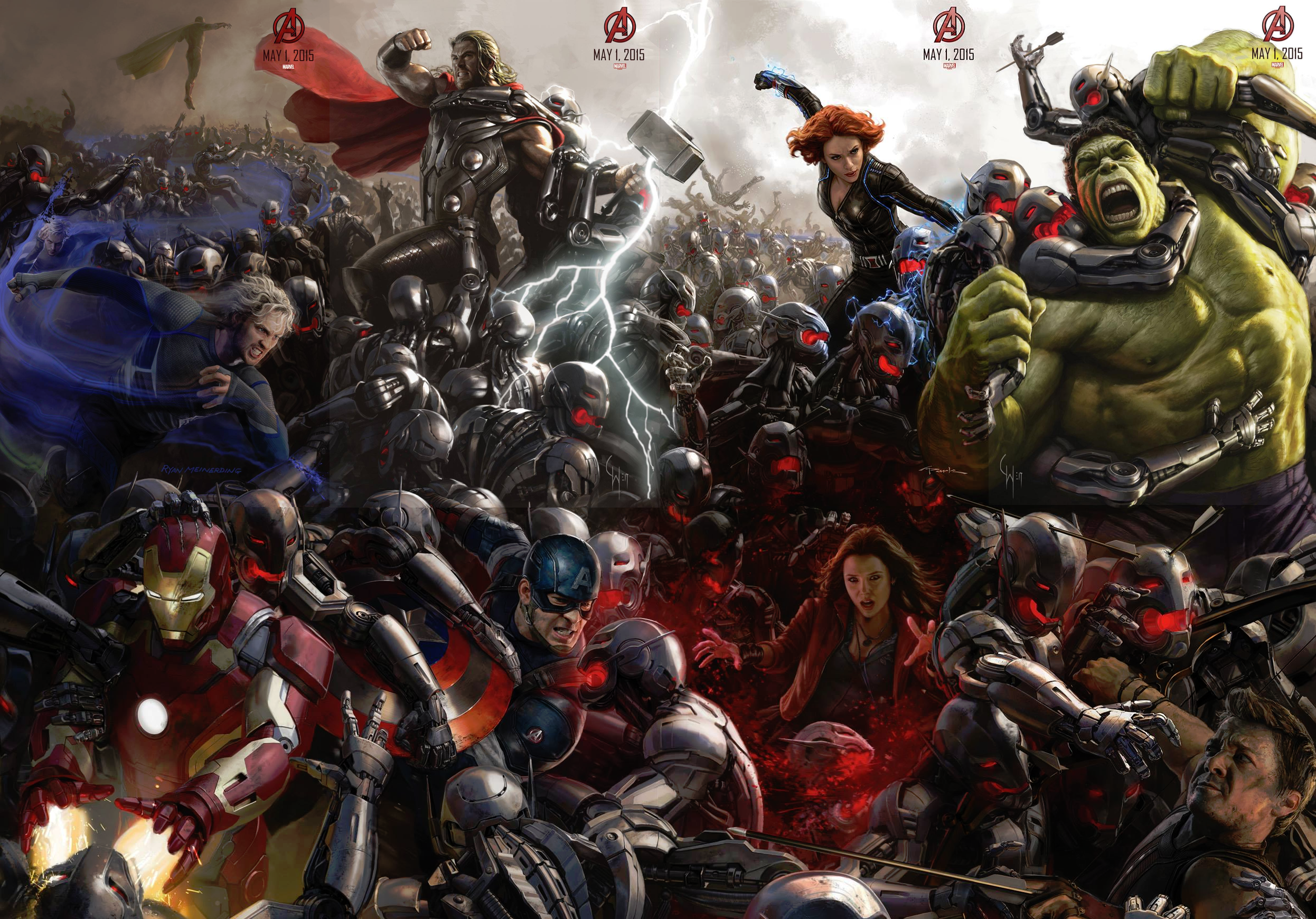
Unlike Batman v Superman: Dawn of Justice, there hasn’t been any photos or footage leaked over next summer’s eagerly awaited sequel to The Avengers. The same went for Ant-Man. Reportedly, the crowd predictably went bonkers over the exclusive footage shown for Avengers: Age of Ultron. In the clips shown, the attendees saw Iron Man’s Hulkbuster armor, footage of the heroes fighting Ultron and a haunting image of Captain America’s broken shield.

broke shield

What helped whet the appetites for fans around the Internet and at Comic-Con were the beautiful posters showcasing each individual Avenger fighting Ultron and his android army. The full poster that has all of them put together is sure to be a sought-after item.

The news that actor Patrick Wilson dropped out of Ant-Man may have reminded some of the behind-the-scenes production headaches plaguing this film. Still, the production is pushing on with their promotion and hopefully Marvel Studios will have another winner in their hands.

The film studio is so confident about Guardians of the Galaxy, that they announced that the film’s director James Gunn will return to direct the sequel, which has a firm release date in July 2017.

The Absentees

While Marvel Studios confidently showcased their upcoming films, it was noticeable that Twentieth Century Fox didn’t have anything to show for next summer’s Fantastic Four reboot. It’s obvious that the studio and the production team behind the much-maligned reboot is feeling sensitive and protective over the film in response to the negative feedback from many fans. No matter how you look at the situation, it doesn’t bode well for the film. But it may wind up winning over fans in the end.

There were other films being released next year that weren’t represented as well. The biggest one was Star Wars Episode VII, which if something was shown might’ve eclipsed the Marvel and DC presentations. Also MIA was Brad Bird’s highly anticipated and mysterious Tomorrowland . Not seeing anything from Star Wars wasn’t a surprise since the film is still early in production, but it’s a missed opportunity for Tomorrowland because there is a lot of curiosity over the film. But Star Wars fans didn’t walk away empty handed: the full-length trailer for the animated TV series Star Wars Rebels made its debut at Comic-Con and it looks terrific.

Other News

Despite the lack of big, headline-making announcements, there were some that had merit. Take for example the news that Legendary Pictures plans to release a prequel to King Kong that takes place on the mighty ape’s homeland, the dinosaur-packed Skull Island. Then there was the pleasant surprise for fans of Star Trek: Deep Space Nine when it was announced that Alexander Siddig (Doctor Bashir) is joining the cast of Game of Thrones. Also noteworthy were the news that the Batman villain Ra’s al Ghul will be a major nemesis for the next season of Arrow and Bobbi Morse a.k.a. Mockingbird will be part of the returning Agents of S.H.I.E.L.D.

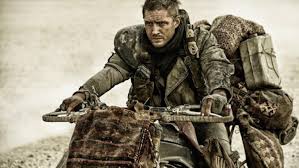
Of the many trailers for movies and TV shows, one that caught everyone’s attention was that of next year’s Mad Max: Fury Road. From looking at the footage, it seems clear that director George Miller has returned to the high-octane roots of the Mad Max franchise. It’s a welcome thought since that futuristic anti-hero has been absent from the screens for too long.

That wraps up what we thought of Comic-Con 2014. We already cannot wait for next year’s convention. BTW, check our Background Noise and Facebook pages for any links (once we find them) to leaked footage or photos themselves of Avengers: Age of Ultron and any other highly anticipated film.

First Look At The New Batman

new batman

Ever since Batman was announced to be appearing in the next Superman movie, there has been a ton of speculation about how he would look. Things went into overdrive when it was announced that Ben Affleck would be taking over the role from Christian Bale. Many people decried the acting pick, while others had a wait-and-see attitude.

Still, behind all the wondering, Batman fans wanted to know how the new Batman would look like. Yesterday, Zack Snyder, the director for 2016’s Superman/Batman movie teased fans with a covered Batmobile and hinted that more revelations would come. Well, Snyder wasn’t kidding.

batmobile

Today, he released a black and white photo of Affleck adorned with the famous Batsuit alongside a new Batmobile. From what can be seen from the photo, the Batmobile looks like a throwback to the sleek designed armored car seen in Tim Burton’s Batman movies, but looks more sturdy like the mini-tank shown in Christopher Nolan’s Batman films.

As for Batman himself. he looks like the way Frank Miller drew him in the famous The Dark Knight Returns graphic novel. Very muscular, and the pose gives off a Batman who seems weary and near the end of his rope, but still determined to carrying out his duty…the latest one being confronting Superman.

To think we have to wait over a year to see the film! At least now we have something to whet our appetites.

Lewis T. Grove