John F. Kennedy: Time Travelers & Alternate Historians’ Favorite Subject

kennedyThe myth and aura of President John F. Kennedy has permeated many aspects of our culture, including the worlds of fantasy and science fiction. This is due to the circumstances of his tenure as U.S. president and his assassination. Even though the Space Age began before he took office, JFK helped invigorate the nation’s space efforts with his pledge to land a man on the moon by the end of the ’60s. His short time in office also saw the closest moment to date of a full-scale nuclear war with the Cuban Missile Crisis. Then there is the tragedy of his assassination that even today is fraught with controversy.

Needless to say, almost all of these stories have to do with either time travel scenarios or alternate history. Often, the time travel yarns lead to alternate timelines where the slain president is never killed in 1963. Ironically, it turn out that JFK living past that fateful day usually leads to a disastrous timeline. It’s interesting to note this considering the admiration that many have for the slain leader. Of course, the reason is because these stories need some drama.

Literary Speculations
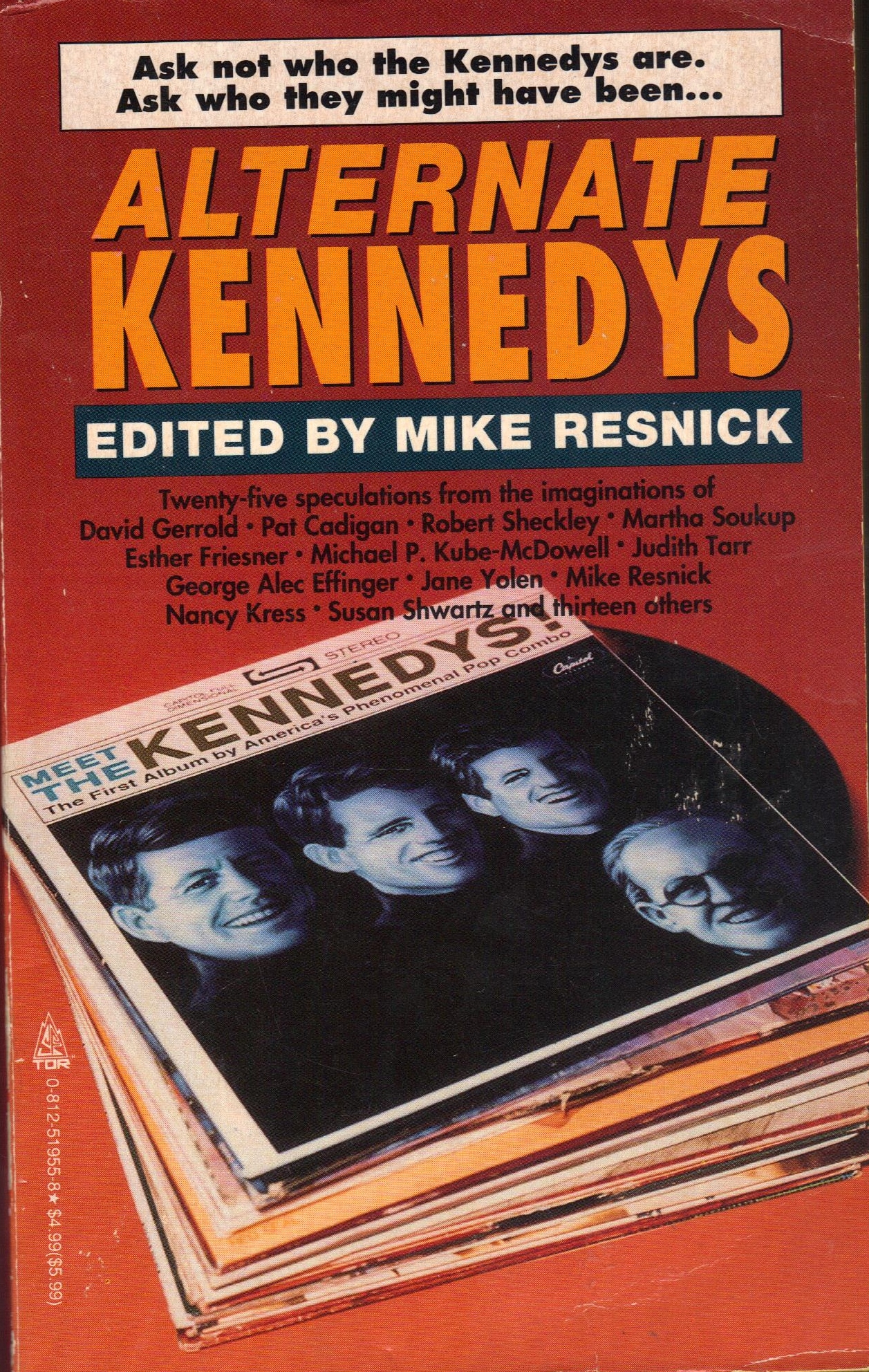
alt kennedys.jpgThere are too many sci-fi and fantasy books to list here that explore JFK and altered history. Some notable entries include Alternate Kennedys, a collection of short stories that featured alternate history accounts, as well as decidedly fantasy and comedic tales of JFK and his family. Some of the better stories in that collection are “The Winterberry”, “The Kennedy Enterprise” (in this tale, the Kennedy brothers are the big stars of a famous sci-fi TV franchise), “A Fleeting Wisp Of Glory”, and “Prince Pat”.

Stanley Shapiro penned a time travel book called A Time To Remember, which was made into a TV film Running Against Time that starred Robert Hays as a professor who wants to save his brother from dying in the Vietnam War. So he goes back in time to save JFK and thus prevent that war from happening.

Another novel about JFK living past 1963 being detrimental to history is Prologue by Greg Ahlgren. In this book, JFK never died and wound up pulling out of Vietnam. This decision led to the communistic takeover of the world, causing the book’s protagonists to travel in time back to JFK’s era and rewrite history.

One recent, high-profile work is Stephen King’s novel 11/22/63 where the story’s main character time travels to the past and stops Oswald. The resulting timeline leads to George Wallace, and later Hillary Clinton, into becoming presidents and the Vietnam War escalating into nuclear war.

jfk king

Putting aside the fantastic novels and stories, recently many historians have written essays and books seriously exploring alternate timelines about JFK. Many of them are well worth reading for history buffs and fans of alternate history. The most recent example is If Kennedy Lived: The First And Second Terms Of John F. Kennedy: An Alternate History by Jeff Greenfield, a followup to his essay collection Then Everything Changed. In that latter collection of essays, Greenfield explored a timeline where Kennedy was killed before he was inaugurated. This terrible event led to the Cuban Missile Crisis becoming a nuclear war.

Getting back to fiction, there are novels about  alternate versions of the Cuban Missile Crisis. In these accounts the crisis turned into full-scale nuclear war between the U.S. and the Soviet Union, leading to terrifying results. They include Resurrection Day by Brendan DuBois and When Angels Wept: A What-If History Of The Cuban Missile Crisis by Eric G. Swedin. Continue reading
A Fan’s Angst About Star Wars Episode VII

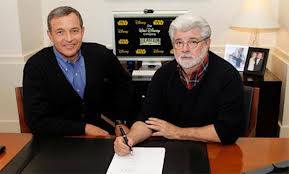
I miss George Lucas. That is basically my reaction to the recent news and rumors of problems with the upcoming film Star Wars Episode VII. From the writer, Michael Arndt, being replaced with director JJ Abrams and Lawrence Kasdan (the writer of The Empire Strikes Back), to hints of tension between Lucasfilm and Disney about the film’s release date.

poor lucas

This is what I feared when Disney took over the franchise. Star Wars movies usually took three years to make and it was all that George Lucas and his company were focused on. Now it seems like Star Wars is just another piece in Disney’s massive empire. The idea of delaying the film to 2016 may seem like a long time to wait for some, but on the other hand it may not be such a bad idea since it feels like everything is being rushed. Abrams only recently finished Star Trek Into Darkness and now with a new script being written, there will be a limited amount of time to get the whole thing done by 2015 as Disney CEO Bob Iger relishes.

The other idea of having a new Star Wars movie every year makes all of this feel like these films will be churned out of a factory and will inevitably lead to people getting burned out on Star Wars. The anticipation for each new episode was part of the fun during the years between films. But with Disney and its shareholders demanding more profits this will not be allowed. See the glut of Marvel films as a reference. Lucas had his flaws but Star Wars was his life’s work and was solely concerned with it and the rich universe he created. This won’t be duplicated with whoever is running things now.

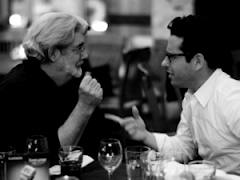
abramsGetting back to J.J. Abrams, one has to question how committed Abrams is to this opportunity. It has also been rumored that he was reluctant to move to England to film the movie, which if true would be ridiculous. How many directors are out there that would swim to England just to have a chance to direct a Star Wars movie? These type of projects just don’t come around too often.  Not to mention the problems several fans had with his Star Trek films that had plot holes all over the place. No doubt caused in part by the scripts. The fact that the Episode VII screenplay is now being rewritten does not inspire confidence except for Kasdan being involved. Having said all of this, I hope that Abrams can pull this out. I think he needs a strong producer lucas abramsto keep him on track and ensure that the problems that occurred in his other films are avoided. His first Star Trek film had nice visuals and good action sequences, so he does have some skill in that regard. He just can’t have free reign to do whatever he pleases, especially on a project of this magnitude. Disney is not going to change directors at this stage of development, so he is it for Star Wars Episode VII.  Down the line, I would like to see someone like Alfonso Cuarón take a stab at these films. He has been receiving great reviews for his sci-fi film Gravity. Having that type of vision for a Star Wars film seems like a great opportunity.

Hopefully, Abrams and Kasdan can come up with a quality script and do justice to the Star Wars saga. That is just as long as Abrams doesn’t bring in his buddy writers. Maybe Abrams will ultimately deliver a great Star Wars film, and all this angst we fans are feeling will be for nothing. We’ll just have to hope for the best.

C.S. Link

Zombies Impossible

securing-yard

Ever since George Romero popularized flesh-eating zombies in his masterpiece Night Of The Living Dead, the creatures’ popularity have grown. Undoubtedly, zombies are the most popular monsters today, beating out the ubiquitous vampires.

The thought of a deceased loved one, reanimating into a decaying ghoul that only wants to consume you is a terrifying idea. It cuts down to our primal fears of being eaten alive by predators. Zombies have also come to symbolizes the supposed coming apocalyptic breakdown of civilization. As dreadful as all that sounds, we have to ask ourselves how likely is it that the dead will rise up and eat us?

From a scientific standpoint, there isn’t any way that will happen. Let’s think about the concept and go into the logistics.

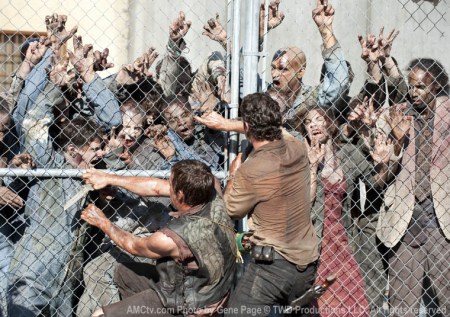
When a person dies, all their bodily functions cease to function. No blood is being pumped, the brain doesn’t send any signals via nerves to tell the body what to do and so on. Now when zombies are reanimated in these films and other media, a point is made that the zombies are immune to bodily harm. Shoot them, stab them,more brains they keep on coming. Remember that scene in Day Of The Dead when that loony scientist was reporting that the organs in a zombie weren’t working, yet the creatures were animated and hungry. Along the way in these stories, it’s stated that something in the brain is keeping the dead body going, which is why you have to shoot or bludgeon the undead in the head. This was seen in The Walking Dead episode “TS-19” where CDC scientist Dr. Edwin Jenner reported this fact to the show’s main characters.

On the surface it makes sense. Something, a virus, radiation, chemicals, nanobots, and or something else have taken over a dead person’s brain and are sending signals to the body to move and consume flesh. Cut off or destroy the brain and the problem is solved.

The problem is that taking over the brain isn’t enough. The mind needs a system to send out messages, hence the nervous system. A zombie’s brain has to be able to send signals throughout the body, via the spinal cord. Once a message is received, the body still needs energy and the means to move. That is where muscles and blood come in. The heart is the organ that pumps blood throughout the body and the blood transports nutrients and oxygen to mobilize the muscles enabling movement. So a zombie needs a functioning circulatory and nervous system. Therefore, humans should be able to shoot zombies in the heart and elsewhere to kill them.

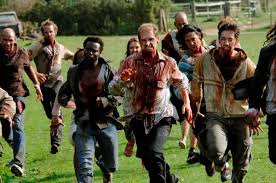
28 weeks laterA more realistic look at zombies are the creatures seen in films like I Am Legend and 28 Days Later. Deadly viruses are to blame for people being transformed into deadly killers, yet they never actually die, but instead mutate. And they can be killed through normal means. That would explain why the infected are able to run after their victims, unlike the lumbering undead in Night Of The Living Dead. In fact, in 28 Weeks Later (the sequel to 28 Days Later) humanity just waited for the infected humans in Great Britain to starve to death before attempting to resettle the decimated country.

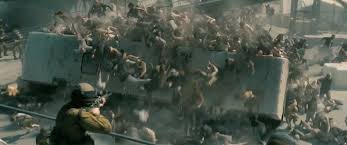
But one thing that doesn’t ring true in those films is how fast the virus mutates a person. Anyone who was infected in 28 Days Later would transform in seconds. This was also seen to varying degree with the walkers in The Walking Dead, the film version of World War Z and other zombie stories. Viruses can’t work that fast. It takes time for the invading viruses to replicate, travel throughout the body and infect the brain. Depending on where a victim was bitten, that person would have a few hours before transforming into a monster.

bicycle-woman[1]Now let’s look at their diets. Why would a zombie eat? To get energy that is needed by the body. This suggests that a zombie would need a working digestive system to break down and process the meat. We go back to the zombie’s body needing circulating blood to help in the process. Yet in these stories, people point out that the zombies aren’t processing the consumed flesh. If that is so, where does the flesh go? If they’re not processed the meat would just collect in the stomach until that organ would burst. We never see any zombies with bloated bellies, do we?

world war z

Of course, the conclusion is that zombies are something that belong strictly in the fantasy/horror realm. George Romero’s films and other works like Dark Horse Comics’ Zombie World speculate or flat out state that the dead are reanimating due to supernatural means. In other words,  magic spells, curses, demonic possessions, pick your poison. Based on how our reality works, zombies can’t exist except in the fervent imaginations of creators and fans. So anyone watching the latest episode of The Walking Dead or playing Resident Evil can relax…for now.

Lewis T. Grove

Golden Age Comic Book Exhibit

SAMSUNGNew to the Young At Art Museum is an exhibit devoted to Golden Age comic books. Called Zap! Pow! Bam! The Superhero: The Golden Age of Comic Books, 1938-1950, this is a traveling exhibit from the William Bremen Museum in Atlanta. It’s located in The Knight Gallery and greeting visitors at the exhibit’s entrance is an arresting statue of Superman bursting through a wall.

As its title suggests, the exhibit features many super rare comic books from the late ’30s through the early ’50s. Several of the titles star early DC and Timely (the company that eventually became Marvel) stalwarts like Superman, Batman, Wonder Woman, Captain America and Sub-Mariner. What was surprising about the comic books in the glass displays was how well preserved they were. One can only imagine their value based on their near mint condition. Any self-respecting comic book fan will enjoy examining them at his or her leisure.

SAMSUNG

Accompanying the comic books are large black and white blowups of pages showcasing the artists’ expertise, as well as information about pop-culture in that era and creators like Jack Kirby. There are also opened trade paperbacks mounted on podiums that allow fans to read the stories in them.

SAMSUNGBut this isn’t just a dry exhibit with old comic books in display cases. The exhibit also has memorabilia and superhero-related displays including a hunk of kryptonite encased in a glass case, and an old-style phone booth that must’ve been a convenient place for superheroes to change out of their civies. There is also a mini-theater that plays old Superman and Captain America serials and a drawing studio for tomorrow’s comic book artists.

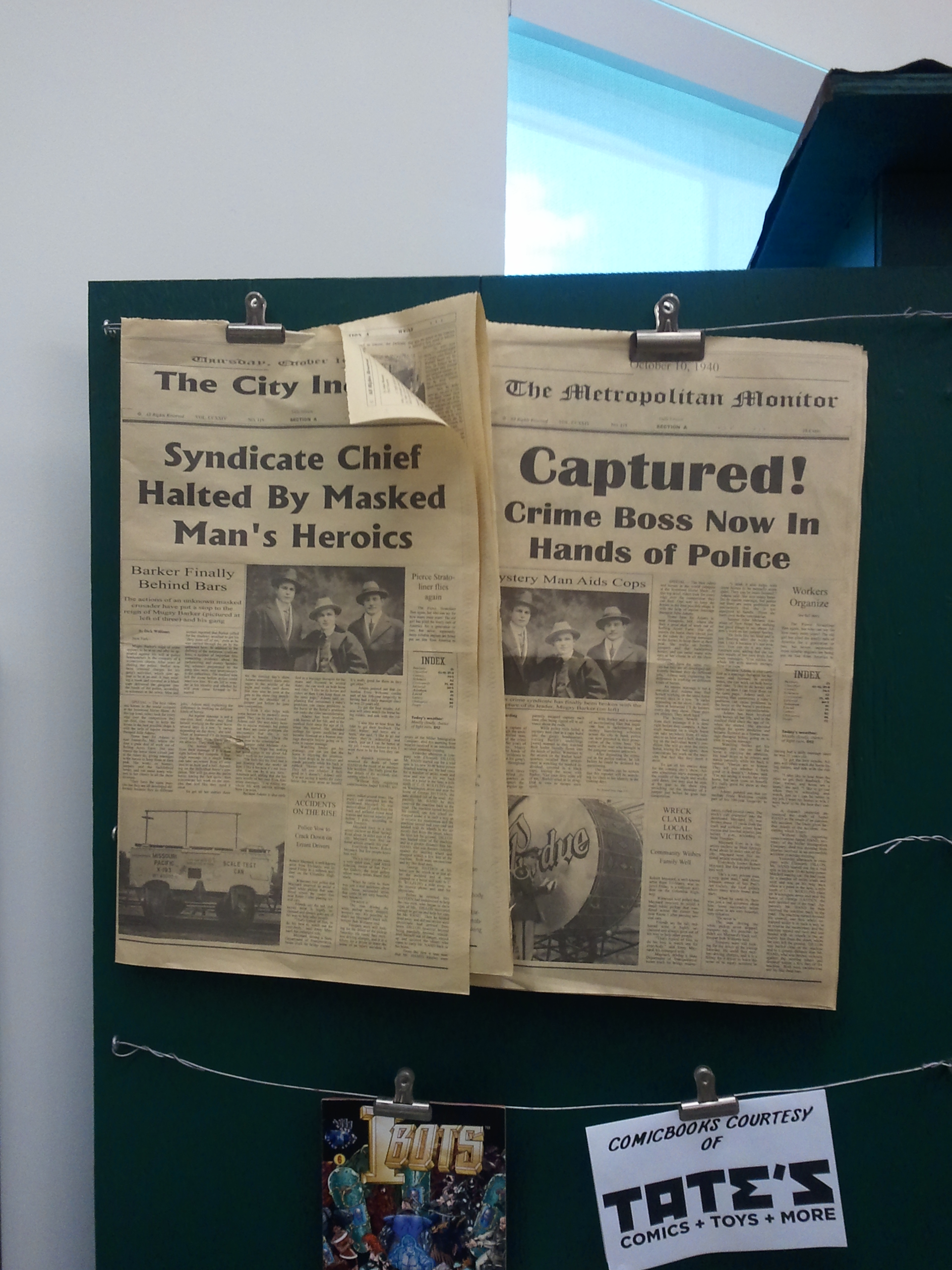
Another interesting feature about the exhibit is the mockup of a newstand that has–what else?–actual comic books. SAMSUNGThese are the modern-day ones given away during Free Comic Book Day. But a nice touch were the mockup newspapers with blaring headlines about superheroes and their feats that added a sense of realism and transported visitors back to that time period. It’s not a large exhibition, but serious fans should enjoy it and can spend up to an hour there just examining the displays and comic books.

The exhibit is running at the Young At Art Museum (a children’s art museum) in Davie, Florida until January 5. There isn’t any word if an exhibit about Silver Age comic books is being planned. Maybe it’s something to be considered by curators.

*Please check out our Facebook page for more photos of this exhibit.

Article and Photos by Waldermann Rivera

We3: A Killer Critters Comic Book Perfect For Film

Films based on comic books are the rage we3 coverin Hollywood these days, and not just those based on superheroes. Many are discovering that the printed medium is a breeding ground for terrific sci-fi, fantasy, horror and crime stories. One such comic book story is We3, which should be made into a film.

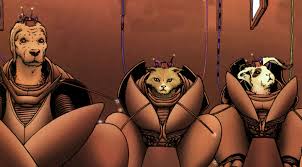
We3 was a comic book mini-series published in 2004 by DC Comics under their Vertigo imprint line. Written by Grant Morrison and drawn by Frank Quitely, the three-issue tale was about a trio of lab animals that were enhanced by the military with bionic implants. The animals were a dog, a cat and a rabbit named Bandit, Tinker and Pirate, respectively. They were fitted with high-tech armor that donned deadly weapons like razor claws and machine guns, and the animals were also had rudimentary speech thanks to skull implants.The animal trio escaped and throughout the series they frantically evaded the military, as they encountered the outside world and other people.

we3 animals

It was both very touching and disturbing since we felt for these abused animals, who didn’t quite understand what happened to them or why. Thanks to Morrison’s script and Quitely’s pencils, it was very easy to build a rapport with the trio and empathize with their plight as they stayed one step ahead of the military. Plus, they were deadly and effective war tools, hence why the military wanted them back at all costs. The story wasn’t just an allegory about the ethics of the military’s use of animals for warfare, but the controversy of animals being subjected to lab experiments. Seriously, look at the way these three animals were outfitted in their robotic armor, the process had to be painful for them. Your heart just goes out these critters whenever they spoke. Their fear and confusion pounded the message home that what was done to them was barbaric.

The mini-series was quite graphic, it clearly wasn’t for children. That could be a reason why film studios may be hesitant to adapt We3. New Line Cinema optioned a live-action film back in 2006 and Morrison even wrote a script for it. Also, Kung Fu Panda director John Stevenson was attached to the project in 2008. Unfortunately, the proposed film has been stuck in development hell and New Line Cinema isn’t involved anymore, so who knows when or if We3 will get made.

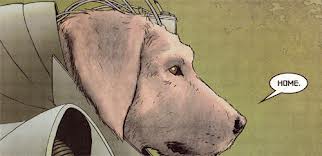
dogIt could be done as an animated film, but serious, adult-oriented animated films are a rarity from Hollywood. The subject matter may be too controversial and violent for a mainstream Hollywood movie. It’s easy to imagine parents protesting the film since they thought it was fine for their children to watch. This could happen despite the fact that in interviews, Morrison stated that the violence in the script was toned down to make the story more palatable. Still, such misperceptions would probably plagued a live-action version of We3. Even though Rise Of The Planet Of The Apes did well in theaters, studios might be hesitant to greenlight a non-family film about talking animals that is violent and sure to raise animal rights issues.

But the bottom line is that films based on comic books are everywhere these days. The studios are always looking for something new to adapt and have made successful adaptations like 30 Days Of Night and Red. In the right hands, We3 would make an unforgettable film if adapted correctly.

José Soto

                                                For Laika