The Aftermath Of Captain America: The Winter Soldier

?????????????????????????????????????????????????????????????????????????????????????????????????????????????????????????????????????????????????????????????????????????????????????

First off, if anyone reading this hasn’t seen Captain America: The Winter Soldier or the most recent episodes of Agents Of S.H.I.E.L.D. then stop reading this because MAJOR SPOILERS will be discussed. Last warning, if anyone doesn’t want to be spoiled then go and watch that excellent movie or watch the TV show online somewhere and come back here when done.

Enemies Within

The events in Captain America: The Winter Soldier, without exaggeration, completely changed the Marvel Cinematic Universe. What happened in that movie probably has more far-reaching consequences than the alien Chitauri attack on New York City seen in The Avengers.

S.H.I.E.L.D., the elite spy agency of the Marvel Universe, no longer exists by the film’s end thanks to Captain America/Steve Rogers (Chris Evans) and his partners. It turned out that the ultra spy organization was infiltrated long ago by Hydra, the Nazi off-shoot organization led by the Red Skull (Hugo Weaving) in Captain America: The First Avenger. That revelation halfway into the film was a big WTF moment in Captain America: The Winter Soldier, especially with the disclosure that Hydra was responsible for orchestrating many chaotic and destructive events in our history since the end of World War II. This was something that is disturbing to learn given our violent history and is the stuff conspiracy fans thrive on. But in hindsight, Hydra’s malevolent influence was there in the open for everyone to see.

fury and starkThink about it, ever since S.H.I.E.L.D. was introduced in Iron Man, there was something a bit too Big Brotherish about S.H.I.E.L.D. They seemed to know too much, had too much access as seen when Nick Fury (Samuel L. Jackson), the agency’s director, turned up uninvited in Tony Stark’s (Robert Downey, Jr.) place in the post-credit scene in that film. The man was for all intents and purposes a trespasser but everyone was too busy wetting their pants when Fury mentioned the Avengers Initiative. Then they came off as a bit nefarious with the way they coldly confiscated scientific equipment and data from Jane Foster (Natalie Portman) and her group in Thor. Their blasé attitude throughout the movie didn’t alleviate this feeling, it was as if they were untouchable and they were. In the climax of The Avengers, the World Security Council ordered a nuclear strike on New York City to stop the alien Chitauri invasion. Nick Fury refused to carry out the order, but the Council overruled Fury and had S.H.I.E.L.D. pilots carry out the order nonetheless. Being that the head of the Council, Alexander Pierce (Robert Redford), was revealed to be part of Hydra, this decision makes sense since he would be fine with sacrificing the city.

????????????????????????????????????????????????????????????????????????????????????????????????????????????????????????????????????????????????????????????????????????????????????????????????

As with real-life spy agencies, it would be par for the course for S.H.I.E.L.D. to be philosophically gray and murky when it came to getting their hands dirty when carrying out missions. To them the ends do justify the means; that is just the unshakable mindset of spies. Nick Fury at the beginning of Captain America: The Winter Soldier was fine with this concept. He even scolded Rogers and told him to just accept the questionable philosophy of Project: Insight and get with the program. For that initiative, S.H.I.E.L.D. constructed three state-of-the-art helicarriers that would preemptively take out human targets before they could commit any acts of terror or criminal activity. Helping the project was a computer program that analyzed and predicted the behavior and actions of prospective targets. Later in the film, Pierce ordered the helicarriers to eliminate all potential threats, which numbered in the millions and included Bruce Banner, Tony Stark, the Avengers and Stephen Strange. While those name drops are cool Easter eggs for fans they point out the fact that Pierce and Hydra’s extreme plan would’ve eliminated any resistance to their plan to instigate world order.

At one point in the film, Fury wanted to preserve S.H.I.E.L.D., but Captain America was adamant about taking down the entire structure. Unlike Fury, he saw that the organization was corrupted and unsalvageable. Even without Hydra’s influence S.H.I.E.L.D. was too omnipresent and powerful. The agency was a perfect example of power corrupts. Thus, it had to be disbanded. This decision would immediately impact the lives of many S.H.I.E.L.D. agents around the world. Continue reading
Agents Of S.H.I.E.L.D. Is too Cute & Bland

field agents

I really wanted to like Marvel’s Agents Of S.H.I.E.L.D., I really did. But after seeing a few episodes of the new series on ABC I have to admit that the show is a subpar, uninvolving disappointment.

Agents Of S.H.I.E.L.D. has many things going for it, at least on paper. Start with executive producer Joss Whedon, who created the great TV shows Firefly and Buffy, The Vampire Slayer. He directed the pilot episode and the megahit film The Avengers and he is one of the driving forces behind the show. For fans, it’s clearly set in the Marvel Cinematic Universe with its many references and name drops from various Marvel films. Also, the star of the show is fan-favorite Special Agent Phil Coulson (Clark Gregg), who turns up alive and well despite being apparently killed by Loki in The Avengers. That’s about it in terms of what’s good with the program.

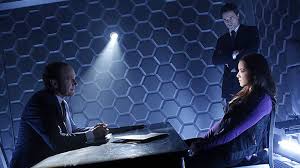
socalled interrogationThe problem with Agents of S.H.I.E.L.D. is that it commits two cardinal sins for genre fans; it’s dull and it’s a procedural-type of show. There are plenty of shows polluting the networks that are just like this one. Here’s the formula: the characters investigate some kind of crime, enter some forgettable guest stars, have everyone speaking in tech-ess that tunes out viewers and add in the Whedon touches. That would be adorably cute and perky female characters and actors speaking in a staged, witty manner. We’ve seen it all before and done better. Plus, in each episode there is an air of whimsy and lightness that doesn’t gibe with the situation in that world. What’s worse is that the light tone undercuts any sense of danger that is so badly needed with the episodes.

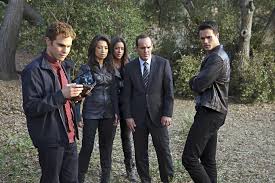
Agents Of S.H.I.E.L.D. takes place shortly after the movie, The Avengers. Society is dealing with the fact that superheroes and aliens exist in the world. S.H.I.E.L.D. (Strategic Homeland Intervention, Enforcement and Logistics Division) is a multinational agency that is a major player in the espionage field. Phil Coulson, coulson and carwho appeared in most of the Marvel Cinematic Universe films, puts together a special task force to confront supernormal threats to world peace and security. On his team are veteran agents Melinda May (Ming-Na Wen), Grant Ward (Brett Dalton), two scientists/engineers–Leo Fitz (Iain De Caestecker) and Emma Simmons (Elizabeth Hentsridge)–and the newest S.H.I.E.L.D. recruit, a hacker called Skye (Chloe Bennet). Continue reading

The Avengers Assemble to Celebrate Fifty Years Of Teaming Up


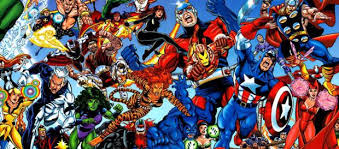
perez avengers

“And there came a day, a day unlike any other, when Earth’s mightiest heroes and heroines found themselves united against a common threat. On that day, the Avengers were bornto fight the foes no single super hero could withstand! Through the years, their roster has prospered, changing many times, their glory has never been denied! Heed the call, thenfor now, the Avengers Assemble!”– Monthly prologue inserted in every issue of The Avengers

Most fans know the story behind Marvel Comics’ famous group of superheroes, the Avengers. In the early ’60s Marvel’s rival DC Comics had a huge hit with their own superhero team the Justice League of America (JLA). In a desire to compete with JLA’s strong sales, Marvel publisher Martin Goodman directed editor Stan Lee to put out their own brand of superhero comics like The Fantastic Four, The Amazing Spider-Man, The Incredible Hulk and The X-Men. Thus, the creation of what general readers know as The Marvel Comic Book Universe was in progress. The popular storylines readers love about Marvel hadn’t been written yet, but the Marvel characters were just created and began their journey of adventures while inhabiting a shared Marvel universe. As successful as these comic books were, the company didn’t have an equivalent to the JLA. In other words, a comic book that featured their most popular heroes teaming up against a huge threat.

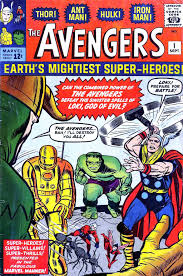
avengers issue 1To remedy this, Stan worked with his long-time collaborator, co-plotter and penciller Jack Kirby to create the Avengers. When Marvel published the first issue of The Avengers Marvel found its equivalent to JLA. Right before the Avengers were created, Marvel had popular heroes like the Hulk, Thor and Iron Man and so it was feasible to do a team-up book since these core members would make a good fit as a team. The comic book was a huge hit with readers because of a formula it followed. The main characters, like the Fantastic Four, didn’t see eye-to-eye with each other. In fact, they fought each other, starting with the very first issue when the Hulk was attacked by the other founding members (it was all part of a ruse engineered by Thor’s wicked step brother Loki). But in the end, the heroes would put aside their differences to battle a force that each of them couldn’t handle alone. What’s more is that these heroes had character flaws, as all heroes from the original Silver Age roster of the Marvel Universe. This contrasted dramatically from the members of the JLA- who were viewed by readers as perfect personalities with no character flaws. Plus, it didn’t hurt that fans loved the famous battle cry “Avengers Assemble!” made by the team.

Enter Captain America

Still, as successful as the book was, Lee and Goodman knew something was missing. There wasn’t anyone who had the ability of keeping the team together; there was no strong leader. They needed someone who had a long-established history to be part of the team. Enter Captain America; co-created in the 1940’s by writer Joe Simon and artist Jack Kirby. Cap’s greatest run at that point, was in the 40’s, when he was popular as a patriotic superhero. But after WWII, sales dwindled for his comic books and he only appeared in comic books occasionally during the 1950s. His return to the Marvel Universe in issue 4 of The Avengers is not just a pivotal moment in Avengers history but in comic book history as well. This was because he is a pop icon who symbolized what was best about America and his heroics dated back to World War II.

His induction into the team changed the tone of The Avengers, too. The stories had more depth and introduced a fish-out-of-water element. What also became apparent is that Captain America was a natural leader and he helped usher in the next important change to the title.

Changing Lineup

Somewhat of a hallmark today for The Avengers is the title’s ever-changing lineup. Lee realized that it was difficult to have so many popular characters in The Avengers while they had their own adventures in their own titles. It was hard to keep up with the continuity and in the end might dilute their popularity. So it was decided to remove the popular characters except for Captain America. The question was who would replace the superstars? In The Avengers #16, photo3Captain America needed to bring in new recruits after the core members left the team. They ended up being Quicksilver, Scarlet Witch and Hawkeye. These choices were out of the ordinary because at that time, they were more known for being villains. Adding to that dilemma was that Hawkeye’s abrasive attitude served as a perfect foil to true-blue, all-American Captain America. Previously, he would give out orders and no one would question him, but now Hawkeye would do so, which added conflict. This element was a big hit with readers and made the book even more successful and reinforced the winning formula: likeable heroes who bicker, but in the end use teamwork to defeat a common foe. Continue reading

Man of Steel Forced To Share The Spotlight With The Dark Knight

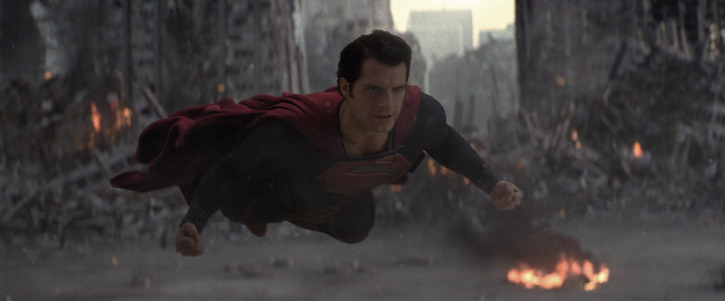
supermashup

With the recent announcement of the Man Of Steel sequel and the revelation that it will be a matchup between Batman and Superman, there was disappointment expressed by some fans. They complained that Superman will not be getting his own sequel movie and instead will have to share precious screen time with the Dark Knight.

affleck batmanThere is some validity to these concerns since now, for many, this movie will be seen as the next Batman movie instead of the second Man Of Steel film. Also, the speculation about who will be playing Batman (now known to be Ben Affleck), as well as how Batman will be portrayed will take away much of the needed attention from Superman when it should be instead focused on building Superman’s new universe. It has been a while since Superman has been relevant and Man Of Steel was successful in reestablishing him as a viable action hero. Superman is entitled to his own solo movies and not have to share the spotlight with a character that could upstage him. Now, the momentum has been halted and Superman will have to wait until after this new movie or even after the Justice League movie is eventually released to get another solo movie.

But that won’t be until 2017. By then, the movie-going public could be tired of comic book movies and be ready for something else. At the same time, I can sort of understand why Warner Bros. is doing this: The Avengers.

The movie studio saw The Avengers’ box office returns and how well received it was with the public. worlds finestThey want their own super hero movie mashup and don’t want to wait for another Man Of Steel movie followed by a standalone Batman movie to introduce their other main character. Marvel had time to do this with the Iron Man, Hulk, Thor and Captain America movies coming out one year at a time. DC doesn’t really have time to do this with The Avengers: Age Of Ultron coming in 2015. They need something to compete with it, and a movie with Superman alone might not be enough. So we get Superman vs. Batman, which has generated a lot of buzz and excitement.

MAN OF STEEL

Hopefully it will help to create a new and exciting DC movie universe that will allow Superman to eventually have his own proper sequel. More importantly that sequel should continue Superman’s interesting character development that Man Of Steel has started.

C.S. Link

The Quicksilver Conundrum

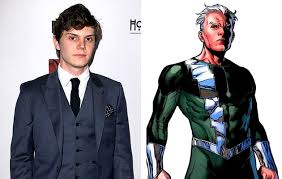
quicksilver and petersThere has been a bit of a combination of both a cold and civil war when it comes to movies based on Marvel Comics characters. But lately things are heating up between movie studios and that’s best seen with the character of Quicksilver, the mutant superhero with superfast powers who is slated to appear in two competing movies: X-Men: Days Of Futures Past and The Avengers 2.

Here’s the background: before Marvel was acquired by The Walt Disney Company, Marvel sold the rights to many of its popular characters to different movie studios like 20th Century Fox and Sony Pictures, who co-produced them with Marvel Studios. That was the main reason characters didn’t crossover into other films. For example, in the Spider-Man films, you wouldn’t see a shot of Thor flying by the Daily Bugle’s windows.

Over time, Marvel Studios began regaining the rights to several characters, most notably the Hulk and Daredevil. These efforts kicked up into high gear after Disney acquired Marvel. The few remaining characters Marvel Studios doesn’t have the film rights to are Spider-Man, the Fantastic Four and the X-Men.

singer x

The studios holding the rights to those characters know a cash cow when they see it and are fighting to retain the rights to the characters. Just recently Sony Pictures adamantly swore that they will never give up the rights to produce Spider-Man films, while Fox toyed with the idea last year to give back the rights to the Silver Surfer and Galactus–two Fantastic Four mainstays, in order to keep the rights to Daredevil.

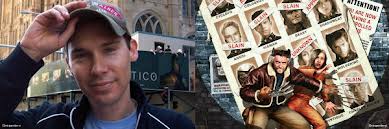
Trying to get the X-Men characters will be a big problem, which is why Marvel seemed content to let Fox continue making X-Men films. That was until director Bryan Singer’s announcement last week. As the director of the upcoming X-Men: Days Of Futures Past, Bryan Singer stated that he had cast Evan Peters to play Quicksilver for the movie. Fans were excited with this idea, mainly because Joss Whedon announced weeks earlier that the same character will be in the sequel to his blockbuster hit The Avengers.

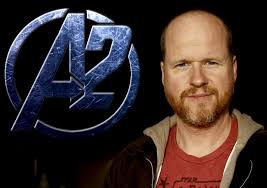
whedonAt first, it seemed as if this was to be some kind of crossover between the two film franchises but no so fast. Both studios are denying this is an attempted crossover. In fact, while Peters will play Quicksilver in X-Men: Days Of Futures Past, Joss Whedon, after confirming last week that Quicksilver will appear in The Avengers 2, said that he is still casting the role. If any of the two announcements were meant for the other side to blink, well it didn’t work. So the feeling for now is that both studios will just have to share Quicksilver.

The reason for the ability of both studios to use Quicksilver is that while Fox owns the X-Men film rights, Marvel does have the right to use Quicksilver and his sister, the Scarlet Witch, in their films just as long as there isn’t any mention that they are X-Men foe Magneto’s children. Meanwhile, in the X-Men films it cannot be stated that the mutant siblings are members of the Avengers (as is the case in the comic books).

This is a real treat for fans who clamor at the idea of a shared universe of all the Marvel characters. They can enjoy two different incarnations of the same character and imagine that both films take place in different time periods. For now, a completely shared cinematic universe is impossible but this casting conundrum brings that dream one step closer to reality.

Lewis T. Grove