Top Ten Star Wars Live-Action Animals

Star Wars is famous and groundbreaking for many reasons including the depiction of unusual and captivating alien animals. The most recent and memorable examples were the magnificent purrgils that appeared in Ahsoka. Whether they’re reliable beasts-of-burdens or savage wildlife, here are the ten best Star Wars animals to appear on live-action films and TV shows. If there are any other Star Wars animals that deserve to be on the list be sure to comment below.

10. Mudhorn (The Mandalorian):

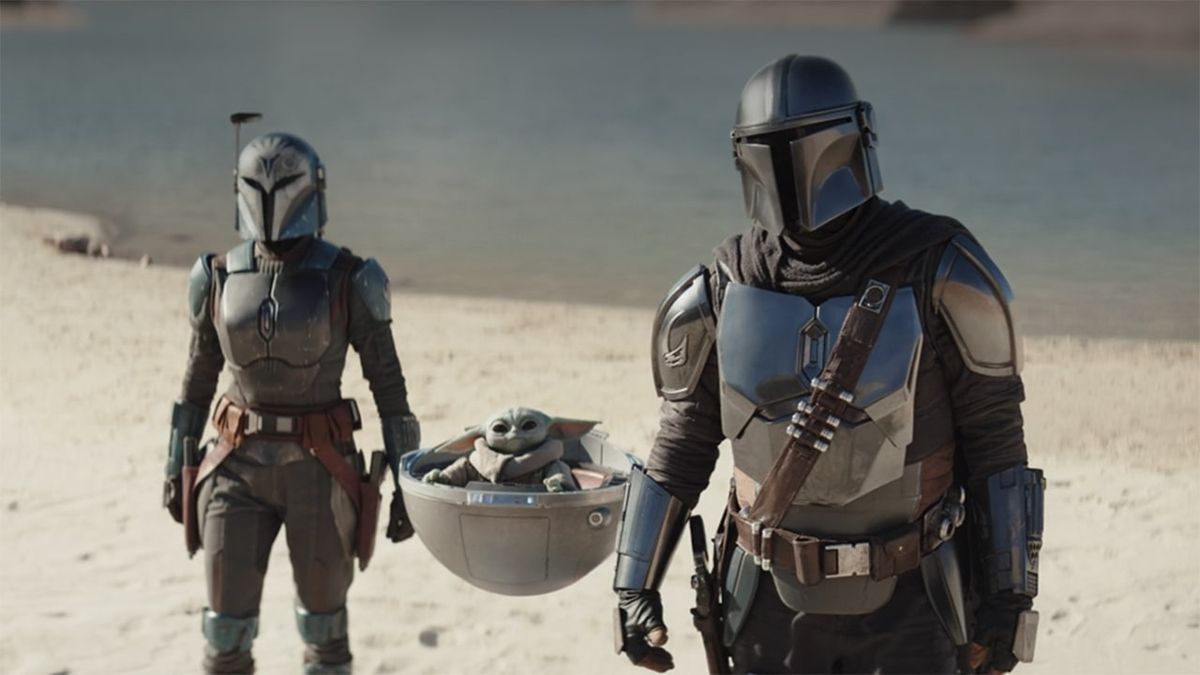
Resembling a giant wooly rhino, the mudhorn earned a lot of sympathy from fans despite its ferocious demeanor. Even though the fierce animal inspired the sigil of Din Djarinn, it was only protecting its egg, which made its death at the hands of Djarinn and Grogu much more disturbing.

9. Rancor (Star Wars Episode VI: Return of the Jedi):
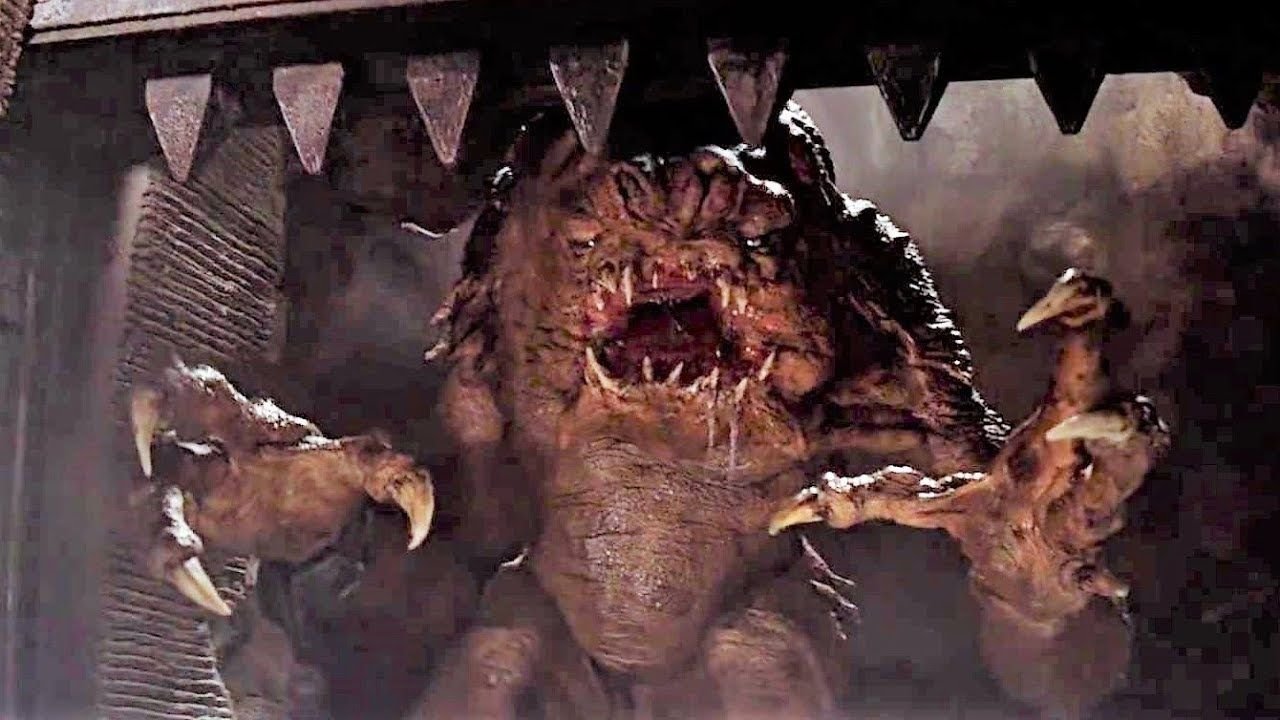
Caged and forced to eat its victims, the gigantic rancor was a fearsome beast that tried to make a meal out of Luke Skywalker. The rancor also had a scene-stealing appearance in The Book of Boba Fett as Boba rode the animal and used it to stop his enemies.

8. Kowakian Monkey-Lizard (Star Wars Episode VI: Return of the Jedi):

Jabba the Hutt’s cackling pet creature was a hilarious standout during the first act of Return of the Jedi by the way it parroted the sadistic laughter of the sinister gangster. Salacious Crumb, the name of the animal, also displayed a malicious side thanks to its vile owner.

7. Exogorth (Star Wars Episode V: The Empire Strikes Back):

Talk about being in the belly of the whale! This behemoth produced many gasps after it was revealed that Han Solo actually landed his ship inside of the spaceborne slug instead of a cave in an asteroid. Han’s escape from the exogorth’s closing jaws was one of the film’s most thrilling moments.

6. Loth-Cat (Ahsoka):
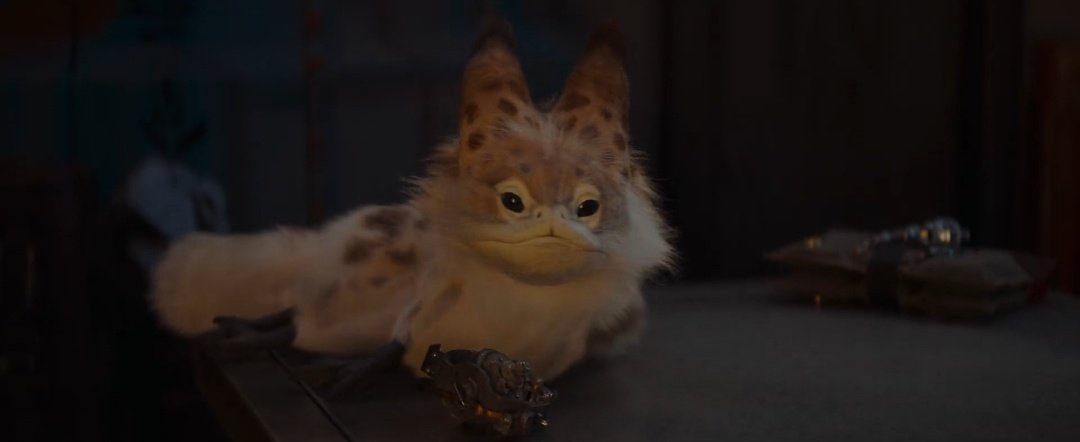
When the loth-cat made its live-action debut in Ahsoka, its appearance captured viewers’ eye with the accuracy of its appearance and charm from Star Wars: Rebels. Can’t wait to see how the loth-wolf is eventually depicted.

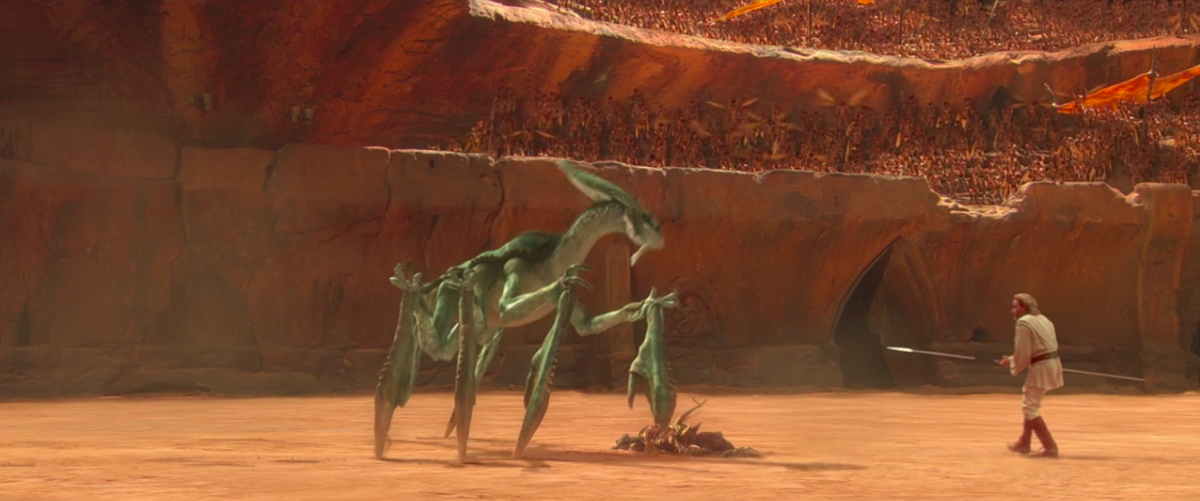
5. Reek and Acklay (Star Wars Episode II: Attack of the Clones):
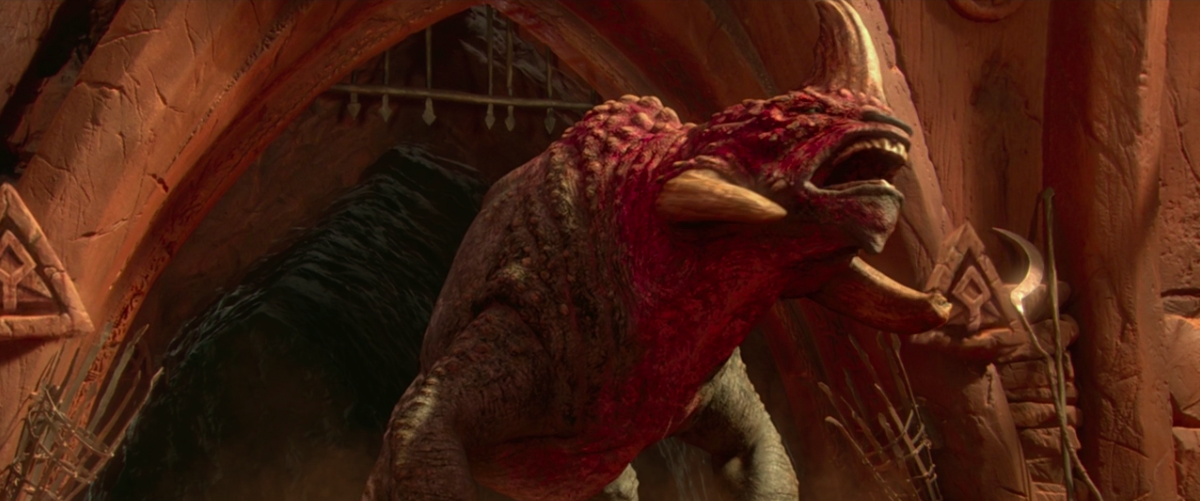
These two giant animals that were dispatched in the Geonosian arena to kill Anakin Skywalker, Obi-Wan Kenobi and Senator Padmé Amidalla were two unique and deadly creatures that harkened back to the giant animals featured in a Ray Harryhausen epic.

4. Purrgil (Ahsoka):
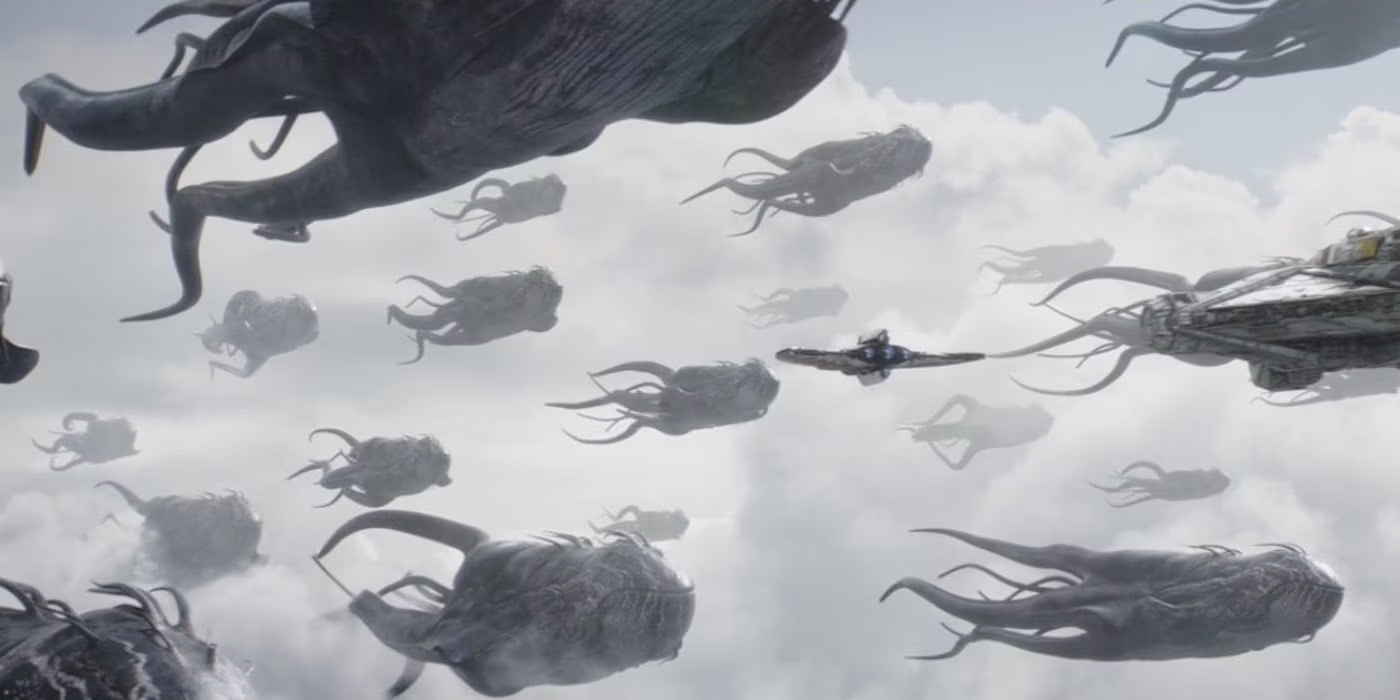
The gentle space-faring whale and squid-like creatures were a truly impressive sight when they made their live-action appearance in Ahsoka. Even more impressive and inspiring was when the peaceful giants demonstrated their ability to travel into hyperspace.

3. Bantha (Star Wars Episode IV: A New Hope):
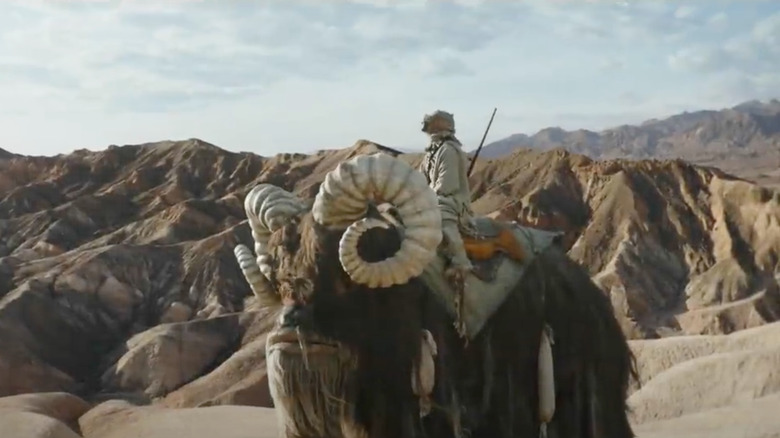
As one of the first animals featured in the Star Wars franchise these mammoth-like creatures with huge ram horns helped give the planet Tatooine a naturalistic and live-in look. Their further appearances in other films and TV shows cemented their status as the planet’s unofficial mascot.

2. Varactyl (Boga) (Star Wars Episode III: Revenge of the Sith):
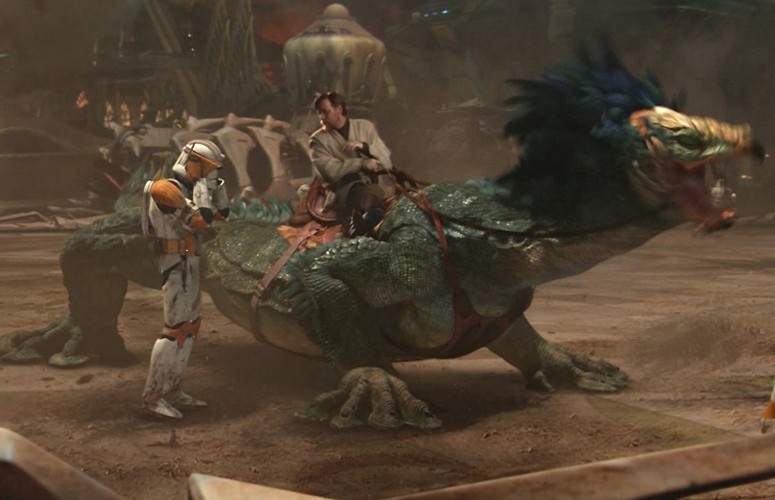
There have been many notable beastly mounts in the Star Wars films but Boga, the long iguana-like varactyl ridden by Obi-Wan, rode stood out with its loyal and spirited nature. Even though it and its rider were fired upon, Boga faithfully obeyed Obi-Wan and kept him from harm while emitting truly unique animal sounds.

1. Tauntaun (Star Wars Episode V: The Empire Strikes Back):

This two-legged beast-of-burden was so eye-catching it was even featured prominently in posters for the film. Looking like a hairy theropod with ram horns, the tauntaun was a hardy mount ridden by Luke Skywalker and Han Solo. The way it was brought to life (at the time of the film’s release) through go-motion and puppetry made the animal realistic thanks to small touches like strange animal sounds and a frosty breath.

Noteworthy Mentions:
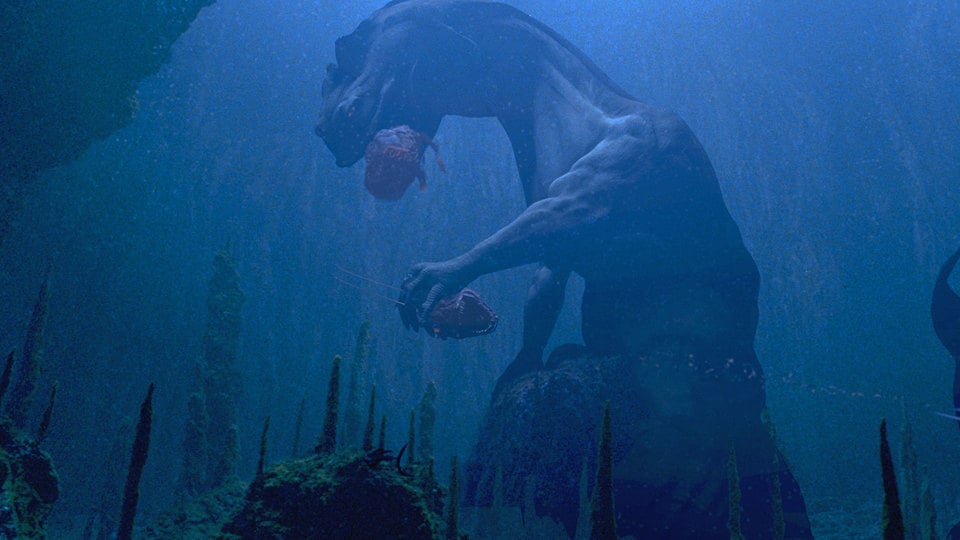
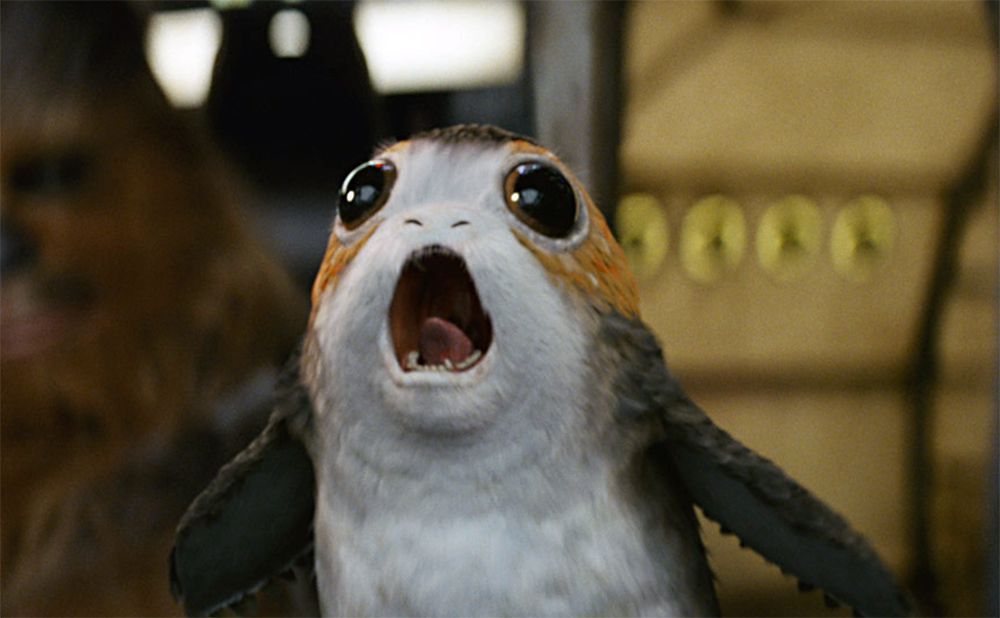
Blurrg, Colo Claw Fish, Dewback, Corellian Hound, Dianoga, Eopie, Fathier, Frog-Dog, Kaadu, Krayt Dragon, Luggabeast, Mynock, Opee Sea Killer, Orbak, Porg, Rathtar, Ronto (they taste great!), Sando, Sarlacc, Shaak,  Vexis Snake, Vulptex, Wampa
Star Trek’s Many Timelines

By now Star Trek fans acknowledge that the official canon timelines of the Star Trek franchise is daunting. Being that Star Trek is 57 years old there are bound to be continuity problems but what has been more glaring are contradictions with the timeline and the more “modern” look of current-day Star Trek that clashes with older series.

There have been pretzel-twisting explanations in the TV shows and films to explain the contradictions, but they tend to fall apart on closer examination or are just ridiculous. More and more, fans have to accept the fact that either modern Trek is a soft reboot of the franchise or it represents new timelines that branched off the original Trek ages ago.

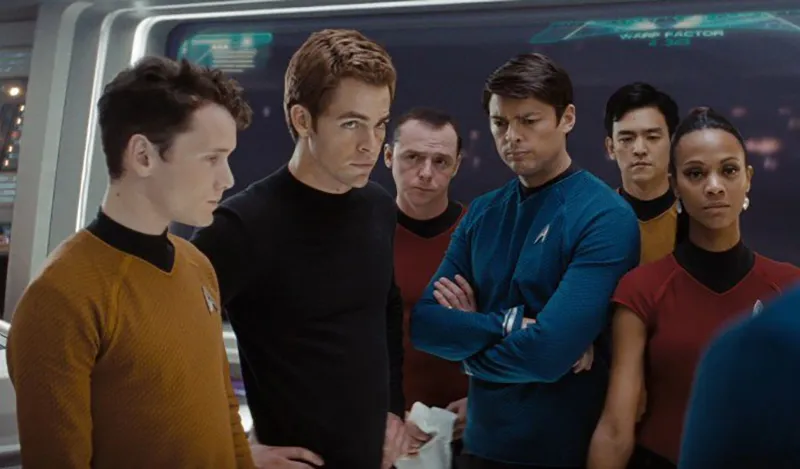
When Star Trek was relaunched in 2009 with the film Star Trek it was a good vehicle to reboot the franchise but the filmmakers did not want to completely alienate many fans. So an explanation was given that the events of Star Trek took place in an alternate reality that was created when the film’s Romulan bad guys time traveled to a time before the original series and changed the timeline.

However, this was not the first time that an alternate timeline was created in Star Trek. Actually this has happened many times in previous Star Trek TV shows starting with the original.

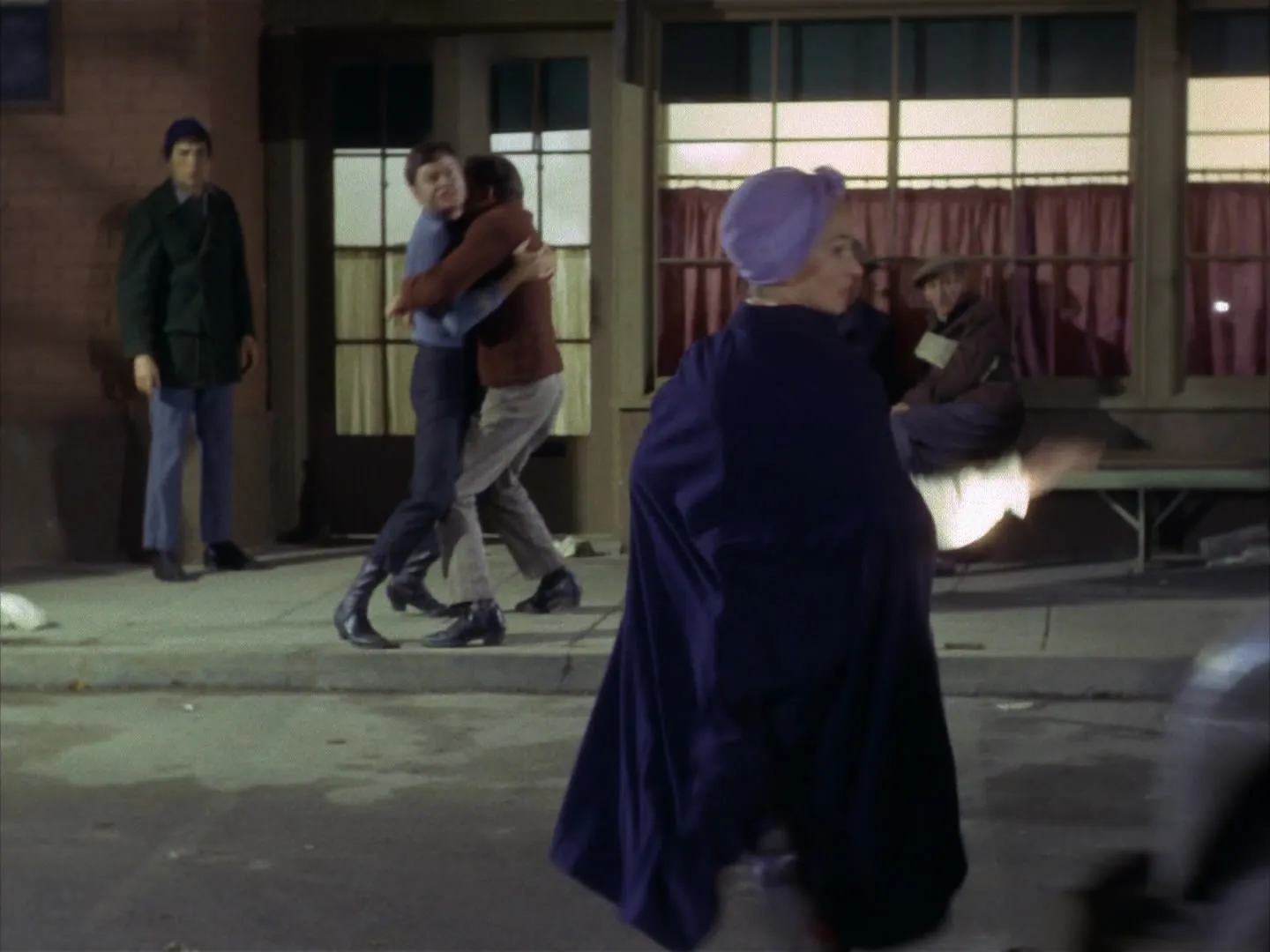
In the classic episode, “City on the Edge of Forever” a new timeline was created when Dr. McCoy went back in time and changed history so that the United States never entered World War II. This created a timeline where presumably the United Federation of Planets or Starfleet did not exist. Supposedly, the original timeline was restored when Kirk and Spock went back in time themselves and prevented McCoy from altering history. Or did they? The timeline McCoy created would still exist simply because he traveled to that pre-World War II period. Remember the scene where the hobo steals McCoy’s phaser and accidently kills himself? That created a new timeline where that man no longer existed. Even if that man never amounted to anything, his erasure would create a small ripple in time and this was never corrected by the end of the episode.

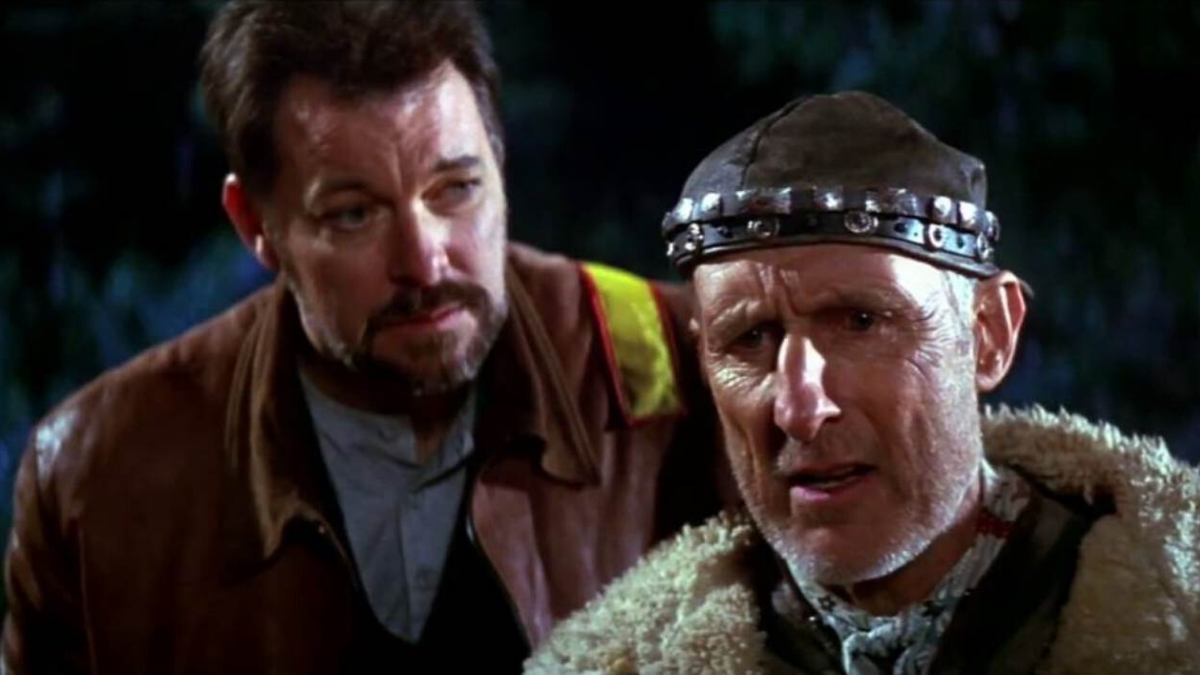
Here are some more examples: In Star Trek: First Contact, the crew of the Enterprise-E journey back to the mid-21st century to prevent the Borg from assimilating Earth. The Borg’s actions wound up killing many people who were involved with humanity’s first faster-than-light voyage. Even Riker and La Forge joined Zefram Cochrane to pilot the Phoenix, the first human-made warp ship. This created a new timeline even though the Enterprise-E crew stopped the Borg and the people the Borg killed remained dead. The crew interacted with people in the past including Cochrane, who was now aware of his destiny and this certainly had an impact on how he acted.

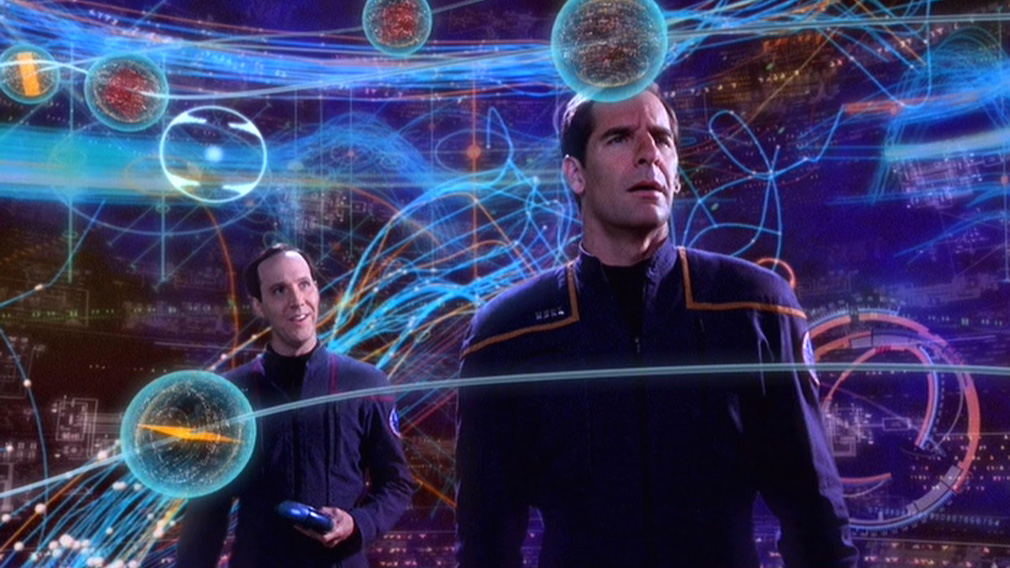
In Star Trek: Enterprise, a major arc involved the aliens called the Xindii who attacked Earth in the 22nd century, but it was revealed that such an attack never took place in the original timeline. More importantly, this attack was never undone when the story arc ended and was now part of the established canon timeline. It was stated that these incidents were part of a so-called Temporal Cold War that took place centuries in the future.

Another instance of the Star Trek timeline being changed was in the Star Trek: Strange New Worlds episode “Tomorrow and Tomorrow and Tomorrow”. In that episode those pesky Romulans are revealed to have changed the original Trek timeline in that they prevented the rise of Khan and the outbreak of World War III from the original time of the 1990s. Now these events are supposed to take place in the middle of the 21st century and evidence of this change was shown in Star Trek: First Contact when it was mentioned that the war took place in the mid-21st century.

There are many other instances of permanently changed timelines throughout Star Trek but in the end it does not matter too much. The real-world reason for these changes are to keep Trek relevant with our times. After all, it would be strange to keep saying that the Eugenics Wars and World War III took place in the 1990s or that the dated look of the original TV show with buttons on consoles is supposed to represent a realistic future for humanity. There have been non-canon efforts such as novels to try to explain this away but the results are nonsensical.

The best advice is to just accept that the Star Trek timelines are very fluicdic. Do not give it too much thought and enjoy the stories.

Disney + Has Damaged Pixar, Star Wars & Marvel

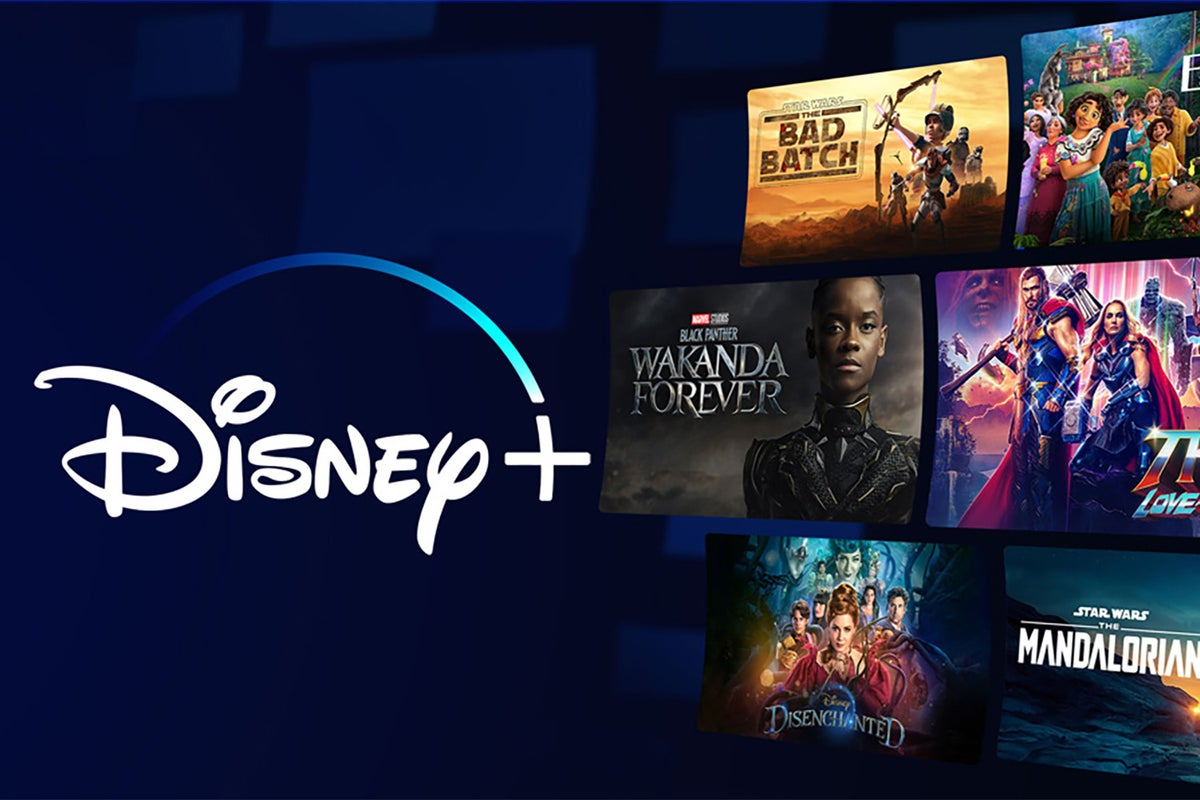
When it was announced that the streaming app Disney + would feature exclusive content for their purchased intellectual properties Star Wars and Marvel, most fans were understandably excited. In the closing years of the 2010s both properties were riding high, especially Marvel with its Marvel Cinematic Universe (MCU). The people running Disney + promised that subscribers would have access to a vast video library of its properties and that the exclusive content would be top-of-the-line when it came to quality. At first, this seemed to be the case. At first.

Shortly after Disney + became available, the COVID-19 pandemic hit, which shut down theaters and the streaming platform became the only medium available to get new content based on Disney IP, Pixar, Star Wars and the MCU. Due to the pandemic many films were delayed and this happened with the Pixar films scheduled for release. At the same time, Disney was desperate to generate streaming traffic for Disney + and to gain subscribers, new product had to be available. The easiest solution was to take the delayed films like Soul and premiere them exclusively on Disney +.

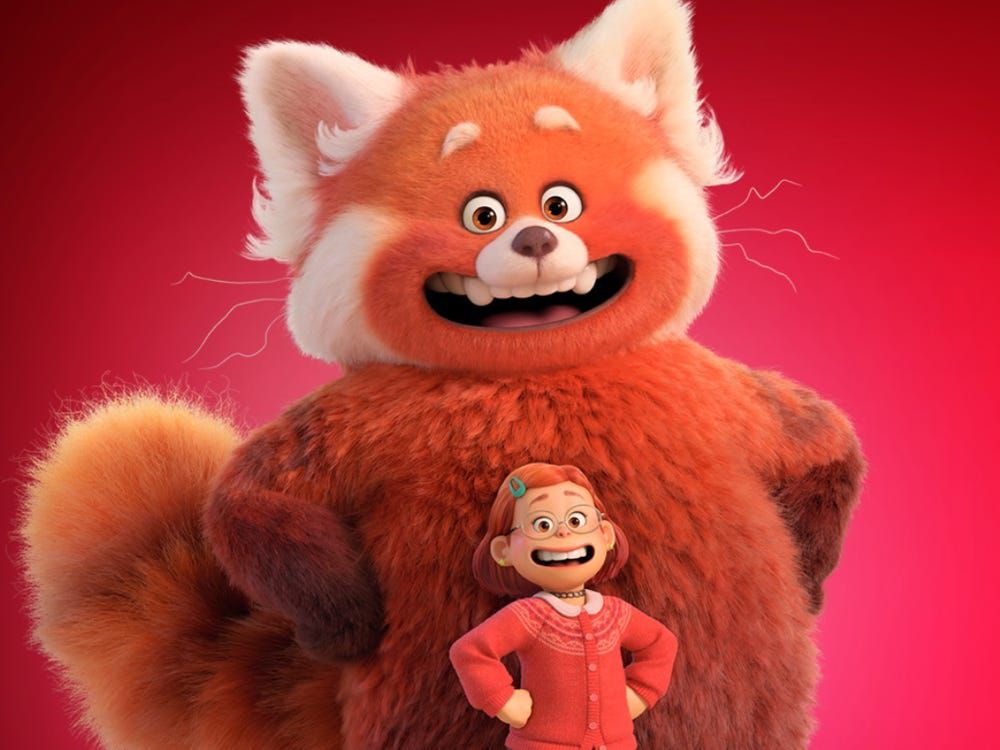
For a short while, this tactic worked, but unlike the other MCU films that were released exclusively in theaters, Disney kept debuting other Pixar films like Luca and Turning Red on the streaming app. This gave the impression that the Pixar films were inferior in quality, because people began thinking that these films were not good enough for theatrical releases. Also, when the Pixar films Lightyear and Elemental actually premiered in theaters, viewers were conditioned to wait for them to come out weeks later on Disney + and save some money. To be fair other streaming apps like HBO Max did this as well, but this tactic was abandoned soon after studios realized they were losing revenue. It took Disney some time to forego premiering some of their films on the app.

The app premiered with The Mandalorian, the hit TV show set in the Star Wars universe about a Clint Eastwoodish, intergalactic bounty hunter and his infant alien ward. The Mandalorian became a huge hit and actually helped keep the Star Wars brand alive. Actually, for a couple of years it was the only Star Wars-related property for fans to watch. Obviously, Disney had to put out more Star Wars content and last year more Star Wars-related TV shows streamed on Disney +, which included The Book of Boba Fett, Obi-Wan Kenobi, Andor, and now Ahoska. While some of the TV shows were well received and even earned Emmy nominations, the Boba Fett show was a huge misfire with its unfocused scripts. Unfortunately, these same problems bled into the third season of The Mandalorian, and Ahsoka is receiving criticisms, as well. It is clear with The Mandalorian, The Book of Boba Fett and Ahsoka that Disney wants to create a more integrated universe with a part of Star Wars history: the period of time after the fall of the Galactic Empire. Reportedly the goal is to have the TV shows lead to a film that ties all the elements together. While it is ambitious and echoes what happened with the MCU, there are problems in that the Star Wars universe is becoming too convoluted. Viewers are forced to watch other shows and even animated programs like Star Wars: Rebels to fully understand what is going on with many of the Star Wars TV shows. With interest in the Star Wars brand waning, this development could not have happened at a worst time.

The problem with the scripts for some of the Star Wars TV shows also plagued the MCU TV shows. What was worse was that the production values for many MCU TV shows was shockingly poor. The MCU, like Star Wars, got off to a promising start on Disney + with TV shows like WandaVision and The Falcon and the Winter Soldier. But the quality of the MCU TV shows soon began to falter and it became more and more obvious that budget limitations were impacting the shows. For example, with the time travel TV show Loki, even though it was well acted and written, it seemed as if there was a lot of talking instead of showing. Instead of time traveling to pivotal events in the MCU, the main characters traveled to mundane time periods.

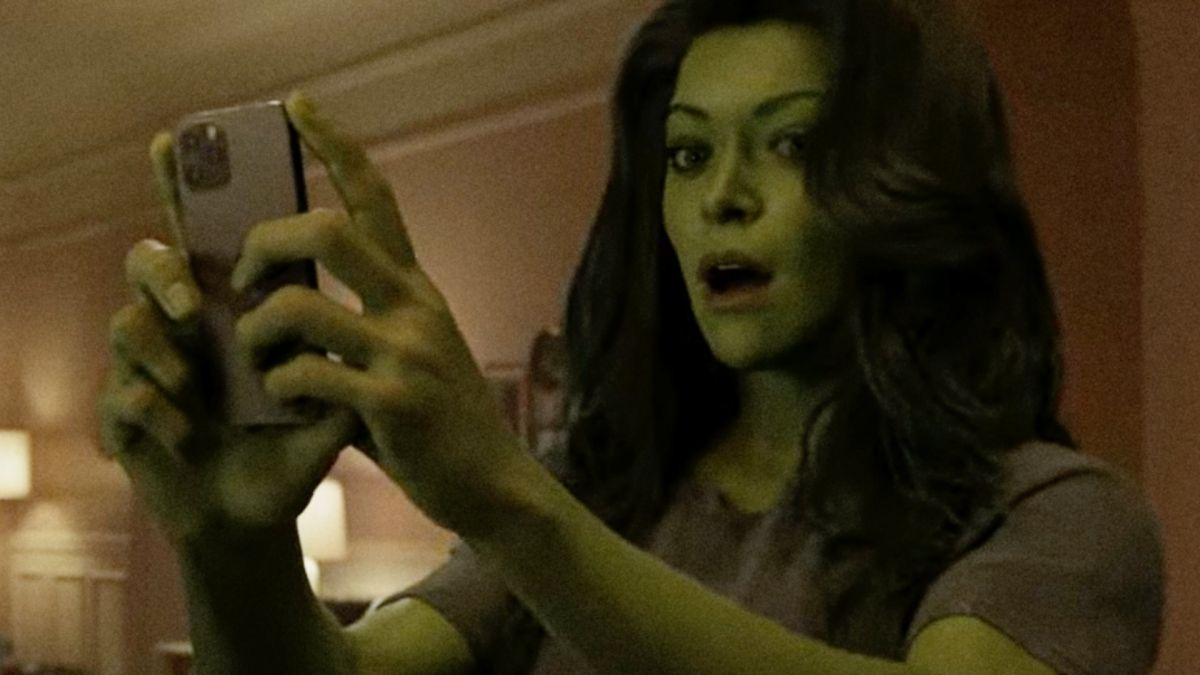
The problem with limited budgets affected some of the effects work on later TV shows. This was best seen with Ms. Marvel, She-Hulk: Attorney at Law and Secret Invasion. With She-Hulk, the limited special effects was fatal for the show because its poor, unfinished special effects left She-Hulk looking like a SIM character. The same budget limitations has severely affected Secret Invasion, which has a lot of talking scenes about world events with limited action scenes. What is even more unbelievable is that the budget for the TV show was about $200 million. Where did that money go? The budget for Secrect Invasion is not the main reason for its poor execution, it is actually due to the scripts which make the show feel small scale. This also went on with many other MCU TV shows that should have had great payoffs. This even happened with WandaVision. For the most part that show was terrific with clever scripts and acting. But the payoff at the final episode felt like a letdown with the scope of the confrontations between characters.

Disney CEO Bob Iger recently said that the market was oversaturated with Star Wars and Marvel TV shows and films, and he is correct. There was a lot of pressure for the Disney + app to have new and original content, which meant that there had to be a lot of content about two of its most popular IPs. Unfortunately, the demand stretched the capability to keep up the quality of the products in order to meet scheduling deadlines. The result was that many fans were disappointed with the finished TV shows as the brands became diluted. To correct this, the brands need to pull back and Disney is doing this as per Iger’s orders. They are giving their properties the time needed to produce quality over quantity. However, there will be more inferior TV shows until the better-produced TV shows come out.

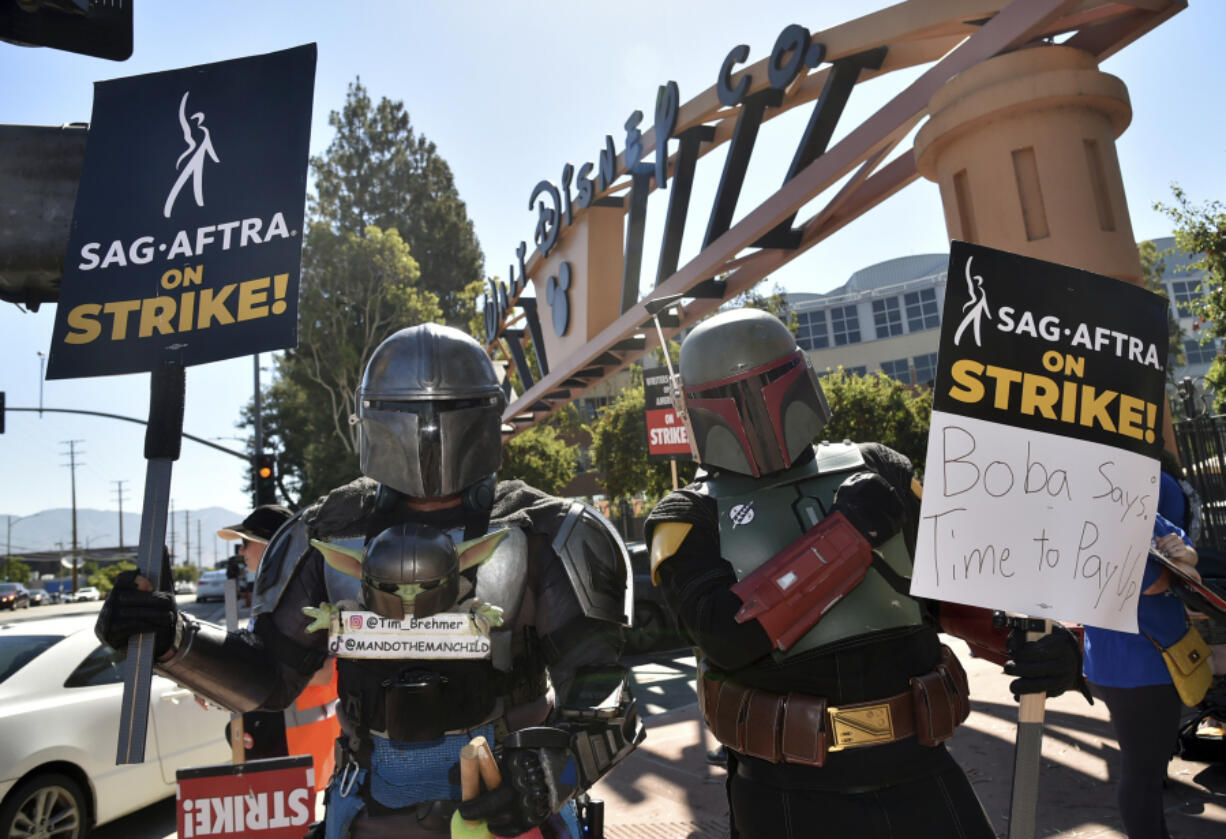
Disney and other studios are facing a new problem with their inability to provide new content thanks to the crippling writer and acting strikes which have shut down productions for film and TV studios. As content dries up and films and TV shows get delayed again or canceled, there will be increased demand. Will the studios make the same mistakes they did earlier this decade and force creators to pump out products before they are ready? Probably, so it is up to the studios to learn from their missteps regarding their streaming platforms.

Meaningless Superhero Deaths

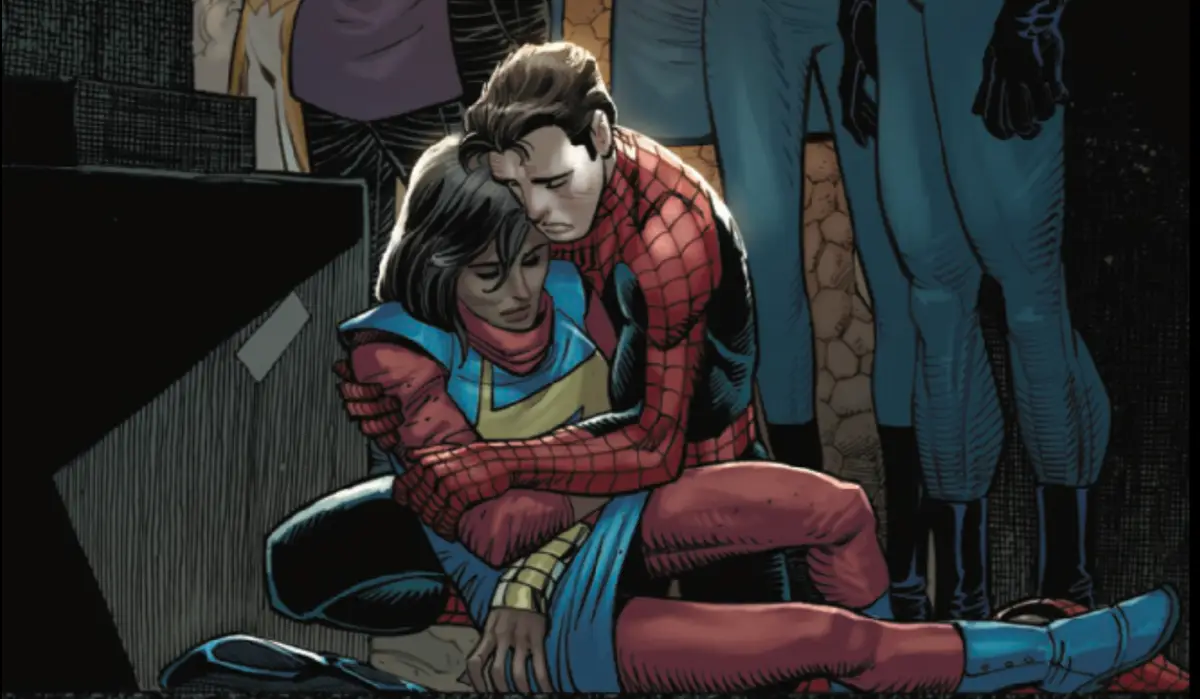
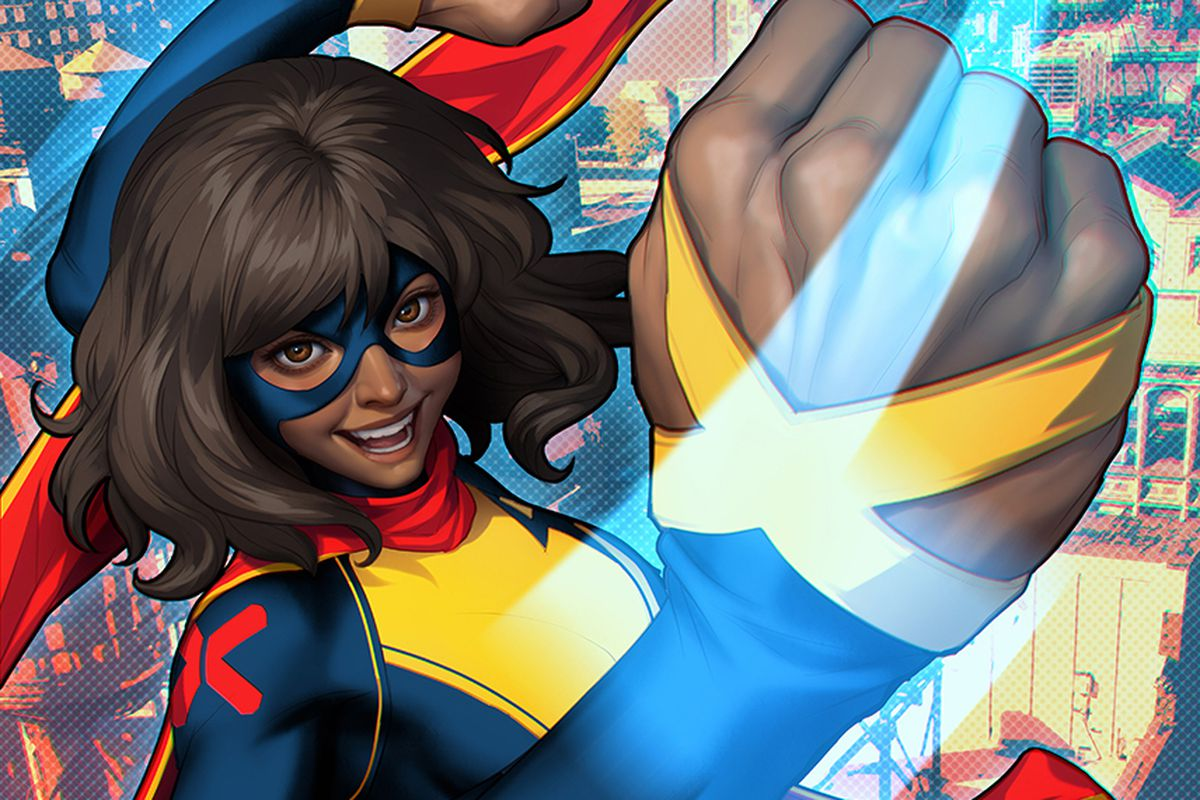
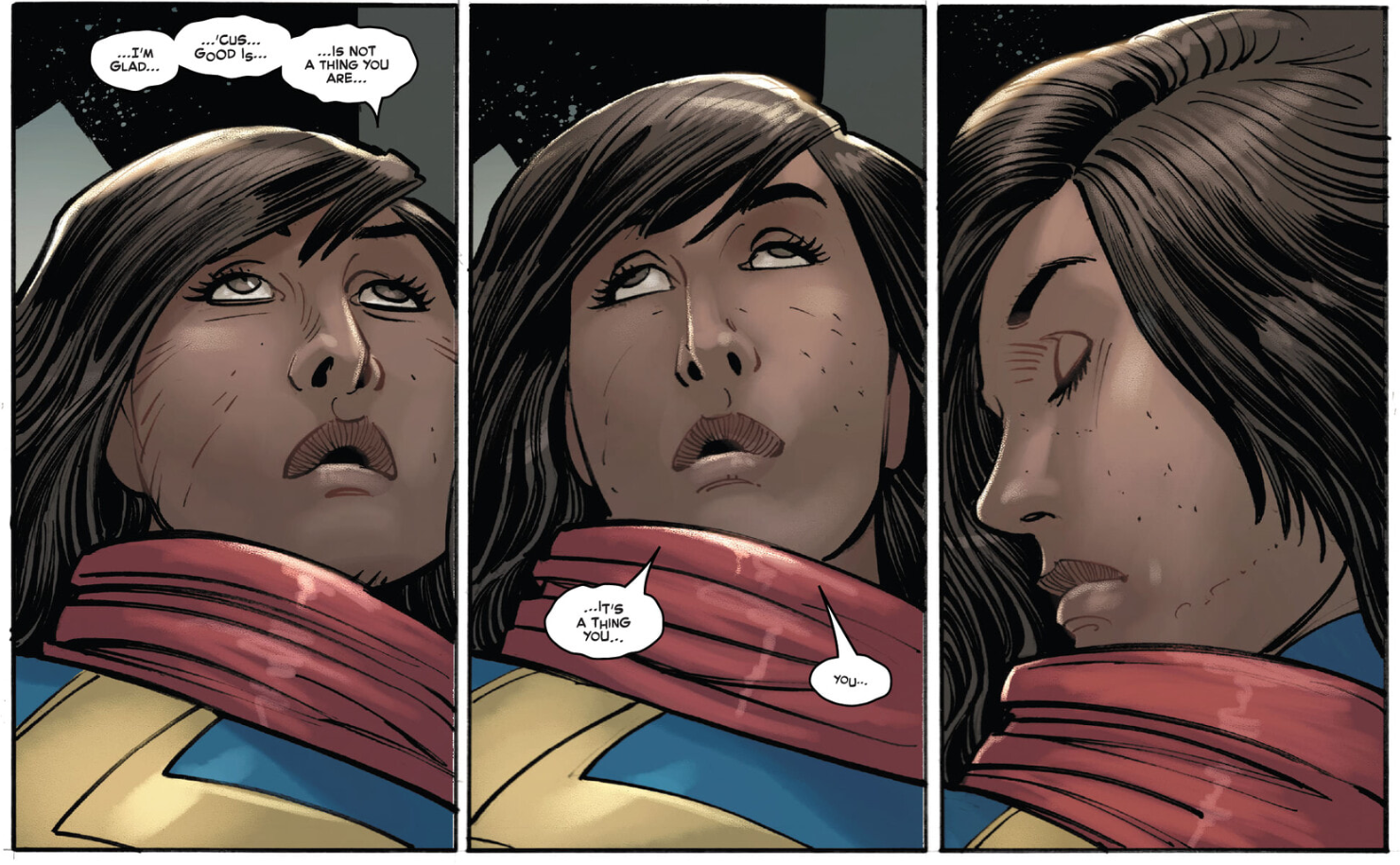
Ms. Marvel is the latest high-profile superhero to have died, which created some controversy with comic book fans. But what was even more troubling was the jaded reaction from many others who knew she would come back to life as was recently announced. This development is just another example of lazy comic book writing trope of killing off then resurrecting a popular character.

When Ms. Marvel was killed off in the closing pages of The Amazing Spider-Man #26, her death made lots of headlines and angered many fans. But many of them were not upset because she was killed. They were upset over the way Marvel Comics threw out all the pomp and circumstances to commemorate the superhero because it was clear she would not stay dead. Sure enough, Marvel Comics announced a few days ago that she will return in a new mini-series called Ms. Marvel: The New Mutant, which will be written by Iman Vellani, who portrays the superhero in the Marvel Cinematic Universe (MCU).

Seriously, is anyone surprised by any of this? Of course, they would not let the poor girl rest in piece. Not when she will co-star in The Marvels later this year. The only reason as to why go through all this death and resurrection is to synch the character with the MCU version. As most comic book readers know, Ms. Marvel is an Inhuman in the comic books, but for whatever reason she was designated as a mutant in the final episode of Ms. Marvel. Given that Inhumans never reached the popularity of mutants in the pages of Marvel Comics, perhaps the powers-that-be gave up on the Inhumans and decided to have it revealed that she is actually a mutant.

Still, why go through all the hand wringing and kill her off in the first place? In the pages of The Amazing Spider-Man, the title character is shown to be in full mourning over Ms. Marvel aka Kamala Khan, but the two were hardly best buddies. Sure, they’ve teamed up a few times it’s not like this happened to the Human Torch. It would have made more sense if she died in the arms of the superhero Ms. Marvel looks up to, Captain Marvel. This was most likely done to generate sales and interest for the comic books, but we’ve been through this too many times, and it was done much better before.

The best example was with the Death of Superman storyline that spanned many comics. That event worked because his death and resurrection felt organic, had a huge impact in the world of DC, and explored all the nuances of Superman dying and coming back to life. Even the death of Captain America years later was better executed as readers had time to process his death and see the Winter Soldier becoming the new Captain America and so on. There is also the death of the Ultimate Comics version of Spider-Man, which turned out to have introduced an even more popular version of the superhero: Miles Morales.

The problem with Ms. Marvel’s death is that these superheroes deaths have been done to death and in Ms. Marvel’s case, it was done too abruptly. Then before anyone could process anything, Marvel goes and announces she is coming back. There were much more imaginative ways to transform Ms. Marvel into a mutant without using the cheap theatrics of temporary deaths. This development still would have generated news, but with less cynical reactions. The fact that Marvel chose the cheap and easy way to go about her transformation just underlines how the so-called House of Ideas has run out of them.

The Indiana Jones Films Ranked

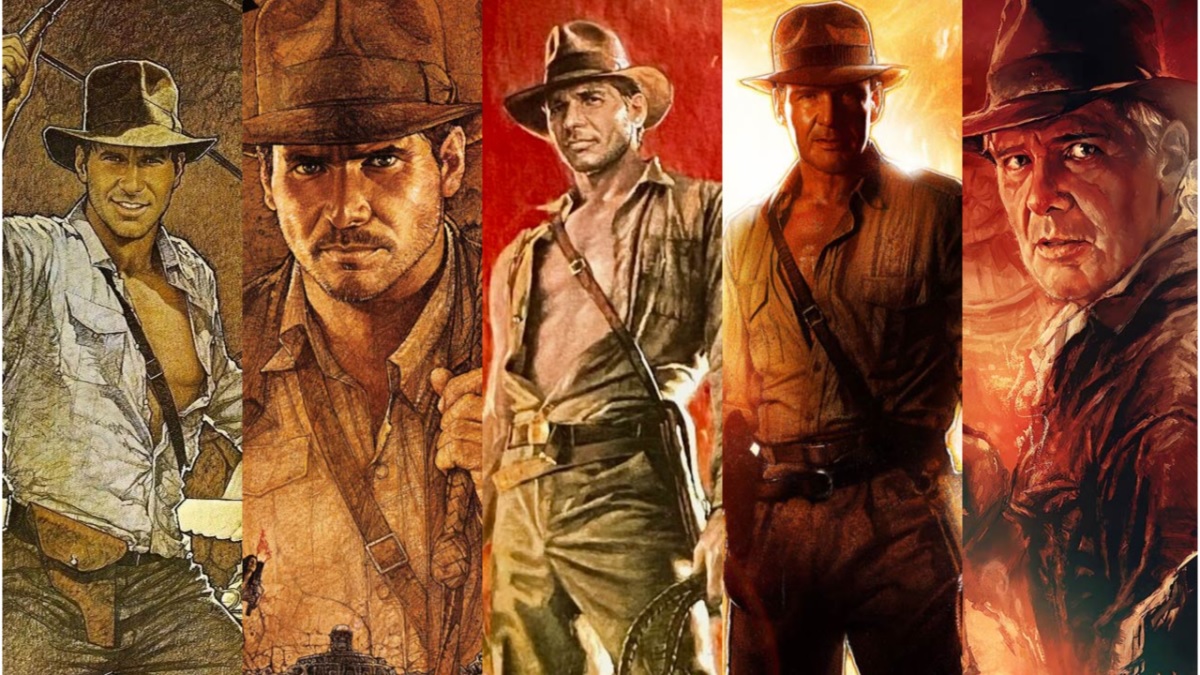
Now that Indiana Jones and the Dial of Destiny has been released, the Indiana Jones film franchise is complete and we can rank all five films.

The quality of these films are generally high, some of which are genuine masterpieces. Even the films that rank at the bottom are entertaining with their own merits, but have their flaws, of course.

Here are the Indiana Jones films ranked from least to best. Be aware of spoilers ahead and feel free to drop a comment about your own preferences!

5. Indiana Jones and the Kingdom of the Crystal Skull

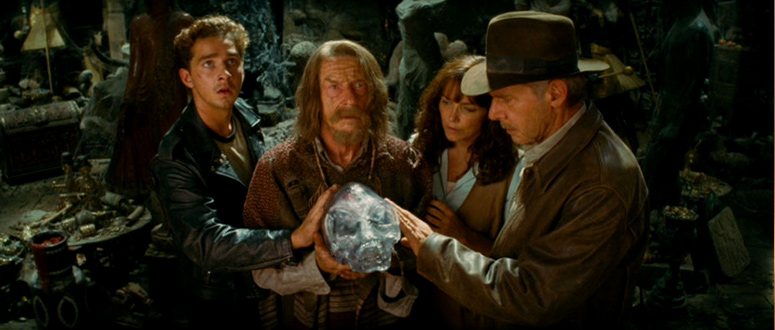
It had been nearly twenty years since Indiana Jones and the Last Crusade came out in theaters when the fourth film premiered. This was the best they could come up with? This was the film that gave us the infamous phrase nuke the fridge because Indy survived a nuclear explosion by hiding in a refrigerator. Our favorite archaeologist deals with the 1950s as he searches for the lost city of Ankakor in South America.  Among the 1950s tropes Indy grapples with include the red scare, bug-eyed aliens, and a greaser who turned out to be his son.

It was great seeing Harrison Ford reprising his role as Indiana Jones and how the adventurer functioned in a different decade. Some of the images from director Steven Spielberg were jaw dropping such as Indiana witnessing an atomic mushroom cloud or a great motorcycle chase on a college campus. But more often than not it felt like many of the filmmakers were phoning it in and taking the easy route. The film is riddled with obvious and needless CG images and stunts, and most of it looked fake. There was little sense of danger in many scenes.

Despite the fact that the script had been worked on forever, it still needed work as the motivations of characters did not make sense. The camaraderie between Indiana and his son was undeveloped and paled when compared to that of Indy and his father in the previous film.

4. Indiana Jones and the Temple of Doom

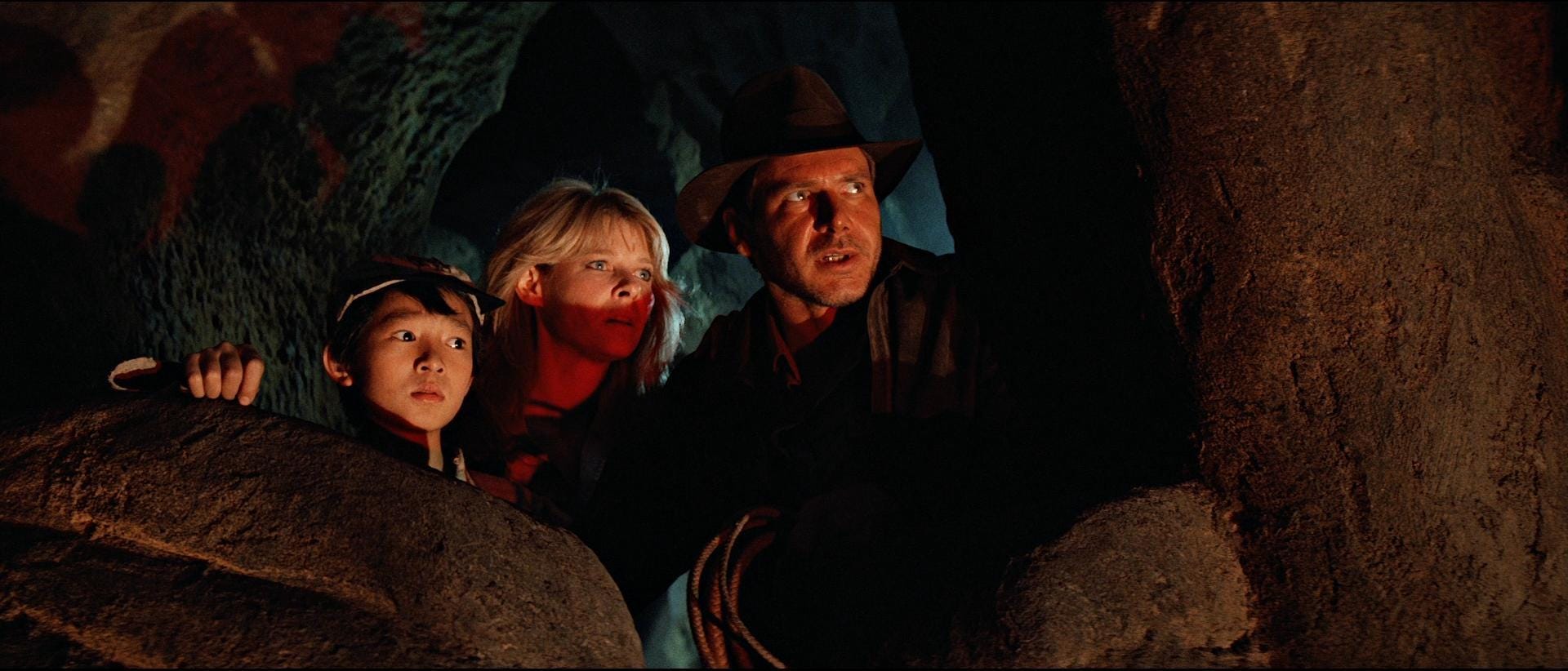
As the franchise’s only prequel the second Indiana Jones film turned out to be the darkest in the franchise due to personal issues regarding divorces that creators Spielberg and George Lucas were going through at the time. The result was that the film feels mean spirited at times and dated with its misogyny and questionable depictions of other cultures.

It lacked the epic scale of Raiders of the Lost Ark and the filmmakers reveled too much in trying to gross out audiences and with trying too hard to be different from the first film. At times, Indiana Jones and the Temple of Doom felt more like a romantic comedy instead of an adventure film. Also, the MacGuffin Indy hunted for was far less impressive when compared to the Holy Grail or the Ark of the Covenant. What exactly do the Sankara Stones do except glow? The characters were annoying and unlikeable especially Willie Scott. She was supposed to be a sharp contrast to the tough-as-nails Marion Ravenwood from the previous film. But by trying to make Willie the opposite of Marion, the filmmakers turned her into a stereotypical screaming damsel in distress who lacked any substance.

Despite its faults, Indiana Jones and the Temple of Doom has some of the franchise’s greatest action scenes that still hold up to today and are iconic. Ford was great as always, as was the production design and score by John Williams.

3. Indiana Jones and the Dial of Destiny

The fifth and final Indiana Jones film has had a mixed reaction from fans. It will take some time to see how it holds up, but for now this is the rank it has earned. There was a lot of trepidation over the film since Spielberg did not direct it and many questioned how an old Ford could believably play a swashbuckling treasure hunter. But the film is an enjoyable send off to the franchise.

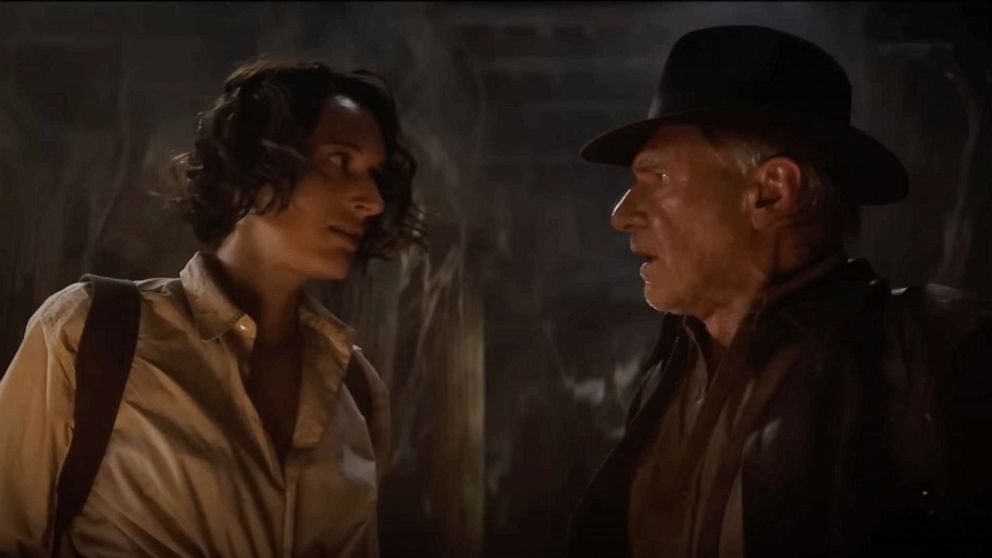
Even though Indiana Jones and the Dial of Destiny lacks a lot of Spielberg’s visual flair, director James Mangold does a fine job with this look at Indiana Jones as a senior citizen in the late 1960s. Embittered over the death of his son which destroyed his marriage and facing retirement, Indiana carries out one final treasure hunt with his goddaughter, which involves time traveling to ancient Syracuse and meeting Archimedes.  Harrison Ford Is Too Old for This Shit – Rolling Stone

There are some issues with the plot mechanics and its credibility (something that the other films suffer from, such as characters using life rafts to jump from an airplane and other feats that would have killed them). But Ford has some good chemistry with Phoebe Waller-Bridge, who plays his goddaughter and the film has some exciting moments, especially during a flashback scene set in World War II and an intense tuk-tuk chase sequence. Anyone hesitant about the film because of Spielberg’s absence should put doubts aside and see Indiana Jones in his last great cinematic adventure.

2. Indiana Jones and the Last Crusade

After the mixed reaction to Indiana Jones and the Temple of Doom, Spielberg and Lucas went back to basics and delivered a rousing adventure that is nearly as great as the first film. It is also the funniest film in the franchise.

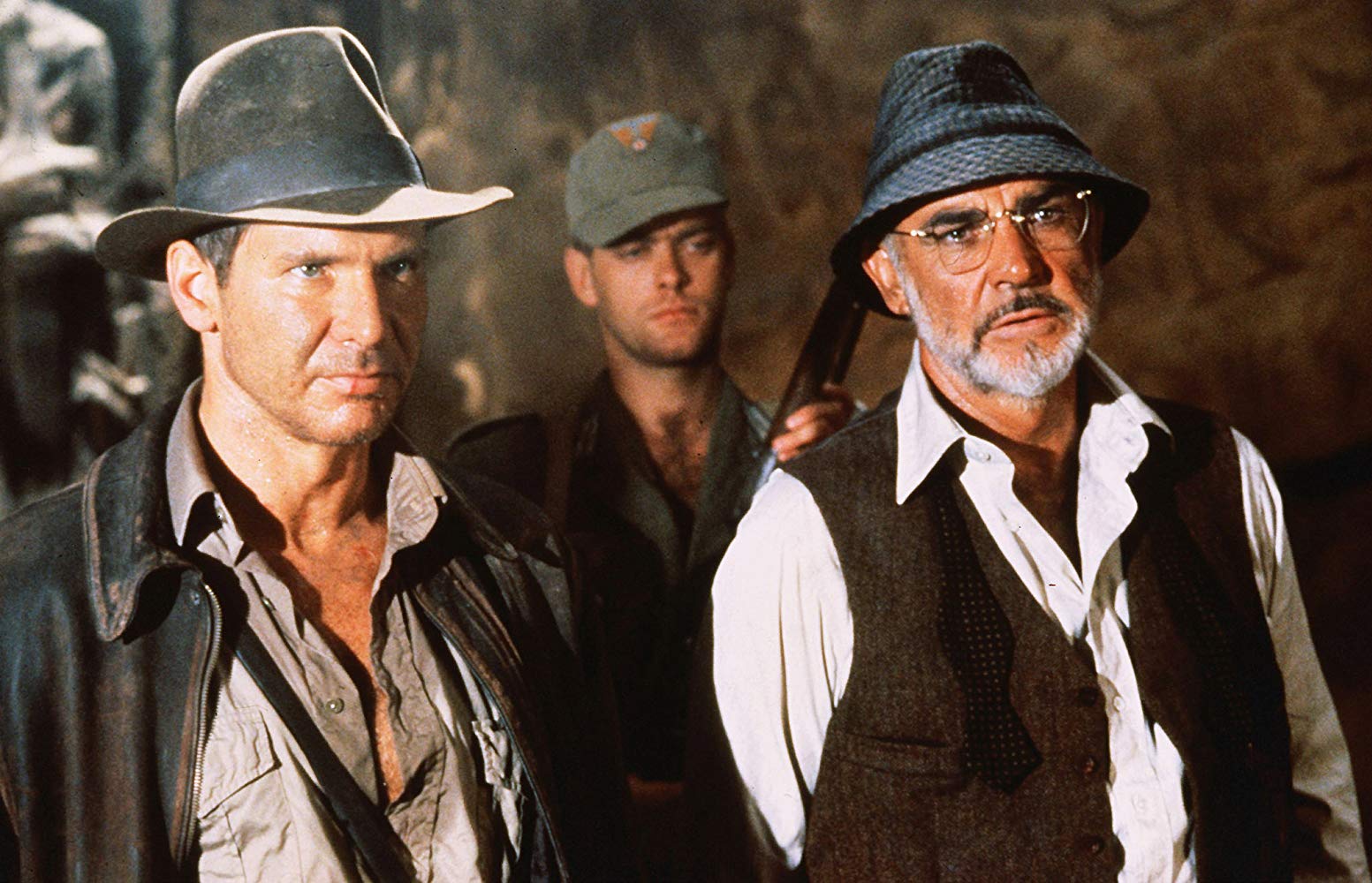
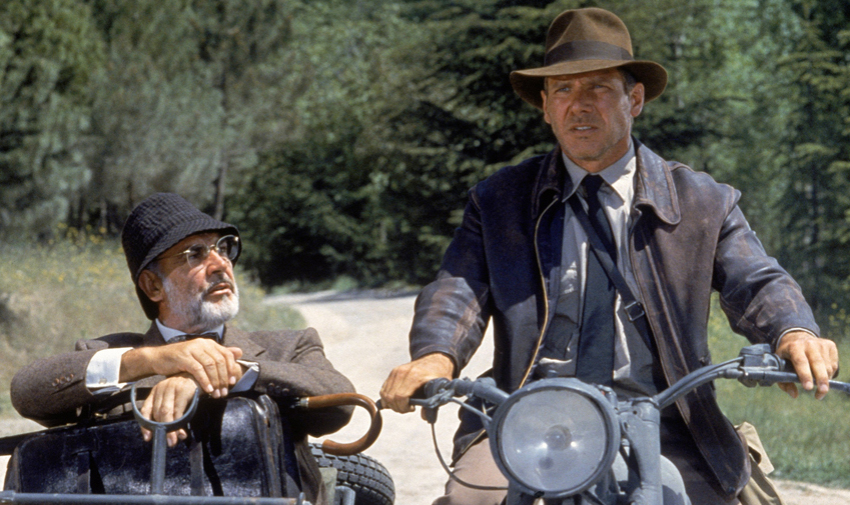
The film opens with a rousing flashback to 1912 which features River Phoenix as a teenaged Indy. After we find out why he fears snakes and how he got his famous fedora hat, the film jumps forward to 1938. Indiana travels to a pre-World War II Europe to find his missing father, who he has not spoken to in some time. Sean Connery was magnificent as Indiana’s father and the two actors share some of the best moments in the franchise thanks to their incredible chemistry.

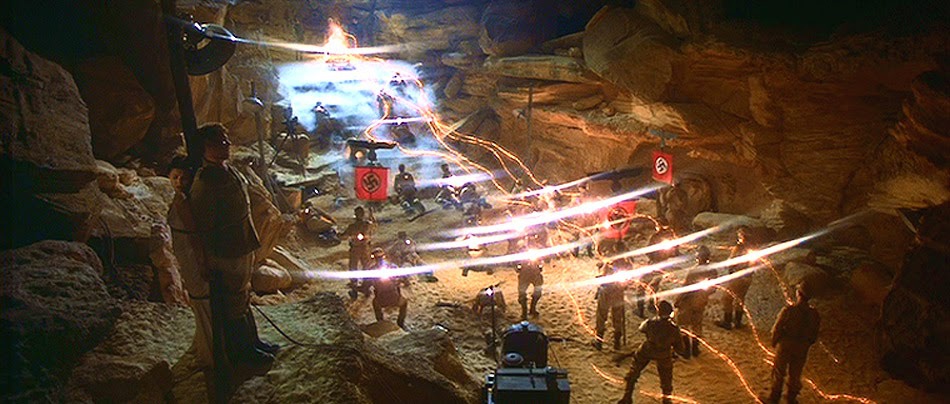
Indiana Jones and the Last Crusade follows some of the same beats as Raiders of the Lost Ark, such as Nazis, intense chases, epic scenery and spine-tingling explorations of ancient sites. Thanks to Spielberg’s skills, a great script and inspired acting, the third film is definitely classic cinema. Oh, be sure to watch the film to the end as it features one of the most beautiful ending scenes ever filmed as Indiana Jones and his companions ride off into the sunset.

1. Raiders of the Lost Ark

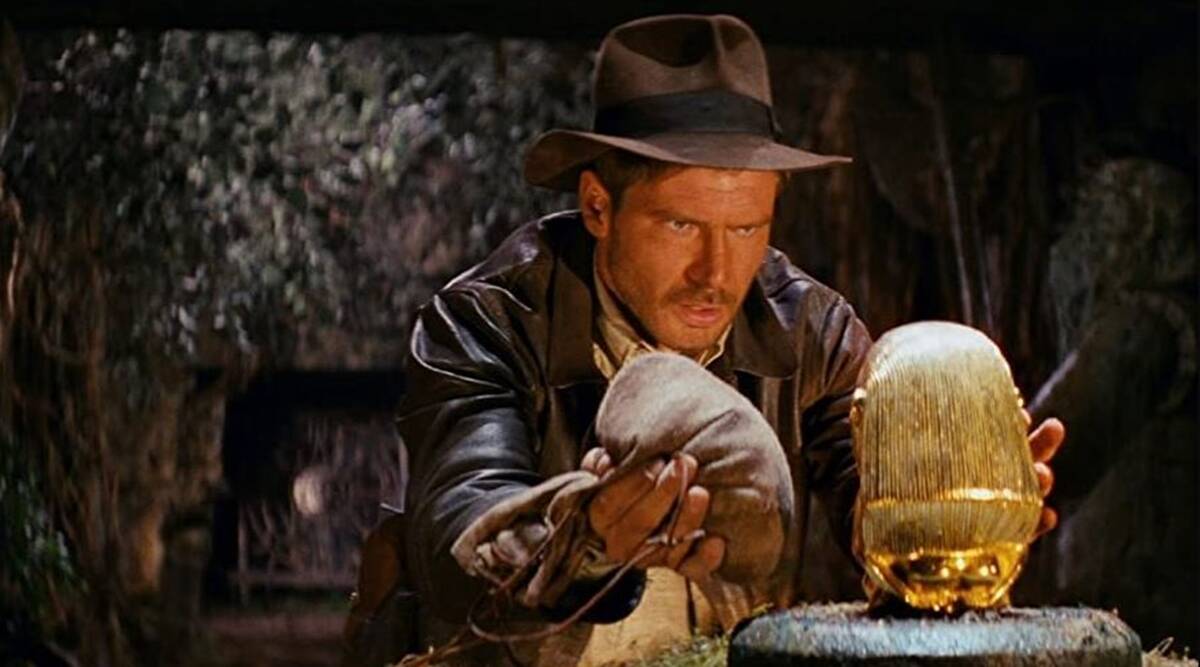
Also known as Indiana Jones and the Raiders of the Lost Ark, this is the first and still greatest Indiana Jones film. When thinking about the recent Martin Scorsese “This is Cinema” meme, Raiders of the Lost Ark certainly applies to that phrase!

Set in 1936, Raiders of the Lost Ark introduces us to Indiana Jones, a two-fisted, globe-trotting archaeologist who hunts ancient treasures. Inspired by the movie serials of the 1930s and 1940s, Raider of the Lost Ark elevated that kind of cinema into the greatest action-adventure film of all time. This was due to the groundbreaking collaboration between George Lucas and Steven Spielberg who wanted to do his version of James Bond. Here’s a bit of trivia, Lucas initially called the hero Indiana Smith and we’re glad the name was changed to Jones since it flows much better!

Spielberg was at his best when directing this monumental film. It featured many of his trademark visual touches like his God light on characters and inventive composition of shadows and silhouettes to showcase characters. Of course, none of this would mean much without a great script, which is what the film thankfully had from Lawrence Kasdan. Each shot was nearly perfect as the level of excitement and mystery increased with each passing second. Raiders of the Lost Ark is true cinematic treasure that has endured through the years and set a standard with adventure films that is difficult to match. That is why it is the best of the Indiana Jones films.

NOTEWORTHY MENTION

Young Indiana Jones and the Mystery of the Blues

During the 1990s, ABC aired The Young Indiana Jones Chronicles, which were historical dramas about Indy when he was a child and a young adult. The episodes had opening and closing segments that starred George Hall as an old Indiana Jones in his 90s telling tales of his youth. In one episode, “Young Indiana Jones and the Mystery of the Blues”, Harrison Ford reprised the role as a bearded Indiana in 1950 who told a story about himself in Chicago in 1920. This episode has been recut into a television film with the same title, but honestly the best part of the episode involved the two segments with Ford.

José Soto