Inheritors

In the Planet Of The Apes film series, humanity’s simian relatives have inherited the Earth in the far future. It’s a fascinating premise, that humankind currently the dominant life form will one day be supplanted. This goes back as early as with H.G. Wells’ classic The Time Machine, where that book’s narrator time travels to the distant future to find that humans no longer exist.

However with The Time Machine and the Apes films, the future rulers of the Earth are related to us. In the case of Wells’ story, humanity evolved into two distinct species the predatory Morlocks and the cattle-minded Eloi. But is this what will happen? Who is to say that our evolutionary branch will continue to dominate the world? For all we know, the eventual rulers will be based upon other animal species currently sharing the world with us. Or they could be something else. Let’s look at some candidates in a post-human world.

Rodents

There’s a good case to be made that some kind of rodent will dominate the world. They are a hardy species able to survive in just about in every environment. Rats are notoriously difficult to eradicate since they are very intelligent and durable. It’s easy to imagine a world where rodents become the dominant species. In Dougal Dixon’s book After Man: A Zoology Of The Future, a future Earth is presented where  rodent dog-like species called the falanx and bear-like bardelots are the top predators. Rodents have also filled other ecological niches in this future world. So it’s easy to imagine how a sentient rodent species could arise from this environment further along into the future.

Insects

This is harder to imagine but not impossible. What impedes insects from becoming dominant life forms is the environment. Earth’s gravity and atmosphere prevent insects from ever growing very large. Over 400 million years ago in the Devonian Era insects grew into monsters because of Earth’s higher oxygen content and temperatures. If such conditions were to be repeated and if there aren’t any competitors then it’s conceivable that insects could rule the land again and from there possibly lead to sentient insects. The potential for insect intelligence already exists with social insects like bees, wasps and ants. The latter are excellent candidates with their complex social hierarchies. Compared to bees and wasps, ants are very common and one species, the driver ant in EastAfrica, is a true terror capable of killing small animals. Phase IV was a movie released in 1974 that was about a newly evolved species of ants that developed a hive intelligence and began supplanting humanity. It may be far-fetched given humanity’s resilience and other competitors but given the right conditions then the opportunity is there for the insects.

Artificial Intelligence

Pretty cut and dried, the Singularity arrives in a few decades or so, Skynet comes online, etc. Humanity is enslaved or exterminated by sentient computers and robots. There is no Neo or John Connor to the rescue. Who knows what the computers do after we’re gone? Maybe they find Earth too confining or completely strip its resources and leave for the stars. Afterwards the microbes that survive will eventually yield to complex life millions of years later. It’s anyone’s guess as to what the new top life forms will be.

Marine Mammals

Dolphins and whales come to mind but despite arguments about the level of their intelligence one important factor impeding their capability for social and technological advancement is their inability to manipulate their environment. They lack appendages that allow them to handle objects. Perhaps if some cetacean evolves to return to land they can develop ambidextrous hands. But that could happen instead to the pinnipeds, namely seals. As with the insects, much depends on environmental factors. A flooded Earth will do.

Reptiles

There could be a second age of reptiles that leads to new kinds of dinosaurs. It’s happened before so it can happen again. Only this time the reptiles or neo dinosaurs evolve into a sentient species. There are several sci-fi stories that present advanced dinosaurs with technology. Harry Harrison’s alternate history book trilogy West of Eden is a good example. In Stephen Baxter’s Evolution, readers are introduced to sapient dinosaurs. Star Trek: Voyager had an episode in the third season called “Distant Origin” that featured a reptilian alien race that turned out to be dinosaurs that left Earth millions of years ago. Of course no such beings have been found in the fossil records…yet. Then again dinosaurs ruled the Earth for millions of years and they included bipedal forms with complex claws but never developed sentience as far as we know.

The Rest

Other candidates include birds. They had their chance when the dinosaurs died out but mammals beat them to the punch. As with cetaceans their lack of manipulating limbs could’ve hindered them.  Perhaps an evolutionary throwback that reintroduces hand-like claws might do the trick. Pigs are reputedly very intelligent as are elephants. But with elephants they are on the verge of extinction, seeing them taking over is difficult. Pigs are versatile creatures  but lack manipulating organs unless their flexible snouts evolve into trunks giving them a chance. The list goes on, many animal species can be candidates for evolving into a sentient, sapient race. Frankly, there are many variables that can’t be completely accounted for so we’ll just stick with our imagination for now.

Lewis T. Grove

From Flashpoint To A New Universe

All I read about DC Comics, these days, is what the New DC is…

DC’s Flashpoint the newest “event” series, is meant to last only six months. It will end at the end of August. This takes place in the screwed-up evil DC heroes universe, where Barry Allen, aka The Flash, is the only one who remembers the good ol’ wholesome DC universe.

This September, all of DC’s comics will relauch as #1, and this will be the new permanent DC. The comic book company says it’s not an “event,” not a prequel, a sequel or an alternate universe. For the current and next generation of DC readers, the DC universe starts here, in September.

Justice League #1 Cover by Jim Lee and Scott Williams

By the way, pick up the new DC’s Justice League, on sale Wednesday, August 31, by Geoff Johns and Jim Lee, who are the chief creative officers for DC Entertainment. The new DC will center around the first issue of Justice League#1 so this will start it all.

I could be wrong, but my guess is that in August, the Flash from Flashpoint, in his efforts to right what was wrong and go back to the old DC universe, never truly succeeds. Kinda like Old Spock from the 2009 Star Trek film. or maybe the readers get to see Flash make it back home, but that old DC universe is closed for readers. No more old universe. The end of Flashpoint I imagine will be the destruction of the Flashpoint Universe (which was truly dark, evil and edgy- darker than Marvel) and from September on, a new DC Universe will appear, and although it’s not as dark as Flashpoint, it seems to be way cooler than the old DC. I know DC wants to match the coolness of Marvel. DC will never portray the original DC Universe as the main universe again. It’s timeline and continuity, they believe, served its 70-year purpose.

And that’s the objective- by every one of these books relauching at #1, DC has the means to start fresh with modern sensibilities.

DC’s Crisis on Infinite Earths in 1986 did much of that, but back then, only Superman and Wonder Woman had a few of their books that relaunched at #1. And what they did then was consolidated dozens of Earths into just one. The 2011 DC Universe, is designed for readers who know nothing about DC, and is also designed for familiar readers. The reaction I sense from old fans is somewhat positive, maybe 70/30 split. But the majority of the old school readers who actively buy comics are approaching or are middle age. the new DC needs to maintain popularity with a fan base for young readers. With TV, movies, web, Youtube, videogames, and other adventure-based presentaions, comics have an uphill battle. And when guys discover girls, comics sustain a bigger loss LOL! In WWII, a single issue of Superman sold five million copies a month! A single monthly issue. These days Superman may sell only 30,000 copies, on a lucky month. And the majority of the readers today are aging fanboys.

BTW, all 52 new DC monthly titles will be available as a download or you can go to the stores and buy the paper comic. Digital download comics are undoubtedly the wave of the future. Every Wednesday, the latest DC comic will be available online and at the local comic shops. That’s a big step. According to DC editor Paul Levitz, digital download comics sell five times more than paper comics- that’s one reason why I believe this could work.

This new DC will work only if it attracts new readers, elementary school, middle and high school kids, who can click their iPhones to download the latest issue of Superman.  And these up and comers will need to want comics more than kids have in the last 30 years who had a ho-hum reaction to comic books up to now. This current generation (sometimes called millenials or Generation 9/11) has been raised on videogames, DVDs, the web, pop music and other entertainement that compete for the user’s attention against comics.
The majority of faithful comic book readers, historically fell into three groups–WWII-era young adults (young GIs stationed in Europe and the Pacific collected comics), baby boomers (who picked up their hobby from their parents) and those from Generation X. Any generation after that were less inclined to buy or collect comics. DC seems to be putting all their cards on the table for one huge gamble. If this doesn’t take off then this “relaunch” will be just another “event.”

Although it’s an uphill battle- these are the positives: it’s designed to be a new universe for new readers to jump in igital download for iPad, iPhone and Droid phones. There’s no need to walk into a store to get new DC comics every Wednesday. Of course this spells trouble for bricks and mortars businesses who will have to be innovative to survive.

My guess is that it will be more successfull than the overall 2010 sales for DC comics, at least, because 1) in 2010 only a select few DC comics were digital downloads and what DC saw is that digital downlad comics made five time more money than paper comics, and 2) from now on, all monthly DC comics are high resolution digital downloads (for the same price as paper comics).

So at the very least, the key to DC’s (and the comic industry overall)  survival is digital download sales, and the high likeleyhood that DC will make more profit than than in any given year in the last 20 or so years.

Geo

Reasons Behind Alien Invasions

Ever since H.G. Wells’ masterpiece War of the Worlds made its debut, people have always been drawn to the concept of aliens invading our world. Given our history it’s easier to believe that alien visitors won’t be benevolent, which is why Stephen Hawking recently warned about trying to seek out extra-terrestrial civilizations. This fascination continues to this day as seen with TNT’s new cable series Falling Skies and recent films like Skyline, Battle: Los Angeles and Transformers: Dark of the Moon. As we watch or read about would-be world conquerors (and how intrepid humans hatch schemes to repulse the invaders), one thing comes to mind given what we know about space. Why invade us?

Let’s look at some reasons offered in books, films, and other media:

Location, location, location. The aliens’ world is dying and they need new turf to call their own and our world is best able to fit their needs. The most famous example of this was the premise of War of the Worlds. There are many things wrong about this idea. One is that it’s doubtful that our unique biosphere will be compatible with an alien species. Think of Pandora the planet in Avatar, yes it had an oxygen atmosphere but the air was toxic to humans due to the concentration of other elements, not to mention the gravity was different. These kind of problems will be faced by alien conquerors, meaning our planet in the long run isn’t suitable. In fact, at the end of Wells’ book this proves to be the case since Earth’s bacteria kill the invading Martians. The only solution is to terraform the Earth into one resembling the aliens’ habitat. Good examples of that are found in David Gerrold’s War Against the Chtorr books and in War of the Worlds.

A deeper problem arises from a military conquest angle where Earth is prized just to gain territory for an interstellar empire. Space is huge, really huge. It’s pretty hard to believe that in all that space, the aliens can’t find a world much closer to their own to occupy and/or terraform rather than spending resources to come all the way out here. The Martian invaders in Wells’ book are of course an exception to that idea when considering how close they are to us.

Slave Labor. In the current episodes of Falling Skies, Earth’s children are fitted with biomechanical devices and are forced to do manual labor for the aliens. While this premise is terrifying, especially for parents, and is a good motivator for the human heroes, again it’s not very practical. Any alien civilization that can travel such far distances would have a technology advanced enough to not need manual labor. Even today, as robotics and other technology improves, we have less and less need for manual labor. It’s easier to build machines to do our bidding rather than having to be concerned for feeding and caring for a human laborer. That’s one issue facing car makers and other manufacturers today.

Pre-emptive. Think of the rationale behind the Iraq War but applied on a galactic scale. Or better yet remember Klaatu and Gort from The Day the Earth Stood Still. An advanced alien culture is aware of our existence, keeps tabs on us to see how we’re advancing socially and technologically. If they conclude that we could become a serious threat once we achieve FTL, they may decide to fight us here instead of there. Luckily, depending on how you look at it, we haven’t advanced enough so far to constitute a cosmic shock and awe campaign.

Our Bling and Other Goodies. Let’s get one thing straightened out, any self-respecting sci-fi fan and science geek knows that all our precious metals and other materials can be easily found in space. That includes water. Yes the water we’ve found on nearby moons is frozen, but melting it isn’t a big deal. Need some H2O? Just mine any nearby comet. Heck aliens would have an easier time building a refinery on Europa and leave us alone. For all we know they may be there already. This fatally shoots down the rationale behind V and Battle: Los Angeles.

Back in May, National Geographic channel aired a special called When Aliens Attack that looked at how a plausible alien invasion would happen. In one segment the reason behind an invasion was discussed and scientists on the show pointed out the above and added that the two thing we have here that no one to date has found in the universe are proteins and chlorophyll. So in other words we’re a food or fuel source for invaders. That kind of goes with the mindset of the aliens seen in Independence Day  (which by the way, celebrates its 15th anniversary this July) who were described as a race of locust-like beings that razed planets for resources and moved on.

What about procreation? Here’s the typical premise, the alien race is dying out and their key to survival is somehow procreating with us or using our DNA to create a hybrid race. This theory is cited by UFO followers to explain cases of alien abductions. In films, this was used by Invasion of the Body Snatchers, Species and  John Carpenter’s The Thing, among others. The problem with this theory is that the idea of procreating with an alien life is impossible. Our planet’s life forms have DNA that is not in any way compatible with extra-terrestrial DNA and vice versa. Sure they may have the technology to overcome this but if they do possess such tech why not apply it much closer to their home instead of traveling thousands of light years to get cow samples? Even if they needed our unique biological makeup, aliens with such advanced technology don’t need to invade us en masse, just take some samples, replicate it and move on.

However, we may have some kind of cultural or biological attribute that may be prized by an alien civilization. The Borg in Star Trek are a good example of this mind set. They set about conquering worlds just to assimilate unique biological and technological attributes that they’ve encountered. There was an issue of Amazing Spider-Man (issues 269-270) where Spider-Man fought the alien Firelord who traveled all the way to Earth just to get some pizza and caused calamity to get it. (Can’t blame him on that account). Then again it would be a lot easier to just negotiate trade with us. It’s easy to imagine that humans would trade a year’s supply of chocolate or complete Beatles collection in exchange for FTL drives.

Predatory Culture. This could be plausible. An advanced race may be ingrained warriors or conquerors whose society is based on predation. They wiped out the game preserves near their world and are looking for easy, new or challenging pickings and that happens to be us. Maybe they’re just bored or have a sadistic streak like kids that get their jollies from terrorizing bugs in the backyard. The Klingons, and the Predators are great examples. Another motivator may be religious like the alien Covenant in the Halo games. There the aliens find humanity to be blasphemous and engage in a holy war against Earth. What could be saving us for the moment from alien predators and fanatics is that some other advanced civilization rose up to counter them before they arrived anywhere near Earth, like the Green Lantern Corps. Another saving grace is our distance. We are kind of out in the boondocks when it comes to galactic location. Is it worth the trouble traveling all the way out here? See the running theme so far?

Sure we complain about how hard it is to travel to the stars but that could be buying us time for when we do have first contact. Perhaps by the time a malevolent race discovers us and sees that we won’t be an easy conquest, they’ll move on. Keep our fingers crossed.

J.L. Soto

Is The Bubble Bursting On Superhero Films?

It seemed not too long ago that any kind of film dealing with superheroes made oodles of money and if the profits weren’t as astronomic as say The Dark Knight or Spider-Man then they were at least respectable.

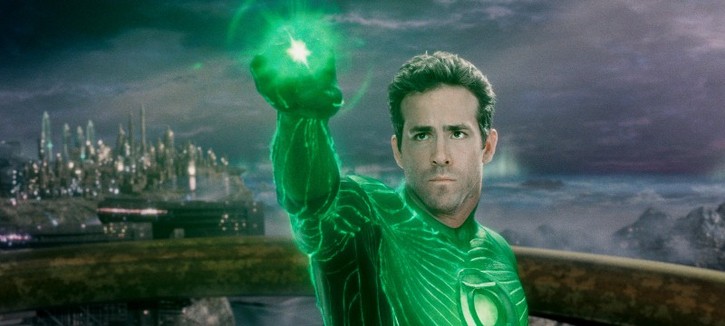
But lately this hasn’t been the case which has been seen so far with this summer’s slate of box office superheroic offerings.  Three comic book-based films have been released Thor, X-Men: First Class (XFC) and Green Lantern. Their box office take has been interpreted by industry experts and insiders from either being merely respectable to disappointing.

Thor’s opening weekend take was $65 million and to date its total domestic earnings are just under $180 million and considering that the film has dropped out of the top ten and the upcoming slew of films one has to wonder if it will reach over $200 million. While certainly nothing to sneeze at (especially if its foreign earnings are accounted, bringing its totals to over $400 million to date) Thor has earned less than the original Iron Man.

As for XFC, the feeling is that while its highly regarded with great reviews, its domestic box office earnings after nearly a month in release is only in the $120 million dollar range. It opened on June 3 with $55 million which was the weakest among the X-Men films including X-Men Origins: Wolverine.

But perhaps the biggest and most surprising disappointing earner has to be Green Lantern.  With a budget in the $150-$200 million range and a dearth of publicity and the anticipation that it would be one of Warner Bros.’ tent pole films this summer, the film earned $53 million in its opening weekend.  Add to that its overseas take has been notably underwhelming (earning in its first week less than $20 million). With upcoming potential box office champs like Cars 2, the third Transformers  flick and the final Harry Potter it’s hard to see how it can remain competitive.

The same concern about the upcoming competition must be applied to the final summer superhero film to come Captain America: The First Avenger. By releasing it on July 22, Paramount, its studio, probably hopes to avoid the competition. But given that by late July the box office starts to simmer down and that it misses an obvious patriotic July 4 weekend release it does suggest a certain lack of confidence in its money-making potential and its ability to compete with the heavyweights. Maybe if Bin Laden had been killed around now that might helped build up enthusiasm among movie goers to Captain America.

Now there are plenty of explanations to go around for the underwhelming numbers. The most obvious one is that there are too many similar films competing at the same time which goes to the old supply and demand rule. That is something that studios have to seriously consider when planning release dates. Maybe if this summer’s films had been spaced further apart the results would’ve been different. This is something that must be frustrating for Marvel Studios since its Thor had to directly compete with XFC, which was released by Fox meaning that the Marvel’s characters had to face off against each other in theaters.

Another is that these films are based on second-tier comic book characters. However, the fact that although they’re  based on relatively unknown characters (outside of the comic book fan world)  and still made that much money is nothing to sneeze at. Just look at the fact that films released last year based on obscure characters (Kick-Ass, Scott Pilgrim Vs. The World, and Jonah Hex) either underperformed or were box office disasters and that was despite the fever pitch Internet chatter that the first two film properties generated.

In the past decade not every film based on a comic book hero has been a Dark Knight-type box office champion. The Punisher films are considered to be disappointments. Ghost Rider didn’t exactly set the world on fire. Both Hulk films merely did OK and he is a more recognizable character than say Green Lantern. Daredevil’s box office earnings barely made over $100 million. And Superman Returns, despite a massive marketing push by Warner Bros., just cracked the $200 million mark. But it’s usually a safe bet that a film based on a popular hero is a healthy return for the investment. Examples of that are the recent Batman films, and the Spider-Man and X-Men trilogies.

The other explanation for the so so box office is of course the quality of the films. Many of the above mentioned films weren’t well regarded by fans and critics alike. In the case of Kick Ass, despite favorable reviews, almost no one has heard of the character so it was difficult to generate the buzz that someone more well known would guarantee. With XFC, its earnings may unfortunately be due to ill timing and franchise burnout. The previous mutant offerings (X-Men: The Last Stand and the Wolverine film) have been derided by fans and critics and soured many to the X-Men franchise. While XFC is a step to rectify past blunders it may be too early to have an X-Men film out. Perhaps Fox should’ve let the franchise rest a while to build up demand (one problem with letting franchises based on Marvel Comic characters rest is that Disney now owns the comic book company and many studios that have certain Marvel properties must make films or else lose the rights to Disney. They will only let them go if they no longer deem them profitable) . Maybe the film lacked, aside from Magneto and Professor X, recognizable and popular characters like Wolverine and Storm.  Still what this summer’s superhero flicks have earned despite their handicaps is impressive in some ways and can’t be considered outright flops. So it really just serves as a caution for studios and a reminder that there are only so many comic book fans that can support a market for superhero films.

But next year will be the critical test to see if the bubble has burst. Why? Because the heavyweights are coming back. A new Batman film, reboots for Spider-Man and Superman and perhaps the biggest test, The  Avengers film featuring Iron Man, Hulk, Thor and Captain America. If these films have disappointing sales then it can truly said that the bubble has burst.

J.L. Soto