Comic-Con 2016 Highlights

The San Diego Comic-Con for 2016 has come and gone and we’re all the more hyped up after the event. Unlike previous Comic-Cons most of the film studios were all too eager to share the trailers for their upcoming films and TV shows. That is except for 20th Century Fox who took their marbles and went home…actually didn’t even present. They wanted to avoid having their presentations pirated. Nice way to promote Alien: Covenant and the third Wolverine flick, people. Result: DC and Marvel ruled the event by bringing their A game.
Justice League

TV Stuff

The other studios made their announcements and presentations. For TV shows, the third season teaser for The Flash got everyone up in arms in anticipation at seeing the live-action version of Flashpoint. For those in the dark, that’s the comic book event where the Flash saved his mom in the past and created a dark reality. This adaptation won’t be literal but more like what we saw with the Marvel Comics Civil War event in Captain America: Civil War. But it still looks awesome. The other DC shows on the CW also had interesting presentations and announcement, the best of those being that the Legends of Tomorrow will be facing the Legion of Doom and meet the rest of the Justice Society of America.

Marvel Studios raised some eyebrows with the revelation that Ghost Rider will be appearing in the fourth season of Agents of S.H.I.E.L.D. and this should be interesting. As for their Netflix stuff, we got teasers of The Defenders (check out our Twitter account with a link to it), Iron Fist, and Luke Cage. The last show looked undeniably badass and thankfully we only have to wait a couple more months.

The biggest TV announcement had to be for Star Trek: Discovery. We saw a glorious 2001: A Space Odyssey-like opener with a starship launching out of a hollowed-out asteroid. What was most intriguing was that the ship’s design is based on one of Ralph McQuarrie’s unused Enterprise designs for the lost Star Trek film Planet of the Titans.
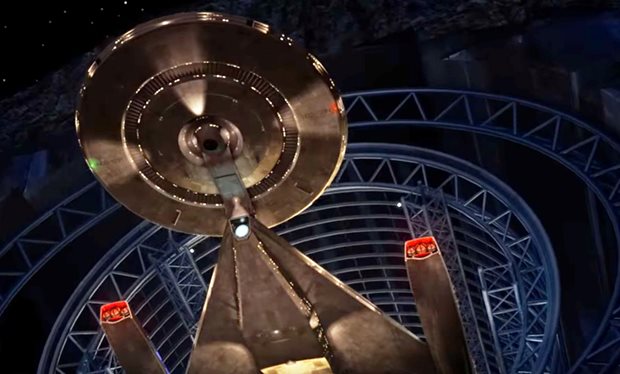
starship Discovery

As cool as it was to see one of McQuarrie’s design come to life, what is sure to get everyone even more excited is that Bryan Fuller, one of the showrunners, confirmed the show will take place in the Star Trek Prime universe! No reboots, people! The real Star Trek has indeed returned! Ahem, apologies to those that love nuTrek, Star Trek Beyond is a fun film that redeems the Star Trek reboots.

Film Stuff

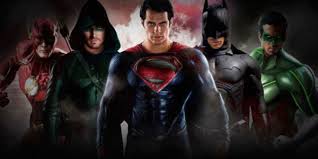
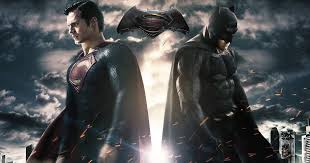
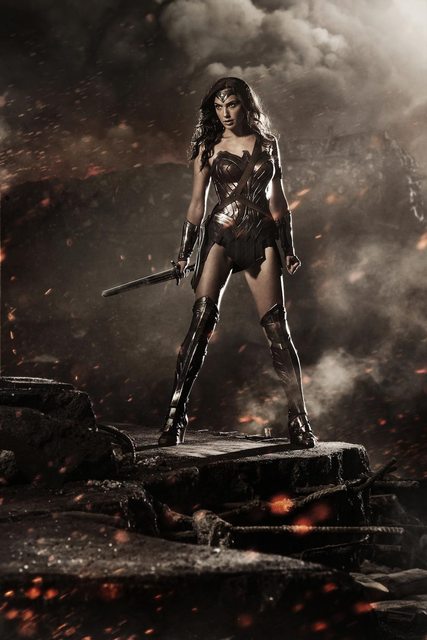
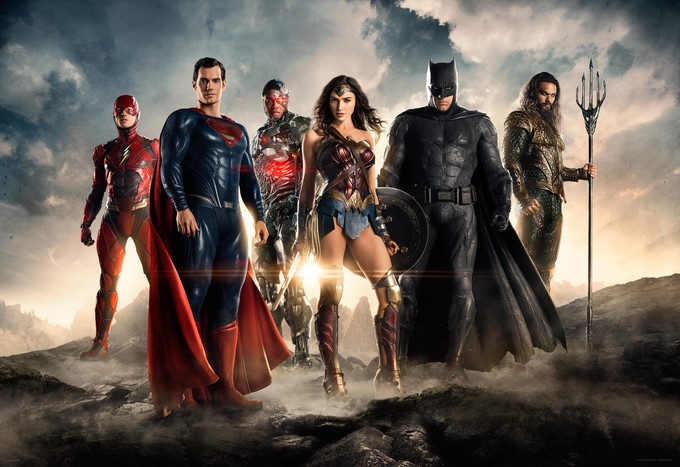
DC Comics and Warner Bros. are still smarting over the lukewarm reception to Batman v Superman: Dawn of Justice. So they didn’t hold back anything in Comic-Con 2016. Amidst the flood of trailers for Suicide Squad, which makes us feel already as if we’ve seen the entire film, came trailers for Wonder Woman and Justice League. The Justice League trailer was very enticing and actually sold us on the Snyderverse version of the Flash. Sure, Grant Gustin rules as Barry Allen but it’s undeniable that Ezra Miller had a lot of charm as the new Flash. The trailer had much more humor than anything seen in Batman v Superman, but where’s Superman? Meanwhile, Gal Gadot clearly shines in the footage shown in both the Justice League and in the trailer of Wonder Woman kicking ass in World War I.

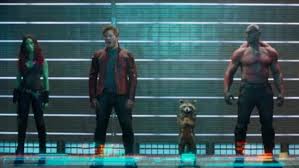
As for DC’s rival Marvel, well they had their goodies as well. Unlike DC, most of the trailers for their upcoming movies are still under lock and key being they are “exclusives” for Comic-Con. There’s no point in trying to scrounge the Internet for pirate footage of Guardians of the Galaxy, Vol. 2 or Spider-Man: Homecoming, it will look like crap and be taken down anyway. But here’s a quick look at Thor: Ragnarok, which will be gone soon:

Marvel should take a cue from DC and present their goods to the larger world who could not attend. The one trailer they released was the second one for Doctor Strange. Make all the snarky remarks that it looks like Inception, but this movie looks astounding! If it works, it will take the Marvel Cinematic Universe in a whole new direction and that is how you keep the superhero film genre afloat. The highlights of Marvel Studios reveals were Brie Larson’s casting as Captain Marvel, the Vulture will be the villain in Spider-Man: Homecoming, and Kurt Russell will play Peter Quill’s dad, aka Ego the Living Planet, in Guardians of the Galaxy, Vol. 2!
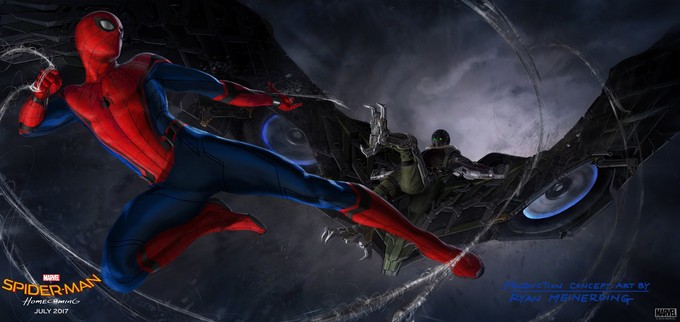
Spidey fights Vulture

In closing, Comic-Con 2016 had a lot more to show for the general public than in recent years. A lot of the announcements and trailers were ho hum like Guy Ritchie’s King Arthur: Legend of the Sword. But more than a few were quite enticing like the one for the return of Mystery Science Theater 3000 (to be shown on Netflix), a Blair Witch sequel and this one for Kong: Skull Island.

It’s great to see the big ape back on the screen! On the whole, we have plenty of fun things to watch in the coming months and into 2017.

DC Wins The TV War…For Now, Part Two

trio

The rivalry between DC Comics and Marvel Comics has many fronts in media like toys, films, video games, etc. But as it stands right now, DC Entertainment dominates the television medium with its current slate of TV shows on the air and their plans for additional programs coming in the near future.

DC’s Television Summit

Once Smallville ended in 2011, a void needed to be filled by DC Entertainment in terms of having a superhero presence in the TV landscape. Rather than mining the Superman/Batman lore, the decision was made to showcase DC’s proto justice leagueother heroes and it was a wise choice. For some time, DC and Warner Bros. fell into a crutch and relied too much on Superman and Batman to represent DC in other media. This was understandable since those were the company’s two biggest heroes. It makes perfect business sense to take advantage of the popularity of those heroes. The problem, though, is that with all the marketing and attention focused on Batman and Superman, DC’s other heroes were left out and helped give the impression that the rest of the DC roster consisted of second stringers. That couldn’t be farther from the truth. The DC universe is populated by many captivating heroes and villains and the problem was that the company wasn’t taking full advantage of that notion. Marvel, and specifically Marvel Studios, faced a similar problem but for different reasons. They didn’t have the film rights to Spider-Man or the X-Men, so they had to rely on their lesser known properties. It turned out for the best, otherwise we wouldn’t have gotten live-action adaptations of Guardians of the Galaxy or Thor.

In DC’s case, they too were forced to look elsewhere since the Superman well had run dry with Smallville and Batman was considered off limits because of the Dark Knight films. Thus, DC Entertainment looked to an urban vigilante that had many of Batman’s characteristics – Green Arrow.

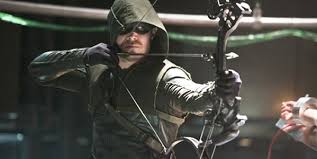
Arrow aimsAll things considered, he is a solid alternative for Batman when it came to being featured in a live-action TV show. After all, both are urban crimefighters without superpowers and use specialized weapons. When Arrow premiered in 2012, it presented a more grounded, realistic world for the superhero. In the first season, the main character, who wasn’t even called Green Arrow (in one episode his alter ego, played by Stephen Amell, thought that name Green Arrow was “lame”), wore a practical uniform with only a hoodie and grease paint to conceal his identity. Moving away from fanciful superhumans allowed Arrow to concentrate more on character development and street-level fight scenes. This meant that it was more inviting and relatable for casual viewers.

What the producers of Arrow did correctly is that they embraced the DC universe. They weren’t afraid to name drop places like S.T.A.R. Labs and Blüdhaven. Likewise, the series featured recognizable DC characters like Amanda Waller (head of the Suicide Squad), Slade Wilson and even the Batman villain Ra’s al Ghul and his League of Assassins. It was enough bones thrown to DC fans to keep them glued to their TVs. Arrow then took a step further and introduced superpowered characters in its second season thanks to this strength-enhancing drug called Mirakuru and the introduction of Barry Allen (Grant Gustin), whose Flash origin occurred at the end of one of the Arrow episodes.

arrow flash

This naturally led to The Flash spinoff that premiered recently. Taking a lighter tone than Arrow, The Flash is more of a throwback to the fast-moving comic books with outlandish supervillains, while utilizing the same kind of engrossing subplots that Arrow uses. What’s more is that both shows are definitely in the same universe. Although the concept of a shared universe isn’t new in TV shows, this was the first time this was done for superhero shows (not counting The Six Million Dollar Man and The Bionic Woman) and it’s exciting to watch characters appearing in both programs with even more allusions to a wider world.

Both Arrow and The Flash are huge hits on The CW network and should be around for the long haul. Gotham, a show set in the title city and taking place after the killing of Bruce Wayne’s parents, is a hit on Fox. In fact, it pulls in more ratings than The CW superhero shows but that is due to the wider audience that Fox has compared gordonto The CW. Even though Gotham is a hit, there should be some caution because it’s on Fox, so there isn’t any guarantee that it will last as long as if it was on The CW. That is a problem that DC and Warner Bros. faces. Sure they can put anything on The CW, a fledging network, but it won’t reach as large an audience as in the major networks. But on the big networks, there is more pressure to succeed. Already, Constantine airs on NBC and has dismal ratings–it was recently announced that the show won’t go beyond initial 13 episodes and its fate is unknown. Constantine’s rating woes are due to its time slot: Fridays at 10 pm. How can any show succeed on that slot? It probably would’ve been better if it aired on a cable network where it could’ve thrived and be allowed to be darker like its comic book counterpart.

Continue reading →

DC Wins The TV War…For Now, Part One

 old DC

One of the great corporate rivalries is the one between the comic book giants Marvel Comics and DC Comics. It’s a competition that has spilled over to other media. When it comes to films, Marvel has won the war on that front due to the monumental successes of their Marvel Cinematic Universe (MCU) films. However, take a quick glance at the current TV schedule. From looking at that and television history, it’s obvious that DC has won the TV War…for now.

Head Start

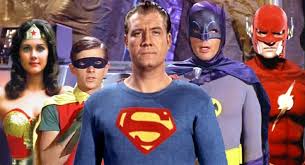
In reality, DC had the war won for decades now. This goes way back to the 1950s with the success of the first TV show based on Superman. That would be, of course, the landmark series Adventures of Superman, which starred George Reeves. It’s well known that the series was very popular and helped cement Superman’s legendary status in pop culture. Marvel at that time period didn’t even exist, nor did their most popular heroes because the company was concentrating on non-superhero comic books.

Following the cancellation of Adventures of Superman, the next DC superhero to bask in the television spotlight was Batman. Beginning in 1966, Batman was an instant hit and a genuine pop culture phenomenon. Starring Adam West and Burt Ward as Batman and Robin, the show was a decidedly goofy sendup of comic books and introduced characters like the Joker and Catwoman to non-comic book readers. Although, it was and is still popular, many decried the way Batman belittled the Caped Crusader and comic books in general.

wonder woman

In the 1970s, there were a few TV shows and specials based on DC Comics superheroes. The best known was Wonder Woman, starring Lynda Carter and it aired from 1975 to 1979. The show wasn’t as cheesy as Batman, nor as popular, but it was noted for its pro-feminist stance since the title character was a superhuman woman. The women’s lib messages obviously went over the heads of most younger viewers, who were enamored with Lynda Carter and her skimpy outfit.

Other TV shows airing in the 1970s were strictly aimed at children like Shazam! and The Secrets of Isis. In fact, these half-hour programs only aired on Saturday mornings and had limited appeal.

Around this time period, Marvel got into the hulk showact with the premieres of TV shows and TV films based on their characters. The first superhero to make a live-action appearance was Spider-Man, who made non-speaking appearances on The Electric Company. Some of the Marvel TV films and shows were truly awful like Captain America and The Amazing Spider-Man, which thankfully did not last long as a series. But a couple were actually decent like Doctor Strange and Marvel’s biggest hit on TV The Incredible Hulk. Airing in November 1977 and starring Bill Bixby and Lou Ferrigno, the TV film was a big hit and led to a successful TV series the following year.

Second Wind

superboyThe decade that followed, the 1980s, was slow for comic book properties on TV. After The Incredible Hulk was cancelled in 1982 there wouldn’t be another superhero TV show until the syndicated program Superboy debuted in 1988. Coming after the film disaster Superman IV: The Quest for Peace, Superboy was a welcome respite for fans who just wanted to see good, old-fashioned superheroics and teenage angst. Plus, Superboy was a competent place holder until DC and its parent company Warner Bros. could bring out another Superman TV series or film.

On a side note, there were a trio of TV films that continued the Hulk’s adventures and the first two introduced live-action versions of Thor and Daredevil. The Hulk and his alter ego David Banner actually died at the end of the third film, but there were plans to do more TV films. However, those ended after Bixby’s untimely death in 1993.

The humongous success of the film Batman in 1989 helped jumpstart new DC-based TV shows in the 1990s. Not wanting to rest with the success of Superboy, Swamp Thing: The Series premiered on the basic cable channel USA Network in 1990, while a show based on the comic book Human Target aired briefly on ABC in 1992.

old flashThere were two shows that made the largest impact in that decade. They were The Flash and Lois & Clark: The New Adventures of Superman. The Flash, starring John Wesley Shipp, premiered in the fall of 1990 fresh off the success of Batman and seemed to copy the stylistic direction of the Tim Burton film. Even though it only lasted one season, the show is revered by fans because of its fun stories, dazzling effects, and character work. Lois & Clark: The New Adventures of Superman, which aired on ABC, was targeted more towards women since it concentrated more on the relationship between Lois Lane (Teri Hatcher) and Clark Kent (Dean Cain). The superhero aspects of Superman took a back seat to the romantic shenanigans and it was laden with light humor. Of course, this displeased some fans, but it was still a successful program.

As for Marvel, the 1990s was a decade best left forgotten. There were DOA pilots based on Power Pack, Generation X and Nick Fury. As for the syndicated show Night Man, the less said about it the better.

Animation Dominion

young justiceAs DC dominated the television medium, there was another TV venue that it conquered. That was with their animated TV shows. Since the 1960s, there have been numerous TV shows that aired on Saturday mornings and on syndication based on DC’s superheroes. DC enjoyed early successes like Superfriends in the 1970s, but their animated shows weren’t acclaimed until Batman: The Animated Series premiered in 1992. Boasting memorable characters, villains and plots, the show was a huge hit and led to other superior animated gems like Batman Beyond, Superman: The Animated Series and Justice League. DC’s animated renaissance probably culminated with the recent Young Justice. It just lasted two seasons, but its smartly written scripts, mature themes, and complex character development won wide appraisals from fans and critics.

In this venue, Marvel actually presented itself as a viable counterpart to DC since the 1960s with series based on Spider-Man, the Hulk, the Avengers and other stalwarts. The results were quite admirable in many instances, but DC on the whole produced more noteworthy animated TV shows.

New Century, New Renaissance

As DC celebrated their animated successes in the 1990s, the live-action field was stagnant after the cancellation of Lois & Clark in 1997. There was an infamous pilot made for the Justice League that thankfully never made it into a series. It can be found on Youtube for anyone that is curious.

The live-action drought ended a few years later in 2001 with Smallville. This long-running show starred Tom Welling as Clark Kent in his teenage years and early twenties. It ran on The WB and later The CW networks and explored many aspects of the Superman mythos while concentrating on Clark’s emotional development and how he came to be Superman. It had its faults like the producers’ insistence of “no tights, no flights”, which meant Clark never put on his iconic Superman suit. (The final episode doesn’t count since he was never fully shown wearing it.) This was strange because many other superheroes featured on Smallville like Green Arrow, the Justice Society and Supergirl were allowed to fully embrace their comic-book roots. The Warner Bros. network tried to capitalize on the success of Smallville with other programs, but weren’t successful. Efforts included the short-lived Birds of Prey in 2002 and a pilot for Aquaman.

Around the time that Smallville came to an end, the superhero genre exploded in theaters. Super hits like The Dark Knight, Iron Man, and The Avengers cemented the permanence of arrowsuperhero films. As it goes, whenever there is a mammoth box office hit, TV executives take notice and follow suit. Warner Bros. and DC took advantage of the heightened interest in superheroes and produced many TV shows. Not all of them bore fruit like pilots for Aquaman and Wonder Woman, or another iteration of Human Target, but others blossomed and are now hit shows. These include Arrow, The Flash, Gotham and to a lesser extent Constantine. And that is just the beginning.

José Soto and Lewis T. Grove

To Be Continued

Marvel Wins The Movie War…For Now, Part Two


avengers guardians DC heroes

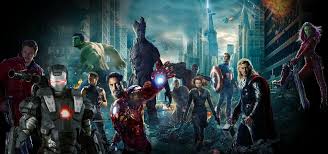
Marvel Entertainment has ruled the box office with its numerous hit films, especially those produced by Marvel Studios. Meanwhile, DC Entertainment and its parent company Warner Bros. while successful with TV and video game adaptations of the DC superheroes seemed to be asleep at the wheel in putting out film products to counter Marvel’s box office dominion.

Late Start

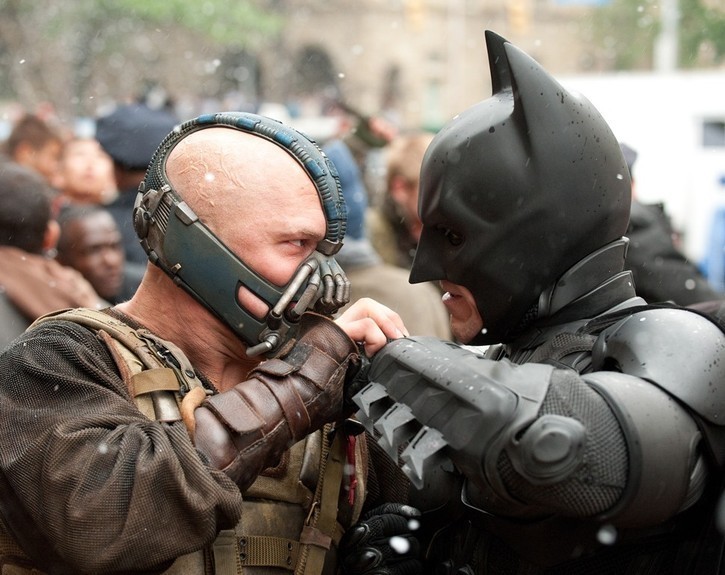
Around the beginning of this decade as Marvel Studios was blossoming what was DC Entertainment doing around this time? We got from them Green Lantern and The Dark Knight Rises. The former film didn’t perform to expectations and failed to resonate with fans and audiences. Green Lantern was hamstrung with weak villains, pedestrian storytelling, and for a film featuring a cosmic hero it was too Earthbound. On the other hand, the final film in Christopher Nolan’s DDark Knight trilogy was well received at the time of its release, but many grumbled that it was too ponderous, pretentious and its villain Bane (Tom Hardy) couldn’t compare to The Dark Knight’s Joker (Heath Ledger). What was noticeable was that Batman’s world seemed smaller and darker than the more light-toned Marvel Cinematic Universe. It seemed odd that Batman was the sole superhero around in Nolan’s films, although for The Dark Knight Rises’ plot of Gotham held hostage, that was a necessity. It was plain to see in the end that while the Batman films were hugely successful, they did not do anything to expand the DC Universe in film. So once that trilogy was completed there wasn’t anything to follow it.

Does all of this mean that it’s over for DC? Should they throw in the towel? Hell, no! They may be way behind Marvel at the moment, but they are gearing up for a new war that will start in March 25, 2016. The release of Batman v. Superman: Dawn Of Justice is just the opening salvo. However, the failures of Green Lantern and The Dark Knight Rises in terms of creating a cinematic universe is why DC had to start over with Man Of Steel in 2013, already a few years behind Marvel Studios. That reboot of Superman and his mythos was successful, but it’s considered controversial by many fans who decried the character deviations, especially when Superman killed at the film’s end.

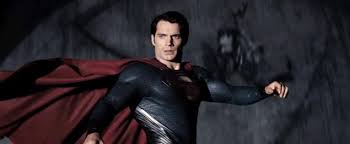
man of steelNevertheless, the film did begin an earnest establishment of a larger universe. Take the scene near the end when Superman (Henry Cavill) and Zod (Michael Shannon) fight above Earth and tear apart a satellite belonging to Wayne Industries. It was a nifty Easter egg, but it was a blink-and-you’ll-miss-it moment and the film should’ve done more. Imagine if a post-credits scene was shown where the near destruction of Metropolis is shown on a TV screen. The camera would’ve pulled back to show that the TV was in a cave and that Batman could be seen watching the disaster on TV. Or have the TV in a non-descript apartment where a certain green Power Battery could be spotted.

Regardless, Man Of Steel was DC’s first true attempt at establishing its own cinematic universe. Its Easter eggs may pale next to Iron Man with the Avengers Initiative scene, but it’s a start.

Broad Horizons Ahead For Both Companies

From March 2016 until 2020, DC has eight films scheduled for release. At this point, the general public doesn’t know which properties will be on the big screen aside from Batman v. Superman: Dawn Of Justice, but current rumors point to Shazam, Wonder Woman, the Justice League (finally!), a new Batman, and a proper sequel to Man Of Steel. DC and Warner Bros. should be commended for not rushing things unlike some other movie studios with comic book properties (looking at you Sony). This means that when the universe is finally presented it should be cohesive and well done.

dawn of justiceRegarding the recent decision to move Batman v. Superman: Dawn Of Justice from May 6,2016 to March 25,2016, it may seem like an admission of defeat. One way of looking at it is that DC recognizes what a juggernaut Marvel Studios and its films have become and want to avoid direct competition. But it’s really a more strategic move by DC and Warner Bros. to ensure that Batman v. Superman: Dawn Of Justice reaches the widest possible audience. That is why they moved up the film’s release date so it doesn’t have to compete with the third Captain America film. A lot of people wwomansalivated over the prospect over these two comic book titans going at it in the box office, but in reality such direct competition would hurt both brands. In this case, DC would have suffered more. Why? It’s likely that Batman v. Superman: Dawn Of Justice would’ve won the match against the third Captain America film, but the Marvel Cinematic Universe is a proven brand with devoted followers and Captain America has risen significantly in popularity thanks to his last film. There isn’t any way that the third film would flopped; it would’ve earned a respectable amount of money in the matchup, enough for Marvel to declare a pyrrhic victory and claim their film held up well against DC’s better known characters. In the meantime, if Batman v. Superman: Dawn Of Justice didn’t have super impressive opening box office numbers or heaven forbid came in second on the opening weekend, it would’ve spelled a PR disaster for DC and stifled their burgeoning cinematic universe. DC had more to lose than Marvel, so taking a page from their competitor’s strategy book, they positioned their centerpiece film in a less competitive time period where it’s guaranteed to score high.

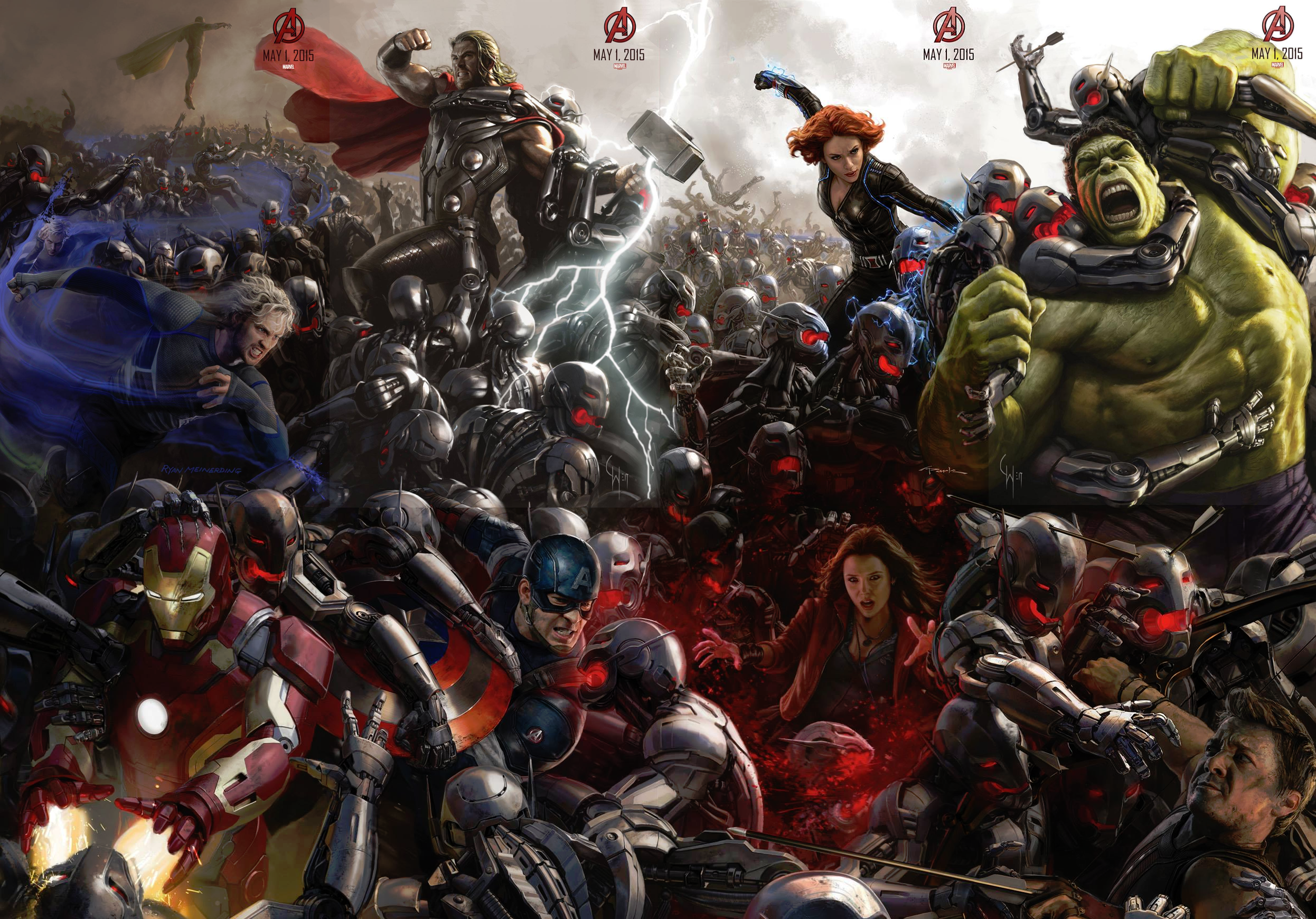
With DC beginning its own universe, which at this point is still in planning stages, Marvel is charging avengers ultron posterforward with more film releases. Next year will see the eagerly anticipated sequel Avengers: Age Of Ultron and Ant-Man. The following year we’ll get the aforementioned third Captain America film and on July 28, 2017 the Guardians of the Galaxy will return to theaters with a new film. Additionally, Marvel recently announced several release dates through 2019 for five more films in the MCU. No details have been released but the speculation is that these films may include sequels to Thor, the Avengers, possibly Iron Man (Robert Downey, Jr. recently expressed interest in continuing to play Iron Man), and new properties like Captain Marvel, Black Panther, the Inhumans, or Doctor Strange.

A film based on the last character mentioned, Doctor Strange, also means that Marvel is branching off in yet another direction. Like with Guardians Of The Galaxy, which is actually a space adventure film, a Doctor Strange film would not be a traditional superhero film, but rather one that deals in the genre of horror and fantasy. The fact that Scott Derrickson has been hired to direct the film is indicative of its horror trappings since Derrickson’s resume includes horror films.

lineupGuardians Of The Galaxy and the upcoming Doctor Strange film point to how Marvel has won the Movie War because they’ve done so well with superhero films that they are now able to branch off into other genres. DC has tried doing this in the past with poor adaptations of Constantine and Jonah Hex. If DC’s film slate includes a rumored movie based on its fantasy property Sandman, then this would prove that DC is remaining competitive and moving beyond superheroes as well. Continue reading →

Marvel Wins The Movie War…For Now, Part One

Avengers sup

Sorry DC Comics fans, but with the runaway success of the recently released Guardians Of The Galaxy film and the announcement that the upcoming film Batman v. Superman: Dawn Of Justice won’t directly compete with the third Captain America film, it’s pretty clear that Marvel Entertainment has won the Comic Book Movie War over its rival DC Entertainment.

DC’s Early Success

For years DC was at the apex of comic book-based films thanks to Superman then Batman dominating the box office. Marvel wasn’t even a contender; it was consigned to bargain-basement FFshlock efforts like Captain America, The Punisher and Roger Corman’s The Fantastic Four, which wasn’t even released. It seemed like Marvel just couldn’t get its act together and was floundering with its attempts to put something out into theaters much less TV. Meanwhile, DC had solid hits with its flagship heroes and films that although were flawed, were generally well received.

supe lexDC’s advantage was that it was (and is still) owned by the studio giant Warner Bros., which had the deep pockets to finance the superhero films. This was why the Superman and Batman films looked so good. In their day, they had big budgets with big-name stars, directors and the best special effects and production people working hard to put out quality efforts. The best Marvel could muster was getting Dolph Lundgren to star as the Punisher.

Fans asked for years where were the big-budget adaptations of Marvel’s best heroes? While Batman tore through theaters where was Spider-Man? Well, Marvel was just a comic book company then that went through many owners who didn’t know a thing about expanding into other media, specifically film and TV. Then there was the legal mess over who had the rights to produce a Spider-Man movie that was only resolved a couple of years before Spider-Man. By that time, Marvel had gone through bankruptcy and in order to raise money sold their coveted properties to different film studios. That is why properties like the X-Men, the Fantastic Four and Spider-Man aren’t made by Marvel Studios today.

Double-Sided Victory

Despite their overall success, DC still had some chinks in their movie armor. For every rousing Superman II or Batman there were undeniable stinkers like Superman III or Batman & Robin. Worse were truly abysmal films like Steel and The Return Of Swamp Thing that not only failed in the box office, but sullied the reputation of superhero films.

batmanDC Entertainment didn’t fully capitalize on the success of the Batman and Superman films. Yes, they did push forward TV adaptations of the Flash and Superman, but they should’ve concentrated on making quality films of their other properties. Instead they pooled all their efforts into Batman, which made sense since he’s their most popular superhero. But the problem with that approach is that when a Batman film falters it affects the rest of their line. And this is what happened with the release of Batman & Robin in 1997. That film strayed far from the winning dark and gothic formula that director Tim Burton used in the first two films and instead was a throwback to the campy 1960s TV shows. That silly approach used by director Joel Schumacher irked many fans who felt that Batman was a dark and serious hero and putting him in goofy situations was undignified. At the same time, DC was floundering with their attempts to reboot the Superman film franchise after the pitiful failure of Superman IV: The Quest For Peace back in the 1980s. A lull existed for DC superhero films that lasted from 1997 until 2004 when the DOA Catwoman was released. DC wouldn’t get back on its feet until the following year when Christopher Nolan’s reboot Batman Begins was unleashed.

batcycle

That film’s success did come with a price. Chiefly that Nolan’s unique and grounded Batman universe couldn’t have any ties to the rest of the DC universe. Hence no mentions of Superman, Wonder Woman, etc. Not even their home cities seemed to exist in Nolan’s dark and brooding world where costumed beings didn’t have true superpowers. As good as that was for the Batman films, it meant that DC couldn’t use them to introduce other heroes. That’s not to say they didn’t try expanding. There was almost a Justice League film made. George Miller was supposed to direct it and a cast was set, but the 2007-2008 writer’s strike ended that dream. Then everyone knows about Superman Returns and Green Lantern, two highly anticipated films that failed and left DC’s expansion efforts stillborn. Unfortunately, as these two films floundered Marvel Studios began its ascension.

The first few films based on Marvel properties were huge hits with the public and fans, some decried how they ignored fundamentals in core concepts. For instance, as Hugh Jackman became a big star for his portrayal of Wolverine, many complained that he was too tall and good looking. Others griped about why Spider-Man all of a sudden had organic webbing and never invented web-shooters. Then there were the misfires that were forgotten in the wake of the successes of Spider-Man 2 or X2: X-Men United. Those included Daredevil, Hulk and Ghost Rider. Continue reading →