2012 Doomsday Scenarios: Month Eight

Ever since humans looked up to space and its vastness, it was easy to imagine possible dangers coming from above. And they had good reason because Earth has dealt with cosmic threats ever since its creation. Whether by meteors, gamma ray bursts or wandering black holes, the possibility of our destruction coming from outer space is unfortunately a very likely scenario.

Doomsday Scenario No. 5: Cosmic Threats

We as people cower and fret over major disasters that come our way. But trying to imagine how we would face certain extinction from astronomical events is difficult. That is because in our recorded history we haven’t dealt with that kind of phenomenon. What is really frightening is that if we found out tomorrow that any one of these threats were to happen, there is very little that can be done to cope with it. Here are some of them:
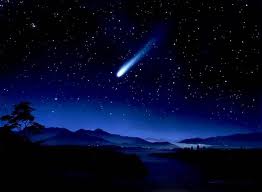
Comets and Meteors: This scenario is probably the best known cosmic threat. Every school kid knows that about the theory that a comet or meteor struck Earth and wiped out the dinosaurs 65 million years ago. Earth is constantly threatened by these celestial objects. In fact, meteors enter our atmosphere all the time. Luckily most are tiny and harmless and make great light shows. But all it takes is that one large rock or ice ball to wreck havoc. It happened most recently in Tunguska, Russia in 1908. Though no remains of the meteor or comet have ever been found, the destroyed forest stands as a stark reminder of how powerful the collisions can be.  Some notable sci-fi books about such impacts are Lucifer’s Hammer by Larry Niven and Jerry Pournelle, The Hammer Of God by Arthur C. Clarke and Moonfall by Jack McDevitt, which is a variant of the theme in that a comet destroys Earth’s moon and the lunar debris is what threatens our planet. For films, there is Deep Impact, Meteor and the much-maligned Michael Bay epic Armageddon. Even though there are efforts underway to catalog all the asteroids and comets in our vicinity and have an early warning system, a rogue rock or iceball can slip by our sensors. Oddly enough, thanks to our technology, this is one disaster that can in theory be prevented. Most now know that lobbing nukes at them won’t work, but if there is enough warning then it’s possible to use rockets or satellites to nudge the orbits of the threatening meteors and comets.
Cosmic Collisions: Some scientists believe that our moon was created from another planetary body colliding with Earth. This happened way before life emerged on Earth but if it were to happen today, it would be devastating. Life will not be able to recover. Our only hope as a species would be to do as the characters did in the book and film When Worlds Collide, build a spaceship to escape and settle elsewhere. In When Worlds Collide, the survivors were lucky that they found a habitable world to colonize. For us, our best bet is to head to Mars and try to terraform the planet.  Of course in these situations a lot depends on how much time and capability we have. In the film Melancholia there wasn’t anything that could be done to save humanity and the Earth when it collided with a rogue planet. One thing to note is that a near collision is enough to disrupt life on Earth by causing the world’s orbit to shift and radically altering our ecosystem.

Gamma Ray Bursts: This is caused by the death of a nearby star when the energy is released from the star’s poles. According to scientists this happens in our galaxy every day. If Earth were to be bombarded by these bursts the ozone layer would be depleted and all life would be subjected to lethal exposure to radiation. Thankfully the bursts are too far away to threaten us.  Scientists believe that any supernova occurring about 8,000 light years or closer to us would be a concern. Actually some scientists theorized that gamma ray bursts are responsible for the periodic mass extinctions in our planet’s prehistory. In the book Starfire by Charles Sheffield, our planet is threatened by the radiation unleashed when our closest solar neighbor Alpha Centauri undergoes a supernova. Of course, if our own star were to undergo a supernova, life on Earth would be wiped out. However, our sun still has a few billion years left before it decays. That is unless the sun undergoes that transformation by artificial means. but that would take technology way beyond what we have today.

Solar Storms: Our sun often ejects solar flares or radiation. Back before we became technologically advanced this phenomenon had little effect on us. We would (and still) get brilliant light shows a.k.a auroras in the skies. But today, the electromagnetic pulses (EMP) from a solar flare would fry our computers and machines’ circuits and render them useless. It’s unlikely our civilization would be able to rebuild circuitry and transformers fast enough to stave off a technological collapse. Knocking on wood, this hasn’t happened yet. The most powerful solar storm in the past 500 years happened in 1859 (a.k.a the Carrington Event) and resulted in auroras appearing as far south as the Caribbean. Our technology was in its infancy then and the only machinery affected were the telegraph systems in North America and Europe. Solar storms also pose a grave risk to manned spaceflight in that astronauts would be bombarded by lethal radiation during a solar storm. In the novel Aftermath by Charles Scheffield (which is the prequel to Starfire) Earth undergoes a severe EMP when Alpha Centauri undergoes a supernova. The electronics worldwide are fried and society has to cope with the sudden loss of power and prevent a return to the Dark Ages.

Traveling Black Holes: It’s not likely to happen in our lifetime or even centuries from now, but it is a danger to regard. Scientists believe that our galaxy if filled with wandering black holes, many of them are supermassive black holes; in fact, they occupy the galaxy’s center. Their immense gravity fields would literally rip apart a solar system. If one were to pass by our solar system, its effect would be felt years before it actually arrived. Just on Earth, the orbit would be shifted and massive. By the time the black hole would siphon off our world atom by atom, all life would be long gone. In science fiction, there are many stories about creating artificial black holes and the consequences. This was shown in the last Star Trek film where the villain Nero created a black hole on the planet Vulcan and destroyed it. Later in the film, Nero tries to create a black hole on Earth to destroy it as well. So far, our world is safe from black holes and these other phenomenon. But they should serve as a drive for us to become a true space-faring civilization. This is the best way to guarantee that we would survive far into the future.

Falling Skies Rising

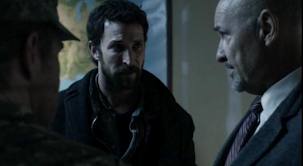
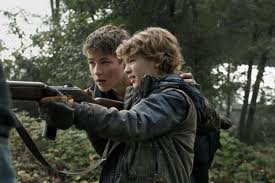
The science fiction war drama TV show Falling Skies just concluded its second season on TNT with the episode “A More Perfect Union”, and proved that it never rests on its laurels.

Falling Skies stars Noah Wyle as Tom Mason, an ex-history professor and now second in command of a rag-tag militia called the 2nd Mass. Originally based in the Boston area (and for the entirety of its first season), the unit abandoned New England early in the second season to head for the supposed safe haven of Charleston, South Carolina.

As with most filmed road trips stuff happened, usually to progress a storyline or develop characters. For instance, Tom started a tender relationship with the group’s field medic Dr. Anne Glass (Moon Bloodgood), dealt with recriminations from being abducted then released by the alien invaders (from the end of the first season) and had to accept that his children had grown up. The oldest Hal (Drew Roy) became a competent, deadly soldier and a future leader; the youngest Matt (Maxim Knight) grew up too fast and is now doing sentry duty; but the most interesting son is his middle one, Ben. He had been abducted (along with many of Earth’s children) by the aliens before the show started and fitted with a biomechanical device on his spine that enslaved him. Ben was rescued last season but this season covered the repercussions and gave Ben one of Falling Skies’ best arcs. It became clear that he had been altered by his experience, seen with his enhanced physical skills and the psychic links he shared with aliens whenever they were nearby.

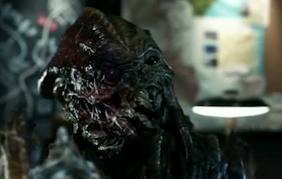
This was instrumental in one of the main arcs. It was revealed that some factions of the arachnid-like alien Skitters were rebelling against their masters and were seeking help from the humans. Tom and others had to overcome their mistrust of the rebel Skitters and while some of the show’s plots moved along a bit too fast, this one had the right pace. This helped viewers to see that things weren’t black and white when it came to the aliens who conquered Earth.

So what waited for them in Charleston? Supposedly the city was the new capitol of the United States with a working government and armed military. More importantly to the beleaguered 2nd Mass., the city offered the promise of a return to normalcy: hot showers, meals and safety. In the penultimate show of the season, “The Price Of Greatness”, they discover that the city had moved underground, leaving behind ruins to throw the aliens off their tracks. Despite a warm welcoming and comforts, things weren’t so great in the underground city. Our heroes were caught between Tom’s old mentor (Terry O’Quinn), the civilian leader, who basically wanted to remain hidden from the aliens and the General Bressler (Matt Frewer), who wanted to go after the aliens. By that episode’s end, the military initiated a coup but that didn’t solve anything.

The final episode of the season had the 2nd Mass. undertaking a covert mission to assassinate an alien Overlord and destroy a cobbled-together installation. There was genuine tension, excitement, deaths and new developments to carry over to the third season. The acting and character development was very well done, it even made viewers feel for an inhuman rebel Skitter when it was killed. That alien never spoke and was quite hideous, but anyone would’ve felt its plight as it desperately tried to fight its alien enemies.

There are many questions unanswered in the show, chiefly, what do the aliens want with Earth? By the end of “A More Perfect Union” it seems as if the aliens are at war with another alien race, but it’s unknown if the new aliens can be counted as allies. Falling Skies gave viewers enough bait to entice them to keep watching.

Many second seasons for shows are make or break in terms of quality. Luckily for Falling Skies, it has found its bearings in the second season and like any worthwhile TV show leaves viewers eager for new episodes and new seasons.

Lewis T. Grove

Theme Park Wars: Star Trek Vs. Star Wars


Theme parks are in a constantly competing with each other with new rides and attractions. Some of the most successful ones are those based on popular science fiction properties. As fans know, Star Wars and Star Trek have taken part in these so-called theme park wars.

Star Tours Past & Present

One of Disney’s greatest rides is Star Tours based on the Star Wars films. It is located in Disneyland, Disney’s Hollywood Studios, Disneyland Paris and Tokyo Disneyland. It was recently given a major facelift by adding new 3D adventures and is now open in the first three parks.

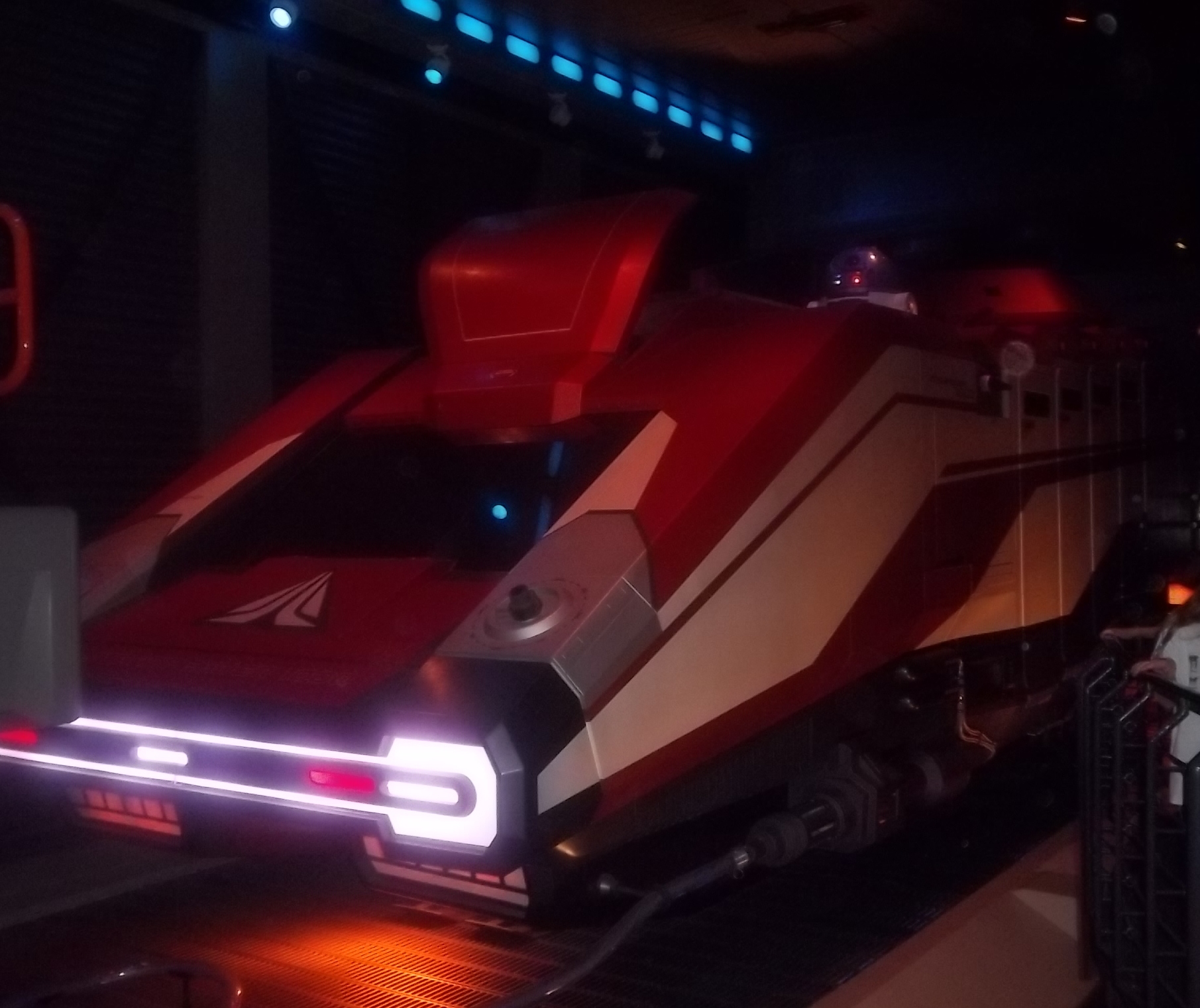
The original Star Tours took place in the Star Wars Universe shortly after the events of Return Of The Jedi. Star Tours was a galactic tour company that offered rides with their fleet of StarSpeeder 3000s. Riders entered a building whose architecture resembled one from the Star Wars films. Inside was a large queue area/spaceport that featured a full-scale mockup of a StarSpeeder 3000. R2-D2 was mounted on top of the vessel and an audio-animatronic version of C-3PO could also be seen in this area. The audio-animatronics of these robots were very well done and looked authentic.

The trip was supposed to take riders to Endor’s moon. However, once onboard the craft, which was a simulator, the pilot droid RX-24 (voiced by Paul Reubens) overshot the moon. The ship and riders wound up in a couple of cosmic misadventures, culminating in a crossfire between Rebel X-Wing fighters and TIE fighters around another Death Star.

It was a fun ride and an instant hit when it opened in Disneyland in 1987. However as with all rides, it grew stale for many veteran riders. Other more elaborate simulator rides came out afterwards that amped up the thrills and effects. Still this ride remained a popular mainstay in the parks.

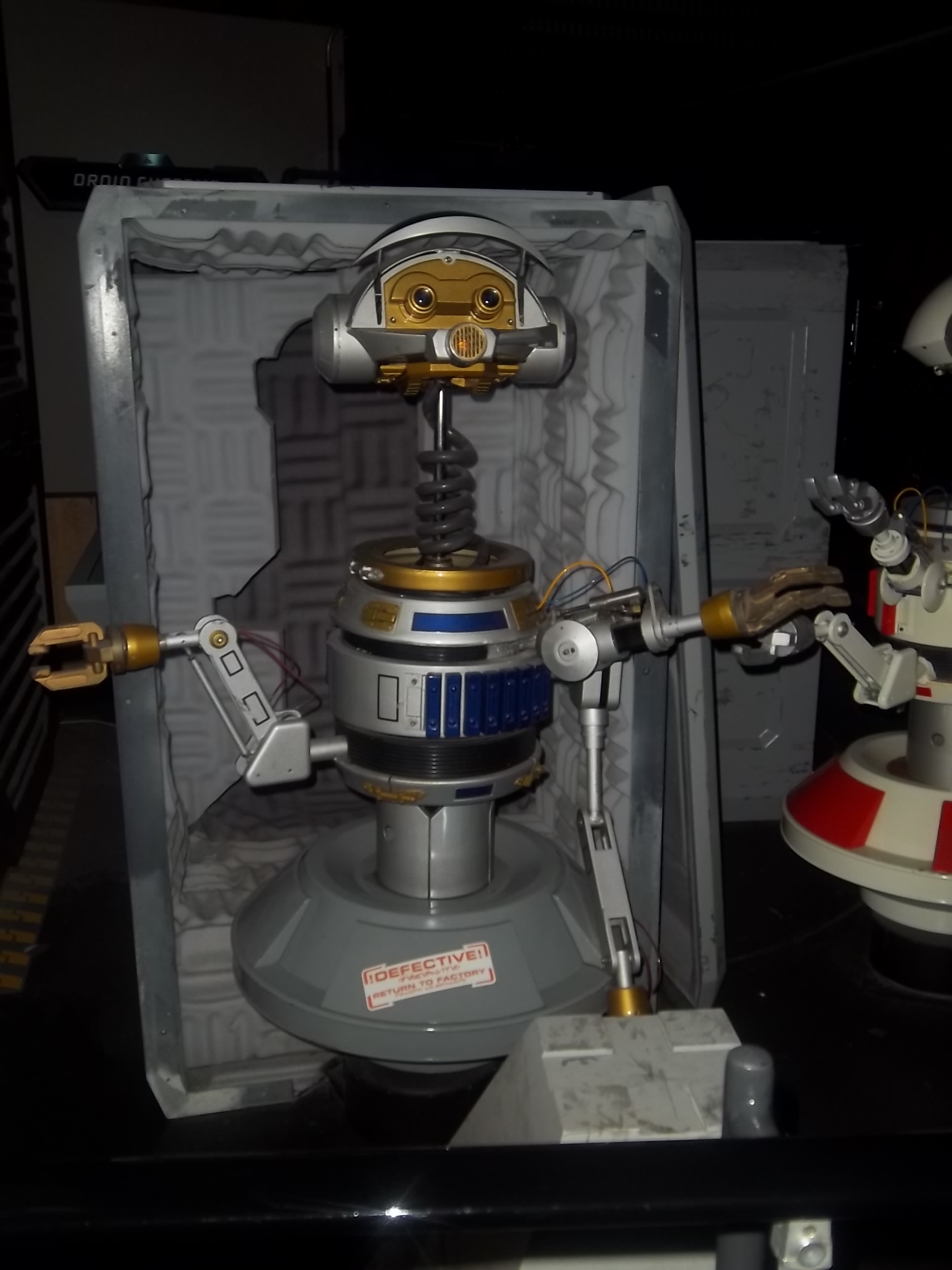
Eventually George Lucas and Disney decided to upgrade the rides. The storyline was changed and new films were produced in 3D. The new version called Star Tours: The Adventures Continue  (unofficially called Star Tours 2.0) emphasized the fact that it now features several different scenarios for riders. It made its debut in Disney’s Hollywood Studios on May 2011 and opened a bit later in the other parks. This ride now takes place in between Episodes III and IV.  While R2-D2 plays the same role in the new version, C-3PO has a larger role as an accidental pilot inside the spaceship. The queue area remains largely the same but is enhanced with large video screens featuring shots of different worlds seen in the Star Wars films. Plus, the re-named StarSpeeder 1000 is now painted with red highlights. RX-24 can also be spotted in the queue as a defective droid.

In the new plotline, Imperial stormtroopers, sometimes led by Darth Vader, attempt to board the StarSpeeder 1000 because one of the riders (randomly chosen and shown on a monitor) is actually a Rebel spy. After escaping, riders go onto two distinct destinations and receive a holographic message from either Admiral Ackbar, Yoda or Princess Leia to deliver the spy to safety.

Destinations include Tatooine, Kashyyyk, and Hoth. What riders experience is completely random and each ride feels new. All in all, there are about 54 different scenarios that can be experienced. This is a great innovation since it keeps the ride fresh and the effects are pure, jaw-dropping eye candy. Even the Naboo scenes with the Gungans and Jar Jar Binks are entertaining.. The new version was an immediate hit. Excited fans rode it over and over again and is building a solid following.

Trek Encounters

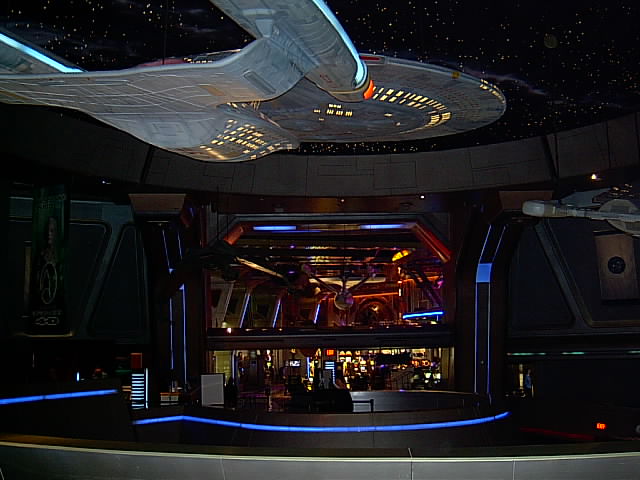
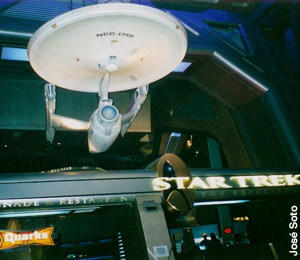
Open from 1998 to 2008, Star Trek: The Experience operated in the Las Vegas Hilton as a mini-theme park inside the hotel. The signature attraction there was Klingon Encounter. Saying it was the only ride in the Experience before BORG Invasion 4D opened in 2004 was inaccurate because guests could still enjoy the Star Trek museum (part of the queue line before the ride) and cavorting at Quark’s Bar. Those were attractions in their own right.

The Klingon Encounter ride started off as any typical simulator ride. Guests would line up in rows behind closed doors and received boarding instructions via video. But the ride took things a step further and fully immersed guests into the Star Trek Universe. A power blackout plunged the room into darkness. Before anyone could react, strobe lights pierced the pitch blackness and then the lights came back on, revealing a transporter room of the Enterprise D complete with uniformed Starfleet personnel! The dumbfounded guests were led to an elevator which took them to a perfect recreation of the starship’s iconic bridge. The consoles and stations had the same exact Okudagrams that eagle-eye viewers noticed on DVDs. Commander Riker then appeared on the bridge’s main viewscreen and informed guests that they were transported into the future because some renegade Klingons wanted to capture one of the guests who is related to a certain starship captain. Then the guests left for the Enterprise’s hangar bay and boarded a Starfleet shuttle piloted by Geordi La Forge. The shuttle was the simulator ride. Onboard, riders faced off against pursuing Klingon Birds of Prey before traveling back to Las Vegas.

The entire ride was captivating, helped by the flawless recreation of the starship’s interiors and the actors who stayed in character throughout their performances. It all helped sell the illusion that modern-day guests time traveled into the future.

BORG Invasion 4D did a similar immersion but it wasn’t as involved or shocking as the Klingon Encounter. This time, guests simply visited a Starfleet science station with actors portraying Starfleet officers. The station’s monitors featured the holographic doctor from Star Trek: Voyager. Before long, the station comes under attack by the Borg (with an actual Borg drone invading the station) and guests were evacuated to a theater that doubled as an escape craft. The vessel’s 3D viewscreen showed an immense Borg Cube that captured the vessel. Inside the Cube, the Borg Queen appeared and attempted to assimilate the guests. At this point, effects like wind, fog and tactile sensations were used to create the impression of a Borg attack. Luckily the Voyager commanded by Kathryn Janeway showed up (seen on side monitors) to save the day. Continue reading

The Dark Side Of Spider-Man

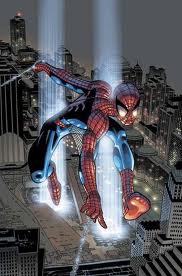
Art by John Romita, Jr.

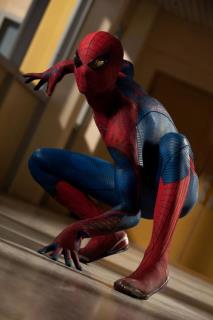
One of the biggest gripes from detractors of the film The Amazing Spider-Man is that it has a dark tone. They blame it on the film studio, which wanted to emulate the mood of the recent, blockbuster Batman films. These critics complain that the character isn’t dark and this new interpretation of Spider-Man doesn’t work for that reason.

However, if anyone looks at the entirety of Spider-Man’s comic books, it can be seen that the character has had dark moments. He isn’t always this light-hearted, happy-go-lucky wise guy that breezes through life. A closer look will show that often his world is bittersweet. Just as often as he loses while he wins. Spider-Man may win a climactic battle against the Green Goblin, but his alter ego Peter Parker faces eviction because he doesn’t have the money to pay rent.

Or the web swinger faces public hostility and derision from the police who consider him an outlaw. Usually, stories in the comic books portrayed him as being persecuted by trigger-happy policemen.

Then there are the tragic periods in Parker’s life.

Dark Origin & History

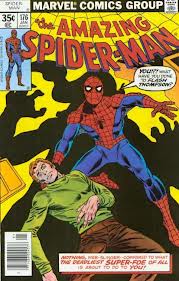
To start, in his debut story (Amazing Fantasy#15), his uncle is killed by a burglar and Parker learns at the end of the tale that he is responsible for his uncle’s death because earlier in the story, he

Art by Ross Andru

selfishly refused to stop the burglar during an unrelated robbery. It may not compare with the agony of the Punisher’s family being gunned down by mobsters but it’s not anything lightweight. Actually most superheroes have some kind of tragic catalyst that turned them heroic.

Throughout his history, Parker has endured many hardships since he’s become Spider-Man. Probably the worst, after his uncle’s death, is the killing of his girlfriend Gwen Stacy at the hands of the Green Goblin in The Amazing Spider-Man #121. This affected him deeply for several years and is a monumental event in comics because it was one of the first times that a main character’s loved one was killed and marked the end of the silver age of comics.

Going Too Far To The Dark Side

Spider-Man has gone through several grim, brooding periods. Some were rather forced and done to sell issues. This happened in the early ’90s after his supposedly deceased parents showed up alive and well from issues #366-389 in the first volume of The Amazing Spider-Man. At the end of that storyline, they were revealed to be robotic doubles sent by his deceased friend Harry Osborn (a.k.a. the second Green Goblin) to basically screw with Parker’s head. For several issues afterward, the web swinger lost it, he gave up on his Parker identity and ran around town emulating a dark hero like Batman. These issues were poorly written because they went overboard with his psychotic reaction. Unfortunately, this events led to the infamous Clone Saga.

There was also the infamous undoing of his marriage that was done using  a convoluted meeting with the demonic entity Mephisto in the storyline “One More Day”. Going completely against character, the creators had Parker make a deal with the devil to save his aunt with his marriage to Mary Jane being wiped from history as a price. This incident probably damaged Parker more than any other because it showed that by agreeing to deal with the devil he lost part of his soul. He seemed much less heroic. It didn’t have to be that way, the editorial board could have just had him get divorced and move on with his life, but they tampered too much with Parker’s integrity.

Memorably Bleak Moments

Art by Mike Zeck

But the character has faced dark events that were successfully told. Take the classic storyline “Kraven’s Last Hunt”,  written by J. M. DeMatteis, where his foe Kraven the Hunter defeats him, puts him in a death-like state and even buries him alive. Later Kraven assumes Spider-Man’s identity and becomes a twisted, violent version of the hero. Parker has to literally claw his way out of the grave and face his inner demons afterwards.

Then there was issue #36 of the second volume of The Amazing Spider-Man. Known as the  “Black Issue” it’s the one where Spider-Man dealt with the 9/11tragedy. There wasn’t anything cheery or fluffy about this story or the character. In fact, it showed how helpless and angry the superhero felt and it worked because since Spider-Man is more of an everyman character, it was easy to identify with him. We all felt like he did during that terrible day.

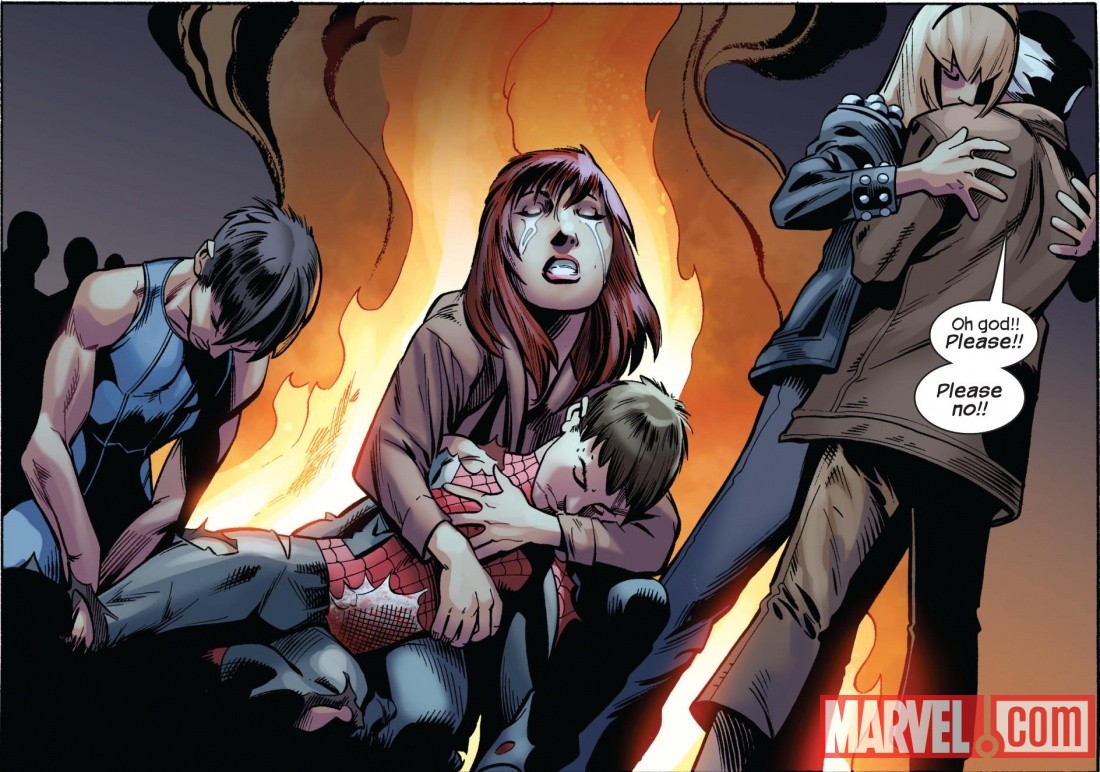
The web slinger’s bleakest moment was obviously when he died in Ultimate Spider-Man # 160. In the “Death Of Spider-Man” story arc, the Ultimate Universe version of Spider-Man fought desperately against his greatest foes and met his end after defeating the Green Goblin. It was one of the character’s most unforgettable stories. Thankfully, readers still have Peter Parker to root for in the regular continuity.

Art by Mark Bagley

Of course, not every storyline is bleak and dreary. The comic books balance the mood all the time with gritty stories like “Kraven’s Last Hunt” to more fun-filled yarns like “Spider Island” and even heartwarming ones like “The Kid Who Collects Spider-Man” (The Amazing Spider-Man #248). Actually DeMatteis’ Spider-Man tales often took on a philosophical and poignant bent with memorable stories like The Amazing Spider-Man: Soul Of The Hunter a sequel to “Kraven’s Last Hunt” and “A Death In the Family” (The Amazing Spider-Man #400). The bottom line is that throughout many tales, he faced many moral dilemmas and almost always rises to the occasion.

A Light Misconception

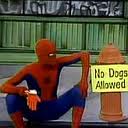
The general public has this misconception that Spider-Man is some kind of goody two shoes and that is largely due to how he is portrayed outside of comics. It probably all started during his first cartoon series in the ’60s and when he appeared in silly live-action segments of the kids’ program The Electric Company. Then whenever he appeared in other animated shows, the more grimmer stories couldn’t be used. This however led to lightweight shows like Spider-Man And His Amazing Friends.

Sam Raimi’s Spider-Man films also contributed to this lightweight perception. In the first two films, the character swings around New York yelling out “Wahoo!” with swooning fans cheering at him (a rare occurrence in comic books) and leaves behind perfectly typewritten notes saying “Courtesy of your friendly neighborhood Spider-Man”. The movies were enjoyable but felt cheesy at times. Things took a turn for the worst with Spider-Man 3 where the attempts to have the character go dark were as laughable as anything seen in the Joel Schumacher Batman films. This isn’t a slight against Raimi, his first two Spider-Man films are fun to watch. If anyone is to blame for this perception it could be the marketing people who want to make sure the character is kid friendly in order to sell more merchandise.

Regardless of marketing efforts, it was refreshing to see the character in a more realistic light during the recent movie which balances thing out. After all, like it or not, sometimes life is dark, even for Spider-Man.

Lewis T. Grove

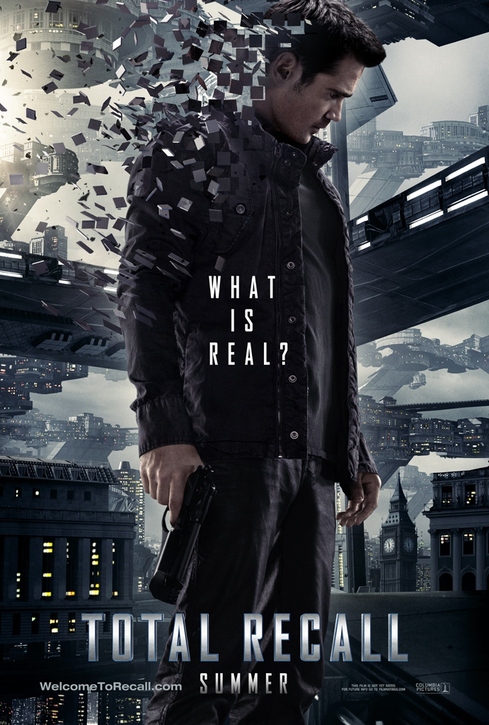
Total Recall Is Easy To Forget

Let’s get to the point, the Arnold Schwarzenegger version of Total Recall is better than this new one with Colin Farrell. I have to admit I never read the source material by Philip K. Dick that both films are based upon. So I judged this film on how it compares to the 1990 version and the level of satisfaction I get from watching it.

The original sci-fi classic is superior because of Schwarzenegger’s forceful type A personality, which is both abrasive and appealing at the same time. He has action-motivated comedy timing, delivering lines with a unapologetic Austrian accent. That movie had your classic Schwarzenegger lines and Arnold’s nature blended perfectly with Paul Verhoeven’s stark vision of the future. It was easy to buy that Schwarzenegger’s character of Douglas Quaid grew into a freedom fighter, he was someone you could cheer. In the new version of Total Recall, Farrell’s character is more of a scared loner and less heroic. It’s largely the same premise, a bored factory worker in the future tries to have exciting memories implanted into him but learns he’s some kind of super spy and involved with a wide conspiracy with everyone out to kill him including his wife. On a side note, one of the few things I liked about this Total Recall were the two main women. Kate Beckinsale (Quaid’s wife) and Jessica Biel (his lover Melina) are incredibly attractive and captivating.

The new film also lacks Verhoeven’s cynical humor that made the first one so memorable. Gone are the mutants and the Mars setting. Although we do get a few nods to the original such as the three-breasted hooker and that old lady that was really Quaid in disguise when he arrives on Mars that kept saying “two weeks,” makes an appearance. But I found myself missing Mars, it made the original film seem more massive and epic. Another thing missing is a memorable and powerful soundtrack that the original had. I can’t even remember the score to this new version of Total Recall but to this day I can clearly remember Jerry Goldsmith’s soundtrack for the original film.

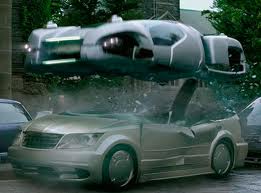
The production design in the new Total Recall is spectacular to look at. The transportation system used to travel between two cities on opposite sides of Earth was really interesting. Basically in this version, Earth is a toxic, uninhabitable wasteland except for two cities (The United Federation of Britain and The Colony-formerly Australia). The only way to travel is to use a gravity elevator that actually goes through the planet’s core. It reminded me of that great underrated gem The Core. As a passenger approaches the center of the planet the gravity reverses since the elevator is headed to the opposite side of the world and the chairs in the elevator have to rotate. Several interesting scenes take place in this setting and was one of the film’s few highlights.

Some of the other future tech was also neat to look at. For example, they use phones that are imbedded into palms and the robot police that pursue Quaid were really cool and would’ve fit in perfectly with Verhoeven’s Robocop.

But this film lacked Schwarzenegger and it suffered; it just wasn’t very interesting. There was not enough comedy relief- or compared to Schwarzenegger, not enough signature comedy by the leading actor. I don’t blame Collin Farrell though; Arnold is one of a kind. I knew Total Recall was in trouble because of the fact that I fell asleep twice while watching it. Even Ice Age: Continental Driftis a better film than this one. So IOW, (using a thick Austrian accent) “Get your ahss back to Mars.”—at least, on blu ray or DVD- with the original Total Recall.

GEO