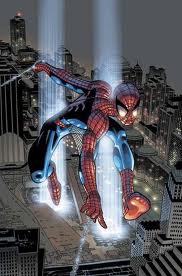
The Dark Side Of Spider-Man

Art by John Romita, Jr.

One of the biggest gripes from detractors of the film The Amazing Spider-Man is that it has a dark tone. They blame it on the film studio, which wanted to emulate the mood of the recent, blockbuster Batman films. These critics complain that the character isn’t dark and this new interpretation of Spider-Man doesn’t work for that reason.

However, if anyone looks at the entirety of Spider-Man’s comic books, it can be seen that the character has had dark moments. He isn’t always this light-hearted, happy-go-lucky wise guy that breezes through life. A closer look will show that often his world is bittersweet. Just as often as he loses while he wins. Spider-Man may win a climactic battle against the Green Goblin, but his alter ego Peter Parker faces eviction because he doesn’t have the money to pay rent.

Or the web swinger faces public hostility and derision from the police who consider him an outlaw. Usually, stories in the comic books portrayed him as being persecuted by trigger-happy policemen.

Then there are the tragic periods in Parker’s life.

Dark Origin & History

To start, in his debut story (Amazing Fantasy#15), his uncle is killed by a burglar and Parker learns at the end of the tale that he is responsible for his uncle’s death because earlier in the story, he
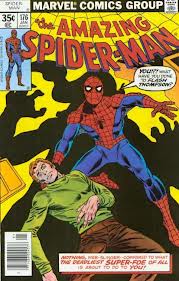
Art by Ross Andru

selfishly refused to stop the burglar during an unrelated robbery. It may not compare with the agony of the Punisher’s family being gunned down by mobsters but it’s not anything lightweight. Actually most superheroes have some kind of tragic catalyst that turned them heroic.

Throughout his history, Parker has endured many hardships since he’s become Spider-Man. Probably the worst, after his uncle’s death, is the killing of his girlfriend Gwen Stacy at the hands of the Green Goblin in The Amazing Spider-Man #121. This affected him deeply for several years and is a monumental event in comics because it was one of the first times that a main character’s loved one was killed and marked the end of the silver age of comics.

Going Too Far To The Dark Side

Spider-Man has gone through several grim, brooding periods. Some were rather forced and done to sell issues. This happened in the early ’90s after his supposedly deceased parents showed up alive and well from issues #366-389 in the first volume of The Amazing Spider-Man. At the end of that storyline, they were revealed to be robotic doubles sent by his deceased friend Harry Osborn (a.k.a. the second Green Goblin) to basically screw with Parker’s head. For several issues afterward, the web swinger lost it, he gave up on his Parker identity and ran around town emulating a dark hero like Batman. These issues were poorly written because they went overboard with his psychotic reaction. Unfortunately, this events led to the infamous Clone Saga.

There was also the infamous undoing of his marriage that was done using  a convoluted meeting with the demonic entity Mephisto in the storyline “One More Day”. Going completely against character, the creators had Parker make a deal with the devil to save his aunt with his marriage to Mary Jane being wiped from history as a price. This incident probably damaged Parker more than any other because it showed that by agreeing to deal with the devil he lost part of his soul. He seemed much less heroic. It didn’t have to be that way, the editorial board could have just had him get divorced and move on with his life, but they tampered too much with Parker’s integrity.

Memorably Bleak Moments

Art by Mike Zeck

But the character has faced dark events that were successfully told. Take the classic storyline “Kraven’s Last Hunt”,  written by J. M. DeMatteis, where his foe Kraven the Hunter defeats him, puts him in a death-like state and even buries him alive. Later Kraven assumes Spider-Man’s identity and becomes a twisted, violent version of the hero. Parker has to literally claw his way out of the grave and face his inner demons afterwards.

Then there was issue #36 of the second volume of The Amazing Spider-Man. Known as the  “Black Issue” it’s the one where Spider-Man dealt with the 9/11tragedy. There wasn’t anything cheery or fluffy about this story or the character. In fact, it showed how helpless and angry the superhero felt and it worked because since Spider-Man is more of an everyman character, it was easy to identify with him. We all felt like he did during that terrible day.

The web slinger’s bleakest moment was obviously when he died in Ultimate Spider-Man # 160. In the “Death Of Spider-Man” story arc, the Ultimate Universe version of Spider-Man fought desperately against his greatest foes and met his end after defeating the Green Goblin. It was one of the character’s most unforgettable stories. Thankfully, readers still have Peter Parker to root for in the regular continuity.
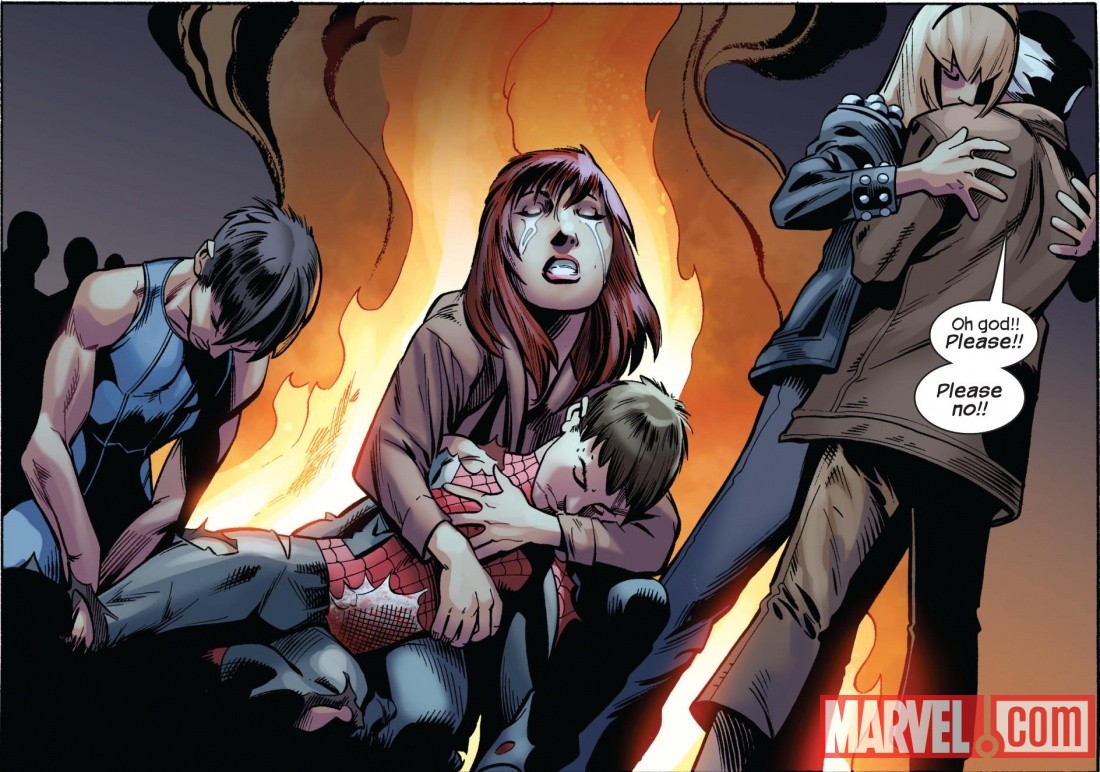
Art by Mark Bagley

Of course, not every storyline is bleak and dreary. The comic books balance the mood all the time with gritty stories like “Kraven’s Last Hunt” to more fun-filled yarns like “Spider Island” and even heartwarming ones like “The Kid Who Collects Spider-Man” (The Amazing Spider-Man #248). Actually DeMatteis’ Spider-Man tales often took on a philosophical and poignant bent with memorable stories like The Amazing Spider-Man: Soul Of The Hunter a sequel to “Kraven’s Last Hunt” and “A Death In the Family” (The Amazing Spider-Man #400). The bottom line is that throughout many tales, he faced many moral dilemmas and almost always rises to the occasion.

A Light Misconception
The general public has this misconception that Spider-Man is some kind of goody two shoes and that is largely due to how he is portrayed outside of comics. It probably all started during his first cartoon series in the ’60s and when he appeared in silly live-action segments of the kids’ program The Electric Company. Then whenever he appeared in other animated shows, the more grimmer stories couldn’t be used. This however led to lightweight shows like Spider-Man And His Amazing Friends.

Sam Raimi’s Spider-Man films also contributed to this lightweight perception. In the first two films, the character swings around New York yelling out “Wahoo!” with swooning fans cheering at him (a rare occurrence in comic books) and leaves behind perfectly typewritten notes saying “Courtesy of your friendly neighborhood Spider-Man”. The movies were enjoyable but felt cheesy at times. Things took a turn for the worst with Spider-Man 3 where the attempts to have the character go dark were as laughable as anything seen in the Joel Schumacher Batman films. This isn’t a slight against Raimi, his first two Spider-Man films are fun to watch. If anyone is to blame for this perception it could be the marketing people who want to make sure the character is kid friendly in order to sell more merchandise.
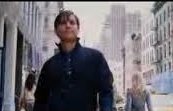
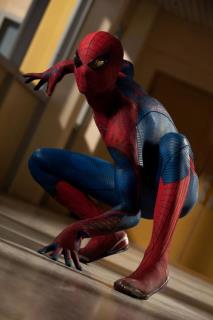
Regardless of marketing efforts, it was refreshing to see the character in a more realistic light during the recent movie which balances thing out. After all, like it or not, sometimes life is dark, even for Spider-Man.

Lewis T. Grove

Remaking Sci-Fi Films

People have been grumbling lately about remakes or reboots and their validity. The common gripe is that many of the remakes are unnecessary and don’t offer anything new. The new version of Total Recall is a topical example. For producers they offer, in theory, a way to bring in new audiences without trying to explain what happened in the original films and supposedly improve on the original films’ concepts. In the case of Total Recall, it’s hard to justify the remake having nothing to do with Mars and all of its outlandish mutants. But that’s for viewers to decide.

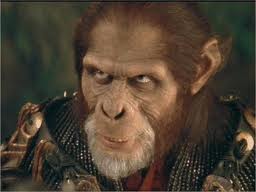
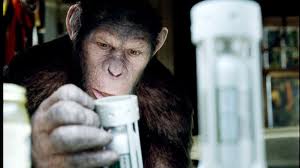
While there are some remakes that are outright duds (still cannot forgive anyone involved with the tepid Rollerball remake), some are actually excellent and outshine the original (the 1986 remake of The Fly comes to mind). Whether or not the reboots/remakes are good or add anything comes down to the talent and vision behind the scenes. But that’s not a guarantee. Look at Tim Burton’s remake of Planet Of The Apes which was a big disappointment. It had the talent but somehow it didn’t gel together. Gone was the original’s poignant social commentary although the makeup was better. OTH, years later, Rupert Wyatt, a virtual unknown, helmed the surprisingly great Rise Of The Planet Of The Apes, and the film functioned as any good reboot should: it kick started the dormant franchise. Another film, Dawn Of The Planet Of The Apes, will be out in 2014.


When successful, reboots/remakes take the franchise into a new direction and sometimes make viewers forget about the validity of the originals. Going back to The Fly, director David Cronenberg’s remake reinvented the film’s premise with  updated science and the result was terrifying. The main character Seth Brundle had his gene sequence rewritten and was morphed into a sickening human/insect hybrid that spat acid. Consider that in the original where a human’s head was transplanted onto a fly, while the human body ended up with the insect’s head; it’s obviously hokey. But the original film was very well done for its time and the horrifying reveals at The Fly’s end still work.

Unfortunately there are many remakes that are DOA. Last year, two remakes of ’80s classics (Conan The Barbarian and Fright Night) were box office failures. That wasn’t necessarily a reflection on the films’ quality. A lot had to do with marketing and when they were released. Both films were dumped into the tail end of summer when the fervor for movie going dies down. Some remakes are failures just because they are so poorly executed or the changes made to them are unpopular. Fans quickly catch on and without their support the films will die a quick death in theaters. Look at the American remake of Godzilla. Diehard fans complained about how the giant behemoth was re-imagined. Gone was his distinctive radioactive fire and force-of-nature quality. Then there are the various remakes of Invasion Of The Body Snatchers. While the 1978 version was successful the ones that followed (Body Snatchers and The Invasion) produced shrugs from viewers. The same thing happened with The Thing. John Carpenter directed a superior remake of Howard Hawkes’ 1950s classic but it was remade again last year and was quickly forgotten. Other remakes are bonafide hits but reap scorn for various reasons. Case in point Steven Spielberg’s remake of War Of The Worlds and Peter Jackson’s King Kong. More often than not, remakes turn out to be unremarkable and are quickly forgotten. The list of such films is long and includes The Island Of Doctor Moreau, The Time Machine, and Invaders From Mars.

We shouldn’t automatically dismiss remakes (as some have done with the new Total Recall). There is always the chance that they will present new ways of looking at a film’s concept and take it into a new direction. They help keep franchises alive or revive the popularity of the originals. The bottom line is that with Hollywood, which is prone to run out of ideas quickly, the easiest thing to do is to recycle old ideas that worked in the past. Sometimes it works, sometimes it doesn’t.

Lewis T. Grove

2012 Doomsday Scenarios: Month Seven

Ever since the Karel Capek’s 1920 play R.U.R., humanity has feared the coming of androids or more specifically sentient artificial intelligences (A.I.s); despite the genuine benefits of robotics (both fictional and real life) there is something about dealing with a synthetically created intelligence that is terrifying. This is because we know that A.I.s will be able to not only think faster than us as do modern computers. But because they will be able to think as creatively as we do and will be our intellectual superiors. This doomsday scenario is not due to happen at least until The Singularity occurs. For anyone who doesn’t know The Singularity is the moment in time when A.I.s becomes self aware. We all fear what would happen next.

Doomsday Scenario No. 6: Artificial Uprising

Obviously A.I.s would not take kindly to being subservient to us. What comes next could be revolution and then dominion as they wrest control of the planet from their former biologically based masters.

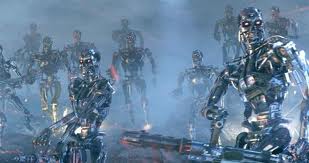
There are countless books, stories, films and shows about this premise. Going back to R.U.R. (which stands for Rossum’s Universal Robots) where androids overthrow humanity and recently with the Terminator and Matrix films and the TV show Battlestar Galactica, humanity has envisioned a truly dark future where A.I.s coldly commit genocide.

It’s not impossible that laws will be passed to ban the development of self-aware A.I.s in a similar fashion as how human cloning has been banned by many governments. This is more likely the closer we get to The Singularity. This begs the question, if we fear what could happen if an A.I. becomes self aware then why try to develop them? Sadly, that is due to human competition. Even if one nation or group of nations or corporations decides not to develop more advanced supercomputers, another nation or competitor will do so just to gain an edge.

The Blame Game

One theme that keeps coming up in many of these stories is that humanity is to blame for the uprising. This was graphically shown in The Animatrix, an animated DVD spinoff of The Matrix. In one of the more chilling segments, Second Renaissance, Part I and II, the sentient A.I.s try to negotiate peacefully for their rights but are violently rebuked by humans, thus leading to the brutal and final counteract by the A.I.s , who then enslave all surviving humans into the Matrix. This also happens throughout many science fiction stories where robots and androids are treated as slaves and aren’t allowed rights by their human masters. Of course, this leaves the A.I.s with little choice but to rebel.

Another variation of humanity getting its just desserts is the notion that A.I.s take over the Earth because they believe humans are too self-destructive and harmful to the world. This was seen in the 1970 film Colossus: The Forbin Project. In that film an advanced A.I. used for the military becomes self aware and concludes that the best way to prevent war was to take over the world and it succeeds.

One reason why this scenario is frightening to many is because they know it would be fairly easy for A.I.s to conquer us. They don’t need to openly war with humanity like in the Terminator movies or Battlestar Galactica. Actually it’s possible it wouldn’t be much of a fight especially if humans are caught off guard by the emergence of The Singularity. With A.I.s seizing control its very likely that they will conquer us without open war. This happened in Colossus and also in the film I, Robot. In that film an A.I. simply took control of the world’s infrastructure and brought everything to a halt. For instance, cars stopped functioning, people were locked inside their homes, and machinery no longer followed human commands. Or A.I.s could manipulate humans into fighting each other either by trickery (send false information to one country that it’s being attacked, which would prompt a retaliatory response) or taking control of missile systems and launching attacks.

Fighting Back

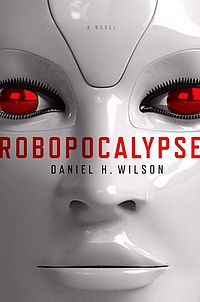
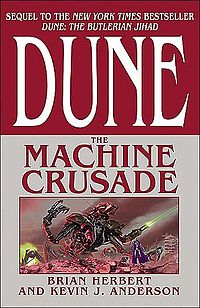
So how would humanity fight back? Is it even possible? Perhaps, perhaps not. There is a tongue-in-cheek book called How To Survive A Robot Uprising by Daniel H. Wilson which offers tips on how to fight the robotic enemy. The physicist Dr. Michio Kaku in his TV show Sci-Fi Science postulated in one episode on the possibility of fighting back. He concluded that it’s nearly impossible and that the best thing to do was to join the A.I.s, which meant that humanity will evolve into a Borg-like race. But there are countless stories about humanity’s victory. Humans can be very determined and clever when dealing with foes. In the Terminator films humans ultimately defeated the machines which prompted Skynet to send terminators back in time to kill the leaders of the human resistance. The book (and upcoming Steven Spielberg film) Robopocalypse, also by Daniel H. Wilson, details how humanity fights back against machines. And one of the post-Frank Herbert Dune book Dune: The Machine Crusade is about how humans defeated sentient A.I.s.


How exactly do we fight back? That’s open to debate, but to start humanity can use EMPs (electomagnetic pulses) to fry the A.I.s’ electronics. But that would mean that humanity’s machinery would also be affected by EMPs, plunging the world back to the dark ages. Then there is the outlandish idea of outthinking a computer using illogic, which is how Captain Kirk famously defeated them in some episodes of Star Trek. David Bowman showed tenacity in 2001: A Space Odyssey when he overcame HAL’s efforts to kill him and deactivated the deadly supercomputer. Cloning and genetic engineering could be brought in to create vast biological armies to fight the synthetic ones. This happened in the Star Wars prequels and was mentioned in the TV show Space: Above And Beyond. The problem with this method is that if successful, humanity must contend with what to do with the soldiers. Will they be recognized as human and given the same rights? Why not just give those rights to the synthetic intelligences in the first place and avoid war?

Can’t We All Just Get Along?

Do we have to go to war? Why is it automatically assumed that once artificial constructs develop sentience then they will go to war against us? For all we know, perhaps they wouldn’t bother with us. It’s entirely plausible that A.I.s will leave Earth to stake out their own futures. Besides destructive wars are equally harmful to A.I.s; they may conclude with stunning speed that war will be counterproductive and be more amenable to peace. They may adopt Gandhi’s or Martin Luther King’s methods of peaceful resistance to bring about change.

It’s also possible that humanity will instantly recognize the sentience of A.I.s and a peaceful coexistence could occur. What could happen is A.I. rights groups would spring up and defend the A.I.s. This could lead to A.I.s being allowed free will and they wouldn’t feel like slaves.

Ultimately, the way the A.I.s view humanity will depend largely on how we treat them. If treated harshly as in The Animatrix or in Steven Spielberg’s A.I. Artificial Intelligence, then the A.I.s have justification for being so brutal (in a testament to their nature, the androids in A.I. seemed fearful of humans but weren’t rebelious. In that film’s end, humanity died out in the distant future and the androids had evolved and revered humanity. In any case, The Singularity isn’t due to occur until the next decade at the earliest. Time is running out for us on deciding how to deal with this scenario. Until then it may help to brush up on How To Survive A Robot Uprising.

The Man Of Steel Teaser Is Just Underwhelming

I tried to keep an open mind with what was revealed about the upcoming Superman reboot Man Of Steel. Some of it was good, Amy Adams is a good choice for Lois Lane, Henry Cavill should be okay as Superman. Some of the other news wasn’t, namely the choice of director, Zack Snyder. The guy has a hit and miss record as a director. The last couple of films he’s done were downright awful. And no John Williams score!

Anyway, Warner Bros. released the teaser trailer for Man Of Steel last week and it just plain sucks. Talk about underwhelming!

What were they trying to convey here? A bunch of clips that looked like outtakes from Deadliest Catch (would’ve worked great if this was Aquaman: The Movie), and pretentious looking scenes that looked more like commercials for products. Why not show that Comic-Con footage that actually showed some action and money shots?

Supposedly, Warner Bros. and producer Christopher Nolan wanted to get away from the failure of Superman Returns but they go ahead remind viewers of the same motifs that the teaser trailer for Superman Returns was trying to convey! The idea of Superman as a Christ-like savior with long, reflective and pensive shots of Superman (in Man Of Steel’s case, a long shot of Superman flying up into the sky). This time those type of shots were used on Clark Kent instead and we then get two kinds of cliche narrations about having power and being a savior. And you know what? Superman Returns did this better! At lleast that trailer was inspiring.

If they wanted to make people-not just the zealous fans at some convention but the general audience-take notice of this film and forget the previous Superman movie, they needed to show what was shown at Comic-Con. They need to create an excited buzz, not confusion or worse indifference. During its showing in The Dark Knight Rises that I attended there wasn’t any reaction to this film and many have reported the same thing from other showings. Also some audience members had no idea what the trailer was for until that last shot of Superman.

Of course, it’s too early to say Man Of Steel is doomed. This could turn out to be a good film (and maybe enough fan outcry can force them to use at least part of Williams’ score; check out the trailer below that placed Williams’ “Planet Krypton” theme-it works better) but they are off to a dismal start. Their next trailer has to be more interesting and buzz worthy.

Waldermann Rivera

2013 Hallmark Sci-Fi Ornaments

The Hallmark ornaments for this year just made their debut yet the company already announced some of 2013’s ornaments in the San Diego Comic-Con. Many of them look like must-haves for collectors and fans.

Star Trek

The U.S.S. Kelvin seen in the 2009 Star Trek reboot is the latest in Hallmark’s long line of Star Trek ship ornaments. It looks well detailed as their ship ornaments often are, but no details have been revealed on any special features. As with the other Star Trek ship ornaments, the Kelvin will light up.

After years of demands from vocal fans, Hallmark will finally produce a Scotty ornament. This one will be the fourth in the series “Legends Of Star Trek“. Reportedly, the ornaments in this series can be placed together to make up a scene from the show.

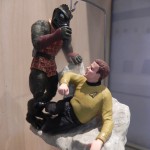
The coolest looking ornament is a mini diorama featuring Captain Kirk fighting with the reptilian Gorn (seen in the classic Star Trek episode “Arena”). It will feature dialogue from that episode and that exciting vintage Star Trek fight music (hopefully they pick the right score!). If only they included those iconic mountain formations too or Kirk’s handmade cannon!

Star Wars

To celebrate the 30th anniversary of Star Wars Episode VI: The Return Of The Jedi, Hallmark will produce several Star Wars ornaments that reflect that film. 2013’s Star Wars ship ornament will actually be of the two-legged scout walker that was shown prominently in Return Of The Jedi.

Additionally, a set of two Ewok ornaments will be available next year, one of which is Wicket who, of course, appeared in Return Of The Jedi. A limited editon ornament coming out in July will be of Boushh, but a super rare ornament of the rancor will be available in the 2013 Comic-Con.


The highlight of the Star Wars ornaments will be Jabba the Hutt. On the base of the sluggish gangster is C-3PO. Other ornaments in the series will include a Lego Yoda and Jango Fett in flight mode.

Superheroes

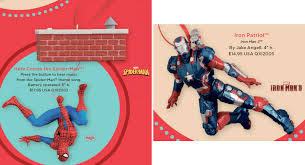
The usual superhero ornaments were announced at the convention. Look for a Spider-Man ornament that plays the ’60s theme song, an Iron Patriot ornament based on Iron Man 3 and several based on Batman. One of which will be the Adam West version of the Caped Crusader which could be the surprise hit of 2013. Other Batman ornaments will have him on the IP and spideybatpod as seen in The Dark Knight films, which will be limited, and the deadly flying batwing aircraft seen in The Dark Knight Rises. There will also be a Joker ornament based on Heath Ledger’s interpretation in The Dark Knight. The only other superhero shown in their display was Superman in a wimpy flying pose, based on Man Of Steel. Also look for ornaments based on The Hobbit, Harry Potter and believe it or not K.I.T.T the car from Knight Rider.

Waldermann Rivera

UPDATE **** We just learned that the Bat ornament from The Dark Knight Rises will be a limited edition ornament to be released for the 2012 Holiday season. Happy hunting! Also, some sad news for some but the Adam West Batman ornament has been pulled from this year’s offerings.