Stranger Things: A Tribute To Classic ’80s Sci-Fi and Horror

Stranger Things Poster

Summer TV series, especially genre ones, have been hit or miss in terms of quality. Sadly, many often fall into the miss category (see Under the Dome and Zoo as examples). But Stranger Things streaming this summer on Netflix is definitely one of the best TV series to come out in a summer season.

Will and Mike Stranger ThingsTaking place in a small Indiana town during the ’80s, Stranger Things is an homage to all the memorable sci-fi and horror tales from that period. Many critics are comparing it to early Steven Spielberg films but that isn’t a fitting description. This series is darker, less whimsical and a better comparison would be to an early Stephen King novel that has had a superior live-action adaptation. Then it throw in elements of the lower-grade genre efforts from that time but executed better and a soundtrack that would fit in nicely with a John Carpenter film. It may sound like a mish-mash but it works. The reason why is that despite its ’80s trappings and callbacks to films and stories from the era, Stranger Things has a timeless and unique feel.

The eight-episode series begins when a boy, Will Byers (Noah Schnapp), disappears after a night out with his buddies. A mystery develops as other characters try to find out what happened to Will. But we, and his mother Joyce (Winona Ryder), learn that he is actually trapped in a dark, parallel dimension and stalked by a flesh-eating monster without a face. As this happens, his friends Mike Wheeler (Finn Wolfhard), Dustin (Gaten Matarazzo) and Lucas (Caleb McLaughlin) meet a strange and quiet girl known only as Eleven (Millie Bobbie Brown), or El for short. It turns out she is an escapee from a nearby government facility run by Dr. Brenner (Matthew Modine) that has been developing her telekinetic and telepathic powers to enter the same dimension Will is trapped in. These experiments opened up a gateway between the two dimensions and the monster that threatens Will is now also preying on our side. Naturally, Dr. Brenner and his associates don’t have her best interest at heart and are pursuing her as she hides out with the boys.

Stranger-Things-Lucas-Dustin-Mike-Eleven


One of the reasons why Stranger Things works so well has to do with the characters and how they are portrayed. This is critical in the case of the children. Their performances seem genuine and their dialogue is authentic. By listening to them, it doesn’t feel like some adult wrote their words. If any of the young performances were sub-par, the series would’ve tanked. But thankfully, these young actors were well chosen especially Brown and Wolfhard. El says little but is very expressive and tortured while experiencing life outside the facility. All the while, El displays an appropriate childlike response to the outside world.

Joyce Byers and Company in Stranger Things

Other standout performances include Ryder as Will’s distraught and determined mother and David Harbour as Chief Hopper, a broken disgruntled sheriff who finds a path to redemption as he gets drawn into the mystery of Will’s disappearance. Other young performances that deserve shoutouts are Natalie Dyer as Nancy Wheeler and Charlie Heaton as Will’s older brother Jonathan. Aside from the stock evil government types, the characters are not one-dimensional. They have flaws and quirks but rise to the occasion when the time comes.

And there is plenty of meat for genre fans in this story. El confronts monster Stranger ThingsOwing thanks to classic sci-fi films from that time like The Thing, Alien and The Fly, Stranger Things delivers actual jump scares and gross out moments and the monster is disgustingly original and disturbing. The people behind the show (The Duffer Brothers) wisely kept its appearance vague until the final episodes and its full revelation won’t disappoint horror and sci-fi fans. Finally, Stranger Things has many Easter eggs and tributes to classics from that time that would delight fans of Star Wars, The Thing and more, but it doesn’t go overboard. With that said, the series isn’t perfect. Although its characters and dialogue are fresh and above average, the same can’t be said for some of its plotting. At times there are contrivances and certain developments are too familiar. Still, the series on the whole is enjoyable and hits its goals.

At eight episodes, the series took the right amount of time to tell its story while dropping hints of further developments. At the same time, not every question is answered so hopefully a second season will be commissioned because the warmly familiar and disturbing worlds of Stranger Things are worth revisiting.

Lewis T. Grove

Top Ten Star Trek Enemy Races and Groups

 Star Trek has a rich trove of enemy alien races and organizations that have plagued our heroes throughout the many films and TV shows. Aside from being formidable, many of the opponents featured in the beloved sci-fi franchise were actually more complex and layered, which is why they resonate so much with fandom. These are the best of the lot and hopefully we’ll see some of them again when Star Trek: Discovery premieres next year.

The Breen with the Dominion

10. The Breen Confederacy: Little is known about this warlike, enigmatic race who wear fully enclosed refrigeration suits. Even their speech is undecipherable. Often mentioned in Star Trek shows they never appeared until the Star Trek: Deep Space Nine episode “Indiscretion” and later allied with the Dominion in the war against the Federation, Klingons and Romulans. This resulted in a Breen attack on Earth that destroyed Starfleet headquarters and set back the Federation war effort against the Dominion. This alone proved the Breen are a deadly adversary to be reckoned with.

Species 8472

9. Species 8472: The nearly undefeatable Borg met their match and then some when they tried assimilating Species 8472. In their first appearance in “Scorpion, Part I” (Star Trek: Voyager), the three-legged aliens shocked viewers when they easily wiped out entire Borg cubes. As one of the most alien-looking enemies featured in Star Trek, Species 8472  stand out due to their weird physiology and use of biotechnology; plus the fact that they kicked the Borg’s collective butts.

8. The Xindi: Made up of five distinct races, the Xindi inflicted a 9/11-type of attack on Earth in the Star Trek: Enterprise episode “The Expanse”. The crew of the Enterprise entered Xindi space in a season-long storyline to prevent the race from destroying the Earth.

3 Xindi racesThe Xindi can be thought of as a prototype of the Federation due to the diverse makeup of their member races: reptilian, aquatic, insectoid, primate and arboreal. Eventually, we learned that they are just as diverse in their beliefs in that some factions are more warlike while others are more reasonable. This enabled Captain Archer and  the Enterprise crew to win over some Xindi members. But others continued with their final attack on Earth and had to be stopped.

7. Terra Prime: An unfortunate fact is that even in the near-paradise future of Star Trek the worst enemy is us, humanity. Many Star Trek stories dwelled on evil humans and organizations, whose antagonistic belief system ran counter to the more enlightened humans in Star Trek. Out of the many nefarious examples like Section 31, the Mirror Universe inhabitants, and rogue Starfleet officers the worst of the bunch is Terra Prime.

John Paxton and Terra Prime

Led by John Frederick Paxton, they are a xenophobic terrorist group in the 22nd century that wanted to isolate Earth and humanity from the galaxy and keep out all alien influences…sounds familiar? Terra Prime only appeared in “Demons” and “Terra Prime”, which were among the final episodes of Star Trek: Enterprise. If the show had continued they would have made a perfect adversary as Earth began its first steps towards forming the diverse Federation.

6. The Vidiian Sodality: If anything the Vidiians are the grossest looking enemy aliens to appear in any Star Trek. We never saw much of them in Star Trek: Voyager. but they were still unforgettable when they did show up. First introduced in the episode “Phage” the Vidiians are a race suffering from a deadly disease that ravages their bodies. In order to stay alive they graft onto themselves body parts from other races, which explains their hodgepodge look.

Vidiians

What makes them so scary is that they just see other races, including us, as resources to cull. Most of them do not think twice as they carve up their victims and distribute their body parts to other members of their race. To them, the fact that they are saving other Vidiians easily justifies their actions while it horrifies everyone else.

5. The Romulan Star Empire: On the whole, the Romulan Star Empire are the go-to totalitarian enemy in Star Trek. Stories dealing with them are basically commentaries about the Cold War in that the Romulans are bitter rivals of the Federation. An uneasy stalemate existed between the two powers as both were equally matched, but there is something more about this race of Vulcan offshoots.

Romulans in Star Trek: Nemesis

This was seen in their very first appearance (“Balance of Terror”, Star Trek), as we met an unnamed Romulan commander who played a cat-and-mouse game with Kirk and the Enterprise. He was Kirk’s equal in terms of cunning, but was sympathetic due to his weariness about war and devotion to duty. Throughout their many appearances in the Star Trek shows, the best episodes about them were the ones that had them as fully fleshed out people who weren’t quite evil but happened to be on the other side.

4. The Cardassian Union: Once highly enlightened and cultured, the Cardassians became militaristic and harsh in order to survive. Their totalitarian ways led to conflicts with other space-faring powers like the Federation. Their prejudiced beliefs about other races also justified their brutal occupation of the planet Bajor as they stripped that planet and its people of its resources.

Cardassian in Star Trek Deep Space Nine

Although they first appeared in Star Trek: The Next Generation (“The Wounded”), the Cardassians were fully developed in Star Trek: Deep Space Nine as one of the main adversaries. What set them apart from other villains was their love of intrigue and desire to regain lost glory, as well as their distinct look with grey and scaly skin. That show’s best stories showed that Cardassians had deep, nuanced and complicated viewpoints as they struggled to find their place in the galaxy.

3. The Klingon Empire: Arguably, the most popular alien race in Star Trek, the Klingons are the perfect antagonistic foil for the peaceful Federation. They first appeared in the classic Star Trek episode “Errand of Mercy” and like the Romulans, they are supposed to represent the West’s Cold War rivals. Known for their harsh and warlike demeanor, the Klingons actually have a complex code of honor and a rich culture. Backing up their brutish reputation, the Klingons are a militaristic match for the Federation with a fearsome fleet of warships and they are all too eager to prove their mettle against anyone.

Klingons

Even though they were the opposite of the Federation, the Klingons eventually became solid allies by the time Star Trek: The Next Generation came along. In the Star Trek spinoffs, more aspects about these noble savages were explored and we realized there was more to them than their love for fighting. That is why they have become so popular to the point that a real-life subculture has emerged that emulates the Klingons.

2. The Dominion: In many ways the Dominion can be considered the dark version of the Federation. They are composed of several different races, the most prominent being the shapeshifting Founders, the deceitful bureaucratic Vorta and the battle-hungry Jem’ Hadar–the thuggish muscle of the Dominion. But unlike the benevolent Federation, the Dominion are brutal conquerors, who only see other races as adversaries to defeat.

dominion

Their presence was alluded to in early episodes of Star Trek: Deep Space Nine as the Federation began exploring the distant Gamma Quadrant. This raised interest among viewers as to who they were, and they got their answer in the episode “The Jem’Hadar”. From the start the Dominion (represented at first by the reptilian-like shock troopers) demonstrated their ruthlessness and mantra to win at all costs. The Dominion soon proved that they were superior to Starfleet in battle tactics and weapons. When war eventually broke out, the Dominion decimated both the Federation and the Klingons. The fact that they came so close to nearly conquering the Federation is why the Dominion rate so highly on this list.

1. The Borg Collective: Ever since the cybernetic race first appeared in the Star Trek: The Next Generation episode “Q Who?” they have thrilled and terrified fans. What is so frightening about them is their cold, adaptable nature. They forcibly assimilated other races they encounter and add their distinctiveness to their collective in a goal of achieving biological and technological perfection.

Borg

The Borg made an instant impact in their first appearance in how they quickly outmatched the Enterprise and would have assimilated the crew if not for the fact that Capt. Picard had to eat crow to get Q to save them. They are a relentless threat and what makes them more terrifying apart from the other Star Trek races is encountering them means a loss of one’s identity. Whenever they assimilate their victims and forcibly graft cybernetic parts onto them all traces of their personality are gone. By transforming victims into mindless zombies, the Borg turn anyone against their former friends and colleagues. This is something that the Enterprise crew grappled with when Captain Picard was assimilated and used Starfleet’s tactics against the Enterprise and the Federation.

Waldermann Rivera

.


Comic-Con 2016 Highlights

The San Diego Comic-Con for 2016 has come and gone and we’re all the more hyped up after the event. Unlike previous Comic-Cons most of the film studios were all too eager to share the trailers for their upcoming films and TV shows. That is except for 20th Century Fox who took their marbles and went home…actually didn’t even present. They wanted to avoid having their presentations pirated. Nice way to promote Alien: Covenant and the third Wolverine flick, people. Result: DC and Marvel ruled the event by bringing their A game.

Justice League

TV Stuff

The other studios made their announcements and presentations. For TV shows, the third season teaser for The Flash got everyone up in arms in anticipation at seeing the live-action version of Flashpoint. For those in the dark, that’s the comic book event where the Flash saved his mom in the past and created a dark reality. This adaptation won’t be literal but more like what we saw with the Marvel Comics Civil War event in Captain America: Civil War. But it still looks awesome. The other DC shows on the CW also had interesting presentations and announcement, the best of those being that the Legends of Tomorrow will be facing the Legion of Doom and meet the rest of the Justice Society of America.

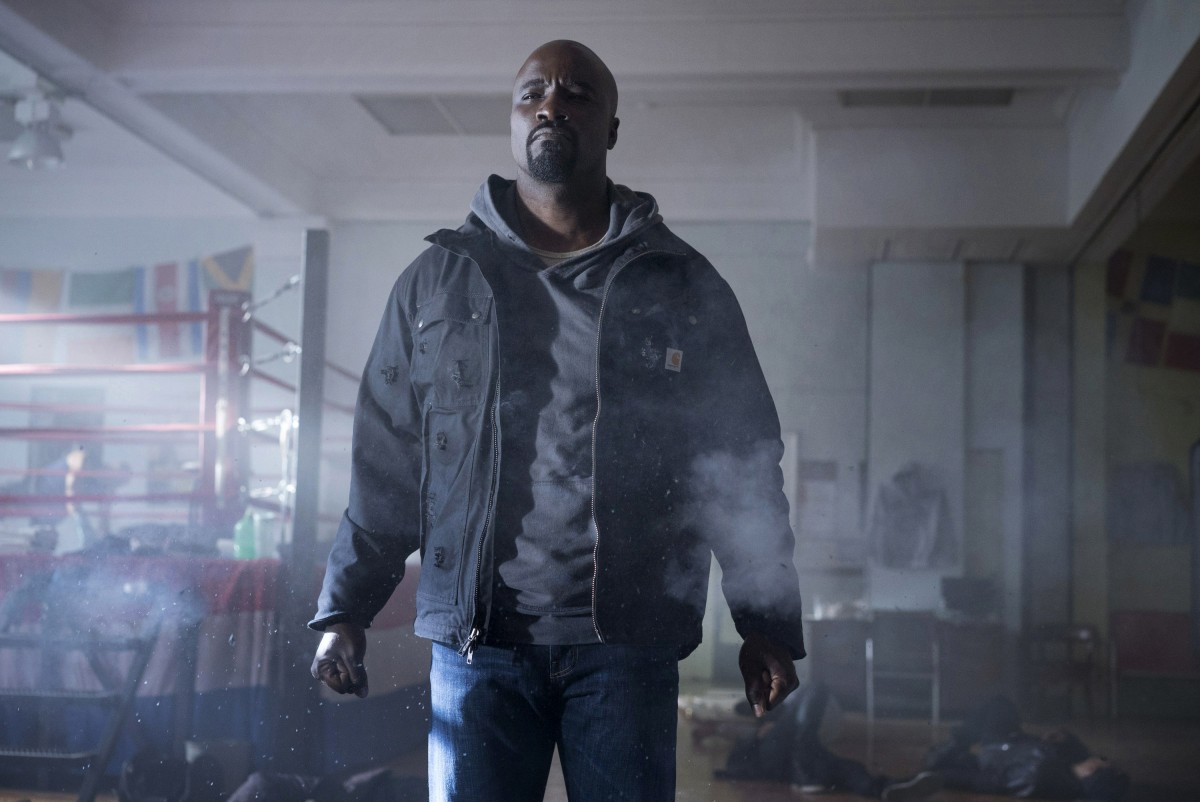
Marvel Studios raised some eyebrows with the revelation that Ghost Rider will be appearing in the fourth season of Agents of S.H.I.E.L.D. and this should be interesting. As for their Netflix stuff, we got teasers of The Defenders (check out our Twitter account with a link to it), Iron Fist, and Luke Cage. The last show looked undeniably badass and thankfully we only have to wait a couple more months.

The biggest TV announcement had to be for Star Trek: Discovery. We saw a glorious 2001: A Space Odyssey-like opener with a starship launching out of a hollowed-out asteroid. What was most intriguing was that the ship’s design is based on one of Ralph McQuarrie’s unused Enterprise designs for the lost Star Trek film Planet of the Titans.

starship Discovery

As cool as it was to see one of McQuarrie’s design come to life, what is sure to get everyone even more excited is that Bryan Fuller, one of the showrunners, confirmed the show will take place in the Star Trek Prime universe! No reboots, people! The real Star Trek has indeed returned! Ahem, apologies to those that love nuTrek, Star Trek Beyond is a fun film that redeems the Star Trek reboots.

Film Stuff

DC Comics and Warner Bros. are still smarting over the lukewarm reception to Batman v Superman: Dawn of Justice. So they didn’t hold back anything in Comic-Con 2016. Amidst the flood of trailers for Suicide Squad, which makes us feel already as if we’ve seen the entire film, came trailers for Wonder Woman and Justice League. The Justice League trailer was very enticing and actually sold us on the Snyderverse version of the Flash. Sure, Grant Gustin rules as Barry Allen but it’s undeniable that Ezra Miller had a lot of charm as the new Flash. The trailer had much more humor than anything seen in Batman v Superman, but where’s Superman? Meanwhile, Gal Gadot clearly shines in the footage shown in both the Justice League and in the trailer of Wonder Woman kicking ass in World War I.

As for DC’s rival Marvel, well they had their goodies as well. Unlike DC, most of the trailers for their upcoming movies are still under lock and key being they are “exclusives” for Comic-Con. There’s no point in trying to scrounge the Internet for pirate footage of Guardians of the Galaxy, Vol. 2 or Spider-Man: Homecoming, it will look like crap and be taken down anyway. But here’s a quick look at Thor: Ragnarok, which will be gone soon:

Marvel should take a cue from DC and present their goods to the larger world who could not attend. The one trailer they released was the second one for Doctor Strange. Make all the snarky remarks that it looks like Inception, but this movie looks astounding! If it works, it will take the Marvel Cinematic Universe in a whole new direction and that is how you keep the superhero film genre afloat. The highlights of Marvel Studios reveals were Brie Larson’s casting as Captain Marvel, the Vulture will be the villain in Spider-Man: Homecoming, and Kurt Russell will play Peter Quill’s dad, aka Ego the Living Planet, in Guardians of the Galaxy, Vol. 2!

Spidey fights Vulture

In closing, Comic-Con 2016 had a lot more to show for the general public than in recent years. A lot of the announcements and trailers were ho hum like Guy Ritchie’s King Arthur: Legend of the Sword. But more than a few were quite enticing like the one for the return of Mystery Science Theater 3000 (to be shown on Netflix), a Blair Witch sequel and this one for Kong: Skull Island.

It’s great to see the big ape back on the screen! On the whole, we have plenty of fun things to watch in the coming months and into 2017.

Fathers & Sons in Star Wars & Star Trek

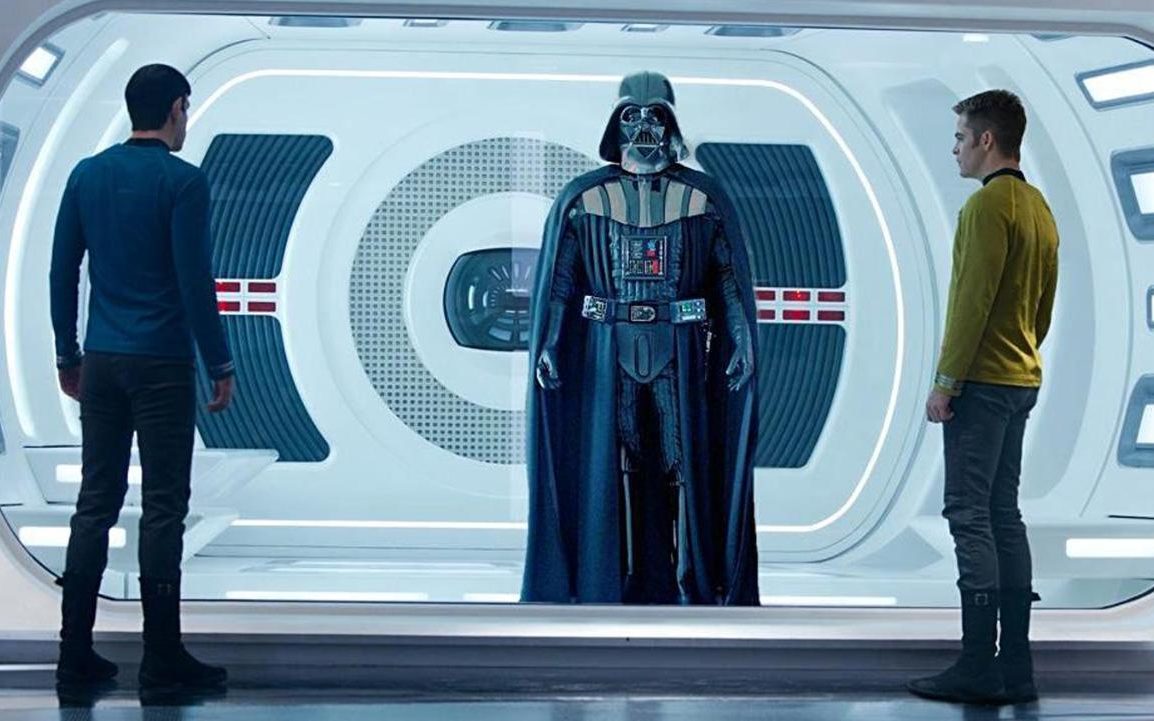
Luke Skywalker and Darth Vader

the visitor

As we celebrate Father’s Day and take time to remember our fathers it’s easy to start thinking about the fathers seen in the two great sci-fi live-action franchises: Star Wars and Star Trek.

Paternal Wars

In pop culture Star Wars is more readily connected with fatherhood issues because of Darth Vader and his twin children Luke Skywalker and Princess Leia Organa. Right now, Vader’s fatherhood is commemorated with cute merchandising that is everywhere, but seriously, Vader is a terrible father figure. Not too surprising since he is the galaxy’s most infamous villain who terrorized the Star Wars universe as Emperor Palpatine’s right hand man.

But his dastardly nature was cemented with the way he treated his children. In Star Wars Episode IV: A New Hope he tortured his daughter for information, though he may not have known Leia was his daughter. On the other hand, this implies that his command of the Force was not as great as he thought or that Leia’s connection to the Force was strong enough to shield her identity from him.

Darth Vader and son

Now with Luke, Vader showed that for most of the Star Wars films, he was a terrible father. He knew who Luke was yet he was obsessed with trying to seduce his son to the dark side of the Force, going so far as to chop off Luke’s hand during their epic lightsaber duel in Star Wars Episode V: The Empire Strikes Back. Yet, Luke still wanted to save his father. In Star Wars Episode VI: Return of the Jedi, Luke felt a glimmer of Vader without helmetgoodness within Vader and he believed he could help redeem Vader. This was why he was hesitant to confront Vader, which he had to do in order to become a Jedi.  By the film’s end, Vader’s resolve weakened and his burgeoning love for son was enough to turn him away from the dark side. Darth Vader found some redemption when he killed the Emperor to save Luke’s life even though it ultimately cost him his own life. Whether or not this final act absolved him of his past crimes is open to debate, but clearly, his love for his son drove him to defeat the Emperor.

Father and son relationships didn’t end Han Solo and Kylo Renwith the sixth Star Wars film. In Star Wars Episode VII: The Force Awakens, we learn that Han Solo’s son, Ben, was actually Kylo Ren, a new follower of the dark side. In this situation, the father is much more sympathetic and our scorn is directed at the son. But we have to wonder what kind of father Han was to Ben. It couldn’t have been a great relationship; he implied during conversation that Ben had too much of Vader in him. But Han hoped he could save his son’s soul when the two finally reunited. Sadly, Ren’s actions at that point set him down a darker path.

Continue reading

Top 50 Star Trek Episodes, Part 2: Episodes 11-30

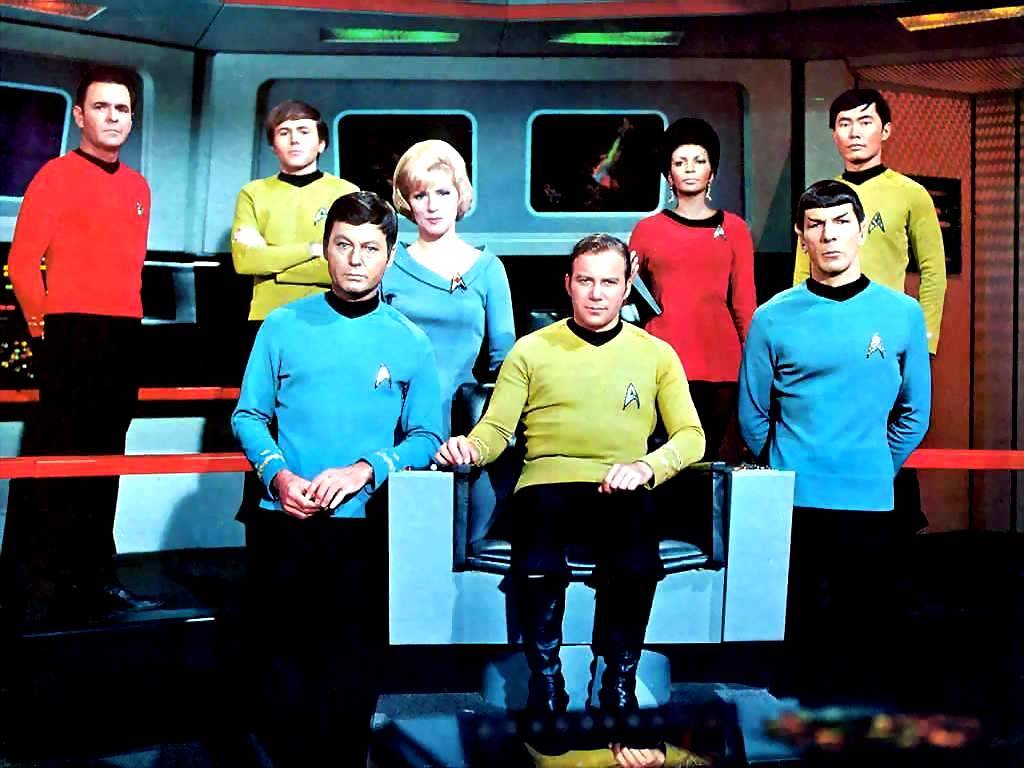
 Star Trek collage wallpaper

As many reading this know, this year marks Star Trek’s 50th anniversary. It’s actually an event that will happen in less than three months from now as celebrations will most likely hit fever pitch among fans who delighted in the space-faring adventures of Captain James T. Kirk (William Shatner), First Officer Spock (Leonard Nimoy) and the rest of the starship Enterprise crew. Continuing our countdown of the 50 best episodes from the original Star Trek series, we will start with the 30th best episode…

30. “Tomorrow is Yesterday” The starship Enterprise and its crew time travel to the 1960s and rescues a U.S. Air Force pilot (Roger Perry) who isn’t allowed to return home and report on what he has witnessed.

Tomorrow is Yesteday

29. “The Conscience of the King” Excellent scripted lines and stellar acting by Arnold Moss as a tortured former dictator turned Shakespearian actor highlights this episode.

Conscience of the King

28. “The Devil in the Dark” Captain James T. Kirk and Spock investigate killings at an underground mining facility by a monstrous rock-like creature. But there is more to the story…

Devil in the Dark

27. “Journey to Babel” The Enterprise transports diplomats to a peace conference; among the passengers are Spock’s estranged parents (Mark Sarek and Jane Wyatt). Complicating the occasion are the strained relations between Spock and his father and an onboard secret agent trying to wreck the conference.

Journey to Babel

26. “Assignment: Earth” In this backdoor pilot, Kirk and Spock time travel to Earth in the 1960s and meet the mysterious Gary Seven (Robert Lansing), a human sent by aliens to Earth to keep humanity from destroying itself. However, his mission is hampered by Kirk and Spock who suspect Seven is up to no good.

Gary Seven Assignment Earth

25. “The Empath” Kirk, Spock and Dr. McCoy (DeForest Kelley) are captured and tortured by callous aliens. During the ordeal they meet Gem (Kathryn Hays), a mute woman who has the power to heal others and is also under study by the aliens to see if her people are worthy of salvation. Helping make the episode so memorable were Hay’s magnificent and expressive performance and a beautiful score.

The Empath

24. “Amok Time” Spock must return to his home planet Vulcan and mate or else he will die. This episode was the first one to lift the veil on the enigmatic Vulcans and revealed much about their logic-based culture. The Vulcan travelogue and cultural exploration were punctuated by a nail-biting duel between Spock and his friend Kirk for the hand of Spock’s betrothed.

Amok Time duel

23. “The Enemy Within” A transporter malfunction splits Kirk into two halves. One meek and indecisive, the other lecherous and primal. This oft-used trope of the evil twin actually worked well because the script (by Richard Matheson) thoughtfully examined how dual aspects of Kirk’s personality, including his savage side, were essential to his survival and capability as a leader.

Kirk the Enemy Within

22. “Friday’s Child” On a planet with a primitive and brutal society Kirk, Spock and McCoy are embroiled in a tribal power struggle involving Klingons. After the head of local tribal leader is killed the trio must escort his pregnant wife (Julie Newmar) to safety while avoiding the leader’s successor and his men. Meanwhile, McCoy has to deal with an uncooperative patient and Spock, who is clueless around infants.

Friday's Child

21. TIE: “The Cage”/”The Menagerie, Part I &II” The very first Star Trek pilot “The Cage” about telepathic aliens imprisoning Captain Pike (Jeffrey Hunter), a previous Enterprise captain, was rejected by NBC, but the network allowed series creator Gene Roddenberry to produce a second pilot. However, footage from the original pilot was recycled into a classic two-part episode of the regular series as Spock undergoes a court martial for helping his former commanding officer.

Continue reading