DC Wins The TV War…For Now, Part Two

trio

The rivalry between DC Comics and Marvel Comics has many fronts in media like toys, films, video games, etc. But as it stands right now, DC Entertainment dominates the television medium with its current slate of TV shows on the air and their plans for additional programs coming in the near future.

DC’s Television Summit

Once Smallville ended in 2011, a void needed to be filled by DC Entertainment in terms of having a superhero presence in the TV landscape. Rather than mining the Superman/Batman lore, the decision was made to showcase DC’s proto justice leagueother heroes and it was a wise choice. For some time, DC and Warner Bros. fell into a crutch and relied too much on Superman and Batman to represent DC in other media. This was understandable since those were the company’s two biggest heroes. It makes perfect business sense to take advantage of the popularity of those heroes. The problem, though, is that with all the marketing and attention focused on Batman and Superman, DC’s other heroes were left out and helped give the impression that the rest of the DC roster consisted of second stringers. That couldn’t be farther from the truth. The DC universe is populated by many captivating heroes and villains and the problem was that the company wasn’t taking full advantage of that notion. Marvel, and specifically Marvel Studios, faced a similar problem but for different reasons. They didn’t have the film rights to Spider-Man or the X-Men, so they had to rely on their lesser known properties. It turned out for the best, otherwise we wouldn’t have gotten live-action adaptations of Guardians of the Galaxy or Thor.

In DC’s case, they too were forced to look elsewhere since the Superman well had run dry with Smallville and Batman was considered off limits because of the Dark Knight films. Thus, DC Entertainment looked to an urban vigilante that had many of Batman’s characteristics – Green Arrow.
Arrow aimsAll things considered, he is a solid alternative for Batman when it came to being featured in a live-action TV show. After all, both are urban crimefighters without superpowers and use specialized weapons. When Arrow premiered in 2012, it presented a more grounded, realistic world for the superhero. In the first season, the main character, who wasn’t even called Green Arrow (in one episode his alter ego, played by Stephen Amell, thought that name Green Arrow was “lame”), wore a practical uniform with only a hoodie and grease paint to conceal his identity. Moving away from fanciful superhumans allowed Arrow to concentrate more on character development and street-level fight scenes. This meant that it was more inviting and relatable for casual viewers.

What the producers of Arrow did correctly is that they embraced the DC universe. They weren’t afraid to name drop places like S.T.A.R. Labs and Blüdhaven. Likewise, the series featured recognizable DC characters like Amanda Waller (head of the Suicide Squad), Slade Wilson and even the Batman villain Ra’s al Ghul and his League of Assassins. It was enough bones thrown to DC fans to keep them glued to their TVs. Arrow then took a step further and introduced superpowered characters in its second season thanks to this strength-enhancing drug called Mirakuru and the introduction of Barry Allen (Grant Gustin), whose Flash origin occurred at the end of one of the Arrow episodes.

arrow flash

This naturally led to The Flash spinoff that premiered recently. Taking a lighter tone than Arrow, The Flash is more of a throwback to the fast-moving comic books with outlandish supervillains, while utilizing the same kind of engrossing subplots that Arrow uses. What’s more is that both shows are definitely in the same universe. Although the concept of a shared universe isn’t new in TV shows, this was the first time this was done for superhero shows (not counting The Six Million Dollar Man and The Bionic Woman) and it’s exciting to watch characters appearing in both programs with even more allusions to a wider world.

Both Arrow and The Flash are huge hits on The CW network and should be around for the long haul. Gotham, a show set in the title city and taking place after the killing of Bruce Wayne’s parents, is a hit on Fox. In fact, it pulls in more ratings than The CW superhero shows but that is due to the wider audience that Fox has compared gordonto The CW. Even though Gotham is a hit, there should be some caution because it’s on Fox, so there isn’t any guarantee that it will last as long as if it was on The CW. That is a problem that DC and Warner Bros. faces. Sure they can put anything on The CW, a fledging network, but it won’t reach as large an audience as in the major networks. But on the big networks, there is more pressure to succeed. Already, Constantine airs on NBC and has dismal ratings–it was recently announced that the show won’t go beyond initial 13 episodes and its fate is unknown. Constantine’s rating woes are due to its time slot: Fridays at 10 pm. How can any show succeed on that slot? It probably would’ve been better if it aired on a cable network where it could’ve thrived and be allowed to be darker like its comic book counterpart.

Continue reading

Marvel Comics’ Greatest Moments

marvel 75 logo

Marvel Comics turned 75 this year. As we celebrate Marvel’s 75th anniversary, it’s hard to imagine how long the comic book company has been around. Even though Marvel Comics first debuted in 1939 with Marvel Comics #1 (featuring decidedly different superheroes like the Human Torch, Ka-Zar and Namor), the company truly came to its own in the 1960s when writer Stan Lee and artists Jack Kirby and Steve Ditko introduced the world to new and dynamic superheroes.

marvel photo

These masked marvels like Spider-Man, the Hulk, the Fantastic Four, the Avengers and the X-Men quickly captured readers’ imaginations. Without exaggeration, Marvel Comics changed the comic book world and left a permanent mark in popular culture and its characters are still vibrant today. Incredibly enough, it can be said that they’re more popular today than when they were first introduced in the 1960s .

While Marvel superheroes have successfully transitioned into other media like films, toys, games and such, let’s not forget that the core of their appeal are with the comic books. Whether they’re just single stories in individual issues or epic mini-series and story arcs, the following are, based on my opinion, the best stories from Marvel’s 75-year history.

age of apAge Of Apocalypse: Spanning several different X-Men titles over several months, this massive storyline was about an altered reality where Professor X’s assassination in the past led to Apocalypse conquering North America, and Magneto leading the X-Men in a desperate attempt to stop him and correct history. Just seeing the alternate takes of our favorite mutants was a joy to read.

Avengers Disassembled: Boasting top avengers disassembledwriters and artists like Brian Michael Bendis, Paul Jenkins, Robert Kirkman, Steve Epting, Dave Finch and George Perez, this comic book crossover spawned from The Avengers #500-503 into other superhero titles and upended most of the Marvel Universe. The team is literally ripped apart from within by an insane Scarlet Witch. Many heroes are killed and the Avengers were catapulted into new popularity with this controversial story arc.

Born Again: Daredevil has never been lower or a more captivating read than in this classic story arc spanning Daredevil #227-231. That is due to the genius writing of Frank Miller and the art of Dave Mazzucchelli. Daredevil’s worst enemy discovers his secret identity and systematically destroys the blind superhero’s personal world plunging Daredevil into his own worst hell.

The Captain: This underrated Captain America tale by Mark Gruenwald, Tom Morgan and Kieron Dwyer spans Captain America #332-350 and has Steve Rogers abandoning his role as the iconic hero and going underground. Meanwhile, a super patriotic, though unstable, replacement is picked by the U.S. government to take over, but as we see, it’s not easy living up to a legend.

Civil War: Probably the last great mini-series produced by Marvel pits its most iconic heroes against each other. As Iron Man and Captain America took opposite sides against the U.S. government’s superhuman registration act, Marvel Comics was changed forever and the mini-series’ impact is still with us today.

civil war 2

Deliverance: The famous “Demon in a Bottle” story arc from Iron Man #120-128 bravely introduced the notion of a superhero being truly human and becoming an alcoholic. Tony Stark’s (Iron Man) alcoholism would resurface to even greater effect several issues later after his nemesis Obadiah Stane orchestrates a series of attacks. Stark soon became unable to continue being Iron Man and hit rock bottom culminating in Iron Man #182 when a now-homeless Stark battles not only the cold elements, but his own inner demons.

wolverine kittyDays of Future Past: The greatest X-Men story ever made reflected the height of the historic collaboration of Chris Claremont and John Byrne. In this exciting two-part tale from The Uncanny X-Men #141-142, robotic Sentinels have hunted mutants nearly to extinction in the near future, so one mutant is sent back in time to alter history.

The Death of Captain America: One immediate aftermath of the Civil War mini-series was Ed Brubaker’s gut-wrenching examination of the death of an American legend. Coldly assassinated before standing trial, Captain America’s death led to another hero taking up his mantle and a serpentine plot by Cap’s greatest enemies.

The Death of Gwen Stacy: The two-part gwen stacy deathstory from The Amazing Spider-Man #121 & 122 is considered by some as the end of the Silver Age of Comics. This emotional tale about Spider-Man’s nemesis, the Green Goblin, killing his girlfriend  was a gut punch not only for Spider-Man but his many followers who were stunned by the tragedy.

The Doctor Is In: John Byrne wrote and drew some outstanding comic books during his Marvel tenure. Before Deadpool came along, Byrne’s rendition of She-Hulk had her hysterically breaking the fourth wall. In The Sensational She-Hulk #5 story titled “The Doctor Is In” she had to not only contend with Doctor Bong, but with literally walking across comic book pages (ads included). Marvel Comics was rarely funnier than with this particular issue.

The Hulk Vs. The Thing: Marvel is known for how often its superheroes fight each other. This early story from Fantastic Four #25 & #26 is one of the best since its primarily a battle royale between two of Marvel’s strongest titans. The Stan Lee-Jack Kirby classic is at the same time a story about determination and fighting against the odds, in particular with the Thing.

spidey trapped

If This Be My Destiny…!: The story arc from The Amazing Spider-Man #31-33 had Spider-Man run through exhausting trials to gather serum for his dying aunt. His quest culminated in issue #33 with a story titled “The Final Chapter!”.  In the issue, our hero is trapped under tons of steel and rubble and in danger of drowning with the serum just out of reach. Spider-Man has to find the fortitude to free himself and his effort was memorably inspiring.

Continue reading

Marvel Mythbuster

stan lee

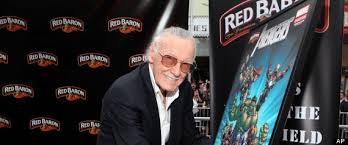
Amidst all the celebration of Marvel Comics’ 75th anniversary is the notion that famed writer Stan lee singlehandedly created the entire lineup of the Marvel Universe. That couldn’t be farther from the truth.

His biggest collaborator in the early days was Marvel Comic’s co-creator Jack Kirby. Kirby was not only the dynamic, genius penciler with fantastic layouts and renditions, he was more than a co-plotter on stories “written” by Stan Lee.

Stan allowed his artists to plan out the full issue after just speaking with them for a few minutes or having a one kirbysentence plot. It was up to Jack to find the action, the comedy, the tragedy, the pacing and the tone as he was also creating the art. So, by saying that Jack was a co-plotter is not giving Jack enough credit. Together Stan and Jack created the X-Men, the Avengers, the Fantastic Four and all the supporting characters and villains that appeared in those books during Marvel’s origin years- the early 1960s. Stan also had other collaborators too, such as Steve Ditko, co-creator of Spider-Man and Dr. Strange, and he had a similar working relationship with Ditko.

As the Marvel universe began to take shape during the ’60s, which was known as the Silver Age of comic books, other artistic collaborators followed– Gene Colan, John Buscema, Bill Everett, Wally Wood, Jim Steranko, all embellished upon the house of characters that Jack, Stan, and Steve built. So for accuracy’s sake remember as we celebrate Marvel Comics’ 75th anniversary, although he was a critical part in the formation of the Marvel Universe, Stan Lee did not create the Marvel Universe all by himself.

 Steven L. Walterson

This Summer’s Best Film: Guardians Of The Galaxy

guardian poster 2

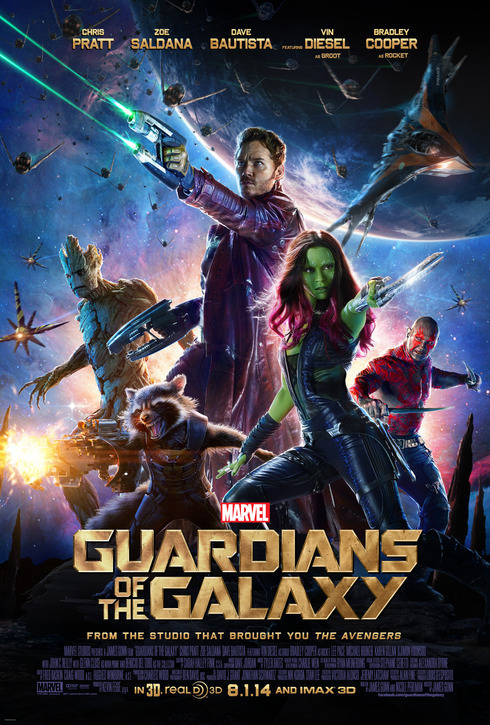
Guardians Of The Galaxy is the perfect embodiment of the summer film. It’s fun, exciting, explosive, and it has the right balance of humor, action and drama. It’s also a big risk for Marvel Studios who until this time produced relatively safe  adaptations of their superhero comic books. Guardians Of The Galaxy doesn’t feature any big-name heroes and it can’t be considered a superhero film but a straight up space opera. Fortunately, Marvel Studios pulled it off in a spectacular way.

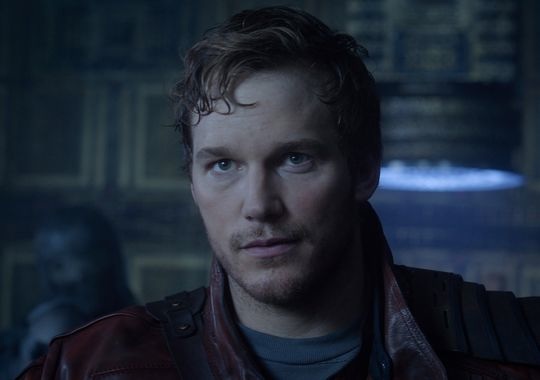
peter quilOne of the many reasons why Guardians Of The Galaxy works so well is due to its main character Peter Quill (Chris Pratt). He is cut from the roguish Han Solo/Mal Reynolds cloth, but with a huge helping of John Crichton thrown into the mix and a pinch of Indiana Jones. We’ve seen his type before, a bumbling, lovable thief/smuggler, who is looking for the next big score, but in the end decides to do the right thing. Even though his character type is familiar, Peter connects with us thanks to Pratt’s sincere and goofy performance and his surprisingly deep emotional makeup. The script (by director James Gunn and Nicole Perlman) takes time to show elements of his past, which explains Peter’s motivations and behavior.

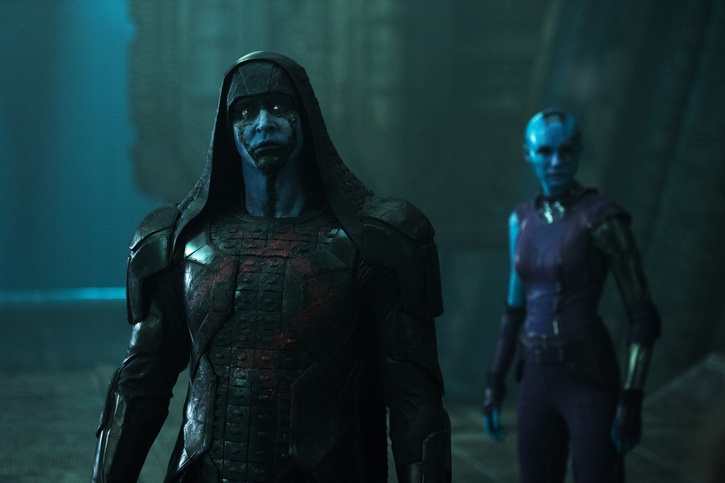
Abducted from Earth as a young boy, Peter, who goes by the moniker Star-Lord, lives a scoundrel’s life in the galaxy while listening to oldies pop music on his vintage Walkman.  When Guardians Of The Galaxy begins, he breaks into an abandoned temple on an alien planet and steals an orb that is coveted by very powerful factions. The worst being Ronan (Lee Pace), a proud Kree warrior who is aghast that his race is now at peace with a rival space power, the Nova ????????????????????????????????????????????????????????????????????????????????????????????????????????????????????Empire. He wants what is inside the orb, an Infinity Stone, a MacGuffin that grants its user deadly power to destroy. Fans of the Marvel Comics know that it’s part of the gem set used to form Infinity Gauntlet, used by the evil madman Thanos to cut a path of destruction across the universe. Ronan is just a lackey of Thanos (who is briefly played by Josh Brolin), and is tasked to retrieve the stone. Over time, Ronan decides to defy Thanos and use the stone to destroy Xandar, the home planet of the peaceful Nova Empire. Continue reading

Superhero Brand Management 101: One Pure Version Needed


Despite the success of the New 52 comic books from DC Entertainment’s DC Comics division, I’m still not seeing an ability by TPTB to consolidate their superhero properties into one source material. I’m a lifelong comic book fan, with a professional background in branding and licensing. I look at superhero properties not only as a fan but also as a brand manager. Here are a few problems I still see superhero companies like Marvel and DC struggling with:

 1) Superhero properties must be cross referenced and cross compatible. There isn’t one clear, solid mass consolidation of the characters across all major media- film, TV, video games, animated series and their related merchandising ventures. This goes for DC, Marvel and, to a certain degree, other comic book companies who overextend their properties. I think they’re taking the wrong approach. This is brand management failure in the making. By that I mean that there are too many versions and variants of characters and their costumes and storylines and it dilutes the core characters. At DC, they have a big problem: Why isn’t Superman’s costume and storyline from the regular comic books seamlessly tied into the 90’s Superman Animated Series, the CW’s Smallvile, DC Universe Online game and the new upcoming Superman movie? BTW, the next Superman movie has no relation with the past films, and is being produced as a relaunch/remake because Superman Returns wasn’t a big hit. Noticing how The Dark Knight made more money, Warner Bros. want the new Superman movie to be “darker.”  Unfortunately, they are all standalone, independent works with no consideration on how any one of these iterations relate to each other.

 Footnote: DC Comics editorial, Superman writer Geoff Johns and artist Gary Frank superbly consolidated elements of the Superman movies and his past comic book iterations. Frank was allowed to illustrate Superman in the likeness of the late Christopher Reeve; the crystalline Krypton- designed for director Richard Donner’s Superman  by brilliant production designer John Barry, was incorporated into comic book Kyptonian architecture. The movie’s three Kryptonian villains (General Zod, Ursa and Non) finally appeared in the comic books. While General Zod originated in the ’50s comics, Ursa and Non were created for the  movies. It was Johns’ inspired idea to suggest they include all Kryptonian costumes designed by all comic book artists from the ’40s to present time, explaining that Krypton’s fashion was as diverse as Earth’s and what Kryptonians wore depended on their guild. Kryptonian fashion illustrated by John Byrne, Curt Swan, Gene Ha and from the films were all finally intermixed successfully. With the relaunch it’s unknown if they’ll keep that Kryptonian integration.

2) Too many %^$#**&$@ iterations of one character. Marvel suffers from this with all their properties. How many Wolverine comics are out there? There’s a title called Dark Wolverine and it’s not even the regular version of the character. And Logan once a proud loner is now in a whole bunch of teams! (Previously, he joined only the X-Men, that was the charm of it!) My question is: How does the comic book relate to the ’90s X-Men animated series, or 20th Century Fox’s X-Men movies, multiple X-Men video games, and other animated series? And now that’s happened with Spider-Man (the underdog loner) and all his different costumes. And let’s not forget there are two different Marvel Universes- the mainstream Marvel Universe and the Ultimate Universe. I know the reason behind it- sales and profits. Spider-Man and Wolverine are fan favorites. Marketing execs must love these infinite variations of the popular Marvel character since they can sell more comic books and toys, but it is confusing and turns away new readers.

3) Cost prohibitive and time prohibitive story lines.  I go across comic book aisles and see special event comics and multiple tie-ins and special issues (Blackest Night, Secret Invasion, DC’s numerous Crisis events and tie ins) and it turns me away. It’s unaffordable! It seems as if the larger companies are targeting upper middle class and upper class readers because the average fan cannot afford to buy so many comics just to get a complete story.

4) DC needs to scale back the amount of comics even more per month. Until the New 52, each month DC put out 52 regular titles, plus many four- and twelve- issue miniseries, and event comics for the tie ins and TBPs. Now they relaunced the DC Universe and cut back the number of monthly comic books to just 52. But it’s still too many comics to afford at $2.99 or $3.99 for each comic book. To read the full interrelaed story, the average buyer needs to spend $150 a month, and that’s for the New 52 comics alone! What about your favorite comics from Marvel, Dark Horse, IDW, or Dynamite? But even if the prices were lower the bottom line is that the average fan doesn’t have time to read every single monthly comic book that comes out per month. It’s impossible. We have to pick and choose what we read and often it feels like we aren’t getting the full experience because no one is picking up every single tie-in. This was a problem when the comic book companies flooded the marketplace with too many titles and eventually everything imploded as a backlash from the speculator boom and the industry still hasn’t recovered from that. Back in the ’60s Marvel had a very manageable lineup with about twelve titles per month. It was easy for readers to jump aboard, experience the full Marvel Universe and not feel overwhelmed. Remember the adage, less is more!

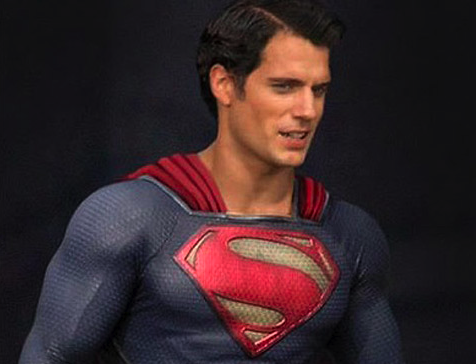
5) Superhero costumes need to be consistent to maintain strong branding. Getting back to the New 52, one big example of this problem is the Superman outfit. In Zach Snyder’s upcoming film, the colors are way off; it looks bluish grey with red violet and no red trunks. In the New 52 comic books, the costume has the right red and blue colors, but no red trunks, just a red belt. And a collar, which seems to be a superhero prerequisite in DC’s New 52. Superman’s outfit is still not consistent from one medium to another. Unfortunately the producers of the new Superman movie, and DC Entertainment clearly didn’t want the classic costume meaning the costume differs from the one Supes wears in the New 52. The result is that already many fans aren’t happy. The same thing happened with Green Lantern. They made a choice with the film to have the costume appear organic and that was fine, it worked. But they should’ve used that costume when they rebooted the New 52 Green Lantern comic book. As a matter of fact, many fans expected they would do that, and were disappointed. DC had the perfect chance and pretext last month with the relaunches to do this but they didn’t. They need to realize that the movie medium is the strongest medium and should be the strongest point of reference.

6) Superhero Genre: We need to understand that superheroes aren’t a medium they are a genre that spans several media. This was proven back in the ’40s when Superman became a radio star and ceased to be confined to the comic book medium. What should be done is to just pick the version that is most popular, whether they be the movie version or the comic book version. In other words, all media should be cross-referenced to be compatible, with the highest priority given to the look of the costumes. This doesn’t mean that story isn’t important but comic books are more of a visual medium so the costume and visuals can’t be screwed up.


7) Executive-level decision mass consolidation of the characters and stories across all major mediums. This has to come from the top execs of WB and Disney sending  directives to DC Entertainment and Marvel respectively. For example, the likeness of an actor portraying the superhero or villain should be used in the comics, toys, etc. This can be expensive in terms of royalty but it just means they need to better negotiate this when coming up with the contract.

8 )Power to the (fans and consumer) people! Another thing the companies can do is have some kind of fan base council (with power and influence) that report to the big guns as to what is popular and what isn’t based on direct feedback from fans who can provide comments or answer polls. This will help bring about the highest level of consumer satisfaction.

 9) Price and online incentives: The price of a paper copy New 52 comic is the same as it is with the digital copy. The digital copy has no enhanced features. Why not? DC is missing out on a huge online opportunity: Incentives for digital comics could be online content like official character websites, commentary, videos, etc. Senior level direction is needed to map out where everything is in terms of the characters’ bios. Online charts and maps should be provided to help new readers understand what is going on, draw them in and appreciate any character’s rich history. 

Conclusion:

 There has to be one pure version of the property, and looking at this from a branding perspective, the property is still muddled. The standalone, independent business model that superhero companies are following is a bad idea. Their properties must be cross-referenced and cross compatible for all mediums, and whichever company has the guts to carry out this properly will win in the long run.


GEO

Visit GEO’s websites:

 http://geo-designs.deviantart.com/
and
http://www.coroflot.com/geodesigns