Some of the best sci-fi films present dark futures depicting societal and social collapse. They serve as a warning to us with their vivid imagery of how things may go horribly wrong in the future. Dystopian depictions are a mainstay in sci-fi films with Elysium being the latest to feature a broken world thanks to humanity’s abusive and negligent ways. Keep in mind these are different from post-apocalyptic films where civilization has fallen due to war, alien attacks, and other catastrophes. Here are the best films of this sub-genre.

10. TIE: The Hunger Games/V For Vendetta: In The Hunger Games, poor districts in Panem, a futuristic North American nation, are forced to send young people to participate in deadly games. Contrasting these backwards districts is the opulent and morally corrupt Capitol that seems like a futuristic Rome. That and the combination of the intrusive and empty media coverage of the games is quite a damnation of this future society. V For Vendetta is an adaptation of Alan Moore’s comic book mini-series about a future London ruled by a brutal, Orwellian regime that subjugates its citizens. V (Hugo Weaving) is a mysterious anarchist out to topple the despotic government via acts of terror and sabotage.
 9. Idiocracy: Mike Judge directed this humorous look at our future that satirizes our current obsession with sex, violence and consumerism. In Idiocracy, unintelligent people are out-reproducing smarter people today. Eventually by the 26th century, the dim-witted will inherit the Earth as society declines due to stupidity and low-brow tastes. Their only hope lies with a modern-day soldier (Luke Wilson) with average intelligence who is frozen and revived into this dumb society.
8. THX 1138: George Lucas made his directorial debut with this film about a futuristic, underground society controlled  by oppressive AIs. The stark, monochromatic production design added to film’s unnerving atmosphere. Robert Duvall stars as the title character, who along with other citizens, is kept in a passive drug-induced state of mind. One day, THX 1138’s drugs wear off, allowing him to feel emotions. When he fails to function properly in the cold, sterile society, he is arrested, but his new emotional state enables him to rebel against the system.
7. Escape From New York: Kurt Russell stars in John Carpenter’s classic tale of an America where crime is rampant and New York City has been turned into a penal colony for hardened criminals. Russell is Snake Plissken, a former vet-turned-criminal who is forcibly deployed into Manhattan to rescue the president of the U.S. (Donald Pleasance). Carpenter’s vision of a nightmarish New York alarmed many who were convinced the city was headed in that direction. Maybe they should’ve been concerned about Detroit instead.
6. Elysium: The world in Elysium is an overpopulated and polluted nightmare. Los Angeles in 2154 looks more like a third-world country with bombed out and decaying streets and shanty homes. Basic necessities like proper housing and healthcare are rare commodities. As in many of these dystopian films, the elite live in a separate, idyllic society; in this case an orbiting habitat. Even though Elysium has a heavy-handed message about the haves and have-nots, its harsh depiction of a ruined Earth will resonate with viewers.
 5. WALL-E: This animated classic from Pixar is about a lone robot cleaning up an abandoned and overly polluted Earth in 2805. For the first half of WALL-E there isn’t any dialogue as the titular robot explores the dun-colored and filthy landscapes. Somehow, WALL-E is able to experience emotions and appreciate the remnants of a now-gone civilization. Eventually he discovers humans, who have been taking refuge aboard a luxurious starship. But humans over the centuries have become morbidly obese and atrophied thanks to their too-convenient lifestyle provided by service robots. It’s up to them to learn to be fully human again.
4. A Clockwork Orange: Stanley Kubrick directed this bleak and desensitizing look at the nature of  violent behavior and society. Its opening scenes, which featured tight, unnerving closeups of Alex (Malcolm McDowell), a young, vicious gang member are haunting. In the future, violent gangs freely roam the streets of London. Dosed on drug-laced milk, these gangs rob, rape and pillage without abandon. What was jarring and disturbing for viewers was the use of classical and Broadway-style music as these young thugs committed violent acts. Eventually, Alex is captured by authorities and is brainwashed to abhor violence with unfortunate results.
3. Soylent Green: The film’s shock ending overshadowed the bleak portrait of a future where overpopulation and scarce resources are strangling society. Despite Robert Thorn’s (Charlton Heston) famous last lines in the film, the rest of Soylent Green is compelling to watch. Resources we take for granted like food and living space are rare, while the streets of New York in 2022 are depressingly crowded and decaying. What’s really touching are Edward G. Robinson’s final film scenes. In despair over the true nature of the Soylent Green substance, his character chooses to be euthanized and is treated to hauntingly beautiful images of a once-pastoral Earth. These scenes still resonate to this day, as does Thorn’s warning to the ignorant masses.
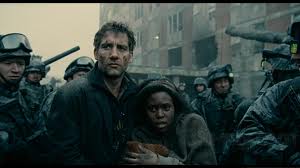
 2. Children Of Men: By 2027, humanity can no longer reproduce, causing a downward spiral for civilization as it becomes clear humanity will soon be extinct. Terrorism and anarchism are commonplace as disorder inevitably takes hold in society. Reminders of a more civilized time are spotted and add to the bleak tone since they reinforce the notion that humanity’s days are numbered. Clive Owen plays an embittered government bureaucrat who finds a cause to believe in. He encounters a pregnant woman who represents humanity’s best hope, and is forced to protect her from various radical factions. Children Of Men’s director, Alfonso Cuarón shot the film using a harsh, realistic tone that engages viewers and brings them into the action. This was best seen in the film’s third act, which takes place in a hellish refugee camp that is attacked by the British army.

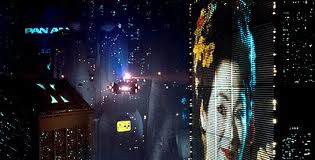
1. Blade Runner: Ridley Scott’s dystopic masterpiece proves that just because the future may have flying cars and cool neon lighting, it doesn’t mean it will be bright. Taking place just a few years from now (2019) in an overcrowded and drenched Los Angeles, Blade Runner wasn’t a simple shoot-em-up with Harrison Ford’s character chasing down evil androids. Blade Runner is rather an ambitious example  of future noir combined with a moody, smoky atmosphere, ethereal score and ambivalent characters. In the film, Ford plays Deckard, a former cop drafted to hunt down rogue, illegal humanoids called replicants. While everyone in the film wonders if replicants have souls, the humans should’ve reflected about their own souls. Blade Runner resonated with so many not just because of the above reasons but for its intricate and crumbling cityscape. It almost seemed beautiful, even though it represented a world that had seen better days.
Lewis T. Grove

 This past week, Dark Horse Comics released their latest Star Wars comic book mini-series simply titled The Star Wars. The comic is based on George Lucas’ original 1974 draft treatment for the first Star Wars film.
 capitol is in Alderaan, that wants to conquer the last remaining free world Aquilae, which is where the nearly extinct Jedi are located. General Skywalker has to convince the ruling king in Aquilae to marshal forces to fight the Empire. Along the way, readers are introduced to a portly Bail Antilles, a teenage Princess Leia, and Skywalker’s old friend, Kane Starkiller, who is Annikin’s father.