Four Things The New Fantastic Four Has To Accomplish

Now that the constant speculation about who would be cast as the Fantastic Four has ended (thank God!), we can officially get pumped for the Marvel Cinematic Universe (MCU) version of the Fantastic Four. With the casting out of the way for the core cast, the production has time to fine-tune the film, as seen with recent news that the film was being rewritten. Thanks to the failures of the previous film versions of the Fantastic Four, there is a a lot of pressure for the MCU version to get it right because it has to at this point.

Given that the Fantastic Four comics launched the so-called Marvel Age of Comics back in the 1960s and is considered one of the premier properties of Marvel Comics, it is outlandish that past efforts to adapt the superhero team into live-action films failed. Yet, here we are. As fans know, the first effort was an unreleased adaptation in the early 1990s that was produced with barely a budget in order for the producer to retain the film rights to the property. That monstrosity was as bad as its reputation and makes Madame Web look like Logan in terms of quality or lack of. The Tim Story duology that came out in the 2000s captured some of the spirit of the comic books, but lacked the gravitas to elevate them to top-tier superhero films. And the less said about the cloud thing called Galactus the better. The worse mainstream adaptation had to be 2015’s Fant4stic, which is how marketing stylized the film logo. The last version of the Fantastic Four basically tanked the career of its director Josh Trank, who had the bizarre idea to make his Fantastic Four film a body-horror film without any of the humor and charm the comic book team was famous for having.

Thankfully, now that Marvel Studios and Disney have the film rights to the Fantastic Four, they can give the property the attention it needs to create a high-quality superhero film. To do that, Marvel Studios has to evoke the qualities that made the comic books so beloved, especially the ones from the 1960s. At the same time, The Fantastic Four has to appeal to audiences in order to get them into theater seats. The cast, which includes Pedro Pascal as Reed Richards/Mr. Fantastic, Vanessa Kirby as Sue Richards/Invisible Woman, Ebon Moss-Bachrach as Ben Grimm/The Thing and Joseph Quinn as Johnny Storm/The Human Torch, are a solid first step, now it is up to the script and the director to bring the Fantastic Four to life. Here are four things The Fantastic Four must accomplish in order to succeed:

Find the Right Balance With Humor, Family and Awe

The two different film versions of the Fantastic Four were flawed in that they either lacked any humor or humanity, or were too goofy and did not aspire to greatness. The Tim Story Fantastic Four films had plenty of humor and most of it worked, especially the interactions between Johnny Storm and Ben Grimm. But the flaw of those films was that they didn’t really aim higher. The films diminished Doctor Doom and had him being a petty businessman instead of the intimidating ruler of Latveria. What’s worse was that efforts to present something incredible lacked any real scope. The worst example was the Galactus storyline in the second film that reduced the cosmic villain into a giant gas cloud. Blame the budgets.

Now the Josh Trank Fantastic Four film was completely the opposite in that it lacked any humor and charm. The entire film was a dire and dark affair where the characters moped about their newfound powers and were forced to work for the military. Nothing in the film was cheerful or bright, nothing at all like the comic books. Those comics exuded optimism while dealing with challenges. Yes, the team often bickered and fought with each other, but they came together at the end because they were a family. The Trank film did not reflect this family aspect at all. It did not help that the characters were mistakenly cast as young adults, but that is another story. The Fantastic Four has to capture the wow factor and the family dynamics and the humor that made the comic books so revolutionary.

Explore the Fantastic (Pun Intended)

A major fault with the previous Fantastic Four films was that they lacked the sci-fi scale of the comic books. Yes there were many sci-fi trappings, but they were not anything audiences have not seen before. What was worse was that the production budgets of the films could not capture the epic scale of the comic books. Just look at the wild panels in Fantastic Four Annual #3 when Reed, Ben and Johnny explore the Negative Zone. Or the images in the Galactus trilogy of Fantastic Four #s 48-50 where the Human Torch traverses skyscraper-sized machinery to find a weapon to defeat Galactus. The closest we got to that in the films was in Fantastic Four: Rise of the Silver Surfer where Doctor Doom stole the Silver Surfer’s powers, which was taken from the comics. Yet, that was completely undone with the finale act where the Galactus cloud showed up.

Meanwhile, the Trank film did not have any of the joy of scientific discovery, even though many of the main characters were scientists. Sure, the characters visited an alien planet, but it was a barren, stormy hellhole that did not inspire any awe, and was more in line with the body-horror aspect of the film. But what made things worse was that the film had a low-budget feel. The Fantastic Four needs a huge budget and the best resources to pull off the mind-bending world of the Fantastic Four. This is not an easy feat given the difficulty of trying to pull off the stretching powers of Mr. Fantastic. In other words, The Fantastic Four has to and will be a true MCU epic with the budget and resources it needs to properly adapt the fantastic (yes, pun intended) feel of the comic books.

Do Not Have Doctor Doom as the Main Villain in the First Film

While Doctor Doom is the premier villain for the Fantastic Four and Marvel Comics, he has been overused in the past films. What was worse was that the depictions of the Latverian ruler in the films were not at all accurate. The filmmakers mistakenly tied the origin of Doctor Doom with the Fantastic Four, which was not the case in the comic books. But in the films the villainous doctor was involved in the same accident that gave the FF their powers, which in turn gave him some kind of electric powers, which was never shown in the comics. These reimaginings omitted his genius intellect that enabled him to master science and sorcery to be able to nearly conquer the world. Nor was his status as ruler of Latveria even a factor.

Doctor Doom has been misused in the previous films and he needs to be faithfully depicted if he is to be the main baddie of the MCU and the Secret Wars event. He should only appear in The Fantastic Four as a cameo, and in other MCU productions in the same way Thanos popped up here and there in early MCU films. As for which villains the FF should confront in the first film, well, supposedly Galactus and the Silver Surfer will be the foes, although it may be too early to confront them. It would have been better if a film trilogy built up to them. Other villains to make life miserable for the Fantastic Four could be Annihilus, the Molecule Man (a major character in Secret Wars), the Super-Skrull (though Secret Invasion ruined that), the Red Ghost, the Mad Thinker or even the Frightful Four. Or the sequels could have the team facing a villain not usually associated with them. A sequel film would also be a perfect way to bring back Namor since he was a major villain that the team fought in the early comic cooks.

Make the Characters Relatable

The Fantastic Four comic books, thanks to Stan Lee’s writing and Jack Kirby’s pencils and stories, were able to present outlandish and jaw-dropping sci-fi visuals while retaining a sense of humanity. Who could forget those intricately drawn panels of Reed’s room-sized machinery? Sure they were dazzling, but the focus was on the characters bickering in those same panels like a dysfunctional family. The Fantastic Four has to incorporate this aspect of family into the film.

Despite the faults with the Tim Story Fantastic Four films what they got right was a sense of pathos as seen with moments were Ben struggles with being the Thing. A perfect example was a scene in the first film where he was not able to pick up his wife’s wedding ring because his rock-like hands lacked dexterity. Then again the film was able to have some fun with Ben when one of the final shots of the first film showed him wearing humongous, custom-made sneakers. Meanwhile, with the Josh Trank film it was difficult to relate to the characters, even the Thing, who barely stood out as a character. The caustic, but loving relationship between Ben and Johnny, while done accurately in the Story films, was absent in the Trank film. That is except for one line at the end of the film where Johnny came off as a mean-spirited A-Hole when he mocked Ben.

If The Fantastic Four focuses on the characters and their family relationship, gives us a sense of wonder and adventure, while featuring villains other than Doctor Doom, then it will succeed. It’s just that simple. Fans will flock to see the film if it has these aspects that made the Fantastic Four one of the most popular superhero teams in comic books.

José Soto

Deadpool & The Pending MCU Comeback

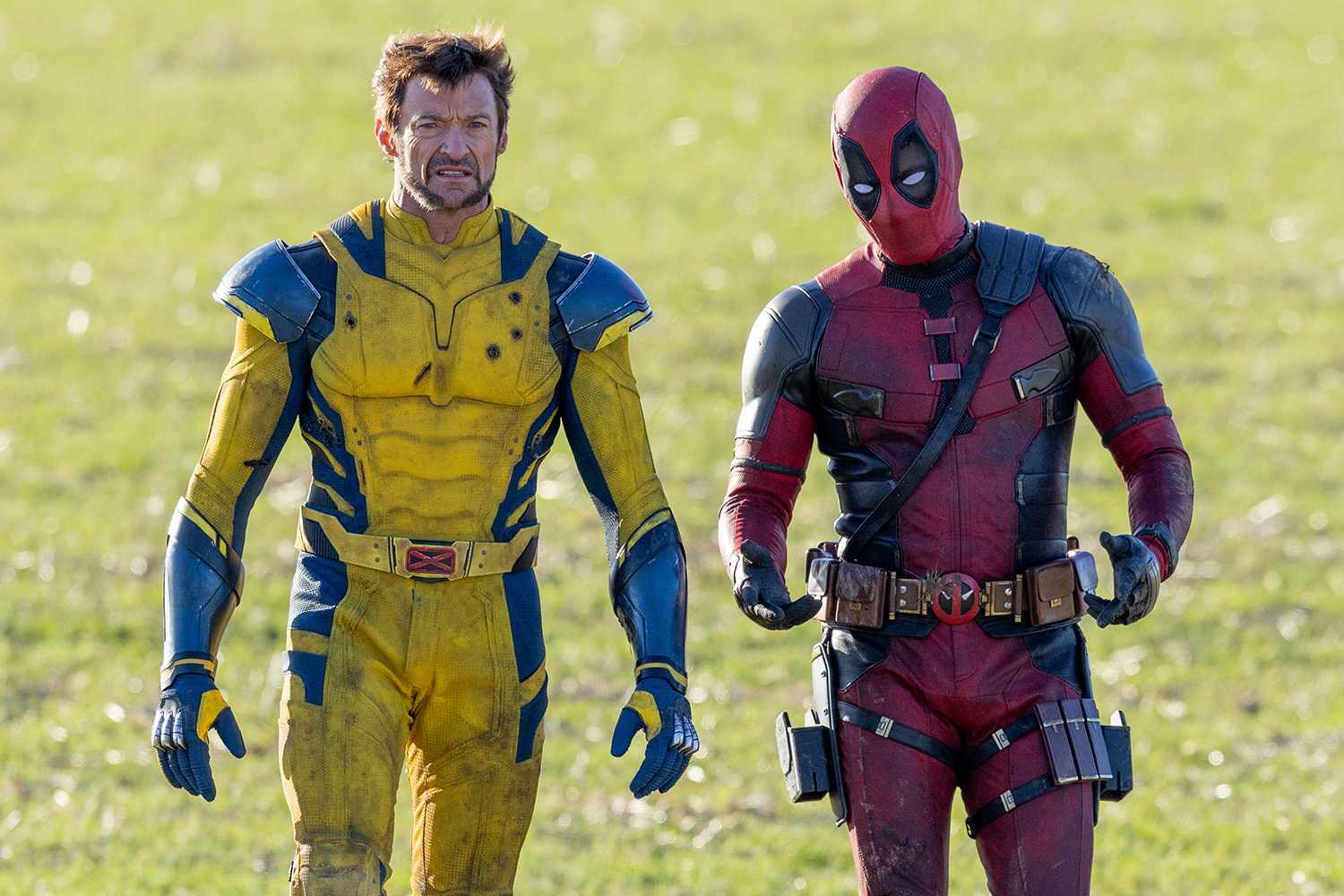
By now most Marvel fans have seen the eagerly awaited trailer for Deadpool & Wolverine, the sole offering from Marvel Studios this year. Just the fact that so many people were anticipating this trailer is alone to demonstrate that superhero fatigue is not necessarily upon us, especially when it comes to the Marvel Cinematic Universe (MCU).

Sure, the MCU and Marvel Studios had its struggles recently, as seen with failures of The Marvels and Secret Invasion and with behind-the-scenes dramas. However, the higher ups at Disney and Marvel Studios acknowledged that things were not working with the MCU and they took corrective actions. Marvel Studios’ president Kevin Feige took a long look at what was being filmed and realized that several projects were not working, at least up to MCU standards. As painful as it was, Feige delayed the release of projects like Daredevil: Born Again and Captain America: Brave New World to basically scrap what was filmed and start over. This is a costly gamble without any guarantee of success (see Solo: A Star Wars Story), but it had to be done. Disney also realized this and the fact that there was too much MCU product, which led to many projects been held back or cancelled. While many fans did not like this, it was what the MCU needed in order to 1) give the coming MCU projects the time to be improved and not rushed and 2) creating demand and anticipation for the projects.

During the past few months, the common theme among trades and the online was that the MCU and superhero films were in decline, given the fact that most superhero films in 2023 did not perform well. Another argument for the decline was the poor reception to the coming Sony films based on Spider-Man properties like Madame Web and Kraven the Hunter. But declaring the superhero films to be in decline may be premature. Of course, they are not as popular as they were around 2018-19, but at that period the Infinity Saga was reaching its climax and everyone wanted to know how the Avengers were going to defeat Thanos. In the years since, the MCU films have had to start all over again with a new storyline, the Multiverse Saga, which has had a rocky start due to many reasons. They range from the COVID-19 pandemic, the reign of Disney CEO Bob Chapek, who demanded too much MCU product and overstretched Marvel Studios, the writers and actors strike from last year, and the firing of actor Jonathan Majors, whose character Kang was supposed to be the next main MCU villain. Thankfully, many of them have been dealt with or are behind Disney and Marvel Studios.

As Marvel Studios reassessed what worked and what did not with its recent projects, the film studio had the time to tweak its upcoming projects to improve them. This has led to Kevin Feige taking more control of the MCU films and TV shows to ensure that the projects match the quality of the previous MCU films.

Now Disney and Marvel Studios have stated that they intend to focus on quality not quantity, which means they are scaling back on what they greenlight and not just any Marvel Comics property will make the transition to live-action. This is great because it allows the film studio to focus on its most popular characters and devote time and resources to more obscure characters to help them stand out (see Guardians of the Galaxy).

In the recent past, quality films and TV shows have found their audiences as seen with the success of Guardians of the Galaxy, Vol. 3 and the second season of Loki. This will most likely occur with Deadpool & Wolverine given that it looks bonkers with its fourth-wall breaking and the zany and raunchy humor of Deadpool that does not seem watered down even though the film is from Disney. Deadpool & Wolverine could help change the direction that Marvel Studios is headed given its high anticipation. v

Also creating high anticipation for Marvel Studios is Daredevil: Born Again, which has excited many fans of the original Netflix production since it now features beloved characters from the Netflix shows. Then there is the over-the-top speculation on who will be cast in the Fantastic Four film coming out next year. Oh, and by the way, Marvel Studios: announce the cast already! Its not just the casting that has many excited about the Fantastic Four, but the fact that Kevin Feige is directly involved with the film and is a passion project for him given that past live-action efforts did not perform well.

Of course, another thing exciting fans is the coming of the X-Men in the MCU, which was teased in The Marvels and the mutants will be front and center in Deadpool & Wolverine. Frankly, it’s about time. Disney has had the rights to the X-Men characters for several years and although it was for the best that they took time for the memories of the Fox version of the X-Men films to dissipate, it’s time for them to appear in the MCU. Thankfully we’re getting that with Deadpool & Wolverine as the trailer clearly shows that not only do we see mutants but images of the MCU films and the Time Variance Authority from Loki.

Yes, it’s great to be excited about the MCU again and we have Deadpool & Wolverine to thank for that. Please, be great!

The DCEU Films Ranked

Now that Aquaman and the Lost Kingdom has left theaters and is available on digital, it is time to rank all the DC Extended Universe (DCEU) films. This ranking leaves out Peacemaker since it was a TV show, but if it were to be placed in the list it would come in third. Yes, it’s that good. Zack Snyder’s Justice League will be included even though it streamed on Max and technically does not take place in DCEU continuity, yet it is still a film associated with the DCEU.

Looking at the films overall, one can’t help but see that it was not very cohesive as a cinematic universe since it went all over the place after Zack Snyder left the DCEU. Still, even though the DCEU turned out to be disjointed and full of unrealized potential, there were films that turned out to be great.

Of course, this list is subjective and everyone else will have different rankings, so feel free to mention them in the comments.

16. Wonder Woman 1984 (2020)

It is sadly shocking that the worst film of the DCEU was a sequel to one of the cinematic universe’s best films, especially since it was directed by Patti Jenkins, the director of the first Wonder Woman. The poor reception to Wonder Woman 1984 was arguably the beginning of the end for the troubled cinematic universe.

What sunk the film was the poorly thought-out script that creepily found a way to reunite Diana Prince/Wonder Woman (Gal Gadot) with her long-dead lover Steve Trevor (Chris Pine). Then there was the entire situation with the wish-fulfilling villain who granted outrageous changes to the world in 1984 that was never referred to in other DCEU films which took place in modern times. And Wonder Woman has been able to fly all this time? Please, let’s move on.

15. Black Adam (2022)

After being announced that The Rock would portray the superhuman anti-hero years ago, the film was stuck in production hell, and it seemed as if this film would never be made. Yet somehow it was made but, Warner Bros. should not have bothered. The Rock’s behind-the scenes machinations crippled the Shazam! sequel since Black Adam was supposed to appear at one point as a villain for Shazam, but The Rock refused to appear in it because there was no way he would be seen as the bad guy. But his actions led to Henry Cavill portraying Superman for the final time, even if it was as a brief cameo. Unfortunately, that was not enough to save Black Adam.

The rest of the film was an uninspired yawner with generic superhuman action pieces that could not even be salvaged by appearances of new characters like the members of the Justic Society. A major flaw with Black Adam was that there was little danger for the title anti-hero because he easily won every single fight. This resulted in a story that had low dramatic stakes for the main character and a forgettable film.

14. Shazam! Fury of the Gods (2023)

This sequel to Shazam! loses most of the charm of the original film as Zachary Levi’s character behaved like a complete buffoon for most of the film. As Shazam in an adult body, it was odd that the superhero acted like an immature pre-teen while in his normal young adult body, Billy Batson (Asher Angel), behaved with much more maturity.

Too often Shazam! Fury of the Gods came off like a paint-by-numbers, generic superhero yarn that was overcrowded with too many characters who were given little screentime to have fully fleshed out storylines. Then there was the ending, which was complete cop out, even though it featured Gal Gadot in a cameo as Wonder Woman.

13. Birds of Prey (and the Fantabulous Emancipation of One Harley Quinn) (2020)

Try saying that three times fast, not even the Flash could pull that off! This film had the misfortune of coming out on the dawn of the pandemic and being something very few fans asked for. Seriously, Warner Bros. greenlit this film but not a solo Batman film with Ben Affleck! Or even a Man of Steel II!

Even though Margot Robbie turned in a solid performance as Harley Quinn, as do most of the other actors, this film looked and felt like a low-budget TV film or two-hour episode. It could have been worse, and the film has its moments, but it’s not exactly something fans should rush out to see.

12. The Flash (2023)

It was supposedly hyped as the greatest superhero film ever made by Warner Bros. executives. Ok, right. The Flash is certainly not even close to being that. However, the film was a wild ride which featured a welcome return of Michael Keaton as Batman/Bruce Wayne. His reprisal was part of a bizarre time travel/alternate universe story that at one point was to be the method to resetting the DCEU. Unfortunately, the result was a jumbled mess that ended up being one of the biggest bombs in film history. What didn’t help the film was the criminal behavior of actor Ezra Miller which drove many away from seeing the film. Sure, Miller turned in a good performance, but the role should have been re-cast.  

The Flash was also hampered by some very awful and cheap looking CG, the questionable use of dead actors, and missed opportunities. If they could stick in a poorly rendered CG of Christopher Reeve for a cameo, why couldn’t the film version of the Flash meet the TV version played by Grant Gustin? What was worse is that by the end of the film, the main character apparently never learned his lesson about meddling with time. So, what was the point of all that?

11. Batman v Superman: Dawn of Justice (2016)

Any Zack Snyder fans should heed this film when arguing that the director should have been allowed to run rampant with his vision for the DCEU. The film had everything going for it, including massive hype that it was the first time DC’s two greatest heroes would meet onscreen. Yes, it was a box office success, but it should have been a member of the billion-dollar club and that is because of how the film turned out.

Bloated and incoherent, Batman v Superman blew its opportunity to wow fans thanks to its script that was more interested in setting up future DCEU films than telling a good story on its own. Also, the film borrowed too many elements from classic comic books like The Dark Knight Returns without proper context. The film was cluttered with Snyder’s overindulgent hyper-realistic shots that dwelled in slo-mo and dour cinematography. Some of the acting was inspired, especially Ben Affleck as Batman who surprised everyone by his performance, but Jesse Eisenberg’s horrendous miscasting as Lex Luthor undermined the film. The extended version of the film is much better as it helped flesh out the many dangling plot threads that were never developed in the original cut.

10. Suicide Squad (2016)

There is a great superhero action film buried somewhere in this film about supervillains forced to carry out a black ops mission for the U.S. Maybe, we’ll see it one day if Warner Bros. ever releases director David Ayer’s original cut. For now, we must settle for a film that tried to be DC’s answer to Guardians of the Galaxy and failing to do that.

The film featured many inspired performances like Will Smith as Deadshot, Joel Kinnamen as Randall Flag, Jai Courtney as Captain Boomerang and of course, Margot Robbie as Harley Quinn. Try as they did, the actors could only do so much as the script had a bunch of underpowered and mostly unlikeable characters facing off against an overpowered supernatural entity that danced stupidly. Thanks to poor editing and forced changes by film executives, the film varied wildly in tone from gritty and dour to flippant and silly as the plot careened all over the place.

9. Aquaman and the Lost Kingdom (2023)

Even though it could not exactly replicate the outlandishness of the original Aquaman, the sequel tried its best and was still a fun adventure. Jason Momoa was great as always portraying the Atlantean king. He clearly was having fun playing the title hero who struggled to juggle conflicting lives in his roles as a father, husband, king, superhero and surfer dude.

The film was not as imaginative or as inventive as the original, but the production did its best to deliver a sound superhero epic about Aquaman and his strained relationship with his half-brother (Patrick Wilson), as they teamed up to save Atlantis from a common foe. Overall, it was a worthy sequel to Aquaman, that is worth watching. Even though it was not intended to be the final DCEU film, Aquaman and the Lost Kingdom, turned out to be a decent sendoff for the DCEU.

8. Justice League (2017)

Yes, Justice League was supposed to be the counterpart to The Avengers as it featured the first team-up of DC’s greatest superheroes on the big screen, but it fell far short of that goal thanks to rushed reshootings by Joss Whedon, who took over for Zack Snyder. The production was very troubled thanks to nervous and clueless Warner Bros. executives who were only interested in padding their wallets. Instead of delaying the film, the executives were concerned with bonuses they would get by releasing the film as scheduled. The result was an uneven, mishmashed vision from two directors with very different visual and storytelling styles.

Justice League was further impaired by shoddy CG that made the film look like a visually messy video game, and who can forget the ghastly removal of Henry Cavill’s mustache? Those scenes with him and the bad CG are nearly unwatchable. Even though this film had many issues, it still featured some virtues like some of the performances and the interactions of the Justice League members hinted at the possibility of greater things to come, but sadly that would never be. 

7. Shazam! (2019)

Admittedly, this superhero film was a bit silly and seemed oriented for younger audiences because of its young cast. But underneath the corny jokes and juvenile antics, was a film with a lot of heart. Shazam! echoed a lot of elements from Big, which clearly helped inspired the superhero film with its look at a young pre-teen who was suddenly transformed into a naïve adult superhero.

Shazam! might be less underwhelming than the superhero epics we are used to by now, but it delivers because of its emphasis on the characters, who struggled to deal with their fantastic situations. This was helped, of course, by some solid performances and great chemistry among the actors. Basically, Shazam! is a fun romp that explores the joys and responsibilities of being superhuman.

6. Wonder Woman (2017)

After the poor reception of prior DCEU films DC fans breathed a sigh of relief when this film turned out to be acclaimed by critics and audiences. Gal Gadot was never better in the role of Wonder Woman in a story that was distinctly unburdened by the continuity of the DCEU. Set in World War I, Wonder Woman was basically a fish-out-of-water story that showcased the Amazonian princess experiencing the violent outside world for the first time.

Gadot had great chemistry with her co-star Chris Pine, who played her love interest Steve Trevor as their relationship formed the heart of the film. It also boasted one of the DCEU’s best moments: when Wonder Woman emerged from the trenches to fight enemy soldiers in a battlefield. Still, the film was not without its flaws, such as an uninspiring final battle with your typical CG villain and a story that eerily copied many of the plot points of Captain America: The First Avenger. Still, Wonder Woman has a lot to offer.

5. Blue Beetle (2023)

There is very little that was original with this film’s superhero origin plot of the likeable everyguy who suddenly became a reluctant superhero. However, thanks to Blue Beetle’s back-to-basics approach with superhero films and heartfelt performances the film stood out from other DCEU productions. Xolo Maridueña really shined as the title hero Jaime Reyes who struggles to help his eclectic family and comes upon an alien battle suit.

The family dynamic in Blue Beetle is arguably its most notable merit as the actors have genuine chemistry with one another and embellished Reyes as a relatable character. What also helped the film were its well-choreographed action scenes and fast-moving plot. The script not only focused on the family dynamic of the Reyes Family but on social and class conflicts as the family struggled to fit into the high-tech world of the DCEU.

4. Aquaman (2018)

Credit has to go to director James Wan for being uninhibited with his superhero film that truly embraced its wild comic book roots. Actor Jason Momoa reveled in his role of the title hero which helped reimagine the image of the Aquaman character from a laughable D-list comic book character into a bonafide badass. The film was also imaginative with its depiction of underwater kingdoms and creatures that was quite dazzling. The less impressive underwater society of Namor shown in Black Panther: Wakanda Forever could not compare to the ones shown in Aquaman.

Brimming with great action, brisk pacing and vibrant production design, Aquaman turned out to be the most successful DCEU film, in fact it was the only one to earn over a billion dollars. Part of the reason for its success was because the film came out at the zenith of the current superhero film craze. However, much of it has to do with its exciting and appealing incorporation of the comic books that inspired it. 

3. Zack Snyder’s Justice League (2021)

This is the quintessential DCEU epic! Few ever expected this version of Justice League to ever be released because it was just a rough cut of the film before Zack Snyder left the project. Once the director was allowed to complete his original vision years later, the result proved to many that this version should have been released instead. Whether or not you are a fan of Snyder, this version clearly has his distinct directorial stamp on it. Hyper-realistic shots, many done in slo-mo, harsh lighting, lavish shots that look like Renaissance paintings, and intensely choreographed and epic fight scenes with stunning special effects.

The film was much darker and veered significantly from the original theatrical version, but it fully fleshed out many of the characters and their arcs with a few notable exceptions. We actually got to see Cyborg developed as a unique hero, many designs and sequences were improved, and the goal of the villain was clearer, which helped raise the stakes for our heroes. We even saw Darkseid in all his evil glory! The only thing that harmed the film was that it not only hinted at what could have been, but it ended on a cliffhanger that took place in a dark future. How could Snyder do this us? Oh, well, at least we had the chance to see his unfiltered vision for the DCEU.

2. The Suicide Squad (2021)

Director James Gunn hit a super homerun with this inventive and thrilling do-over of the Suicide Squad concept. Brimming with Gunn’s trademark dark humor, character interactions and visual whimsy, The Suicide Squad should have been a huge hit, but it came out at the wrong time when Warner Bros. was flailing about during the pandemic. What also helped the film stand apart from other DCEU films was its willingness to kill off amiable characters and featuring outlandish villains taken straight from DC’s silver age.

The Suicide Squad’s best assets were the characters, which were performed with great enthusiasm by a winning ensemble cast. Margot Robbie turned in her best performance as Harley Quinn and Idris Elba was so relatable and grounded as Bloodsport. Meanwhile, the character King Shark stole the movie as the DCEU’s version of Groot, thanks to a wonderful script and Sylvester Stallone’s inspired voice acting. Its creative success was not able to salvage the DCEU, but it provided us with a glimpse of how James Gunn’s new vision for live-action DC films will be like.

1. Man of Steel (2013)

In a way, it is sad that the best film of an extensive cinematic universe turned out to be its very first one. But here we are. This Superman film was and remains one of the most controversial superhero films thanks to Zack Snyder’s gritty reimagining of the Man of Steel. In his deconstruction of the Superman mythos, Snyder’s vision set a tone for the DCEU that stood apart from the competition. Even though his take of Superman may be considered too dark for those that wanted a more traditional and optimistic Superman, Man of Steel updated the Last Son of Krypton and his story, which was needed for modern audiences.

The grounded and more realistic look at what it would be like if a superhuman alien was raised on Earth also doubled as a First Contact story and an exploration of the struggle of becoming a responsible adult. Henry Cavill was perfectly cast as a more emotionally vulnerable Clark Kent/Kal-El/Superman who strived to find his place in the world. He was not perfect, he was wracked with uncertainty, he made mistakes, he was forced to kill. All of this may not fit into the ideal many had about Superman, but credit has to go to Snyder for having the fortitude to present a different look at Superman.

The film featured terrific performances, special effects and never-before-seen action sequences that finally let us see the horror and epic scale of superhuman battles. Even though many cannot appreciate the film for its own merits, Man of Steel established the template for the DCEU going forward. Simply put, Man of Steel is the DCEU at its best.

José Soto

Wither Physical Media? Or The Downside Of Digital Streaming

By now, we all know about how physical media is dying, especially after the retailer Best Buy announced last year they would discontinue selling DVDs, Blu-rays and 4K disks this year. This is largely due to the prevalence of digital media and digital streaming services like Netflix, Hulu, Max, and so on, and declining sales of physical media. These platforms made it much more convenient to access and watch your favorite films and TV shows without the bother of physically getting up, searching through your DVD/Blu-ray library and inserting disks into a player. However, something has been lost with the downfall of physical media. Or is it truly dead?

By announcing that physical media was doomed, interest has increased in fans and collectors to obtain the remaining physical media, especially in secondary markets, as fans are now actively hunting down copies of their favorite films. What helped drive the hunts was a major flaw that became clear with the rise of digital media: the availability of a favorite film or TV show.

On paper, digital media and streaming takes care of the problems with buying and collecting physical media, namely storage and the ease of accessing your favorite Star Trek episode. The problem is the streaming market has become so diversified that these services feel like you’re accessing incomplete libraries. A draw of streaming was the vast libraries they boasted. This was the case when Netflix was the only large streaming service years ago, but with the coming of Disney+, Max and other streaming services, these companies understandably took their toys and went home. Good luck if you subscribed to Netflix to watch the latest Marvel superhero film. You might get Morbius or some knock-off film, but if you want to watch Iron Man or Avengers: Infinity War you’ll have to subscribe to Disney+. The same thing happened if you wanted to watch Star Trek. While you can watch some of the films on other services, for the “complete” Star Trek library you have to subscribe to Paramount+, which offers little else that would interest the average Star Trek fan. And by “complete” we have to keep in mind that Paramount+ cancelled and removed Star Trek: Prodigy from their service. Now you can only see that show on Netflix, which will exclusively stream the second and final season of Star Trek: Prodigy.

Anyone sees where this is going? Essentially, you have to subscribe to all the major and even minor digital streaming services to be able to access the films and TV shows you want to see. That is if they have the rights to stream them. Anyone want to see Outland? Never heard of it? No surprise. Outland was a sci-fi crime drama that starred Sean Connery as a sheriff on a mining station on IO. It copied the gritty and grounded look of Alien but was a well done film. Now where can you find it. Sure, anyone can buy it digitally, but why should they if they are supposed to easily access it on digital streaming? Also the money spent to download Outland is comparable to buying a physical disk.

The same issue has been noted online with the sci-fi film Cocoon. It was successful back when it was released in the 1980s, it even won Academy Awards, but it is unavailable on physical media and you have to hunt for it on streaming. Then there is the situation with trying to watch the original version of Star Wars, no bloody Episode IV or other silly subtitles, and where Han shoots first! Many fans hoped that Disney+ would have streamed the original vision of George Lucas, but to date that has not happened. The only way to see the unaltered Star Wars is by purchasing old VHS cassettes, laser disks, and DVDs. Of course, the quality won’t be 4K but at least it is accessible to you and owned by you.

The problem with buying digital downloads of films and TV shows is that you don’t actually own the downloads. Disney+ boasted that with its service you could download their content to watch anywhere on any device. But do you get to keep the downloads if you unsubscribe? If you can please drop a comment below.

Many owners of the PS5 learned the hard way that their digital downloads are not theirs to keep forever, as it was announced late last year that any Discovery+ content that was purchased and downloaded would be removed from PS5s. So, what is the point of buying downloads if you cannot keep them? With DVDs and Blu-rays, the disks are yours forever, you can watch them at anytime just as long as you have a player, which are very cheap these days. Of course, a problem with all the media platforms is the availability of old and obscure content. There are countless sci-fi, fantasy and horror films and TV shows that have basically disappeared since they are not streaming (usually due to rights issues) on any service and if they had a DVD or Blu-ray release, they have gone out of print a long time ago. This makes me glad that I never got rid of my DVD copy of Peter Jackson’s The Frighteners since it is a favorite that cannot be easily seen these days.

What can a genre fan do? Sure you can subscribe to every streaming service but that is expensive and you’ll be stuck paying for subpar services just to access a film or TV show, which can be removed at anytime, often without notice. This happened to me when I was binging Snowpiercer on Max and stopped watching it a few episodes away from its season finale. The next day the entire series was removed from Max. This streaming service was infamous for removing other genre content because the parent company did not want to pay residuals to writers and so on. Such content included Raised By Wolves and Westworld. Anyone who intended to watch the complete series is out of luck these days.

Another thing that makes physical media superior is that many disks come with unique interactive menus and features that you cannot get on a digital download. Some like The Lord of The Rings films are renowned for the exhaustive content on their Blu-rays and 4K disks like extensive behind-the-scenes features, production art, games, and of course deleted scenes. You certainly won’t get this much material in a download!

The best option is to shop for obscure products on second-hand online services that specialize in obscure and out-of-print DVDs and Blu-rays. But be prepared to pay a lot. Then there is cable or satellite TV. Yes, the point of streaming services was to enable viewers to cut the cable cord, but many times, cable is the best place to watch obscure genre films. However, while sales these days of physical media are past their heyday, they are still being made. It is easy to see a time when physical media makes a comeback like vinyl records did as streaming services and digital downloads become more expensive and inconvenient for fans. But for now, make a point of actively seeking out and buying your favorite obscure sci-fi film like Silent Running or the original version of the Star Trek TV shows. You never know if an increase in sales would have an influence on the decision makers in Hollywood. Besides a Blu-ray or 4K disk library definitely looks cool on display in your homes!

For All Mankind Looks Ahead By Going To The Past

The fourth season of the alternate history TV series, For All Mankind, just concluded with a typical speculative flourish that defines the program.

Streaming on Apple TV +, For All Mankind was co-created by Ronald D. Moore and explores a reality where the Soviets reached the moon before the United States could. Instead of stagnating as in our reality, in this alternate world, the United States is inspired to keep pushing the boundaries in space exploration. In each subsequent season, the series jumps ahead roughly every decade and we see how much of an impact the Soviet moon landing has in the world. A lunar station is established in the 1970s, which further fuels the space race between the world powers of the Soviet Union and the United States. Naturally, this also fuels the Cold War which now extended into outer space as seen in season two when the two world powers nearly went to war on the moon during the 1980s.

By the third season, tensions cooled between the two powers in the 1990s. A new space race to reach Mars and the struggles of those who reached the red planet were the focus of the third season. This brings us to the fourth season which just concluded. Taking place in the early 2000s, the fourth season of For All Mankind presents a world where Al Gore is the U.S. president, the Soviet Union continues to exist, John Lennon is still alive and there are only three Star Trek TV shows (!), but as with the previous seasons, the TV show focuses on several characters affected by the alternate space race.

The heart of For All Mankind is the aging astronaut Ed Baldwin (Joel Kinnaman). In the first season, Baldwin had the opportunity to land on the moon on Apollo 10 before the Soviets, but never took it, much to his regret as Alexei Leonov landed on the moon shortly after Baldwin’s mission. Baldwin winds up involved in crititcal points in NASA’s space exploratory efforts such as being commander of the Jamestown lunar station, helping to defuse tensions with the Soviets in the second season during a space shuttle flight, and as the commander of the commercial mission to land on Mars and establish a colony there in the third and fourth season. Despite his many achievements, Baldwin struggles to find meaning in his life, to adapt to a quickly changing world and he does not even want to return to Earth after spending many years on Mars. By the fourth season, Baldwin is facing his twilight years and determined to make a difference. He does this by latching onto the quest to keep the human Martian colony from withering out.

In the fourth season, a large asteroid, called Goldilocks, is discovered drifting towards Mars that is rich in iridium. After a lot of deliberation, the M-7, a conglomeration of seven world powers, including the U.S. and the Soviets, decided to have the asteroid diverted into Earth orbit for immediate rewards and riches. Dev Ayesa (Edi Gathegi), an Elon Musk-type and owner of the corporation Helios Aerospace, has a vision of humanity expanding into the solar system and beyond. He realizes that if the Goldilocks asteroid is diverted to Earth that any interest in developing Mars and exploring space will wither and die as the world powers will be busy enriching themselves with the asteroid in Earth orbit. He comes up with a plan to essentially hijack the asteroid and have it orbit Mars instead in order to force Earth to keep investing in the red planet.

As this is going on, there is a labor struggle in the Martian colony best represented by Miles Dale (Tobey Kebbel), a former oil platform worker turned Martian laborer. In the reality of the TV show, fossil fuels have been phased out of use in the world as new energy technologies made them obsolete. While this may be great for the environment, many workers in the fossil fuel field had to find new means of employment. Dale relocated to Mars for a new opportunity, but the realities and frugality of Helios forced him to run a black market operation in the colony. Underlining these labor struggles is the fact that many of the laborers including Baldwin see Mars as their home not Earth, which means this could be the beginning of Mars eventually becoming an independent world.

Trying to keep the Martian colony running smoothly is Commander Danielle Poole (Krys Marshall), a Black woman who was one of the first woman astronauts for NASA in the 1970s. As Baldwin is the rebellious heart of For All Mankind, Poole is the soul of the show as we see from her POV how radically different this reality is from our own since women and people of color were able to advance in society much more quickly compared to our own. Like Baldwin, Poole is very relatable but for different reasons. While Baldwin is a sympathetic relic struggling to fit into the new order, Poole is an empathic and level-headed, by-the-book leader who is the moral center of the show. As these situations go, Poole is brought out of retirement to command the Martian colony and becomes embroiled in the labor struggle that morphs into a revolution of sorts on Mars.

In the backdrop of the fomenting Martian revolution, we also follow the stories of several NASA personnel. The most interesting is Margo Madison (Wrenn Schmidt), the first woman to be mission controller of NASA. During the TV show she was forced to work for the Soviets and commit treason by providing them with the secrets of American space technology. In the just-concluded season, Margo, who was believed to have been killed in a domestic terrorist bombing, comes out of hiding from the Soviet Union and has to decide what she will do with her life and how she can contribute to humanity’s space efforts. Her situation brings her into conflict with her protogee, Aleida Rosales (Coral Peña), who also is a woman of prominence in NASA.

What makes For All Mankind so captivating to watch is how it balances interesting personal stories with wider geopolical developments in this world that is distinctly different than ours. We see the impact of how a Soviet moon landing further accelerates society and technology. It’s obvious that we have the capability to have advanced in space exploration but our society lacks the drive to take us there. It’s disheartening that while there is a thriving colony on Mars in the TV show, real-life efforts show how far behind we are. We cannot even manage to return to the moon as we learned recently when the Artemis mission was delayed, yet again.

In some ways, even though we see that this is not a perfect society, it seems to be a better world than our own. Many issues have been addressed much earlier in this timeline such as the struggles of people of color , women, and members of the LGBTQ+ community. Advances in techonolgy are casually noted such as the use of the Internet and cell phones which began in the 1980s, and the rapid development of alternatives to fossil fuels. On the other hand, this altered world has its own problems such as it seems as if socialism/communism has spread throughout the world thanks to the continued exitence of a despotic Soviet Union (in the fourth season of the TV show, Gorbachev was overthrown by hard-line communists). One simple but intriguing tool the TV show uses is that of the montage. At the start of each season, a montage quickly brings viewers up to date on developments of the world, such as the results of presidential elections and pop culture news.

These developments would be meaningless if For All Mankind never presented how these events affected its characters. We see the wonders and struggles of this altered world through their eyes and react accordingly. One of the show’s strengths is that is able to smoothly introduce new characters while moving away from older characters as the show jumps ahead in time. It’s unknown if Baldwin and some other older characters like Poole will continue to be a part of the series though it’s unlikely. In a flashforward tease shown in the season finale, we find ourselves in 2012 without any indication if Baldwin and the others are still alive or active. With regards to the fourth season, For All Mankind continued to soar with its look at a past that is more futuristic than our own. Many episodes and plot lines were fascinating and built up to an intense and cathartic season finale.

At this time, it is unknown if For All Mankind has been renewed for a fifth season, though it is one of the more popular TV shows on Apple TV +. Not only would it be great if we’re given a fifth season taking place in the 2010s but a sixth season that takes place in this decade and beyond. Who knows, maybe we’ll see the Jovian system being colonized or perhaps of the first steps to faster-than-light travel as humanity begins to contemplate traveling to other star systems. If all goes well Ronald D. Moore and his colleagues will be able to conclude this captivating look at an alternate world of true space exploration.

José Soto