After skipping out of the San Diego Comic-Con last year, Marvel Studios made a welcome return to the convention yesterday to Hall H with tantalizing announcements that point the way forward for the Marvel Cinematic Universe (MCU).
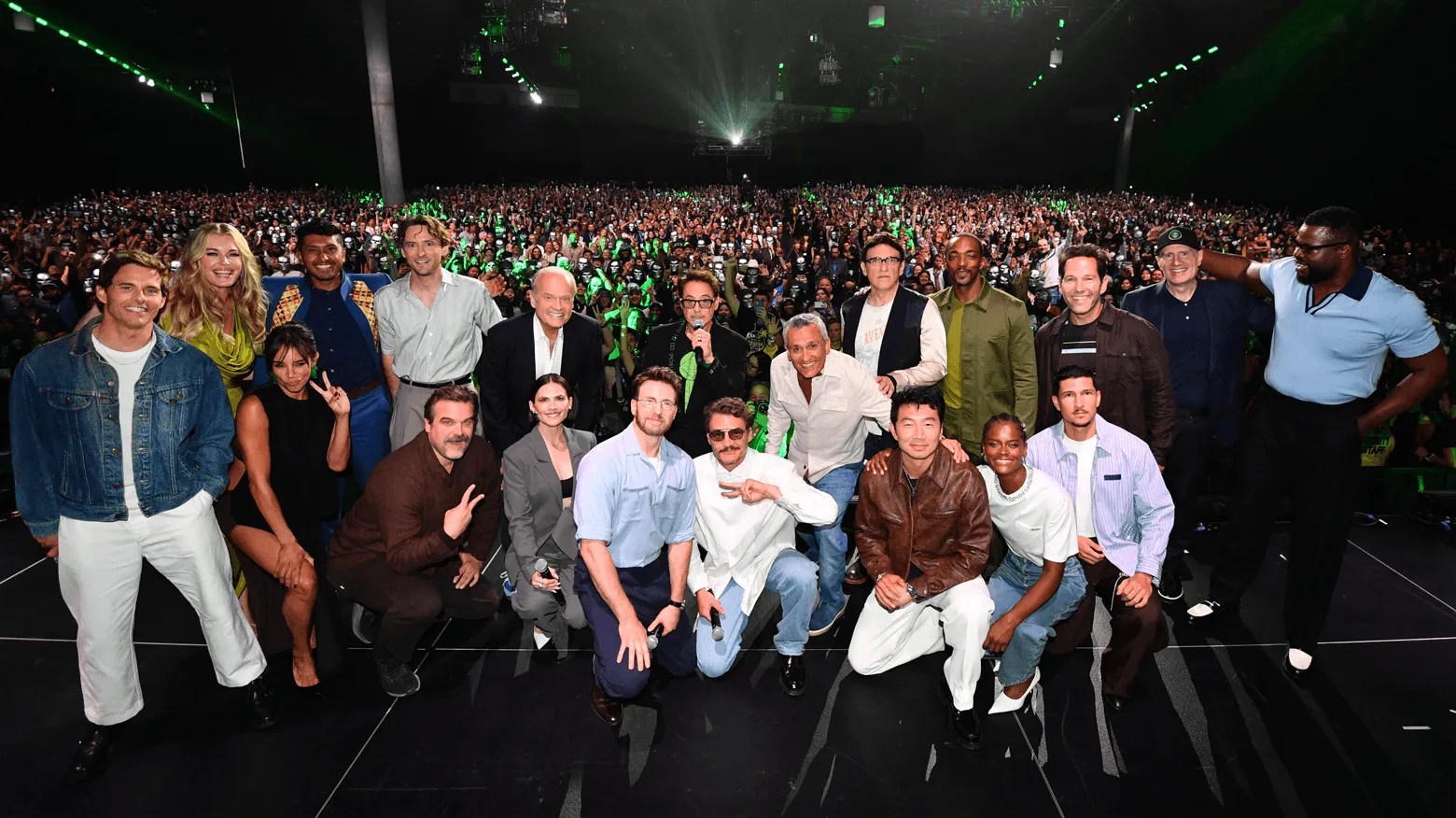
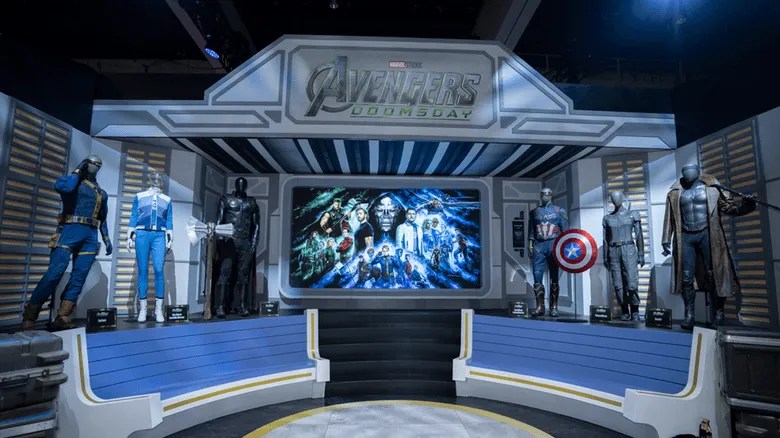
The announcements were not on par with past announcements like Robert Downey, Jr. playing Doctor Doom in Avengers: Doomsday or revealing a mammoth list of upcoming projects. But Marvel Studios did put on a good presentation for the public with exclusive footage from this week’s release of Spider-Man: Brand New Day and this December’s Avengers: Doomsday, along with an impressive roster of actors from the latter film appearing on stage along with Marvel Studios president, Kevin Feige and the directors of the new Avengers film, Joe and Anthony Russo.
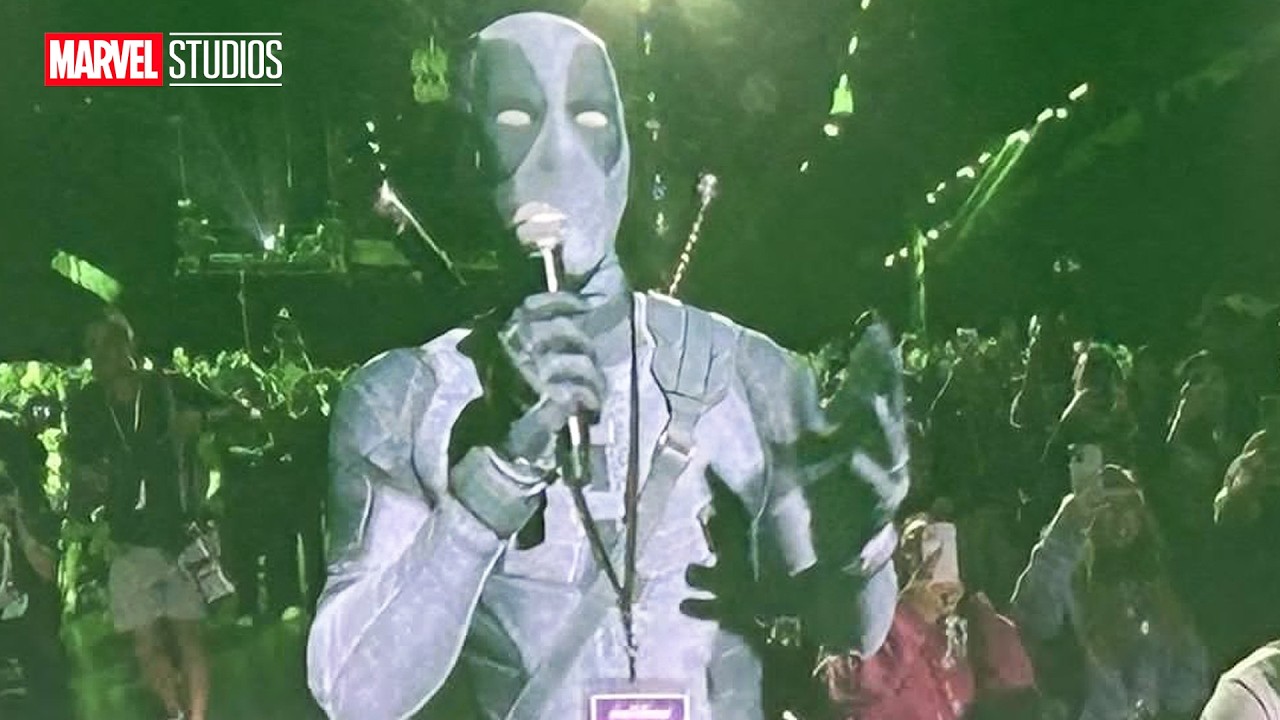
What caught everyone’s interest was an appearance by Ryan Reynolds playing Deadpool who popped out of the audience and teased the cast as to why Thor was crying in a cryptic scene from Deadpool & Wolverine–a question that was leveled at Paul Rudd who plays Ant-Man. The question while playful had dark undertones with the implication that Ant-Man will die in Avengers: Doomsday. There was also the question that everyone had about whether or not Deadpool will appear in the Avengers film. So far, the answer appears to be no, but Reynolds did reveal in a recent interview that there are plans for a new Deadpool film.
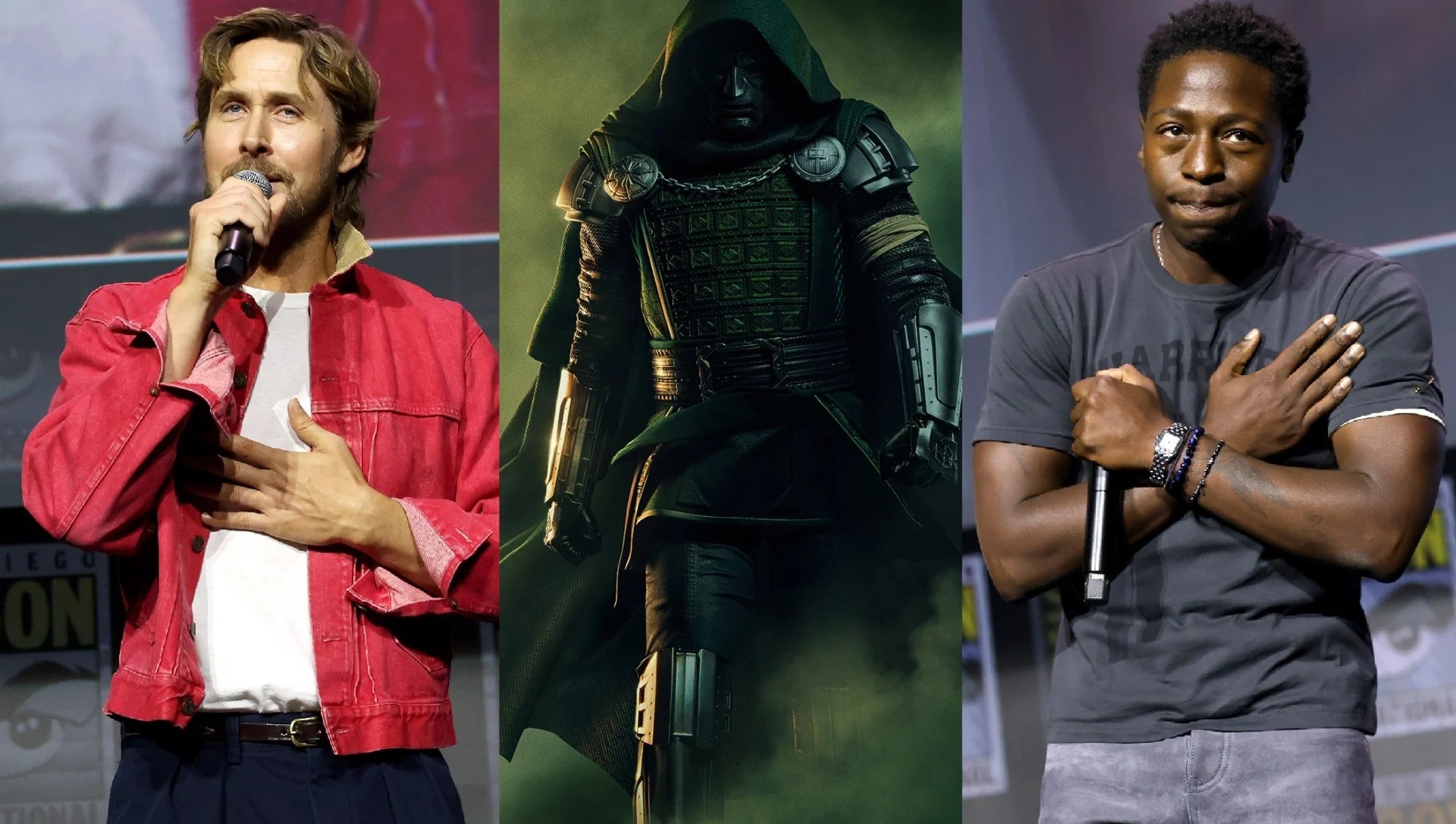
The last announcement made by Feige after the Avengers: Doomsday presentation ended did not surprise anyone: a third Black Panther film coming in December 15, 2028, to be directed by Ryan Coogler. What blew the roof off the hall was that the announcement that Black Panther will be now played by David Jonnson. Genre fans will recognize him from his appearances in Alien: Romulus and The Long Walk. This was very welcome news given Johnson’s natural charisma and acting talent, and frankly he was the best part of those films. So him playing T’Challa’s grown up son who picks up the mantle of the Black Panther, plus Coogler’s revelation that Black Panther III will be filmed in large format film amped up interest in this film.
The most surprising revelation at Hall H was the announcement of a new Ghost Rider starring Ryan Gosling, to be directed by Shawn Levy and slated for release in 2028. Apparently Gosling and Levy’s collaboration in next year’s Star Wars: Starfighter went so well that they are teaming up again for the MCU. It was not revealed which version of Ghost Rider Gosling will play but expect him to play the original Johnny Blaze version. It’s interesting to note that the actor is married to Eva Mendes who appeared in the original Ghost Rider film in 2007 and it would be nifty if she appears in the reboot. Some have concerns that Levy who is known for more lightweight films will be directing a film that should be more horror based given the superhero’s horror roots. Regardless, nearly everyone is excited by the idea of Ryan Gosling playing Ghost Rider as many have fan casted throughout the years. As long as it turns out better than the original and it doesn’t end up being unfilmed like what happened with Blade. Hopefully Feige and Marvel Studios know better now and seems to have since at least a director has been locked in and not just the lead actor.
Regarding the MCU TV shows, no major announcements or trailers were released. The only thing mentioned by Feige was that VisionQuest will conclude the Wanda trilogy. Most likely the big announcements about MCU TV shows (and trailer releases) will be done at the D23 Expo on August 14.
It’s also worth mentioning that despite speculation there won’t be any secret MCU films planned for between Avengers: Doomsday and Avengers: Secret Wars, the latter of which won’t be a two-part film. Another thing missing from the Marvel Studios presentation was any news about the new X-Men film. That could be due to the fact that there isn’t a full cast and the desire to keep Sadie Sink’s character in Spider-Man: Brand New Day a secret for a while longer (the popular theory is that she is playing Jean Grey, a founding member of the X-Men). Apparently, Marvel Studios is keeping its cards hidden in order to avoid the past embarrassment of announcing a bunch of projects that never get made–see Blade, Inhumans, Armor Wars; and this is for the best. Give the fans a few nuggets of information about definite projects when they are ready to be announced.
It’s easy to say that given the failure of several recent superhero films that superhero fatigue is upon us. However, given the excitement of upcoming superhero projects at this year’s Comic-Con that may not be the case.
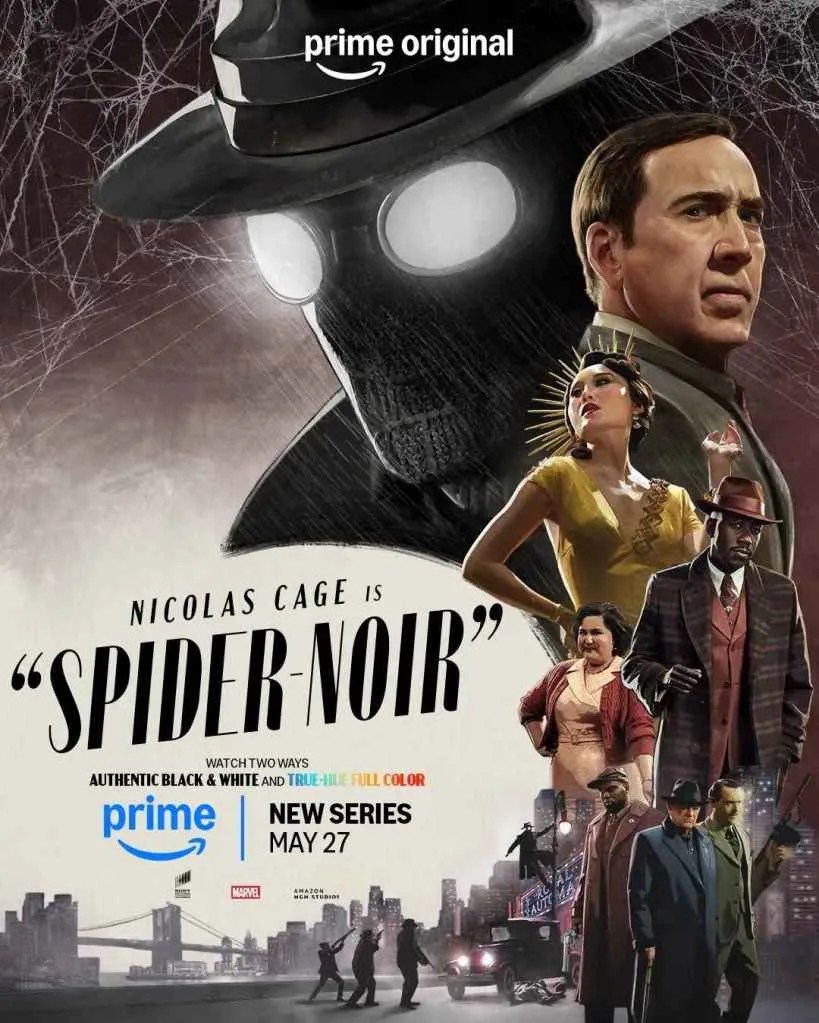
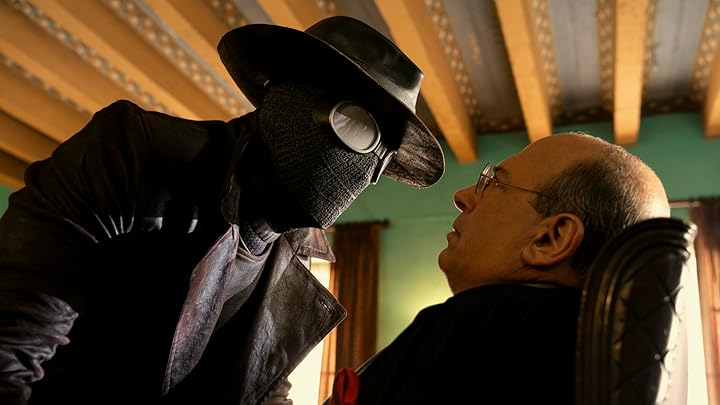
Spider-Noir is the latest superhero TV show now streaming on Prime Video and stars Nicolas Cage as a variant of Spider-Man set in New York City during the 1930s. This time, for legal reasons, his name is Ben Reilly and he is called The Spider instead. Noticeably older and gruffer than the traditional Spider-Man/Peter Parker, Reilly operates as a classic gumshoe private detective in a gritty New York oozing with corruption, crime and notorious gangsters. In other words, this is not your typical Spider-Man story and this is how the Multiverse should have been done by the studios.
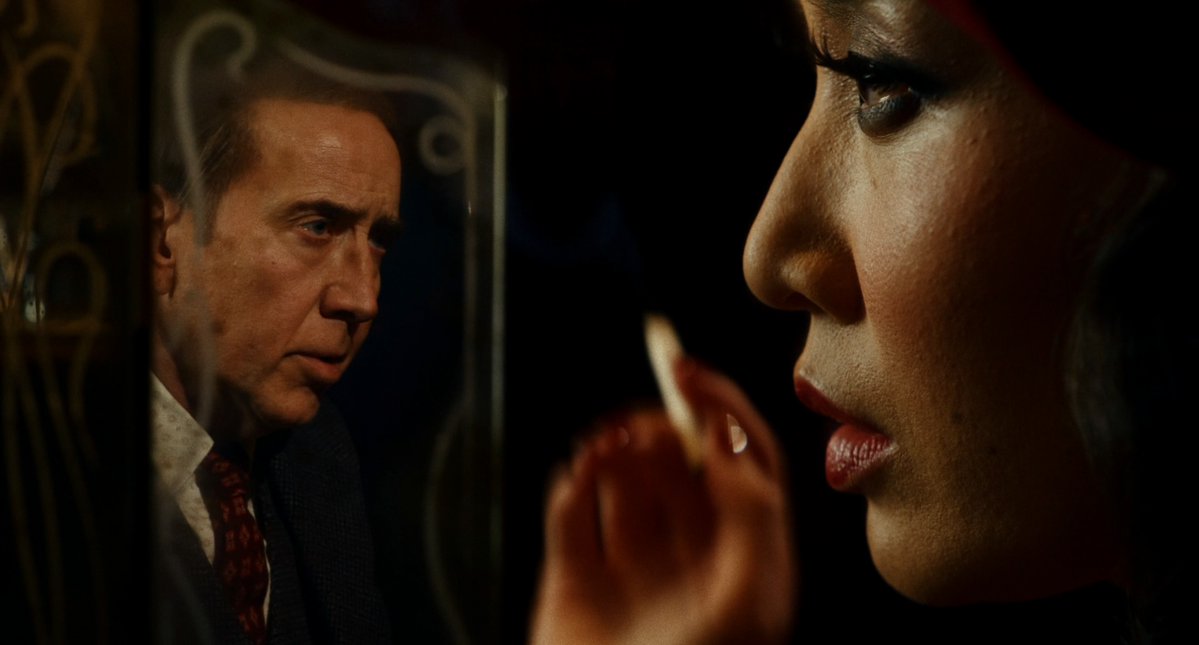
When Spider-Noir begins, Ben Reilly operates out of his tiny office in Manhattan as a gumshoe for hire and still grieving over the death of his girlfriend Ruby five years ago, Ever since her death, Reilly retired from being the masked vigilante, The Spider, but all that changed when he is hired to track down a criminal named Addison, who turns out to have pyrokinetic powers. After Addison is killed, circumstances drag Reilly and his associates down a nefarious rabbit hole involving the city’s corrupt mayor (Michael Kostroff), the notorious mob boss, Silvermane (Brendan Gleeson), who runs the city’s underworld with a savage fist, and Cat Hardy (Li Jun Li), a conflicted nightclub singer he is hired to track but falls in love with. Silvermane has superpowered henchman in his employ, such as Flint Marko (Jack Huston), a Sandman variant, Lonnie Lincoln (Abraham Popoola), a more sympathetic version of Tombstone, and Dirk Leyden (Andrew Lewis Caldwell), a version of the obscure Spider-Man villain Megawatt, who all come into conflict with the Spider.
During his investigations, Reilly finds out that the villains are connected to his World War I past and how he got his spider powers. More importantly, Reilly is forced to come out of retirement as The Spider, which brings him to the attention of Silvermane, who wants to consolidate his grip of power in New York City.
As one can tell by the premise and seeing the show itself, Spider-Noir is an inspired homage to the classic 1930s crime films that were once so popular during the Golden Age of Film. The show can be watched either in garish color with popping bright hues or in noirish black and white, which feels more appropriate. The TV show captures many of the elements that made crime noir films so popular: the jaded detective; a dazzling but conflicted femme fatale; struggling people who talk with exaggerated New York accents and read script lines that would make Humphrey Bogart feel right at home; numerous Dutch angles; split focus shots, and scintillating photography that evokes stark existentialist German cinematography. There are so many ways this approach could have approached a satire, but thanks to the skills from everyone involved, Spider-Noir is a respectful tribute to those types of crime noir films. The actors have to be singled out for their innovative performances, especially Cage, who evokes a combination of Bogart and Jimmy Cagney while infusing his performance with the bouts of unpredictable insanity that made him so famous. The other actors turn in commendable work here as well, such as Li whose near-tragic Hardy captivates every scene she’s in and Gleeson, who projects a chilling presence.
The Multiverse is a great concept that allows for the exploration of many famous characters in different settings which provide captivating insights into what makes them work. The comic books from DC and Marvel have produced many memorable works based on variants of their renowned characters, but live-action attempts at exploring the Multiverse have had mixed results. For Marvel’s part, it seemed as if the studios were too afraid to go all out and give us wildly different versions of their characters. Why is that? Perhaps the studio heads fear that doing so will confuse audiences. But they underestimate them all the time. Other times, the efforts were laughably bad, such as Sony’s misguided films starring Spider-Man villains that were dead on arrival. We could have had more inspired Multiverse films and TV shows in the run up to Avengers: Doomsday and Avengers: Secret Wars and even the beloved Spider-Verse films that took greater advantage of the Multiverse concept like Spider-Noir has done. The executive producers of Spider-Noir are Phil Lord and Christopher Miller, who also guided the Spider-Verse films and they should be the go-to guys for more Multiverse works if they ever happen.
Spider-Noir is more than an homage to crime noir films, it is also one of the best superhero TV shows ever done that focuses on character and exciting superheroics. Underneath his cynical exterior, Ben Reilly still has a good heart because he knows that having great power has great responsibility. Even though this setting is unbelievably different than the traditional one seen with Spider-Man lore, it still is a Spider-Man story and one that hints at how the character would be like if he were middle aged. This approach allows the character to be shown in a unique way while sticking to what makes Spider-Man so popular. By going all in with the Multiverse concept, this TV show is able to present a novel approach to the Spider-Man character and see how he would have turned out under a different setting. Spider-Noir, simply put, takes full advantage of the Multiverse concept and how it should be done.
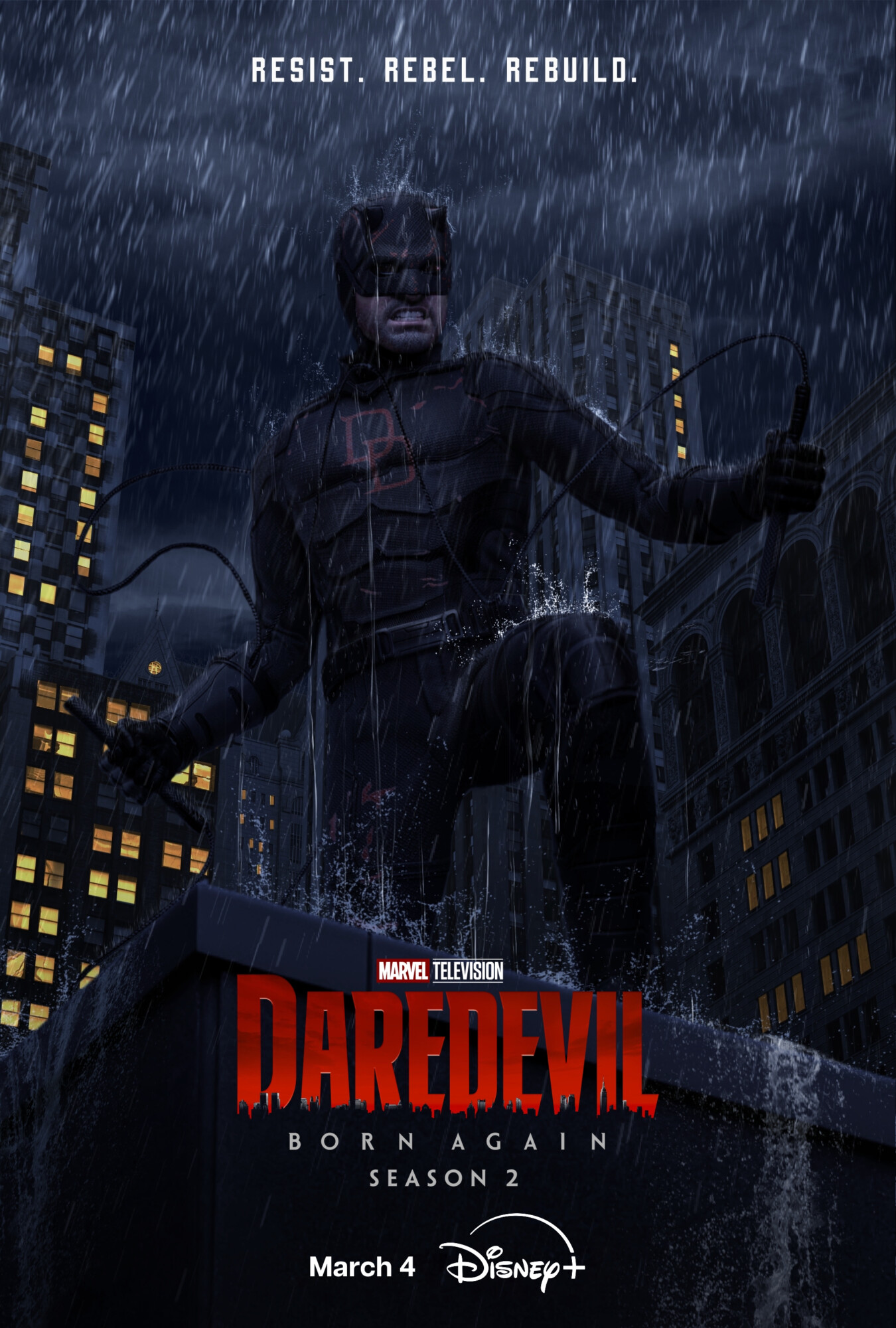
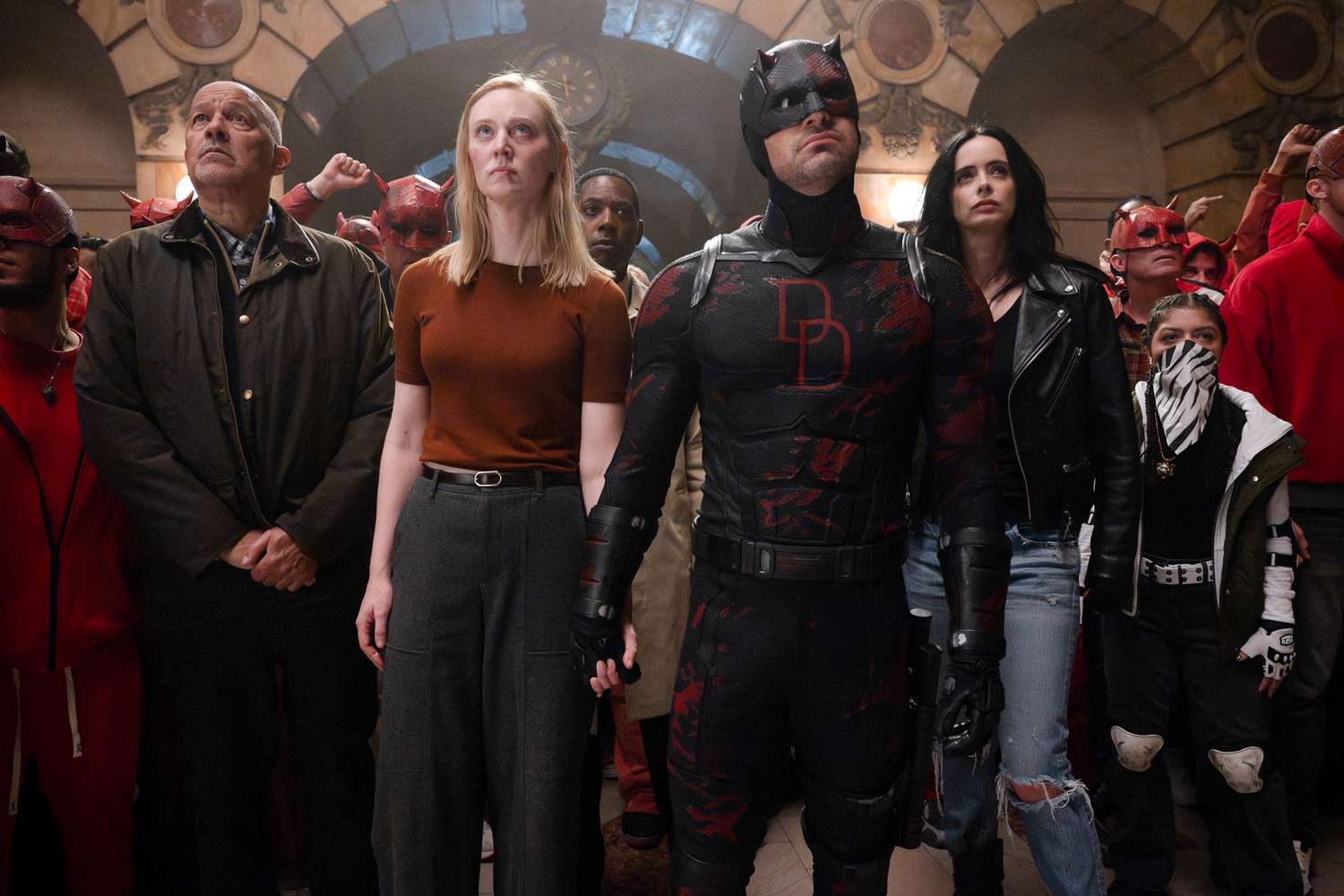
While many fans of the original Netflix TV show, Daredevil, were elated when the program was revived for Disney+ as Daredevil: Born Again, quite a few had complaints about the new TV show. Originally, the revival was supposed to be a soft reboot of the original Netflix show, but Marvel Studios was not happy with the episodes filmed and retooled it with new footage. The result was a strange hybrid that at times matched the greatness of the original show and other times it fell short. Still, Daredevil: Born Again was a fine TV show with its faults, it just was that it could not compare to the greatness of the Netflix show. That changed, however, with Daredevil: Born Again’s second season.
The second season of Daredevil: Born Again just concluded its eight-episode run and it was very evident from the first episode to the last that it reached the heights of the intense drama and gritty superhero fights that made the Netflix TV show so renowned.
When the first episode “The Northern Star” begins, blind lawyer Matt Murdock (Charlie Cox), who is actually the costumed viglante Daredevil with superhuman senses, operates in the shadows with a dedicated group to undermine the criminal mayor of New York City, Wilson Fisk (Vincent D’Onofrio), who is nicknamed the Kingpin. In the first episode, Daredevil raids a cargo ship approaching Brooklyn that is smuggling weapons and is willfully sunk by its captain during the raid to scrub any evidence linking the shipment to Fisk. As Murdock and his allies try to expose Fisk’s crimes and Fisk uses every means possible to cover up his link to the shipment, a series of events pits Murdock and Fisk into a forceful confrontation that will determine the fate of the city and its citizens.
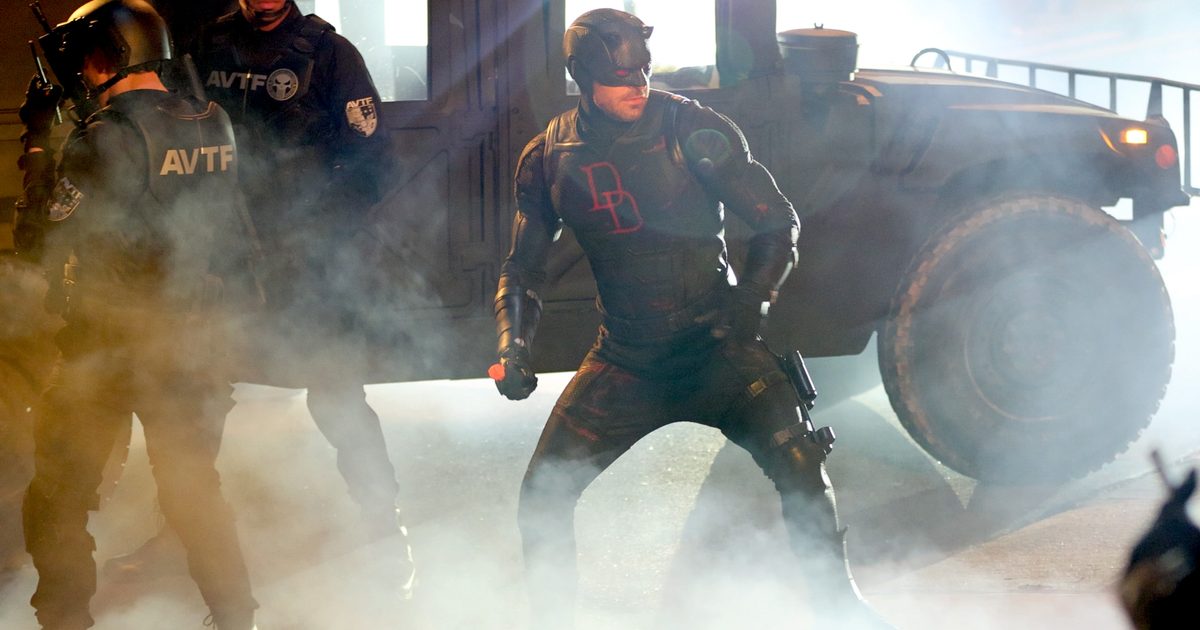
The overrall storyline of Fisk’s iron grip on the city and the reign of terror caused by his Anti-Vigilante Task Force (AVTF), who are made up of corrupt and violent cops, was much more compelling and distressingly relevant to our times. We are shown how oppressive the AVTF are on the locals, and how they begin to fight back after being cowed for so long. We also witness how Fisk’s rule negatively impacts everyone, including the main characters who either suffer from internal ethical struggles or just do their best to survive and heroically try to expose Fisk.
While the first season struggled with its new supporting characters that really did not engage audiences, here in the second season, they came into their own and added their mark to the series. Take for example, Daniel Blake (Michael Gandolfini), the young deputy mayor of communications. When first introduced last season, Blake came off as naive, easily enthralled by Mayor Fisk, and eager to win Fisk’s approval. But in the second season, Blake comes to fear the tyrannical Fisk and questions his own loyalty especially when it comes to dealing with BB Urich (Geneya Walton), a journalist who is out to expose Fisk. Then there is Heather Glenn (Margatita Levieva), a therapist and former girlfriend of Murdock. She also gets enthralled by Fisk after working for him and later begins to lose her sanity after her ordeal of being kidnapped in the first season by the masked serial killer known as the Muse. How they and other characters wind up by the end of the season felt organic and rounded out the characters so that we understood them better.
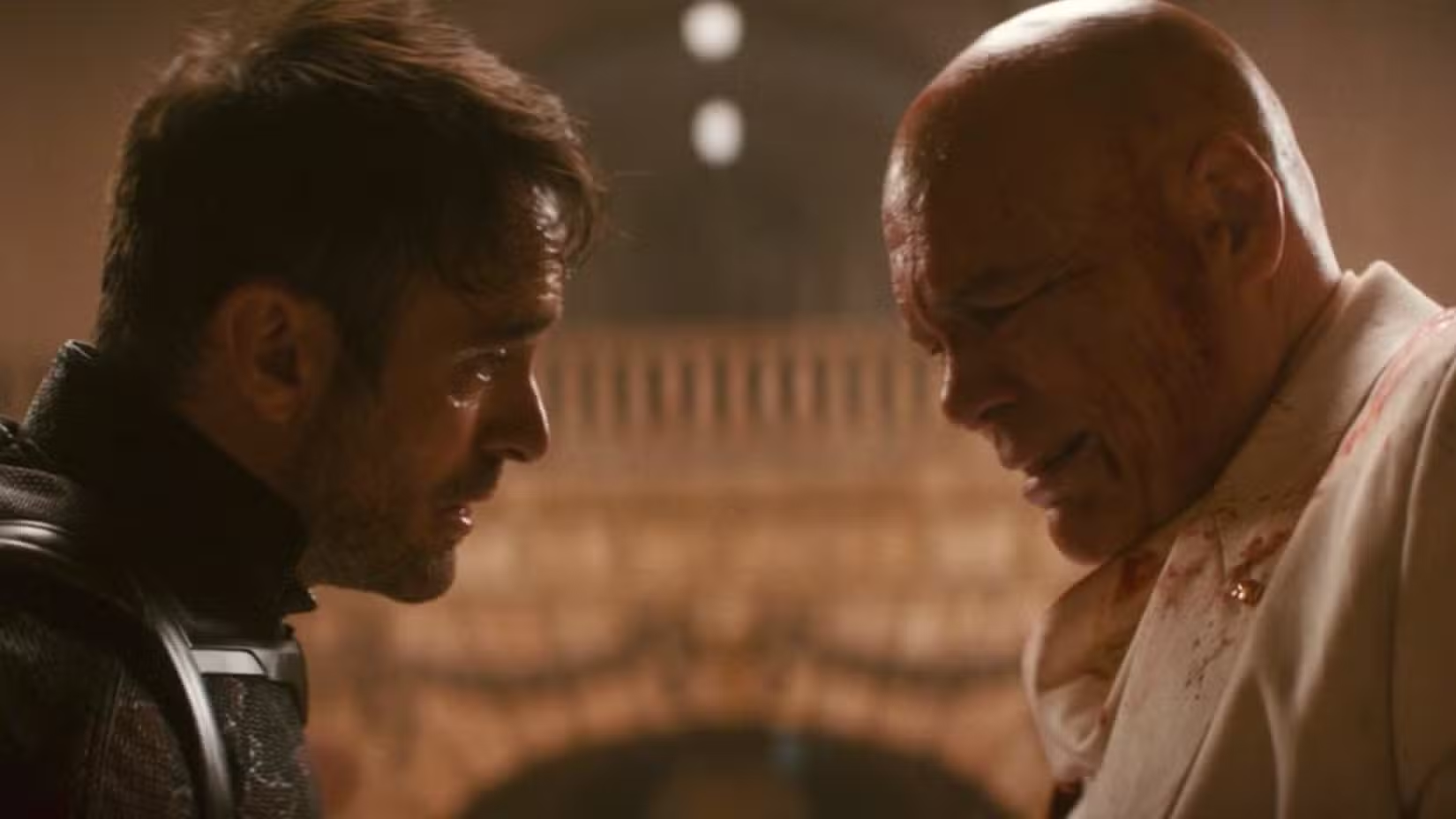
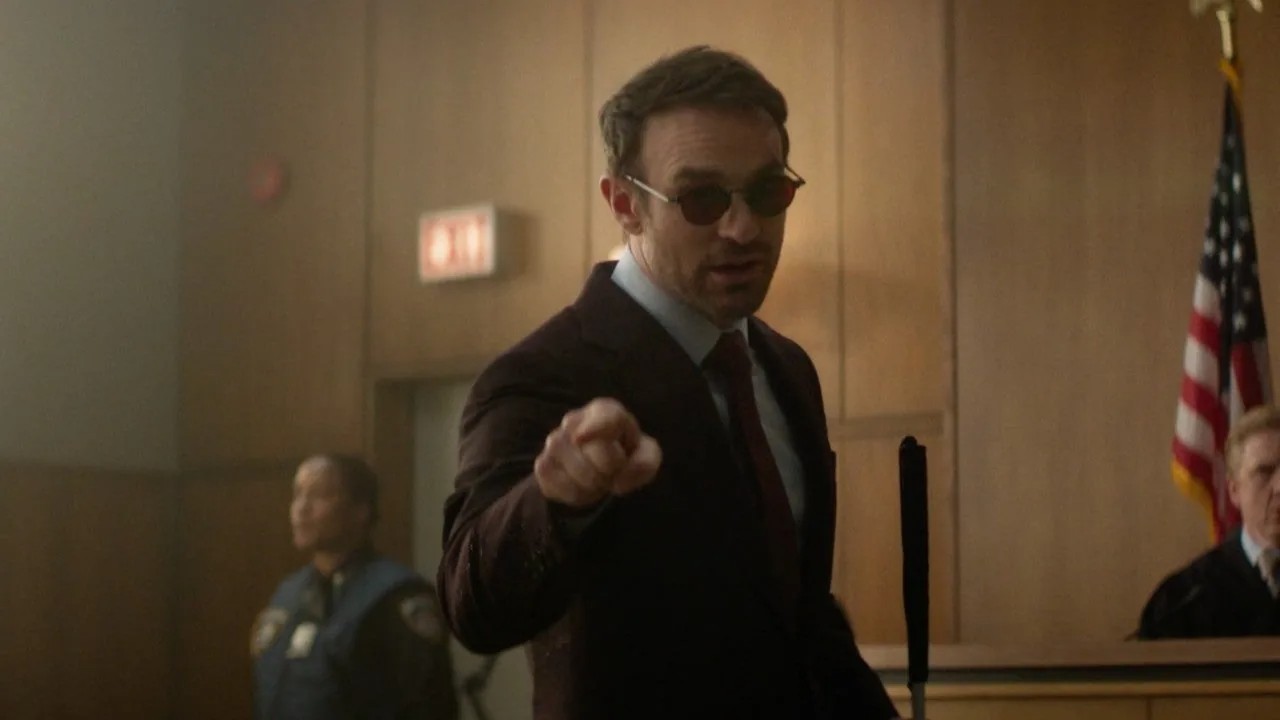
Of course, the main characters like Murdock, Fisk, and Murdock’s girlfriend Karen Page (Deborah Ann Woll), were well developed with captivating arcs that explored their inner emotional turmoils. Fisk certainly belongs in the conversation as one of the best live-action villains ever presented on film or TV thanks to how he is written and D’Onofrio’s intense performance. The man is a terrifying mountain of barely controlled rage and sensitivity who more and more becomes unhinged. Meanwhile, Murdock struggles to defend a broken justice system by taking extra-judicial measures to preserve it and barely does so. Yet, thanks to his skill as a lawyer, in one of the most riveting scenes in the series takes place in the final episode “The Southern Cross” Murdock redeems the law when he confronts Fisk in a courtroom. Unlike their previous encounters that ended with bloody fistfights, this confrontation was one of pure will and words, but it was still intensely compelling. How the confrontation ended was one of the most memorable moments in the TV show.
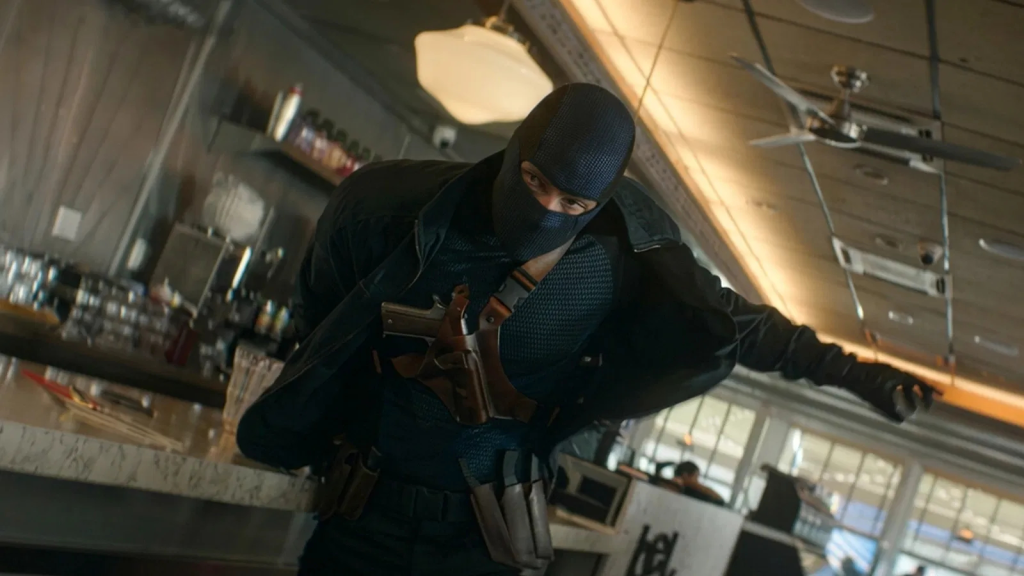
One of the MVPs of the season was hands down the insane assassin Bullseye (Wilson Bethel). Once a disgraced FBI agent manipulated by Fisk in the original series down a path of crime, Bullseye, otherwise known as Benjamin Poindexter, sets off on personal quest of redemption. In the first season of Daredevil: Born Again, Bullseye murdered Murdock’s best friend Foggy Nelson (Elden Henson), and ever since then he wants to amend for his sin. This sets him off an a murderous rampage that culminated in the episode “Gloves Off” where he skillfully takes out an entire team of AVTF agents in a diner. That was one of the most inventively filmed action sequences in the TV show and demonstated how deadly Bullseye is. Thankfully, the series did not salvage him or try to re-invent him to be some kind of anti-hero, but his actions helped significantly propel the show’s narrative.
Another pleasing aspect of Daredevil: Born Again, which fans of the Marvel Cinematic Universe (MCU) should enjoy is its connection to the MCU. It’s not over the top with pointless cameos by established MCU characters but the subtle connections are visible, such as an establishing cityscape shot that features the Avengers Tower or a name drop. More impressive is that this TV show is clearly a continuation of the original Netflix Daredevil with flashback scenes, references and even character appearances. The most joyful returns were characters from other Netflix Marvel TV shows like Jessica Jones (Krysten Ritter) and even Luke Cage (Mike Colter). Their appearances reinforce a sense of continuity and herald an eagerly awaited Defenders reunion that will take place in the third season of Daredevil: Born Again. This is much appreciated and helps cement the relevance of both Daredevil TV shows.
The future is unknown for Daredevil: Born Again after its upcoming third season. The ratings for the second season were not the greatest, which is a shame since it rises to the level of greatness from the Netflix era. Hopefully word of mouth will increase attention to this TV show. Perhaps an appearance by Cox in the upcoming Spider-Man: Brand New Day (which is not a guarantee and do not expect his character to don the Daredevil outfit) or any other MCU film will steer more fans to give Daredevil: Born Again a deserved chance.
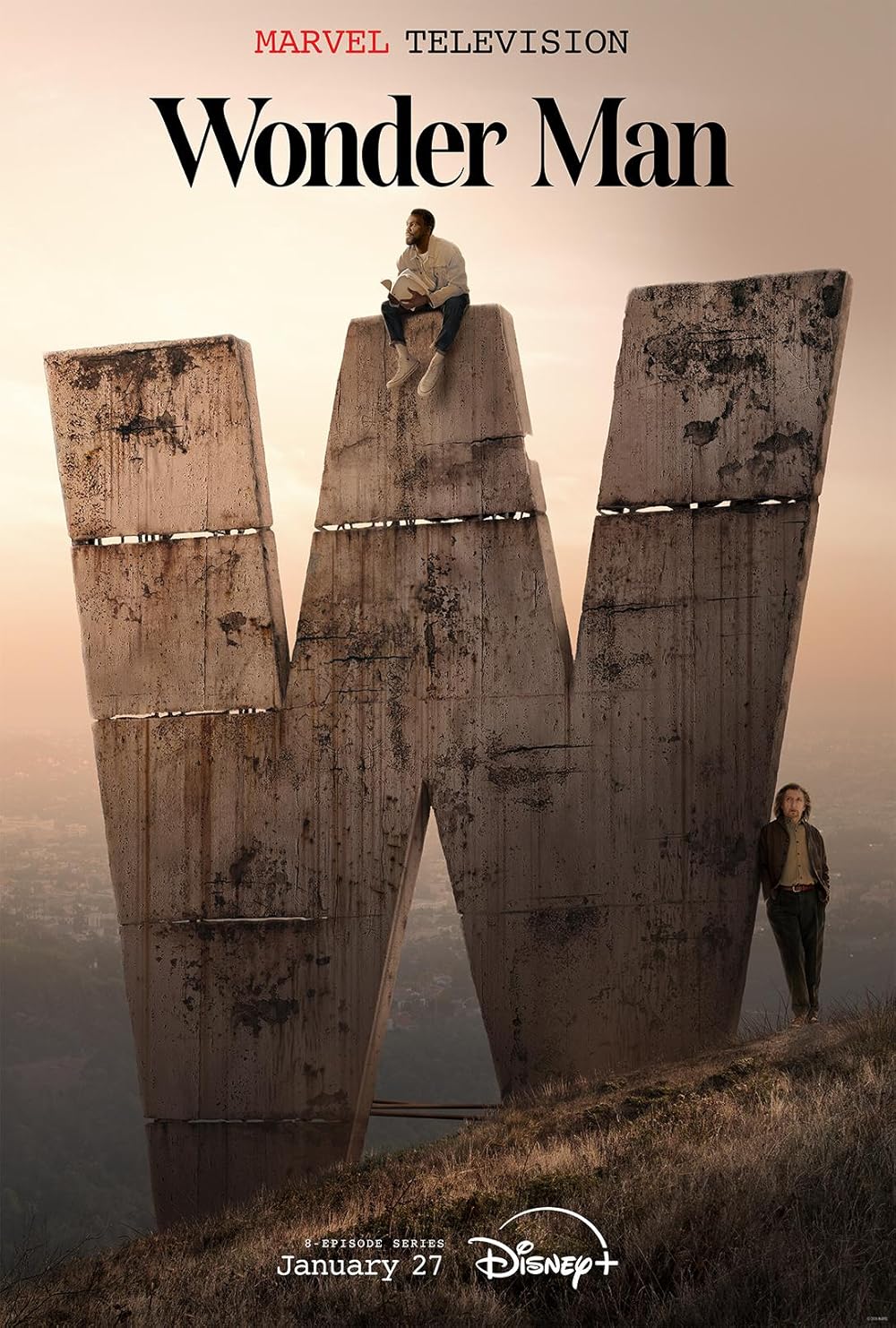
Wonder Man is the latest Disney+ Tv show based on the Marvel Cinematic Universe (MCU) and it is so unlike the typical MCU project, which can be either a pleasant surprise for some or disappointing for fans expecting your typical superhero fare. No matter how a viewer may judge the show, it has to be admitted that it is different.
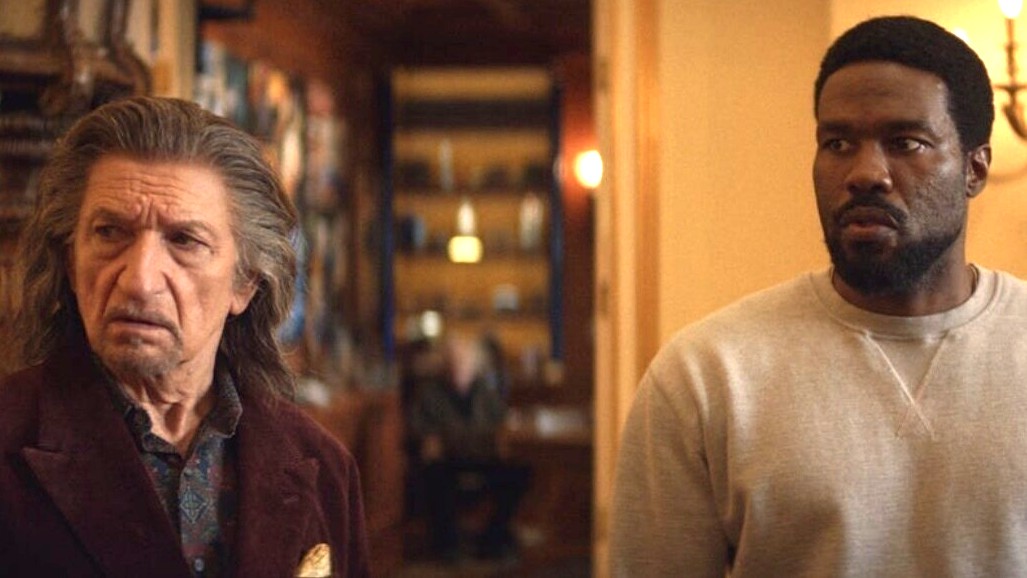
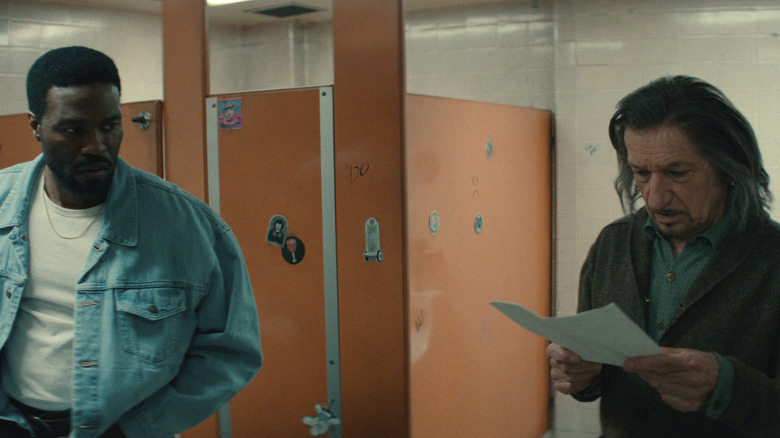
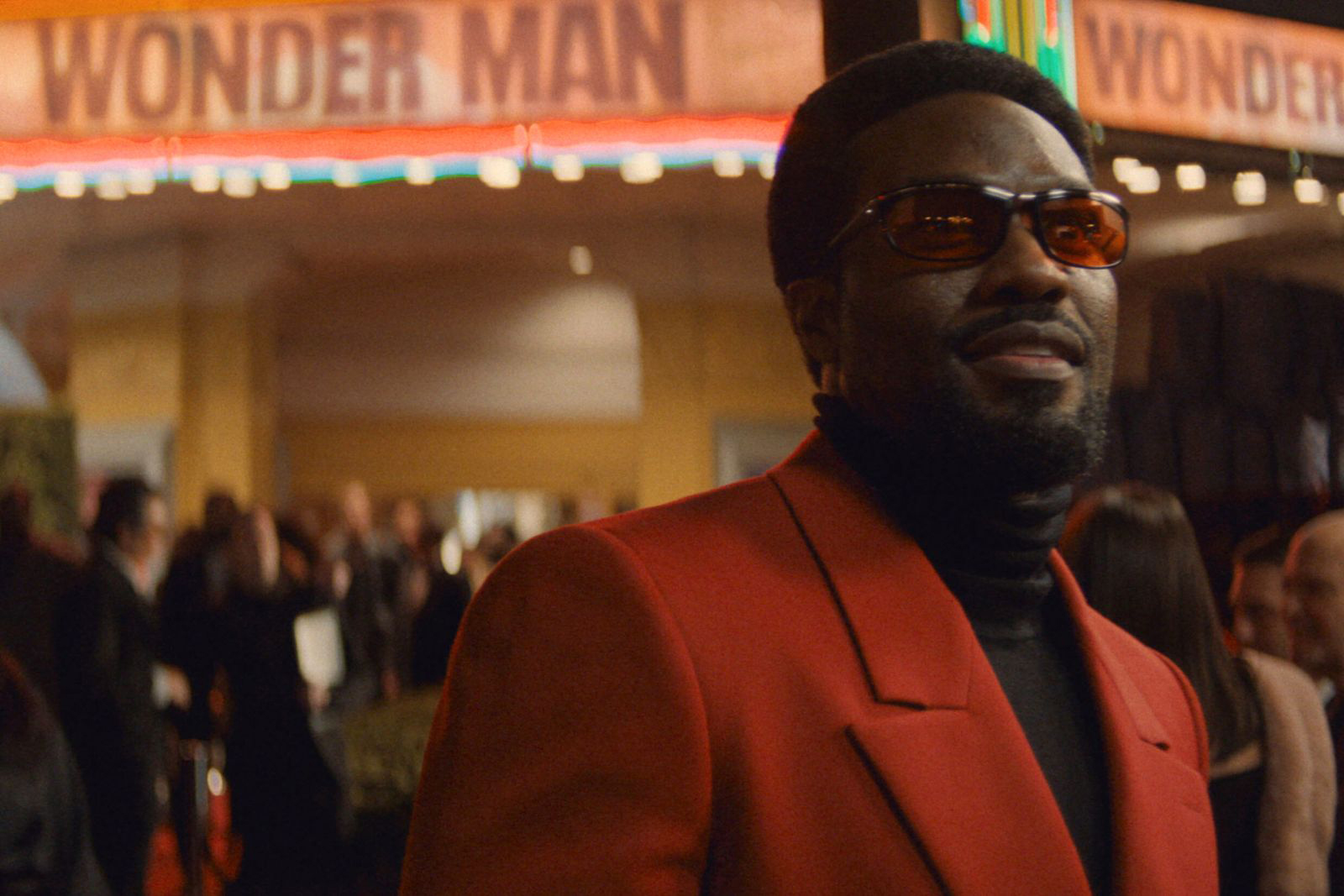
Yahya Abdul-Mateen II stars as Simon Williams a down-on-his-luck actor in Hollywood looking for his big break and learns that an ‘80s sci-fi action film, Wonder Man, is being remade by the renowned eccentric director Von Kovak (Zlatko Burić). Simon is eager to be cast in the title role because it was a favorite film of his when he was young. What needs to be mentioned is that he learned about the role from Trevor Slattery (Ben Kingsley), the disgraced actor who was jailed for portraying the terrorist, the Mandarin, in Iron Man 3.
The two actors form an unlikely bromance as the elder actor mentors the younger one about being a true thespian and how to navigate the Hollywood filmmaking landscape. Unfortunately, Trevor was forced to initiate the friendship with Simon because he was arrested by the Department of Damage Control (DODC) for escaping jail and was promised his freedom if he entrapped Simon. The DODC suspects Simon of harboring superpowers and wants to jail him for being dangerous and to meet quotas. Meanwhile, Simon, who actually has superpowers, is desperate to keep his powers a secret from everyone because superpowered people are banned from acting in Hollywood and obviously his acting career would be over if the world learned his secret.
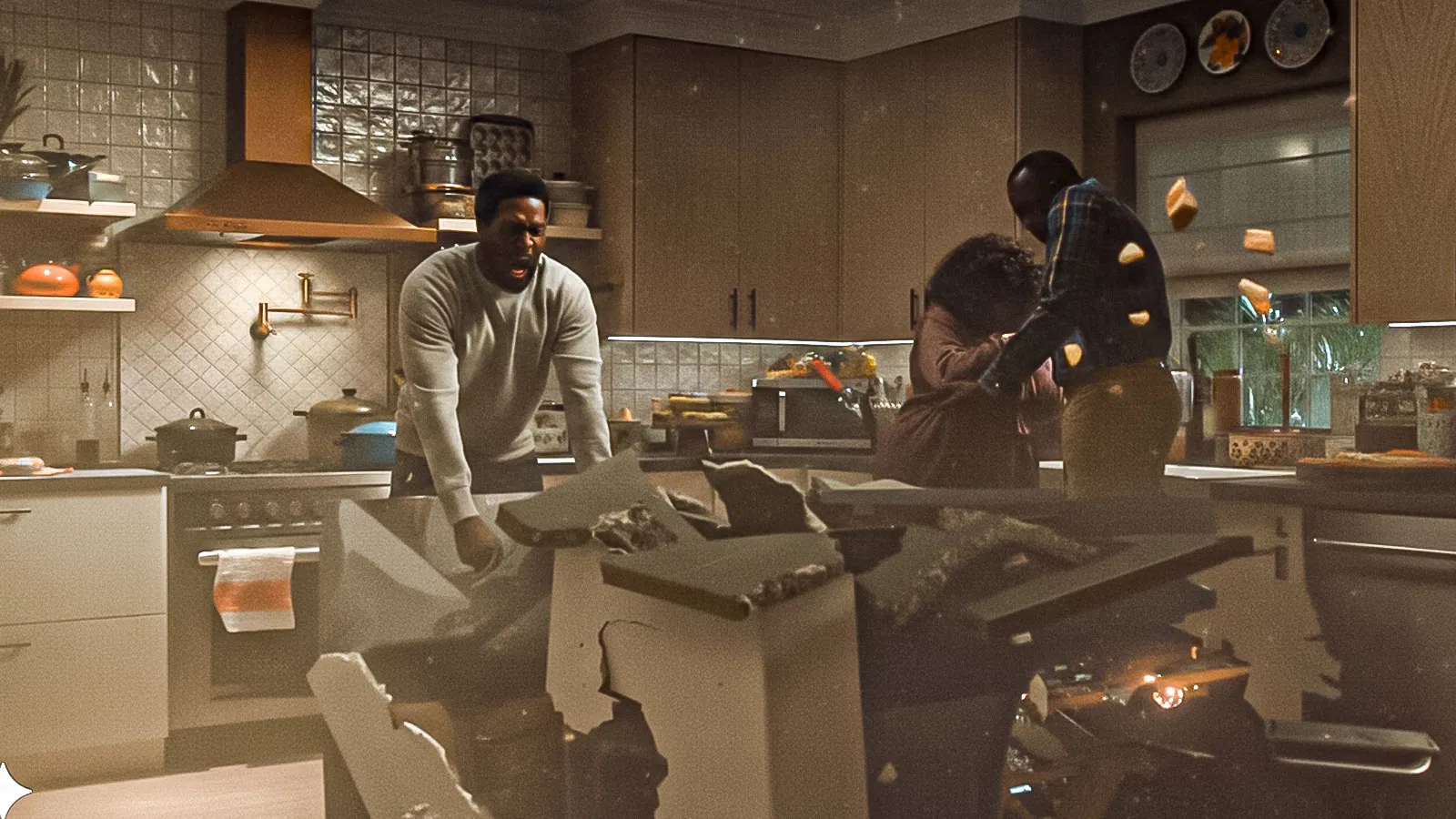
That is basically it about Wonder Man. Anyone expecting superhero escapades and world-ending threats will be sorely disappointed. There are not even any pesky villains or any deep connections to the MCU aside from Trevor and the DODC. So, the TV show can be enjoyed and understood by non-MCU fans. Anyone with an open mind will find out that Wonder Man is an enjoyable and slightly humorous look at the plight of modern actors. In many ways, the TV show is Marvel Studios’ version of Entourage or The Studio but not as comedic, but that’s fine. The emotions are in the right place and anyone can’t help but feel for Simon as he navigates his life and the quirky people he meets. We get enough details about Simon to relate to him, which was best seen in the episode “Pacoima” where Simon visited his mother (Shola Adewusi) for her birthday and had to defend his acting career, especially with his older brother Eric (Demetrus Grosse). Highlighting that episode was the classic sitcom trope of the main character’s buddy, in this case Trevor, tagging along for the family gathering.
What helps Wonder Man tremendously is the terrific and genuine chemistry between Abdul-Mateen II and Kingsley. The two have great rapport with each other and the friendship between them feels very authentic and natural. Kudos, of course, go to both actors, and Kingsley turns in one of his best performances and this MCU vehicle is the best one to showcase Trevor. It would be a crime if we never saw the duo again since they light up every scene they are in.
The future for Wonder Man is unknown at this time, since Marvel Studios has reduced their offerings in light of recent disappointments. Unlike other MCU TV shows, this one was released with all eight episodes simultaneously, which implied that Disney did not have confidence in the TV show. But anyone dismissing it for that reason would be mistaken since it is one of the better MCU TV shows that tried something different that worked thanks to the talent in front and behind the cameras. This is a case where being different worked for Marvel Studios. As long as the talent is there, they should do more of this.
Wonder Man is under the Marvel Spotlight label, which implies it was just a limted series. But even if a second limited series never comes to fruition, Simon and Trevor deserve to be seen again whether dealing with Hollywood politics or L.A. living or just shooting the breeze in a movie theater as they discuss film and TV shows. Besides, without giving anything away about the final episode, anyone who enjoyed Wonder Man should know what else happened to Simon and Trevor.
2026 looks to be another jam-packed year with all the sci-fi, horror, fantasy and animated projects planned for the year. There are many promising original films and TV shows and returning franchises that will excite any fan. Also, it can be said that 2026 will be do or die for the Marvel Cinematic Universe (MCU), since it has struggled lately. Once their films were guaranteed to rake in the money, but that’s not the case anymore and Marvel Studios is betting it all with the films Avengers: Doomsday and Spider-Man: Brand New Day. On the other hand, the DC Universe is off and running with this year thanks to the success of last year’s Superman film. Now let’s look at the most anticipated films and TV shows of 2026.
Films
10. Toy Story 5
It’s incredible that Pixar has been able to come up with a new angle for a Toy Story film that is very relevant to current times. Tom Hanks and Tim Allen return to voice the iconic toy characters Woody and Buzz as they and their toy companions now have to contend with a tablet that threatens their popularity with their child owner.
8. The Dog Stars
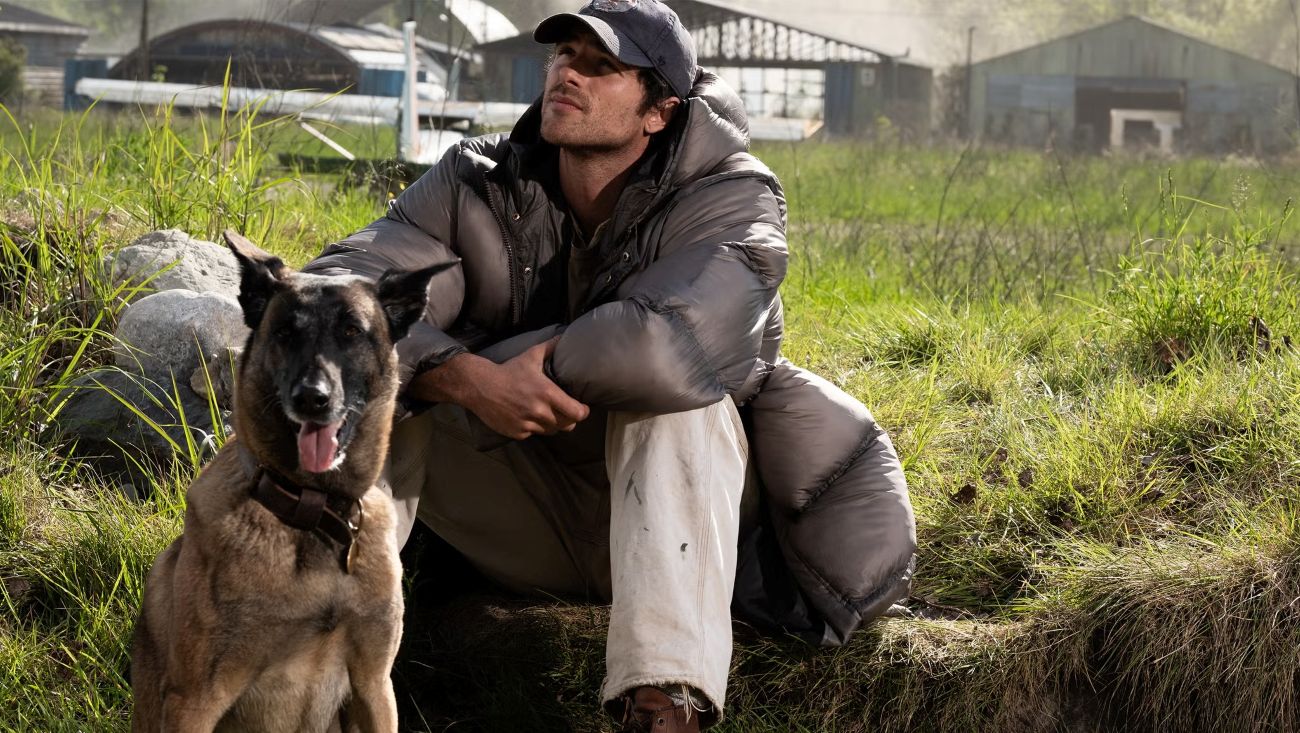
Not a lot is known about this post-apocalyptic film about a pilot, his dog and a disgruntled veteran, but master director Ridley Scott is behind this adaptation of Peter Heller’s novel. Given Scott’s track record with genre classics like Alien, Blade Runner and The Martian, this one should be another winning notch in the director’s filmography.
8. The Mandalorian and Grogu
Earlier this decade, a film based on the TV show, The Mandalorian, would have set fandom on fire. But given how Disney loves to milk their IP to the death, interest in the galactic bounty hunter Mandalorian and his adopted Force-sensitive child Grogu has declined and the timing of this film may be unfortunate. Still, it will be the first Star Wars film released since 2019, so that should generate interest.
7. Supergirl
The next DC Universe (DCU) film features Superman’s drunken cousin, Kara-Zor-El (Milly Alcock) aka Supergirl, in an outer space adventure that supposedly adapts Tom King’s acclaimed comic book mini-series, Supergirl: Woman of Tomorrow. The film gets bonus points for featuring the return of Krypto the Superdog and Jason Mamoa making his DCU debut as Lobo, the intergalactic bounty hunter.
6. Project Hail Mary
The directing team of Christopher Miller and Phil Lord return to live-action with this adaptation of Andy Weir’s novel about a lone astronaut (Ryan Gossling) sent on a desperate mission to another star system to find out why the stars in the universe are suddenly being extinguished. Given the credentials of the directors, who were revered for their work on the Spider-Verse films, and the off-kilter look of the trailer, Project Hail Mary should be a unique and off-beat film that could resonate.
5. Dune, Part Three
The third film adapts the Dune sequel novels, Dune Messiah and Children of Dune and completes the epic sci-fi trilogy by director Denis Villeneuve. The first two films received nearly universal praise from critics and fans for its faithful adaptation of Frank Herbert’s novel about political intrigue and religion in the distant future, which featured stunning visuals, strong performances and engrossing worldbuilding. Dune, Part Three will conclude the spiritual journey of the messiah-like Paul Atreides as he struggles to set a course for humankind in the universe while retaining his own humanity.
4. The Odyssey
The latest film from director Christopher Nolan which is based on the epic Greek fantasy poem by Homer has generated tremendous word of mouth thanks to the meticulous artistry of Nolan and the reputation his films have garnered. The Odyssey is a suitable project for Nolan because of its grand nature, and he is only one of a handful of directors who can do justice to the film. The six-minute trailer that was recently released which focused on the subterfuge of the Trojan Horse increased the fervor for the film given how impressive and large scale the scenes looked on large screens.
3. Disclosure Day
Steven Spielberg, one of the most acclaimed directors of all time, returns to his genre roots with this UAP/UFO-related film that is largely shrouded in mystery. Unlike his previous UFO films that seemed hopeful, Disclosure Day feels more grounded, mysterious and ominous judging by the teaser trailer alone. The teaser implies the film will tackle government conspiracies and spirituality. After a long period of non-genre dramas and musicals, seeing Spielberg tackling aliens once again is a welcome event.
2. Spider-Man: Brand New Day
Following the aftermath of Spider-Man: No Way Home, the latest MCU Spider-Man picks up after Spider-Man’s (Tom Holland) civilian identity has been erased thanks to a magical spell. Not a lot has been revealed about the next MCU Spider-Man film but it features popular Marvel characters like the Hulk and Punisher, a bunch of new supervillains and a mysterious new character played by Sadie Sink. Aside from speculation about Sink’s role, the film is noted for being directed by Destin Daniel Cretton who directed the well-received MCU film Shang-Chi and the Legend of the Ten Rings.
1. Avengers: Doomsday
From the chair announcement trailer to the character teasers, no other film coming out in 2026 has generated the amount of buzz as the first Avengers film since Avengers: Endgame. The film begins the conclusion of the MCU’s Multiverse Saga, which will finish with next year’s film Avengers: Secret Wars. Marvel Studios has a lot riding on the success of this film given how MCU films and TV shows have had uneven reception lately. The film is pulling out all stops to bring back fans to guarantee a box office win with its hard pivot to legacy characters and actors, notably those from the Fox X-Men films and Robert Downey, Jr. who returns not as Iron Man but as the premier Marvel villain Doctor Doom. No matter how it ends up, Avengers: Doomsday will be the event film of 2026.
Notable Mentions:
28 Years Later: The Bone Temple; The Bride!; Clayface; Coyote vs. Acme; Evil Dead Burn; Flowervale Street; Forgotten Island; Godzilla: Minus Zero; Good Luck, Have Fun, Don’t Die: Greenland 2: Migration; Hokum, Hoppers; Iron Lung; The Legend of Aang: The Last Airbender; Masters of the Universe; The Mummy, Primate; Redux Redux, Werwulf, Wildwood
Television
10. Star Trek: Starfleet Academy
Most likely the latest Star Trek TV show will be garbage given the cringy publicity images and clips that highlight cliche teenage angst. Also going against it is that not many fans were interested in a Star Trek show set in the unpopular Star Trek: Discovery era of the 31st century, but it looks well produced and could surprise us.
9. The Boroughs
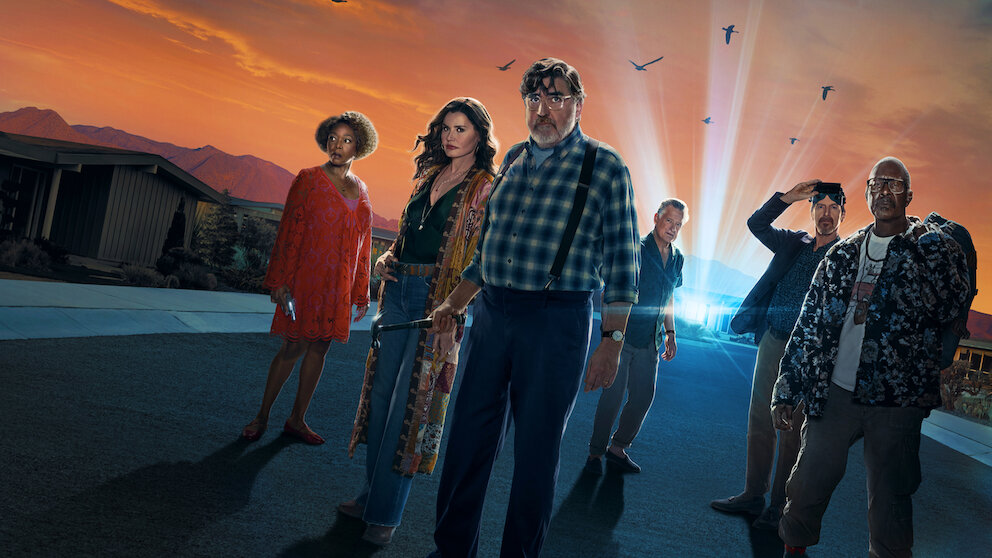
Fresh off concluding their popular TV series, Stranger Things, the Duffer Brothers follow up that TV show with The Boroughs. This one focuses on middle-aged residents of a suburban community instead of kids who team up to face an unusual threat. Starring Al Molina, Geena Davis, Bill Pullman and others, The Boroughs should echo the same magic that made Stranger Things so well regarded.
8. Monarch: Legacy of Monsters
The second season of the Monsterverse TV show is finally upon us. The first season unexpectedly provided depth and intriguing worldbuilding for the action-oriented Monsterverse films while featuring many appearances by our favorite kaijus like Godzilla. The second season will provide more of this and should develop the Monsterverse storyline further.
7. Neuromancer
Apple TV has turned into the premier streaming service for high-quality sci-fi programs and given recent adaptations of popular sci-fi literary works like Foundation and Silo, it was time for the streaming service to jump into adapting the William Gibson novel that jumpstarted the cyberpunk subgenre. Details are not available but since Neuromancer will stream on Apple TV, it should be a quality adaptation.
6. Spider-Noir
While it is lamentable that this program about an alternate take on Spider-Man set in the 1930s will stream on MGM+ (who actually subscribes to that streaming service?), it offers a unique take on Spider-Man. Filmed in black and white to establish a noir mood, the series will star Nicolas Cage (who voiced the same character in the Spider-Verse animated films) as Ben Reilly, an older and more jaded version of Marvel’s most popular hero.
5. X-Men ’97
After the triumphant first season that redefined the animated X-Men TV shows, this second season takes place right after the events of the first season as the heroic mutants find themselves scattered in different time periods and have to find a way back home. Only this time, the X-Men have to grapple with the mega-villainy of Apocalypse. However, being that Beau DeMayo, the showrunner of the first season, has been fired by Marvel Studios, it has to be seen if the new showrunners can match DeMayo’s work.
4. VisionQuest
This MCU TV show concludes the loose trilogy made up of WandaVision, Agatha All Along, and now VisionQuest. This shows follows the journey of the white android Vision (Paul Bettany) who was imbued with the memories of the original Vision in the final episode of WandaVision and now he has to struggle to find his identity. What makes the concluding part of the trilogy more exciting is that Terry Matalas, who was responsible for the popular third season of Star Trek: Picard, will be the showrunner.
3. Lanterns
The sole DCU TV show coming out in 2026 is a detective show will feature the intergalactic sentinels Green Lanterns Hal Jordan (Kyle Chandler) and John Stewart (Aaron Pierre) investigating a murder in Nebraska that will lead to dark and otherworldly events. Given the success of other DCU TV programs like Peacemaker and Creature Commandos, and the bonafides of the showrunners, including DCU head James Gunn, Lanterns should be another win for the fledgling superhero cinematic universe.
2. The Boys
The final season of the adaptation of Garth Ennis’ comic book series about “superheroes” dominating popular culture and the world itself promises to go all out as a ragtag group of anti-heroes led by Bill Butcher (Karl Urban) have their final confrontation against the twisted and sadistic Homelander (Anthony Starr) who rules the United States in a reign of terror with his lackeys and cohorts. The final season of The Boys promises to be just as brash, graphically violent and sardonic as the previous four seasons and its spinoff TV show Gen V.
1. Daredevil: Born Again
It’s true that the first season of Daredevil: Born Again turned out to be uneven, but the best episodes of that season were produced by Dario Scardapane and directed by Justin Benson and Aaron Moorhead, who were the showrunners of the original Daredevil TV program on Netflix. The second season will be completely done by them and that is reason alone to look forward to it. Another reason is that it will focus on how the blind superhero Daredevil (Charlie Cox) and his allies (including Kristen Ritter reprising her role of Jessica Jones) operate on the streets of New York City under martial law as the police enforce a ban on vigilantes imposed by Daredevil’s nemesis Mayor Wilson Fisk (Vincent D’Onofrio).
Notable Mentions
3 Body Problem, Army of Shadows, Avatar: The Last Airbender; The Beauty, Blade Runner 2099, For All Mankind; Invincible, A Knight of the Seven Kingdoms, One Piece, Paradise; Silo, Star City, Star Trek: Strange New Worlds, Star Wars: Maul-Shadow Lord; Stranger Things: Tales From ’85; The Testaments, Wonder Man, Your Friendly Neighborhood Spider-Man