As we all know, the latest buzz going around the ‘net has been about the leaked emails from Sony Pictures and in particular the future of the Spider-Man film franchise. We learned that Sony and Marvel Entertainment came agonizingly close to having Spidey appearing in 2016’s Captain America: Civil War and in other Marvel Cinematic Universe (MCU) movies. Additionally, the emails it’s clear that the Sony executives were up in arms over where to go forward with the franchise.
The Amazing Spider-Man 2 underperformed (and for good reason!) last summer in theaters and took a vicious beating from critics and fans over its convoluted script and having too many characters. The emails prove that Sony knows something is wrong with the franchise, and also demonstrate how they badly lack any creative solutions. Let’s look at their idea for an Aunt May film which would reveal her secret life. Really? That is one dumb idea. Why not have a kid-friendly film starring Ms. Lyons the dog? Then there was the notion of making an animated comedy film about Spidey. That would go over as well as that Broadway play. Or how about a movie about an unnamed female superhero? Sorry, but other film studios are coming out with high profile superheroines like Wonder Woman and Captain Marvel. Seriously, these kinds of ideas make the planned Sinister Six movie to be a brilliant move!
What’s worse is that The Amazing Spider-Man 2’s reception has cast a doubt on continuing the franchise to the point that the planned Venom movie is all but dead and now the likelihood of a Sinister Six film is in doubt. The fragile nature of these films underscore how much the Spider-Man film franchise is in trouble. Announcement after announcement fail to drum up any interest among fans or worse hostility. The only Marvel property that generates more hostility is next year’s Fantastic Four reboot. Smelling blood in the water, many fans are ripping apart the two recent Spider-Man films and a war cry has started for Sony to sell the film rights back to Marvel. That’s regrettable. The reboot had some good parts and shouldn’t be completely disregarded, especially the first film.
From Highlight To Casualty
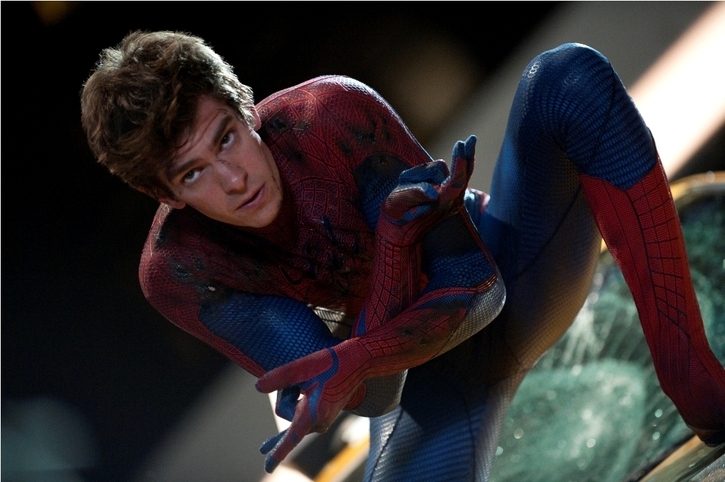
What the reboot got correct is that the films moved away from Sam Raimi’s Silver Age-inspired films that were kind of goofy and a bit dated. The new Peter Parker, played excellently by Andrew Garfield, wasn’t a textbook nerd anymore. He was more of a loner, an outsider, and he seemed more modern. Peter was someone who had trouble connecting with the world around him until that famous spider bite changed his life. And the way Spider-Man was presented was just spot-on perfect. He was brash, wise cracking, nimble and at times it seemed like pages from a comic book were literally put on the silver screen without missing anything. Then there was the near-perfect chemistry between Peter and his love Gwen Stacy (Emma Stone). Some may wonder why Marc Webb, a director known for a romantic comedy – (500) Days of Summer – was picked to direct the rebooted films. Part of that had to be with the success he had with (500) Days of Summer, a genuinely funny and affecting movie that was a chick flick for guys. Webb was able to convey a moving romance between Peter and Gwen and they were the highlights of the rebooted films. However, other parts of the films had severe faults, like cartoony villains and haphazard editing, which is why it’s likely that Webb won’t come back for future Spider-Man films. Continue reading →
Ornaments have been popular presents during the Holiday season and this year’s isn’t an exception. The genre-related offerings from Hallmark this year are quite impressive but next year’s Hallmark ornaments promises to be just as noteworthy. To date these are the 2015 Hallmark ornaments.
Star Trek
2015 looks to be a quiet year for Star Trek Hallmark ornaments. Doubtless, 2016 will be another story since it will be the 50th anniversary of the franchise. But next year’s ornaments look very beautifully sculpted. They include the Enterprise C famously featured in the classic episode “Yesterday’s Enterprise” on Star Trek: The Next Generation. The other two will be of Lt. Uhura and “The Needs of the Many” ornament, which features Kirk and Spock during Spock’s death scene in Star Trek II: The Wrath of Khan. No doubt, the base will have sound, most likely being Spock’s unforgettable final words.
Star Wars
Sorry, new fans of the upcoming trilogy, but at this time, no ornaments based upon Star Wars: The Force Awakens will be offered. Perhaps Hallmark wanted to hedge their bets on the popularity of ornaments based on new films. Look at what happened in 1999 when the company flooded the market with ornaments of the sure-fire hit Star Wars Episode I: The Phantom Menace. Today many of those ornaments can be bought for a dollar on eBay. But who knows, in a few short months we’ll find out for certain if ornaments based on next year’s StarWars film will be produced.
Either way, Hallmark is playing it safe for 2015 and its confirmed Star Wars ornaments will include a Y-Wing fighter, Luke Skywalker standing on his hands with Yoda perched on his feet as seen in the training segments of The Empire Strikes Back, Admiral Akbar and Zeb from Star Wars: Rebels. The most interesting looking ornament is a twofer; C-3P0 and R2-D2.
UPDATE: In the Hallmark Keepsake Dreambook, it’s stated that commemorative ornaments based on Star Wars: The Force Awakens are coming later this year, but no further information is currently available.
Superhero
At this point, only a few superhero ornaments have been confirmed. They include the Marvel mainstay Spider-Man in Holiday-themed adornments, a grey and black-garbed Batman, Wonder Woman as portrayed by Lynda Carter, and Steve Austin – the Six Million Dollar Man. There will also be an ornament based on the garish batmobile seen in the Joel Schumacher Batman films. There must be fans of that car. Joker fans should note that an ornament based on the Joker played by Caesar Romero will be available.
So far, it looks like there won’t be any Guardians of the Galaxy ornaments. Too bad, a dancing baby Groot would’ve been a natural ornament. But there’s always a chance a limited edition ornament of these space heroes may be released. A gut feeling indicates that Hallmark will unveil some kind of Guardians of the Galaxy ornament and don’t be surprised if they produce a set of ornaments for Avengers: Age of Ultron in the same vein as they did in 2012 when they released a trio of interlocking ornaments of Thor, Iron Man and Captain America.
UPDATE: There will be dancing baby Groot as seen at the end of Guardians of the Galaxy and a Hulk vs. Ultron based on their battle in Avengers: Age of Ultron. Also, keep an eye out for a new Iron Man ornament. Sadly, we won’t be getting a Marvel superhero trio like we did in 2012. There’s always next year and on that note we’ll have to wait then to find out if Ant-Man will be getting an ornament (an ornament based on Batman v Superman: Dawn of Justice is a given).
Science Fiction/Fantasy
Headlining the ornaments based on sci-fi and fantasy properties are the Predator himself and should make a nice companion piece to this year’s Alien ornament. To accompany Cornelius from the original Planet Of The Apes, 2015 will see another ape ornament: the nefarious Dr. Zaius.
Fans of The Walking Dead rejoice! Hallmark is producing an ornament of everybody’s favorite walker killer, Daryl Dixon. Who knows? Are Rick Grimes, Michonne or the Governor next?
Expect a new Harry Potter ornament, one of Smaug the dragon from The Hobbit films, Megatron from the Transformers toys and Beetlejuice, as well. Don’t be surprised if Hallmark unveils more ornaments based on popular sci-fi, fantasy and horror properties. We’ll keep you posted.
UPDATE: As one of our readers pointed out in the comments, the Harry Potter ornament will be of our favorite young wizard on Platform 9 3/4. There will also be an ornament of the Mockingjay symbol featured in The Hunger Games: Mockingjay, Part 2.
On a lighter note, a new Gizmo ornament is coming. Recreating one of his cutest moments in Gremlins, this ornament features the diminutive Mogwai riding a toy car. For animation fans, ornaments based on the films WALL-E, Inside Out and Home, as well as the ever-present Disney characters and films (like Frozen) will be available. BTW, there will be an ornament of the super nerd Sheldon from The Big Bang Theory. Bazinga!
The rivalry between DC Comics and Marvel Comics has many fronts in media like toys, films, video games, etc. But as it stands right now, DC Entertainment dominates the television medium with its current slate of TV shows on the air and their plans for additional programs coming in the near future.
DC’s Television Summit
Once Smallville ended in 2011, a void needed to be filled by DC Entertainment in terms of having a superhero presence in the TV landscape. Rather than mining the Superman/Batman lore, the decision was made to showcase DC’s other heroes and it was a wise choice. For some time, DC and Warner Bros. fell into a crutch and relied too much on Superman and Batman to represent DC in other media. This was understandable since those were the company’s two biggest heroes. It makes perfect business sense to take advantage of the popularity of those heroes. The problem, though, is that with all the marketing and attention focused on Batman and Superman, DC’s other heroes were left out and helped give the impression that the rest of the DC roster consisted of second stringers. That couldn’t be farther from the truth. The DC universe is populated by many captivating heroes and villains and the problem was that the company wasn’t taking full advantage of that notion. Marvel, and specifically Marvel Studios, faced a similar problem but for different reasons. They didn’t have the film rights to Spider-Man or the X-Men, so they had to rely on their lesser known properties. It turned out for the best, otherwise we wouldn’t have gotten live-action adaptations of Guardians of the Galaxy or Thor.
In DC’s case, they too were forced to look elsewhere since the Superman well had run dry with Smallville and Batman was considered off limits because of the Dark Knight films. Thus, DC Entertainment looked to an urban vigilante that had many of Batman’s characteristics – Green Arrow.
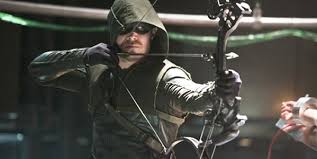
All things considered, he is a solid alternative for Batman when it came to being featured in a live-action TV show. After all, both are urban crimefighters without superpowers and use specialized weapons. When Arrow premiered in 2012, it presented a more grounded, realistic world for the superhero. In the first season, the main character, who wasn’t even called Green Arrow (in one episode his alter ego, played by Stephen Amell, thought that name Green Arrow was “lame”), wore a practical uniform with only a hoodie and grease paint to conceal his identity. Moving away from fanciful superhumans allowed Arrow to concentrate more on character development and street-level fight scenes. This meant that it was more inviting and relatable for casual viewers.
What the producers of Arrow did correctly is that they embraced the DC universe. They weren’t afraid to name drop places like S.T.A.R. Labs and Blüdhaven. Likewise, the series featured recognizable DC characters like Amanda Waller (head of the Suicide Squad), Slade Wilson and even the Batman villain Ra’s al Ghul and his League of Assassins. It was enough bones thrown to DC fans to keep them glued to their TVs. Arrow then took a step further and introduced superpowered characters in its second season thanks to this strength-enhancing drug called Mirakuru and the introduction of Barry Allen (Grant Gustin), whose Flash origin occurred at the end of one of the Arrow episodes.
This naturally led to The Flash spinoff that premiered recently. Taking a lighter tone than Arrow, The Flash is more of a throwback to the fast-moving comic books with outlandish supervillains, while utilizing the same kind of engrossing subplots that Arrow uses. What’s more is that both shows are definitely in the same universe. Although the concept of a shared universe isn’t new in TV shows, this was the first time this was done for superhero shows (not counting The SixMillion Dollar Man and The Bionic Woman) and it’s exciting to watch characters appearing in both programs with even more allusions to a wider world.
Both Arrow and The Flash are huge hits on The CW network and should be around for the long haul. Gotham, a show set in the title city and taking place after the killing of Bruce Wayne’s parents, is a hit on Fox. In fact, it pulls in more ratings than The CW superhero shows but that is due to the wider audience that Fox has compared to The CW. Even though Gotham is a hit, there should be some caution because it’s on Fox, so there isn’t any guarantee that it will last as long as if it was on The CW. That is a problem that DC and Warner Bros. faces. Sure they can put anything on The CW, a fledging network, but it won’t reach as large an audience as in the major networks. But on the big networks, there is more pressure to succeed. Already, Constantine airs on NBC and has dismal ratings–it was recently announced that the show won’t go beyond initial 13 episodes and its fate is unknown. Constantine’s rating woes are due to its time slot: Fridays at 10 pm. How can any show succeed on that slot? It probably would’ve been better if it aired on a cable network where it could’ve thrived and be allowed to be darker like its comic book counterpart.
Marvel Comics turned 75 this year. As we celebrate Marvel’s 75th anniversary, it’s hard to imagine how long the comic book company has been around. Even though Marvel Comics first debuted in 1939 with Marvel Comics #1 (featuring decidedly different superheroes like the Human Torch, Ka-Zar and Namor), the company truly came to its own in the 1960s when writer Stan Lee and artists Jack Kirby and Steve Ditko introduced the world to new and dynamic superheroes.
These masked marvels like Spider-Man, the Hulk, the Fantastic Four, the Avengers and the X-Men quickly captured readers’ imaginations. Without exaggeration, Marvel Comics changed the comic book world and left a permanent mark in popular culture and its characters are still vibrant today. Incredibly enough, it can be said that they’re more popular today than when they were first introduced in the 1960s .
While Marvel superheroes have successfully transitioned into other media like films, toys, games and such, let’s not forget that the core of their appeal are with the comic books. Whether they’re just single stories in individual issues or epic mini-series and story arcs, the following are, based on my opinion, the best stories from Marvel’s 75-year history.
Age Of Apocalypse: Spanning several different X-Men titles over several months, this massive storyline was about an altered reality where Professor X’s assassination in the past led to Apocalypse conquering North America, and Magneto leading the X-Men in a desperate attempt to stop him and correct history. Just seeing the alternate takes of our favorite mutants was a joy to read.
Avengers Disassembled: Boasting top writers and artists like Brian Michael Bendis, Paul Jenkins, Robert Kirkman, Steve Epting, Dave Finch and George Perez, this comic book crossover spawned from The Avengers #500-503 into other superhero titles and upended most of the Marvel Universe. The team is literally ripped apart from within by an insane Scarlet Witch. Many heroes are killed and the Avengers were catapulted into new popularity with this controversial story arc.
Born Again: Daredevil has never been lower or a more captivating read than in this classic story arc spanning Daredevil #227-231. That is due to the genius writing of Frank Miller and the art of Dave Mazzucchelli. Daredevil’s worst enemy discovers his secret identity and systematically destroys the blind superhero’s personal world plunging Daredevil into his own worst hell.
The Captain: This underrated Captain America tale by Mark Gruenwald, Tom Morgan and Kieron Dwyer spans Captain America #332-350 and has Steve Rogers abandoning his role as the iconic hero and going underground. Meanwhile, a super patriotic, though unstable, replacement is picked by the U.S. government to take over, but as we see, it’s not easy living up to a legend.
Civil War: Probably the last great mini-series produced by Marvel pits its most iconic heroes against each other. As Iron Man and Captain America took opposite sides against the U.S. government’s superhuman registration act, Marvel Comics was changed forever and the mini-series’ impact is still with us today.
Deliverance: The famous “Demon in a Bottle” story arc from Iron Man#120-128 bravely introduced the notion of a superhero being truly human and becoming an alcoholic. Tony Stark’s (Iron Man) alcoholism would resurface to even greater effect several issues later after his nemesis Obadiah Stane orchestrates a series of attacks. Stark soon became unable to continue being Iron Man and hit rock bottom culminating in Iron Man #182 when a now-homeless Stark battles not only the cold elements, but his own inner demons.
Days of Future Past: The greatest X-Men story ever made reflected the height of the historic collaboration of Chris Claremont and John Byrne. In this exciting two-part tale from The Uncanny X-Men #141-142, robotic Sentinels have hunted mutants nearly to extinction in the near future, so one mutant is sent back in time to alter history.
The Death of Captain America: One immediate aftermath of the Civil War mini-series was Ed Brubaker’s gut-wrenching examination of the death of an American legend. Coldly assassinated before standing trial, Captain America’s death led to another hero taking up his mantle and a serpentine plot by Cap’s greatest enemies.
The Death of Gwen Stacy: The two-part story from The Amazing Spider-Man #121 & 122 is considered by some as the end of the Silver Age of Comics. This emotional tale about Spider-Man’s nemesis, the Green Goblin, killing his girlfriend was a gut punch not only for Spider-Man but his many followers who were stunned by the tragedy.
The Doctor Is In: John Byrne wrote and drew some outstanding comic books during his Marvel tenure. Before Deadpool came along, Byrne’s rendition of She-Hulk had her hysterically breaking the fourth wall. In The Sensational She-Hulk #5 story titled “The Doctor Is In” she had to not only contend with Doctor Bong, but with literally walking across comic book pages (ads included). Marvel Comics was rarely funnier than with this particular issue.
The Hulk Vs. The Thing: Marvel is known for how often its superheroes fight each other. This early story from Fantastic Four #25 & #26 is one of the best since its primarily a battle royale between two of Marvel’s strongest titans. The Stan Lee-Jack Kirby classic is at the same time a story about determination and fighting against the odds, in particular with the Thing.
If This Be My Destiny…!: The story arc from The Amazing Spider-Man #31-33 had Spider-Man run through exhausting trials to gather serum for his dying aunt. His quest culminated in issue #33 with a story titled “The Final Chapter!”. In the issue, our hero is trapped under tons of steel and rubble and in danger of drowning with the serum just out of reach. Spider-Man has to find the fortitude to free himself and his effort was memorably inspiring.
One of the great corporate rivalries is the one between the comic book giants Marvel Comics and DC Comics. It’s a competition that has spilled over to other media. When it comes to films, Marvel has won the war on that front due to the monumental successes of their Marvel Cinematic Universe (MCU) films. However, take a quick glance at the current TV schedule. From looking at that and television history, it’s obvious that DC has won the TV War…for now.
Head Start
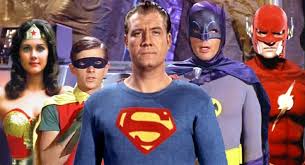
In reality, DC had the war won for decades now. This goes way back to the 1950s with the success of the first TV show based on Superman. That would be, of course, the landmark series Adventures of Superman, which starred George Reeves. It’s well known that the series was very popular and helped cement Superman’s legendary status in pop culture. Marvel at that time period didn’t even exist, nor did their most popular heroes because the company was concentrating on non-superhero comic books.
Following the cancellation of Adventures of Superman, the next DC superhero to bask in the television spotlight was Batman. Beginning in 1966, Batman was an instant hit and a genuine pop culture phenomenon. Starring Adam West and Burt Ward as Batman and Robin, the show was a decidedly goofy sendup of comic books and introduced characters like the Joker and Catwoman to non-comic book readers. Although, it was and is still popular, many decried the way Batman belittled the Caped Crusader and comic books in general.
In the 1970s, there were a few TV shows and specials based on DC Comics superheroes. The best known was Wonder Woman, starring Lynda Carter and it aired from 1975 to 1979. The show wasn’t as cheesy as Batman, nor as popular, but it was noted for its pro-feminist stance since the title character was a superhuman woman. The women’s lib messages obviously went over the heads of most younger viewers, who were enamored with Lynda Carter and her skimpy outfit.
Other TV shows airing in the 1970s were strictly aimed at children like Shazam! and The Secrets of Isis. In fact, these half-hour programs only aired on Saturday mornings and had limited appeal.
Around this time period, Marvel got into the act with the premieres of TV shows and TV films based on their characters. The first superhero to make a live-action appearance was Spider-Man, who made non-speaking appearances on The Electric Company. Some of the Marvel TV films and shows were truly awful like Captain America and The Amazing Spider-Man, which thankfully did not last long as a series. But a couple were actually decent like Doctor Strange and Marvel’s biggest hit on TV The Incredible Hulk. Airing in November 1977 and starring Bill Bixby and Lou Ferrigno, the TV film was a big hit and led to a successful TV series the following year.
Second Wind
The decade that followed, the 1980s, was slow for comic book properties on TV. After The Incredible Hulk was cancelled in 1982 there wouldn’t be another superhero TV show until the syndicated program Superboy debuted in 1988. Coming after the film disaster Superman IV: The Quest for Peace, Superboy was a welcome respite for fans who just wanted to see good, old-fashioned superheroics and teenage angst. Plus, Superboy was a competent place holder until DC and its parent company Warner Bros. could bring out another Superman TV series or film.
On a side note, there were a trio of TV films that continued the Hulk’s adventures and the first two introduced live-action versions of Thor and Daredevil. The Hulk and his alter ego David Banner actually died at the end of the third film, but there were plans to do more TV films. However, those ended after Bixby’s untimely death in 1993.
The humongous success of the film Batman in 1989 helped jumpstart new DC-based TV shows in the 1990s. Not wanting to rest with the success of Superboy, Swamp Thing: The Series premiered on the basic cable channel USA Network in 1990, while a show based on the comic book Human Target aired briefly on ABC in 1992.
There were two shows that made the largest impact in that decade. They were The Flash and Lois & Clark: The New Adventures of Superman. The Flash, starring John Wesley Shipp, premiered in the fall of 1990 fresh off the success of Batman and seemed to copy the stylistic direction of the Tim Burton film. Even though it only lasted one season, the show is revered by fans because of its fun stories, dazzling effects, and character work. Lois & Clark: The New Adventures of Superman, which aired on ABC, was targeted more towards women since it concentrated more on the relationship between Lois Lane (Teri Hatcher) and Clark Kent (Dean Cain). The superhero aspects of Superman took a back seat to the romantic shenanigans and it was laden with light humor. Of course, this displeased some fans, but it was still a successful program.
As for Marvel, the 1990s was a decade best left forgotten. There were DOA pilots based on Power Pack, Generation X and Nick Fury. As for the syndicated show Night Man, the less said about it the better.
Animation Dominion
As DC dominated the television medium, there was another TV venue that it conquered. That was with their animated TV shows. Since the 1960s, there have been numerous TV shows that aired on Saturday mornings and on syndication based on DC’s superheroes. DC enjoyed early successes like Superfriends in the 1970s, but their animated shows weren’t acclaimed until Batman: The Animated Series premiered in 1992. Boasting memorable characters, villains and plots, the show was a huge hit and led to other superior animated gems like Batman Beyond, Superman: The Animated Series and Justice League. DC’s animated renaissance probably culminated with the recent Young Justice. It just lasted two seasons, but its smartly written scripts, mature themes, and complex character development won wide appraisals from fans and critics.
In this venue, Marvel actually presented itself as a viable counterpart to DC since the 1960s with series based on Spider-Man, the Hulk, the Avengers and other stalwarts. The results were quite admirable in many instances, but DC on the whole produced more noteworthy animated TV shows.
New Century, New Renaissance
As DC celebrated their animated successes in the 1990s, the live-action field was stagnant after the cancellation of Lois & Clark in 1997. There was an infamous pilot made for the Justice League that thankfully never made it into a series. It can be found on Youtube for anyone that is curious.
The live-action drought ended a few years later in 2001 with Smallville. This long-running show starred Tom Welling as Clark Kent in his teenage years and early twenties. It ran on The WB and later The CW networks and explored many aspects of the Superman mythos while concentrating on Clark’s emotional development and how he came to be Superman. It had its faults like the producers’ insistence of “no tights, no flights”, which meant Clark never put on his iconic Superman suit. (The final episode doesn’t count since he was never fully shown wearing it.) This was strange because many other superheroes featured on Smallville like Green Arrow, the Justice Society and Supergirl were allowed to fully embrace their comic-book roots. The Warner Bros. network tried to capitalize on the success of Smallville with other programs, but weren’t successful. Efforts included the short-lived Birds of Prey in 2002 and a pilot for Aquaman.
Around the time that Smallville came to an end, the superhero genre exploded in theaters. Super hits like The Dark Knight, Iron Man, and The Avengers cemented the permanence of superhero films. As it goes, whenever there is a mammoth box office hit, TV executives take notice and follow suit. Warner Bros. and DC took advantage of the heightened interest in superheroes and produced many TV shows. Not all of them bore fruit like pilots for Aquaman and Wonder Woman, or another iteration of Human Target, but others blossomed and are now hit shows. These include Arrow, The Flash, Gotham and to a lesser extent Constantine. And that is just the beginning.

 he Amazing Spider-Man 2 underperformed (and for good reason!) last summer in theaters and took a vicious beating from critics and fans over its convoluted script and having too many characters. The emails prove that Sony knows something is wrong with the franchise, and also demonstrate how they badly lack any creative solutions. Let’s look at their idea for an Aunt May film which would reveal her secret life. Really? That is one dumb idea. Why not have a kid-friendly film starring Ms. Lyons the dog? Then there was the notion of making an animated comedy film about Spidey. That would go over as well as that Broadway play. Or how about a movie about an unnamed female superhero? Sorry, but other film studios are coming out with high profile superheroines like Wonder Woman and Captain Marvel. Seriously, these kinds of ideas make the planned Sinister Six movie to be a brilliant move!
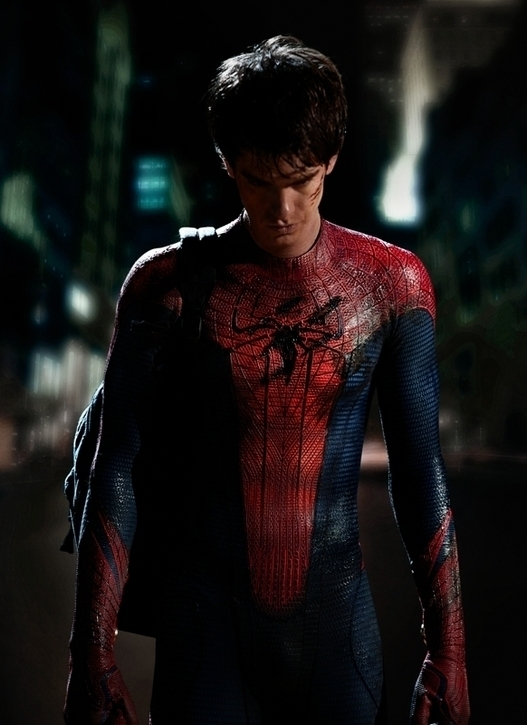 films moved away from Sam Raimi’s Silver Age-inspired films that were kind of goofy and a bit dated. The new Peter Parker, played excellently by Andrew Garfield, wasn’t a textbook nerd anymore. He was more of a loner, an outsider, and he seemed more modern. Peter was someone who had trouble connecting with the world around him until that famous spider bite changed his life. And the way Spider-Man was presented was just spot-on perfect. He was brash, wise cracking, nimble and at times it seemed like pages from a comic book were literally put on the silver screen without missing anything. Then there was the near-perfect chemistry between Peter and his love Gwen Stacy (Emma Stone). Some may wonder why Marc Webb, a director known for a romantic comedy – (500) Days of Summer – was picked to direct the rebooted films. Part of that had to be with the success he had with (500) Days of Summer, a genuinely funny and affecting movie that was a chick flick for guys. Webb was able to convey a moving romance between Peter and Gwen and they were the highlights of the rebooted films. However, other parts of the films had severe faults, like cartoony villains and haphazard editing, which is why it’s likely that Webb won’t come back for future Spider-Man films. Continue reading