Sci-Fi Properties That Should Be In Theme Parks

Many of us will head to the theme parks this summer to enjoy abundant thrill rides and attractions that are based on beloved sci-fi properties like Star Wars, Tron, Avatar and Jurassic Park. While it seems like many sci-fi films and TV shows have been adapted into popular rides and attractions, there are actually a gold mine’s worth of material that either haven’t been done yet, are no longer available or are only available in the less visited theme parks throughout the world. Let’s explore some sci-fi properties that should be featured in more popular theme parks.

Alien/Predator

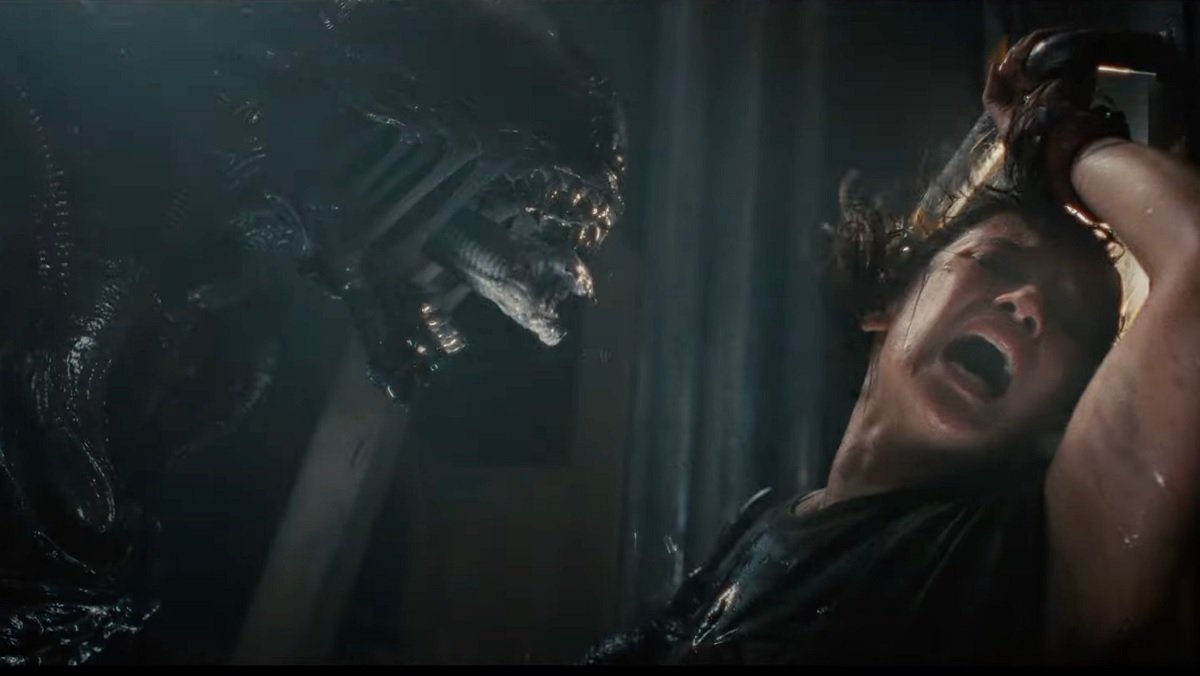
Both sci-fi/horror properties have been featured as haunted house attractions in Universal Studios’ Halloween Horror Nights, while Alien was part of the sorely missed attraction The Great Movie Ride at Disney’s Hollywood Studios. Although both properties don’t gel well with the standard Disney family friendly image and their current parks, they are popular IP owned by Disney and should be considered for some kind of dark ride that is geared for adults.

Back to the Future

The old Back to the Future: The Ride simulator attraction closed years ago in the Universal Studios theme parks to make way for The Simpsons. The original ride is still remembered fondly by fans of the film trilogy and ride enthusiasts. With the rumor going around that Universal may get rid of The Simpsons since that property is now owned by Disney, why not remake the original ride, but with better special effects to rival Avatar: Flight of Passage?

Battlestar Galactica

There is a roller coaster based on Battlestar Galactica in Universal Studios Singapore, but much more can be done with this property. A trackless simulator ride would work where a random ride operator accompanying the riders could be revealed to be a Cylon. Or go for a high-tech simulator ride that takes you on an epic space battle as you defend the Galactica from Cylon raiders like with Star Tours.

Doctor Who

This is what you do with a Doctor Who ride, have guests line up to enter a blue police box/phone booth which turns out to be the TARDIS! After exploring the time ship and guided by an actor playing the Doctor, guests can choose which door to go through that leads them into some kind of dark ride or walk-through attraction. The choices can lead to an adventure featuring the Daleks, the Cybermen or even the Weeping Angels. Voila!

Godzilla

At one point, the Japan pavilion in Epcot was supposedly going to have a ride based on Godzilla, but of course that never happened and is why that area is usually skipped by visitors looking for an attraction. A ride featuring the world’s most famous kaiju could be in the form of a simulator/trackless ride like Skull Island: Reign of Kong, or be more like the old Kongfrontation ride in Universal Studios with jaw-dropping giant animatronics of Godzilla himself that we can see up close.

Mad Max

This is soooo easy. Put out a motorized stunt show on a recreated barren, desert wasteland. Throw in lots of jury-rigged vehicles, including a V8 Interceptor and a War Rig, plenty of stunt driving and performers, and there you go: a Mad Max themed stunt show. Other options can be explored for a Mad Max-themed attraction. Just don’t do anything like that Fast and Furious abomination at Universal Studios.

The Matrix

Think of the awesome attraction The Bourne Stuntacular at Universal Studios Orlando or the closed Terminator 2- 3D: Battle Across Time show. One featuring the Matrix could be a similar theater attraction could be where patrons are released from the Matrix itself and witness an epic, live-action stunt show with dazzling effects where our rescuers battle deadly Agents in a theater setting.

Planet of the Apes

Genting Skyworlds in Malaysia has a trackless ride called Invasion of the Planet of the Apes that looks pretty interesting. Some kind of deal should be made to bring the attraction to the Disney parks since Disney owns the property. Disney’s Animal Kingdom would be good spot for Invasion of the Planet of the Apes or any other ride/attraction based on the other great sci-fi franchise from the ’70s that is still popular today. After the ride, guests can go visit the gorilla exhibit at the park.

Star Trek

Those of us fortunate enough to have visited Star Trek: The Experience still have fond memories of it. Based in the Las Vegas Hilton, Star Trek: The Experience was how Galaxy’s Edge was supposed to be for Star Wars, a fully immersive mini-park/themed area that celebrated all aspects of Star Trek. The mini-land featured two attractions, one was a simulator ride that took place on a faithfully recreated Enterprise D set, while the other was a 4D movie featuring the Borg and characters from Star Trek: Voyager. Both attractions would work today with some minor upgrades or there are many options that could be utilized for Star Trek. There is so much material ranging from the original TV show through today’s Trek offerings that an entire park can be built that is solely focused on Star Trek. If only!

WALL-E

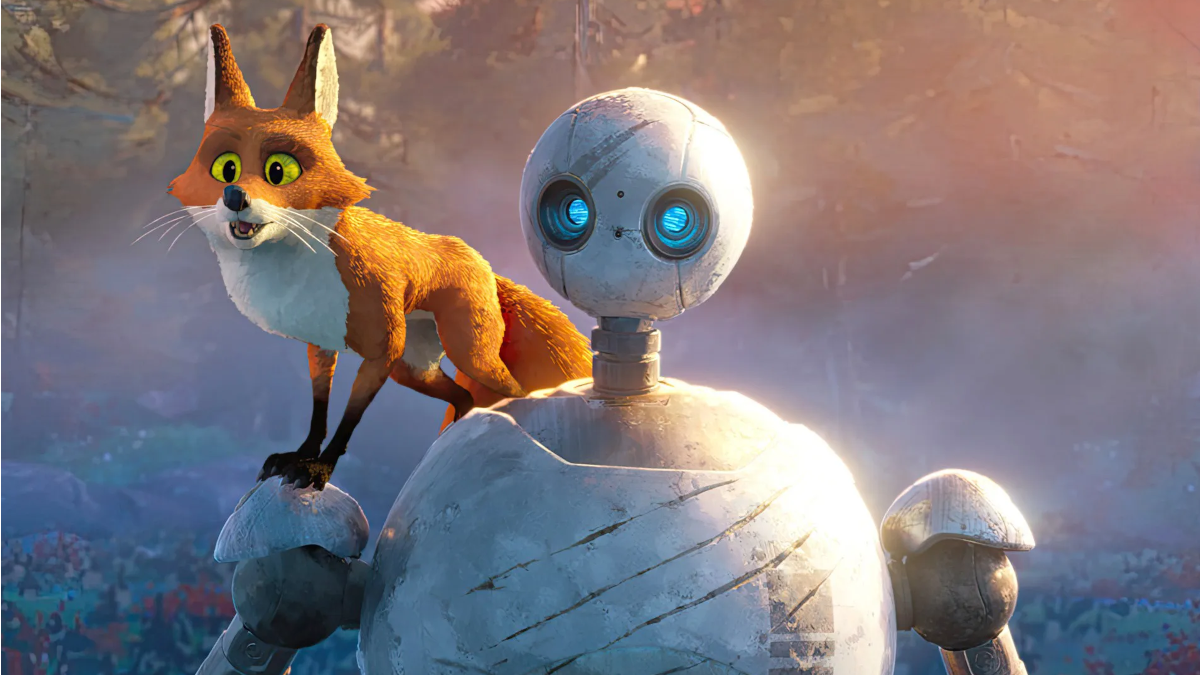
This sci-fi property based on the classic Pixar film is a no-brainer for Epcot with its environmental themes and the cute robot. WALL-E is practically tailor made for Epcot. Yet for all the IP flooding the park these days, it is a mystery as to why WALL-E isn’t included aside from a minor playground for young children. A trackless simulator ride with animatronics taking place onboard the Axiom with WALL-E trying to protect the plant he found on Earth would be more than suitable.

José Soto

The Curse Of Blade

About five years ago at a Comic-Con appearance, Marvel Studios president Kevin Feige eagerly announced that a new film about the vampire hunter Blade would be produced by Marvel Studios to join the Marvel Cinematic Universe (MCU). What made the announcement even more exciting was that Mahershala Ali would portray Blade, a role made famous by Wesley Snipes. That was then. Now? Nothing. The film keeps getting delayed over and over again to the point that many are asking if the project is cursed.

At the same Comic-Con, several other film and TV projects were announced and they have been produced and released since then. Only Blade remains unrealized; the closest we got to having Blade appear in the MCU was hearing his voice during a post-credits scene in Eternals. There are several reasons why the reboot of the Wesley Snipes film has been delayed, some of it has to do with the pandemic and the recent Hollywood strikes. But the main reason for the delays has to do with the inability to come up with a script and holding onto a director.

Marvel Studios has not been impressed with the scripts. The first one was penned by Stacy Amma Osei-Kuffour in 2021, while Bassam Tariq was chosen to direct the film. Tariq left a year later due to the lack of progress with the film while Marvel Studios brought in other writers to revamp the script. Reports have it that the first script was very light on action, a staple of the Blade films, and supposedly took place in the 1920s. Other writers who took a shot at Blade included Beau DeMayo, who was responsible for the well-received X-Men ’97 animated series, but time and time again Marvel Studios brought more and more screenwriters to turn in a suitable script. Mahershala Ali himself has expressed dissatisfaction with the original script and the pace of the project and it would not be surprising if he winds up leaving the project, even though he approached Marvel Studios with the idea of portraying the vampire hunter.

Meanwhile, Yann Demange, the director who replaced Tariq, left the project a few weeks ago, and no replacement has been announced yet. This is going on as the film is supposedly slated to begin production later this year for a 2025 release. At this rate, it is doubtful the film will meet the deadline or even be made.

Kevin Feige and Marvel Studios recently announced their desire to focus on the quality of their films and TV shows, which is commendable. But the unfortunate result of focusing on quality has been the delay of Blade. This is very frustrating for fans of the character and the original films who wanted to see the MCU take of the Daywalker (as he is called by the vampires he hunts), as well as Ali’s interpretation of the superhero.

It is baffling why Marvel Studios is having a hard time with this project which should be a slum dunk and would have a ready audience for a character with huge name recognition. The Blade films were popular even before the MCU existed and most people were not even aware that the supernatural hero was actually based on a Marvel Comics character. The premise should be fairly simple to produce. Why not just do a remake of the original Blade film Deacon Frost as the villain? The story worked in the first Blade, just throw in some MCU references and call it a day.

The answer to that is that Marvel Studios wants a fresh new take on the character and probably as rumors have it, wants Blade to help launch the Midnight Sons superhero team for the future. This is a great idea, but Marvel Studios has a lot on their plate and it’s anyone’s guess as to when they will get around to it.

Until Marvel Studios decides on a script and hires a solid director (supposedly they are eyeing Jordan Peele or Chad Stahelski who have either shown interest or been approached for Blade), the least they can do is have the character appear in upcoming MCU projects. This would keep fans happy and maybe even Ali, too.

However, the constant delays has become an embarrassment for Marvel Studios. They must settle on a script and director very soon in order to meet the production schedule and release date. Otherwise, Blade is doomed.

The Mad Max Films Ranked

Given the poor box office performance of Furiosa: A Mad Max Saga, it is likely this will be the final film in the Mad Max franchise for a good while. Hopefully, the film will have a second life on home media/streaming which could lead to the production of Mad Max: The Wastelands, which was based on background material that George Miller wrote when making Mad Max: Fury Road. In any event, for now we will only have five films in the Mad Max franchise and so it is time to rank the films. It is interesting to see how far the films have come from a low-budget independent film way back in 1979 to topnotch Hollywood-funded productions. Here we go, and be sure to leave a comment on the rankings or with your own preferences.

5. Mad Max (1979)

The first film in the Mad Max Saga is also the most unlike the typical Mad Max film we have come to expect. The near-future world of Mad Max largely resembles our own, except that it is running down as lawlessness has become more and more prevalent. Mel Gibson starred as Max Rockatansky, a police officer in the struggling Main Force Patrol (MFP), who is dedicated to maintaining order in the wild highways Down Under. It isn’t until the last fifteen minutes of the film that Max becomes the ruthless anti-hero that we know and love. The film would have been improved if Max left the MFP much sooner and his family was killed earlier on so we could have had more scenes of Gibson as Mad Max.

The fact that it takes so long for the film to get going is why it ranks last. It is a decent origin film that shows us how Max was a decent family man, but even at 90 minutes, the film drags at many places. It features a lot of the impressive car stunts and chases that George Miller improved upon in the later films and Gibson was so magnetic in his portrayal of Max, so it cannot be written off. After all, the popularity of Mad Max helped pave the way for greatness.

4. Mad Max: Beyond Thunderdome (1985)

The first half of the third Mad Max film was quite enjoyable and captivating. Mad Max is reduced to a nomadic wanderer in the barren desert wastelands of Australia in his broken-down car that is now pulled by camels. The car is stolen by an airborne raider played by Bruce Spence, who portrayed a similar character in The Road Warrior; yes, it’s kind of confusing and a definite sign that continuity was not a strong suit for these films. Max tracks his vehicle to a settlement called Bartertown run by Aunty Entity (Tina Turner, who was surprisingly great in her role). To win his car and his freedom, Mad Max is forced to fight to the death in a gladiatorial match in Thunderdome. After he breaks the rules in the deathmatch, Max is banished to the desert and is eventually rescued by a band of young children who see him as a messianic figure.

The film suffers greatly when Max meets the young refugees from the Lord of the Flies since this storyline of Max mistaken for being their savior clashes with the Bartertown storyline. The second half of the film slows down and takes on a strangely goofy tone that belonged in an adventure film geared towards kids. Not even the derivative chase scene at the end involving a train could salvage this film, which should have been split into two different films.

3. Furiosa: A Mad Max Saga (2024)

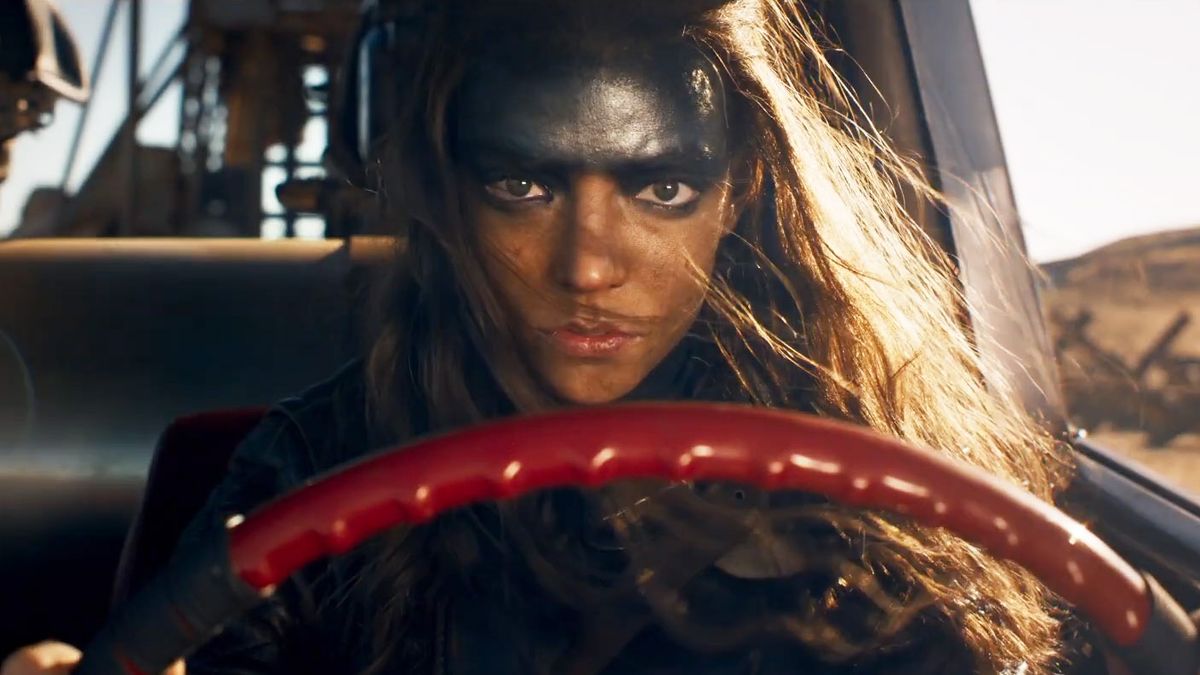
The world of Mad Max finally expanded beyond Max himself in this prequel that tells the story of Furiosa, the breakout character from Mad Max: Fury Road. Aside from a brief cameo, Mad Max does not appear in the film, but it still feels like a Mad Max film. The film is more sprawling and epic in scope than the average Mad Max film as it takes place across years, as Furiosa is seen developing from a young innocent girl into a vicious warrior in adulthood.

Anya Taylor-Joy and Chris Hemsworth turn in exceptional performances as Furiosa and her nemesis, Dementus. The production design and other technical aspects of the film are exceptional as is George Miller’s direction. It isn’t as good as Mad Max: Fury Road due to some questionable CG, and although it’s exciting it cannot match the desperate pace of Mad Max: Fury Road that kept us on the edge of our seats. Still, Furiosa: A Mad Max Saga is an exciting and great entry in the Mad Max franchise.

2. Mad Max 2: The Road Warrior (1981)

The first sequel to Mad Max definitely set the bar (so high) and the template for a classic Mad Max film with pulse-pounding, kinetic car chases, neo-medieval battles in the desert, Western tropes and little dialogue. The film was originally released in 1981 in Australia as Mad Max 2, then released in the United States a year later and renamed The Road Warrior. Nowadays, it is known as Mad Max 2: The Road Warrior, but whatever it’s called. it’s one of the best sci-fi action films of all time.

Mel Gibson reprised his role as Mad Max, the loner anti-hero who cares little for others and is only focused on surviving and getting the next tank of gas for his V8 Interceptor. He becomes a reluctant hero after meeting a group of struggling, good-hearted people in a gas refinery settlement that is besieged by ruthless raiders. The film was packed with action and rarely lets you breath as it concluded with a white-knuckle chase scene involving a gas tanker and rig driven by Max attacked by the motorized raiders. This sequence was made so memorable by its frenetic editing and a pounding score by Brian May. Simply put, Mad Max 2: The Road Warrior forever established the tone for future films.

1. Mad Max: Fury Road (2015)

Now we come to not just the best Mad Max film, but one of the greatest action films of all time and a futuristic Western on wheels, as director George Miller describes his film. Tom Hardy takes over the role of Mad Max, who is captured by the forces of the desert despot Immorten Joe (Hugh Keays-Byrne), and is soon caught up in a desperate escape from Immorten’s savage society on a modified tanker with several of Immorten’s wives and Furiosa (Charlize Theron), one of Immorten’s officers who frees the wives. The extended chase scenes across the apocalyptic desert were elevated with beautiful photography, intense editing and some of the most memorable imagery seen on film.

Mad Max: Fury Road was so revered that it was actually nominated for the Best Picture Oscar and won a slew of technical Oscars, which were all well deserved. The film is much more than an action film but one that touches on several themes such as women’s rights, societal injustice and the capabilities of the disabled. It also features many unique and eccentric characters that were easily memorable such as the the vicious Immorten Joe, Nux (Nicholas Hoult), one of Immorten’s soldiers who joins Max, and of course Furiosa, who quickly becomes a co-lead in the film and earned her own film. Mad Max: Fury Road is Mad Max at its finest and is a must watch for film lovers.

José Soto

Furiosa Excitingly Expands The Mad Max Saga

It’s unfortunate that Furiosa: A Mad Max Saga is not doing well in theaters because it is a truly great sci-fi action piece and a worthy prequel to Mad Max: Fury Road. But given how great the film is, it is certain that it will join that club of films that were initial box-office bombs and become revered as classics later on, as it happened to Blade Runner, The Thing, Edge of Tomorrow, The Suicide Squad, and so on.

Furiosa: A Mad Max Saga as its title suggests is the background story of Furiosa, the breakout character of Mad Max: Fury Road. As a prequel to that film, it begins back when Furiosa (first played by Alyla Browne, then later by Anya Taylor-Joy) was a young girl who was kidnapped from her idyllic garden home by barbaric raiders. For anyone who isn’t familiar with the world of Mad Max, these are post-apocalyptic films that take place in Australia, which is a barren desert wasteland full of roving gangs that prey on the weak. After seeing her mother killed by the gang that snatched her, Furiosa harbors a personal hatred against the gang and its leader Dr. Dementus (Chris Hemsworth), a charismatic, yet brutish thug. Seeing Furiosa as a stand-in for his long-lost children, Dementus comes to think of her as his own daughter.

Living a nomadic hunter-gatherer existence, Dementus’ gang encounters the savage society of Immortan Joe (Lachy Hulme), who we last saw in Mad Max: Fury Road. After tense negotiations between Dementus and Immortan Joe, Furiosa was traded to Immortan Joe, who intended to raise her to be one of his wives. However, Furiosa escaped that fate, and masquerading as a young male she joined one of Immortan Joe’s pit crews with her desire to return to her home and killing Dementus being her driving force.

Director George Miller, who introduced us to the world of Mad Max, has wowed us again with this captivating, brutal and exciting post-apocalyptic tale of vengeance and survival. The film is visually and tonally similar to Mad Max: Fury Road but differs in that the former film told a tighter story that moved as fast as the vehicles featured in the film. Furiosa: A Mad Max Saga tells a more sprawling story that spans years and features many characters, a lot of them returning from Mad Max: Fury Road. Even Mad Max himself pops up in a cameo though he is portrayed by Tom Hardy’s double.

While an expansion and exploration of the world of Mad Max is always welcome, doing so robs Furiosa: A Mad Max Saga of that feeling of intensity and non-stop action that made Mad Max: Fury Road so beloved. Make no mistake, there is a lot of action in Furiosa: A Mad Max Saga but there is also a lot of character development as we bear witness to seeing the brutal transformation of Furiosa as she starts off as an innocent yet skilled child into a hardened nearly feral survivor who desperately holds on to lost dreams. As such, the film time between the major action scenes are much longer, although the epic car chases and battles are well worth the wait. The best sequence comes around the halfway point of the film that involves another one of those scenes where motorized gangs besiege a souped-up supply tanker called a War Rig that is armed to the teeth. The scene lasts about 15 minutes and is worth the price of admission alone thanks to George Miller’s skillful talent for delivery pulse-pounding action.

Anya Taylor-Joy does a great job as Furiosa as she takes on some of the characteristics of Mad Max in that she rarely speaks and adopts a savage loner persona. The other actors like Hemsworth are just as memorable in their roles with the standouts being Tom Burke and Charlee Fraser. Burke portrays Praetorian Jack, the sympathetic driver of a war rig that serves as a prototype to Mad Max’s character and could explain why Furiosa eventually bonded with Max. Meanwhile, in her brief presence as Furiosa’s mother, Fraser, was outstanding in her performance as a skilled warrior who went above and beyond to save her daughter. Even though she was not successful, her sacrifice left a solid impression on young Furiosa.

Exploring the world of Mad Max is a welcome idea although the filmmakers should now think beyond epic car chases and battles in deserts. What else is going on in this world? What about the coastline of the continent or beyond? It’s too bad the film is not performing well because it is unlikely we will revisit this world in the near future.

Furiosa: A Mad Max Saga is a spectacular entry into the Mad Max Saga that does what it sets out to do: provide the origin story of Furiosa in a kinetic and engaging fashion that exemplifies George Miller’s cinematic style.

After Kingdom Of The Planet Of The Apes

Kingdom of the Planet of the Apes is the latest entry of the long-running Planet of the Apes franchise. The film is both a continuation of the previous trilogy that came out in the last decade while being a new starting point for a new trilogy that expands the story of the Apes franchise. There will be spoilers for Kingdom of the Planet of the Apes.

For anyone who hasn’t seen any of these films, the world of Planet of the Apes is one where humans have been supplanted by intelligent apes capable of speech, while humanity has become animalistic. The previous trilogy, consisting of Rise of the Planet of the Apes, Dawn of the Planet of the Apes and War for the Planet of the Apes, served as the origin story for the franchise. The trilogy provided the background for how apes gained human-level intelligence, which came about from efforts to find a cure for Alzheimer’s Disease. The supposed cure, in the form of an artificial retrovirus, instead increased the intelligence of apes. But the retrovirus had the opposite effect on humans. First it spread like wildfire and killed millions of people and caused civilization to collapse. Then the virus mutated and caused the remaining humans to lose their intelligence and the ability to speak, and cemented the apes dominion on Earth.

The main character in the trilogy was Caesar (in a brilliant motion-capture performance by Andy Serkis), who was the first hyper-intelligent ape and the leader of an Ape Rebellion against the humans who tormented his species. Eventually, Caesar tried to live a quiet life as the leader of his ape colony in the forests beyond human civilization, but conflict arose between the two species. By the end of the last Planet of the Apes film, Caesar was able to defeat the humans that enslaved his fellow apes and led them to an oasis to start a new colony, but he died from wounds inflicted during his battle with humans.

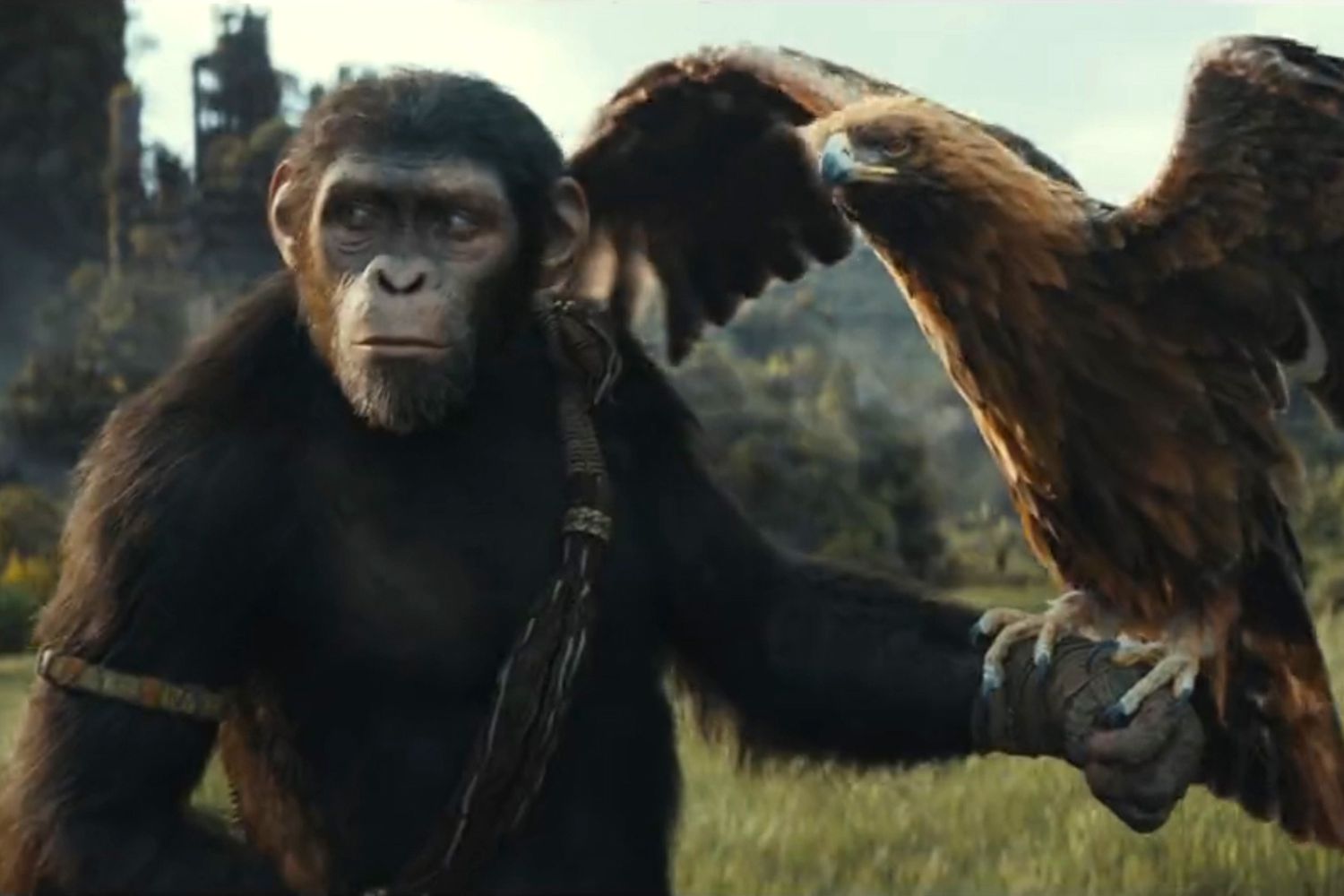
Kingdom of the Planet of the Apes takes place “many generations” after the death of Caesar and apes have evolved further and multiplied while transforming from a hunter-gatherer society into an agricultural one. Meanwhile, humanity has devolved into mute, animalistic savages, however, Noa (Owen Teague), the lead ape character, meets Mae (Freya Allan), a young human woman who is actually intelligent and able to speak. Eventually it is revealed she comes from a human outpost that is quarantined from the world and located near a satellite base. These humans are still intelligent and by the end of the film have begun efforts to communicate with other humans who have not succumbed to the virus in order to reestablish human civilization. Obviously, this will set up a future conflict between humans and apes if Mae’s settlement is able to jump start civilization.

One of the later elements that made the films in this franchise so compelling was the eternal question of humanity being able to co-exist with another society, which was an obvious, and sadly still an ongoing, allegory to our inability to co-exist with each other. This theme was vaguely hinted at in the second Apes film, Beneath the Planet of the Apes, but was the main focus in the films that followed starting with Escape From the Planet of the Apes. After the violent revolution seen in Conquest of the Planet of the Apes, Battle for the Planet of the Apes offered the hope that both species were able to co-exist peacefully, though that was debatable.

In the final moments of that film, which took place hundreds of years in the future, several ape and human children were attending a lecture by an ape teacher, who was narrating the events of the film. Although this ape spoke about the ability of both species living in peace, a young girl and an young ape were seen squabbling with each other, hinting at a future conflict between the two. After this, a statue of the main character in that film (also known as Caesar, this time played by Roddy McDowall) was seen crying. It was left to viewers to ponder if these were tears of joy because the two species at last lived peacefully or if the tears were of sorrow because of a coming conflict between humans and apes.

This idea of trying to live peacefully is touched upon in Kingdom of the Planet of the Apes as Noa questions Mae in the final scenes if it is possible to for the two species to share the planet. Mae answers that she does not know, but he doesn’t realize that as she is talking to him, she has a gun ready to shoot him, just in case. Of course, the very notion that she brings a gun with her while coming to Noa’s colony raises the question if she is trustworthy. Throughout the film, she gave little reason to trust her as she lied to Noa and his apes about her true motives from the moment she meets them.

Noa is rightfully suspicious of her and in turn, humanity, but he is willing to work with her during his conflict with Proximus Caesar (Kevin Durand), a despotic ape leader from another clan that enslaved his clan. Noa is also more focused on learning and passing knowledge to his people. He learns about Caesar and his peaceful ways as the ape has become a religious leader long after his death. It is implied that Noa will pass on the legend of Caesar to his clan while inspiring them to learn more about the world. This is best illustrated in the final moments when he takes his ape companion Soona (Lydia Peckham) to a decaying observatory and introduces her to the wonders of the universe via an old telescope.

Mae for her part is shown as being worried about Noa and the evolving ape civilization that will prevent humanity from making a comeback. In one scene she silently watches Noa repair a cattle prod that was used by one of Proximus Caesar’s soldiers and is worried at his ability to repair a tool. During the film, she and Noa are captured by Proximus Caesar’s forces and is ordered by the ape tyrant to help him open an abandoned vault used by the human military long ago. She is adamant that apes should not have access to old human weapons and technology inside the vault and was willing to let innocent apes die to prevent their access.

During her mission to enter the vault, Mae killed a fellow human, a collaborator called Trevathan (William H. Macy), who threatened to expose her to the apes. Though it was understandable why she was distrustful of the apes and the collaborator, her actions made her untrustworthy and ignoble. On the other hand, her actions are meant to help resurrect human civilization and it is seen through Proximus Caesar that the apes are not much better than humans and full of humanity’s worst traits.

It will be interesting to see where the Apes franchise will go after Kingdom of the Planet of the Apes. It is clear that a new trilogy is been set up that will put ape and humanity into conflict once again. There is also a tantalizing hint that space travel will be involved, as Noa is seen being fascinated by space and images of astronauts. As wild as it sounds, having apes evolve to the point of venturing into space is a great idea. Who knows? Maybe space exploration could wind up being the means for both species to learn how to cooperate and live in peace if space travel is needed to help save the Earth.

It also hints at the possibility of the new Apes films linking back to the original films. Think about it. The very first film featured astronauts who wound up on Earth in the far future and Rise of the Planet of the Apes featured Easter eggs of a lost space mission, which could be these astronauts that could show up again at the end of the new trilogy. Anyway, no matter which direction future films go, the Apes franchise has demonstrated the uncanny ability to move into new and exciting directions as most recently seen with Kingdom of the Planet of the Apes.